King Arthur’s World

Chivalry ‘framed an ideal of the heroic character, combining…strength and valor, justice, modesty, loyalty to superiors, courtesy to equals, compassion to weakness, and devotedness to [God],’ as defined by Bulfinch in his 1858 ‘The Age of Chivalry, or Legends of King Arthur’.

Chivalry in the Middle Ages was a lifestyle and a philosophy. A lifestyle that guided a knight’s actions and decisions backed-up by a philosophy that defined chivalrous principles and virtues.

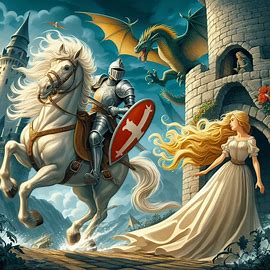
Every year the Knights of the Round Table renew their oaths of chivalry as proclaimed by the King Arthur during the Christian holiday of Pentecost.

The time of Pentecost was likely chosen because it was a time of renewal and commitment for Christians.

Source: Bulfinch’s Mythology, 1991. Graphic: Knight Rescuing a Maiden, AI generated.

Monet and Water

Monet loved water, the sea, lakes, rivers, mist, fog, it didn’t matter. He searched it out and painted it. Plants, people, buildings were extensions of his water.

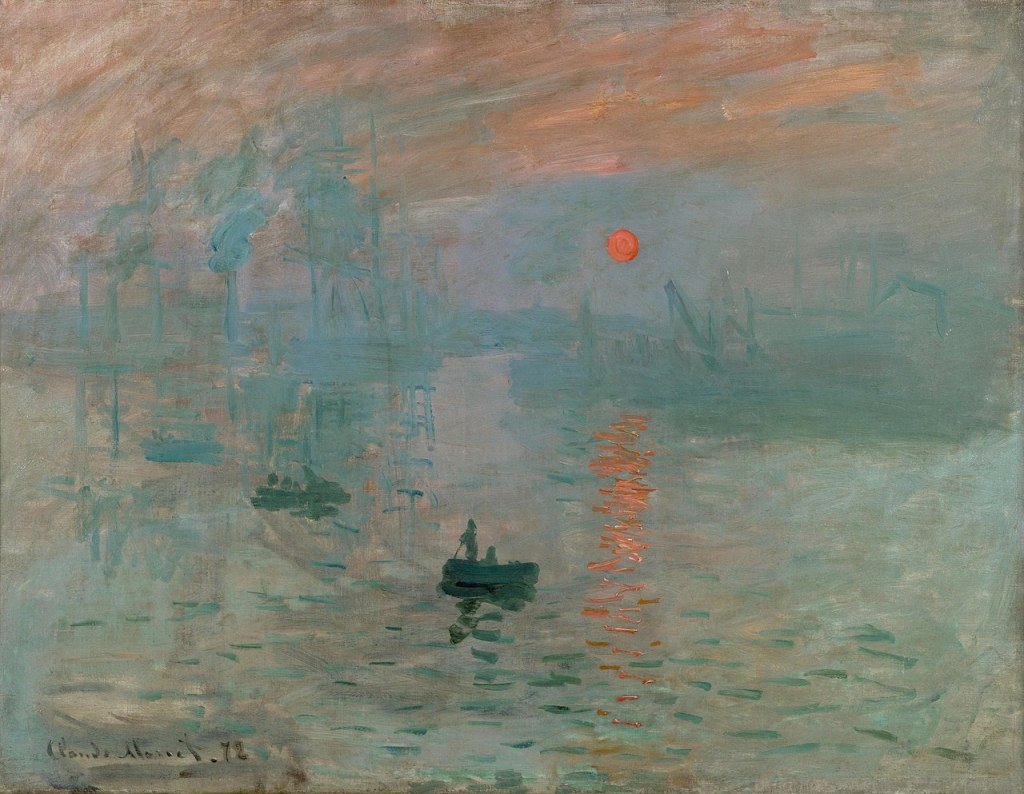
His 1872 seascape, Impression: Sunrise, from which the style ‘Impressionism’ is derived, is a study of the morning light unsuccessfully trying to break through the mist of solitude surrounding the boaters. Water fills the painting from top to bottom.

Taillandier in his monograph, ‘Monet’ wrote, “His fascination with water was such that he painted leaves, grass, and meadows as he painted water, the brushstrokes like so many quivering waves in the air”.

Monet painted water. Houses were painted like so many waves. The sky rippled. Skin erupted with steam and stones dissolved into mist.

Source: Monet by Yvon Taillandier, 1987. Graphic: Impression: Sunrise by Monet, 1872, Public Domain.

Journalism–Fox Butterfield

Fox Butterfield was a New York Times reporter that wrote several articles in the 1990s expressing total bewilderment about the ‘paradox’ between putting criminals in prison and the subsequent drop in crime. It wasn’t until the year 2000 that Butterfield finally started to acknowledge that locking up the criminals was responsible for the drop in crime in our streets.

James Taranto with The Wall Street Journal invented the term ‘The Butterfield Effect’ for Fox Butterfield and people in general who can’t accept facts or data that run counter to their beliefs. Another term for the ‘Butterfield Effect’ is cognitive dissonance.

Source: The Fox Butterfield Follis, Washington Examiner, 2000. Graphic: Cognitive Dissonance, de Castro, Contemplative Studies, 2020

Burial of the Count of Orgaz

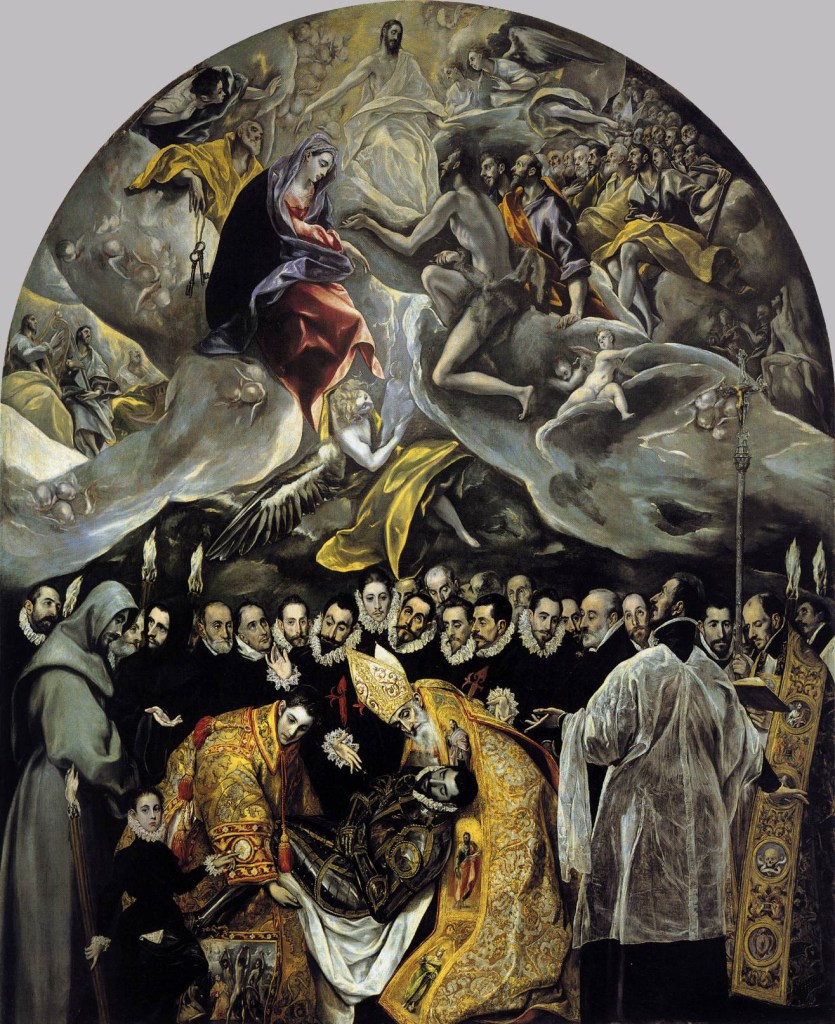
The 1586 painting, Burial of the Count of Orgaz is considered El Greco’s greatest work, which he created during his later mannerist phase of the High Renaissance. Mannerist paintings are known for their exaggerated proportions of figures and structures and the use of very intense colors.

The painting is large, almost 16’ by 12’, oil on canvas divided into two halves with the Count being buried by Saints Stephan and Augustine, per local legend, in the lower half and in the upper half his soul, depicted as a child, is transported to heaven.

The painting was commissioned by El Greco’s parish priest, Andres Nunez de Madrid, to remind Orgaz’s relatives that they were obligated by the Count’s will to provide a yearly donation to his church in Toledo, Spain.

Source: El Greco by Michael Scholz-Hansel, 2016, Taschen. Graphic: Burial of the Count of Orgaz by El Greco, Public Domain

The Divine Comedy:

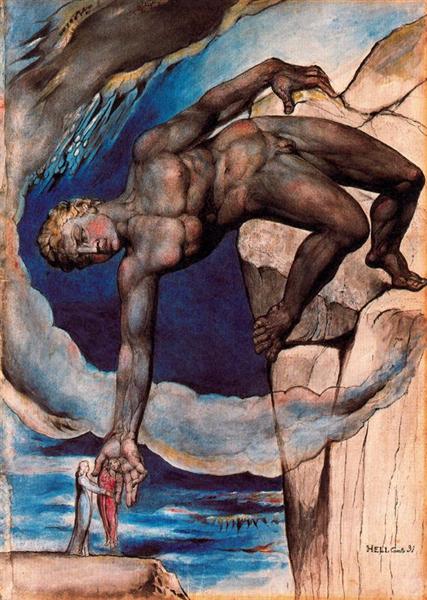
William Blake (1757-1827), in the final years of his life created 102 watercolors and 7 copper plates, most unfinished, for Dante’s ‘The Divine Comedy’. One of the more profound and captivating of these paintings is ‘Antaeus Setting Virgil and Dante into the Ninth Circle of Hell’.

The giant Antaeus, son of Neptune and Gaia, was invincible as long as he remained attached to his mother. Hercules, for his 11th task, had to defeat Antaeus but couldn’t if he touched the Earth, so he lifted him off the ground and strangled him to death.

The Ninth Circle is reserved for the treacherous and is subdivided into 4 rings. The first part is reserved for familial traitors and is named Caina as in Cain and Abel. The second ring, Antenora for Antenora of Troy is for national traitors. Ptolomaea for Ptolemy is the third ring for those who betray their guests. Finally, the inner ring is called Judecca for Judas Iscariot betrayer of Christ and is for the worst traitors: those who turn on their masters. At the center of the Ninth Circle resides Satan.

Finally, as an aside, Dante’s ‘The Divine Comedy’ shouldn’t be interpreted as The Divine Humor, but as The Divine Outcome. The author meant that comedy was the opposite of tragedy. Tragedies begin well and end badly, but Dante’s Comedy begins badly, in Hell, and ends well with Dante reaching his desired destination: Heaven.

Source: Will Blake, The Divine Comedy by David Bindman, 2000. The Divine Comedy by Dante Alighieri, circa 1321. Bulfinch’s Mythology, 1867. Graphic: Antaeus Setting Down Dante and Virgil in the Last Circle of Hell, Blake, 1827, Public Domain.
A Riddle

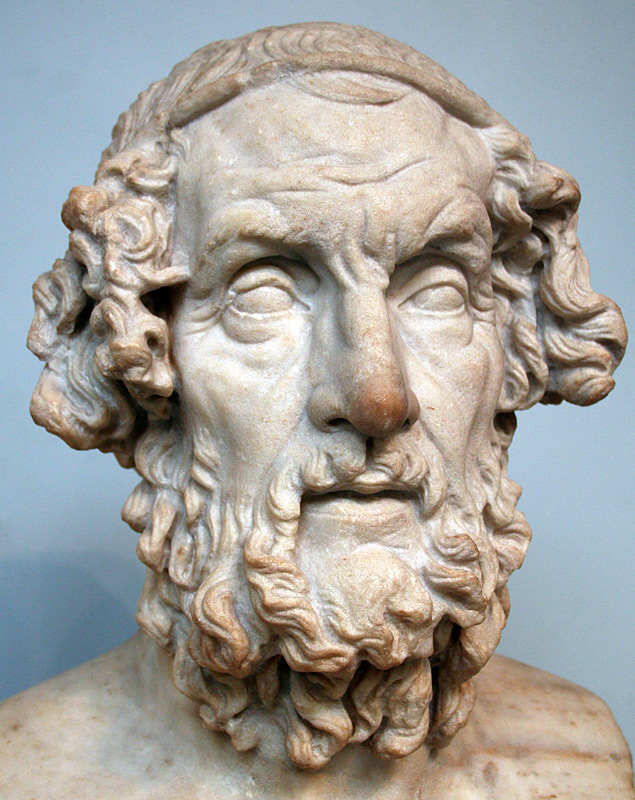
Homer is said to have died of grief or maybe shame when he was unable to solve the riddle posed below by some small children:

‘What do you leave behind if you know you have it and what do you take with you if don’t know you have it?’

Lice.

Almost nothing is known about Homer, including his existance, making everything said about him to be either myth, allegorical, or just made up out of whole cloth.

Source: Bulfinch’s Mythology, 1991 – 1st published 1855. Graphic: Bust of Homer, British Museum, Public Domain

No Free Lunch

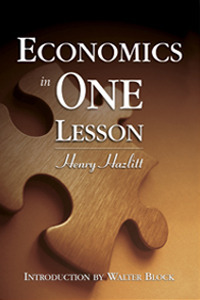
Henry Hazlitt in 1946 published one of the greatest books on economics ever written: ‘Economics in One Lesson’. It’s concise, lucid, factual, and in respect to deductive reasoning on par with Fredrich Hayek’s ‘The Road to Serfdom’ and Adam Smith’s ‘The Wealth of Nations’.

Hazlitt, like Hayek, was a student of the Austrian school of economics which advocated for minimal government intervention, was against central planning, and believed in gold-standard like currencies.

Hazlitt sums up his short book in one sentence, ‘The art of economics consists in looking not merely at the immediate but at the longer effects of any act or policy; it consists in tracing the consequences of that policy not merely for one group but for all groups.’ What’s good for the gander is likely not good for the goose.

He expands this thought by showing that economics is about tradeoffs and choices or to simplify it further, when it comes to government spending there is no free lunch. Spending money on guns means less money spent on butter. When President Johnson, in the 1960s after the book was written, tried to spend money on both guns and butter we received inflation. When our current politicians spent unlimited amounts of money on everything imaginable, we received inflation.

History may not repeat itself, but it rhymes.

Source: Economics in One Lesson by Henry Hazlitt, 1946. Graphic: Economics in One Lesson, Hardcover, 2008 Edition, public domain.

Mesopotamian Life After Death

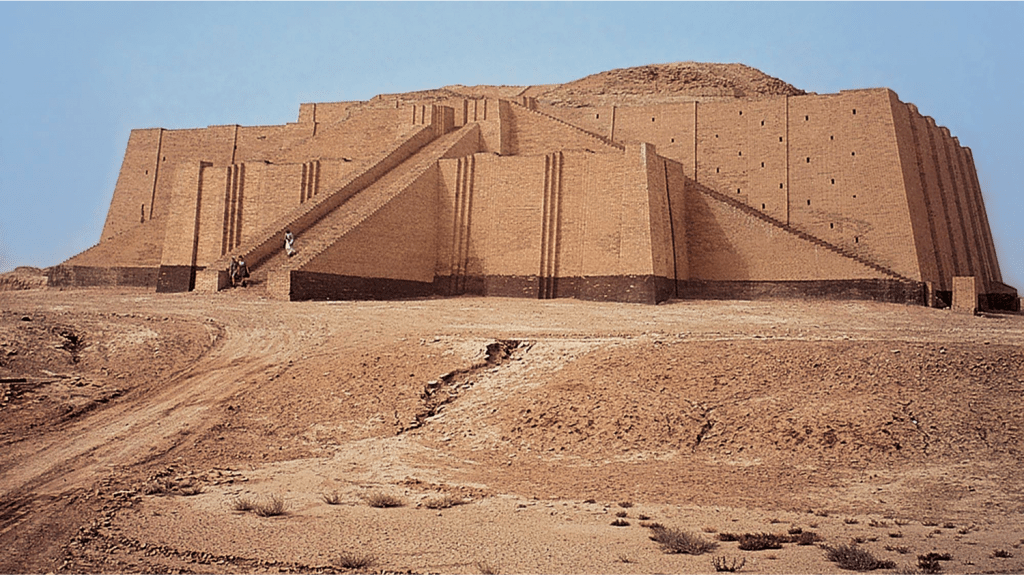
Five thousand years ago, Sumerians and Akkadians, occupying what is now southern and central Iraq, respectively, believed souls or spirits after death occupied a subterranean world called Kur or Irkalla.

All those who entered this underworld could not leave but it was not hell or heaven but more of a place to exist after death; as a ghost of your past.

There is no record that Mesopotamians in 3000 BC believed in reincarnation, resurrection, or any form or transmigration of the soul.

With many exceptions, the spirit or ghost that existed in the netherworld maintained the social status that they had when alive. Thus, kings were still kings, slaves were still slaves.

In the Epic of Gilgamesh, he and his friend Enkidu ventured into this underworld to retrieve their lost magical objects and to seek immortality. They did not find the magical objects, but they did find the Plant of Immortality but promptly lost it to a serpent, learning one of the earliest lessons for humanity: never entrust your life to a snake.

Source: Epic of Gilgamesh. Mesopotamian Beliefs by Chaksi, 2014, World History. The Afterlife by Enlightenment Journey. Graphic: Ziggurat of Ur, 21st century BC, dedicated to the Moon god Nanna.

The Noble Lie

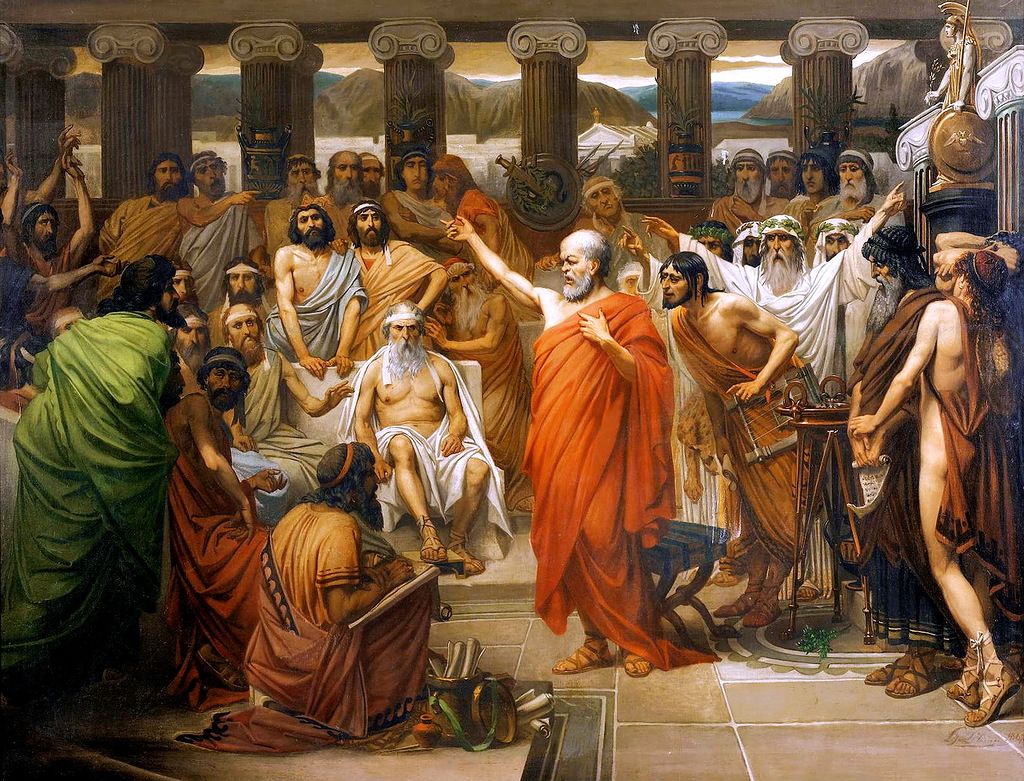
In Plato’s Republic, a “Noble Lie” is a myth, or a falsehood knowingly propagated by the elites to maintain social harmony, or stated succinctly, to keep the plebs in their place and make sure they love it.

Plato believed that society required a class system led by philosophers who needed to create a lie that unites and binds the lower classes to the state. Without this binding myth the classes will turn on each other, and the government will fail.

The Noble Lie myth promoted by Plato, via Socrates, was that the populace was born with hierarchical souls with the upper classes having better souls. Another myth was Karl Marx stating, “From each according to his ability, to each according to his needs,” formulating a classless society where goods and services were free.

Source: Plato’s Republic. A Noble Lie by Plato Intelligence. Introduction to Plato: The Noble Lie by Paul Krause, 2019, Minerva Wisdom. Graphic: Socrates’ Address by Lebrun, 1867, public domain.

End Times for Socrates

Plato documents Socrates’ final days in four books all written as dialogues. The first dialogue, ensuing shortly before Socrates’ trial for impiety and corruption of Athenian youth occurs between Socrates and the Athenian prophet, Euthyphro, who together attempt to define piety without success.

The second book, Apology, Socrates defends himself to the Athenian court, poorly in all respects, purposefully one suspects, confessing that his life’s quest is one of seeking wisdom, nothing more.

Crito is the third book in this series, and it takes place in Socrates’ prison cell after he has been found guilty of his crimes with his execution scheduled for the next day. Crito, a wealthy friend of Socrates, has come to urge him to escape. Socrates refuses and the ensuing dialogue revolves around justice and the damage to one’s soul through the actions of injustice.

In the fourth book Phaedo, a Greek philosopher, visits on the day of Socrates’ execution, and has a discussion centered on the immortality of the soul. Socrates offers four arguments for why the soul must be eternal while the body is mortal, firmly imprinting the duality of nature into the human psyche for endless generations to come.

Source:  Euthyphro, Apology, Crito, and Phaedo by Plato, 4th century BC. Graphic: Statue of Socrates by Drosis, Athens, Classical Wisdom.