Iron Butterfly’s In-A-Gadda-Da-Vida

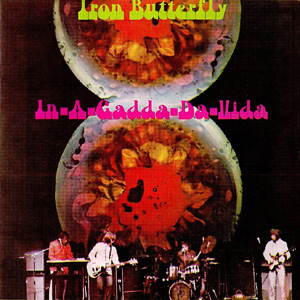
This week in 1968, San Diego psychedelic, hard rock band, Iron Butterfly released their second album, “In-A-Gadda-Da-Vida” which sold a record, at the time, 8 million copies in its first year and a reputed 30 million, to date, worldwide. The song was voted the 24th greatest hard rock song of all time by VH1 in 2009 and also contained the 10th greatest drum solo of all time, as voted WatchMojo.

“In-A-Gadda-Da-Vida” was planned as a love song to Adam and Eve tentatively titled “In the Garden of Eden” but when vocalist and song writer Doug Ingle, sang the song after drinking a whole freaking gallon of Red Mountain wine, he slurred the words so badly that drummer, Ron Bushy, transcribing the lyrics, mis-interpreted “In the Garden of Eden” as what became one of the great rock songs, ever.

In the 1995 episode “The Simpsons – Bart Sells His Soul”, Bart pranks his church into singing “In-A-Gadda-Da-Vida” for the opening hymn which he labeled as “In the Garden of Eden” by I. Ron Butterfly in the sheet music handout.

Source: Simpson Wiki. Watch Mojo. Graphic: Album cover, Atco Records.

The Ark of the Covenant

Shortly after the Israelites exodus from Egypt around 1500 BC Moses received the Ten Commandments from God who further instructed Moses to have Bezalel build an Ark to house the commandments and He gives specific instructions on how the Ark should be built. Since no pictures are known to exist for the actual Ark, Spielberg’s rendition, built for “Raiders of the Lost Ark” movie, is as good as anything that currently depicts it.

The Ark was initially kept in the ancient Samarian sanctuary city of Shiloh in a tabernacle built under Moses direction and remained there for 369 years.

During the battle of Eben-ezer in 1180 BC the Israelites were defeated by the Philistines, bringing the Ark back to the Philistine pentapolis city of Ashdod, just south of the present-day Tel Aviv, as part of their plunder of Shiloh. Upon capturing the Ark, the Philistines were beset by plagues and misfortune and decided that it would be best to return it to the Israelites.

After its return it eventually settled in Kiriath-Jearim where it remained for about 20 years.  King David eventually brought the Ark to Zion or the City of David. When Solomon succeeded David, he had the Ark brought to his temple in Jerusalem sometime in the 10th century BC, no earlier than 957 BC.

Around 586 BC the Neo-Babylonian Empire destroyed Jerusalem and Solomon’s Temple. After this destruction the Ark disappeared, and its location has been a mystery ever since.

Legends and myths say the Ark was destroyed, or it is currently in Ethiopia, or in the Philistine city of Ekron, or beneath Jerusalem, or on Mount Nebo, or in a cave near the Dead Sea, or the Romans captured it during the Jewish revolts in the 1st and 2nd centuries AD, or aliens took it.

Source: Bible. BibleArchaeology.org. Wikipedia. Graphic: Ark from “The Raiders of the Lost Ark

To Kill a King

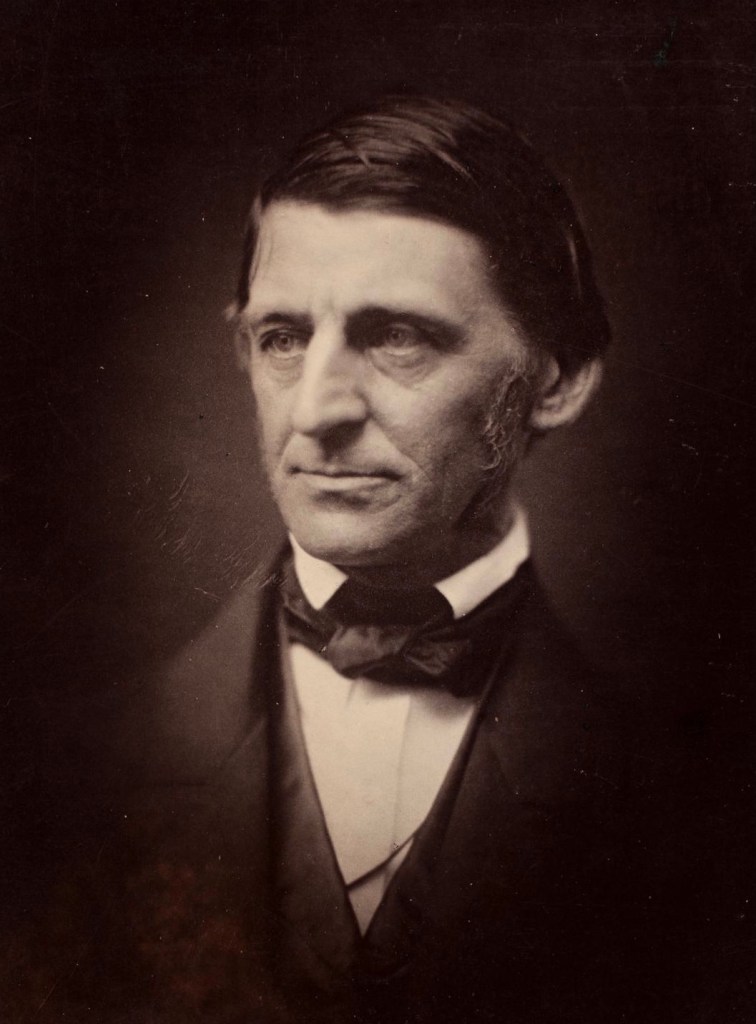
Ralph Waldo Emerson, author of the transcendental essay, “Self-Reliance” is often credited with saying, “When you strike at a king, you must kill him.” The exact setting and time for the quote is unknown but Ann Althouse believes it was said during a conversation with Oliver Wendell Holmes Jr., one of the most widely cited Supreme Court justices, after Holmes attacked Plato. Emerson’s parried with the quote above, meaning that if you strike at the philosopher king you must be thorough.

Niccolò Machiavelli, in his book “The Prince”, didn’t specifically mention the need to “kill the king” however, he did say, “If an injury has to be done to a man it should be so severe that his vengeance need not be feared,” and he also added “People should either be caressed or crushed. If you need to injure someone, do it in such a way that you do not have to fear their vengeance.”

Source: The Prince, Machiavelli. Emerson, Althouse Blog, 2019. Graphic: Emerson by Hawes, 1857, Public Domain.

Devil Take You

Devil aka The Night Chronicles: Devil.

Theaters: 17 September 2010

Streaming: ~2011

Runtime:  90 minutes

Genre:  Drama – Horror – Mystery – Suspense — Thriller

Els:  6.5/10

IMDB:  6.3/10

Rotten Tomatoes Critics:  50/100

Rotten Tomatoes Audience:  43/100

Metacritic Metascore:  44/100

Metacritic User Score:  8.3/10

Awards: — Two minor nominations for screenplay and supporting actor

Directed by: John Erick Dowdle

Screenplay by: Brian Nelson

Story by: M Night Shyamalan

Music by:  Fernando Velazquez

Cast: Chris Messina, Logan Marshall-Green, Jenny O’Hara

Film Locations:  Toronto, Philadelphia, Los Angles

Budget:  $10 Million

Worldwide Box Office:  $62.6 Million

Five strangers, one of them the devil on a soul collecting task, are stuck together on a broken-down Philadelphia elevator waiting to be rescued.

Devil is a low budget movie done right. The director and acting are competent, but the real star of the show is the screenplay. The run-time has been criticized as too short, but a longer movie would have led to over-telling of the story, unnecessarily dragging out the plot.

Sources. IMDb. Rotten Tomatoes. Metacritic. Horror Film Wiki. Graphic: Movie Poster, Universal Pictures.

Bodegas Juan Gil Silver Label 2020

Mourvedre (Monastrell) from Jumilla, Spain

Purchase price $15.99

Rankings: Robert Parker 92. James Suckling 90. ElsBob 90-91.

ABV: 15.0%

A deep red in color with notes of black fruits. A full-bodied wine, medium-high in tannins with a medium and balanced finish. Pairs well with rich foods high in fat such as marbled steaks or cured meats.

This is an excellent wine at a good price.

The White Album

The Beatle’s most innovative album originally titled The Beatles was released 55 years ago, plus a few months, in November of 1968. It was the group’s only double album containing 30 new tracks, mostly written between February and April of 1968. The album cover was released in pure white with the simple and only words The Beatles stamped on the front, causing it to be known forever more as the White Album.

The album followed Sgt Pepper, and Ringo remarks that recording the White Album calmed the seas, “Sgt Pepper did its thing, it was the album of the decade – of the century maybe. It was very innovative. Great songs, glad I was on it. But the White Album…We ended up being more of a band again and that’s what I always love, I love being in a band.”

The album went number 1 on the UK charts for eight weeks and stayed in the charts for 22 weeks. In the US it ran at number 1 for 9 weeks and stayed in the charts for an astounding 65 weeks. The 2018 50th anniversary album reissue entered the Billboard 200 at number 6. None of the 30 tracks from the original album were issued in single format. The songs covered a broad range of genres including rock, pop, folk, country rock, blues, Ska, proto-metal, and avant-garde.

Source: Apple Corp, thebeatles.com. Genius.com. Graphic: Cover of the White Album, by Beat 768, 2010, Public Domain.

Journalism – Patricia Smith

Patricia Smith is very good at performance poetry, like freestyle rap battles without a beat, but as a journalist she could never quite grasp that poetry was fiction and journalism wasn’t. She could write, she was good with words and phrases, talents that journalism seeks out and rewards, but she would rather write a good story, usually fiction, than hit the pavement to flesh out the truth.

Patricia Smith began her career in journalism in the late 1970s as an entry level clerk at the Chicago Daily News, first as a typist and later as a music and entertainment reviewer. When the Daily News folded in 1978, she then worked as an entertainment writer for the Chicago Sun-Times from 1978 to 1990. She left the Sun-Times after it was discovered that she had written a review of a concert that she did not attend. In 1990 she moved to the Boston Globe, beginning as an entertainment critic, and eventually was made a reporter and the paper’s metro columnist. She was fired from the Globe in 1998 for fabricating characters and events in one of her metro columns. The Globe editors, after further investigation, believed that an additional 52 columns or hers contained fictional elements.

Source: New York Times, Chicago Tribune, Media Nation. Graphic: Patricia Smith

The Roman Jewish Wars

During the first and second centuries AD there were 3 major Jewish revolts against Roman rule in Judea: The first war from 66-73 AD, the Kitos War from 115-117 AD, and the Bar Kokhba Revolt from 132-135 AD. Roman taxation, financial exploitation, religious persecution, oppression, extrajudicial executions, and the plundering of the Second Jewish Temple all contributed to the conflicts.

Roman punishment increased with each successive war eventually leading to wholesale depopulation of Jewish communities by enslavement, death, and exile. It is believed that upwards of 1.3-1.4 million Jews were killed during these revolts, which would have been about one-third of the total worldwide Jewish population. After the Bar Kokhba Revolt the Romans renamed the area Palestina after the Philistines who populated the general area before the 6th century BC.

Source: Josephus. Wikipedia, Heritage-History, WorldHistory, Alchetron, Britannica. Graphic: Roman Triumphal panel from Beth Hatefutsoth showing spoils from the Jewish Temple. Max Morris 2016.

Nothing Against the State

The title to this post is from Mussolini’s quote: “All within the state, nothing outside the state, nothing against the state.”  The phrase is assigned to fascist ideology, but it is right at home within any authoritarian government.

Below is a partial listing of 20th century sanctioned murder by governments:

  • Mao’s Great Leap Forward: 15-55 million deaths. Chinese communism. 1958-1962
  • The Holocaust: 5-17 million deaths. German Nazis. 1939-1945
  • Ukrainian Holodomor: 1.8-7.5 million deaths. Russian communism. 1932-1933
  • Soviet WWII Prisoners: 3.3-3.5 million deaths. German Nazis. 1941-1945
  • Khmer Rouge Killing Fields: 1.3-3 million deaths. Khmer Rouge/Cambodian communism 1975-1979
  • Polish Genocide: 1.8-3.0 million deaths of non-Jews. 3.0 million Jews included in the Holocaust post above. German Nazis. 1939-1945.
  • Bangladesh Genocide: 300,000-3 million deaths. Pakistani military dictatorship. 1971
  • Polish Gentile Genocide: 1.2-1.8 million deaths. German Nazis. 1939-1945
  • Kazakh Genocide: 1.3-1.75 million deaths. Kazakh communism. 1931-1933
  • Russian Gulag: 1.6 million deaths (possibly more). Russian communism. 1920s to 1953
  • Armenian Genocide: 700,000-1.5 million deaths. Young Turks/Ottoman Empire. 1915-1922
  • Greek and Pontic Genocide: 300,000-1.2 million deaths. Ottoman Empire. 1914-1922
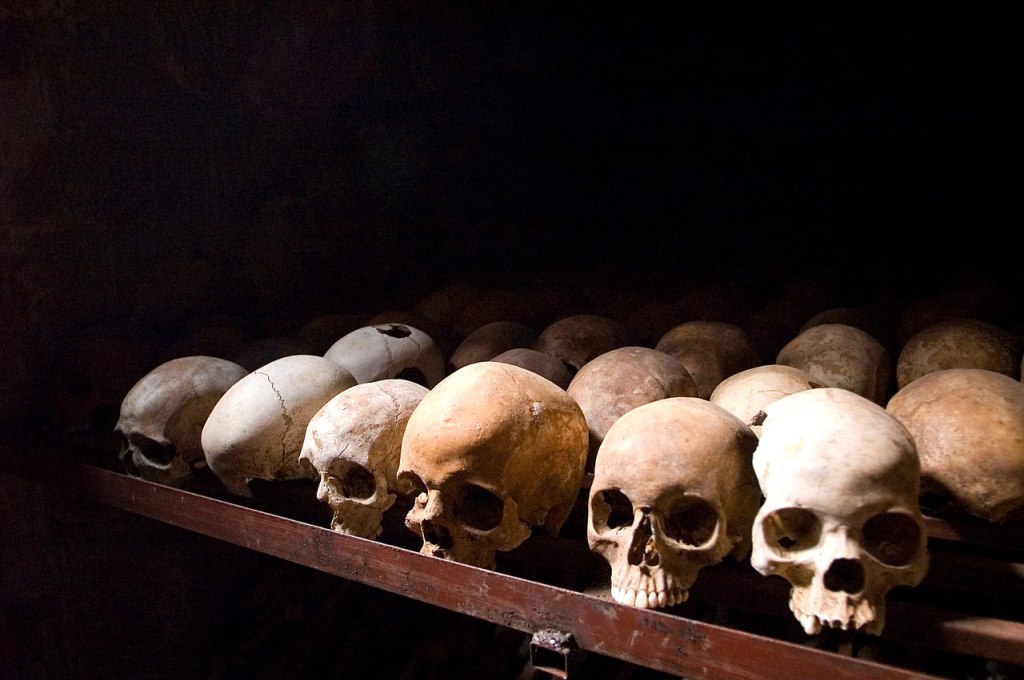
  • Rwandan Genocide: 500,000-1 million deaths. Rwandan dictatorship or totalitarian state. 1994
  • Ustasha Genocide: 357,000-600,000 deaths. Croatia fascists encouraged by the Nazis. 1941-1945
  • Dafur Genocide: 100,000-500,000 deaths. Sudanese Arab dictatorship and Arab militia. 2003-Present
  • East Timor Genocide: 85,000-200,000 deaths. Indonesian military dictatorship. 1974-1999

Source: Wikipedia, Independent, History.com, News.Stanford, Hoover.org. Graphic: Nyamata, Rwanda Memorial Site, by Fanny Schertzer, 2007, GNU Free Documentation License.

The KISS Principle and Skunks:

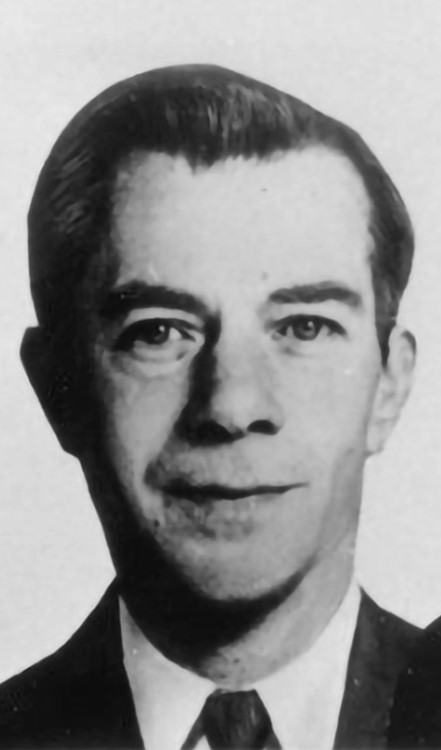
Willie Sutton, bank robber and writer, supposedly quipped when Mitch Ohnstad, a reporter asked him why he robbed banks: “Because that’s where the money is”.

In Sutton’s autobiography, he denied saying that he robbed banks because that’s where the money was, but he did say that he enjoyed robbing banks. It is estimated that he stole upwards to two million dollars from more than 100 banks over four decades starting in the 1920s.

His quaint response that he didn’t utter, has evolved into a rule of thumb for medical students now known as Sutton’s Law. It’s an instruction for medical students, and practitioners to accept the most likely diagnosis rather than spending inordinate amounts of time and money exploring all possible answers.

In accounting, a variant to Sutton’s Law is used to find savings in a budget, stating that the biggest savings will be found where the greatest costs occur.

Along a similar path of logic Occam’s Razor, attributed to the 14th century Englishman, William Ockham, states that when confronted with competing hypotheses to any given set of data one should select the least complicated proposition or as it is usually stated “The simplest explanation is usually the best one.”

Adding it all up leads one to the KISS Principle: Keep It Simple Stupid, first formulated by Kelly Johnson, lead engineer at Lockheed’s Skunk Works.

Source: Sutton, Where the Money Was: Memoirs of a Bank Robber, 1976. Kaplan et al, Harvard BS, 1998, MSN, Wikipedia. Graphic: Sutton, DOJ, public domain.