Nebbiolo Grapes

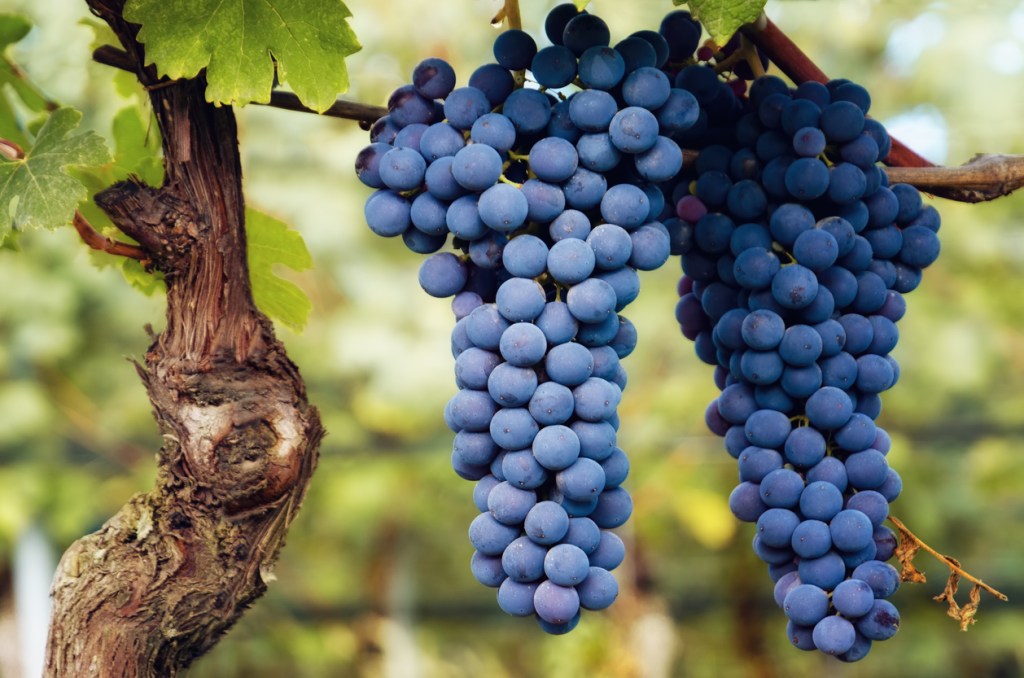
Nebbiolo is an Italian grape variety predominantly associated with the Piedmont region in northwest Italy, near the borders of France and Switzerland. Indigenous to this area, it boasts a long history of cultivation. Evidence indicates that wines made from Nebbiolo have been produced in the region since at least the first millennium AD, with the earliest recorded mention of the grape dating back to the 13th century in the vicinity of Turin.

Today, Nebbiolo is the cornerstone of several renowned wines, including Barolo and Barbaresco. These wines are notable for their clarity, often drawing comparisons to Pinot Noir in appearance. However, they stand out for their medium- to full-bodied structure and complex profile, characterized by aromas of red fruit, pronounced tannins, vibrant acidity, and an extraordinary finish. Decanting is crucial to mellow the tannins and enhance their drinkability.

Nebbiolo wines pair exceptionally well with rich, fatty dishes such as ribeye steak and meals featuring acidic components, including meat ragù and hearty pasta sauces.

Graphic: A bunch of Nebbiolo Grapes by Cristiano Alessandro, Licensed.

Gravity and Vanilla Black Holes

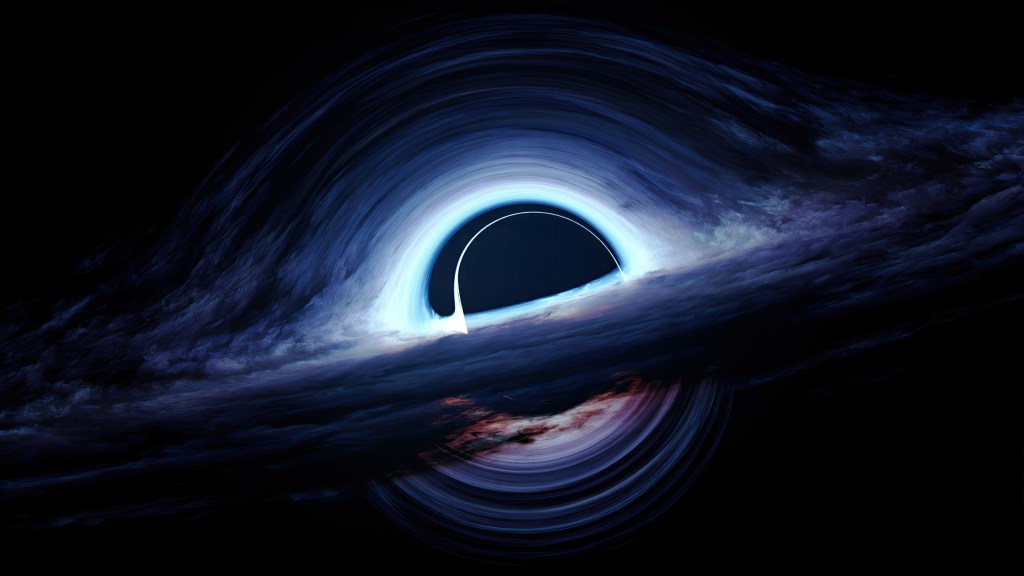
Einstein’s theory of general relativity, which includes gravity, predicts that black holes have a tricky feature: a singularity. This is a point where space and time are squeezed so tightly that the laws of physics break down—think of it as a cosmic “error message.” To fix this, scientists often turn to exotic matter—hypothetical substances with bizarre properties like negative energy—to smooth things out. However, a team from the University of Barcelona, led by Pablo Bueno, found an alternative. They didn’t need exotic matter at all. Instead, they tweaked Einstein’s gravity by adding an infinite series of extra “rules” (higher-curvature corrections) to the math.

Their solution works in spacetimes with more than four dimensions—beyond our usual height, width, depth, and time. In these higher-dimensional worlds, black holes can exist without singularities. This “smooths out” black holes, making them less mysterious and more like regular objects in spacetime—no weird stuff required.

The presence of extra dimensions doesn’t just fix singularities—it can also change how black holes behave. In higher-dimensional spacetimes, black holes might have different event horizon shapes (the boundary beyond which nothing escapes) or other structural quirks. The Barcelona team’s work shows that these altered properties emerge naturally from gravity in more than four dimensions, offering a fresh perspective on these cosmic giants.

Thinking outside the box, is it possible that these extra dimensions link black holes to “a reality outside regular spacetime,” like wormholes (tunnels through spacetime), braneworlds (parallel universes on higher-dimensional “membranes”), or even gateways to white holes (theoretical opposites of black holes that spit stuff out)? Theories like string theory and braneworld scenarios suggest that extra dimensions might allow such connections. For example, a wormhole could theoretically bridge two distant points in our universe—or even lead to a completely different universe.

While the math of higher dimensions opens the door to these possibilities, it’s all conjecture. The Barcelona team’s work is a major step forward in understanding black holes in higher dimensions, but it doesn’t directly prove connections to other realities.

Source: Grok 3. Regular Black Holes… by Bueno, P. et al., Physics Letter B, February 2025. Graphic: Black Hole Rendering, iStock licensed.

Hundred Days

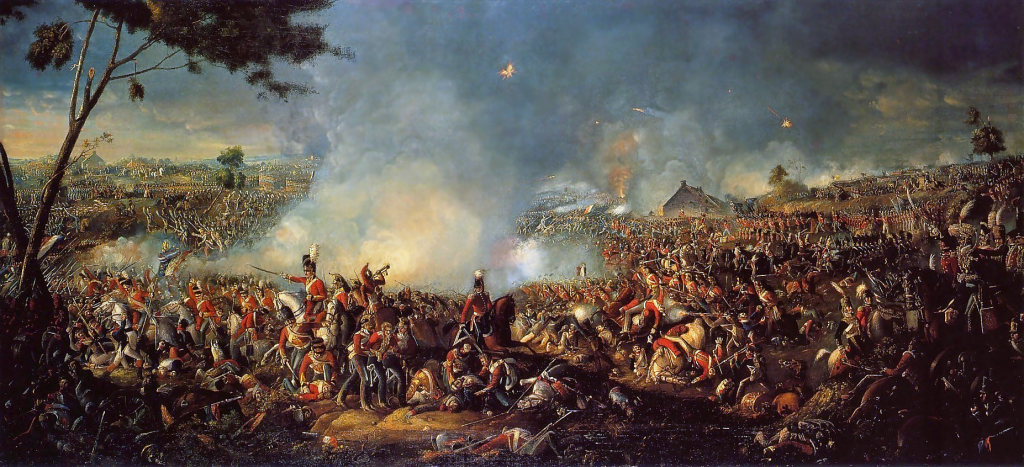
Napoleon Bonaparte, reeling from his disastrous Russian campaign of 1812 and suffering significant losses to the Sixth Coalition in 1813, faced a decisive defeat at the Battle of Leipzig in October of that year. With his options exhausted and his army depleted, Napoleon abdicated his throne on 11 April 1814, and was exiled to Elba, a small island off the coast of Tuscany.

After approximately ten months in captivity, Napoleon executed a daring escape on 26 February 1815, orchestrated by loyal supporters and a small contingent of soldiers. He landed in France and marched triumphantly into Paris on 20th of March, reclaiming his title as Emperor and ushering in his second reign. This brief resurgence, however, ended with his defeat at the Battle of Waterloo on 18 June 1815, at the hands of the Duke of Wellington and Prussian Field Marshal Gebhard Leberecht von Blücher. The victorious Anglo-Prussian forces entered Paris on 7th of July restoring King Louis XVIII to the French throne and effectively concluding Napoleon’s reign—later dubbed the “Hundred Days” (20 March to 8 July) in historical accounts.

Unable to flee to the United States as he had hoped, Napoleon surrendered to the British Navy and was transported to England. From there, he was exiled to the remote island of Saint Helena in the South Atlantic, arriving there on 15 October 1815. He spent his final years there, dying on 5 May 1821.

Source: Napoleon by André Castelot, 1991. Graphic: Battle of Waterloo by William Sadler, 1815 (Public Domain).

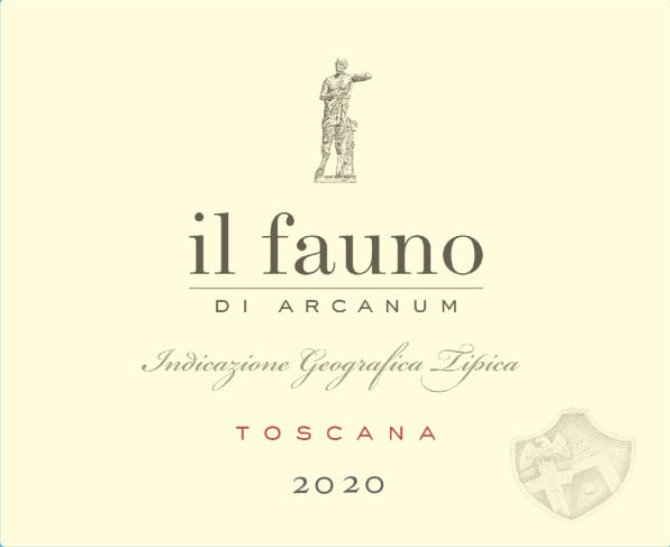
Tenuta di Arceno Il Fauno di Arcanum 2020

Bordeaux from Tuscany, Italy

Merlot 41%, Cabernet Franc 34%, Cabernet Sauvignon 20%, Petit Verdot 5%

Purchase Price: $87.00 (Restaurant)

James Suckling 93, Wine Spectator 93, Jeb Dunnuck 92, Robert Parker 92, ElsBob 92

ABV 14.5%

Aromas of black cherry and plum; full-bodied and dry with a silky tannic finish. Pairs well with ribeye, filet, grilled vegetables, or desserts like cannoli and tiramisu. We enjoyed it with osso boco on garlic mashed potatoes – delicious. Also ideal for sipping on a shady patio on a warm afternoon.

An excellent fine wine priced slightly under the median for 92-point wines (retail ~$52).

Trivia: A Faun (Fauno in Latin) is a half-human, half-goat creature in Greek and Roman mythology with hairy legs, pointed ears, a tail, and human arms. The most famous faun is Pan, the Greek god of nature, known for playing a flute, his sexual prowess, and joking attitude.

Michelangelo, Medici, and Florence

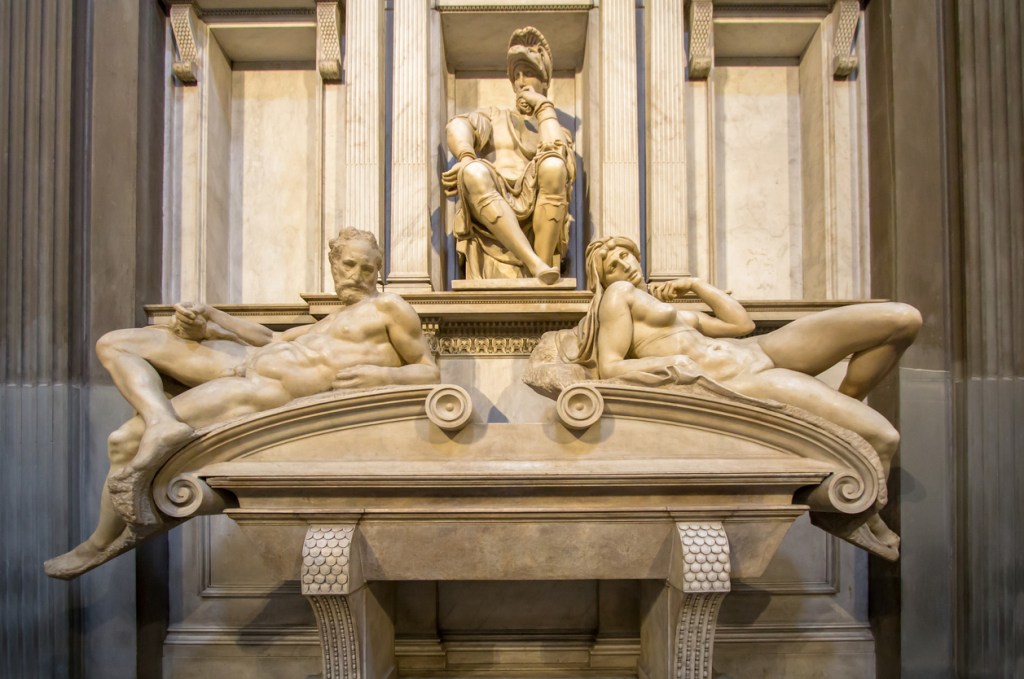
Tomb of Lorenzo II de Medici and below lying on the sarcophagus two sculptures ‘Dawn and Dusk’ in Medici Chapel, Florence, Italy

Florence, the Medici family, and the Renaissance are inextricably linked, forming a vibrant nexus of world-shaping brilliance and energy. After Lorenzo the Magnificent’s death in 1492, Michelangelo emerged as the towering figure of art and beauty during the High Renaissance, spanning the late 15th and early 16th centuries.

Michelangelo’s unparalleled artistic mastery endured for nearly fifty years beyond his death in 1564, yet with the passing of Ferdinando I de’ Medici in 1609, Baroque masters like Caravaggio and Bernini ascended as Europe’s preeminent talents.

Michelangelo navigated a delicate balance with the shifting demands of his Medici patrons, fiercely defending his artistic vision while securing payment, often with friction. The expectations of the Medici popes, Leo X (1513–1521) and Clement VII (1523–1534), frequently clashed—both in timing and creative intent—with his ambitions. This tension, happily, fueled his masterpieces, including the Sistine Chapel ceiling (1508–1512) and the Last Judgment (1536–1541).

The image depicts the Tomb of Lorenzo II de’ Medici, a work Michelangelo sculpted between 1524 and 1531.

Source: The Medici, Michaelangelo…Florence, Essays by Acidini…2002. Graphic: Tomb of Lorenzo II de Medici, Michelangelo, 1524-1531. CAHJKT iStock Photo Licensed.

Study of the Undead

Bram Stoker drew inspiration for his 1897 gothic epistolary novel Dracula by poring over books at The London Library, a private institution in St. James’s Square, London. In 2018, the library pinpointed 26 volumes Stoker consulted during his writing process. Remarkably, many carry his handwritten notes, underlinings, and folded pages. Librarians everywhere might jokingly call these monstrous book defacing crimes worthy of a flogging. Among the most heavily marked were Sabine Baring-Gould’s The Book of Were-Wolves, Thomas Browne’s Pseudodoxia Epidemica, and Emily Gerard’s “Transylvanian Superstitions”—works blending eerie folklore with sharp critique that sparked Stoker’s imagination.

Published in 1865, Baring-Gould’s The Book of Were-Wolves explores werewolf legends and vampire lore through a scholarly lens. A clergyman and folklorist, he sifted through tales—like the grisly trials of accused werewolves such as Peter Stumpp or exhumations of unnaturally preserved bodies tied to Slavic upir and Romanian strigoi—with curiosity and skepticism, treating them as anthropological curiosities.

Across the centuries, Thomas Browne’s 1646 Pseudodoxia Epidemica tackled the “vulgar errors” of its day. A physician and polymath, Browne debunked oddities like the belief that chameleons live on air alone. His blend of scientific inquiry and dry wit unraveled superstition—a rational counterpoint Stoker likely found intriguing but likely unhelpful for horror novel.

Then there’s Emily Gerard’s “Transylvanian Superstitions,” published in The Nineteenth Century journal in 1885. This ethnographic study dives into Romanian folklore, spotlighting vampire beliefs. Gerard recounts tales of the strigoi—dead souls rising to torment the living—and practices like staking corpses to keep them down. Stoker’s notes mention “Nosferatu,” a term some tie to her work (though its origins are debated), showing her influence on Stoker’s undead vision.

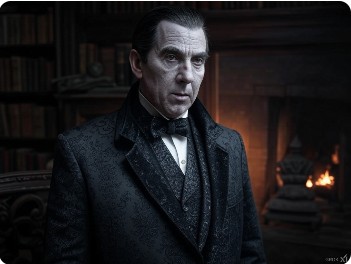
Source: London Library and Stoker’s Study Books, Dracula. Graphic: Dracula, Grok 3.

Alien Proof

We are an advanced species; we’ve learned how to blend.” — Ra, Stargate (1994)

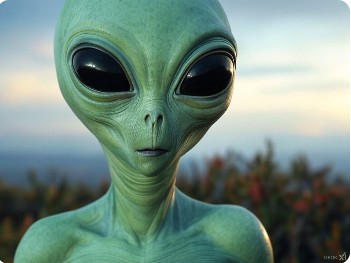
Where are the aliens? UFOs, Area 51, aliens—oh my! It’s a swirling bucket of murky fun, brimming with conspiracies, starry-night tales, and probing delights. What’s real? What’s surreal? What counts as proof of life beyond Earth? There’s a flood of chatter out there—grainy videos, “as God is my witness” accounts—but sifting it for substance is like panning for gold in a litterbox.

Speculation about UFOs and Area 51 is a roaring mix of rumors, secrecy, and sci-fi vibes. Take the 1947 Roswell crash: the U.S. military first claimed they’d recovered a “flying disc,” only to pivot hours later, insisting it was just a weather balloon. The rancher who found it, Mac Brazel, described a sprawl of tinfoil, rubber, and sticks—hardly spaceship material. Yet alternate theories snowballed, spinning every extraterrestrial possibility into gospel. Alien wreckage, bodies, anti-gravity tech, even “element 115” (later synthesized by Russia as moscovium)—it’s all been tossed into the pot. Bob Lazar, since 1989, has been the loudest voice pushing these wild claims, though he’s got little beyond his word to prop them up.

More recently, posts on X have revived whispers of an egg-shaped craft allegedly hauled to Area 51 in the ‘80s. A supposed witness linked to EG&G—a firm founded by three MIT grads with deep ties to classified projects, including Area 51—claimed it was so advanced they couldn’t cut it open or X-ray it, hinting at extraterrestrial origins. This comes secondhand, under oath, but there’s no photos, no artifacts—just testimony.

What the government has declassified carries weight but lacks dazzle. The CIA’s 2013 Area 51 release confirmed it as a test site for spy planes like the U-2 and A-12 Oxcart, likely explaining many ‘50s and ‘60s UFO sightings. In 2017, the Pentagon’s Advanced Aerospace Threat Identification Program (AATIP) fessed up to studying UFOs—or UAPs, to dodge the tinfoil-hat vibe. Leaked Navy videos, like the 2004 Tic Tac encounter, show objects defying known tech: no visible propulsion, jaw-dropping acceleration. The 2021 UAP report to Congress didn’t shout “aliens” but didn’t slam the door either—144 cases, one pinned as a balloon, the rest labeled “we don’t know.”

So, where’s the slam-dunk proof of aliens? Not much holds up under a bright Tesla LED. Lazar’s stories are big on panache and spirit, short on bones. Government reports and videos tease the imagination, but never-ending psyops muddy the waters, and nothing crosses the finish line. We’re left with 90% noise—mental candy, heavy on sugar, light on meat. Until ET shakes your hand, it’s probably best to treat the evidence as entertainment.

Source and Graphic: Grok 3.

Closer to Zero

“The answer to the ultimate question of life, the universe, and everything is 42” Douglas Adams.

But to the question “Are we alone?”—the answer leans towards likely,”  ElsBob

In a recent systems-thinking thought experiment, researchers from Germany and the U.S. revisited the statistical “Hard Steps” model, originally proposed by Brandon Carter in 1983, which aimed to estimate the probability of intelligent life emerging. Carter’s model focused on rare biological milestones—such as photosynthesis and multicellularity—concluding that intelligent life should be exceedingly rare due to the improbability of these “hard steps.” 

In a February 2025 paper, Mills et al. propose a tweak to this framework. Rather than life’s progression depending on a handful of unlikely biological breakthroughs, they suggest Earth’s environmental evolution—marked by the presence of water, organic compounds, oxygen, and geochemical shifts—created a more gradual pathway toward complexity. They argue that these conditions didn’t so much lower the odds of each step but reframed life’s development as a cumulative process, softening the gauntlet of improbable hurdles envisioned by Carter. 

Is this new? Not entirely. The idea that life’s journey—from planetary formation to advanced neural systems, language, and sociocultural structures—unfolded as a process has roots in the 1950s, with pioneers like Urey and Miller. What’s novel in Mills et al.’s work is their integration of geological timelines and Bayesian reasoning to qualitatively soften the perceived improbability of life’s emergence, rather than delivering a fully quantitative overhaul of the Hard Steps model. Where Carter’s framework likened intelligent life to finding a unicorn, this tweak nudges it from “highly improbable” to “slightly less than highly improbable.” 

Now, the fun part—calculating the odds of a planet fostering life advanced enough for Alan Turing to deem it intelligent. 

The “witch’s cauldron” of variables for simple life might include (though not exhaustively): a planet in the habitable zone, liquid water, organic molecules, self-replicating systems, protocell formation, anaerobic metabolism, photosynthesis, aerobic respiration, multicellularity, geochemical cycles, plate tectonics, ocean currents, atmospheric dynamics, natural radiation, planetary stability, appropriate size and gravity, and a protective magnetic field—plus, perhaps, a partridge in a pear tree. Estimating these probabilities is speculative, but let’s assume a rough combined probability for simple life emerging on a suitable planet. Using reasonable constraints, Grok 3 might estimate this at approximately 1 in 1 billion (10⁻⁹). 

The leap to sentient, intelligent life adds further layers: advanced neural systems, social organization, cultural evolution, time, and a dash of random chance. These additional factors could reduce the odds by another factor of 1,000, shifting the probability to between 1 in 1 trillion (10⁻¹²) and 1 in 1 quadrillion (10⁻¹⁵). These are back-of-the-envelope figures, grounded in the spirit of the thought experiment rather than precise data. 

To make these abstract numbers relatable, let’s scale them to the universe and our galaxy. Current estimates suggest the observable universe contains roughly 100 billion galaxies (10¹¹), each with an average of 100 million stars (10⁸). Assuming 3 planets per star (a conservative guess based on exoplanet studies), that yields approximately 3 × 10¹⁹ planets—30 quintillion—across the universe. In the Milky Way, with 100 billion stars (10¹¹), we might estimate 300 billion planets (3 × 10¹¹). 

Applying the probabilities: 

Simple life in the universe: At 1 in 1 billion (10⁻⁹), roughly 3 × 10¹⁰ planets—30 billion—might host simple life. 

Intelligent life in the universe: At 1 in 1 trillion (10⁻¹²) to 1 in 1 quadrillion (10⁻¹⁵), between 30 million (3 × 10⁷) and 30,000 (3 × 10⁴) planets might harbor intelligent life. 

Simple life in the Milky Way: At 1 in 1 billion (10⁻⁹), about 300 planets (3 × 10²) could sustain simple life. 

Intelligent life in the Milky Way: At 1 in 1 trillion (10⁻¹²) to 1 in 1 quadrillion (10⁻¹⁵), the odds drop to 0.3 (3 × 10⁻¹) to 0.0003 (3 × 10⁻⁴) planets—statistically less than 1.

Across the vast universe, intelligent life seems plausible on millions or thousands of planets, depending on how pessimistic the odds. On a galactic scale, though one planet with intelligent life is statistically improbable meaning that Earth is likely alone in the Milky Way as far as sentient beings are concerned.  Still, these numbers remain speculative, blending science with educated guesswork—and a touch of cosmic whimsy.

Source: …Evolution of Intelligent Life, Mills, et al, Science Advances 2025. Graphic: Grok 3 Drawn DNA.
The First English Wine Auction

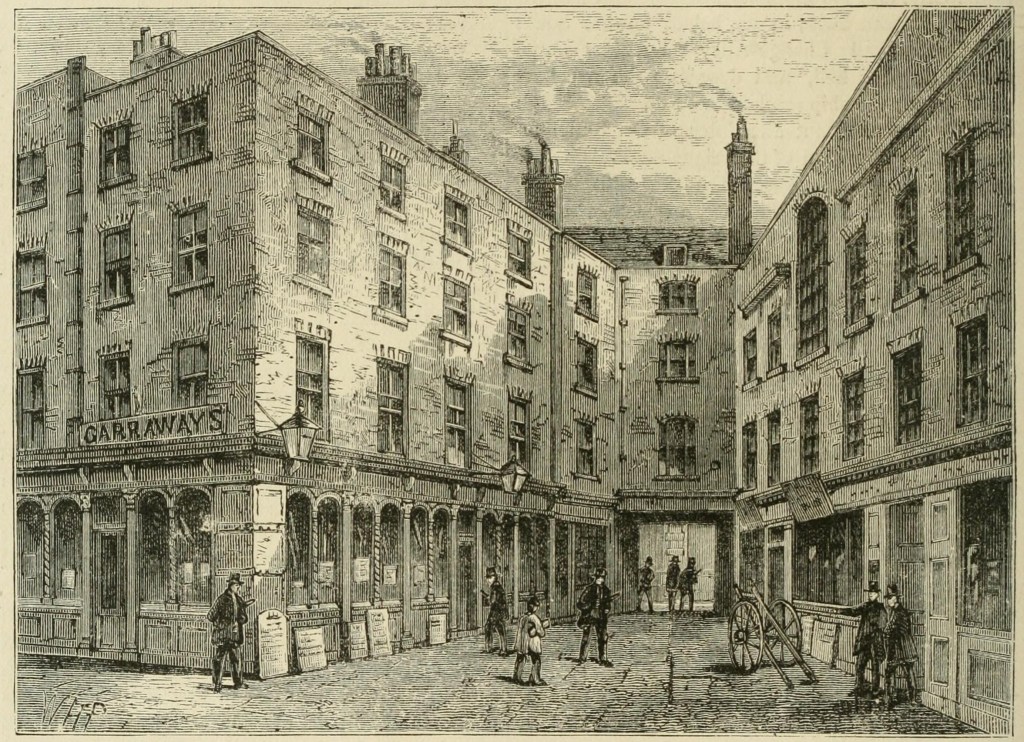
On 20 February 1673, London’s Garraway’s Coffee House, located just north of London Bridge and the Tower of London, held the first recorded wine auction in England. Instead of the traditional “going, going, gone” and a bang of a gavel method, this auction was conducted “to the candle.” In this form of bidding, participants could place bids until a one-inch candle burned out, which typically took only a minute or two. The purpose of this method was to create an unpredictable end time, preventing last-second bids and encouraging bidders to make their best offers early.

London coffee houses in general, and Garraway’s in particular, served as trading houses for commodities and shares. At Garraway’s, tea merchants and trading shares in companies associated with South Sea trade were the main order of business. All that remains today of the coffee house is a plaque informing the public that people of quality frequented this area.

Trivia: Garraway’s Coffee House appears in at least two of Charles Dickens’ novels: The Pickwick Papers and Little Dorrit. In Chapter 37 of The Pickwick Papers, Samuel Pickwick meets his lawyer, Mr. Serjeant Snubbin, at Garraway’s to discuss his case, where he is being sued by his landlady for breach of promise. The opposing lawyer for the landlady is the theatrical blowhard, Mr. Serjeant Buzfuz. Dickens remains the absolute master of character names. In Chapter 21 of Little Dorrit, Arthur Clennam visits “wharves, docks, the Custom House, Garraway’s Coffee House, and the Jerusalem Coffee House” as he attempts to piece together his family’s business and financial affairs.

Source: This Day in Wine History. Novels of Dickens. Wikipedia. Graphic: Photo of Garraway’s Coffee House, 1873. Public Domain.

A Poke in the Eye

A Trip to the Moon (Le Voyage dans la Lune): Astronomers in wizard costumes and pointy hats take an artillery shell rocket safari to the moon, discovering mushrooms and surly aliens.

The 1902 film, inspired by Jules Verne and H.G. Wells’ moon novels among other artistic works, was Georges Méliès’ masterpiece. It incorporated every technique that he could conjure up, including splicing in instant scene changes, fade-ins and fade-outs, tracking shots, and—way ahead of his time—color.

Color was hand-painted onto the film by 200 women, producing up to 60 copies of his various films. A hand-colored version of the film was discovered in 1993 and turned over to the Filmoteca de Catalunya in Barcelona. Although in poor condition, the restoration was completed in 2011 and shown at Cannes in the same year.

Trivia: Although confirmation sources are sparse, Méliès introduced another innovation into the marketing side of movies, which in today’s world of DVDs and streaming seems commonplace: selling copies directly to consumers. He charged up to 1,000 francs (approximately $193 US) for a colorized copy of his films.

Genre: Adventure, Fantasy, Sci-Fi

Directed by: George Melies

Screenplay by: George Melies

Music by: Added Live during Showings. Varied by Location.

Cast: George Melies, Bleuette Bernon, Francois Lallement

Film Location: Montreuil, France

ElsBob: 9.0/10

IMDb: 8.1/10

Rotten Tomatoes Critics: 100%

Rotten Tomatoes Popcornmeter: 90%

Metacritic Metascore: -%

Metacritic User Score: -/10

Theaters: 1 September 1902

Runtime: ~15 minutes at 15 frames per minute        

Budget: 10,000 francs (~$2000 US)

Source: Scifist.com, Rotten Tomatoes, IMDb. Graphic: A Trip to the Moon Trailer.