Heavy

Mission of Gravity

By Hal Clement

Illustrations: Vincent Di Fate

Easton Press

Copyright: © 1987

Original Publication Date: 1954

AmazonPicture

Di Fate Biography:

FootNoteA

Vincent Di Fate, born 1945 in Yonkers, is a New Yorker and American artist known for his depictions of science fiction, fantasy, and realistic space art. He has an MA from Syracuse University.

People Magazine noted the Di Fate is, “one of the top illustrators of science fiction…” His specialty is imaging technologies and environments in the nether regions of space and the universe. His clients include NASA, IBM, Scientific American, and The National Geographic Society. James Lizowski, Omni Magazine critic, noted that Di Fate, “combines the skills of a masterful painter with the fierce demand of an uncompromising artist to create visions of the future that are precise, powerful, and dazzling to the eye“. 

His numerous awards include the: Hugo, Sklark, Lensman, Chesley, and Rondo Awards, among others for illustration of science fiction and fantasy subjects. He was inducted into the Science Fiction Hall of Fame in 2011 and the Illustrator’s Hall of Fame in 2019. He has consulted for MCA/Universal, 20th Century Fox, Walt Disney, MGM/United Artists.

Di Fate has also written three books and is currently working on his fourth. His second book Infinite Worlds was the first comprehensive history of science fiction art in America. Listed below are some of the books of fiction he has illustrated. Additionally, he has illustrated hundreds of sci-fi and fantasy book covers in his four decades as an artist.

Di Fate Book Illustrations (Partial):

  • 2001: A Space Odyssey by Arthur C. Clarke
  • Prelude to Foundation by Isaac Asimov
  • The Demolished Man by Alfred Bester
  • The Fabulous Riverboat by Philip José Farmer
  • The Dark Design by Philip José Farmer
  • The Magic Labyrinth by Philip José Farmer
  • The World of Null-A by A.E. van Vogt
  • Rules of Engagement by Elizabeth Moon
  • The Time Traders by Andre Norton
  • The Godmakers by Frank Herbert

Di Fate Bibliography:

  • Di Fate’s Catalog of Science Fiction Hardware 1980
  • Infinite Worlds: The Fantastic Visions of Science Fiction Art 1997
  • The Science Fiction Art of Vincent Di Fate 2002

Clement Biography:

Human beings are prone to believe the things they wish were true.” – Hal Clement

Hal Clement, born in 1922, in Massachusetts, passing away in 2003, was an American science fiction writer and a leader of the hard science fiction subgenre. Hard science, as it was defined in 1957 by P. Schuyler Miller, is characterized by scientific accuracy and logic. Hard science fiction is strongly rooted to known physical laws in the natural universe. In an interview with “The Science Fiction Radio Show” in the early 1980s Clement said that he had “…trouble writing something unless, I can, more or less convince myself it might happen.” In the old days before computers, he was known to whip out his slide rule and run through the calculations to make sure his stories passed the law of physics test.
FootNoteB

Clement received a degree in astronomy from Harvard University in 1943, an M.Ed. from Boston University in 1946, and eventually an M.S. in chemistry from Simmons College in 1963. He was a B-24 Liberator, a heavy bomber, pilot during WWII, flying combat missions over Europe, finishing his Air Force career after the war in the Air Force Reserve, retiring as a colonel. He taught astronomy and chemistry at the high school level in Massachusetts.

Clement while working towards his B.S. at Harvard wrote and published his first piece of science fiction, a short story called “Proof“. The story first appeared in a 1942 issue of Astounding Science edited by his mentor John W. Campbell. Campbell was known as the leader of the hard science wing of the science fiction genre which Clement admits affected his writing standards. Clement’s first three novels were Astounding Science serials under Campbell: Needle in 1950, Iceworld in 1953, and Mission of Gravity, his best-known novel, in 1954. Clement followed up Needle and Mission of Gravity with the sequels: Through the Eye of a Needle in 1978 and Star Light in 1971, respectively. He also wrote two additional short story sequels for Mission of Gravity: Lecture Demonstration in 1973 and Under in 2000.

In addition to his writing, Clement also painted astronomically oriented artworks under the name George Richard. In 1998, he was inducted into the Science Fiction and Fantasy Hall of Fame and was named the 17th SFWA Grand Master by the Science Fiction and Fantasy Writers of America in 1999.

Hal Clement wrote over 120 novels, novellas, short stories, and collections. Below is a listing of just his novels.

Clement Bibliography (Novels Only, Shorter Fiction not Listed):

  • Needle 1950
  • Iceworld 1953
  • Mission of Gravity 1954
  • The Ranger Boys in Space 1956
  • Cycle of Fire 1957
  • Close to Critical 1958
  • Natives of Space 1965
  • Star Light 1971
  • Left of Africa 1976
  • Through the Eye of a Needle 1978
  • The Nitrogen Fix 1980
  • Intuit 1987
  • Still River 1987
  • Fossil 1993
  • Half Life 1999
  • The Essential Hal Clement, Volume 1: Trio for Slide Rule and Typewriter 2007
  • The Essential Hal Clement, Volume 3: Variations on a Theme by Sir Isaac Newton 2007
  • Heavy Planet 2002
  • Noise 2003
  • Hal Clement SF Gateway Omnibus 2014

Mission of Gravity:

Mission of Gravity was first published in serialized form in The Astounding Science Fiction Anthology of 1953 with the hardcover coming out in 1954 followed by the paperback in 1958.

The story takes place on the planet Mesklin, an object thought to be in the 61 Cygni system, eleven light years from Earth. Mesklin is a super-giant bowl-shaped planet, flattened at the poles, an oblate spheroid, with an extreme rotation that allows for 18-minute days or approximately 9 minutes of daylight. The high spin rate creates gravity that equals about 3g at the equator and 700g at the poles. Clement eventually re-calculated the gravity over the planet and changed the polar regions to 200g. For comparison purposes the Sun has a gravity of 28g or 28 times that of Earth.

Earth has sent a probe to Mesklin to study its extreme gravity and other matters of value, but it became stranded in the high gravity areas of a pole ruling out a rescue by a human team. Earth wants to recover the probe at all costs to learn what secrets it contains.

The planet is populated by an intelligent species of centipedes that come in assorted sizes, but the ones be-friended by the Earth visitors are about three feet long. An Earth spacemen, Charles Lackland travels to the equator of the planet where he can just manage the 3g environment and meets Barlennan a captain of a sailing raft named the Bree. The Bree and its crew are on a trading voyage in the equatorial areas making a profit by bartering goods from isolated populations all over the planet. After Barlennan learns English, a deal is arranged for him and his crew to retrieve the probe at the poles and return it to the equator where the humans can pick it up. So begins the centipedes’ journey to the pole.

Literary Criticism:

As with all science fiction, Mission of Gravity suffers from futuristic technology that outdates itself in a few years. A quaint process in mapping the surface of Mesklin involves taking a series of high altitude photographs, displaying them of photo paper and trying to put them all together like a giant jig-saw puzzle. No GPS coordinates, no digital, just 1950 Earth tech and methodology. Leaving that aside though, the story is well worth reading. The science as presented is sound, mostly, the story telling and plot is a page turner, and the characterization of the alien’s life-forms is plausible and interesting. It will be worth your time and at 223 pages a quick read.

References and Readings:

FootnoteA: Di Fate Cover Art for Ron Goulart Collection. Broke Down Engine. Macmillan. 1967

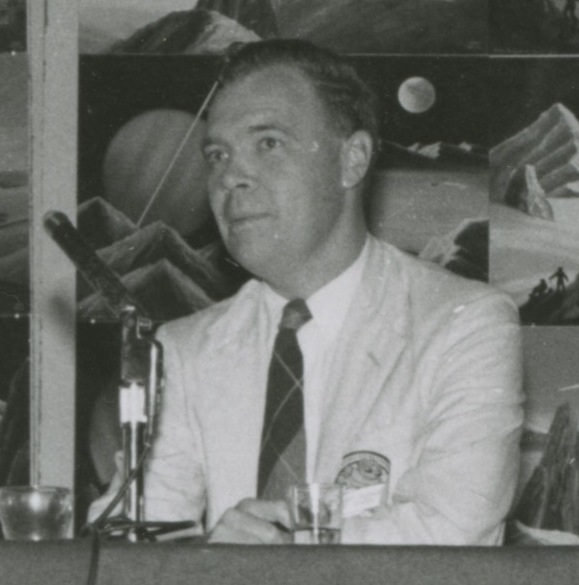
FootnoteB: Hal Clement at the 14th World Science Fiction Convention. Cropped from a Larger Photo. Public Domain. 1956
Exploration 21: MK–U Fame

FootnoteA

Lime and limpid green, a second scene
A fight between the blue you once knew
Floating down, the sound resounds
Around the icy waters underground

Pink Floyd – Astronomy Domine: Written by Syd Barrett – Piper at the Gates of Dawn – 1967

Astronomy Domine“, a Latin phrase meaning “An Astral Chant to the Lord” leads off Pink Floyd’s debut album: “Piper at the Gates of Dawn” containing the rhyming cadence of nonsense some of which are noted above. Many have attributed these lyrics to a psychedelic experience induced by LSD, but others say nay–you decide. Leaving that aside, Syd Barrett in 1968 was thrown out of the band that he helped create, reportedly due to his excessive use of psychedelics and mental illness, cause, and effect some would say. Barrett’s family denied that he was mentally ill only that he was occupying a point on the autism spectrum. Roger Waters, Floyd bassist, the world’s best-known antisemite and Red Chinese apologist, said Barrett was schizophrenic. David Gilmour, the band’s guitarist, believed that LSD may not have been the root cause of Barrett’s aberrant behavior but it likely was the catalyst. Barrett died in 2006 at the age of sixty, a painter, a gardener, a recluse.

MKUltra, as I discussed in a previous post concerning Ken Kesey’s novel “One Flew Over the Cuckoo’s Nest“, was a covert CIA designed, funded, and operated psy-op to brainwash and mentally torture subjects with the aim of controlling human behavior. The CIA used drugs, such as LSD, electroshocks, hypnosis, sensory deprivation, isolation, verbal abuse, sexual abuse, radiation, and other sadistic depravities to achieve their objectives. The operation officially ran from 1953 to 1963 or 1973 depending on source, but there is speculation that it continued well beyond the previously mentioned dates. Allegedly, all CIA documents related to MKUltra were destroyed in 1973 by the order of CIA Director Richard Helms. The operation was revealed to the public by the U.S. Senate Church Committee in 1975 with additional information coming from the Rockerfeller and Pike Committees run from the Senate and House of Representatives, respectively. The program consisted of 162 projects at 86 institutions including colleges, mental hospitals, prisons, and drug companies and employed at least 185 “researchers”. MKUltra was unethical and illegal, causing widespread human destruction and death among the thousands of unknowing subjects with little or no known repercussions or consequences for the instigators or managers of the program.

It is estimated that at least a thousand, likely more, a lot more, prostitutes’ and their clients, enlisted military, CIA and other government employees, drug company employees, terminal cancer patients, prisoners, college and university students, and the vulnerable were selected, some voluntarily, some not, for the experiments which frequently did not end well. Over 1100 soldiers in the U.S. Army alone were administered LSD; with some of their stories discussed below.

Using government-employed prostitutes, read that opening phrase again, unsuspecting men were lured to CIA safe houses where they were drugged with LSD and observed. George Hunter White, the federal agent in charge of this sub-program of MKUltra, known as Midnight Climax, is quoted as saying in a letter to the head of the program, Sidney Gottlieb, that his work was, “…fun, fun, fun…Where else could a red-blooded American boy lie, kill, cheat, steal, rape, and pillage with the sanction and blessing of the All-Highest? High morals and ethics were not a requirement for employment at the CIA.

The agency also targeted individuals who were considered enemies of or threats to the government, including foreign agents and dissidents. The subjects were detained and coerced into participating in the experiments. Robert Kennedy’s assassin Sirhan Sirhan’s lawyer discussed in open court that his client may have been the subject of a MKUltra experiment but offered no evidence as proof.

The CIA experimented on their own employees, military personnel, and other government workers without their consent or knowledge. Frank Olson, a CIA scientist, was murdered because of his concerns over the program.

Some individuals were aware that they were participating in MKUltra experiments and consented to be part of the research such as Ken Kelsey mentioned above. These volunteers often included military personnel, government employees, and civilians who were recruited for specific studies. The late 50s early 60s crowd of bohemians and hippies were full of willing participants to experiment with LSD. No coercion needed.

 As a outgrowth of Nazi war crimes during WWII, the Nuremberg Code was established in 1947 and is still considered a fundamental document in the ethics of medical research. The Nuremberg Code was only six years before the onset of the MKUltra experiments.

Below is a compilation of some of the more notorious, famous, and not-so-famous subjects of MKUltra that are in the public records.

  • Harold Blauer, a minor talent in the professional tennis circuit during the 1930s, managed to reach the “Round of 16” in the U.S. Professional Tennis Tournament at Forest Hills in 1935 but lost to the eventual winner, Bill Tilden. Later in life, due to symptoms of depression, Blauer checked into the New York State Psychiatric Institute in 1952, where he was diagnosed as a “pseudo-neurotic schizophrenic” which in modern terms is called “borderline personality disorder”. The doctors believed his condition was improving and scheduled him for release from the institute. Inexplicably the doctors began injecting Blauer with a derivative of mescaline, MDA, a psychedelic compound like LSD and psilocybin and a close cousin of MDMA, better known in the night clubs as Ecstasy. The drug was developed by the German company Merck in 1912. One month after checking into the Institute Blauer was dead. The treating doctors were treating him under a classified agreement with the U.S. Army Chemical Corps, a front for the CIA’s MKUltra project. The doctors have stated that they did not know what they were injecting into Blauer. The CIA’s front man at the Institute was Dr. Paul Hoch. Hoch later became head of mental hygiene in New York and a professor at Columbia University. In 1975 the government admitted to Blauer’s family that the mescaline derivative injections caused his death. In 1987, the government, after being sued for Blauer’s death paid out $700,000 to his family.
  • Whitey Bulger was a crime boss heading up the Winter Hill Gang in Somerville, Massachusetts, a suburb of Boston and an FBI informant snitching on the Patriarca crime family. Prior to his criminal career in Boston, he was arrested for robbing a bank in Rhode Island. He was incarcerated in an Atlanta Federal prison for this crime in 1956, becoming an inmate participant of MKUltra in return for a lighter sentence. He was told the experiment was focused on finding a cure for schizophrenia. While in prison he was given large doses of LSD almost every day for 15 months. He claims that his violent tendencies in later life were due to the drug. Even though he was a protected informant for the FBI he was finally apprehended in California in 2011 and sentenced to two consecutive life terms in 2013. He was premeditatively murdered within 7 minutes of arrival at the high security Hazelton Prison in West Virgina in 2018. Who ordered his murder remains unknown.
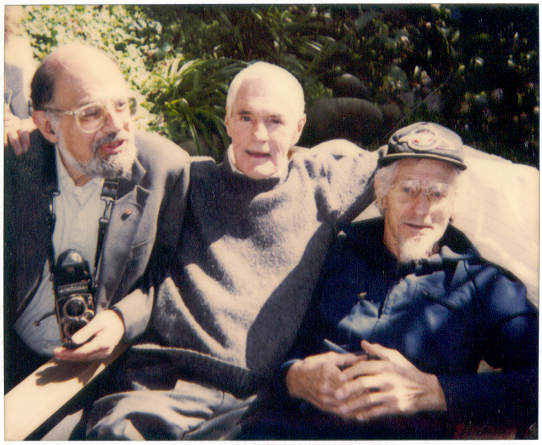
  • Allen Ginsberg, who died in 1997, was an American poet, writer, and core member of the Beat Generation best known for his 1956 poem of lament “Howl“, a literary reaction to a bad peyote trip. Ginsberg became a volunteer in the MKUltra in the 1950s, but it is not exactly clear whether he was fully informed of the nature or purpose of the LSD experiments. After discovering that the experiments were a CIA operation he wrote, “Am I, Allen Ginsberg, the product of one the CIA’s lamentable, ill-advised, or triumphantly successful experiments in mind control?” A dual head scratcher of a question framed by a poet.
FootnoteC
  • Robert Hunter was the lyricist for the Grateful Dead, joining the band in 1967 but never playing on stage, who went on to write many of the band’s most memorable songs including: “Ripple“, “Truckin“, and “Terrapin Station“. He also participated, and was paid, in MKUltra experiments with LSD, psilocybin, and mescaline at Stanford University. He reported that his experiences were creatively formative for him. He went to sing the praises of LSD throughout the land. “Black Peter“, “Dark Star“, and “China Cat Sunflower” were all songs that he wrote while under the influence of LSD. He died in 2019 at the age of 78 in California.
  • Dr. Robert Hyde is credited with being the first American to take LSD. The doctor was a psychiatrist at Boston Psychopathic Hospital, where he was persuaded by the Viennese doctor, Otto Kauders, to try and prescribe LSD to treat schizophrenia in his patients. In 1949 Hyde obtained LSD from Sandoz Chemicals, the company where LSD was discovered in 1938. After taking the drug he didn’t experience any psychosis, but his colleagues found his behavior strange. Hyde went on to accept CIA funding to test LSD on one hundred patients. This was the first of many LSD experiment in the U.S. Robert Hyde continued his experiments on unwitting patients at the CIA’s center in Rhode Island and later at the Vermont State Hospital. It was never clear whether Dr. Hyde fully understood the purposes of MKUltra.
  • Candy Jones, an American model, and radio host claimed that she was hypnotized and brainwashed by an MKUltra agent in 1960 who later employed her as a courier and spy. She claimed the experiments on her resulted in her having a split personality. Jones also claimed that Dr. Gilbert Jensen was her CIA handler who hypnotized her and drugged her to bring forward a secondary personality named Arlene. This secondary personality was supposedly used for various covert missions. She claimed that the CIA trained her in every aspect of covert action, including explosives, close combat with improvised weaponry, disguise, and communications. Her experience is speculative and has never been proven but it is a great plot which was used in the 2010 movie Salt. Angelina Jolie as Evelyn Salt plays a double-agent who is mind-controlled by remnants of the former USSR secret service. 
  • Ted Kaczynski was an American mathematician and domestic terrorist better known as the Unabomber. While earning his undergraduate degree at Harvard he volunteered, in 1959, for a psychological study run by Dr. Henry Murray, a CIA employee working on the MKUltra project. Kaczynski, in the study was subjected to intense interrogation that were, in his own words, “vehement, sweeping, and personally abusive.” The aim was to psychologically break the subject and explore the effects of severe stress on the human psyche. He later became a recluse, living in the backwoods of Montana, and a long-distance murderer, mailing bombs to people who advocated for modern technology, injuring twenty-three and killing three. From his cabin in Montana, he developed a nihilistic, anti-capitalist, anti-technology political philosophy, writing a manifesto that opposed industrialization and rejected modern left-wing politics. After an intense manhunt he was captured in 1996 and died in prison in 2023. As a post-script, Timothy Leary began his research, in 1960, on psychedelics while at Harvard. While there is no evidence that Leary knew or ever met Kaczynski at Harvard, it has been said that Dr. Murray supervised Leary’s research into psychedelics.
  • Ruth Kelly a singer and waitress at the Black Sheep Bar in San Francisco, was unknowingly given LSD before performing on stage by George H. White, a veteran of the US Bureau of Narcotics or one of his men. White found Kelley attractive but uninterested and resistant to his advances. She was able to finish her set but rushed off to the hospital immediately afterward and wasn’t released until the effects of the LSD wore off. White headed up a part of the MKULTRA program called Operation Midnight Climax, a program that used prostitutes who gave their clients LSD, all the while agents behind one-way mirrors observed the effects of the drug. A CIA investigator later wrote that “The LSD definitely took some effect during her act.” White claimed he was trying to recruit Kelly for Operation Midnight Climax, which may have been true, but he may have had other motives. What became of Ms. Kelly after her run in with White is lost to the streets of San Francisco.
  • Ken Kesey was an American novelist who wrote “One Flew Over the Cuckoo’s Nest“. After finishing college at the University of Oregon he moved to California and enrolled in Stanford to study creative writing from 1958 to 1961 while simultaneously settling into the counterculture lifestyle gripping the area and the nation. In 1959 he volunteered for the CIA’s LSD mind experiments being run under the code name MKUltra. These experiments were conducted at a VA hospital in Menlo Park, just northwest of Stanford. At the same time in 1959 he accepted a position as an attendant in the hospital’s psych ward, working there while tripping on LSD. He began writing “One Flew Over the Cuckoo’s Nest” in 1959 or 60 (various sources give different dates).
FootnoteD
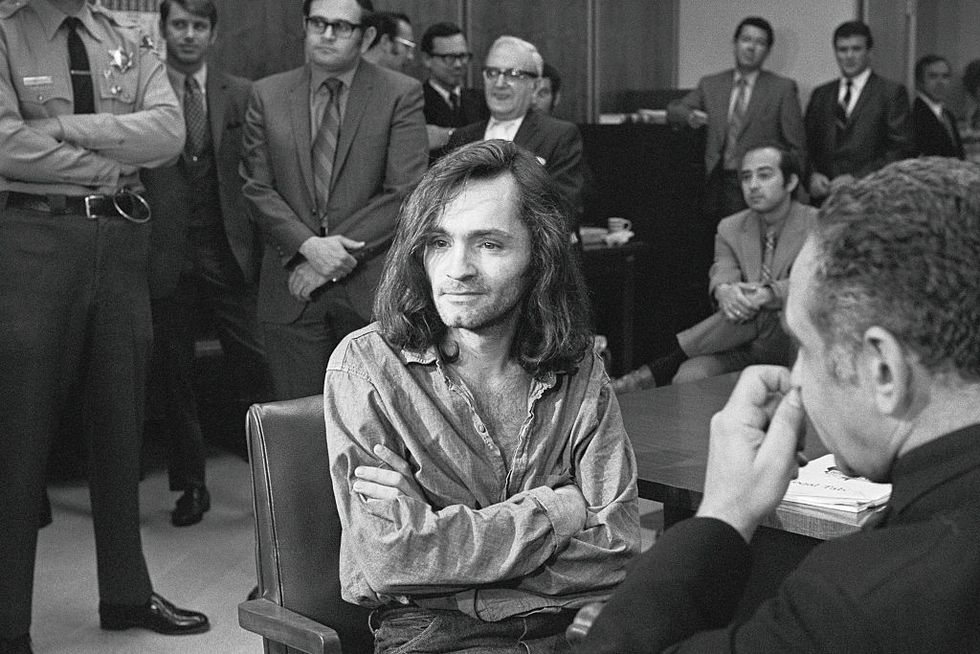
  • Charles Manson was a pimp, arsonist, thief, rapist, murder, and leader of the San Francisco Manson Family religious cult. He was born in Cincinnati, Ohio in 1934 to Kathleen Maddox, a 15- or 16-year-old prostitute and alcoholic. Manson took the last name of his mother’s first husband. Manson spent much of his teen years in juvenile reformatories and prison for theft and robbery. He was first sent to juvenile detention in 1947 which he promptly ran away from. From 1947 till 1967 Manson was sent to various prisons on various charges, eventually, at the age of thirty-two he was given his freedom. He had by that time spent sixteen years of his life behind bars. In prison he studied Scientology and continued with the practice for a brief period while he was in Los Angles after his release from prison. In 1967 he moved to San Francisco, collected a group of followers from the local street bohemians, and proclaimed himself a god. This group, known as Manson’s Family, was a communal religious cult who worshiped Manson and his teachings. In 1969, the Family carried out several notorious murders on Manson’s orders, including that of actress Sharon Tate, Roman Polanski’s wife. Manson was convicted of first-degree murder and conspiracy to commit murder in 1971. Manson died in prison in 2017 at the age of eighty-three, spending 62 years of his life locked up. If you discount his first 13 years of life, Manson was only a free man for 8 years in which he spent his non-incarcerated time almost entirely as a criminal and a con man. Whether Manson was part of the MKUltra experiments has always been highly controversial with little corroborating evidence to link him to the CIA experiments. Author Tom O’Neill explored the possibility but concluded that the theory was “far-out”, but he authored a book about it anyway. Some also insist that Manson and his followers were heavily into LSD which they obtained from the San Francisco Free Clinic, reportedly sourced through CIA connections. Manson was a troubled kid and thoroughly wacked-out street smart adult who had the ability to connect and schmooze with anyone. It is unlikely that the CIA could have made Manson any crazier than he already was.
  • Linda McDonald, a 25-year-old mother, was admitted to the Allan Memorial Institute in Montreal, Canada in 1963 for fatigue and depression, known today as post-natal depression, after the birth of her fifth child in five years. After 3 weeks of uneventful and normal evaluations, Ewen Cameron, a famous doctor with impecable credentials diagnosed Linda as a paranoid schizophrenic or possible manic depressive, better known today as bipolar disorder. Her husband was told that she would be institutionalized for the rest of her life if he didn’t agree to his “deep sleep” treatment, but Linda was not informed of the treatment plan, nor did she give her consent. Within a month she was comatose and subsequently spent 73 or 86 days in a barbiturate infused sleep. She was also subjected to 102 or 109 high doses of electroconvulsive treatments along with repetitious “depatterning” phrases continually playing under her pillow as she slept. At the end of the treatment her mind had been totally wiped clean, and to this day she remembers nothing of her life before leaving the clinic. She had been turned into an infant to the point her husband had to potty train her. When considering her yearly age, she starts from the day she left the clinic, her first 26 years do not exist to her. She tried to commit suicide twice the first two years away from the clinic. Ewen Cameron was a friend of Allen Dulles, head of the CIA, and his “Sleep Room” experiments were part of MKUltra. Fifty-five Canadian families are suing the government and the hospitals involved in MKUltra for monetary damages. The lawsuit was first filed in 2019 and continues to this day.
  • Frank Olson was an American bacteriologist and a biological warfare scientist who worked for the United States Army Biological Warfare Laboratories, and was an employee of the CIA. Olson was one of the few who knew the true nature of MKUltra and was against the project’s human experiment protocols. In a 1953 meeting in rural Maryland, during the early days of MKUltra, Olson was secretly dosed with LSD by his colleague and superior Sidney Gottlieb, head of the MKUltra program. Olson had a severe and traumatic reaction to the drug which continued for days. Nine days after being dosed, Olson plunged to his death from the window of the Hotel Statler in New York. The U.S. government first described his death as a suicide, and then as misadventure, while others alleged murder. In 1975 it was learned from the Rockefeller Commission that Olson was dosed with LSD without his knowledge. His family threatened to sue, and the government eventually agreed to a $750,000 settlement and an apology from President Gerald Ford. In 1994 Olson’s son had his father’s body exhumed to be buried next to his mother. The family after exhumation had a second autopsy performed. The team that examined the body concluded that Frank Olson was murdered before being thrown out of the hotel window. The CIA’s manual of assassination says the most efficient “accident”, in a simple assassination is a fall from seventy-five feet or more onto a solid surface. Frank Olson stayed on the 13th floor of the Hotel staler, approximately 130 feet above the surface. It is believed that Allen Dulles and Richard Helms were directly involved in Frank Olson’s death.
  • Wayne Ritchie, deputy US marshal, veteran of the Marine Corps, claims that he was unknowingly dosed while at a holiday party with other federal officers in December 1957. In a sworn deposition given as part of the lawsuit Ritchie later filed, Ira Feldman, a CIA agent involved in the MKUltra program, nonchalantly explained the manner in which he observed the people he had secretly drugged with LSD: “You just sit back away and let them worry, like this nitwit, Ritchie,” he said, acknowledging that Ritchie’s dosage was “a full head”. He said Ritchie was dosed because he “deserved to suffer.” Shortly after being exposed to LSD, Ritchie armed himself with his government-issued service revolvers and attempted to rob a bar in the Fillmore District. During the robbery attempt, he was knocked out by another customer, and arrested by police a brief time later. He pleaded guilty to attempted armed robbery and was sentenced to five years of probation and a fine of $500. 40 years after the incident, Ritchie learned of the CIA’s MKULtra program that covertly drugged people in the San Francisco area with LSD. He filed suit, which was dismissed, but the court acknowledged that it was quite possible that the CIA drugged Ritchie.
  • Jimmy Shaver, an airman at the Lackland Air Force Base in San Antonio, Texas, with no previous criminal record, was accused of the rape and murder of a 3-year-old girl, Chere Jo Horton on the night of 4 July 1954. When Shaver was found he was shirtless, covered in blood, and in a “trance-like” state.  He was arrested and interrogated, during which he didn’t recognize his wife and insisted that another man was responsible, claiming to have lost all memory of the incident. Eventually, Shaver signed a statement taking full responsibility, saying the evidence was overwhelming and that he must have committed the heinous crime. Shaver 4 years later was executed on his 33rd birthday for the rape and murder of Chere Jo Horton. In 2019 it was revealed that Shaver was unknowingly used by MKUltra as one of its subjects in mind control. 
  • James Stanley joined the U.S. Army when he was 15 years old and by the time he was twenty he had been promoted to master sergeant which in these modern times takes about 20 years for a private to get promoted to MSG. To say he had a promising career in the Army ahead of him would be an understatement. Then he volunteered to test gas masks in 1958 at Edgewood Arsenal, a chemical weapons facility. While testing the masks the drinking water provided to him was secretly laced with LSD. It has been speculated that the testing of gas masks was a ruse while observing his reaction to LSD the real purpose of the experiment. Stanley began experiencing significant negative effects after being given the LSD. He suffered from hallucinations, memory loss, incoherence, and a personality change. He had spells of uncontrolled violence that destroyed his family and likely impacted his career as a soldier. He left the Army in 1969 and his marriage was dissolved one year later. The testing he was subjected to was done under the MKUltra project. He did not learn that he was exposed to LSD until 1975, when the Army followed up on the experiment by contacting him. He then realized that his odd behavior and feelings of confusion were the result of chemical testing that he had not agreed to. He sued the Army for the testing but lost his case. According to the Supreme Court, it didn’t matter whether his allegations were true. He lacked standing to sue because military personnel can’t sue the government or their superiors for damages, no matter how severe or even unconstitutional they may be. Dissenting Justices Brennan and Marshall write, “…it is important to place the Government’s conduct in historical context. The medical trials at Nuremberg in 1947 deeply impressed upon the world that experimentation with unknowing human subjects is morally and legally unacceptable. The United States Military Tribunal established the Nuremberg Code as a standard against which to judge German scientists who experimented with human subjects. Its first principle was: “The voluntary consent of the human subject is absolutely essential.” In 1994, Congress passed a private claims bill to remedy the CIA’s wrongful treatment of Stanley. In 1996, an arbitration panel awarded Stanley $400,577, which was the maximum amount allowed under the bill, after a 2-1 vote. There is no public record of who the people on the arbitration panel were.

On 22 January 2024 the FDA (the Food and Drug Agency) finalized new rules relaxing the need for informed consent when experimenting on human subjects with drugs.

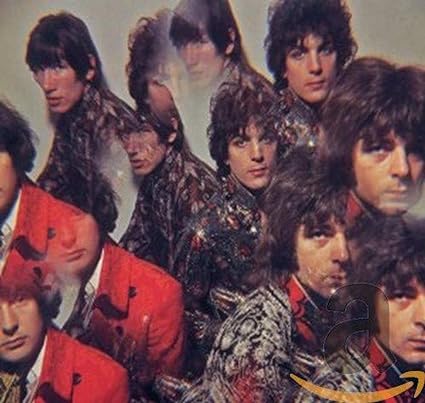
FootnoteA: Piper at the Gates of Dawn Album Cover. Pink Floyd. EMI Columbia. 1967

Footnote B: CIA official crest.

FootnoteC: Allen Ginsberg, Timothy Leary, and John C. Lilly. Photo by Philip H. Bailey. CC-By-SA 1991

FootnoteD: Charles Manson in a Courtroom During his Murder Trial. Getty Images. 1970

Apologetics

Eusebius: The Church History

By Eusebius (of Caesarea)

Translated by Paul L. Maier

Kregel Academic

Copyright: © 2007

Original Publication Dates: 313-326 AD

Original Title: Eusebius: Ecclesiastical History

AmazonPicture

Maier Biography:

Paul L. Maier, born 1930 in St. Louis, author, public speaker, and historian has written twenty-three adult and children, fiction and non-fiction, books about Christianity. He is the son of Walter A. Maier, founder, and speaker of The Lutheran Hour.

He graduated from Harvard and Concordia Seminary in St. Louis with additional studies in Heidelberg, Germany and Basel, Switzerland. He was the Seibert Professor of Ancient History at Western Michigan University until he retired in 2011.

In addition to his definitive translation of “Eusebius: The Church History“, his 1993 “Skeleton in God’s Closet” was a number one best seller in religious fiction, a thriller concerning the Resurrection of Jesus. He also co-wrote with Hank Hanegraaff in 2006 a rebuttal to Dan Brown’s “The Da Vinci Code“: “The Da Vinci Code: Fact or Fiction?

In addition to writing books Maier has produced six religious documentaries including the 2014 “The Week That Changed the World“, detailing the Holy Week before Jesus’s resurrection, discussing the key personalities, the politics, and the treachery that sealed Christ’s fate.

Maier Bibliography-Books and Documentaries:

  • A Man Spoke, A World Listened: The Story of Walter A. Maier 1963
  • Pontius Pilate 1968
  • First Christmas: The True and Unfamiliar Story in Words and Pictures 1971
  • First Easter: The True and Unfamiliar Story in Words and Pictures 1973
  • First Christians: Pentecost and the Spread of Christianity 1976
  • Flames of Rome 1981
  • The Best of Walter A. Maier 1981 (paperback)
  • Josephus, The Essential Writings 1988
  • In Fullness of Time 1991
  • A Skeleton in God’s Closet 1994
  • The Very First Christmas 1998
  • The New Complete Works of Josephus with William Whiston 1999
  • Eusebius: The Church History 1999
  • The Very First Easter 2000
  • More Than a Skeleton 2003
  • Caspar Schwenckfeld on the Person and Work of Christ: A Study of Schwenckfeldian Theology at Its Core 2004 (paperback)
  • Martin Luther a Man Who Changed the World 2004
  • The Da Vinci Code: Fact or Fiction? with Hank Hanegraaf 2006
  • The Real Story of Creation 2007
  • The Real Story of the Flood 2008
  • A Skeleton in Rome 2011
  • The Constantine Codex 2011
  • The Genuine Jesus 2021
  • Christianity: The First Three Centuries (Documentary) 2003
  • The Odyssey of St. Paul (Documentary) 2003
  • Jesus: Legend or Lord? (Documentary) 2003
  • How We Got the Bible (Documentary) 2009
  • Christianity and the Competition (Documentary) 2010
  • The Week that Changed the World (Documentary) 2011

Eusebius Biography:

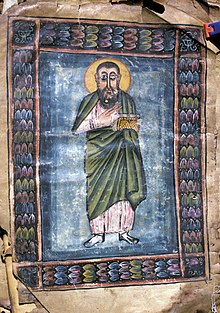
FootnoteA

“May I be an enemy to no one and the friend of what abides eternally. May I never quarrel with those nearest me and be reconciled quickly if I should. May I never plot evil against others, and if anyone plots evil against me, may I escape unharmed and without the need to hurt anyone else.” — Eusebius

Eusebius of Caesarea, also known as Eusebius Pamphili, was a historian, interpreter of scripture, and Christian apologist, born around 260-265 AD in Caesarea, where he gained prominence in the fourth century, before passing away around 339 AD. His early education was by the learned presbyter, and eventual saint, Pamphilus, the principle religious scholar of his generation.  Eusebius became bishop of Caesarea around 314 AD, shortly after Constantine became Roman Emperor, and remained in that position until his death in 339 AD. Eusebius became a significant figure in the theological controversies and politics of his day, becoming a, if not the leading spiritual advisor and confidant to Constantine.

Christians since the time of Christ were persecuted for their faith which came to a ghoulish crescendo under the Diocletian Edicts, also known as “The Edicts Against the Christians” of 303 AD. The edicts dissolved the Christians’ legal rights, compelled them to reject Jesus and to adhere to the local religious customs of paganism and polytheism. The edict saw the destruction of Christian scripture and churches along with the torture and execution of approximately 3500 church leaders and lay people including Eusebius’ teacher Pamphilus. The persecution ended with the Edict of Milian in 313 AD, decreed and signed by Constantine and Licinius proclaiming religious toleration within the empire.

FootnoteB

The edict gained the life-long gratitude of Eusebius culminating in the Christian bishop’s panegyric, “Life of Constantine“, in which the author details the emperor’s religious policies as well as a hagiographic account of Constantine’s life. Historians have described their relationship as complex, evolving over time. They have also stated that Eusebius may have been the power behind the throne or, as others have surmised, just an obsequious toady seeking protection from his church enemies. Regardless of the actual relationship it is agreed that Eusebius was Constantine’s spiritual and political advisor.

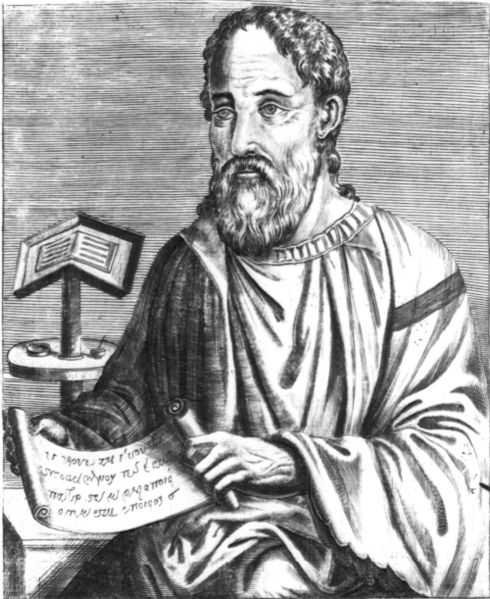
FootnoteC

Eusebius, through his bond with the emperor, helped structure the relationship between church and state, assisting in the creation of the Constantinian concept of a Christian empire, which had a considerable influence on the development of the early Christian Church and the Roman Empire, along with empires to come.

Constantine, to put down an early rebellion of church leaders, ordered three hundred bishops throughout the empire to meet at the First Council of Nicaea in 325 AD to resolve the controversy of Arianism, a concept that Christ was not divine but was created by God. Much of the Church believed that Christ was of the same substance, “consubstantiality“, as the Father and as such: divine. Eusebius, enjoying the emperor’s favor, sat next to him at the council and offered his own creed stating that Christ was begotten, not made, from the Father. The council, in the end, rejected Arianism and formulated the creed that is recited at every High Catholic Mass to this day. The council also set the time for Easter as the Sunday after the first full moon following the Spring equinox rather than occurring on the Sunday closest to Jewish Passover or on the Jewish Passover even it was not on a Sunday. Which explains why no one knowns when Easter occurs. Constantine was adamant about foregoing any Jewish practices in the honor of Jesus.

Eusebius is referred to as the “Father of Church History” due to his voluminous writings in the field including, as discussed below, his account of the first centuries of Christianity in his “Ecclesiastical History” or “Church History“. 

Church History (Ecclesiastical History):

FootnoteD

Church History ” or “Ecclesiastical History” is the only exigent work that chronicles the development of early Christianity and its Church from the birth of Christ on into the fourth century. Eusebius’s account, written in Koiné Greek, lingua franca for the Mediterranean area from fourth century BC to fourth century AD, provides a chronological narrative, using the succession of Roman Emperors as a linear timeline, of the early Christian Church. Eusebius, with his access to the Theological Library of Caesarea, incorporated many church documents, acts of the martyrs, letters, and extracts from earlier Christian writings into his work, many which no longer exists. The “Church History” covers the succession of Church bishops, the history of Christian teachers especially Origen, the history of the many church heresies and conflicts, and Christianity’s relationships with Romans, pagans, and Jews. Despite accusations that “Church History” is more a defense of Christianity, an apologetic and hagiography, than a history, Eusebius’s work remains a valuable source for understanding early Christian history.

Below are the Maier’s chapter listings, brief descriptions, and Roman Emperors during the historical period covered.

  • Book I: The Person and Work of Christ: Eusebius on Christ. Augustus to Tiberius.
  • Book II: The Apostles: Eusebius on the Apostles. Tiberius to Nero.
  • Book III: Missions and Persecutions: Formation of the New Testament. Galba to Trajan.
  • Book IV: Bishops, Writings, and Martyrdoms: Defenders and Defamers of the Faith. Trajan to Marcus Aurelius.
  • Book V: Western Heros, Eastern Heretics: Death at Lyons, Rome, and Alexandria. Marcus Aurelius to Septimius Severus.
  • Book VI: Origen and Atrocities at Alexandria: Life of Origen. Septimius Severus to Decius.
  • Book VII: Dionysius and Dissent: Church Life According to Dionysius. Gallus to Diocletian.
  • Book VIII: The Great Persecution: Edicts Against Christians. Diocletian to Galerius.
  • Book IX: The Great Deliverance: The End of Persecution? Maximin, Maxentius, and Constantine.
  • Book X: Constantine and Peace: Eusebius and Constantine. Constantine.

Literary Criticism:

In C.F. Cruse’s 1850 translation of “Ecclesiastical History” he states that, “…Eusebius was not without his beauties, but they were rarely scattered, that we can hardly allow him an eminent rank as a writer.” This is an understatement of the 19th century although it is a polite way to admit Eusebius was incapable of engaging his readers in any form other than pedantic verbosity. This is also an example that Cruse was not immune from obfuscating meaning in his written translations and commentary. His comment above simply stated that Eusebius rarely wrote with elegance and concision. Eusebius’ writing was dense, confusing, dogmatic, and sometimes incomprehensible. Eusebius’ writing compares favorably, snark intended, with Edward Gibbons’ “The Decline and Fall of the Roman Empire” whose erudite, verbose, and opaque style has managed to confuse his readers for two plus centuries now, but for some reason no one seems to mind, except me. Gibbons disliked, immensely, Eusebius’ “Ecclesiastical History” stating that it was full of lies and falsehoods which is an exceedingly difficult position to support due to Eusebius’ excessive use, usually in quotes, of original source material. Gibbons blamed the fall of the Roman Empire on the rise of Christianity, a problematic thesis considering Christianity was the least of the Empires worries. Unchecked immigration and a corrupt governing class were much bigger problems than a few Christians asking to be left alone to worship their God in peace.

Paul L. Maier’s translation of “Church History” is a masterful improvement over C.F. Cruse’s 1850 attempt to make Eusebius readable. Cruse strove to accurately translate Eusebius with the result of burdening his readers with difficult and cluttered phrasing. Maier saves his readers by reducing Eusebius’s lengthy sentences, dense language, and abrupt subject changes to intelligible bites of prose that are readable, understandable, and usable. An example of Maier taking difficult sentences and distilling them into something cogent can be seen in the two example sentences below. The first sentence comes from Loeb’s edition of “Ecclesiastical History“, which is a very faithful rendition of Eusebius’ writing, followed by Maier’s translated version. Loeb: “I have already summarized the material in the chronological tables which I have drawn up, but nevertheless in the present work I have undertaken to give the narrative in full detail.” Maier: “Previously I summarized this material in my Chronicle but in the present work I deal with it in the fullest detail.” The first sentence takes a few readings to comprehend the meaning. Maier allows for instant comprehension.

Ecclesiastical History” or “Church History” is an important work in understanding the beginnings of Christianity and the governing hierarchy that was built up over the centuries. This is not a long book, less than four hundred pages, but it does take dedication to the task of reading and understanding it. In the end it is worth the effort as a little history is always useful if not enlightening.

References and Readings:

FootnoteA: Eusebius preceding his Eusebian Canons in the Garima Gospels. Michael Gervers. 2004. Public Domain

FootnoteB: The Christian Martyrs’ Last Prayer. Jean-Leon Gerome. Walters Art Museum. 1863-1883. Public Domain

FootnoteC: Eusebius of Caesarea. Unknown Source and Date. Public Domain

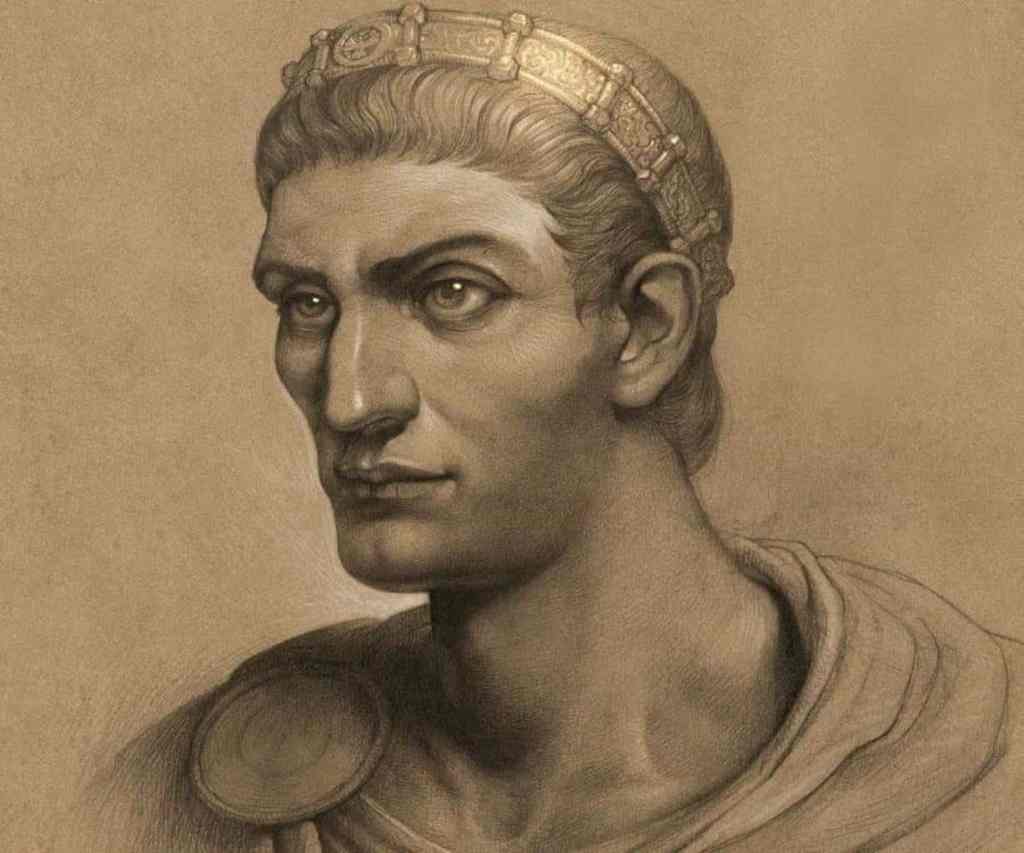
FootnoteD: Constantine the Great. Unknown Source and Date. Public Domain