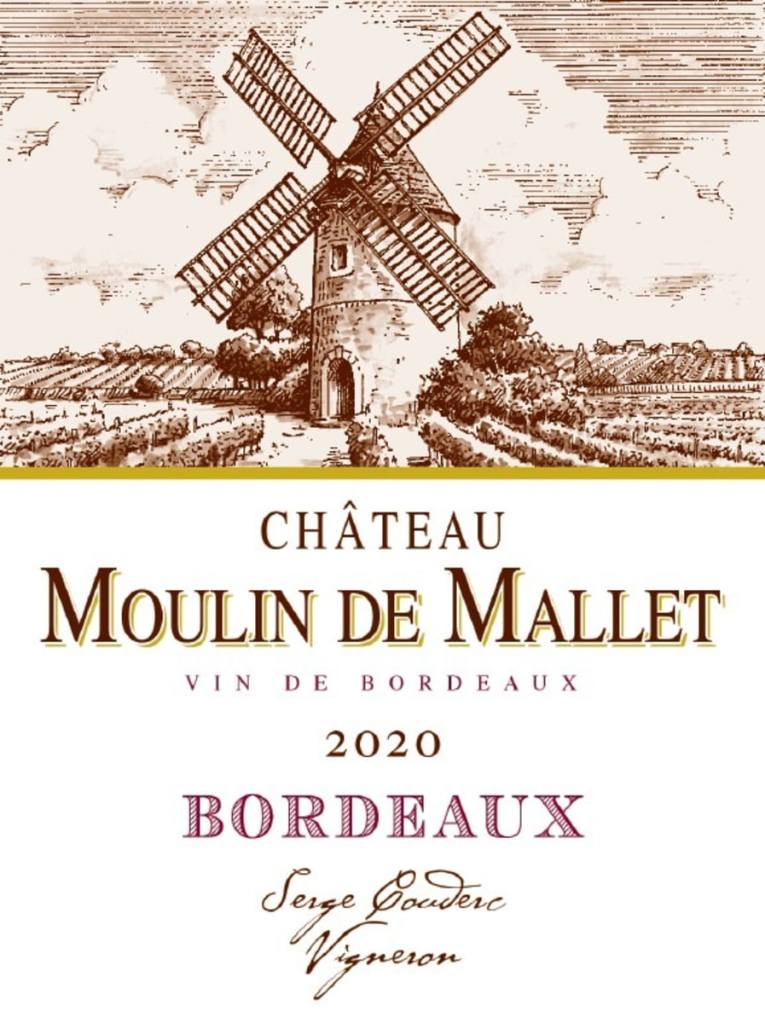
Chateau Moulin de Mallet 2020

Bordeaux Red Blends from Bordeaux, France

Merlot 90%, Cabernet Sauvignon 10%

Purchase Price: $12.98

Wine Enthusiast 90, ElsBob 86

ABV 14%

A deep garnet to deep ruby wine, with aromas of black fruits, medium bodied, strong tannins verging on overpowering and acidic.  Sub 90 wines always go better with spicy or tomato-based appetizers such as meatballs in a marinara sauce or aged cheeses such as cheddar, blue, or Gouda.

A good wine at an elevated price. I wouldn’t pay more than $8-9 for this wine. Currently the wine ranges from $12-15.

Trivia: In the 17th century, the Médoc, now home to legendary estates like Château Margaux and Château Latour, was a marshland, better known for corn than Cabernet. Dutch masters of hydraulic engineering and maritime trade drained the swamps, transforming them into arable land ideal for vineyards. Their aim was strategic rather than altruistic: to buy Bordeaux wine and sell it to the English at a modest profit, or a ludicrous one, if the winds blew favorably.

Windmills pumped water into manmade canals that emptied into the Gironde estuary, terraforming the landscape into a system of trade, terroir, tale, and endless lore. Though water management continues today, steam and electric pumps have long replaced the windmills. Most were dismantled or left to decay, their blades stilled by steam and electric pumps.

One survivor, the restored 18th-century Moulin de Lansac and another, depicted on the wine label shown above, Moulin de Mallet, were not water-pumpers but grain-grinders. Moulin in French translates to grain-grinder, turning wind into flour rather than marsh into vineyard. Still, it stands as a quiet admission of simpler times.

Dutch windmills turning. Pleistocene gravels emerging. French vines growing.

Like the circles that you find in the windmills of your mind “ by Noel Harrison, The Thomas Crown Affair, 1968.

Off the Beaten Path

Not every grape is born to be a Cab or Merlot. Not every vine survives the frozen winter’s cold. But, sometimes, you can find a remarkably obscure wine, and you get what you need. (With apologies to the Rolling Stones.)

Wine does not need a household name or worldwide cultivation to leave an impression. Some, from the cracks and corners off the main viticultural beat, fill a glass with a style that beckons notice and draws a grudging nod of respect. Grapes of lesser renown are legion but here we will bow to three worthy of a close encounter. The Amur grape straddling the banks of the thousand-mile Amur River at the intersection of Russia and China; the Saperavi grape of a thousand names, slightly exaggerated, from the rolling Asian hills of eastern Georgia; and the Marquette grape born in the land of a ten-thousand lakes from the test beds of U. of Minnesota.

The Amur grape (Vitis amurensis) is an ancient varietal dating back to pre-Pleistocene times, a survivor at the margins of glaciers and regions of permanent snow and ice. Evolution favored a rootstock capable of withstanding sub-zero winters and the ability to send forth fresh shoots with the swiftness of kudzu covering a Georgia (State) pine, bravely managing the brief, wet summers of floodplains and permafrost.

Its native lavender to deep purple berries yield a full-bodied red wine with subtle aromatics, hinting at dark fruits and recollections of the long-gone boreal forest. The tannins are firm, the acidity cleansing; sharp enough to demand a gentle, sweet companion. Amore mio of chocolate and Amur. I tried a Amur wine in Beijing many years ago and I found it a worthy experience.

Saperavi (Vitis vinifera) is a rare teinturier grape, its flesh and skin both red, born in the soils newly freed from the retreating glacial ice and snow of southeastern Georgia, nurtured in the cradle of winemaking and civilization. Descended from wild vines cultivated over 8,000 years ago, the spirits and life of Saperavi still retain their vitality in modern times accounting for 30% of its total wine production. Georgians once fermented this varietal in qvevri, (kveh-vree—rhymes with every) egg-shaped clay vessels, dating to the Bronze Age, buried underground, where time, earth, grape, and chemistry converge in a spirited dance of Bacchanalian delight. Though about 10% of Georgian wines still develop in clay, most now age in oak, trading ancestral custom for ease and balance.

Dark as ink in a deep well and high in acidity, Saperavi yields wines that are intense and age-worthy, layered with plum, blackberry, clove, and sometimes a wisp of rising smoke. They range from bone-dry to deliciously sweet, each bottle a tale of terroir and ancestry. Today, the heart of prehistoric craftsmanship still beats in chests of these rugged Caucasus descendants. This wine is hard to find in the U.S., but if you’re in Georgia, try it, just have something sweet nearby to balance its acidity.

Marquette (Vitis vinifera × Vitis riparia, etc.) is a cold-hardy hybrid born in Minnesota in 2006, now finding homes in Vermont and New York. With its ruby hue, medium body, and notes of cherry, blackcurrant, and spice, it evokes a northern acceptance of the land’s tempered gifts. It survives brutal winters, resists disease, and thrives in organic soils that traditional wine grapes often shun. Though oak-aging adds depth, even youthful Marquette wines hold their own. Already, a few notable bottlings hint at its potential. The 2021 La Garagista “In A Dark Country Sky a Whole-Cluster Marquette”, received a rating of 92, described as bold and structured: $43.

Together, this trio of wines form a brave departure from the pack. They are not overt crowd-pleasers, not yet anyway, but a small, short break from tradition can’t be all bad.

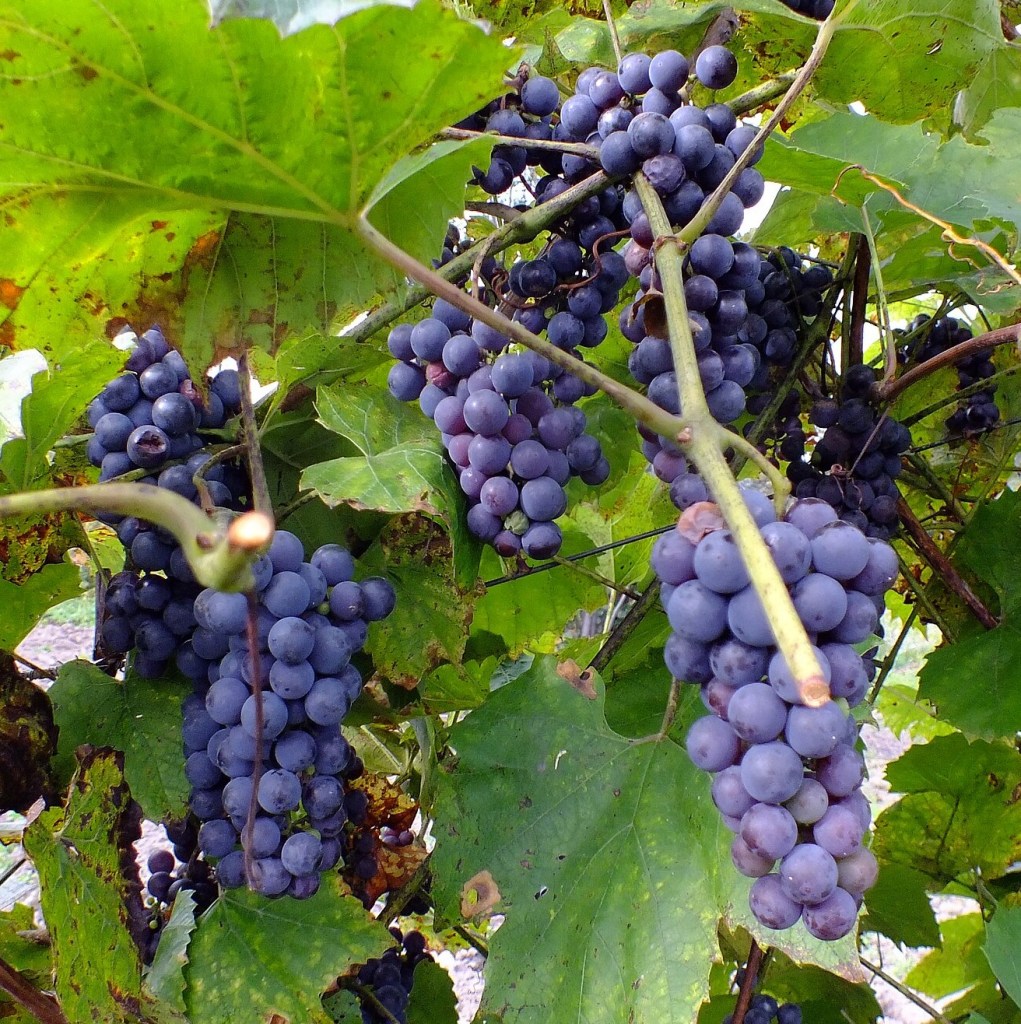
Graphic: Amur Grapes, Vitis amurensis, by Andshel, 2015. Public Domain.

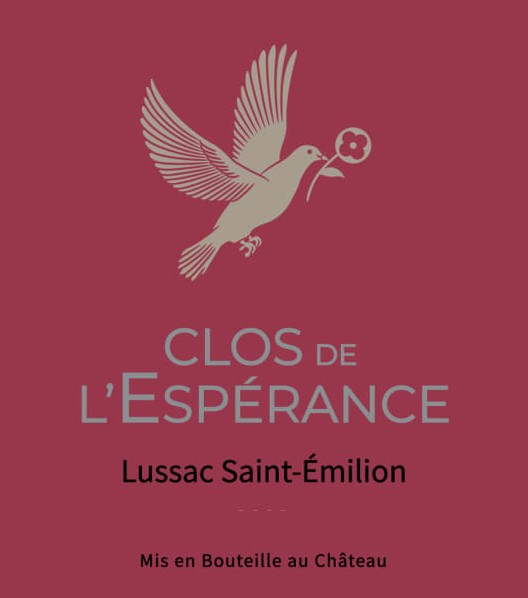
Cols de l’Esperance Lussac Saint-Emilion 2023

Bordeaux from Bordeaux, France

Merlot 100%

Purchase Price: $14.99

Vinous 92, James Suckling 92, Wilfred Wong 91, ElsBob 90

ABV 14.0%

A dark ruby to a dark purple wine with aromas of cherry and a touch of vanilla; medium bodied, smooth tannins, dry, with short to medium finish. This wine will pair well with ambrosial aromas such as lamb but stay clear of overly spicy foods.

An excellent fine wine at a great price. You should let this vintage sit for another year or two and hopefully it will develop a little more character. Cheers.

Note: The label does not explicitly mention that this wine is 100% Merlot, nor does it say it’s a Bordeaux. The retail shops refer to this wine as a Bordeaux and the only grape it mentions on its label is Merlot–the only varietal that the Clos de l’Esperance vineyard grows. Lussac-Saint-Emilion is a wine appellation located in the Bordeaux region and as such it can be called a Bordeaux.

World’s Best Vineyard 2024

The World’s Best Vineyards, known for curating exceptional wine tourism destinations, publishes an annual list of the top vineyards worldwide. Their selections highlight not only wine quality but also the visitor experience, including tastings, accommodations, and unique attractions at the vineyard and in its surrounding area.

For 2024, the title of the best vineyard in Europe, and the world, has been awarded to Bodegas de los Herederos del Marqués de Riscal, situated in the small but charming town of Elciego, Spain, at the southern edge of the Rioja Alavesa wine region in northern Spain.

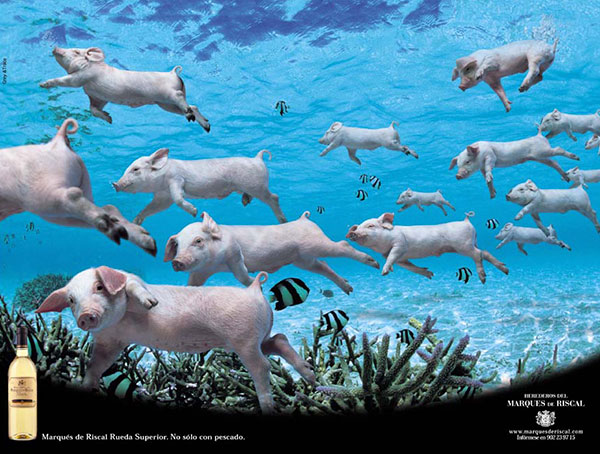
With a legacy spanning over 160 years, the vineyard and winery trace their origins back to 1858. Their first Rioja wine was produced just four years later, in 1862. For over a century, Marqués de Riscal crafted only red wines until they daringly broke with tradition and local reverence in 1972 by introducing their first white wine from Rueda. This leap into white winemaking is honored on their website with a whimsical and enigmatic photograph of the swimming pigs of the Bahamas. The choice of imagery invites unlimited speculation: pigs fly, pigs swim, white wine in Rioja, let your imagination freely wander.

In 2006, Marqués de Riscal expanded its offerings with the inauguration of the City of Wine, a striking complex featuring a hotel and entertainment facilities crowned by a “billowing titanium and stainless-steel roof;” designed by architect Frank Gehry. Visitors to the City of Wine can immerse themselves in the vineyard’s rich history and culture while enjoying luxurious relaxation at the Spa Vinothérapie Caudalie, fine dining at multiple restaurants, shopping at the wine boutique, or even celebrating their love with a wedding, perfect for couples old and young.

Oh, and enjoy the wines: Tempranillo, Tempranillo Blends, Tempranillo/Graciano, Garnacha/Viura, Verdejo, and Sauvignon Blanc. The Marques de Riscal Reserva Rioja’s (Tempranillo) various vintages are consistently rated in the 88-91 range and sell for about $25. Cheers.

Source: World’s Best Vineyards. Marques de Riscal Vineyard. Graphic: Swimming Pigs of the Bahamas.

Party On

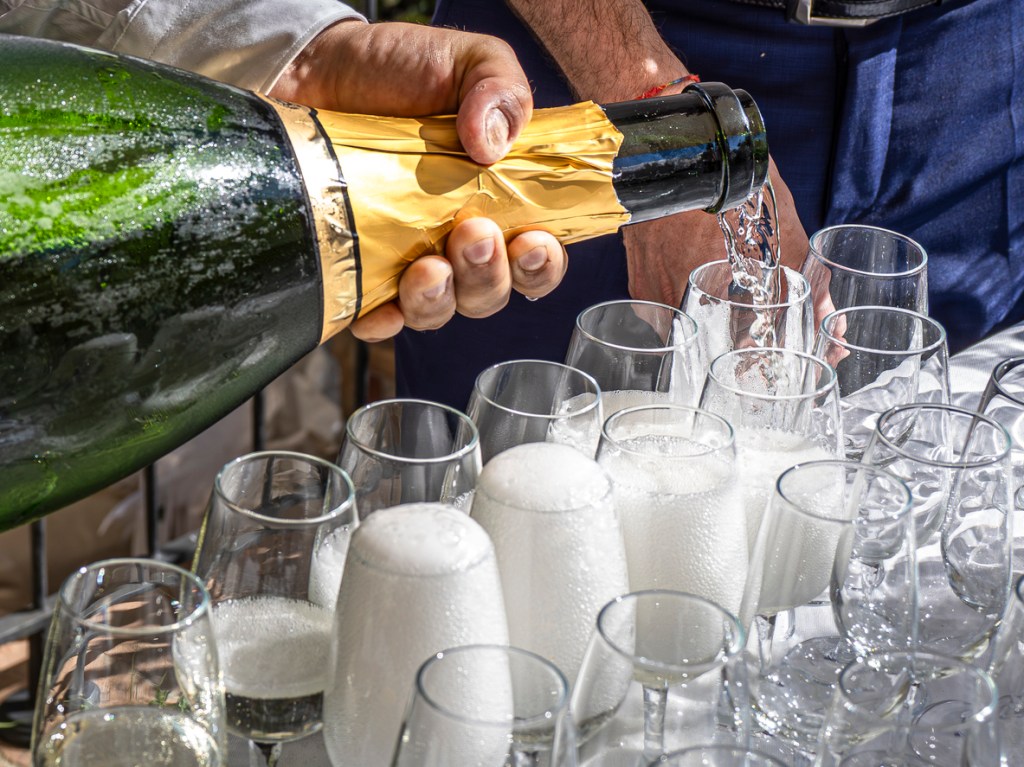
Wine bottle sizes have wonderfully creative and often biblical names although when or who named them is lost in the mists of time. Below is a listing of the common and uncommon ones:

  • Split or Piccolo: 187.5 mL or one-quarter of a standard 750 mL bottle. Usually used for sparkling wines. Piccolo means little or small in Italian and is the smallest standard wine bottle.
  • Half Bottle or Demi: 375 mL or a half of a standard 750 mL bottle. Demi is half or less than whole in Latin.
  • Standard: 750 mL This is the most common size for a wine bottle.
  • Magnum: 1.5 liters or two standard bottles. Magnum comes from the Latin meaning great or large.
  • Double Magnum: 3 liters or four standard bottles.
  • Jeroboam: 3 liters for Champagne and Burgundy bottles or 4.5-5 liters for Bordeaux bottles. The volume difference between the varietals is historically unclear, but Bordeaux wines continually seek grandeur at the expense of everyone else. Additionally, the Jeroboam for Bordeaux was 4.5 liters until 1978 when it switched over to the 5-liter size. Jeroboam was the first king of the northern Kingdom of Israel, from 931-910 BC, after the monarchy split into the ten tribes remaining in the north and Judah and Benjamin claiming south.
  • Rehoboam: 4.5 liters only used for sparkling wine. Rehoboam, son of Solomon, was the last king of a united Israel. The northern tribes started to rebel against Solomon before his death, leading Rehoboam to relocate to Judah shortly after his coronation over the united Israel. He ruled over Judah from 931-913 BC.
  • Methuselah: 6 liters used for sparkling wine or Burgundy. Methuselah was a biblical patriarch and the oldest person, 969 years, mentioned in the bible. He was the son on Enoch, father of Lamech, and grandfather to Noah. The name Methuselah, now synonymous with exceptional longevity, is traditionally believed to have meant “his death shall bring” during his lifetime. Tradition holds that he died in the same year as, but just prior to, the Great Flood, indicating that his life may have foreshadowed this event.
  • Imperial: 6 liters or eight standard bottles. The meaning is possibly related to the region’s historical emphasis on creating wines worth of royalty and at 6 liters capable of serving several blue bloods in one sitting.
  • Salmanazar: 9 liters equivalent to 12 standard bottles. The name likely refers to Shalmaneser V, an Assyrian king who reigned from 727 to 722 BCE. He is mentioned in the Bible for his conquest of Samaria and the exile of the northern Kingdom of Israel’s inhabitants. The dispersal of the inhabitants at this time became known as “Ten Lost Tribes”.
  • Balthazar: 12 liters is equivalent to 16 standard bottles. Balthazar is traditionally known as one of the Three Magi who visited the infant Jesus after his birth. According to Christian tradition, Balthazar was the King of Arabia and brought the gift of myrrh to Jesus, symbolizing suffering and death. Myrrh during ancient times was not only used incense and perfumes, but it was also associated with embalming and anointing the dead including Jews. It was gift that foreshadowed Christ’s end.
  • Nebuchadnezzar: 15 liters or 20 standard bottles. This monster, including wine and the bottle would weigh at least 40 lbs. Nebuchadnezzar II, ruling from 605-562 BC, was a Neo-Babylonian king. He is renowned for his military conquests, notably the destruction of Jerusalem and Solomon’s temple, and the exile of the Jewish people in 586 BC, marking the third major instance of Jewish exile in ancient history.

Birthplace of Wine

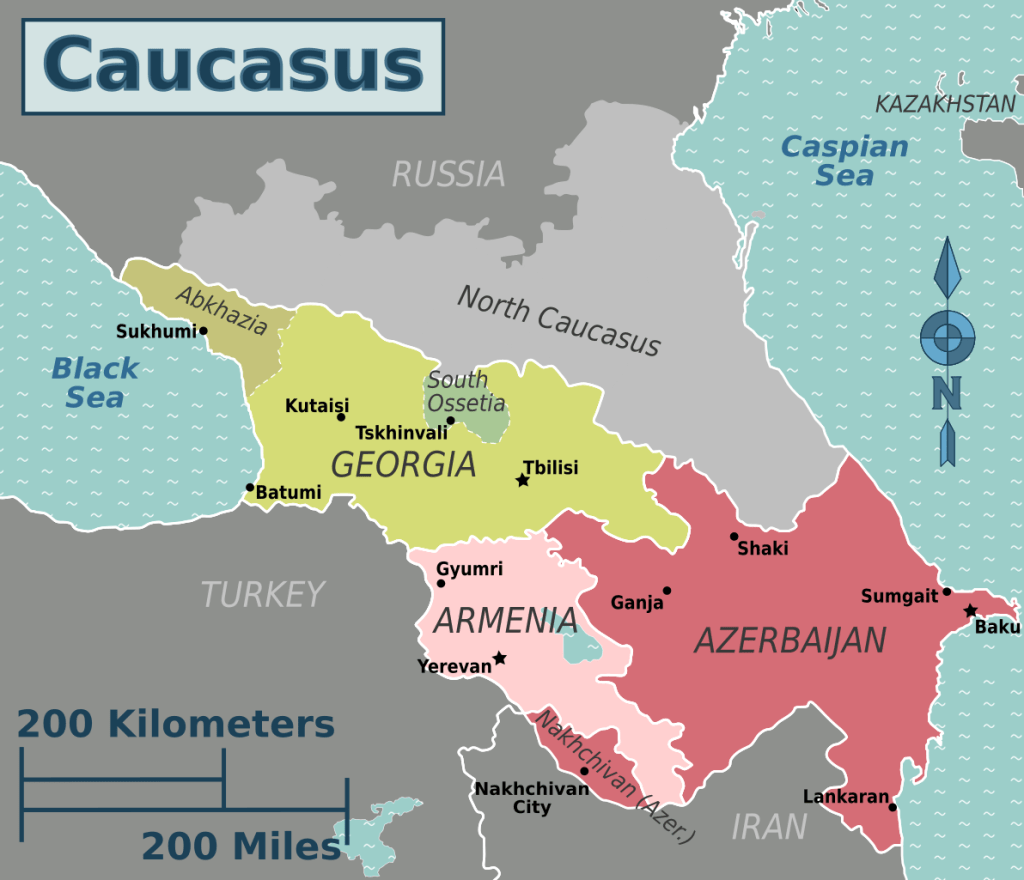
The modern grape (Vitis vinifera subsp. vinifera) is believed to have evolved from its wild ancestor, Vitis vinifera subsp. sylvestris, native to a broad region spanning the Caucasus Mountains (present-day Armenia, Georgia, and Azerbaijan) to the Mediterranean. This area offered ideal conditions for wild grapevines to flourish after the retreat of the Pleistocene glaciers, with its temperate climate and poor, rocky soils providing excellent drainage on rolling hills and mountainsides.

Archaeological evidence suggests that the domestication of grapes likely began in the South Caucasus region between 6,000 and 8,000 years ago. It’s possible that early farmers selectively cultivated wild grapevines, favoring those with the juiciest and most flavorful fruit, gradually developing them into the domesticated grape varieties familiar to us today.

In modern-day Georgia, approximately 30 miles (50 km) south of Tbilisi, evidence of grape wine production dates back to 6000–5800 BC. At the sites of Gadachrili Gora and Shulaveris Gora—Gora or hills are akin to the “tels” of the Levant—researchers have unearthed ancient pottery fragments containing chemical traces of wine, such as tartaric acid. These findings indicate that the inhabitants of this region were cultivating grapes and fermenting them into wine as early as 8,000 years ago.

This positions Georgia as a leading candidate for the “birthplace of wine,” with a merry winemaking tradition that has persisted through millennia.

Source: Oldest Evidence of Winemaking by Andrew Curry, National Geographic, 2017. Graphic: Caucasus Region by Peter Fitzgerald, modified by Travelpleb, Wikimedia Commons.

Red Wine Retail Prices

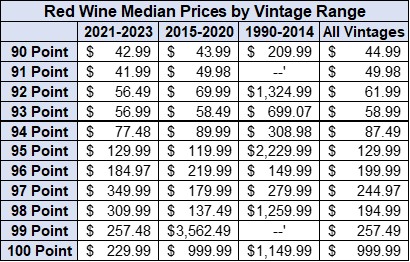
It is time for my yearly posting on red wine retail prices in the US. The ugly part of the post is that wine prices at the retail level have increased substantially; 5-550%, depending on vintage and rating since last year, with an average increase around 20%. The 2021-2023 vintage column for the posted spreadsheet is likely representative of reality while the other columns suffer from low sampling rates for some ratings.

A 90-point red of recent vintage has a medium price around $43. Last year that same quality wine went for about $28. These are medium values for a bottle of wine, half are less, half are more. My personal rule of thumb is that the medium value is the maximum one should pay.  Additionally, at the beginning of 2024 you could easily find a 90-point red for $10-15. You may be able to still find a 90-point red in that price range, but it will take some effort. Most 90-point reds now start at $20.

As with last year, Argentina, Chile, and Spain offer the best value in red wines while France and US tend to be priced 3 to 4 times above those from South America and the Iberian Peninsula.

Top Six Wine Varietals by Volume Sales in the US for 2024

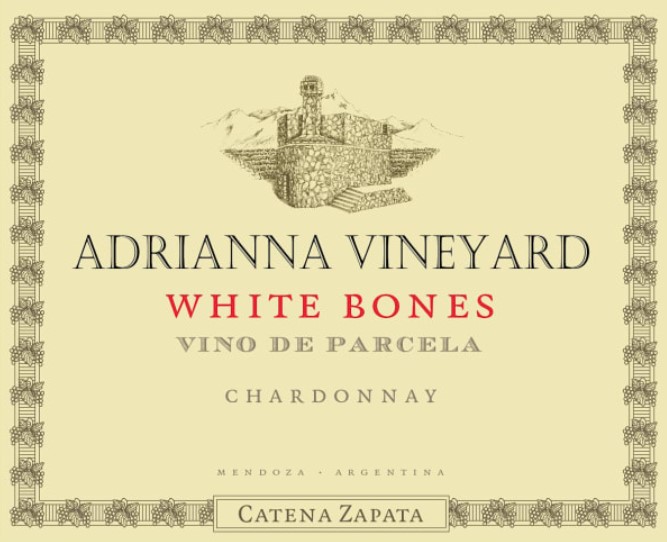
  1. Chardonnay – The white for the win. Chardonnay is the most planted grape in the world. Wine label shown is a 98-100 rated 2022 Chardonnay from Argentina priced around $140.
  2. Cabernet Sauvignon – Always popular, this red comes in a close second. The grape is a cross between Cabernet Franc and Sauvignon Blanc.
  3. Pinot Grigio/Gris – A dry, acidic favorite among white wine enthusiasts. Pinot Grigio and Pinot Gris are the same grape, just with an Italian and French name, respectively.
  4. Merlot – High sales volume but not necessarily high dollar amounts compared to other wines on this list. Merlot is more affordable due to higher yields, it can grow almost anywhere, and it doesn’t need to be aged as long as Cabernet Sauvignon.
  5. Sauvignon Blanc – Increasing in popularity every year. A lighter-bodied white with more acidity than Chardonnay.
  6. Pinot Noir – Consumers love this wine’s complex flavors. It’s a medium dry, medium-bodied wine that ages well and makes for a nice sipping wine.

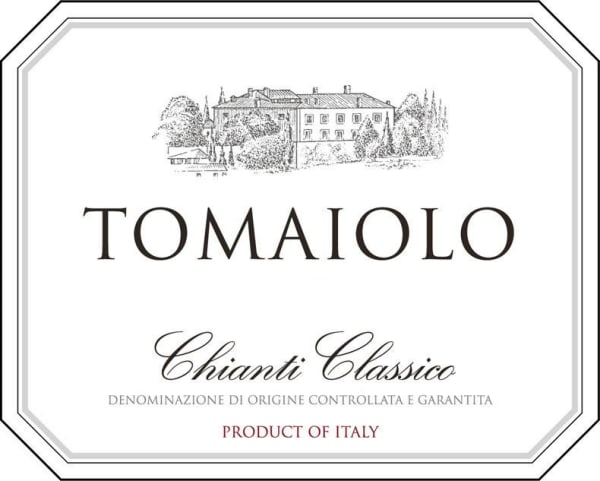
Tomaiolo Chianti Classico 2020:

Sangiovese from Chianti, Tuscany, Italy

100% Sangiovese

Purchase Price: $14.99

Wilford Wong 90, ElsBob 90

ABV 12.5%

Ruby red in color, aromas of red fruits, medium bodied, slightly tannic, slightly dry, acidic. Ideal with roasted or grilled meats, and naturally, pasta.

An excellent table wine at a fair price of $15 although the wine now appears to be selling for about $20.

Chateau Blaignan 2018

Bordeaux Red Blends from Medoc, Bordeaux, France

Purchase Price: $60 (Restaurant)

Wilfred Wong 91, James Suckling 90, Wine Enthusiast 90, ElsBob 91.

ABV 14%

Aromas of black fruits and spice, medium to full-bodied, dry with silky tannins. We enjoyed this wine with medium rare, peppered beef filets with a side of grilled thick-cut vegetables: delicious.

An excellent fine wine at a little more than half the retail price (~$23) for a comparable vintage and rated wine.

Trivia: Château Blaignan is the one of the oldest winemaking estate in the Médoc region of Bordeaux. Documents dating back to the 15th century reveal that vineyards were planted in the Blaignan hamlet nearly 600 years ago.

Trivia II: During the 15th century, the Bordeaux region was a significant battleground during the Hundred Years’ War between England and France. The English kings, including Edward III, and Henry V, led several military campaigns in the region. The war culminated in the Siege of Bordeaux in 1453, which marked the end of English rule, by Henry VI, in the region and the conclusion of the Hundred Years’ War.