Cold Dark Matter (CDM) comprises approximately 27% of the universe, yet its true nature remains unknown. Add that to the 68% of the universe made up of dark energy, an even greater mystery, and we arrive at an unsettling realization: 95% of the cosmos remains unexplained.
Socrates famously said, “The only thing I know is that I know nothing.” Over two millennia later, physicists might agree. But two researchers from Dartmouth propose a compelling possibility: perhaps early energetic radiation, such as photons, expanded and cooled into massive fermions, which later condensed into cold dark matter, the invisible force holding galaxies together. Over billions of years, this dark matter may be decomposing into dark energy, the force accelerating cosmic expansion.
Their theory centers on super-heavy fermions, particles a million times heavier than electrons, which behave in an unexpected way due to chiral symmetry breaking: where mirror-image particles become unequally distributed, favoring one over the other. Rather than invoking exotic physics, their model works within the framework of the Standard Model but takes it in an unexpected direction.
In the early universe, these massive fermions behaved like radiation, freely moving through space. However, as the cosmos expanded and cooled, they reached a critical threshold, undergoing a phase transition, much like how matter shifts between liquid, solid, and gas.
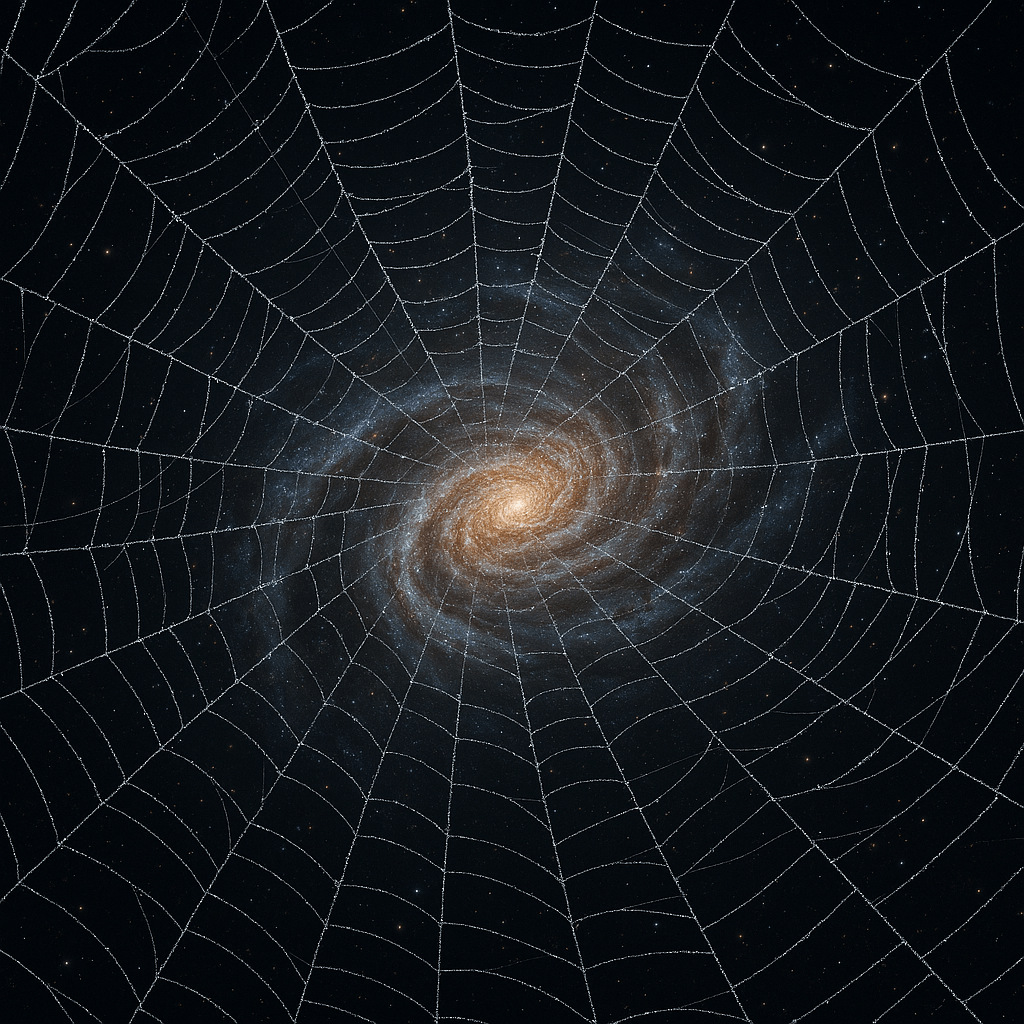
During this transformation, fermion-antifermion pairs condensed—similar to how electrons form Cooper pairs in superconductors, creating a stable, cold substance with minimal pressure and heat. This condensate became diffuse dark matter, shaping galaxies through its gravitational influence, acting as an invisible web counteracting their rotation and ensuring they don’t fly apart.
However, dark matter may not be as stable as once thought. The researchers propose that this condensate is slowly decaying, faster than standard cosmological models predict. This gradual decomposition feeds a long-lived energy source, possibly contributing to dark energy, the force responsible for the universe’s accelerated expansion.
A more radical interpretation, mine not the researchers, suggests that dark matter is not merely decaying, but evolving into dark energy, just as energetic fermion radiation once transitioned into dark matter. If this is true, dark matter and dark energy may be two phases of the same cosmic entity rather than separate forces.
If these hypothesis hold, we should be able to detect, as the researchers suggest, traces of this dark matter-to-dark energy transformation in the cosmic microwave background (CMB). Variations in density fluctuations and large-scale structures might reveal whether dark matter has been steadily shifting into dark energy, linking two of cosmology’s biggest unknowns into a single process.
Over billions of years, as dark matter transitions into dark energy, galaxies may slowly lose their gravitational cage and begin drifting apart. With dark energy accelerating the expansion, the universe may eventually reach a state where galaxies unravel completely, leaving only isolated stars in an endless void.
If dark matter started as a fine cosmic web, stabilizing galaxies, then over time, it may fade away completely, leaving behind only the accelerating force of dark energy. Instead of opposing forces locked in conflict, what if radiation, dark matter, and dark energy were simply different expressions of the same evolving entity?
A tetrahedron could symbolize this transformation:
- Radiation (Energetic Era) – The expansive force that shaped the early universe.
- Dark Matter (Structural Phase) – The stabilizing gravitational web forming galaxies.
- Dark Energy (Expansion Phase) – The force accelerating cosmic evolution.
- Time (Governing Force) – The missing element driving transitions between states.
Rather than the universe being torn apart by clashing forces, it might be engaged in a single, continuous transformation, a cosmic dance shaping the future of space.
Source: CDM Analogous to Superconductivity by Liang and Caldwell, May 2025, APS.org. Graphic: Galaxy and Spiderweb by Copilot.


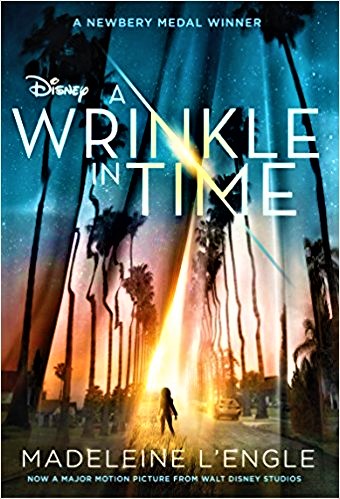 The movie is based on the Madeleine L’Engle’s 1962 book
  Rated: PG — Runtime: 166 minutes
 elsToday