Boris Pasternak (1890–1960), Russian poet and novelist, spent a decade creating his singular opus, Doctor Zhivago, completed in 1956. More than a historical narrative, it is a philosophical cathedral, a novel constructed of haunted Romanticism, moral reckoning, and symbolic renewal. Set against the dissolution of Tsarist Russia and the disillusionment of revolutionary aftermath, the book crosses the bridge from imperial decay into the intoxicating dream of collective transformation, only to watch that dream unravel into a black hole of exile, violence, and starvation.
This arc of collapse recalls the spiritual bargain Thomas Mann dramatizes in Doctor Faustus, but where Mann’s protagonist descends into metaphysical madness, Doctor Zhivago journeys through the quiet but unrelenting erosion of the soul. He does not perish; he endures, but with dimming strength and drive. The rails he rides are not toward damnation but disillusionment. And still, beams of light pierce the fog: rays of love, recollection, and art that suggest the possibility of meaning and rebirth.
As Nikolai Nikolaievich says early in the novel, “the whole of life is symbolic because it is meaningful.” In this way, the prose becomes Pasternak’s metaphorical terrain, thick with fog, fractured history, and spiritual yearning. The appended poetry, by contrast, is a sudden clearing. Here, the truth is not narrated but sung as parables: psalms.
Pasternak stands in conversation with his literary ancestors, not in imitation but in integration. Tolstoy’s presence is unmistakable, the historical sweep as personal crisis, the aching attention to moral choice. But where Tolstoy moves with structural precision, Pasternak drifts with mystical defiance. His narrative resists symmetry. His characters do not seek ideology, they search for grace.
Symbolist in sensibility if not in allegiance, Pasternak paints with metaphysical hues. As Nikolai Nikolaievich reflects, it is not commandments but parables that endure, not doctrine but symbol. Life, for Pasternak, is sacred not by design but because of its trembling unpredictability.
It is no accident that Hamlet opens Zhivago’s verse collection. The parallels run deep: both Hamlet and Zhivago move through time like exiles from history itself, cast adrift in worlds too cruel for their contemplative souls. When Pasternak writes, “I consent to play this part therein,” he evokes both the tragedy and transcendence of bearing witness. Zhivago performs his role, but lives another life, internal, poetic, unreachable: above the fray, but corrupted by the psychosis below.
His poems chart this existential divide: March, an ode to ugliness and beauty; Holy Week, a quiet redemption; Parting, remembrance caught in an unfinished gesture. In Garden of Gethsemane, Pasternak, born Jewish, philosophically Christian, offers the novel’s spiritual heartbeat and epitaph: “To live is to sin, / But light will pierce the Darkness.”
Perhaps nowhere is Pasternak more intentional, and more misunderstood, than in his use of coincidence. Critics have dismissed the improbabilities: chance meetings, reappearances, entwined fates that strain believability. Yet, viewed symbolically, they form a system. These moments are not narrative indulgences; they are metaphysical punctuation marks, appearing when a character risks dissolution and irrelevance, summoning memory, recognition, or spiritual breath.
These recurring events hint at resurrection, not just personal but societal. Pasternak suggests life moves not in straight lines but in spirals and cycles. Coincidence becomes a kind of syntax for recurrence, for unfinished conversations rekindled in new voices. Meaning doesn’t unfold; it echoes amplified.
Again and again, children appear, observers, inheritors, blank slates. In them lies the novel’s quiet eschatology: renewal not through revolution, but through the uncorrupted eye. These youths do not argue ideology. They carry memory unwittingly. They are the future poets whose truths will be elemental and free, like wind through the trees.
If Doctor Zhivago is a Passion, then its resurrection comes not in fire, but in continuity. Not in triumph, but in scattered verses, remembered, revived. Pasternak’s salvation is lived: grace through endurance, beauty through suffering, renewal through remembrance.
Banned in the Soviet Union upon completion, Doctor Zhivago was smuggled to Italy and published in 1957, igniting an international phenomenon. The CIA distributed the book behind the Iron Curtain as a weapon of quiet revolt. Pasternak was awarded the Nobel Prize in 1958, then compelled to decline it under state pressure. And still, by 2003, the novel had found its way into Russian classrooms.
This was not just a novel. It was a voice buried and reborn.
Pasternak’s opus is not a chronicle of a man or an era, but a symbolic landscape of what it means to remain human in the machinery of history. A tale not of revolution’s glory, but of the soul’s refusal to be mechanized. It rejects dogma in favor of parable, certainty in favor of consequence, ideology in favor of grace.
Doctor Zhivago teaches us that life may be coincidence, but not accident. That beauty may falter, but goodness moves quietly. And that sometimes, when all else falls away, it is poetry that remains, whispering its eternal truths into the trembling heart of history.
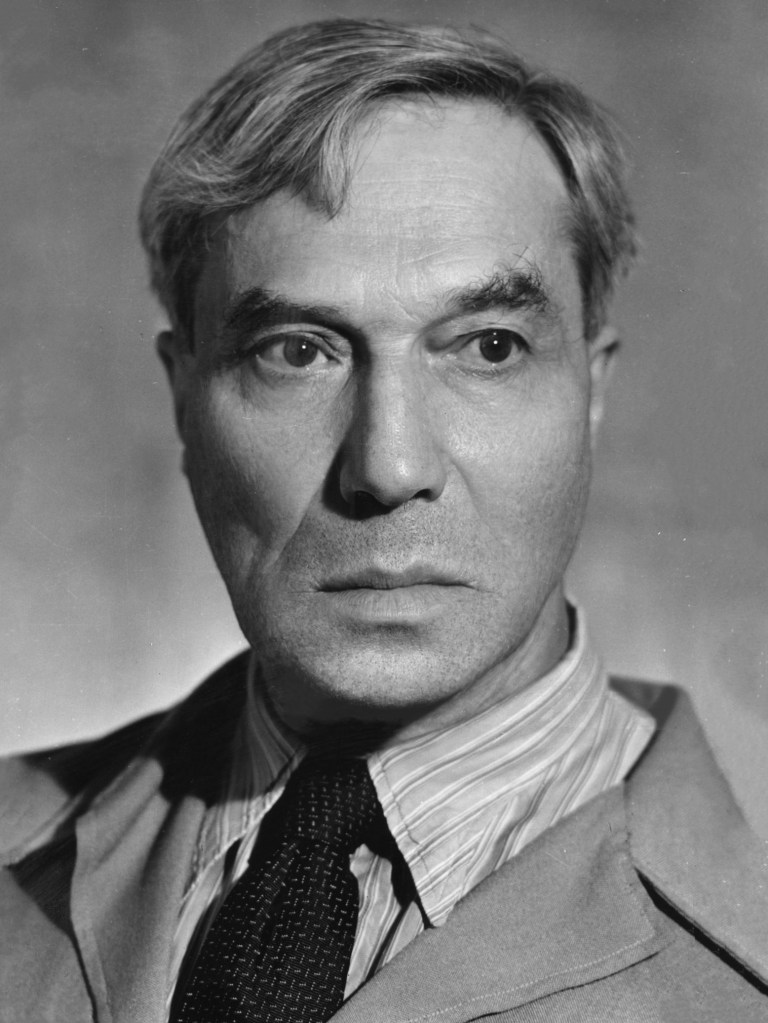
Source: Dr. Zhivago by Boris Pasternak, 1957. Graphic: Boris Pasternak, 1959. Public Domain.
Cupid and Psyche is the timeless tale of love’s conquering power, overcoming all obstacles in its path. It symbolizes the union of the soul with desire, transcending to a love that goes beyond the physical and the mortal.
The only extant writings of Cupid and Psyche is known from Apuleius’s romance “The Golden Ass,” composed in the 2nd century AD. The tale is likely to have been known as early as the 4th century BC, and Cupid is known as far back as the 8th century BC from Hesiod’s “Theogony.”
In the myth of Cupid and Psyche, with Cupid’s mother Venus as the antagonist, the characters metaphorically act out various emotions and experiences, both mortal and immortal.
Psyche,a mortal more beautiful than the goddess Venus, represents the soul (in Greek, Psyche means soul) and its journey from the tragedy of human life to the transformative power of love for everlasting spiritual fulfillment.
Cupid, tasked by his mother Venus to destroy Psyche for possessing beauty beyond that of a mortal, instead falls in love with her. Cupid embodies love and desire, and the emotional power and unpredictability that it brings to a relationship.
Venus, the goddess of love and beauty, represents jealousy and the obstacles that Psyche battles to realize the completion of her quest for emotional and spiritual fulfillment. Her trials for Psyche reflect the ever-present barriers to true love.
Cupid and Psyche is a story of transcendent transformation over the physical to the triumph of love and the immortality of the soul.
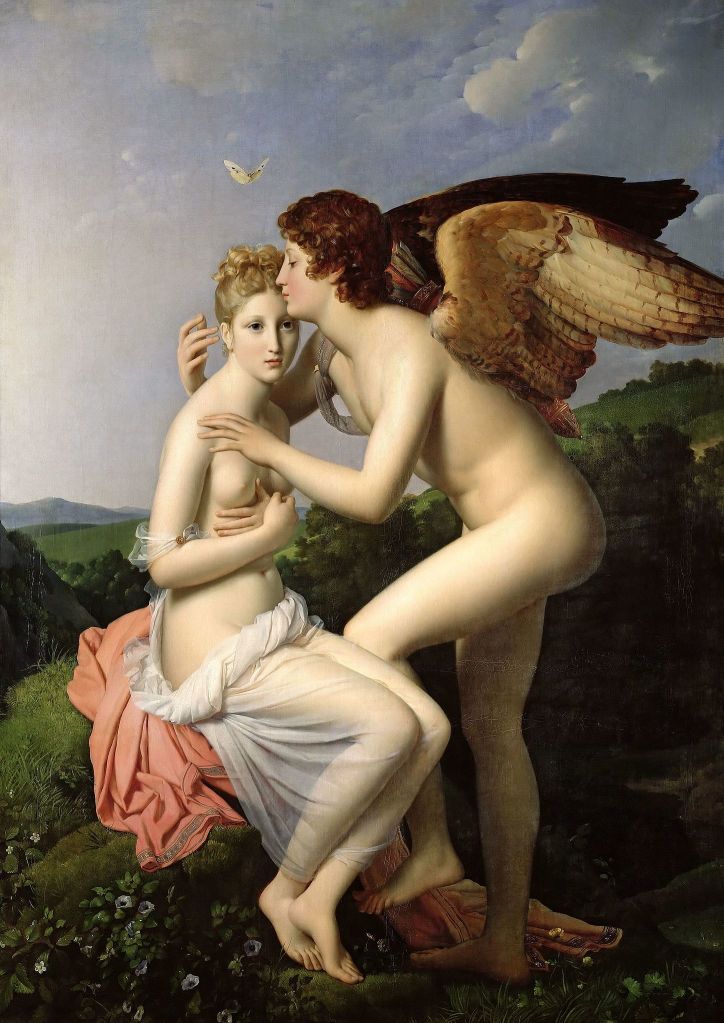
Trivia: In the painting by Gerard, the butterfly floating above Psyche’s head represents, rather redundantly, the soul.
Source: The Golden Ass by Apuleius. The Evolution of Cupid, Erlang Shen, Fatelines, 2022. Graphic: Cupid and Psyche by Francois Gerard, 1798, The Louvre, Public Domain.
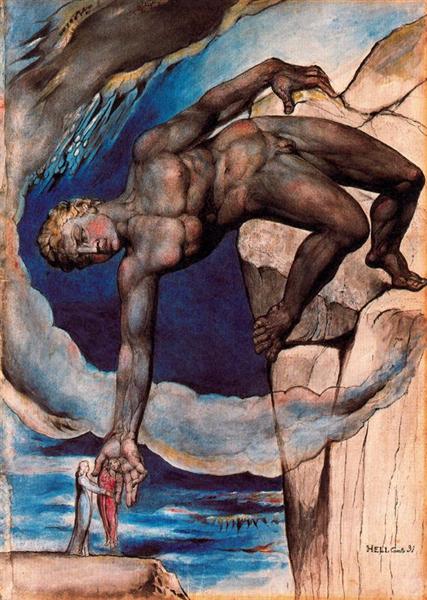
William Blake (1757-1827), in the final years of his life created 102 watercolors and 7 copper plates, most unfinished, for Dante’s ‘The Divine Comedy’. One of the more profound and captivating of these paintings is ‘Antaeus Setting Virgil and Dante into the Ninth Circle of Hell’.
The giant Antaeus, son of Neptune and Gaia, was invincible as long as he remained attached to his mother. Hercules, for his 11th task, had to defeat Antaeus but couldn’t if he touched the Earth, so he lifted him off the ground and strangled him to death.
The Ninth Circle is reserved for the treacherous and is subdivided into 4 rings. The first part is reserved for familial traitors and is named Caina as in Cain and Abel. The second ring, Antenora for Antenora of Troy is for national traitors. Ptolomaea for Ptolemy is the third ring for those who betray their guests. Finally, the inner ring is called Judecca for Judas Iscariot betrayer of Christ and is for the worst traitors: those who turn on their masters. At the center of the Ninth Circle resides Satan.
Finally, as an aside, Dante’s ‘The Divine Comedy’ shouldn’t be interpreted as The Divine Humor, but as The Divine Outcome. The author meant that comedy was the opposite of tragedy. Tragedies begin well and end badly, but Dante’s Comedy begins badly, in Hell, and ends well with Dante reaching his desired destination: Heaven.
Source: Will Blake, The Divine Comedy by David Bindman, 2000. The Divine Comedy by Dante Alighieri, circa 1321. Bulfinch’s Mythology, 1867. Graphic: Antaeus Setting Down Dante and Virgil in the Last Circle of Hell, Blake, 1827, Public Domain.
The adage, History doesn’t repeat itself, but it often rhymes, or less succinctly, historical, and current events may not unfold in the same manner, but they often follow similar patterns or themes. As an example, the rise of authoritarianism usually follows, and rhymes, with the erosion of democratic norms, intolerance of dissent, animosity towards religious or ethnic minorities, economic instability, isolation of true democratic countries, and war.
This quote is often attributed to Mark Twain but no collaborating evidence for him saying exactly this has ever been found. He did say something similar, in a novel he wrote with Charles Warner, the 1874 The Gilded Age: A Tale of To-Day that “History never repeats itself, but the Kaleidoscopic combinations of the pictured present often seem to be constructed out of the broken fragments of antique legends.” The quote in its entirety is sentence that Twain could never write, it had to have come from his co-author.
Austrian American psychoanalyst Theodor Reik, a student of Freud, published an essay in 1965, “The Unreachables” where he wrote: It has been said that history repeats itself. This is perhaps not quite correct; it merely rhymes. There are recurring cycles, ups and downs, but the course of events is essentially the same, with small variations. It has been said that history repeats itself. This is perhaps not quite correct; it merely rhymes.
Regardless of whomever said, History doesn’t repeat itself, but it often rhymes were astute observers of history and life.
Source: Quote Investigator, 2014. Graphic: Publicity photo of Reik, 1920s, public domain.
Stephen Mitchell was born in Brooklyn in 1943 (80ish), educated at ‘Ivy League’ schools in the US and France, and, quoting his words, “de-educated through intensive Zen practice“. That may be just a spoonful of humor, it is though a spoonful of humility, and a large serving of Zen-Socratic wisdom. A wisdom that becomes one that reflects upon his life and realizes his education has granted him neither knowledge nor wisdom. He does not say what the Ivy League has instilled in him, but the derivation of any real value from those hallowed halls, as seen from the Zen rear-view mirror, appears minimal.
In an interview with the Los Angeles Times, he ruminates that “If I’m a scholar, I’m an amateur“. A humble observation in the truest form of the personal quest for fulfillment and enlightenment. In the same interview, elaborating on Chuang-tzu in Mitchell’s ‘The Second Book of the Tao‘, he says: “I have no pretensions to scholarship. I just love to play with the Taoist masters. For them, nothing is sacred. The best tribute is contradiction.” Again, humility before all, all before self.
In a separate interview with Scott London also discussing ‘The Second Book of the Tao‘ Mitchell relates the teachings of Chuang-tzu as a philosophy of the unassuming and the simple life. “There was nothing to live up to,” he says. “There was only a passion for the genuine, a fascination with words, and a constant awareness that the ancient Masters are alive and well in the mind that doesn’t know a thing.” Mitchell personifies and lives that philosophy.
Mitchell has translated and authored many books including the bestselling Tao Te Ching, Gilgamesh, The Gospel According to Jesus, and his latest book, The First Christmas released in 2021. He is also the coauthor of three of his wife Byron Katie’s bestselling books: Loving What Is, A Thousand Names for Joy, and A Mind at Home with Itself and numerous children’s books.
The Discovery of the Story of Gilgamesh:
The Epic of Gilgamesh was, in the beginning, a series of Sumerian poems/stories likely passed down through the ages as oral histories before being written down in Akkadian 700-1000 years after the reign of the mythical/historical King of Uruk: Gilgamesh.
Mitchell may have been introduced to the literary stature of Gilgamesh while translating the Austrian mystic poet, Rainer Marie Rilke. Rilke wrote at the end of 1916. “I … consider it to be among the greatest things (the poem Gilgamesh) that can happen to a person. I have immersed myself in [it], and in these truly gigantic fragments I have experienced measures and forms that belong with the supreme works that the conjuring Word has ever produced.”
The poem, written in Assaryian cuneiform script, on clay tablets, was discovered by Austen Henry Layard while excavating mounds, beginning in 1844, around what is now known as the city of Mosul. The mounds turned out to be the remains of the ancient Assyrian capital palaces of Nineveh including the library of King Ashurbanipal or Ashur Banipal (668-627 BC) depending on the source. Over 25,000 clay tablets from the library, twelve of which contained the poem, were shipped back to the British Museum. It took until 1872 before the poem was discovered among this immense trove of tablets and in 1872 George Smith translated and published the poem. These twelve tablets contain the fullest version of the poem found to date.
The first surviving version of the combined epic is known as the Old Babylonian version and dates from the 18th century BC. The longer and more complete copy of the poem, from King Ashurbanipal’s library is from the 10th to the 13th centuries BC and is known as the Standard version. Currently seventy-three fragments, possibly more, of the Standard version have been discovered containing some two thousand lines of the original, which is surmised to be three thousand lines long.
Mitchell mainly adapts the Standard version into a contemporary English language poem with gap filler supplied by the Old Babylonian version. Where there is no original material to complete known gaps, Mitchell has contributed original work to provide clarity and to maintain continuity.
The Man of Gilgamesh:
Gilgamesh is accepted as being the 5th king of Uruk, possibly reigning roughly in the 26th century BC (2800-2500 BC) for 126 years. Some believe the long reign of 126 years may actually be a number in base six which would equate to 54 years in base ten. Very little is known of his reign with the exception that he built the walls Uruk, is listed in the Sumerian King list, and is mentioned as a contemporary of Aga, son of King Enmebaragesi of Kish.
Aga, who ruled over Sumer for 625 years, is the antagonist in the Sumerian poem ‘Gilgamesh and Aga‘, recording the King of Kish’s siege of Uruk after Gilgamesh refused to submit to him. From the poem Aga commands Gilgamesh and the citizens of Uruk to work forever as slaves on Kish’s irrigation projects.
There are wells to be finished. There are wells in the land to be finished. There are shallow wells in the land to be completed. There are deep wells and hoisting ropes to be completed
Gilgamesh is made King of Uruk for his defiance and resistance to Aga’s demands. King Gilgamesh captures Aga on the 10th day of the siege but sets him free to return to Kish.
The Land of Gilgamesh:
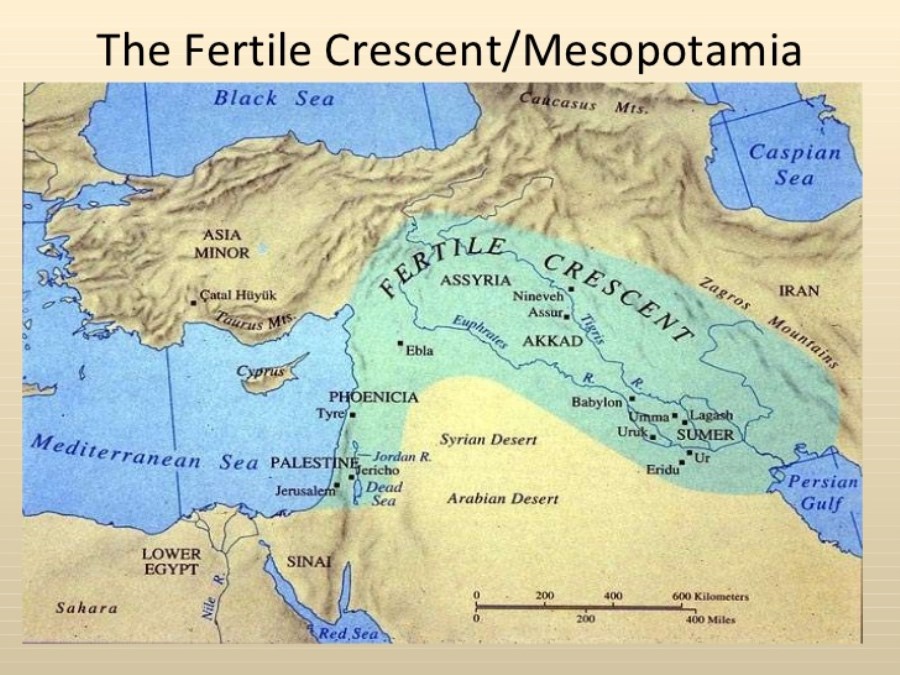
Uruk was a Sumerian city-state established in the southern reaches of Mesopotamia and was located on the east bank of the Euphrates River. The river today, through the process of river channel migration, is much further to the west. The city and its surrounding area were home to about 40,000-125,000 people, who during the time of Gilgamesh controlled the entire Sumer area.
The Sumerian area and Uruk lay claim to the beginnings of civilization, urbanization, laws, and writing. Cuneiform, wedge shaped writing on clay tablets and the earliest known system of writing, dates to the fourth millennium BC with the oldest examples being inventories of goods stored and transported in and out of the Sumer area.
The oldest known surviving law code, the Code of Ur-Nammu, in the world comes down through the ages from the Sumerian king Ur-Nammu or his son Shulgi of Ur during the last half of 21st century through the beginning of 20th century BC. The Code of Urukagina is older but is known only through references in other ancient writings. The better-known Babylonian Code of Hammurabi is younger and dates from the eighteenth-century BC.
The greatest architectural monument of Uruk was the White Temple built upon the Anu Ziggurat during the fourth millennium. The temple was thirteen meters high and 22.3 x 17.5 meters in depth and width. It stood upon a ziggurat with dimensions of 50 x 46 x 10 meters in depth, width, and height, respectively. On the flat plains surrounding Uruk it was visible in the distance for kilometers.
German archaeological excavations in 2003, conducted in and around the old riverbed of the Euphrates, have reportedly revealed garden enclosures, specific buildings, and structures described in The Epic of Gilgamesh, including Gilgamesh’s tomb. According to The Death of Gilgamesh, he was buried at the bottom of the Euphrates when the waters parted after he died. There is debate whether these excavations and discoveries exist or are a hoax. These discoveries have not been confirmed and no updates from the original can be found but one of the original authors of the 2003 study is Jorg Fassbinder, a geophysical archeologist associated with the University of Munich.
Uruk is also recognized as the city of Erech, founded by Nimrod, great-grandson of Noah, as mentioned in Genesis 10:10:
8And Cush begat Nimrod: he began to be a mighty one in the earth.
9He was a mighty hunter before the LORD: wherefore it is said, Even as Nimrod the mighty hunter before the LORD.
10And the beginning of his kingdom was Babel, and Erech, and Accad, and Calneh, in the land of Shinar.
11Out of that land went forth Asshur, and builded Nineveh, and the city Rehoboth, and Calah
The Legend of Gilgamesh:
Gilgamesh in Sumerian possibly means ‘The Old Man Is a Young Man’ or ‘The Ancestor Was a Hero’. An immortal Hero, a synthesis that brings us to the story and plot of Gilgamesh.
Gilgamesh is the epic hero of the times. Dashing, brave, adventurous; a seeker of immortality and wisdom but not much in the way of kingly benevolence. The gods knowing Gilgamesh lacked wisdom sent him his twin and his opposite: Enkidu. Enkidu became Gilgamesh’s brother and constant companion. Thus begins the quest of Gilgamesh to find himself. It is far more than that, though, as Mitchell explains:
“Part of the fascination of Gilgamesh (the story and person) is that, like any great work of literature, it has much to tell us about ourselves. In giving voice to grief and the fear of death, perhaps more powerfully than any book written after it, in portraying love and vulnerability and the quest for wisdom, it has become a personal testimony for millions of readers in dozens of languages.“
Gilgamesh, as with some of his readers of today, is slow to learn the lessons of life, slow to acquire wisdom even when it is given to him/us for free. From the old Babylonian Version in Book X, Siduri, a wise matron brewer of beer offers Gilgamesh an opiate of advice for his pain brought on through the death of his brother Enkidu.
“Gilgamesh, where are you roaming? You will never find the eternal life that you seek. When the gods created mankind, they also created death, and they held back eternal life for themselves alone. Humans are born, they live, then they die, this is the order that the gods have decreed. But until the end comes, enjoy your life, spend it in happiness, not despair. Savour your food, make each of your days a delight, bathe and anoint yourself, wear bright clothes that are sparkling clean, let music and dancing fill your house, love the child who holds you by the hand, and give your wife pleasure in your embrace. That is the best way for a man to live.”
Gilgamesh declines the advice to live for the day and continues with his quest for immortality.
The Victorian Era produced some of the greatest literature the world has ever had the pleasure to read. Any list of the greatest books ever written always contains, or should, Dickens, Bronte, Eliot, and Conrad, who was Polish but wrote in English from England, with an occasional inclusion of Wilde, Hardy, Wells, Trollop, and Stevenson. Bibliophiles would not forget to include Stroker, Barrie, Thackeray, Butler (everyone should read the poorly titled ‘The Way of All Flesh’), and Carroll. Stretching the definition of Victorian, one could bring in the Russians Tolstoy and Dostoyevsky, Americans Twain, Poe, Cooper, and Melville along with the French authors Hugo, Flaubert, and Dumas.
Victorian literature is loosely defined as being written during the reign of Queen Victoria who ruled over the United Kingdom and Ireland for 63 years from 1837 to 1901, parenthetically, a reign exceeded in longevity only by Queen Elizabeth’s 70 years on the throne. The Victorian Era was bookended by the Industrial Revolution which ended around the 1840s and the beginning of the Technological Revolution that began in the 1870s and continued to the start of WWI. The era witnessed the beginning of the end of the labor intensive agricultural and mining sectors, with a subsequent weakening of the guild and manor systems. The hermetic British class system also sustained a permanent leak with the advent of a true middle class brought about by an unconstrained rise in economic fortunes and personal incomes.
All this brought about a renegotiation and a realignment of the social structures in place since the time of the pharaohs. Serfs and slavery gave way to agricultural innovations and the introduction of a managerial class in business. The existing economic and social fabrics were torn asunder with the way forward less than clear, but the status quo would not endure for long. The ensuing social upheaval provided a bonaza of topics and plots for the Victorian Era authors. Dickens wrote about poverty and children, Hardy plotted about morality and money, Trollop’s novels took on class and money, Emily Bronte took on immorality, class, and money, and Thackeray discussed hypocrisy. None of the subjects the authors approached were exclusive to their times, but in the Victorian age contrasts had sharp edges. Victorian times were either-or with little in between. Grey was tea, which incidentally dates to the Victorian Era.
Apologies for the preamble to this post which was meant to be just a listing of Victorian authors but somehow, I digressed into a brief discussion of 19th century all things British. The following table is a composite of other lists and sources dealing with Victorian authors, whether prose, poetry, or plays, fiction or non-fiction. The table below initially had additional information about the authors, but WordPress does not give the space needed to display them so squeeze the sides of table I did. Also, I initially was listing all authors, regardless of nationality, within the Victorian Era but that grew too large for web page. Finally, the “Best Sellers” column is subjective in that it may be the critics’ choice, or it may be based on current sales, and sometimes it’s just what I liked the most. As an example, the critics always list ‘Great Expectations’ or ‘The Tale of Two Cities’ as his best but I’ve always preferred ‘Oliver Twist’ and ‘A Christmas Carole’ which led me to list ‘Great Expectations’ and ‘A Christmas Carole’.
Name
Nationality
Born
Died
“Best Sellers”
Ainsworth, William Harrison
English
1805
1882
Windsor Castle
Arnold, Matthew
English
1822
1888
The Scholar Gipsy
Bagehot, Walter
English
1826
1877
The Economist
Ballantyne, Robert Michael
Scottish
1825
1894
The Coral Island
Barlas, John
Scottish
1860
1914
Bloody Heart – Phantasmagoria
Barr, Amelia
English
1831
1919
Remember the Alamo
Barrie, J.M.
Scottish
1860
1937
Peter Pan
Beerbohm, Max
English
1872
1956
Zuleika Dobson
Benson, A.C.
English
1862
1925
Basil Netherby
Besant, Walter
English
1836
1901
All in a Garden Fair
Blackmore, R.D.
English
1825
1900
Lorna Doone
Blunt, Wilfred Scawen
English
1840
1922
The Dream King: Ludwig II of Bavaria
Boucicault, Dion
Irish
1820
1890
The Bastile
Braddon, Mary Elizabeth
English
1835
1915
Lady Audley’s Secret
Bradley, Edward
English
1827
1889
The Adventures of Mr. Verdant Green
Bray, Anna Eliza
English
1790
1883
Trelawneys of Trelawne
Brontë, Anne
English
1820
1849
Agnes Grey
Bronte, Charlotte
English
1816
1855
Jane Eyre
Bronte, Emily
English
1818
1848
Wuthering Heights
Browning, Elizabeth Barrett
English
1806
1861
A Drama of Exile
Browning, Robert
English
1812
1889
The Ring and the Book
Buchanan, Robert
Scottish
1841
1901
The Shadow of the Sword
Bulwer-Lytton, Sir Edward
English
1803
1873
England and the English
Burney, Frances
English
1752
1840
Evelina
Butler, Samuel
English
1835
1902
Erewhon – The Way of All Flesh
Caine, Hall
English
1853
1931
The Blind Mother – The Last Confession
Caird, Mona
English
1854
1932
The Wing of Azrael
Carlyle, Thomas
Scottish
1795
1881
Sartor Resartus
Carroll, Lewis
English
1832
1898
Alice’s Adventures in Wonderland
Chesterton, G.K.
English
1874
1936
Father Brown – The Man Who was Thrusday
Clare, John
English
1793
1864
The Shepherds Calendar
Clough, Arthur Hugh
English
1819
1861
The Bothie of Tober-na-Vuolich
Coleridge, Mary
English
1861
1907
The Lady on the Drawingroom Floor
Collins, Wilkie
English
1824
1889
The Woman in White – The Moonstone
Conrad, Joseph
Polish
1857
1924
Heart of Darkness – Lord Jim
Corelli, Marie
English
1855
1924
The Romance of Two Worlds
Corvo, Baron
English
1860
1913
Hadrian the Seventh
Craik, Dinah Mulock
English
1826
1887
John Halifax, Gentleman
Darwin, Charles
English
1809
1882
On the Orgin of Species
Davies, W.H.
English
1871
1940
The Autobiography of a Super-tramp
Dickens, Charles
English
1812
1870
A Christmas Carol – Great Expectations
Disraeli, Benjamin
English
1804
1881
Sybil; or, the Two Nations
Dobell, Bertram
English
1842
1914
The Poetical Works of Thomas Traherne
Dowson, Ernest
English
1867
1900
Vitae Summa Brevis (Days of Wine and Roses)
Doyle, Sir Arthur Conan
English
1859
1930
Sherlock Holmes
Dunsany, Lord
Irish
1878
1957
A Dreamers Tale
Eliot, George
English
1819
1880
Middlemarch
Ewing, Juliana Horatia
English
1841
1885
Christmas Crakers and other Christmas Stories
Farningham, Marianne
English
1834
1909
Girlhood – Brothers and Sisters
Farrar, Frederic William
English
1831
1903
Life of Christ
Gaskell, Elizabeth
English
1810
1865
North and South – Ghost Stories
Gilbert, William Schwenck
English
1836
1911
H.M.S. Pinafore – The Pirates of Penzance
Gilchrist, Robert Murray
English
1867
1917
The Stone Dragon and Other Tragic Romances
Gissing, George
English
1857
1903
The Nether World
Gore, Catherine
English
1798
1861
Manners of the Day
Gosse, Edmund
English
1849
1928
Father and Son
Gosse, Philip
English
1810
1888
A Naturalist’s Rambles on Devonshire Coast
Grossmith, George
English
1847
1912
The Diary of a Nobody
Haggard, H. Rider
English
1856
1925
King Solomon’s Mines
Hallam, Arthur Henry
English
1811
1833
The Poems of Arthur Henry Hallam
Hardy, Thomas
English
1840
1928
The Mayor of Casterbridge
Harkness, Margaret
English
1854
1923
Assyrian Life and History
Helps, Sir Arthur
English
1813
1875
Leaves from the Journal of Our Life
Hemans, Felicia
English
1793
1835
Casabianca – Coeur De Lion at the Bier
Henley, William Ernest
English
1849
1903
Invictus
Hood, Thomas
English
1799
1845
The Bridge of Sighs – The Song of the Shirt
Hopkins, Gerard Manley
English
1844
1889
Binsey Poplars
Hornung, E.W.
English
1866
1921
Raffles Stories
Housman, A.E.
English
1859
1936
The Collected Poems of A.E. Housman
Housman, Laurence
English
1865
1959
The Field of Clover
Howitt, Mary
English
1799
1888
The Spider and the Fly
Howitt, William
English
1792
1879
The History of the Supernatural
Hubback, Catherine
English
1818
1877
The Younger Sister
Hughes, Thomas
English
1822
1896
Tom Brown School Days
Huxley, Thomas Henry
English
1825
1895
Man’s Place in Nature
James, M.R.
English
1862
1936
Ghost Stories
Jefferies, Richard
English
1848
1887
The Story of My Heart
Jennings, Louis
English
1836
1893
Mr. Gladstone
Jerome, Jerome
English
1859
1927
Three Men in a Boat
Jerrold, Douglas William
English
1803
1857
Black-Eyed Susan
Jewsbury, Geraldine
English
1812
1880
The Half-Sisters
Kingsley, Charles
English
1819
1875
Westward Ho!
Kingston, William Henry Giles
English
1814
1880
In the Rocky Mountains
Kipling, Rudyard
English
1865
1936
The Jungle Book – Kim
Landon, Letitia Elizabeth
English
1802
1838
The Poetical Works of Miss Landon
Landor, Walter Savage
English
1775
1864
Imaginary Conversations – Rose Aylmer
Le Fanu, Joseph Sheridan
Irish
1814
1873
Ghost Stories
Lear, Edward
English
1812
1888
The Complete Nonsense of Edward Lear
Lever, Charles
Irish
1806
1872
The Martins of Cro’Martin
Levy, Amy
English
1861
1889
The Romance of a Shop
Lewes, George Henry
English
1817
1878
The Spanish Drama
Linton, Eliza Lynn
English
1822
1898
The True History of Joshua Davidson
Macaulay, Thomas Babington
English
1800
1859
Lays of Ancient Rome
MacDonald, George
Scottish
1824
1905
The Princess and the Goblin
Marryat, Captain Fredrick
English
1792
1848
The Privateersman
Marshall, Emma
English
1830
1899
Under Salisbury Spire
Massey, Gerald
English
1828
1907
Ancient Egypt Light of the World
Maurier, George du
French
1834
1896
Trilby
Mayhew, Henry
English
1812
1887
London Labour and the London Poor
Melville, George John
Scottish
1821
1878
The Queen’s Maries: A Romance of Holyrood
Meredith, George
English
1828
1909
The Egoist – Diana of the Crossways
Mill, John Stuart
English
1806
1873
On Liberty
Molesworth, Mary Louisa
English
1839
1921
The Cuckoo Clock
Moore, George
Irish
1852
1933
Esther Waters
Moore, Thomas
Irish
1779
1852
Minstrel Boy – The Last Rose of Summer
More, Hannah
English
1745
1833
Sorrows of Yamba
Morley, Henry
English
1822
1894
English Writers
Morris, Francis Orpen
English
1810
1893
A History of British Butterflies
Morris, William
English
1834
1896
The Wood Beyond the World
Morrison, Arthur
English
1863
1945
The Adventures of Martin Hewitt
Newman, John Henry
English
1801
1890
Apologia Pro Vita Sua
Norton, Caroline
English
1808
1877
The Sorrows of Rosalie: A Tale with Other Poems
Oliphant, Margaret
Scottish
1828
1897
Supernatural Collection
Ouida (Maria Louise Ramé)
English
1839
1908
Under Two Flags – A Dog of Flanders
Pater, Walter
English
1839
1894
Studies in the History of the Renaissance
Patmore, Coventry
English
1823
1896
The Angle in the House
Potter, Beatrix
English
1866
1943
The Tale of Peter Rabbit
Rands, William Brighty
English
1823
1882
Lilliput Levee
Reade, Charles
English
1814
1884
Peg Woffington – Masks and Faces
Reynolds, George
English
1814
1879
Wagner the Werewolf – The Necromancer
Rogers, Samuel
English
1763
1855
Table-Talk and Recollections – Toils and Struggles
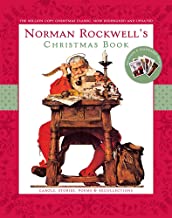
A beautiful collection of Norman Rockwell’s Christmas and winter scenes interspersed with Christmas stories, music, and more that you have experienced and loved since you were a little, wide-eyed tyke waiting for permission to tear into your presents.
The book not only contains some great Rockwell snapshots of Christmas but timeless stories of Christmas cheer, that if you haven’t read you should, just for the heart-warming smiles they will bring to your fuddy duddy lips and cheeks. O’Henry’s Gift of the Magi is here along with Moore’s Night Before Christmas, Dicken’s Christmas goblin short story, Virginia’s, “Is there a Santa Claus?” letter, and the newspaper’s response, all to remind and reinforce why Christmas is the world’s favorite holiday.
This book was first published in 1977, which is the one I have, with various reprintings and content expansions through the years, the most recent edition coming out in 2009. The new edition contains additional Rockwell paintings along with poster size prints that are ready for framing. Merry Christmas.



 elsToday