Divine Right to Rule–Not

Sir Robert Filmer, a mostly forgotten 17th century political theorist, claimed that kings ruled absolutely by divine right, a power he believed was first bestowed upon Adam.

In his First Treatise of Government, John Locke thoroughly shredded and debunked this theory of divine rights of monarchs to do as they pleased. Locke with extensive use of scripture and deductive reasoning demonstrated that ‘jus divinum’ or the divine right to rule led only to tyranny: one master and slavery for the rest, effectively undermining the natural rights of individuals and a just society.

Filmer, active during the late 16th to mid-17th century, argued that the government should resemble a family where the king acts as the divinely appointed patriarch. He erroneously based his theory on the Old Testament and God’s instructions to Adam and Noah. He used patriarchal authority as a metaphor to justify absolute monarchy, arguing that kings can govern without human interference or control. Filmer also despised democracies, viewing monarchies, as did Hobbes, as the only legitimate form of government. He saw democracies as incompatible with God’s will and the natural order.

Locke easily, although in a meticulous, verbose style, attacked and defeated Filmer’s thesis from multiple fronts. Locke starts by accepting a father’s authority over his children, but, in his view, this authority is also shared with the mother, and it certainly does not extend to grandchildren or kings. Locke also refutes Filmer’s assertion that God gave Adam absolute power not only over land and beast but also man. Locke states that God did not give Adam authority over man for if he had, it would mean that all below the king were ultimately slaves. Filmer further states that there should be one king, the rightful heir to Adam. Locke argues that there is no way to resolve who that heir is or how that could be determined. Locke finishes his argument by asserting that since the heir to Adam will be forever hidden, political authority should be based on consent and respect for natural rights, rather than divine inheritance: a logical precursor to his Second Treatise of Government, where Locke profoundly shaped modern political thought by advocating for consent-based governance.

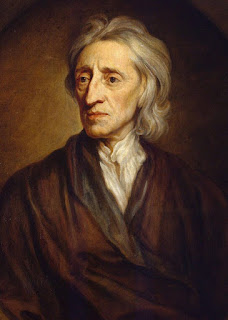
Source: First Treatise of Government by John Locke, 1689. Graphic: John Locke by Godfrey Kneller 1697.  Public Domain.
Natural Law—Point Counterpoint

Version 1.0.0

The notions of right and wrong, justice and injustice, have there no place. Where there is no common power, there is no law; where no law, no injustice.” — Leviathan by Thomas Hobbes

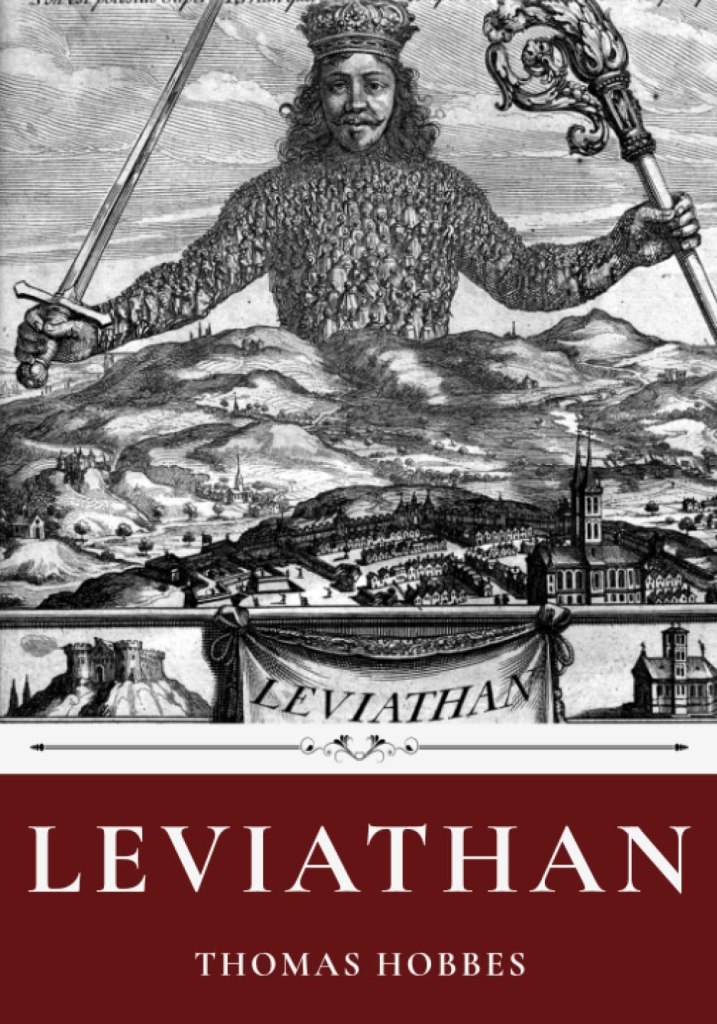
Thomas Hobbes saw human nature as a cauldron of chaos. In his state of nature, life is “nasty, brutish, and short,” a “war of all against all” where self-preservation is the only natural law. Shaped by Thucydides’ tales of strife and Machiavelli’s ruthless pragmatism, Hobbes cast man’s self-interest as a destructive force that casts morality aside. His remedy to avert chaos: a towering sovereign, ideally a monarch, to crush anarchy with an iron fist. The social contract trades liberty for security, forging laws as human tools to bind the beast within. Yet Hobbes stumbled: he failed to grasp power’s seductive pull. He assumed his Leviathan, though human, would rise above the self-interest he despised, wielding authority without buckling to its corruption.

Reason, which is that law, teaches all mankind…that being all equal and independent, no one ought to harm another in his life, health, liberty, or possessions.” — Second Treatise of Government by John Locke

John Locke painted a gentler portrait of man than did Hobbes. He rooted natural law in reason and divine will, granting all people inherent rights to life, liberty, and property. His state of nature is peaceful yet imperfect, marred by the “want of a common judge with authority,” leaving it vulnerable to human bias and external threats. Optimistic, Locke envisioned a social contract built on the consent of the governed, protecting these rights through mutual respect and laying the groundwork for constitutional rule. Where Hobbes saw a void to be filled with control, Locke trusted reason to elevate humanity, crafting government as a shield, not a shackle.

Hobbes and Locke clash at the fault line of power. Hobbes’s sovereign, meant to tame chaos, reflects the rulers’ thirst for dominance, but his naivety about power’s effect cracks his foundation. Locke’s ideals, morality, reason, rights, empower the ruled, who yearn for liberty after security sours. Hobbes missed the flaw: rulers, driven by the same self-interest he feared, bend laws to their will, spawning a dual reality—one code for the governed, another for the governors. Locke’s vision of freedom and limited government inspires their soul, while Hobbes’s call for order fortifies their bones with courts, police, and laws of men. The U.S. Constitution marries both, yet scandals tip the scales: power corrupts, and liberty frays as safeguards buckle under the rulers’ grip.

Hobbes and Locke both accept the imperfection of man but take different paths to mitigate that imperfection with workable safeguards. Hobbes insists on the rule by law but drafted by imperfect man and applied with a Machiavellian indifference with no solution for absolute powers corrupting influence. Locke also chooses to rule by law but guided by morality, God and the will to depose of despots.

Sources: Leviathan, Thomas Hobbes; Second Treatise of Government, John Locke. Graphic:Original Leviathan frontispiece, a king composed of subjects, designed with Hobbes’s input.

Locke and Citizenship

John Locke, the intellectual and philosophical father of modern Western democracies, argues in his Second Treatise of Government that membership in a political society—and thus citizenship—is not automatically granted by birth on a country’s soil alone. Instead, it depends on the concept of consent, whether explicit or tacit, and the allegiance of the parents. Locke asserts that a child’s status is tied to the political community of the parents rather than merely the geographic location of their birth. Citizenship to Locke was not a right but a contract between the governed and the government. A summation of his reasoning follows:

  1. Voluntary Consent as the Basis of Citizenship: Locke begins with the premise that all individuals are born free and equal in a state of nature. Political society emerges only through the voluntary consent of individuals to join together. For Locke, citizenship is not an inherent trait but a contractual relationship. A child born on foreign soil to non-citizen parents has not entered this contract, nor have their parents done so on their behalf.
  • Parental Influence on Political Identity: Locke suggests that a child’s initial political identity derives from their parents. He describes the natural subjection of children to parental authority, implying that their political allegiance aligns with that of their parents until they reach an age where they can consent for themselves. If the parents are foreigners—not members of the political society where the child is born—they owe no allegiance to that country’s government, and thus neither does the child by extension.
  • Rejection of Jus Soli: Unlike later theories of jus soli (right of the soil), Locke does not consider birth on a territory sufficient for citizenship. He distinguishes between temporary presence and permanent allegiance. A foreigner residing in a country does not automatically become a member of its commonwealth unless they explicitly consent to its laws and government. A child born to such foreigners, being incapable of agreeing to these terms, does not acquire citizenship through birth alone.
  • Tacit Consent and Its Limits: Locke acknowledges that tacit consent—such as owning property or residing long-term in a country—can signal allegiance. However, a newborn child cannot provide consent, tacit or otherwise. If the parents are merely visitors or temporary residents, their presence does not imply a commitment to the political community, and thus the child does not gain citizenship by default.
  • An Illustrative Analogy: Locke reinforces his argument with an example: a child born to English parents in France does not become a French subject simply because of the location of birth. Instead, the child remains tied to the English commonwealth through the parents’ allegiance. This reflects Locke’s view that citizenship stems from political bonds, not just physical geography.

In summary, Locke’s arguments about citizenship, consent, and political society in his Second Treatise of Government are deeply rooted in his broader natural law framework. Natural law, for Locke, is a set of universal moral principles derived from reason and human nature, which govern individuals in the state of nature—before the establishment of organized political societies.

Locke contends that a child born on foreign soil to non-citizen parents is not a citizen of that country because citizenship requires consent and allegiance, which the child inherits from the parents’ status rather than the place of birth. Furthermore, a minor lacks the capacity to consent to the laws and allegiance of a foreign land. Locke’s reasoning underscores individual agency and the contractual nature of political membership, prioritizing these over a purely territorial basis for citizenship.

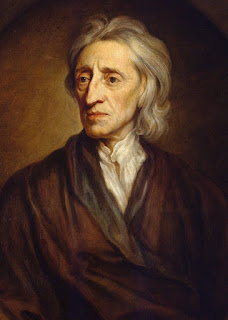
Source: Second Treaties of Government by John Locke, 1690. Graphic: John Locke by Godfrey Kneller 1697.  Public Domain.
Locke and Jefferson

John Locke’s theory on the social contract is a cornerstone of his political philosophy and western democracies, as outlined in his work “Second Treatise of Government.” According to Locke, the social contract is an agreement among individuals to form a government that will protect their natural rights to life, liberty, and property. The social contract is a compromise between man’s inherent natural rights and the need to preserve and protect those rights.

Thomas Jefferson, in his Declaration of Independence builds on Locke’s concepts, tweak is probably a better word. Locke writes that people have “natural rights” to “life, liberty, and estate” (property), and if a government violates these, it’s “dissolved,” giving people the right to form a new one. Jefferson writes into the Declaration its famous “life, liberty, and the pursuit of happiness”—swapping “property” for a broader, aspirational feel. Locke’s idea that government derives legitimacy from the “consent of the governed” shows up when Jefferson lists grievances against King George III, arguing the king’s abuses justify breaking away. And Locke’s justification for revolution—“when a long train of abuses” threatens these rights, people can resist—mirrors Jefferson’s “whenever any Form of Government becomes destructive of these ends, it is the Right of the People to alter or to abolish it.”

Locke’s key points in his Second Treatise:

  1. State of Nature: Locke believed that in the state of nature, individuals are free and equal, governed by natural law, which dictates that no one should harm another in their life, health, liberty, or possessions. Anarchy with adherence to God’s moral code.
  2. Natural Rights: Locke argued that individuals have inherent rights to life, liberty, and property. These rights are inalienable and must be protected by any legitimate government.
  3. Consent of the Governed: Locke emphasized that government derives its authority from the consent of the governed. People agree to form a government to protect their natural rights, and this consent is the basis of political legitimacy.
  4. Limited Government: Locke’s social contract theory advocates for a government with limited powers, designed to serve the common good and protect individual rights.
  5. Right to Revolution: Locke believed that if a government becomes tyrannical and or violates the social contract, the people have the right to revolt and establish a new government that will better protect their rights.

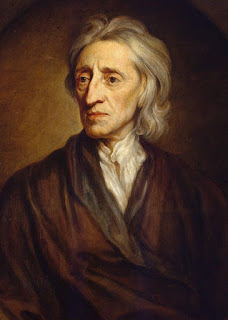
Source: Second Treaties of Government by John Locke, 1690. Graphic: John Locke by Godfrey Kneller 1697.  Public Domain.
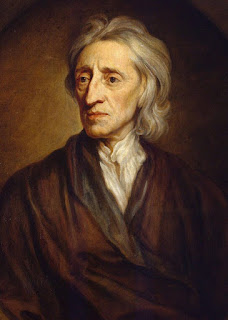
The Legacy of John Locke

The English Bill of Rights was signed into law on 13 February 1689, creating the constitutional monarchy that still exists today, albeit with the monarchy reduced to a figurehead status.

The coronation of William III and Mary II was conditional on their agreeing to the terms stipulated in the Bill of Rights, which included, among others, free speech for members of Parliament, the freedom to bear arms for self-defense, freedom from cruel and unusual punishment, and the establishment of due process.

The Bill of Rights was primarily drafted by members of the English Parliament in response to the abuses of power by King James II, who was overthrown in the Glorious Revolution of 1688.

John Locke’s “Second Treatise of Government” had a significant influence on the English Bill of Rights of 1689. Locke was a proponent of natural rights, the social contract, and the separation of powers, which were foundational to the development of constitutional government. His work emphasized that government should be based on the consent of the governed and that individuals have inherent rights to life, liberty, and property.

Source: JohnLocke.net. Graphic: John Locke, 1697, Public Domain.