The Mystic

Rasputin: Dark Servant of Destiny.  Grigori Rasputin, often referred to as the “Mad Monk,” was a peasant with a fondness for madeira, cheap steaks, and prostitutes. He seemingly cured the Tsar’s son, Alexei, returning him to health by a gift from God: the power of faith.

Rasputin, living by the Russian proverb “You can’t avoid that which is meant to happen,” accepted his fate and was welcomed by the Empress and her son into the royal household with open arms. However, he was later expelled from the royal household by the Tsar and his handlers for violating another Russian proverb: “Don’t bring your own rules into someone else’s monastery.”

Rasputin: Dark Servant of Destiny, a 1996 HBO TV movie seen by almost no one, is Alan Rickman’s tour de force. It provides an exquisite emotional interpretation of religious fervor and mystical power. The film brings the myth of Rasputin into the realm of authenticity and historical plausibility.

The film recreates Rasputin’s madness amidst the early 20th-century events that predated and possibly presaged the madness of events set into motion by Lenin in 1917 (Rasputin was murdered towards the end of 1916). These events led to what Orwell succinctly summarized in “Animal Farm” when the new boss replaced the old boss: “The creatures outside looked from pig to man, and from man to pig, and from pig to man again; but already it was impossible to say which was which.

Genre: Biographical, Drama, Historical

Directed by: Uli Edel

Screenplay by: Peter Pruce

Music by: Brad Fiedel

Cast: Alan Rickman, Greta Scacchi, Ian McKellen, Freddie Finlay

Film Location: Budapest, Hungary and St. Petersburg, Russia

ElsBob: 7.0/10

IMDb: 6.9/10

Rotten Tomatoes Critics: -%

Rotten Tomatoes Popcornmeter: 79%

Metacritic Metascore: -%

Metacritic User Score: -/10

Theaters: 23 March 1996

Runtime: 135 minutes

Source: Rotten Tomatoes, IMDb. Graphic: Rasputin Movie Trailer, copyright HBO.
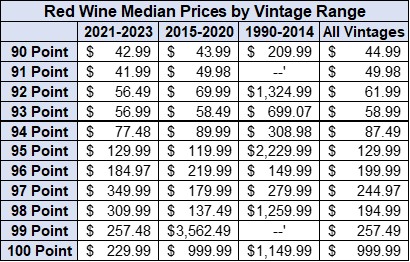
Red Wine Retail Prices

It is time for my yearly posting on red wine retail prices in the US. The ugly part of the post is that wine prices at the retail level have increased substantially; 5-550%, depending on vintage and rating since last year, with an average increase around 20%. The 2021-2023 vintage column for the posted spreadsheet is likely representative of reality while the other columns suffer from low sampling rates for some ratings.

A 90-point red of recent vintage has a medium price around $43. Last year that same quality wine went for about $28. These are medium values for a bottle of wine, half are less, half are more. My personal rule of thumb is that the medium value is the maximum one should pay.  Additionally, at the beginning of 2024 you could easily find a 90-point red for $10-15. You may be able to still find a 90-point red in that price range, but it will take some effort. Most 90-point reds now start at $20.

As with last year, Argentina, Chile, and Spain offer the best value in red wines while France and US tend to be priced 3 to 4 times above those from South America and the Iberian Peninsula.

Money for Nothing

In 1985 Dire Straits released their 5th studio album “Brothers in Arms”, becoming their most successful album while attaining several firsts for the band and British music. It was the first album to sell over a million CDs and the first British album to go 10x Platinum in the UK, eventually reaching 14x platinum.

The whimsical, tongue in cheek firmly planted, “Money for Nothing”, the 2nd track on “Brothers in Arms” was to become their greatest commercial success reaching No. 1 on the Billboard Hot 100 in the United States and winning the Grammy Award for Best Rock Performance by a Duo or Group with Vocal. The song’s partially animated music video was a staple on MTV when the channel focused on music videos.

Mark Knopfler got the idea from listening to hardware store employees who thought rock stars had it easy. He, however, found a successful musician’s life exhausting. In 2009, he remarked, “If anyone can tell me one good thing about fame, I’d be very interested to hear it.”

Source: PDMusic.org. Knopfler…by Ian Young, BBC, 2009. Graphic: Money for Nothing—Dire StraitsVEVO.

Love, Class, and Money

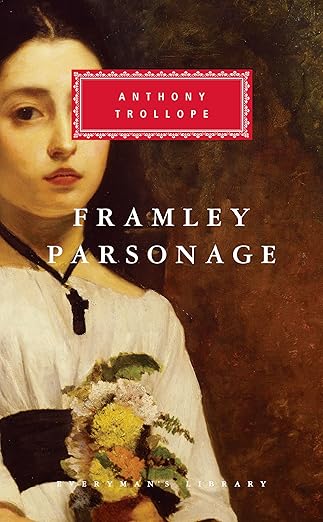
Framley Parsonage, by the Victorian author Anthony Trollope, is the fourth novel in the six-part Chronicles of Barsetshire series. This series is set in the fictional county of Barsetshire in the English countryside and details the social entwinings of the gentry, rich mercantile classes, clergy, and occasionally what we would today refer to as the comfortable middle class. The novels, which can be read in any order, revolve around themes of maintaining social status, finding love, marrying well, and money. Hypocrisy, chicanery, and snobbish attitudes often create dilemmas that Trollope, in a winding but satisfying narrative fashion, concludes as the reader wishes.

Framley Parsonage specifically details the misadventures of the amiable but horribly naive vicar, Mark Robarts, who is a boyhood friend of Lord Ludovic Lufton. Through this friendship, Ludovic’s mother, Lady Lufton, installs Robarts in the Framley Parsonage with a sufficient salary to support his young family’s basic needs. Through a misplaced sense of ambition, Robarts attempts to further his standing in life by associating with a parliament member, charlatan, and aptly named Mr. Sowerby, bringing humiliation and disgrace upon himself.

Trollope displays an absolute sense of enjoyment in writing this novel, skewering the political class with an abundance of wit and satire, along with exploring four marriage sub-plots that he resolves with appropriately deserved denouements of happiness or the lack thereof.

Source and Graphic: Framley Parsonage by Anthony Trollope, Publisher Everyman’s Library, 1994.

Exploits in Dying

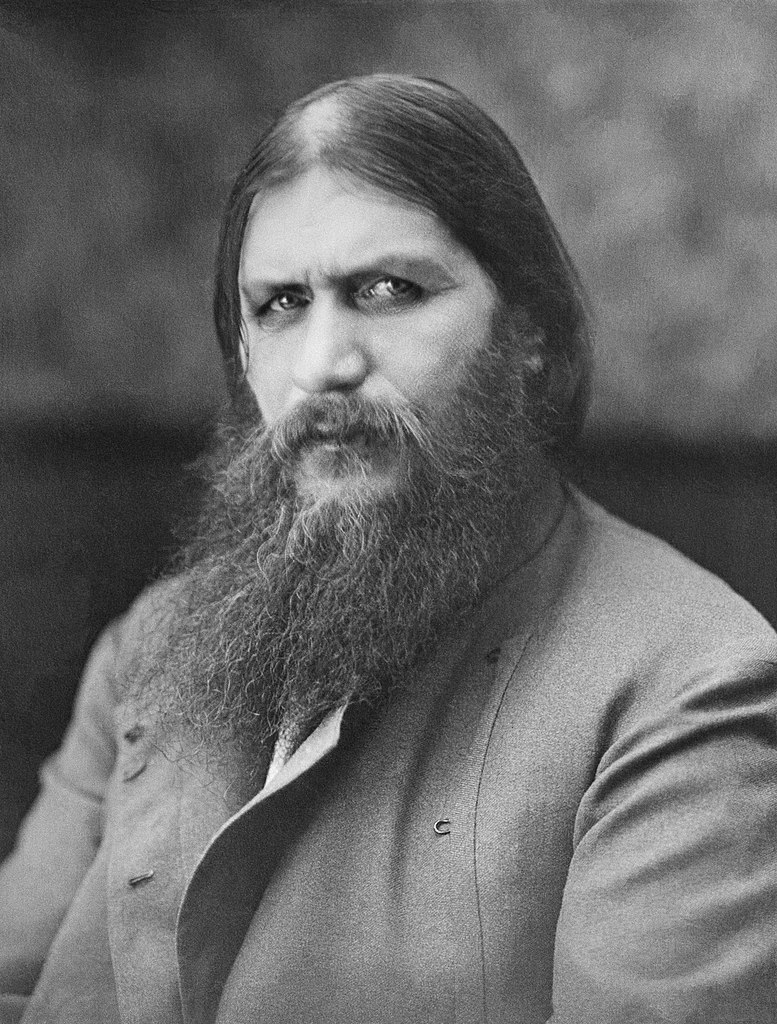
Grigori Rasputin, a Russian mystic, met an inglorious, improbable, and inexplicable end in 1916 at his assassin’s Moika Palace in Saint Petersburg. Although accounts vary, Rasputin’s executioners ostensibly made multiple attempts to murder him. They began with cyanide-laced cakes, which did not achieve their desired outcome. Next, in an attempt to reach a different result with the same measures, they offered him wine fortified with more cyanide. This attained the same result as the first attempt.

Following this, they shot him multiple times, but he continued to move, eventually attacking his would-be murderers. Finally, they wrapped him up in a carpet and tossed him into a freezing river, where he supposedly died of hypothermia.

A less imaginative account of his death suggests that he died from a single bullet to the head.

Rasputin supposedly left a letter, which was read by Alexandra, the wife of Tsar Nicholas II, prophesizing that if he was killed by Russian nobles, the Russian Tsar’s family would be executed within a few years.

Source: Biography, 2021. Graphic; Rasputin, c1910, Russian Empire, public domain. 

15 Million Asteroids

How high’s the water, mama?
Two feet high and rising
How high’s the water, papa?
She said is two feet high and rising”
(Johnny Cash Five Feet High and Rising)

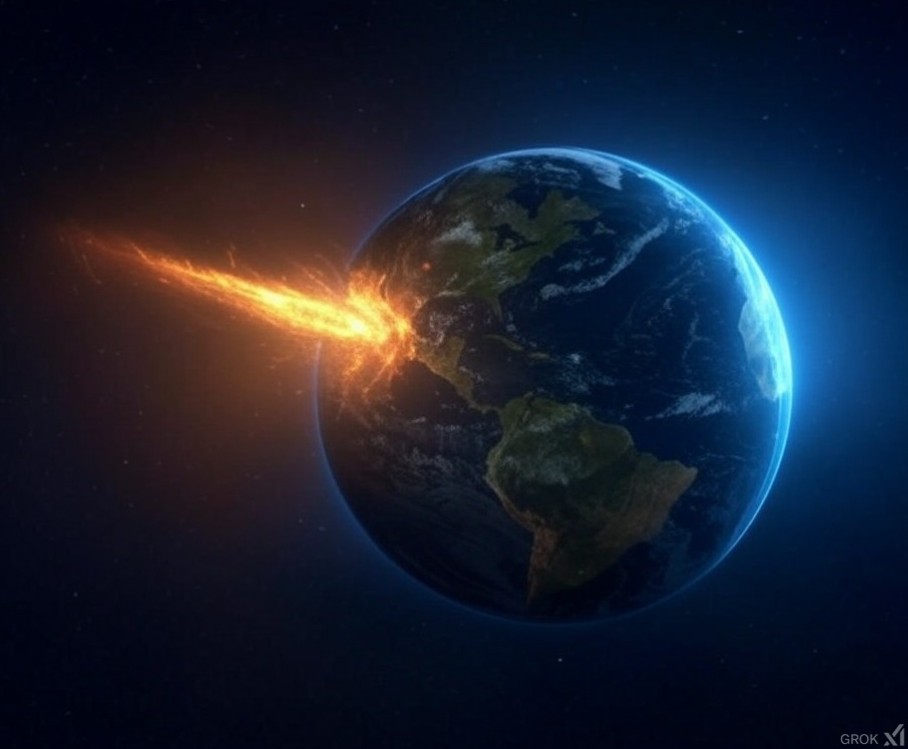
The early development of life on Earth relied on two essential building blocks: carbonaceous (carbon) material and water. It has long been postulated that asteroids, comets, and other planetesimals brought these ingredients to our planet. Water in meteorites existed in the form of hydrous minerals and possibly brine.

Researchers from Rutgers University, led by Professor Katherine Bermingham, studied isotopes of molybdenum from meteorites and Earth’s crust. They inferred that water arrived on Earth during its late accretion phase, around 4.1-3.8 billion years ago. The team also suggested that the water was delivered by inner solar system planetesimals such as comets and asteroids.

This is a crucial milestone in Earth’s development timeline, as there are two competing theories about when water was delivered to our planet: the Moon-Forming Event and the Late Heavy Bombardment (LHB). The Moon is believed to have formed about 4.5 billion years ago, shortly after Earth formed around 4.56 billion years ago, caused by a large object crashing into Earth. The LHB is a period of intense bombardment by planetesimals on the inner planets, occurring around 4.1-3.8 billion years ago.

An inference from the LHB is that all planets and moons existing at that time either contained or still contain water.

Trivia: Assuming the median size of planetesimals striking Earth during its early formation was around 15 kilometers (9.3 miles) with an average water content of 5% of their total volume, it would take about 15,688,960 hunks of rock to supply the current volume of water on Earth. Dividing that number by the LHB time interval of 300 million years suggests a significant impact every 227 months, or roughly every 19 years.

Source: Life-bearing Water, by Bermingham et al, Rutgers, 2025. Graphic: Comet Cometh, Grok, 2025.

Falcon Heavy

Seven Years ago on 6 February 2018, SpaceX’s Falcon Heavy made its maiden voyage, carrying a Tesla Roadster with Starman in the driver’s seat. The rocket is designed to go beyond low Earth orbit but is not certified to carry any sentient biologics.

Recently, astronomers affiliated with Harvard announced the discovery of an asteroid in an orbit uncomfortably close to Earth. Further research by the red-faced researchers revealed that it was the Tesla roadster launched by SpaceX in 2018. The Tesla is in a heliocentric orbit and is currently on its second trip around the sun, according to Pearson.

To date, Falcon Heavy has inserted 11 payloads into GEO, GTO, HEO, LEO, and heliocentric orbits. It has up to 10 more missions scheduled through 2028. Eventually, the rocket will supposedly be retired when Starship is fully operational.

Source: US News. Person. CNET. Graphic: Falcon Heavy Demo Mission, 2018, copyright SpaceX. Falcon Heavy First Launch 6 February 2018, copyright SpaceX.

The Count

Nosferatu: A Symphony of Horror: In this 1922 silent film Count Orlok wishes to establish a new outpost in Germany and become acquainted with his real estate agent’s wife. He finds her neck lovely. The film is a fairly close adaptation of Bram Stoker’s Dracula, but due to objections from the author’s family, the names and places were changed to avoid copyright infringement.

In modern times, this film might seem like a curiosity, but it remains essential viewing for true movie buffs. It stands in the pantheon of early film creators, possibly second only to Georges Méliès’ 1902 classic, Le Voyage dans la Lune (the rocket in the eye of the moon movie).

Both movies pioneered special effects, compelling storytelling, and other cinematic techniques that have been refined through the ages, creating a viewing experience still admired and appreciated today. Nosferatu shocks, sexualizes, and instills suspense to great effect. While it wasn’t the first horror movie (that honor likely goes to The Cabinet of Dr. Caligari, released in 1920), it certainly captured the imaginations of viewers back in the roaring ’20s.

Trivia: The word “Nosferatu” originally comes from the Greek nosophoros, meaning “plague carrier.” Old Slavic languages retained this meaning, and it morphed into being synonymous with the undead or vampires in archaic Romanian. In Chapter 18 of Bram Stoker’s Dracula, Professor Van Helsing states, “The Nosferatu do not die like the bee when he stings once.”

Genre: Horror

Directed by: F.W. Murnau

Screenplay by: Henrik Galeen

Music by: Hans Erdmann

Cast: Max Schreck, Gustav von Wangenheim, Greta Schroder

Film Location: Baltic Sea, Germany, Slovakia

ElsBob: 8.0/10

IMDb: 7.8/10

Rotten Tomatoes Critics: 97%

Rotten Tomatoes Popcornmeter: 87%

Metacritic Metascore: 79%

Metacritic User Score: 7.4/10

Theaters: 4 March 1922

Runtime: 65-94 minutes        

Budget: $

Box Office: $

Source: Rotten Tomatoes, IMDb, Metacritic. Graphic: Count Orlok, Film Poster, Public Domain. Nosferatu Trailer.

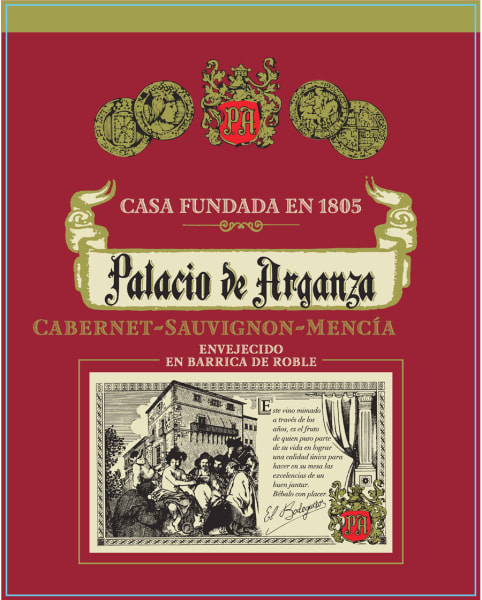
Vinos de Arganza Palacio de Arganza 2021

Other Red Blends from El Bierzo, Spain

Cabernet Sauvignon and Mencia

Purchase Price: $12.99

Wine Enthusiast 91, James Suckling 91, ElsBob 90

ABV 13%

Ruby red in color, aromas of black fruits and flowers, medium to full-bodied, smooth, dry bitter cherry tannins. Ideal with roasted or grilled meats and Spanish shellfish Paella.

An excellent table wine at a very reasonable price…cheap even. Buy a case and set it aside if you can find it.

Trivia: Mencia grapes are only known from the Spanish and Portuguese Iberian Peninsula, producing medium-bodied aromatic red wines that will age well.

Put Your Lights On

While lying in a hospital bed recovering from a major heart attack at the age of 28, Everlast (Erik Schrody, aka Whitey Ford), an American singer and songwriter, wrote the song “Put Your Lights On.” A song of hope, of belief, an affirmation of caring for one’s soul. A powerful message, a warning even, signifying that “all you sinners” need to “watch out” when you find yourself in a dark place and “Put Your Lights On.”

Everlast penned the song in 1998, and after Carlos Santana asked him to contribute a track to his new album, it was included in the “Supernatural” album release in 1999. The song won a Grammy for Best Rock Performance by a Duo or Group with Vocal. As a single, it reached #18 on the charts.

Source: Songfacts. Graphic: Put Your Lights On, Santana, 2021, Video Remastered, Santana VEVO. Put Your Lights On cover 1999, copyright Arista Records.