Marietta Cellars Old Vine Red Lot 74

Other Red Blend from Sonoma County, California

Vintages from 2019, 2020, 2021

Zinfandel (predominate), Syrah, Petite Sirah, Carignan, Grenache, Barbera

Purchase Price: $9.24

Robert Parker 93,Wilfred Wong 91, ElsBob 91

ABV 13.5%

A medium-to-dark purple wine with aromas of black fruits, a touch of earthy musk; medium bodied, supple but tannic, dry, with a medium finish. This wine will pair well with almost any food or as an afterwork refreshment.

An excellent table wine at a great price. I picked it up for under $10 but the lowest price I’ve seen lately is still a very reasonable $15.

Swollen Caricatures

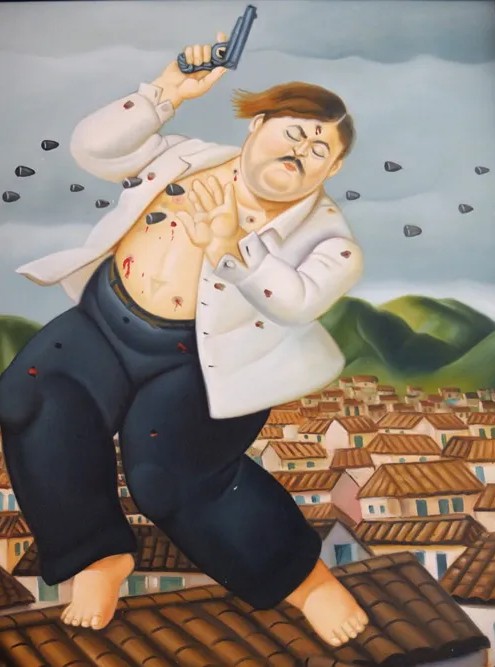
Fernando Botero Angulo, 1932-2023, was a Columbian practitioner of figuraism in paint and sculpture, a style where reality is discernable but changed to reflect the artist’s interpretation of his or her world. His unique style has taken on a life of its own and has become known as Boterismo where he exaggerates reality by inflating his objects, mimicking a fat farm on a carbo diet, injecting, according to some, a humor inherent in his plus sized models but it all seems so melodramatic. A melancholic need to explore life’s downsides, forcing the viewer to share not the beauty of life but its complexities and vulnerabilities. There is no happiness in his paintings, just a humorless life.

His style, not far removed from Legar’s Tubism, was the artist’s attempt to find himself and to relieve the self-inflicted anxiety that came from his mode of outward expression not matching his inward vision. He states that “…the moment comes when the painter manages to master the technique and at the same time all of his ideas become clear: at that point his desire to transpose them faithfully onto the canvas becomes so clear and compelling that painting becomes joy itself.”

Botero’s 1999 painting, “The Death of Pablo Escobar”, a mafioso interpretation of Chagall’s “Fidler on the Roof”, was an attempt to capture the violence that the drug kingpin brought to Columbia and the world. Standing atop Columbian society, Escobar was laid low by his chosen swordian method of rule: bullets. The artist’s son Juan Carlos Botero states that his father wanted to reflect on the magnitude of the tragedy that Escobar’s actions meant for Columbia, but he also magnified the beast in the man, reminding the world that Columbia and Escobar were once synonymous. A cruel man ruling over a dysfunctional society that he created.

Source: Botero by Rudy Chiappini, 2015. Graphic: The Death of Pablo Escobar by Botero, 1999.

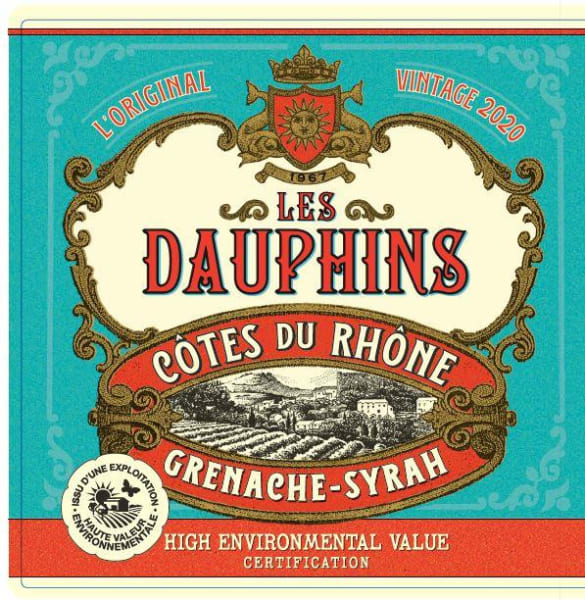
Cellier des Dauphins Les Dauphins Cotes du Rhone Rouge 2020

Rhone Red Blend from Cotes du Rhone, Rhone, France.

Grenache 80%, Syrah 20%

Purchase Price: $13.99

Wine Enthusiast 90, Wine Searcher 87, ElsBob 88

ABV 14.0%

Aromas of black fruits, spice; medium-full bodied, semi-bold, tanninc, with an easy short finish. A good wine to pair with pizza or strong cheese.

A very good fine wine at a fair price.

Geo Anomalies

NASA has identified the South Atlantic Magnetic Anomaly (SAA) as a region off the coast of South America, where Earth’s magnetic field is significantly weaker. This weakening reduces magnetic shielding, exposing satellites and spacecraft to higher levels of radiation and posing a risk to their operation. Understanding the causes and implications of the SAA is essential for addressing these LEO challenges.

One hypothesis suggests that irregularities at the core-mantle boundary disrupt the geodynamo, the mechanism generating Earth’s magnetic field. The anomaly’s alignment with submarine volcanic features hints at possible links between mantle-crust interactions and magnetic disturbances. Additionally, a hotspot near the Mid-Atlantic Ridge corresponds to a geomagnetic intensity minimum at the core-mantle boundary, implying that thermal and compositional anomalies in the mantle may affect convection in the molten outer core, creating localized variations in the magnetic field.

Further research using subsurface imaging will help in uncovering the internal processes shaping Earth’s magnetic field and enhancing our understanding of the planet’s protective geodynamo.also assist in predicting magnetic anomalies and their effect on LEO space flight in the future.

Source: NASA. Graphic. Core Geomagnetic Anomaly, NASA.

Bottle Bottoms

The bottom of your wine bottle is more varied and interesting than one would initially expect. They come flat, convex, textured, embossed, thickened, punted, and two-tiered. As varied as Samwise Gamgee’s potato servings.

Starting with the easiest to manufacture and thus likely the cheapest is the flat bottom wine bottle. And because it doesn’t conform to historical and aesthetic traditions it’s also the rarest. The flat bottom is more likely to be encountered in the spirit world, but Aldi-Chapter and Verse and Garcon wine labels sell flat bottoms, generally to the casual wine enjoyment crowd, with wines rated as good in the 83–85-point range. Interesting enough Garcon bottles with flat bottoms are also squashed into a flat oval like a quarter mile running track, so they fit into UK letterbox openings.

Although rare, a very slight convex bottom is also used on some bottles, mostly liqueurs such as Galliano for aesthetic reasons. The bottles that employ this feature require some additional features to keep them upright on store shelves.

Textured and embossed bottoms are a common feature in the fine wine market. The textured bottoms are mainly for stability, keeping the bottle in one place on a wet surface such as bar or table. Occasionally practical details such as volume or manufacturing symbols are embossed on the bottom of the bottle, with higher end wines also adding in branding, batch numbers, and other unique marks.

Thickened bottoms are usually restricted to bottles needing extra stability when standing upright or to supply structural support for wines under pressure such as Champagne or Prosecco.

Which brings us to the ever-present punt on the bottom of almost all retail wine bottles. They have been in use for centuries creating the classic lost-to-the-past conundrum of why it was there in the first place. This forgotten history has created myriad possibilities for the small inward cone at the bottle’s base. In manufacturing the punt ensures a more consistent base plus it makes the bottle stronger. On the practical side it is theorized that the punt helps collect sediment at the bottom, improves grip on the bottle, or it helps create the illusion that the bottle has a larger volume.  Then there is aesthetics, a punt just looks cool. In the end no one knows why it exists, but everyone has a theory.

Finally, there are two-tiered bases where a flat bottom covers over the punt creating a hollow enclosed cavity. An example is the DobleAlto dual tiered base bottle that mixes and matches the order of the punt and flat bottom such as shown in the graphic where the flat bottom is above the punt. The two-tier base may have been invented for structural integrity reasons but most likely it was a way to make a product stand out from its competitors.

Getting to the bottom of bottoms is an involved process. Happy investigations and cheers.

Graphic: DobleAlto bottle from Global Package.

April Fools

April Fool’s Day brings pranks, jokes, and ‘kick-me’ notes to the consternation of almost all. The silliness has its foundations a long way in the past, nearly 450 years ago by some estimates, and is still going strong.

While its actual roots are debated, one popular explanation suggests that the origins of April Fool’s Day go back to the change from the Julian to the Gregorian calendar which occurred on 15 October 1582. Under the Julian calendar the new year began on April 1 and was moved to January 1st under the new calendar.

The transition to the new calendar was announced in Rome by Pope Gregory and was quickly adopted in Catholic countries such as Spain and Portugal but other areas found its adoption was slower, either through slow communications, religious differences, or just resistant to change.

Since the change over to the new calendar was slow, some people and communities continued to celebrate the New Year on April 1st and were roundly mocked as April Fools. This mockery quickly morphed into jokes, both vernacular and practical, which continued to this day.

The BBC has become known for their irreverent April Fool’s jokes. In 1957 they showed their viewers a clip of Swiss farmers harvesting spaghetti from trees, with many in their audience calling in to find out how they could grow their own spaghetti trees. In 1980 the BBC told its listeners that Big Ben was going to a digital readout and followed that up with an announcement that clock hands would be sold off to the first four that called in.

Paris in the Evening

Henri Toulouse-Lautrec, born in 1864, was a unique figure among French nobility and artists. Despite his diminutive stature and aristocratic lineage tracing back to Charlemagne, Lautrec defied conventional expectations with his eccentric, mischievous character, and individualistic style. While influenced by the Impressionists, exemplified by masters like Monet and Degas, he later embraced the Post-Impressionist movement alongside Gauguin and Cézanne, leaving a distinctive mark on the art world. Post-Impressionists diverged from their predecessors by infusing their work with deeper emotion, personal experiences, and greater individualism. Their bold brushwork, exaggerated colors, and unconventional techniques laid the groundwork for the future, anticipating Expressionism.

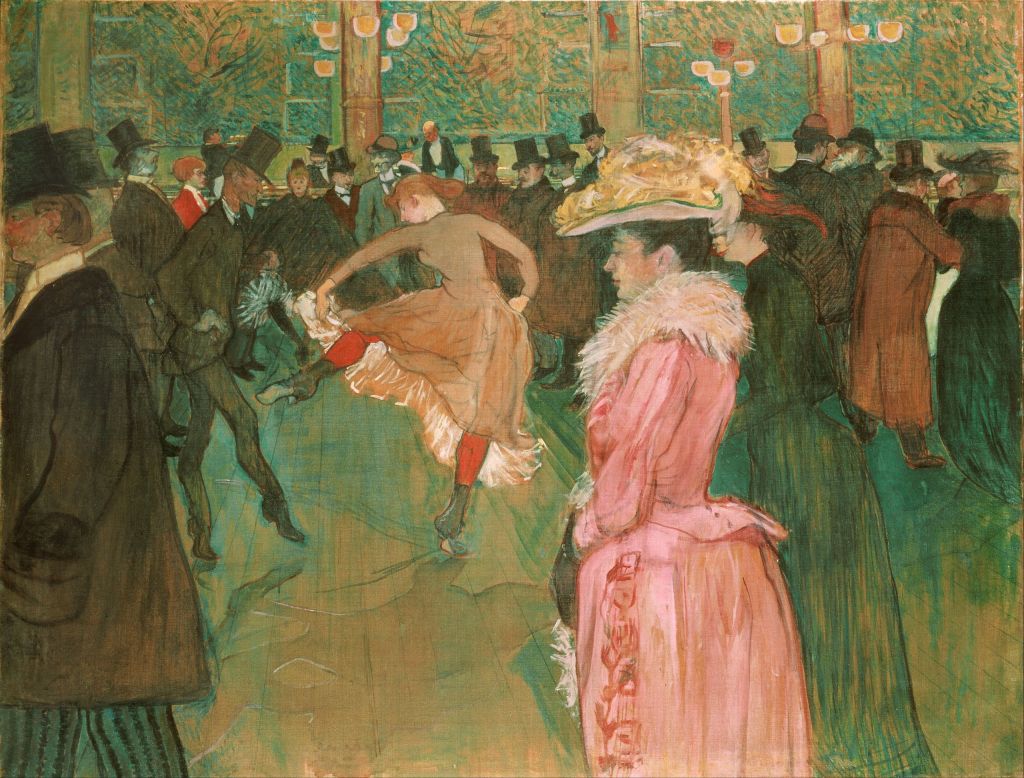
Parisian nightlife was a cornerstone of Lautrec’s art, and At the Moulin Rouge: The Dance stands as his most famous painting, portraying fashionable society and featuring many of his friends and family in a composition of overlapping planes with a perspective that subtly defies reality and logic. The artwork is divided into three distinct planes. The static background features figures such as Lautrec’s father, the poet Yeats, and Jane Avril, a renowned can-can dancer nicknamed “Crazy Jane,” who was both a close friend of Lautrec and a frequent model. In the center, the action unfolds as Valentin le Désossé, a gentleman in a top hat, instructs a cabaret dancer in new steps. The foreground is a detailed study of a contrasting passivity from the central swirl. The viewer’s eye swings between the galloping dancer in earthy tones accented by orange stockings and the quiet, introspective woman in pink.

Lautrec intentionally distorted the painting’s perspective, evident in the mismatched linear lines of the floorboards and fluid, swaying shadows that resemble a confused liquid more than lighting effects. These artistic choices enhance the surreal atmosphere of the scene, amplifying the contrast between the hyper-dynamic dancer and the passive, tranquil surroundings. Through At the Moulin Rouge: The Dance, Lautrec masterfully evokes the opposing vibrant activity and a ‘to be seen’ spirits of Parisian nightlife, providing a vivid outline while inviting viewers to interpret the finer details themselves.

Source: Toulouse-Lautrec by Doughlas Cooper, 1982. Graphic: At the Moulin Rouge: The Dance, Toulouse-Lautrec, 1890. Philadelphia Museum of Art. Public Domain.

Black Swans Part II

Last week, we introduced Taleb’s definition of black swans; rare, unpredictable ‘unknown unknowns’ in military terms, with major impacts, exploring historical examples that reshaped society post-event. This week I’m going to introduce a fictional black swan and how to react to them but before that the unpredictable part of Taleb’s definition needs some modifications. True black swans by Taleb definition are not only rare but practically non-existent outside of natural disasters such as earthquakes. To discuss a black swan, I am going to change the definition a bit and say these events are unpredictable to most observers but predictable or at least imaginable to some. Taleb would likely call them grey swans. For instance, Sputnik was known to the Soviets, but an intelligence failure and complete surprise to the rest of the world. Nikola Tesla anticipated the iPhone 81 years ahead of time. 9/11 was known to the perpetrators and was an intelligence failure. Staging a significant part of your naval fleet in Pearl Harbor during a world war and forgetting to surveil the surrounding area is not a black swan, just incompetence.

With that tweak out of the way, we’ll explore in Part II where Taleb discusses strategies to mitigate a black (grey) swan’s major impacts with a fictional example. His strategies can be applied to pre-swan events as well as post-swan. Pre-swan planning in business is called contingency planning, risk management, or, you guessed it, black swan planning. They include prioritizing redundancy, flexibility, robustness, and simplicity, as well as preparing for extremes, fostering experimentation, and embracing antifragility.

Imagine a modern black swan: a relentless AI generated cyberattack cripples the Federal Reserve and banking system, wiping out reserves and assets. Industry and services collapse nationwide and globally as capital evaporates, straining essentials, with recovery decades away if ever. After the shock comes analysis and damage reports, then the rebuilding begins.

The Treasury, with no liquid assets, must renegotiate debt to preserve global trust. Defense capabilities are maintained at a sufficient level, hopefully hardened, to protect national security, while the State Department reimagines the world to effectively bolster domestic production and resource independence while keeping the wolves at bay.

Non-essential programs, from expansive infrastructure projects, research, federal education initiatives, all non-essential services are shelved, shifting priorities and remaining resources to maintaining core social and population safety nets like Social Security and Defense. Emergency measures kick in: targeted taxes on luxury goods and wealth are imposed to boost revenue and redirect resources. Tariffs encourage domestic production and independence.

Federal funding to states and localities is reduced to a trickle. States and municipalities must take ownership of essential public services such as education, water, roads, and public safety. The states are forced to retrench and innovate, turning federal scarcity into local progress.

Looking ahead, resilience becomes the first principle. Diversification takes center stage, with the creation of a sovereign wealth fund based on assets like gold, bitcoin, and commodities, bolstered by states that had stockpiled reserves such as rainy-day funds, ensuring financial stability. Local agriculture, leaner industries and a realigned electrical grid, freed from federal oversight, innovate under pressure, strengthening a recovery. Resilience becomes antifragility, the need to build stronger and better in the face of adversity. And finally, the government must revert to its Lockean and Jeffersonian roots, favoring liberty and growth over control, safety, and stagnation: anti-fragility.

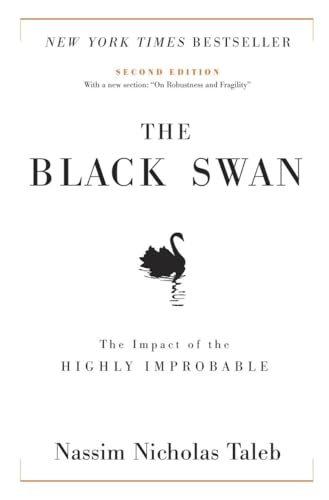
Source: The Black Swan by Nassim Nicholas Taleb, 2007. Graphic: The Black Swan hardback cover.

The Fable of the Turkey

Drum, a plump turkey, trusted his caring master, Strum, who fed him daily and cooed, “You’re the finest bird here.” Drum, a data geek, tracked his weight, 18 pounds on day 300, projecting 24 by day 400. On day 364, a Wednesday, he lost his head and some weight. By Thursday, day 365, Strumpf found him tasty, and his weight hit zero. Blind trust in trends can carve you up.

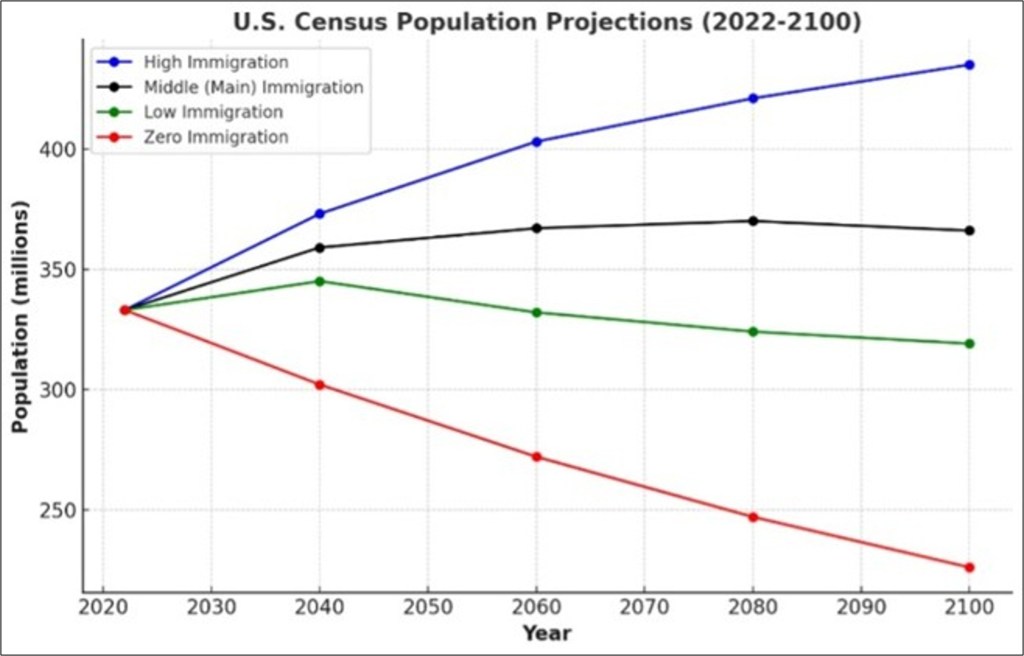
The Census Bureau’s 2023 Population Projections for the U.S. to 2100 play the same game. This “projection, not prediction” uses births (Total Fertility Rate, TFR, at 1.6), deaths, and net migration, spinning four population scenarios: Zero Immigration (333 million today drops to 226 million, down 32%), Low (down to 317 million), Main (up to 369 million), and High Immigration (435 million with 1–1.5 million newcomers yearly). Only immigration increases the population; births and deaths stay flat. It’s 78 years built on 2–3 years of data; no risks, no “what ifs,” no alternatives.

This is a house of cards sold as insight. Projections might hold up in the short term, but 78 years? Please. The Census Bureau, I assume, pitches this study for policy, budgets, districts, but it’s a narrative push: immigration or bust. Zero immigration craters us to 226 million; 1.5 million new bodies annually swells the population to 435 million. Yes, immigration boosts numbers, but why’s it the only solution? No probe into low births, no fixes beyond “import more bodies.” It’s not analysis, just bait for Congress and the public.

A growing or declining population has consequences. A 30% drop could tank GDP and programs such as Social Security. Or yield cheaper homes and a leaner U.S., like Japan (96 million by 2050, still thriving). Growth has costs too, more support for Social Security but more sprawl, maybe more crime, resource strains but the Census skips over those trade-offs. And a low TFR isn’t fate. The WWII generation raised four kids on $60,000 (adjusted) when homes were $12,700. Now we have $420,000 homes, $65,000 wages, and $10,000-per-kid childcare, maxing out affordable families at two. Inflation (2%+ since ‘71) and $36 trillion in debt, increasing by a trillion every 3 months, destroyed the dollar and concomitantly the Federal Reserve and government killed big families.

Increasing family size is a choice. Possible solutions to reverse the trend are tax credits at $5,000 per kid, or even an expanding credit for each additional child above 2, could lift TFR from 1.6 to 2.1 by 2035. That’s 700,000–1 million extra births annually within a decade, millions more Americans by 2050, no immigration spike needed. Cut housing costs by slashing senseless regs, open land to building, drop mortgage rates to 1%) and one income might work again. A declining family size is a choice, not a given.

The Census Bureau releases raw numbers, no “why,” no debate. Immigration’s one fix but not the only one. The government broke the system; it can unbreak it. Next time, Mr. Census Bureau, ask some questions, beyond just slinging spurious stats to support a preferred narrative.

Source: Census Bureau, The Black Swan, Fable of the Bees.  Graphic: Population Projections by the Census Bureau.
Party On

Wine bottle sizes have wonderfully creative and often biblical names although when or who named them is lost in the mists of time. Below is a listing of the common and uncommon ones:

  • Split or Piccolo: 187.5 mL or one-quarter of a standard 750 mL bottle. Usually used for sparkling wines. Piccolo means little or small in Italian and is the smallest standard wine bottle.
  • Half Bottle or Demi: 375 mL or a half of a standard 750 mL bottle. Demi is half or less than whole in Latin.
  • Standard: 750 mL This is the most common size for a wine bottle.
  • Magnum: 1.5 liters or two standard bottles. Magnum comes from the Latin meaning great or large.
  • Double Magnum: 3 liters or four standard bottles.
  • Jeroboam: 3 liters for Champagne and Burgundy bottles or 4.5-5 liters for Bordeaux bottles. The volume difference between the varietals is historically unclear, but Bordeaux wines continually seek grandeur at the expense of everyone else. Additionally, the Jeroboam for Bordeaux was 4.5 liters until 1978 when it switched over to the 5-liter size. Jeroboam was the first king of the northern Kingdom of Israel, from 931-910 BC, after the monarchy split into the ten tribes remaining in the north and Judah and Benjamin claiming south.
  • Rehoboam: 4.5 liters only used for sparkling wine. Rehoboam, son of Solomon, was the last king of a united Israel. The northern tribes started to rebel against Solomon before his death, leading Rehoboam to relocate to Judah shortly after his coronation over the united Israel. He ruled over Judah from 931-913 BC.
  • Methuselah: 6 liters used for sparkling wine or Burgundy. Methuselah was a biblical patriarch and the oldest person, 969 years, mentioned in the bible. He was the son on Enoch, father of Lamech, and grandfather to Noah. The name Methuselah, now synonymous with exceptional longevity, is traditionally believed to have meant “his death shall bring” during his lifetime. Tradition holds that he died in the same year as, but just prior to, the Great Flood, indicating that his life may have foreshadowed this event.
  • Imperial: 6 liters or eight standard bottles. The meaning is possibly related to the region’s historical emphasis on creating wines worth of royalty and at 6 liters capable of serving several blue bloods in one sitting.
  • Salmanazar: 9 liters equivalent to 12 standard bottles. The name likely refers to Shalmaneser V, an Assyrian king who reigned from 727 to 722 BCE. He is mentioned in the Bible for his conquest of Samaria and the exile of the northern Kingdom of Israel’s inhabitants. The dispersal of the inhabitants at this time became known as “Ten Lost Tribes”.
  • Balthazar: 12 liters is equivalent to 16 standard bottles. Balthazar is traditionally known as one of the Three Magi who visited the infant Jesus after his birth. According to Christian tradition, Balthazar was the King of Arabia and brought the gift of myrrh to Jesus, symbolizing suffering and death. Myrrh during ancient times was not only used incense and perfumes, but it was also associated with embalming and anointing the dead including Jews. It was gift that foreshadowed Christ’s end.
  • Nebuchadnezzar: 15 liters or 20 standard bottles. This monster, including wine and the bottle would weigh at least 40 lbs. Nebuchadnezzar II, ruling from 605-562 BC, was a Neo-Babylonian king. He is renowned for his military conquests, notably the destruction of Jerusalem and Solomon’s temple, and the exile of the Jewish people in 586 BC, marking the third major instance of Jewish exile in ancient history.