“The answer to the ultimate question of life, the universe, and everything is 42” Douglas Adams.
But to the question “Are we alone?”—the answer leans towards likely,” ElsBob.
In a recent systems-thinking thought experiment, researchers from Germany and the U.S. revisited the statistical “Hard Steps” model, originally proposed by Brandon Carter in 1983, which aimed to estimate the probability of intelligent life emerging. Carter’s model focused on rare biological milestones—such as photosynthesis and multicellularity—concluding that intelligent life should be exceedingly rare due to the improbability of these “hard steps.”
In a February 2025 paper, Mills et al. propose a tweak to this framework. Rather than life’s progression depending on a handful of unlikely biological breakthroughs, they suggest Earth’s environmental evolution—marked by the presence of water, organic compounds, oxygen, and geochemical shifts—created a more gradual pathway toward complexity. They argue that these conditions didn’t so much lower the odds of each step but reframed life’s development as a cumulative process, softening the gauntlet of improbable hurdles envisioned by Carter.
Is this new? Not entirely. The idea that life’s journey—from planetary formation to advanced neural systems, language, and sociocultural structures—unfolded as a process has roots in the 1950s, with pioneers like Urey and Miller. What’s novel in Mills et al.’s work is their integration of geological timelines and Bayesian reasoning to qualitatively soften the perceived improbability of life’s emergence, rather than delivering a fully quantitative overhaul of the Hard Steps model. Where Carter’s framework likened intelligent life to finding a unicorn, this tweak nudges it from “highly improbable” to “slightly less than highly improbable.”
Now, the fun part—calculating the odds of a planet fostering life advanced enough for Alan Turing to deem it intelligent.
The “witch’s cauldron” of variables for simple life might include (though not exhaustively): a planet in the habitable zone, liquid water, organic molecules, self-replicating systems, protocell formation, anaerobic metabolism, photosynthesis, aerobic respiration, multicellularity, geochemical cycles, plate tectonics, ocean currents, atmospheric dynamics, natural radiation, planetary stability, appropriate size and gravity, and a protective magnetic field—plus, perhaps, a partridge in a pear tree. Estimating these probabilities is speculative, but let’s assume a rough combined probability for simple life emerging on a suitable planet. Using reasonable constraints, Grok 3 might estimate this at approximately 1 in 1 billion (10⁻⁹).
The leap to sentient, intelligent life adds further layers: advanced neural systems, social organization, cultural evolution, time, and a dash of random chance. These additional factors could reduce the odds by another factor of 1,000, shifting the probability to between 1 in 1 trillion (10⁻¹²) and 1 in 1 quadrillion (10⁻¹⁵). These are back-of-the-envelope figures, grounded in the spirit of the thought experiment rather than precise data.
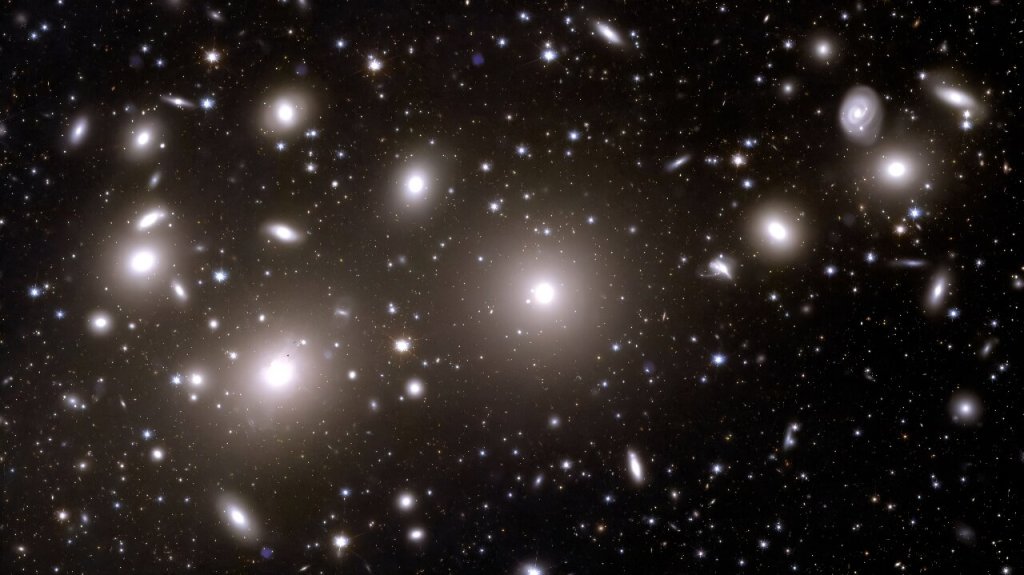
To make these abstract numbers relatable, let’s scale them to the universe and our galaxy. Current estimates suggest the observable universe contains roughly 100 billion galaxies (10¹¹), each with an average of 100 million stars (10⁸). Assuming 3 planets per star (a conservative guess based on exoplanet studies), that yields approximately 3 × 10¹⁹ planets—30 quintillion—across the universe. In the Milky Way, with 100 billion stars (10¹¹), we might estimate 300 billion planets (3 × 10¹¹).
Applying the probabilities:
Simple life in the universe: At 1 in 1 billion (10⁻⁹), roughly 3 × 10¹⁰ planets—30 billion—might host simple life.
Intelligent life in the universe: At 1 in 1 trillion (10⁻¹²) to 1 in 1 quadrillion (10⁻¹⁵), between 30 million (3 × 10⁷) and 30,000 (3 × 10⁴) planets might harbor intelligent life.
Simple life in the Milky Way: At 1 in 1 billion (10⁻⁹), about 300 planets (3 × 10²) could sustain simple life.
Intelligent life in the Milky Way: At 1 in 1 trillion (10⁻¹²) to 1 in 1 quadrillion (10⁻¹⁵), the odds drop to 0.3 (3 × 10⁻¹) to 0.0003 (3 × 10⁻⁴) planets—statistically less than 1.
Across the vast universe, intelligent life seems plausible on millions or thousands of planets, depending on how pessimistic the odds. On a galactic scale, though one planet with intelligent life is statistically improbable meaning that Earth is likely alone in the Milky Way as far as sentient beings are concerned. Still, these numbers remain speculative, blending science with educated guesswork—and a touch of cosmic whimsy.
Source: …Evolution of Intelligent Life, Mills, et al, Science Advances 2025. Graphic: Grok 3 Drawn DNA.



 elsToday