Epistemic Humility

Donald Rumsfeld, expanding on Socrates’ statement, “The only true wisdom is in knowing you know nothing,” pedantically states in the year 2002 that, “There are known knowns—things we know that we know. There are known unknowns—things we know we don’t know. But there are also unknown unknowns—things we don’t know we don’t know.

Which suggests that we all are pre-ordained to a life of study to shorten the list of unknowns and the embarrassment of being unprepared.

G.K. Chesterton anticipating that a lifetime, or something less than a lifetime of study has its dangers, warned in his 1908 collection of essays, “All Things Considered,” “Without education, we are in a horrible and deadly danger of taking educated people seriously.” Implying that a myopic education may allow for mastering a single subject but is ill-equipped to understand anything broader; unable to see the forest for the trees.

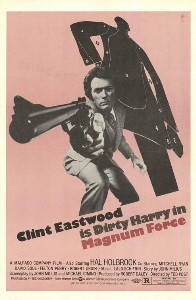
Which leads us to the 1973 “Magnum Force” with Clint Eastwood, wielding a Smith and Wesson Model 29 .44 magnum in a Dirty Harry hand, explaining to an unfortunate soul that “A man’s got to know his limitations,” highlighting the concept of epistemic humility: the recognition that one’s knowledge and understanding is always limited and to proceed accordingly.

Source: Socrates. G.K. Chesterton. Socratic-Method.com.  Graphic: Magnum Force poster, copyright Warner Bros.

Rights of the Free

Thomas Paine, American Founding Father, philosopher, and inventor authored some of the most influential and inspirational works supporting the American Revolution: The American Crisis and Common Sense. He also wrote a rousing defense of the 1789 French Revolution: The Rights of Man.

Paine’s thesis in “The Rights of Man” is that human rights are natural rights, inalienable, and not subject to the caprices of the governing class. They cannot be repealed. He asserts that men are born free and equal, and the government’s purpose is to preserve these natural rights, chiefly: liberty, security, property, and resistance to oppression.

Paine, like Thomas Jefferson in the Declaration of Independence, believed that citizens must stand firm against tyranny to uphold the principles of justice and liberty. Jefferson’s eloquence is unparalleled when he wrote in the Declaration: “Governments are instituted among Men, deriving their just powers from the consent of the governed, –That whenever any Form of Government becomes destructive of these ends, it is the Right of the People to alter or to abolish it, and to institute new Government…”

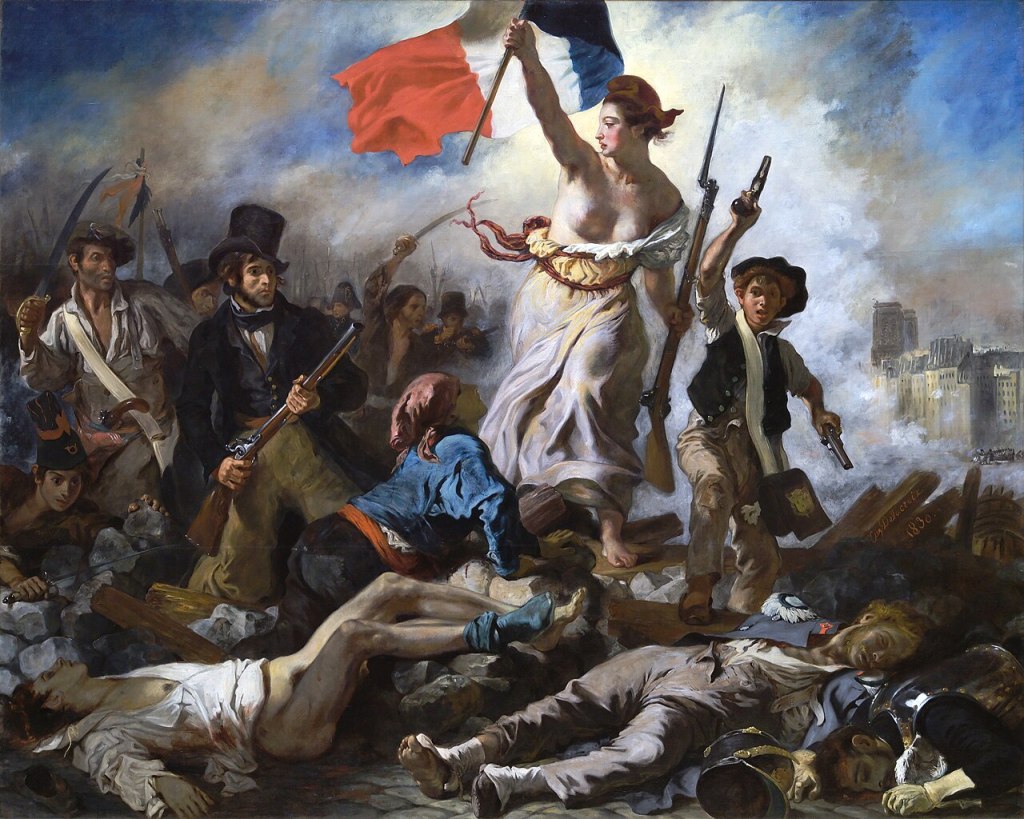
Source: Rights of Man by Thomas Paine, 1791. Graphic: Liberty Leading the People by Eugene Delacroix 1830. Public Domain.

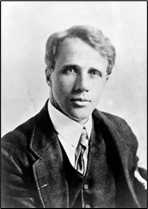
It Goes On

“In three words, I can sum up everything I’ve learned about life. It goes on.” 

So said Robert Frost on his eightieth birthday when journalist Ray Josephs asked him what the most important thing he has learned about life.

The full quote as captured in Josephs’ ‘This Week Magazine’ article:

In three words, I can sum up everything I’ve learned about life. It goes on. In all the confusions of today, with all our troubles . . . with politicians and people slinging the word fear around, all of us become discouraged . . . tempted to say this is the end, the finish. But life — it goes on. It always has. It always will. Don’t forget that.’

Source: Quote Investigator. Graphic: Robert Frost c 1910s. Public Domain.

The Divine Comedy:

William Blake (1757-1827), in the final years of his life created 102 watercolors and 7 copper plates, most unfinished, for Dante’s ‘The Divine Comedy’. One of the more profound and captivating of these paintings is ‘Antaeus Setting Virgil and Dante into the Ninth Circle of Hell’.

The giant Antaeus, son of Neptune and Gaia, was invincible as long as he remained attached to his mother. Hercules, for his 11th task, had to defeat Antaeus but couldn’t if he touched the Earth, so he lifted him off the ground and strangled him to death.

The Ninth Circle is reserved for the treacherous and is subdivided into 4 rings. The first part is reserved for familial traitors and is named Caina as in Cain and Abel. The second ring, Antenora for Antenora of Troy is for national traitors. Ptolomaea for Ptolemy is the third ring for those who betray their guests. Finally, the inner ring is called Judecca for Judas Iscariot betrayer of Christ and is for the worst traitors: those who turn on their masters. At the center of the Ninth Circle resides Satan.

Finally, as an aside, Dante’s ‘The Divine Comedy’ shouldn’t be interpreted as The Divine Humor, but as The Divine Outcome. The author meant that comedy was the opposite of tragedy. Tragedies begin well and end badly, but Dante’s Comedy begins badly, in Hell, and ends well with Dante reaching his desired destination: Heaven.

Source: Will Blake, The Divine Comedy by David Bindman, 2000. The Divine Comedy by Dante Alighieri, circa 1321. Bulfinch’s Mythology, 1867. Graphic: Antaeus Setting Down Dante and Virgil in the Last Circle of Hell, Blake, 1827, Public Domain.

Mesopotamian Life After Death

Five thousand years ago, Sumerians and Akkadians, occupying what is now southern and central Iraq, respectively, believed souls or spirits after death occupied a subterranean world called Kur or Irkalla.

All those who entered this underworld could not leave but it was not hell or heaven but more of a place to exist after death; as a ghost of your past.

There is no record that Mesopotamians in 3000 BC believed in reincarnation, resurrection, or any form or transmigration of the soul.

With many exceptions, the spirit or ghost that existed in the netherworld maintained the social status that they had when alive. Thus, kings were still kings, slaves were still slaves.

In the Epic of Gilgamesh, he and his friend Enkidu ventured into this underworld to retrieve their lost magical objects and to seek immortality. They did not find the magical objects, but they did find the Plant of Immortality but promptly lost it to a serpent, learning one of the earliest lessons for humanity: never entrust your life to a snake.

Source: Epic of Gilgamesh. Mesopotamian Beliefs by Chaksi, 2014, World History. The Afterlife by Enlightenment Journey. Graphic: Ziggurat of Ur, 21st century BC, dedicated to the Moon god Nanna.

The Myth of Er

In Plato’s Republic, and his Phaedo, the Myth of Er is recounted to explain the immortality of the soul and the importance of keeping one’s soul morally pure. Myth in this story doesn’t mean the fable or legend of Er but the word or account of Er.

In the Myth of Er a soldier killed in battle is taken to the afterlife where souls are judged for their actions on Earth. Er, though, rather than be judged, is allowed to witness the fate of new souls’ arrival and report his sights and experiences back to the people of Earth.

The judges send the good souls upward through the celestial spheres, which Plato modeled as the Spindle of Necessity; to further cleanse their souls so they can be sent back to Earth to inhabit a new body, forgetful of their past life. The bad souls descend into the ground and return dirty and tired where they are required to pay a penalty before returning to a new life on Earth. The truly evil are forever confined to the underground to be tormented until the end of time.  

In the Myth of Er the three Fates are responsible for weaving the threads of man’s destiny, maintaining the cycle of birth, experience, and death symbolized by the Spindle of Necessity.

Source: Greek Mythology.com. Plato’s Phaedo. Plato’s Republic Book 10. Epoch Times. Graphic: The Three Fates, painting by Paul Thumann, c. 1800s. Public Domain.

Pericles-Funeral Oration:

At the end of first year of the Peloponnesian War in 431 BC Athenians held the customary public funeral to honor the soldiers who gave their lives in the war against Sparta. As Thucydides records in his “History of the Peloponnesian War” the funeral was a procession of citizens that ushered ten cypress coffins representing the ten Athenian tribes plus one more for the soldiers not recovered from the field of battle to the public graveyard at Ceramicus.

Thucydides further states that “When the bodies had been buried, it was customary for some wise and prudent notable and chief person of the city, preeminent in honor and dignity, before all the people to make a prayer in praise of the dead, and after doing this, each one returned to his House. That time to report the praises of the first who were killed in the war, Pericles, son of Xanthippus, was chosen; who, having finished the solemnities made in the tomb, climbed on a chair, from where all the people could see and hear him, and gave this discourse.

Pericles’ speech was given not only as a tribute to the fallen, but a celebration of the Athenian citizens’ patriotism and urged them to honor the dead by continued support for the city and its democratic ideals.

The following is the first paragraph of the speech recorded by Thucydides:

Most of those who have spoken here before me have commended the lawgiver who added this oration to our other funeral customs. It seemed to them a worthy thing that such an honor should be given at their burial to the dead who have fallen on the field of battle. But I should have preferred that, when men’s deeds have been brave, they should be honored in deed only, and with such an honor as this public funeral, which you are now witnessing. Then the reputation of many would not have been imperiled on the eloquence or want of eloquence of one, and their virtues believed or not as he spoke well or ill. For it is difficult to say neither too little nor too much; and even moderation is apt not to give the impression of truthfulness. The friend of the dead who knows the facts is likely to think that the words of the speaker fall short of his knowledge and of his wishes; another who is not so well informed, when he hears of anything which surpasses his own powers, will be envious and will suspect exaggeration. Mankind are tolerant of the praises of others so long as each hearer thinks that he can do as well or nearly as well himself, but, when the speaker rises above him, jealousy is aroused and he begins to be incredulous. However, since our ancestors have set the seal of their approval upon the practice, I must obey, and to the utmost of my power shall endeavor to satisfy the wishes and beliefs of all who hear me.

Source: Richard Hooker, 1996, University of Minnesota, Human Rights Library. Graphic: Pericles Funeral Oration by Philipp Foltz, 1877, Public domain.

To Kill a King

Ralph Waldo Emerson, author of the transcendental essay, “Self-Reliance” is often credited with saying, “When you strike at a king, you must kill him.” The exact setting and time for the quote is unknown but Ann Althouse believes it was said during a conversation with Oliver Wendell Holmes Jr., one of the most widely cited Supreme Court justices, after Holmes attacked Plato. Emerson’s parried with the quote above, meaning that if you strike at the philosopher king you must be thorough.

Niccolò Machiavelli, in his book “The Prince”, didn’t specifically mention the need to “kill the king” however, he did say, “If an injury has to be done to a man it should be so severe that his vengeance need not be feared,” and he also added “People should either be caressed or crushed. If you need to injure someone, do it in such a way that you do not have to fear their vengeance.”

Source: The Prince, Machiavelli. Emerson, Althouse Blog, 2019. Graphic: Emerson by Hawes, 1857, Public Domain.

Phaedo

Phaedo is the fourth and final Socratic dialogue by Plato (the others being Euthyphro, Apology, and Crito) discussing the day Socrates was put to death by the Athenian state. Phaedo, who was with Socrates on the day of his death, is in the Greek city of Phlius at a later time and is asked by his friend Echecrates to tell him all about that eventful day.

The dialogue begins with Socrates proposing that a philosopher should look forward to death, but it is immoral for one to take his own life. He posits that the soul is immortal and one’s life should be geared to keeping one’s soul pure. He then provides three, or four depending on interpretations, arguments for the immortality of the soul. First, he puts forth the cyclical argument that death follows life which is followed by death and so on. Second, he proposes that we are born knowing what our souls knew before birth, we just can’t remember it until the proper questions are raised. Finally, Socrates puts forth the Affinity argument which states that the body is mortal and visible, and the soul is immortal and invisible.

After these arguments Socrates introduces Forms, actually a Platonic idea, the fourth argument according to some, sometimes known as the two-world theory where reality is set against what our senses tell us. Our senses give us a visible but imperfect perception of the world as opposed to Forms which are only conceived in one’s mind and are invisible and unchanging.

At the end of the dialog Socrates tells his audience the myth of Er, a discussion of where to soul goes upon death. He then says his goodbyes, drinks hemlock, and slowly dies.

The Phaedo is more a compilation of Plato’s beliefs than a thorough discussion of Socratic philosophy, especially the discussions of Forms.

Source: Ancient Greek Philosophers, translated by Benjamin Jowett, published 2018. Phaedo by Tim Connolly, Internet Encyclopedia of Philosophy. Graphic: Copy of a Bust of Plato, original by Silanion. Photo of bust by Nguyen, 2009.

Exploration 17: Time

I have a few questions. If time didn’t exist–

  • How old would you be when you die?
  • How would you separate your birth from that of your mother’s?
  • Would you be self-aware?
  • Or in a slightly diffent form, would life be possible?
  • What form would E=mc2 and F=ma take?
    • E and F=m–some form of a n-dimensional black hole?
    • E and F=0–absolute zero temp, nothingness? This seems silly.
  • What form would physics, the universe, and everything take without time?
  • Would mathematics be any different?
    • If mathematics is constant what would the metaphysical ramifications be?

Is time artificial, a construct, a rationalization for something we do not understand?

I’ll stop now.