Natural Law—Point Counterpoint

Version 1.0.0

The notions of right and wrong, justice and injustice, have there no place. Where there is no common power, there is no law; where no law, no injustice.” — Leviathan by Thomas Hobbes

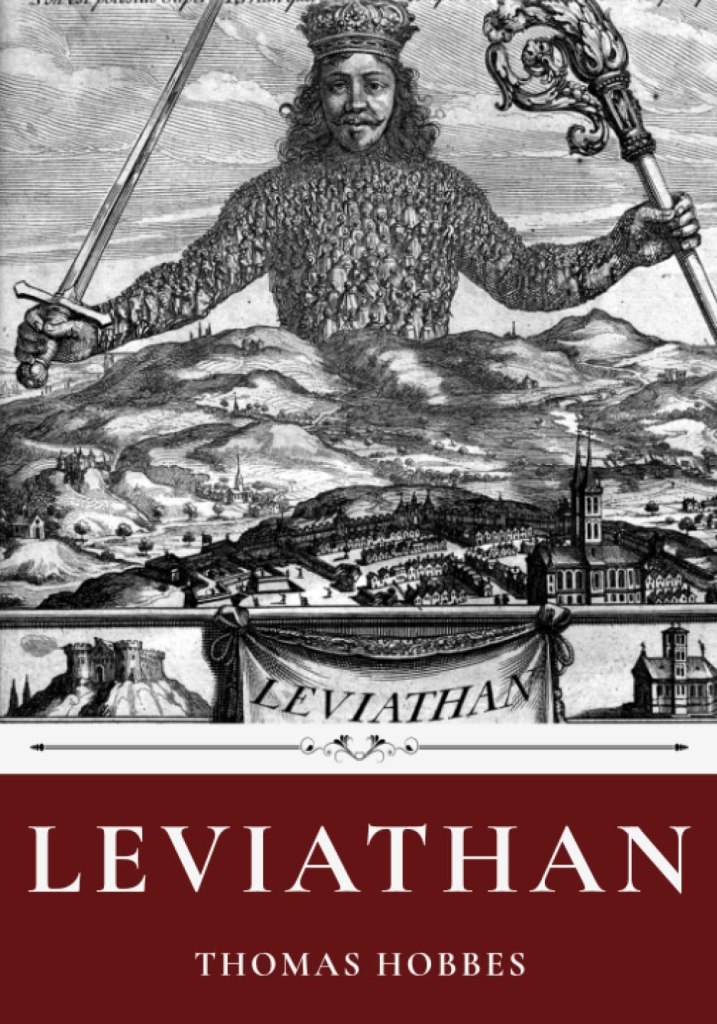
Thomas Hobbes saw human nature as a cauldron of chaos. In his state of nature, life is “nasty, brutish, and short,” a “war of all against all” where self-preservation is the only natural law. Shaped by Thucydides’ tales of strife and Machiavelli’s ruthless pragmatism, Hobbes cast man’s self-interest as a destructive force that casts morality aside. His remedy to avert chaos: a towering sovereign, ideally a monarch, to crush anarchy with an iron fist. The social contract trades liberty for security, forging laws as human tools to bind the beast within. Yet Hobbes stumbled: he failed to grasp power’s seductive pull. He assumed his Leviathan, though human, would rise above the self-interest he despised, wielding authority without buckling to its corruption.

Reason, which is that law, teaches all mankind…that being all equal and independent, no one ought to harm another in his life, health, liberty, or possessions.” — Second Treatise of Government by John Locke

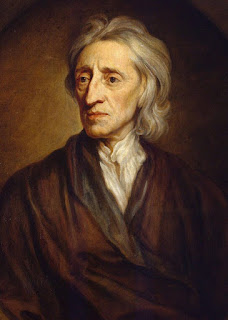
John Locke painted a gentler portrait of man than did Hobbes. He rooted natural law in reason and divine will, granting all people inherent rights to life, liberty, and property. His state of nature is peaceful yet imperfect, marred by the “want of a common judge with authority,” leaving it vulnerable to human bias and external threats. Optimistic, Locke envisioned a social contract built on the consent of the governed, protecting these rights through mutual respect and laying the groundwork for constitutional rule. Where Hobbes saw a void to be filled with control, Locke trusted reason to elevate humanity, crafting government as a shield, not a shackle.

Hobbes and Locke clash at the fault line of power. Hobbes’s sovereign, meant to tame chaos, reflects the rulers’ thirst for dominance, but his naivety about power’s effect cracks his foundation. Locke’s ideals, morality, reason, rights, empower the ruled, who yearn for liberty after security sours. Hobbes missed the flaw: rulers, driven by the same self-interest he feared, bend laws to their will, spawning a dual reality—one code for the governed, another for the governors. Locke’s vision of freedom and limited government inspires their soul, while Hobbes’s call for order fortifies their bones with courts, police, and laws of men. The U.S. Constitution marries both, yet scandals tip the scales: power corrupts, and liberty frays as safeguards buckle under the rulers’ grip.

Hobbes and Locke both accept the imperfection of man but take different paths to mitigate that imperfection with workable safeguards. Hobbes insists on the rule by law but drafted by imperfect man and applied with a Machiavellian indifference with no solution for absolute powers corrupting influence. Locke also chooses to rule by law but guided by morality, God and the will to depose of despots.

Sources: Leviathan, Thomas Hobbes; Second Treatise of Government, John Locke. Graphic:Original Leviathan frontispiece, a king composed of subjects, designed with Hobbes’s input.

Howling Through Europe

During the Italian Renaissance, a cultural rebirth fueled optimism and propelled civilization to new heights. Yet, in stark contrast, werewolf and witch trials, often culminating in gruesome executions, cast a superstitious shadow over the cold, rugged rural regions of France and Germany from the 14th to 17th centuries.

One notorious case revolves around Peter Stumpp, dubbed the “Werewolf of Bedburg.” In 1589, near Cologne in what is now Germany, Stumpp faced accusations of lycanthropy during a spree of brutal murders and livestock killings. Under torture, he confessed to striking a pact with the devil, who allegedly provided a magical wolf-skin belt that allowed him to transform into a wolf. He admitted murdering and cannibalizing numerous victims, including children. Stumpp’s punishment was as horrifying as his alleged crimes: he was beheaded and burned, alongside his daughter and mistress, who were also implicated. His severed head was later mounted on a pole as a grim public warning.

In a striking counterexample, a case from 1692 in present-day Latvia and Estonia challenges the typical narrative. An 80-year-old man named Thiess of Kaltenbrun confessed to being a werewolf, not to wreak havoc, but to protect his community. He claimed he and other “werewolves” battled witches, even journeying to Hell and back to secure the region’s grain supply. The court, skeptical of his tale and possibly viewing him as delusional (perhaps an early case of clinical lycanthropy), rejected the death penalty and sentenced him to flogging instead.

These trials often hinged on confessions extracted through torture, blurring the lines between truth, projection, vengeance, and superstition. Historians still debate the reality behind the accused: Were they serial killers, convenient scapegoats for unsolved crimes, or individuals afflicted by psychological conditions like lycanthropy—a disorder marked by the delusion of transforming into an animal? In his 1865 work, The Book of Were-Wolves, Sabine Baring-Gould analyzed cases like Stumpp’s, arguing that while superstition inflated their legend, they may have been rooted in real incidents: gruesome murders or societal fears run amok.

Source: The Book of Werewolves by Baring-Gould. Werewolf Trials by Beck, History, 2021. Graphic: Werewolf Groc 3.

Locke and Jefferson

John Locke’s theory on the social contract is a cornerstone of his political philosophy and western democracies, as outlined in his work “Second Treatise of Government.” According to Locke, the social contract is an agreement among individuals to form a government that will protect their natural rights to life, liberty, and property. The social contract is a compromise between man’s inherent natural rights and the need to preserve and protect those rights.

Thomas Jefferson, in his Declaration of Independence builds on Locke’s concepts, tweak is probably a better word. Locke writes that people have “natural rights” to “life, liberty, and estate” (property), and if a government violates these, it’s “dissolved,” giving people the right to form a new one. Jefferson writes into the Declaration its famous “life, liberty, and the pursuit of happiness”—swapping “property” for a broader, aspirational feel. Locke’s idea that government derives legitimacy from the “consent of the governed” shows up when Jefferson lists grievances against King George III, arguing the king’s abuses justify breaking away. And Locke’s justification for revolution—“when a long train of abuses” threatens these rights, people can resist—mirrors Jefferson’s “whenever any Form of Government becomes destructive of these ends, it is the Right of the People to alter or to abolish it.”

Locke’s key points in his Second Treatise:

  1. State of Nature: Locke believed that in the state of nature, individuals are free and equal, governed by natural law, which dictates that no one should harm another in their life, health, liberty, or possessions. Anarchy with adherence to God’s moral code.
  2. Natural Rights: Locke argued that individuals have inherent rights to life, liberty, and property. These rights are inalienable and must be protected by any legitimate government.
  3. Consent of the Governed: Locke emphasized that government derives its authority from the consent of the governed. People agree to form a government to protect their natural rights, and this consent is the basis of political legitimacy.
  4. Limited Government: Locke’s social contract theory advocates for a government with limited powers, designed to serve the common good and protect individual rights.
  5. Right to Revolution: Locke believed that if a government becomes tyrannical and or violates the social contract, the people have the right to revolt and establish a new government that will better protect their rights.

Source: Second Treaties of Government by John Locke, 1690. Graphic: John Locke by Godfrey Kneller 1697.  Public Domain.

Hundred Days

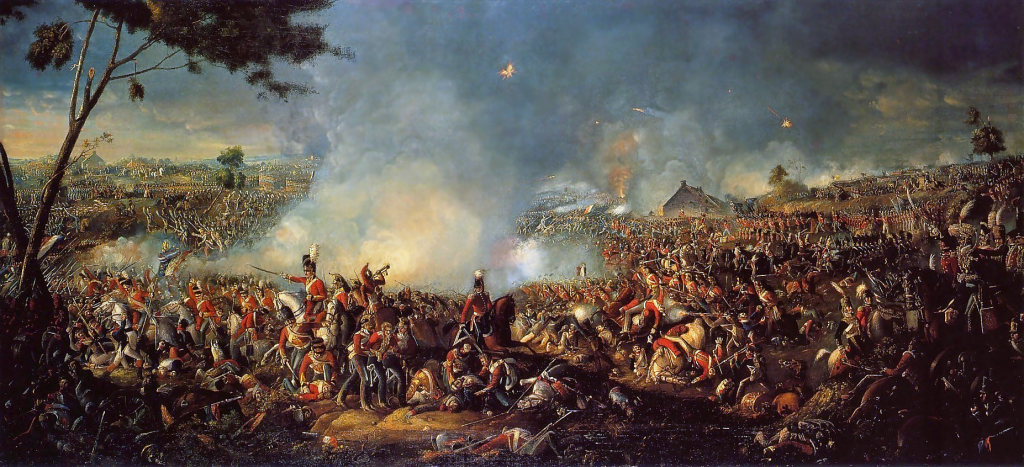
Napoleon Bonaparte, reeling from his disastrous Russian campaign of 1812 and suffering significant losses to the Sixth Coalition in 1813, faced a decisive defeat at the Battle of Leipzig in October of that year. With his options exhausted and his army depleted, Napoleon abdicated his throne on 11 April 1814, and was exiled to Elba, a small island off the coast of Tuscany.

After approximately ten months in captivity, Napoleon executed a daring escape on 26 February 1815, orchestrated by loyal supporters and a small contingent of soldiers. He landed in France and marched triumphantly into Paris on 20th of March, reclaiming his title as Emperor and ushering in his second reign. This brief resurgence, however, ended with his defeat at the Battle of Waterloo on 18 June 1815, at the hands of the Duke of Wellington and Prussian Field Marshal Gebhard Leberecht von Blücher. The victorious Anglo-Prussian forces entered Paris on 7th of July restoring King Louis XVIII to the French throne and effectively concluding Napoleon’s reign—later dubbed the “Hundred Days” (20 March to 8 July) in historical accounts.

Unable to flee to the United States as he had hoped, Napoleon surrendered to the British Navy and was transported to England. From there, he was exiled to the remote island of Saint Helena in the South Atlantic, arriving there on 15 October 1815. He spent his final years there, dying on 5 May 1821.

Source: Napoleon by André Castelot, 1991. Graphic: Battle of Waterloo by William Sadler, 1815 (Public Domain).

Exploits in Dying

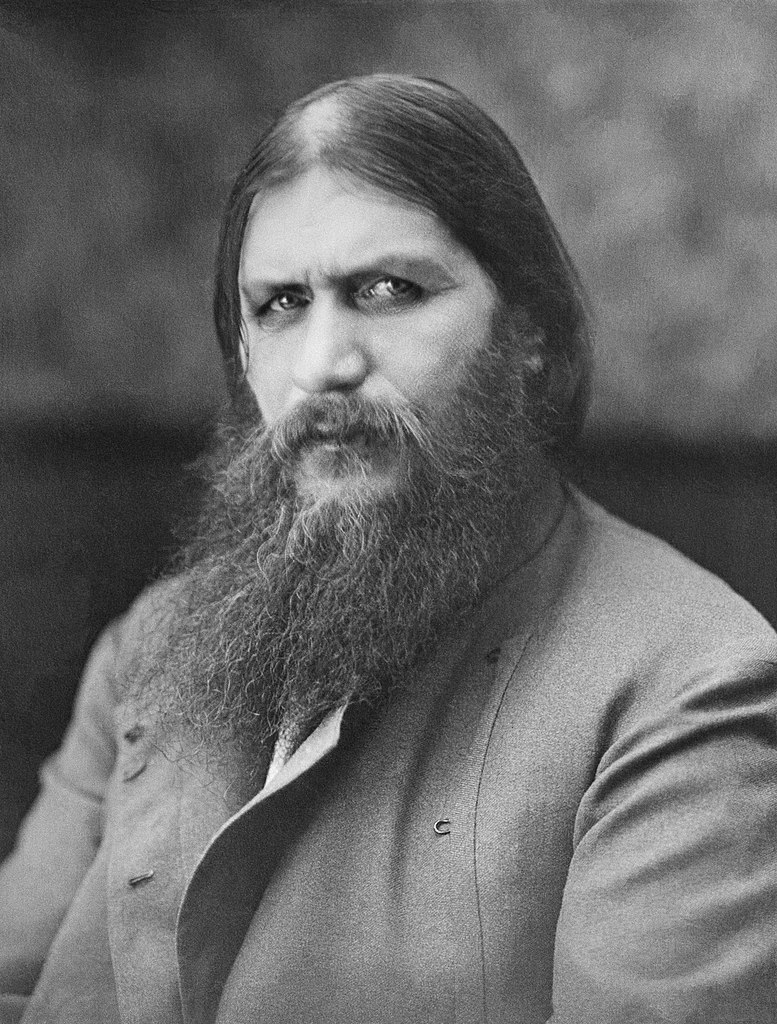
Grigori Rasputin, a Russian mystic, met an inglorious, improbable, and inexplicable end in 1916 at his assassin’s Moika Palace in Saint Petersburg. Although accounts vary, Rasputin’s executioners ostensibly made multiple attempts to murder him. They began with cyanide-laced cakes, which did not achieve their desired outcome. Next, in an attempt to reach a different result with the same measures, they offered him wine fortified with more cyanide. This attained the same result as the first attempt.

Following this, they shot him multiple times, but he continued to move, eventually attacking his would-be murderers. Finally, they wrapped him up in a carpet and tossed him into a freezing river, where he supposedly died of hypothermia.

A less imaginative account of his death suggests that he died from a single bullet to the head.

Rasputin supposedly left a letter, which was read by Alexandra, the wife of Tsar Nicholas II, prophesizing that if he was killed by Russian nobles, the Russian Tsar’s family would be executed within a few years.

Source: Biography, 2021. Graphic; Rasputin, c1910, Russian Empire, public domain. 

1556 Shaanxi Earthquake

23 January 1556, a massive earthquake with a magnitude estimated between 7 and 8 struck Shaanxi, China, resulting in the tragic loss of upwards of 830,000 lives. The quake hit late in the evening, when most people were at home, leading to widespread destruction as homes were buried by landslides and collapsed structures.

This devastating extensional earthquake occurred in the Wei River Valley, part of the Weihe-Shanxi Rift system. Faults in the region indicate that vertical movement of up to 25 feet might have occurred during the tremor or multiple quakes.

The Wei River Valley is also renowned for its extensive loess deposits—glacially created windblown silt and fine sand—that have shaped the landscape into a series of terraces and rolling hills. In the 16th century, local inhabitants carved out caves, known as yaodongs, in these loess deposits for shelters. Tragically, during the earthquake, these caves and above-ground shelters collapsed, burying most of the inhabitants alive.

Source: Shaanxi Earthquake by Smith, 2021, Nature World News. Graphic: Loess Landscape Near Shanxi, China by Till Niermann, public domain.

The End

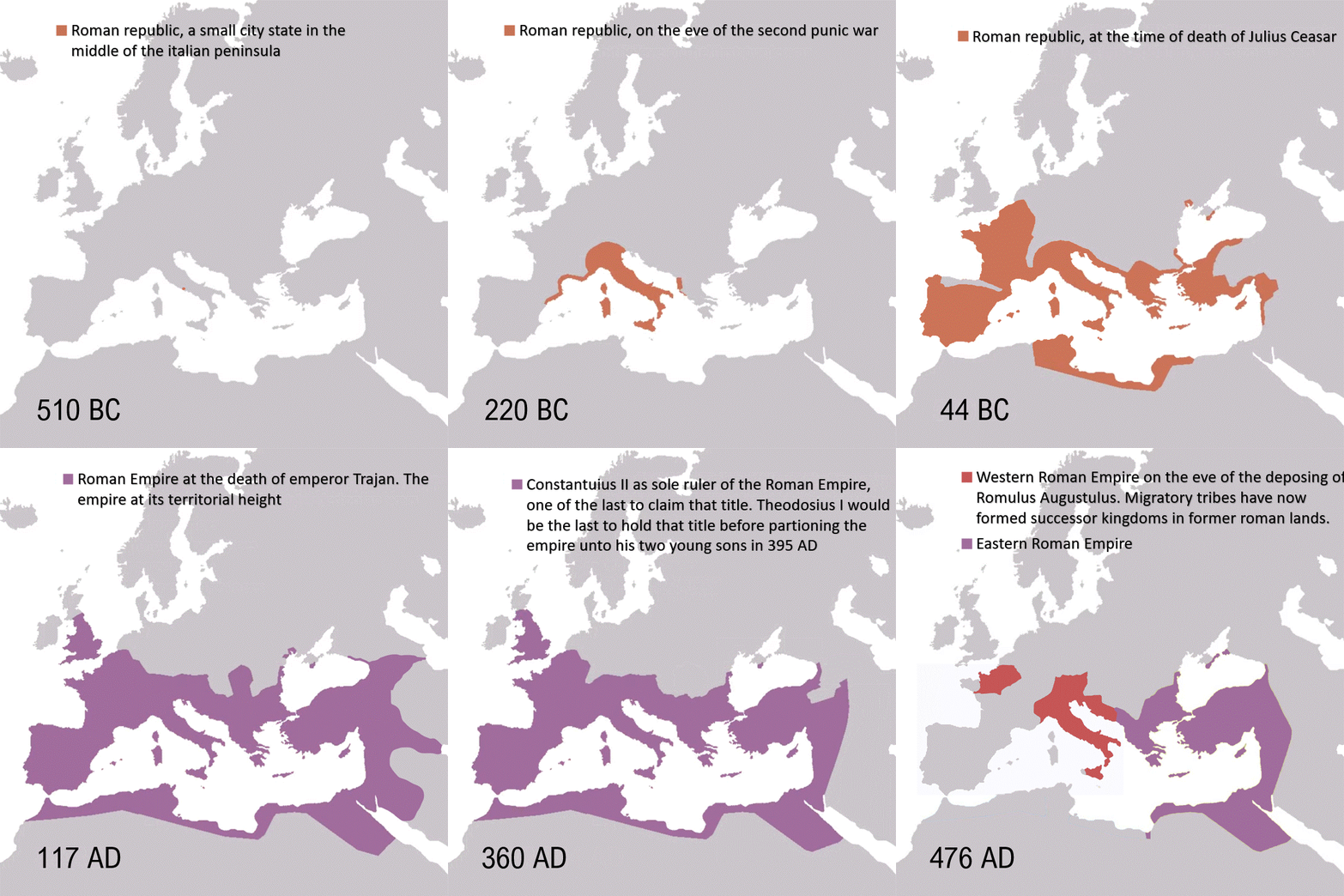
On 16 January 27 BC, the Roman Senate voted to confer the title of Augustus upon Octavian, Julius Caesar’s adopted son, realistically marking the end of the Roman Republic and the beginning of the Roman Empire. This decision aimed to restore stability and order after years of civil war and internal conflict, legitimizing Octavian’s authority while maintaining a veneer of republican governance. Augustus took effective control of the military, religion, bureaucracy, and administrative operations of the empire.

After the assassination of Julius Caesar in 44 BC, Octavian, in 43 BC, formed the Second Triumvirate with Mark Antony and Lepidus. Following their eventual conflict and his decisive victory at the Battle of Actium in 31 BC, Octavian became the uncontested ruler of Rome.

The Roman Empire was the final iteration of the Roman government, which began as a monarchy with Romulus as king in 753 BC, transitioned into a republic in 509 BC, and lasted through the era of civil wars and dictatorships until Octavian’s elevation as Augustus in 27 BC. The Roman Empire as a whole lasted until 476 AD when the Western Empire fell, while the Eastern Empire continued until 1453 AD.

Trivia: 16 January 27 BC, is the actual Julian calendar date, retained and quoted in texts for historical accuracy. According to the Gregorian calendar, however, the date marking the end of the Roman Republic would be 26,27 January 27 BC.

Source: Roman Republic…by M. Vermeulen, The Collector, 2020.  Graphic: Evolution of the Roman Empire, by ESKEHL-Wikipedia, 2022.

Choose

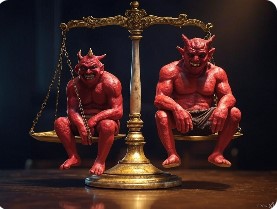
Movies such as Pakula’s 1982 “Sophie’s Choice” and Eastwood’s 2024 “Juror #2” depict gut-wrenching moral dilemmas, where every decision is flawed and ethically unbearable.

Moral dilemmas arise when all available options are objectionable, involving transgressions against moral principles. Their resolution often revolves around the “Principle of the Lesser of Two Evils,” where one chooses the least harmful option.

In 1944, President Roosevelt’s health was rapidly deteriorating, and many in the Democratic Party believed he wouldn’t finish his term if re-elected. Despite this, Roosevelt ran for a fourth term but was pressured to find a different running mate with better economic and leadership skills. Vice President Henry Wallace was replaced by Harry Truman, a senator from Missouri, on the ticket.

Roosevelt won his fourth term but passed away less than three months into it, making Truman the 33rd President on 12 April 1945. Within four months, Truman faced the dilemma of dropping atomic bombs on Japan to possibly end World War II or continuing a more conventional war.

Although there were no initial estimates of fatalities before the bombings, aftermath estimates suggested that up to a quarter of a million lives were lost at Nagasaki and Hiroshima. In contrast, continuing the war conventionally was estimated to result in 6 to 11 million additional fatalities.

Truman chose the lesser of two evils: sacrificing a quarter of a million souls to save millions.

Source: Lesser Evil Principle by Dougherty, 2020, Encyclopedia of Business and Professional Ethics. Graphic: Grok Generated.

Four Women of the Renaissance

Leonardo da Vinci, who died on May 2, 1519 at the age of 67, began around 40 paintings in his lifetime, of which fewer than 20 survive. Of those that survive, only about 15 are believed to be complete.

The artist painted only four known portraits of women:

  • Ginevra de’ Benci at the National Gallery of Art in Washington, D.C.
  • La Belle Ferronnière at the Louvre Museum in Paris.
  • Mona Lisa also at the Louvre Museum in Paris.
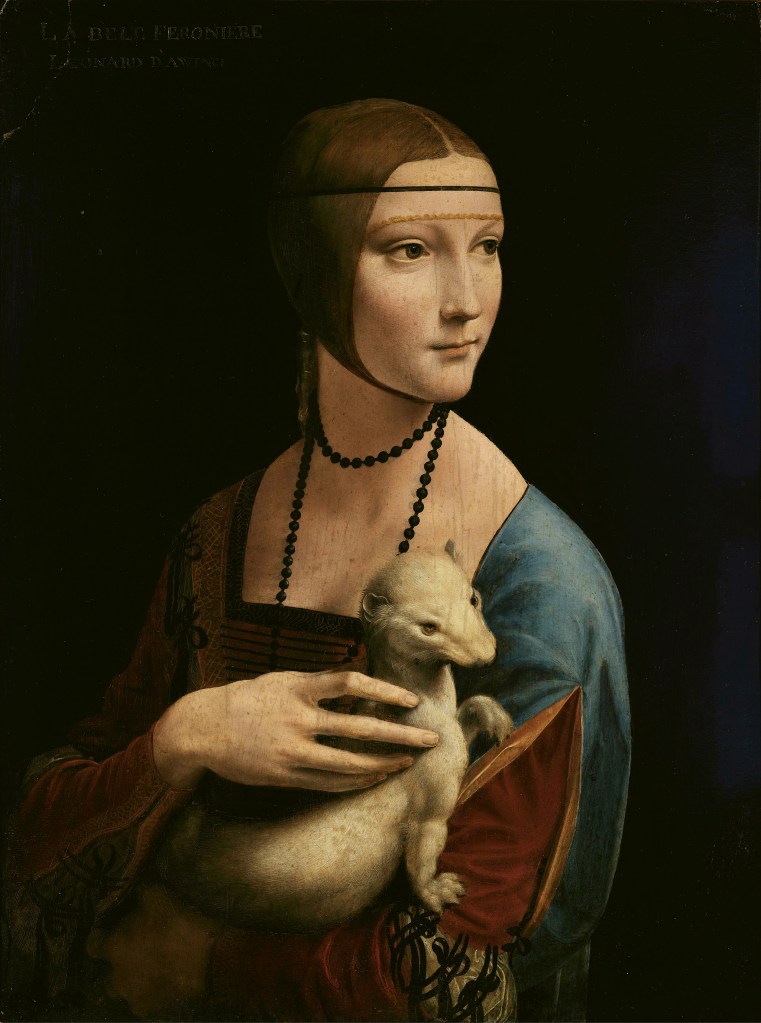
  • Cecilia Gallerani (known as “Lady with an Ermine“) at the Czartoryski Museum in Krakow, Poland.

Cecilia Gallerani was the mistress of Ludovico Sforza, Duke of Milan, and was painted while da Vinci worked in the Duke’s court in Milan, Italy. The Polish government paid 100 million Euros for the painting in 2016.

Trivia: Many believe that Leonardo da Vinci continuously reworked the Mona Lisa throughout his life; it was still in his possession when he died. The fact that the Mona Lisa does not have eyebrows suggests, to me, that the painting was still unfinished. The absence of eyebrows in the Mona Lisa has led to other theories as well:

  • Others argue that da Vinci might have intentionally left them out for artistic reasons.
  • There’s also the theory that the eyebrows might have faded over time due to the varnish or other conservation issues.

Source: Leonardo da Vinci by Walter Isaacson, 2017. Graphic: Lady with and Ermine by da Vinci, public domain.

The First Capitalist

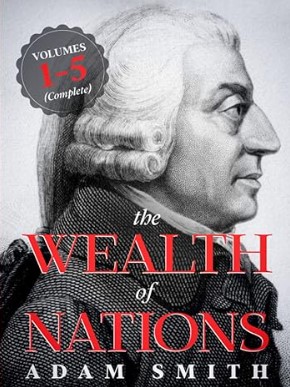
Adam Smith, who published his landmark economic treatise The Wealth of Nations in 1776, created an immense tome that spans around 950 pages of incredibly original theory, but it also disparagingly known for its complex language, lengthy, detailed detours, and economic examples that can seem quaint or enigmatic by today’s standards. The book is worth reading but find an abridged version such as The Wealth of Nations: Abridged, CreateSpace, 2011, 150 pages.

His theories for the efficient running of a country’s economy have become the foundation of classical economics, eventually forming the basis for the capitalist economic system. In his book, he introduced concepts such as the invisible hand, free markets, and laissez-faire economics—principles that are widely accepted in the Chicago and Austrian schools of economic thought today.

The Wealth of Nations is divided into 5 books:

  • Economic Efficiency: Discusses the division of labor and how it increases productivity and efficiency in the economy.
  • Accumulation of Capital: Focuses on the importance of savings and investment in driving economic growth.
  • Economic Growth: Examines the factors that contribute to the prosperity of nations, including labor, land, and capital.
  • Economic Theory: Lays out the principles of supply and demand, price mechanisms, and market dynamics.
  • The Role of Government: Argues for limited government intervention, emphasizing the protection of property rights, national defense, and the provision of public goods.

Trivia: Smith never used the word capitalist or any of its derivatives. The first English use of the word “capitalism” is believed to have appeared in the novel The Newcomes by William Makepeace Thackeray. The story follows a banking family and their increasing wealth and admittance into the English aristocracy.

Source: The Wealth of Nations by Adam Smith. The Newcomes by Thackeray.