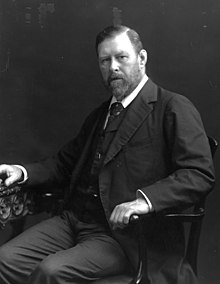
Irish author Bram Stoker wrote the quintessential horror story, Dracula during the early to mid-1890s, publishing it in 1897–except Stoker didn’t write it “as fiction but as a warning of a very real evil” according to J.D. Barker’s history of the book.
Many events in the book were not fiction. The ship Dmitri (Demeter in the book) did run aground in Whitby Harbor, and it was carrying crates of dirt that had originated from the European port of Varna. Mr. and Mrs. Jonathan Harker and Dr. Seward were friends of Stoker who supposedly supplied first person accounts of the tale to the author.
Stoker’s publisher, finding the book too frightening for the public, only agreed to publish the book if the first 101 pages were left out along with extensive revisions to the story which took a very clear story of vampires in our mist to one of fictional horror. In the 1980s the original manuscript showed up in rural Pennsylvania with the first 101 pages still missing and was purchased by Paul Allen of Microsoft fame.
Source: Dracula by Bram Stoker. J.D. Barker, Bram Stocker published by Time.com. Graphic: Bram Stoker, circa 1906, Public Domain.
Irish playwright George Bernard Shaw finished writing his best loved play, Pygmalion, a story of English societal class stratification and transformation, in 1912 and it premiered in Germany, of all places, in October of 1913.
The play was inspired by the Greek myth where Pygmalion, a sculptor, fell in love with his ivory creation which was later recounted in Ovid’s Metamorphosis.
The play has been adapted to film and stage in various forms including Shaw’s 1938 film, Pygmalion. The film was then adapted as a Broadway hit musical in the 1956 My Fair Lady by Lerner and Loewe starring Julie Andrews and Rex Harrison, which was then recreated into the 1964 Academy Award winning, blockbuster film of the same name starring Audrey Hepburn and Rex Harrison.
A truly timeless story.
Source: Pygmalion by George Bernard Shaw, 1912. Myths Encyclopedia. Metamorphoses by Ovid, c. 8 AD. Classics.mit.edu/Ovid. Graphic: Mrs. Patrick Campbell as Eliza Doolittle, 1913, Public Domain.
Mark Anthony opens his famous, but fictional, eulogy to Julius Caesar with 7 words of endearment and authority; Aristotelian pathos and ethos, that have become as familiar as blue sky to fans of Shakespeare and English lit students everywhere: “Friends, Romans, countrymen lend me your ears”.
Julius Caesar, a tragedy by Shakespeare, written around 1599, was based on Caesar’s life and death as documented in Plutarch’s Parallel Lives.
With pathos, logos and a chariot laden with irony, Anthony turns initial honor for Brutus and Caesar’s ambition inside out. He brings honor to Caesar and lays ambition on Brutus, along with Cassius. He brings condemnation to the conspirators and love for Caesar.
The first few lines of Anthony’s Eulogy:
Friends, Romans, countrymen, lend me your ears; I come to bury Caesar, not to praise him. The evil that men do lives after them; The good is oft interred with their bones; So let it be with Caesar. The noble Brutus Hath told you Caesar was ambitious: If it were so, it was a grievous fault, And grievously hath Caesar answer’d it. Here, under leave of Brutus and the rest– For Brutus is an honourable man; So are they all, all honourable men– Come I to speak in Caesar’s funeral. He was my friend, faithful and just to me: But Brutus says he was ambitious; And Brutus is an honourable man. He hath brought many captives home to Rome Whose ransoms did the general coffers fill: Did this in Caesar seem ambitious? When that the poor have cried, Caesar hath wept: Ambition should be made of sterner stuff: Yet Brutus says he was ambitious; And Brutus is an honourable man. You all did see that on the Lupercal I thrice presented him a kingly crown, Which he did thrice refuse: was this ambition? Yet Brutus says he was ambitious; And, sure, he is an honourable man. I speak not to disprove what Brutus spoke, But here I am to speak what I do know. You all did love him once, not without cause: What cause withholds you then, to mourn for him? O judgment! thou art fled to brutish beasts, And men have lost their reason. Bear with me; My heart is in the coffin there with Caesar, And I must pause till it come back to me.
Source: “Julius Caesar” by William Shakespeare, Act 3, Scene II. Plutarch’s Parallel Lives. Graphic: Marlon Brando as Mark Antony in the 1953 film “Julius Caesar”
She came over near me and smiled with her mouth and she had little sharp predatory teeth, as white as orange pith and shiny as porcelain. They glistened between her thin too taut lips. Her face lacked color and didn’t look too healthy.
“Tall, aren’t you?” she said.
“I didn’t mean to be.” (said Marlow)
Her eyes rounded. She was puzzled. She was thinking. I could see, even on that short acquaintance, that thinking was always going to be a bother to her.
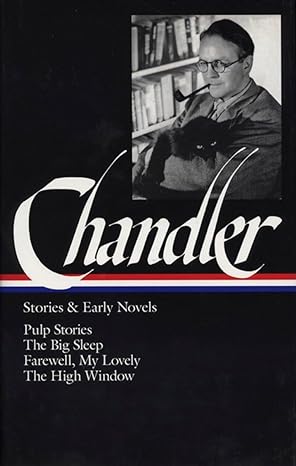
The above excerpt is from Raymond Chandler’s first Philip Marlowe novel: “The Big Sleep”, published in 1939. Marlowe is a hard, introspective private eye dreamed into existence from Chandler’s cynical but playful mind, creating the quintessential detective and crime novel of the 20th century. “The Big Sleep” has been ranked as one of the best 20th century novels by The Guardian, Time Magazine, Le Mond, and at least 20 other current best book lists.
The 1946 movie adaptation of the book starring Humphrey Bogart and Lauren Bacall with the screenplay by William Faulkner achieved a Metascore of 86 and a user score of 8.0. The Telegraph, critiquing the movie, in 2004 stated that “The Big Sleep is the best scripted, best directed, best acted, and least comprehensible film noir ever made.”
Chandler was 44 years old, an out of work alcoholic, before he wrote his first piece, a short story, “Blackmailers Don’t Shoot”. “Blackmailers” was the warm-up private eye mystery that would evolve, over the course of the next six years, into his first Philip Marlowe novel: “The Big Sleep”.
Source. Chandler:Stories and Early Novels published by Library of America, 1995. The 100 Greatest Literary Characters by Plath et al published by Rowman and Littlefield, 2019. Graphics: Warner Bros’ 1946. “The Big Sleep” and book cover.
Arthur C. Clarke in his 1979 sci-fi novel, The Fountains of Paradise, builds a space elevator on Earth as a solution to the monetary and technical expense of Earth-based rockets.
A space elevator is a conceptual solution for a low-cost, low energy planet-to-space transportation system. The challenge to building the elevator is finding a material strong enough to withstand the immense compressional and tensional forces that with a counterweight balance, would be 44,490 miles long (71,600 km). Carbon nanotubes offer a possible solution but currently they are only strong enough to work on Mars or the moon.
This is not Clarke’s best novel, but he thoroughly explains the concept of a space elevator and a lot of the engineering problems that would need to be solved to build one. The solutions to all the problems are solved by the book’s protagonist, Dr. Vannevar Morgan, a thinly veiled character that likely refers to himself as Arthur C. Clarke when he is among friends.
As an aside, both within the book and as a reader, he spends 5-6 pages harping on his belief there is no God. Why he does so is a mystery since it adds nothing to his story and in the end, it is a pointless, garrulous, one-sided debate.
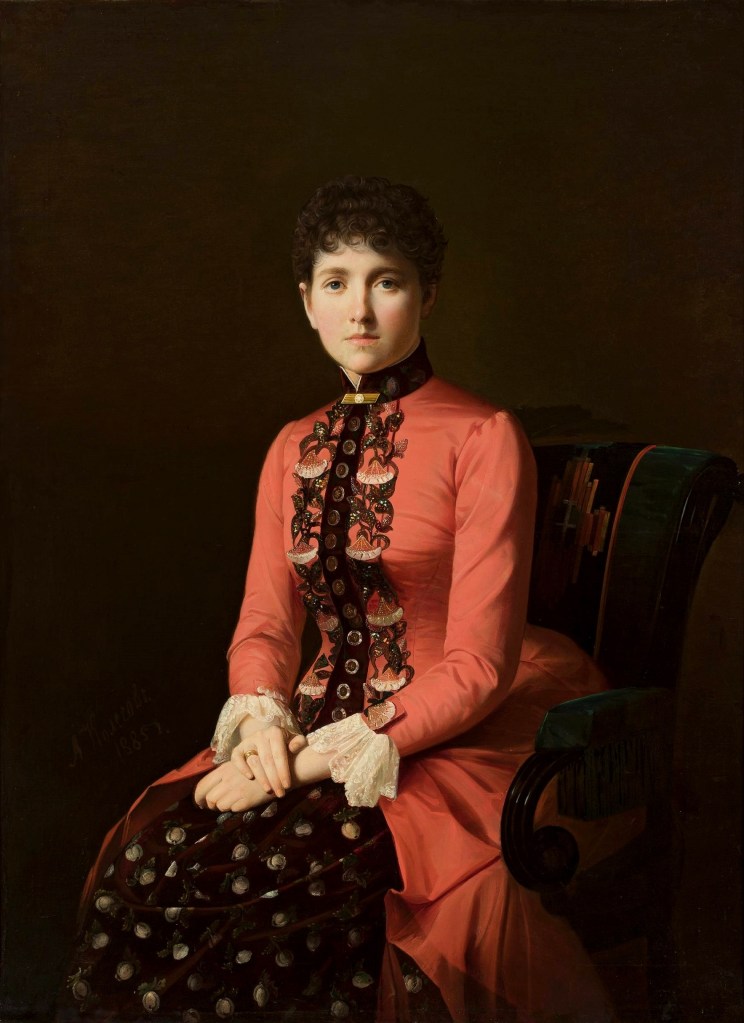
“Happy families are all alike; every unhappy family is unhappy in its own way.” So begins Leo Tolstoy’s epic 19th century Russian novel, Anna Karenina. A beginning line that is not only one of literature’s great openings, but it indubitably stages an existential story that transcends time, culture, and humanity: a diegesis of love and misery.
Love and misery where mental and societal control is lost to emotional need. When Anna’s lover, Vronsky, pleads with her to respect her mother’s needs and his duty, she snaps, “Respect was invented to cover the empty place where love should be. And if you don’t love me anymore, it would be better and more honest to say so.” (chapter 24)
Anna Karenina through time has consistently ranked as one of the greatest novels ever written. Encyclopaedia Britannica lists it as the number one novel of all time.
Sources: Leo Tolstoy, Anna Karenina, serialized in 1875, published in book form in 1878. Plath et al, The 100 Greatest Literary Characters, published in 2019. Enclyclopaedia Britannica, 12 Novels Considered the “Greatest Book Ever Written”, by Jonathan Hogeback.
Aleksey Kolesov, “Portrait of a Young Woman” (Anna Karenina), 1885. Public domain, via Wikimedia Commons
It was the year without summer. During the year 1816, temperatures in Europe were the coldest of any recorded between 1766 and 2000. Across the pond in New England frost occurred every month of the year and six inches of snow fell in June. Crops failed, food was scarce, and people died unpleasantly premature.
There was no summer that year because in 1815 the Indonesian volcano, Mount Tambora, had a fit and blew its top, more or less straight up into the stratosphere. The amount of material injected into the upper atmosphere blocked the sunlight and caused global cooling.
Meanwhile, not to let bad weather forestall important matters, Lord Bryon while vacationing in Geneva, challenged his two companions, Percy Shelly, and Mary Godwin, the soon to be Mary Shelly, to a contest of who could write the best ghost story. Lord Bryon and Percy soon abandoned the project, but Mary persevered and published her Frankenstein two years later, giving birth to the monster with no name, countless movies, myths, legends, and frightful nights for children everywhere.
In the tenth chapter of her epistolary novel, Frankenstein, or The Modern Prometheus, we finally meet her fictional monster to learn not only that it lives, but it also speaks grammatically correct King’s English. Shelly cast her monster as Lucifer from the pages of Milton’s Paradise Lost. The monster, addressing its creator, Victor Frankenstein, speaks of profound loneliness, “The fallen angel becomes a malignant devil. Yet even that enemy of God and man had friends and associates in his desolation; I am alone.”
In the end the monster wishes to die but the author leaves those matters in the reader’s hands.
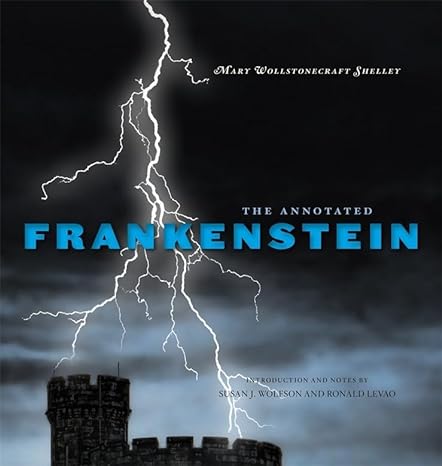
Sources Frankenstein by Mary Shelly. First published in 1818. The 100 Greatest Literary Characters by Plath et al, published 2019. Cover from a 2012 edition of Frankenstein shown below.
Vincent Di Fate, born 1945 in Yonkers, is a New Yorker and American artist known for his depictions of science fiction, fantasy, and realistic space art. He has an MA from Syracuse University.
People Magazine noted the Di Fate is, “one of the top illustrators of science fiction…” His specialty is imaging technologies and environments in the nether regions of space and the universe. His clients include NASA, IBM, Scientific American, and The National Geographic Society. James Lizowski, Omni Magazine critic, noted that Di Fate, “combines the skills of a masterful painter with the fierce demand of an uncompromising artist to create visions of the future that are precise, powerful, and dazzling to the eye“.
His numerous awards include the: Hugo, Sklark, Lensman, Chesley, and Rondo Awards, among others for illustration of science fiction and fantasy subjects. He was inducted into the Science Fiction Hall of Fame in 2011 and the Illustrator’s Hall of Fame in 2019. He has consulted for MCA/Universal, 20th Century Fox, Walt Disney, MGM/United Artists.
Di Fate has also written three books and is currently working on his fourth. His second book Infinite Worlds was the first comprehensive history of science fiction art in America. Listed below are some of the books of fiction he has illustrated. Additionally, he has illustrated hundreds of sci-fi and fantasy book covers in his four decades as an artist.
Di Fate Book Illustrations (Partial):
2001: A Space Odyssey by Arthur C. Clarke
Prelude to Foundation by Isaac Asimov
The Demolished Man by Alfred Bester
The Fabulous Riverboat by Philip José Farmer
The Dark Design by Philip José Farmer
The Magic Labyrinth by Philip José Farmer
The World of Null-A by A.E. van Vogt
Rules of Engagement by Elizabeth Moon
The Time Traders by Andre Norton
The Godmakers by Frank Herbert
Di Fate Bibliography:
Di Fate’s Catalog of Science Fiction Hardware 1980
Infinite Worlds: The Fantastic Visions of Science Fiction Art 1997
The Science Fiction Art of Vincent Di Fate 2002
Clement Biography:
“Human beings are prone to believe the things they wish were true.” – Hal Clement
Hal Clement, born in 1922, in Massachusetts, passing away in 2003, was an American science fiction writer and a leader of the hard science fiction subgenre. Hard science, as it was defined in 1957 by P. Schuyler Miller, is characterized by scientific accuracy and logic. Hard science fiction is strongly rooted to known physical laws in the natural universe. In an interview with “The Science Fiction Radio Show” in the early 1980s Clement said that he had “…trouble writing something unless, I can, more or less convince myself it might happen.” In the old days before computers, he was known to whip out his slide rule and run through the calculations to make sure his stories passed the law of physics test.
FootNoteB
Clement received a degree in astronomy from Harvard University in 1943, an M.Ed. from Boston University in 1946, and eventually an M.S. in chemistry from Simmons College in 1963. He was a B-24 Liberator, a heavy bomber, pilot during WWII, flying combat missions over Europe, finishing his Air Force career after the war in the Air Force Reserve, retiring as a colonel. He taught astronomy and chemistry at the high school level in Massachusetts.
Clement while working towards his B.S. at Harvard wrote and published his first piece of science fiction, a short story called “Proof“. The story first appeared in a 1942 issue of Astounding Science edited by his mentor John W. Campbell. Campbell was known as the leader of the hard science wing of the science fiction genre which Clement admits affected his writing standards. Clement’s first three novels were Astounding Science serials under Campbell: Needle in 1950, Iceworld in 1953, and Mission of Gravity, his best-known novel, in 1954. Clement followed up Needle and Mission of Gravity with the sequels: Through the Eye of a Needle in 1978 and Star Light in 1971, respectively. He also wrote two additional short story sequels for Mission of Gravity: Lecture Demonstration in 1973 and Under in 2000.
In addition to his writing, Clement also painted astronomically oriented artworks under the name George Richard. In 1998, he was inducted into the Science Fiction and Fantasy Hall of Fame and was named the 17th SFWA Grand Master by the Science Fiction and Fantasy Writers of America in 1999.
Hal Clement wrote over 120 novels, novellas, short stories, and collections. Below is a listing of just his novels.
Clement Bibliography (Novels Only, Shorter Fiction not Listed):
Needle 1950
Iceworld 1953
Mission of Gravity 1954
The Ranger Boys in Space 1956
Cycle of Fire 1957
Close to Critical 1958
Natives of Space 1965
Star Light 1971
Left of Africa 1976
Through the Eye of a Needle 1978
The Nitrogen Fix 1980
Intuit 1987
Still River 1987
Fossil 1993
Half Life 1999
The Essential Hal Clement, Volume 1: Trio for Slide Rule and Typewriter 2007
The Essential Hal Clement, Volume 3: Variations on a Theme by Sir Isaac Newton 2007
Heavy Planet 2002
Noise 2003
Hal Clement SF Gateway Omnibus 2014
Mission of Gravity:
Mission of Gravity was first published in serialized form in The Astounding Science Fiction Anthology of 1953 with the hardcover coming out in 1954 followed by the paperback in 1958.
The story takes place on the planet Mesklin, an object thought to be in the 61 Cygni system, eleven light years from Earth. Mesklin is a super-giant bowl-shaped planet, flattened at the poles, an oblate spheroid, with an extreme rotation that allows for 18-minute days or approximately 9 minutes of daylight. The high spin rate creates gravity that equals about 3g at the equator and 700g at the poles. Clement eventually re-calculated the gravity over the planet and changed the polar regions to 200g. For comparison purposes the Sun has a gravity of 28g or 28 times that of Earth.
Earth has sent a probe to Mesklin to study its extreme gravity and other matters of value, but it became stranded in the high gravity areas of a pole ruling out a rescue by a human team. Earth wants to recover the probe at all costs to learn what secrets it contains.
The planet is populated by an intelligent species of centipedes that come in assorted sizes, but the ones be-friended by the Earth visitors are about three feet long. An Earth spacemen, Charles Lackland travels to the equator of the planet where he can just manage the 3g environment and meets Barlennan a captain of a sailing raft named the Bree. The Bree and its crew are on a trading voyage in the equatorial areas making a profit by bartering goods from isolated populations all over the planet. After Barlennan learns English, a deal is arranged for him and his crew to retrieve the probe at the poles and return it to the equator where the humans can pick it up. So begins the centipedes’ journey to the pole.
Literary Criticism:
As with all science fiction, Mission of Gravity suffers from futuristic technology that outdates itself in a few years. A quaint process in mapping the surface of Mesklin involves taking a series of high altitude photographs, displaying them of photo paper and trying to put them all together like a giant jig-saw puzzle. No GPS coordinates, no digital, just 1950 Earth tech and methodology. Leaving that aside though, the story is well worth reading. The science as presented is sound, mostly, the story telling and plot is a page turner, and the characterization of the alien’s life-forms is plausible and interesting. It will be worth your time and at 223 pages a quick read.
Oh, when I look back now
That summer seemed to last forever
And if I had the choice
Yeah, I'd always wanna be there
Those were the best days of my life

Song written by Bryan Adams/Jim Vallance - Summer of 69 - Reckless album - Released 1985
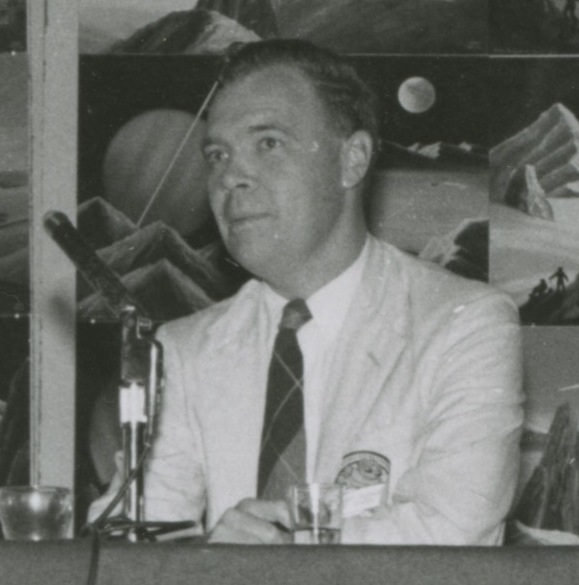
BradburyBiography:
“All education is self-discovery.” Bradbury
Ray Bradbury, 1920-2012, was an American treasure, an exceptionally talented and prolific writer in multiple genres that included science fiction, horror, and mystery but his passion lay in the field of fantasy. He felt that fantasy, by his definition, was “a depiction of the unreal“. He took inspiration and pleasure from the fantastical works of Poe, Wells, and Verne and spent a lifetime mining his imagination for the unreal. Fantasy was where he could not only “create myths for the future” but warn society of the dangers of technology and conformity. In his words: “to prevent the future.”
FootnoteA
Bradbury was born in Waukegan, Illinois, a small town of 20-30 thousand people, at the time, north of Chicago, and came of age there during the Great Depression. It was a time when the future was murky, and he said he needed his imagination to see through the gloom. That imagination was fruitful and varied.
His writing was packed full of social commentary, especially Fahrenheit 451, but more on that in a bit. He wrote about the unreal side of the present but with an eye to the future. His prescient vision alerted us 75 years ago about the evils that will come from a monoculture dispensed from the organs of mass media and technology. He was afraid that it would keep society passive and ignorant. And ignorance has come to pass.
Bradbury never drove a car, but he did ride in them, he did not board a plane, heights bothered him, until he was in his sixties, and he never used a computer. He thought the internet was useless, perfectly encapsulating a flaw, maybe the major flaw in science fiction: predicting the future is hard and mostly wrong. Machines didn’t interest him but when he wrote about them, he just made it up as he went.
He initially corrected people when questioned about his “science fiction” writing, “I don’t write science fiction” he insisted. “I write fantasy. Fantasy is a depiction of the unreal.” In later interviews when referred to as a science fiction writer he just graciously accepted it and moved on. Science fiction he also said was “a depiction of the unreal but with an attempt to be faithful to reality.” He didn’t want to be faithful to reality. He stated that of all the stories he wrote, and it’s believed that there were more than a thousand of them, no one seems to be able to add them all up, Fahrenheit 451 is the only true science fiction he ever wrote. It not only has withstood the test of time as a classic piece of sci-fi literature, but it also was rendered into two motion pictures in 1966 and 2018. The former was only marginally bad with the latter being just flat out bad, proving the point that low budget sci-fi does not win any awards in Hollywood or with audiences.
FootnoteB
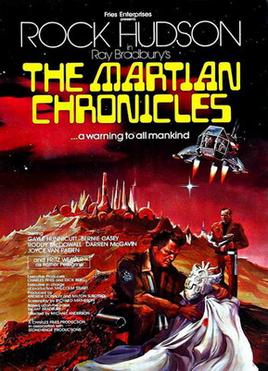
Bradbury made his mark in the literary world with The Martian Chronicles, a collection of loosely connected short stories released in 1950. The book chronicles the settlement of Mars, the home of Martians by Americans fleeing an Earth falling into a hellish abyss.
During the height of the second Red Scare beginning in 1947, Bradbury warned of government censorship with his fourth and possibly his greatest novel, Fahrenheit 451. The story initially appeared in book format in 1953 and was reprinted in the nascent publication Playboy in 1954. Fahrenheit 451 is the story of firemen not putting out fires but starting them. They burn books, and buildings with books to keep people ignorant and thus obedient. An obedient population was not a threat to the government.
Dandelion Wine:
FootnoteC
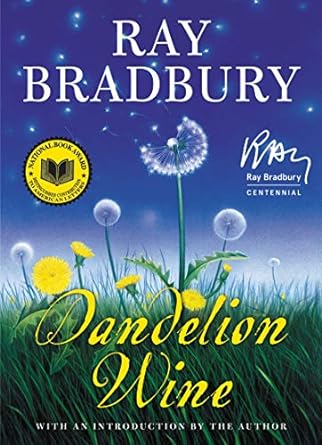
Dandelion Wine is Bradbury’s fifth novel and his most intimate creation. It is a loose collection of forty-nine semi-autobiographical short stories detailing a 12-year-old boy, Douglas Spaulding and his 10-year-old brother Tom, trying to stretch out the summer of 1928 into a never-ending triumph of pubescence experience in small town America.
In a 1974 introduction to Dandelion Wine, titled Just This Side of Byzantium…, Bradbury writes: “…Waukegan was Green Town was Byzantium with all the happiness that that means, with all the sadness that these names imply. The people there were gods and midgets and knew themselves mortal and so the midgets walked tall so as not to embarrass the gods and the gods crouched so as to make the small ones feel at home…Here is my (Bradbury’s) celebration,then, of death as well as life, dark as well as light, old as well as young, smart and dumb combined, sheer joy as well complete terror written by a boy who once hung upside down in trees, dressed in his bat costume with candy fangs in his mouth, who finally fell out of the trees when he was twelve and went and found a toy-dial typewriter and wrote his first ‘novel’.”
FootnoteD
About half of the chapters in the book were initially published, starting in 1946, as short stories in magazines such as Weird Tales (The Night), Charm (The Green Machine), and The Saturday Evening Post (The Happiness Machine). In 1957 all the stories were brought together into the book, Dandelion Wine. The title refers to Douglas’s grandfather making wine every summer from the petals of dandelions. Bradbury used the title as a metaphor for cramming all the joys and happenings of summer into one bottle. Or one book.
As a testament to the lasting appeal of the book, the 1971 crew of Apollo 15 named a lunar crater Dandelion. In 1986, as a testament to Bradbury’s lasting appeal as a writer, an asteroid was named after him called 9766 Bradbury.
And finally, in a 2010 interview with Universe Today a few years before his death, in reference to being buried on Mars, he said: “I don’t want to be the first live person to arrive there,” he said. “It’ll be too late. But I want to be the first dead person that gets there. I want to arrive in a Campbell’s soup can. Bury me on Mars in (a) thing called the Bradbury Abyss. They gotta name a place on Mars for me, and I will welcome that.” Maybe Elon Musk can help with this.
FootnoteE
Literary Criticism:
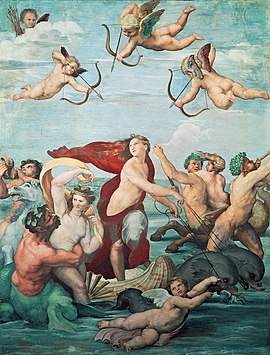
Ray Bradbury writes poetry as prose. Natural and chatty prose. Prose rich in explanation, metaphor, and image. Prose that is a joy to read, planting scenes in your mind that grow into a picture worthy of Raphael’s Triumph of Galatea.
Dandelion Wine is the extraordinary time in a boy’s life where innocence, friendship, and happiness occur without the weight of the substantial and ponderous adult years.
Read the snippet below from chapter 29 of Dandelion Wine, Summer’s Ice House and tell me you do not feel the chill.
Deep in winter they had looked for bits and pieces of summer and found it in furnace cellars or in bonfires on the edge of frozen skating ponds at night. Now, in summer, they went searching for some little bit, some piece of the forgotten winter...Summer’s Icehouse on a summer day! They said the words, laughing, and moved to peer into that tremendous cavern where in fifty, one-hundred, and two-hundred-pound chunks, the glaciers, the icebergs, the fallen but not forgotten snows of January…
Dandelion Wine is a masterpiece of prose, of imagination, and fantasy.
Bradbury Literary Awards:
World Fantasy Award for Life Achievement 1977
Prometheus Award for Fahrenheit 451 1984
Bram Stoker Award for Lifetime Achievement 1989
P.V. Helmerich Distinguished author Award 1994
Emmy Award for The Halloween Tree 1994
First Fandom Hall of Fame Award 1996
Science Fiction and Fantasy Hall of Fame Inductee 1999
Medal for Distinguished Contribution to American Letters 2000
“Since we don’t know where we’re going, we have to stick together in case someone gets there.” Kesey
FootnoteA
Ken Kesey, who died at the age of sixty-six in 2001, was a novelist, hippie, and beatnik, tuning into the counterculture movement of the sixties that renounced materialism, institutions, and the middle-class, while embracing LSD, free-sex, and carrots. Kesey, I believe, just embraced LSD, grass, and laughs.
After finishing college at the University of Oregon–go Ducks–he moved to California and enrolled in Stanford–go Tree??–to study creative writing from 1958 to 1961 while simultaneously settling into the counterculture lifestyle gripping the area and the nation.
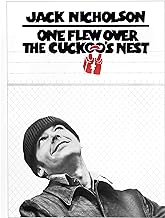
In 1959 he volunteered for the CIA’s LSD mind experiments being run under the code name MKUltra. These experiments were conducted at a VA hospital in Menlo Park, just northwest of Stanford. At the same time in 1959 he accepted a position as an attendant in the hospital’s psych ward, working there while tripping on LSD. He began writing One Flew Over the Cuckoo’s Nest in 1959 or 60 (various sources give different dates). In 1962 Kesey published his masterpiece. The rest is history.
FootnoteB
Later, in 1964 Kesey and his band of Merry Pranksters, a group he and others formed in the late fifties, bought an old school bus, repainted it in the pop art and comic book style of Andy Warhol and Roy Lichtenstein respectively, and took off to survey and crash the Beatnik scene in New York City. While on the road to New York they handed out LSD in various forms, it wasn’t illegal until 1966, and held street party theater for the locals. The whole experience was recorded with microphones and cameras along with several books being written afterwards about the experience.
After returning to California in 1965 Kesey was arrested for marijuana possession. Fearing prison, he faked his suicide which didn’t really fool the police and escaped to Mexico. A few months later in 1966 he was captured and sent to an honor prison camp in Redwood City, California for six months where he cleared brush and kept a diary of his experience later publishing it as Kesey’s Jail Journal: Cut the M*********** Loose.
Upon release from prison, he gave up the bohemian lifestyle, returned to Oregon, and settled down to the life of a respectable middle-aged citizen with a little acid and weed still making recreational appearances.
FootnoteC
Defending his drug use he made the point, in an interview with Charley Rose in 1992, that doing drugs was a personal decision and if your neighbor incurred no harm, then no one need be concerned. A thoroughly libertarian position not terribly different than William Buckley’s view on pot. He also denied being a mindless drug addict stating in an interview with Terry Gross, “I’ve always been a reliable, straight-up-the-middle-of-the-road citizen that just happens to be an acidhead.”
One Flew Over the Cuckoo’s Nest:
The story’s narrator, Chief Bromden, a 6’6″ tall member of a Columbia River Indian tribe, is a schizophrenic patient in an Oregon psychiatric hospital, passing himself off as a deaf, mute with an agreeable disposition. Bromden forms a bond of friendship with Randle McMurphy, a new psych patient who, rather than put in a few months in at a prison work farm, convinces his jailers that he is insane so he can get transferred to a no work sanitorium with better meals. McMurphy initially finds his situation much improved and installs himself as head crazy but quickly butts heads with Nurse Ratched the chief administrator for his floor. Nurse Ratched is a humorless soul sucking battle axe who quickly realizes that she is in a clash of Titans and wits with McMurphy where the winner takes all. As in Macbeth only one king, or Queen, shall live or as Shakespeare states, “if the assassination / Could trammel up the consequence”. In today’s vernacular, the Machiavellian “when you set out to kill the king, you must kill him” and damn the repercussions is more succinct.
Literary Criticism:
One Flew Over the Cuckoo’s Nest is one of the best American novels written in the latter half of the twentieth century easily standing with Steinbeck’s East of Eden and Of Mice and Men, Hemingway’s The Old Man and the Sea, Lee’s To Kill a Mockingbird, and Bradbury’s Fahrenheit 451. Except for Hemingway’s novella they all explore good and evil within the context of human nature and its effect on one’s soul. Kesey’s book pokes and prods the reader with almost farcical battles of weak minds against strong minds. Wills of strength versus the will of the state. Occasional good against consistent evil.
Every literary device and human character flaw known has been applied to this novel, simile, metaphor, personification, action, protagonist, antagonist, conflict, allusion, imagery, climax, male chauvinism, misogynism, sexuality, sexual repression, fear, hate, violence, intimidation, dominance; it is all here, a masterpiece of storytelling that maybe only Dickens was capable of duplicating.
In Aristophanes’ play The Birds he invented the term “cloud cuckoo land” as the name for his bird utopia but in reality, it was the home for the absurd. Whether Kesey intended to imitate Aristophanes social criticism and sarcasm inherent in The Birds is not known but they both found their subject matter bizarre and ridiculous.
Mental Health and the Cuckoo’s Nest:
One Flew Over the Cuckoo’s Nest, the book, the play, the movie, likely accelerated the deinstitutionalization of mental patients in the U.S. and the world. It was a process that had already begun in the mid-fifties with the introduction of the antipsychotic drug, chlorpromazine, allowing mental illness to be treated outside of a hospital setting. In the sixties and seventies President Kennedy and California Governor Reagan were champions of providing mental health services without walls. In hindsight it should have been easily anticipated the inevitable negative consequences of such policies. Homelessness and incarceration, rampant use of illicit drugs and crime, the general breakdown of societal norms when the mentally ill were allowed to take charge of their own care without supervision. Assuming logical outcomes from illogical inputs is well–illogical.
In Virgil’s Aeneid he wrote, “facilis descensus Averno (the descent to hell is easy)” or as Samuel Johnson updated the proverb by stating, “…hell is paved with good intentions”. Today we just say the “Road to hell is paved with good intentions” and hell is a dystopian wasteland.











 elsToday