Curse of the Estranged

Gabriel García Márquez’s (1927–2014) One Hundred Years of Solitude is a masterpiece of magical realism; at once stoic, uplifting, comically despondent, and burdened by the fatigue of generational inheritance. Yet the novel is less an invention of imagination than a genealogical metaphor of memory, familial hope, and civilizational rise and fall. It rises like a sanctuary built from familiar tablets: the Bible, Cervantes, Voltaire, Tolstoy, Proust, Faulkner, Joyce, Steinbeck, and Borges. Each echo resounds through the Colombian fictional town of Macondo, transforming it into a mythic stage where memory, estrangement, and loneliness endlessly repeat.

From the very first pages, Márquez threads this cycle with solitude: literally. Including the title, the word appears fifty‑two times in the century‑long history of Macondo and the Buendías. This repetition carries a biblical resonance, binding the family of protagonists and antagonists alike to a penitential tether, chained to their founding dynasty.

In Spanish, soledad is semantically broader than its English counterpart. It signifies estrangement and alienation, being cut off from community, intimacy, or history, even exiled. Yet it also carries the weight of aloneness and solitude: quiet, contemplative, existential. Both registers coexist, and the Spanish reader does not have to choose.

For the English reader, however, the word disconnects, pulling them towards a definition that resists the narrative. The translator, and likely Márquez himself, kept this tension to force meditation not only on the word but on the characters’ purgatory. The Buendías are lost in their obsessions, unable to connect to those around them. In the first half of the book, solitude leans toward estrangement and alienation; by the latter half, it transforms into aloneness, as the Buendías begin to accept their fate. The family lives together in their sanctuary but they live their lives separate and alone. In its final use, the meaning retreats back to estrangement and collective dissolution, a history erased, trapped in a myth of their own making: “because races condemned to one hundred years of solitude did not have a second opportunity on earth.”

Márquez saturates the Buendía saga with biblical archetypes, weaving Genesis, Exodus, Revelation, and Marian purity into the fabric of Macondo: an Eden where death was alien, maturing into purgatory, then the Flood, and finally apocalypse. José Arcadio Buendía, the founder, is Adam and Noah at once, naming the world yet cursed by forbidden knowledge. “The earth is round, like an orange,” he declares, signaling a lifelong obsession with the metaphysical and the scientific. His wife, Úrsula Iguarán, is Eve and Sarah, burdened by genealogy and the fear of incest as original sin, a fear that culminates in the pig’s tail. Melquíades, the gypsy prophet, is Elijah and Daniel, his parchments the scripture of Macondo. The saga culminates in apocalyptic imagery: four years of rain, a final wind of destruction, Revelation retold as estrangement and erasure: endless solitude.

But Márquez’s tablets of echoes reach further, extending beyond scripture into the canon of world literature. The novel from the first pages breeds familiarity with the reader. One Hundred Years of Solitude is less a solitary invention than a refracting of the great books through Macondo’s myth. Its pages carry the shadows of Ovid’s transformations, Homer’s wanderings, Cervantes’ absurd quests, Kafka’s fate, Borges’ magic, and Proust’s memory; a literary inheritance reborn in Macondo’s myth.

These echoes form the very foundations of the narrative, opening into critiques of power, class, and the absurdity of the human condition. They expose an overreliance on human appetites; sexuality, incest, adultery, compulsion; that drive the fate of the family. The Buendías cannot conquer their world or their desires. Noble beginnings collapse into a fated Sartrian No Exit. And in the end, the Buendías’ saga dissolves into futility, their century of solitude reduced to the bitter irony that “wisdom was worth nothing if it could not be used to invent a new way of preparing chickpeas.”

Graphic: Gabriel Garcia Marquez by Jose Lara, 2002. Flickr

The Long Way

By 1881, literature was shifting, Realism’s clarity giving way to Modernism’s psychological fog. Henry James pioneered the transformation, publishing what many hailed as his masterpiece and others found nearly unreadable. He moved from the crisp windows of Daisy Miller and Washington Square, where social dilemmas are transparent, into the labyrinth of The Portrait of a Lady, a slow, meandering narrative that tested patience to the point of exasperation. James stretched his scenes into long psychological dramas, shadowed by melancholy, lingering on minutiae rather than decisive events. To admirers, this was a profound exploration of consciousness, to detractors, a soporific feast of abstraction.

Where James’s Portrait is a punishing fugue of memory and angst, a darkness at the edge of noon, Proust’s Swann’s Way (1913) offers a sensual slow dance of lush detail, playful childhood games, and adult desire. In Combray, the family had two ways to take their walks: the short way and the long way. The short way was familiar, contained, offering scenery but little transformation. The long way was expansive, expressive, full of detours and revelations. In Swann in Love, the same pattern unfolds: the first half is Swann’s descent into desire, the short way of immediacy; the second half is his struggle to free himself, the long way of disillusionment and reflection. For Proust, the long way is where life’s lessons are held. Meaning is not found in shortcuts but in detours, delays, and the endurance of memory. The long way is the design of his art: winding detours that illuminate the search for lost time.

Wilde enters here as counterpoint. Where Proust lingers in digressive glow, Wilde sharpens language into bite. His wit distills the same metaphysical concerns: beauty, desire, memory, decay, into crystalline aphorisms. Wilde’s sentences are daggers wrapped in velvet, each polished to a point. If Proust is the cathedral of memory, Wilde is the mirror that cuts as it reflects. The Picture of Dorian Gray dramatizes the peril of desire and the corruption of beauty; themes Proust refracts through memory and longing. But Wilde compresses the ineffable into epigram: glow against bite, long way against short.

Cinema, now, becomes the continuance of these styles. Wilde’s paradox and Proust’s memory echo in films as diverse as Spectre (2015), No Time to Die (2021), and Gosford Park (2001). In Spectre, Madeleine Swann, a psychologist whose very name invokes Madeleine tea cakes and Swann’s Way, probes Bond’s past like Proust probing consciousness, turning trauma into narrative. In No Time to Die, desire and mortality entwine, echoing Proust’s meditation that “life has taken us round it, led us beyond it.” And in Gosford Park, Sir William McCordle brushing crumbs from a breast, Swann brushing flowers from a bosom, gestures lifted from Proust’s sensual triggers, collapse time into desire, while Altman’s upstairs-downstairs satire mirrors Wilde’s social wit. These films remind us that both the glow and the bite, the long way and the short, remain inexhaustible. The short as overture, the long as movement. One as a flash of life, the other as the light of experience.

James stretches narrative into labyrinthine difficulty. Proust redeems patience with memory’s illumination. Wilde polishes language into paradoxical brilliance. Chaplin, in Modern Times (1936), adds another metaphor: the gears of industry grinding human life into repetition. Yet even here, the Tramp and the Gamin walk off together, the long way, not the shortcut; suggesting resilience and hope. Between them, Modernism oscillates: fog and clarity, glow and bite, labyrinth and mirror, machine and memory. Meaning is elusive but never absent. It waits in the folds of memory, in the flash of wit, in the shadows of desire, in the detours of the long way, ready to be revealed.

Through memory’s fragments, along the winding road of joy and grace, we taste again the sweetness of love, the timelessness of innocence, and life’s inexhaustible richness.

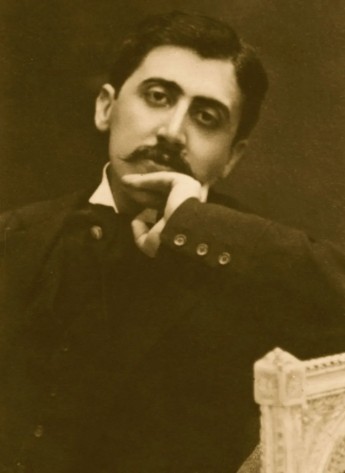
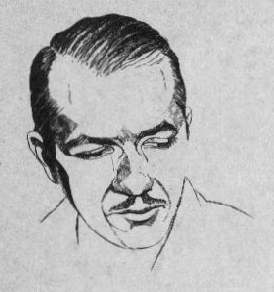
Graphic: Marcel Proust, Hulton Archive/Getty Images.

Consequence of Coincidence

Boris Pasternak (1890–1960), Russian poet and novelist, spent a decade creating his singular opus, Doctor Zhivago, completed in 1956. More than a historical narrative, it is a philosophical cathedral, a novel constructed of haunted Romanticism, moral reckoning, and symbolic renewal. Set against the dissolution of Tsarist Russia and the disillusionment of revolutionary aftermath, the book crosses the bridge from imperial decay into the intoxicating dream of collective transformation, only to watch that dream unravel into a black hole of exile, violence, and starvation.

This arc of collapse recalls the spiritual bargain Thomas Mann dramatizes in Doctor Faustus, but where Mann’s protagonist descends into metaphysical madness, Doctor Zhivago journeys through the quiet but unrelenting erosion of the soul. He does not perish; he endures, but with dimming strength and drive. The rails he rides are not toward damnation but disillusionment. And still, beams of light pierce the fog: rays of love, recollection, and art that suggest the possibility of meaning and rebirth.

As Nikolai Nikolaievich says early in the novel, “the whole of life is symbolic because it is meaningful.” In this way, the prose becomes Pasternak’s metaphorical terrain, thick with fog, fractured history, and spiritual yearning. The appended poetry, by contrast, is a sudden clearing. Here, the truth is not narrated but sung as parables: psalms.

Pasternak stands in conversation with his literary ancestors, not in imitation but in integration. Tolstoy’s presence is unmistakable, the historical sweep as personal crisis, the aching attention to moral choice. But where Tolstoy moves with structural precision, Pasternak drifts with mystical defiance. His narrative resists symmetry. His characters do not seek ideology, they search for grace.

Symbolist in sensibility if not in allegiance, Pasternak paints with metaphysical hues. As Nikolai Nikolaievich reflects, it is not commandments but parables that endure, not doctrine but symbol. Life, for Pasternak, is sacred not by design but because of its trembling unpredictability.

It is no accident that Hamlet opens Zhivago’s verse collection. The parallels run deep: both Hamlet and Zhivago move through time like exiles from history itself, cast adrift in worlds too cruel for their contemplative souls. When Pasternak writes, “I consent to play this part therein,” he evokes both the tragedy and transcendence of bearing witness. Zhivago performs his role, but lives another life, internal, poetic, unreachable: above the fray, but corrupted by the psychosis below.

His poems chart this existential divide: March, an ode to ugliness and beauty; Holy Week, a quiet redemption; Parting, remembrance caught in an unfinished gesture. In Garden of Gethsemane, Pasternak, born Jewish, philosophically Christian, offers the novel’s spiritual heartbeat and epitaph: “To live is to sin, / But light will pierce the Darkness.”

Perhaps nowhere is Pasternak more intentional, and more misunderstood, than in his use of coincidence. Critics have dismissed the improbabilities: chance meetings, reappearances, entwined fates that strain believability. Yet, viewed symbolically, they form a system. These moments are not narrative indulgences; they are metaphysical punctuation marks, appearing when a character risks dissolution and irrelevance, summoning memory, recognition, or spiritual breath.

These recurring events hint at resurrection, not just personal but societal. Pasternak suggests life moves not in straight lines but in spirals and cycles. Coincidence becomes a kind of syntax for recurrence, for unfinished conversations rekindled in new voices. Meaning doesn’t unfold; it echoes amplified.

Again and again, children appear, observers, inheritors, blank slates. In them lies the novel’s quiet eschatology: renewal not through revolution, but through the uncorrupted eye. These youths do not argue ideology. They carry memory unwittingly. They are the future poets whose truths will be elemental and free, like wind through the trees.

If Doctor Zhivago is a Passion, then its resurrection comes not in fire, but in continuity. Not in triumph, but in scattered verses, remembered, revived. Pasternak’s salvation is lived: grace through endurance, beauty through suffering, renewal through remembrance.

Banned in the Soviet Union upon completion, Doctor Zhivago was smuggled to Italy and published in 1957, igniting an international phenomenon. The CIA distributed the book behind the Iron Curtain as a weapon of quiet revolt. Pasternak was awarded the Nobel Prize in 1958, then compelled to decline it under state pressure. And still, by 2003, the novel had found its way into Russian classrooms.

This was not just a novel. It was a voice buried and reborn.

Pasternak’s opus is not a chronicle of a man or an era, but a symbolic landscape of what it means to remain human in the machinery of history. A tale not of revolution’s glory, but of the soul’s refusal to be mechanized. It rejects dogma in favor of parable, certainty in favor of consequence, ideology in favor of grace.

Doctor Zhivago teaches us that life may be coincidence, but not accident. That beauty may falter, but goodness moves quietly. And that sometimes, when all else falls away, it is poetry that remains, whispering its eternal truths into the trembling heart of history.

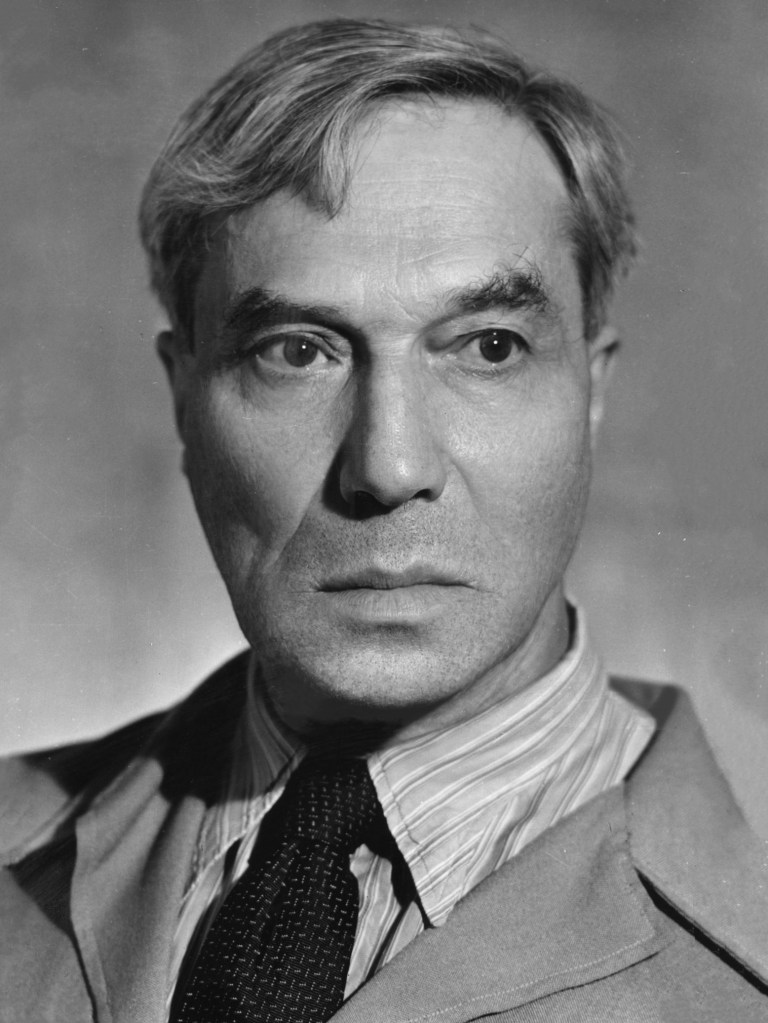
Source: Dr. Zhivago by Boris Pasternak, 1957. Graphic: Boris Pasternak, 1959. Public Domain.

Practical Solutions

Thomas Malthus in the late 18th century stated that population growth proceeds at an exponential pace while growth in the food supply is arithmetic (linear) leading to inevitable periods of disease and starvation. Malthus argued, or more accurately, preached, that there were only two ways to prevent inevitable famine: actively curtail population growth or let nature take its course. He advocated tariffs to spur local agricultural production and moral restraint. Modern day adherents of Malthusian theories coupled with climate, environmental, and social catastrophes include Paul Ehrlich author of The Population Bomb, and Garrett Hardin author Tragedy of the Commons, both who were concerned that resources could not keep pace with population growth. John Maynard Keynes, not necessarily a Malthusian, initially feared overpopulation would result in poverty. Later, he grew concerned that insufficient population growth would lead to labor shortages and economic stagnation. All Malthusian predictions fail because they underestimated human ingenuity: agricultural innovations, industrial advances, and the energy revolution continually expanded resources. While Malthusian thinkers predicted collapse, human ingenuity reshaped the future, standing on the shoulders of giants, we brought the sky closer instead of watching it fall.

Early in his career, Robert A. Heinlein acknowledged Malthusian concerns about overpopulation, but rather than advocating population control, he envisioned technological solutions to expand humanity’s reach. This idea provided the foundation for his 1956 juvenile novel, Time for the Stars, which explores interstellar colonization as a means of alleviating Earth’s burden. Faced with mounting population pressures, Earth launches an interstellar program to search for habitable worlds. The explorations will take place aboard spaceships that can accelerate up to but not beyond the speed of light. As the ships venture deeper into space at relativistic speeds, conventional communication with Earth suffers increasing delays, making real-time coordination nearly impossible. If the ships are lost or destroyed their discoveries will be delayed or lost completely. To solve this problem, Heinlein introduces the literary fictional concept of telepathic twins and triplets, individuals capable of instantaneous communication, unaffected by distance or time dilation.

Twins are recruited to maintain real-time communication with the ships, with one twin remaining on Earth while the other travels aboard the spacecraft. The twin on Earth ages much faster than the spacefaring twin traveling at near-light speeds. As the time gap widens, their telepathic link weakens, forcing the ship-bound twin to communicate with younger generations of their family on Earth.

This adventure becomes the sci-fi narrative for the concept of the twin paradox first proposed by Paul Langevin. In 1911 Langevin showed that a traveler moving close to the speed of light for two years would return to an Earth that had aged 200 years since his departure. At first, the paradox seemed to suggest that each twin should perceive the other as older, an apparent contradiction. Einstein resolved this by showing that time dilation is a fundamental consequence of special relativity, not an actual paradox. In special relativity, time dilation arises due to velocity, whereas in general relativity, it extends to curved spacetime via the equivalence principle. The traveler ages slower than his Earth-bound twin.

In Time for the Stars, Heinlein does more than illustrate relativistic physics, he champions the optimism that human ingenuity will always outweigh natural pessimism. It serves not only as a rebuttal to Malthusian gloom but also as a direct rejection of William Golding’s dystopian vision in Lord of the Flies, which Heinlein previously wrote in his 1955 utopian novel ‘Tunnel in the Sky’. Lord of the Flies in semitic languages translates directly to Beelzebub. In Indo-European languages Beelzebub, according to some, translates to ‘lord of the jungle’ a phrase with much less negativity than the semitic translation. Heinlein further expands on the lord of the jungle by introducing the German 20th century concept of Lebensraum in chapter 3 of Time for the Stars titled Project Lebensraum. Lebensraum in his novel parallels the German concept in that it means territorial expansion as a pragmatic solution to overpopulation. Given the post-WWII connotations of Lebensraum, Heinlein’s use of the term is provocative, perhaps deliberately so, prompting reflection on whether space colonization is an ethical necessity or simply another form of expansionist imperialism. Heinlein believed in the problems of overpopulation, but he wanted a positive solution to that rather than a disturbing reach into limiting fertility. Project Lebensraum to Heinlein was likely a repurpose of Lebensraum as a brilliant solution to overpopulation and continued survival of the species.

Ultimately, Heinlein’s Tunnel in the Sky counters the pessimistic view of human nature, demonstrating that young people can build a functional society rather than descend into chaos, contrasting Lord of the Flies and reinforcing the themes of Project Lebensraum in Time for the Stars. As an extension of that logic, humanity must expand beyond Earth to secure its future.

Time for the Stars is more than a literary exploration of Einstein’s time dilation, it is a direct refutation of fear-driven pessimism, a celebration of humanity, and a testament to our quest for an enduring future among the stars.

Source: Time for the Stars by Robert A. Heinlein, 1956. Graphic: Robert A. Heinlein.

The Many Colors of Slavery

Those who deny freedom to others deserve it not for themselves.”—Abraham Lincoln

Whoever does not have two-thirds of his day for himself, is a slave, whatever he may be: a statesman, a businessman, an official, or a scholar.” — Friedrich Nietzsche

As the great continental glaciers receded at the end of the Pleistocene, fertile land emerged, allowing for the transition from hunting and gathering to agriculture. Farming was labor-intensive, and with the rise of permanent settlements came the demand for constrained and controlled labor. Slavery, likely with first roots in Mesopotamia, though independent manifestation by the Pharaohs in ancient Egypt and other early civilizations, made it ubiquitous, and it has never disappeared.

From the bonded laborers of the Pharaohs to the structured servitude in Greece and Rome, from the transatlantic trade that brutalized African populations to the modern exploitation of migrant workers in sweatshops and the sex trades, slavery has evolved rather than vanished. Each era refines its own form of servitude; forced labor, insurmountable debt, bureaucratic entrapment, or corporate exploitation. It is a practice as ancient as prostitution and taxation, deeply embedded in human society, yet constantly shifting into less visible but equally insidious forms. As long as slavery remains profitable its existence will continue to indelibly stain humanities’ collective soul.

Slavery, and its ultimate contrast, freedom, was a persistent theme in the works of sci-fi author Robert A. Heinlein. With a piercing social awareness, Heinlein, who, in his early years, was described by Isaac Asimov as a ‘flaming liberal’—picked up the theme and horrors of slavery with his 1957 juvenile novel “Citizen of the Galaxy”; bringing the many forms of servitude into the personal history of a precocious kidnapped boy named Thorby. Citizen of the Galaxy is a planet-hopping, spacefaring critique of oppression, class structure, and the nebulous concept of freedom. Heinlein crafts a future where contrasting societies across the galaxy reflect varying degrees of servitude and autonomy, if not necessarily total freedom. Man rarely allows himself complete independence.

Heinlein through the lens of Thorby explores the various shades of slavery, beginning with the brutal, controlling enslavement and continuing to more subtle forms that the individual may not even recognize as confinement. (Partial plot giveaways beyond this point.) Escaping his initial enslavement by the graces of a kindly, strict, but loveable old cripple named Baslim, Thorby moves into a hierarchical, structured existence of spacefaring traders then onto a self-imposed, due to a thirst for justice, straitjacket of a corporate bureaucracy on his birth planet of Terra. A life story of how control can be imposed by others or by ourselves.

As Heinlein’s social perspectives evolved, his libertarian leanings took greater prominence in Citizen of the Galaxy. Through Thorby’s life journey, Heinlein emphasizes personal autonomy, resistance to tyranny, and the moral duty to fight injustice. Baslim, Thorby’s first mentor, symbolizes the idea that one person can stand against oppression and make a difference, even if it takes many miles and years to materialize.

This theme runs through much of Heinlein’s work, but here, it’s especially poignant because Thorby is powerless for much of the novel, making his eventual triumph all the more meaningful. Heinlein’s novels, Farnham’s Freehold, Friday, and Time Enough for Love, explore slavery and control, reinforcing humanity’s inherent need for freedom, or at the very least, breathing space.

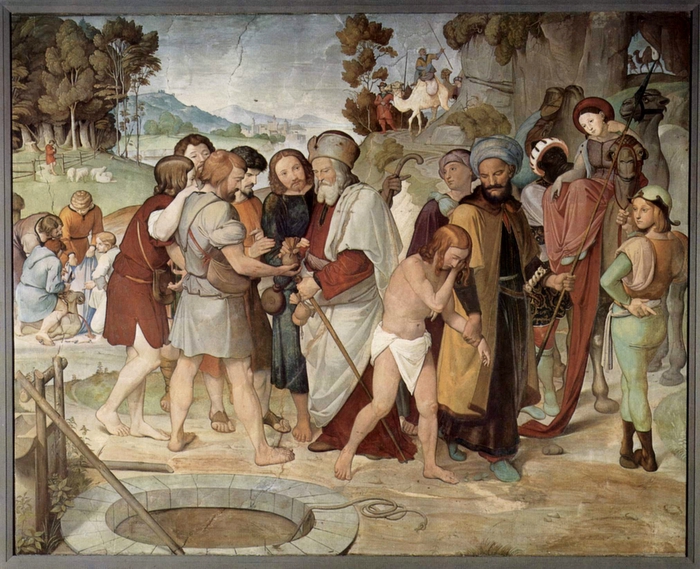
Source: Citizen of the Galaxy by Robert A. Heinlein, 1957. Graphic: Joseph Sold into Slavery by Friedrich Overbeck, 1816. Vanderbilt University. Public Domain.

Beelzebub Retold

 “No matter where or what, there are makers, takers, and fakers.” Heinlein: Time Enough for Love, 1973.

William Golding’s 1954 dystopian novel Lord of the Flies follows a group of stranded schoolboys who, without adult supervision, descend into savagery. Their initial attempt at cooperative survival deteriorates as fear and power struggles drive the strong to dominate the weak; order gives way to chaos, smothering courage beneath a blanket of terror.

While Lord of the Flies initially struggled in sales, Heinlein, perhaps one of its few early readers, found its premise of boys descending into barbarity overnight to be an absurd fiction. In response, he swiftly crafted Tunnel in the Sky, a sci-fi adventure that presents a striking contrast with a parallel plot: instead of chaos and savagery, his young survivors rise to heroic heights, confronting their primal fears with resilience and camaraderie.

The ninth of Heinlein’s thirteen juvenile novels (1947–1963), Tunnel in the Sky is framed as sci-fi but at its core,it’s an adventure story rooted in the conceptual school of literary romanticism. A story of survival wrapped in the timeless cloak of human values and existence. The novel uses sci-fi primarily as a means to transport young student survivalists to an uninhabited planet for their final class exam: surviving 5–10 days in a primitive, dangerous setting. After depositing the students on the planet, the novel’s sci-fi categorization reverts to Call of the Wild. A passing grade is assigned to those that were able to walk or crawl out alive.

After sending the students to the planet the transport mechanism malfunctioned and they are trapped alone on the planet with only a few provisions, maybe forever. With a few knives, limited medical supplies, and other paraphernalia that would fit in packs and pockets they are forced to search out each other to put together a workable society to provide food, shelter, and defense against the elements and native man-eating fauna. With expected fits and starts the kids put together a workable society that provides for their needs and a few wants eventually raising the question of whether they would even accept a rescue.

Heinlein was an incorrigible optimist and humanist. He believed humanity could and will solve all existential problems. To him Lord of the Flies was an impossibility. Humans want to live and self-interest eventually embraces “The needs of the many outweigh the needs of the few” (Spock-The Wrath of Khan).

In semitic languages such as Hebrew, Lord of the Flies is a literal translation of Beezlebub, who was initially a minor Philistine god that expelled flies, believed to be a source of sickness. Over time the Jews referred to him as a major demon and eventually Christianity elevated him to Satan himself. In Indo-European languages Beezlebub literally translates to Lord of the Jungle, one who conquers for the good of humanity: lebensraum. Golding’s Beelzebub represents dystopian destruction; Heinlein’s brings forth the utopian Lord of the Jungle.

Source: Tunnel in the Sky by Robert Heinlein, 1955.  Graphic: Heinlein in Amazing Stories, 1953. Public Domain.

Ignoble Realism

During the late 18th century French Revolution, the peasants laid their grievances at the feet of the nobles and took their heads in lieu of apology and retribution. As the years passed the revolutionary fervor subsided, Napoleon’s reign was brief yet transformative, and finally Louis XVIII, replacing Napoleon, restored the French nobility which brought peace to the land but also returned the country to the immoral customs of yore, not that they really went away, of avarice, promiscuity, and vice. Themes that Honoré de Balzac vividly paints in Old Goriot (Gor-e-u or Gor-e-ot), his greatest novel, first published in serial form in 1834; a fearless reflection of the Realist artistic movement taking shape in his time.

In this forlorn, unflattering critique of French society he uses a fine brush to sketch the uncomfortable and unseemly details of a decayed culture like a faded relic of indulgence, stripped of its former grandeur, except now the lower classes join the upper crust in a race to the dishonorable depths of unprincipled shame.

Honoré de Balzac’s Old Goriot tells the tale of unrequited, selfless paternal love thoroughly blind to the selfish indifference of his two young daughters, Delphine and Anastasie who have forsaken their father for wealth and prestige. Eugene de Rastignac, a young but poor law student, pursues the married Delphine with the blessings of her father with little thought about the moral implications of his ambitious desires or the Faustian struggles they entail. Vautrin, a criminal mastermind, enters the scene to put an exclamation point on the plot’s everything is inbounds, nothing is forbidden in early 19th century Parisian life. As Goriot dies alone, broke and broken, Eugene must decide his path in a city of corruption, indifference, and immorality. To succumb to the ruthless ambition of Parisian society or fight for a moral existence to save his soul.

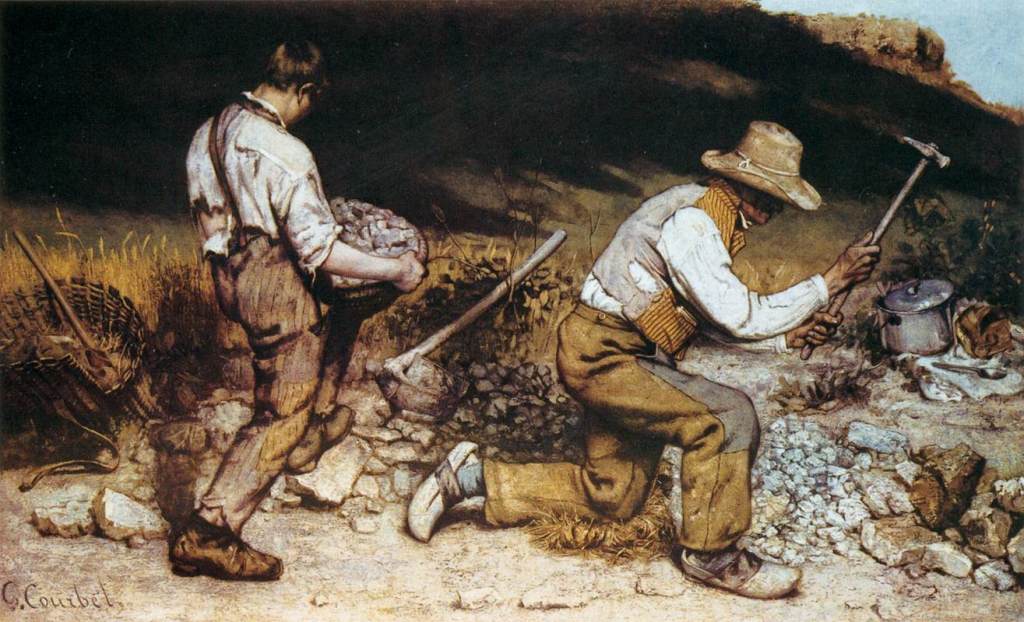
Source: Old Goriot by Honoré de Balzac’s, 1834. Graphic: The Stone Breakers by Gustave Courbet, 1849 (Realism art movement).

White Guard

Mikhail Bulgakov’s White Guard, set during the Ukrainian War of Independence (1917–1921) amid the Russian Civil War, captures Kyiv in an existential power struggle against varied forces: Ukrainian nationalists allied with German troops, the White Guard clinging to Tsarist dreams, Lenin’s Bolsheviks closing in, plus Poles and Romanians. Against this bloody backdrop, Bulgakov crafts a semi-autobiographical tale of loss and fatalism, culminating in a nihilistic realization of humanity’s purpose: “But this isn’t frightening. All this will pass. The sufferings, agonies, blood, hunger, and wholesale death. The sword will go away, but these stars will remain… So why are we reluctant to turn our gaze to them? Why?”

Bulgakov, a doctor of venereal diseases like the book’s protagonist Alexei Turbin, knew hopelessness. In 1918, syphilis was a scourge, often incurable, leading to madness, mirroring the war’s societal decay. Alexei volunteers for the White Guard, tending to horrors he can’t heal, his efforts dissolving in a dream: “shadows galloped past…Turbin was dying in his sleep.” War becomes a disease, resistance futile. Yet Bulgakov’s lens widens. Sergeant Zhilin dreams of Revelation, “And God shall wipe away all tears…and there shall be no more death,” finding humility in cosmic indifference. Petka, an innocent, dreams simply of a sunlit ball, untouched by great powers. “Blessed are the pure in heart, for they shall see God” (Matthew 5:8).

Then, out of dreamland into the light: “All this will pass.” The stars endure, wars fade. Writing in the 1920s after the White defeat, Bulgakov channels Russian fatalism—Dostoevsky’s inescapable will, Chekhov’s quiet surrender. But he’s not fully broken. His “Why?” pleads, mocks, resists. Why not look up? Survival is luck, death equalizes, yet fighting a losing battle confronts our nothingness. Kyiv falls, the Bolsheviks threaten, the White Guard vanishes, still, Bulgakov continues to ask. Why?

He blends despair with irony, a doctor mocking death as the stars watch. The German expulsion of the Reds in 1918 briefly eased bloodshed, but 1919 brought worse, “Great was the year and terrible the Year of Our Lord 1918, but more terrible still was 1919.” History moves on; stars don’t care. Bulgakov’s question lingers: Why? To fight is to live, fate be damned.

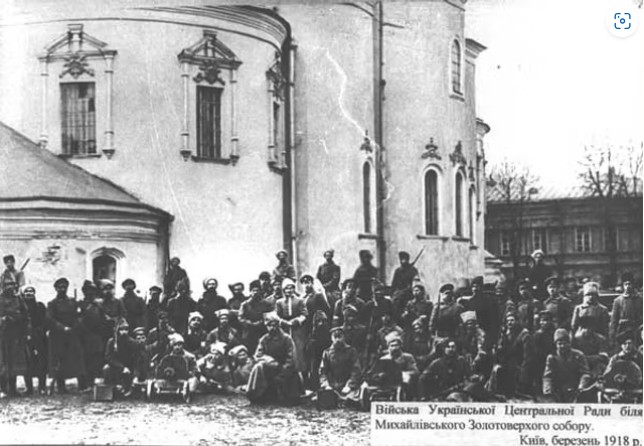
Source: White Guard, Mikhail Bulgakov, trans. Marian Schwartz. Graphic: Ukrainian Soldiers circa 1918.

Study of the Undead

Bram Stoker drew inspiration for his 1897 gothic epistolary novel Dracula by poring over books at The London Library, a private institution in St. James’s Square, London. In 2018, the library pinpointed 26 volumes Stoker consulted during his writing process. Remarkably, many carry his handwritten notes, underlinings, and folded pages. Librarians everywhere might jokingly call these monstrous book defacing crimes worthy of a flogging. Among the most heavily marked were Sabine Baring-Gould’s The Book of Were-Wolves, Thomas Browne’s Pseudodoxia Epidemica, and Emily Gerard’s “Transylvanian Superstitions”—works blending eerie folklore with sharp critique that sparked Stoker’s imagination.

Published in 1865, Baring-Gould’s The Book of Were-Wolves explores werewolf legends and vampire lore through a scholarly lens. A clergyman and folklorist, he sifted through tales—like the grisly trials of accused werewolves such as Peter Stumpp or exhumations of unnaturally preserved bodies tied to Slavic upir and Romanian strigoi—with curiosity and skepticism, treating them as anthropological curiosities.

Across the centuries, Thomas Browne’s 1646 Pseudodoxia Epidemica tackled the “vulgar errors” of its day. A physician and polymath, Browne debunked oddities like the belief that chameleons live on air alone. His blend of scientific inquiry and dry wit unraveled superstition—a rational counterpoint Stoker likely found intriguing but likely unhelpful for horror novel.

Then there’s Emily Gerard’s “Transylvanian Superstitions,” published in The Nineteenth Century journal in 1885. This ethnographic study dives into Romanian folklore, spotlighting vampire beliefs. Gerard recounts tales of the strigoi—dead souls rising to torment the living—and practices like staking corpses to keep them down. Stoker’s notes mention “Nosferatu,” a term some tie to her work (though its origins are debated), showing her influence on Stoker’s undead vision.

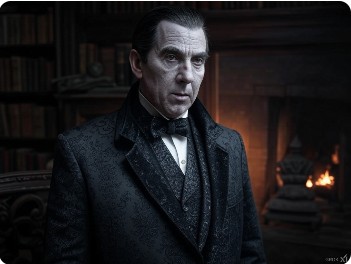
Source: London Library and Stoker’s Study Books, Dracula. Graphic: Dracula, Grok 3.

Love, Class, and Money

Framley Parsonage, by the Victorian author Anthony Trollope, is the fourth novel in the six-part Chronicles of Barsetshire series. This series is set in the fictional county of Barsetshire in the English countryside and details the social entwinings of the gentry, rich mercantile classes, clergy, and occasionally what we would today refer to as the comfortable middle class. The novels, which can be read in any order, revolve around themes of maintaining social status, finding love, marrying well, and money. Hypocrisy, chicanery, and snobbish attitudes often create dilemmas that Trollope, in a winding but satisfying narrative fashion, concludes as the reader wishes.

Framley Parsonage specifically details the misadventures of the amiable but horribly naive vicar, Mark Robarts, who is a boyhood friend of Lord Ludovic Lufton. Through this friendship, Ludovic’s mother, Lady Lufton, installs Robarts in the Framley Parsonage with a sufficient salary to support his young family’s basic needs. Through a misplaced sense of ambition, Robarts attempts to further his standing in life by associating with a parliament member, charlatan, and aptly named Mr. Sowerby, bringing humiliation and disgrace upon himself.

Trollope displays an absolute sense of enjoyment in writing this novel, skewering the political class with an abundance of wit and satire, along with exploring four marriage sub-plots that he resolves with appropriately deserved denouements of happiness or the lack thereof.

Source and Graphic: Framley Parsonage by Anthony Trollope, Publisher Everyman’s Library, 1994.