Noir Righteousness

The Big Nowhere B Big Nowhere.jpg

Written by:  James Ellroy

Published by: Mysterious Press

Copyright:  © 1988

Life it seems, will fade away
Drifting further every day

Deathly lost, this can’t be real
Cannot stand this hell I feel

(Partial lyrics to Metallica’s Fade to Black, ©1984. Songwriters: James Hetfield, Lars Ulrich, Cliff Burton, Kirk Hammett).

When there are no heroes, no good guys, no morals worth fighting for, then you’ve walked into The Big Nowhere.  There are no prizes here so Sam Spade took the night train out of L.A., and Mike Hammer’s 45 would have melted by the 9th chapter, leaving a rather skinny book with a sloppy ending. No one, no thing is redeemable in this novel, possibly not even the reader, who is captivated, disheartened, engrossed, disgusted on the raw truth presented as living without a soul, trying to make sense of this hell on earth, wishing never to come anywhere near The Big Nowhere.

…thinking Coleman’s Upshaw fixation would break him down on his homosexuality, stymie and stalemate him.  He was wrong. Coleman picked up Augie Duarte at a downtown bar, sedated him and took him to an abandoned garage in Lincoln Heights.  He strangled him and hacked him and ate him and emasculated him like Daddy and the others had tried to do to him…

Everyone deserves to die, sooner rather than later, in this l.a. l.a. land; the protagonists, if there are any, the antagonists, the groupies, the followers and the hanger-ons, everyone.

The Big Nowhere is the second, and likely the best, of Ellroy’s L.A. Quartet which includes:

  1. Black Dahlia © 1987
  2. The Big Nowhere © 1988
  3. L.A. Confidential © 1990
  4. White Jazz © 1992

Don’t miss this one.

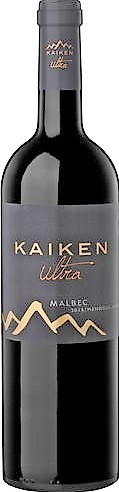
Kaiken Ultra Malbec 2013

W Kaiken Malbec 2013Malbec from Mendoza, Argentina
100% malbec
14.5% alcohol by volume

els 8.7/10

James Suckling 93

Wine Spectator 90

The Kaiken Winery, named after the gregarious caiquen goose, is located a few miles southwest of Mendoza, Argentina on a medial position of an alluvial fan born from sediment disgorged from the towering Andes to the west, and a few stones throw north of the spirited, flowing braids of the Rio Mendoza.

The malbec grapes are harvested from 3 vineyards north and south of Mendoza, ranging from 950-1250 meters above sea level, rendering thirsty, hot days and dry, cool nights, partnering with the sandy, loamy soils in providing temperament and complexion to the impending wines.

With a clear ruby-red color the wine exudes a black cherry and plum bouquet with a mild vanilla sweetness coming later. This malbec is smooth all around; pleasant and mellow tannins with a simple and balanced finish. On a better day I might rate this wine 9.0/10 but it just doesn’t manifest the pizzazz, personally, to push it to that level.

The 2013 vintage is very difficult to find but there is a similarly rated 2015 Kaiken Ultra Malbec available for $18.99 wine.com.

Explorations: Quetzals

E Quetzal.jpgE Male Resplendent Quetzal.jpgQuetzals are large colorful birds with iridescent feathers, usually found in the humid highlands from northern South America and southern North America. There are 6 species in 2 genera within the family Trogonidae. They eat fruits, berries, insects and an occasional frog or lizard. The picture to the left is of a golden headed quetzal.

The resplendent quetzal, picture of a male to the right, is the national bird of Guatemala and the Guatemalan currency is also named the quetzal. It is considered one of the most beautiful birds in the western hemisphere. During mating season it will grow a twin tail feather train up to 3 feet in length.

War in Paradise

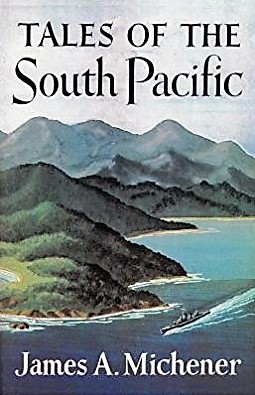
Tales of the South Pacific B South Pacific

Written by:  James A. Michener

Published by:  Curtis Publishing Company

Copyright:  © 1947

James Michener, an adopted child of a Pennsylvania Quaker, instilled his fictional Tales of the South Pacific from his garrisoned experiences as a Lieutenant Commander in the US Navy during the latter half of his WWII tour of duty. From 1944-1946, he was stationed mainly on Espiritu Santo, a small island on the eastern edge of the Coral Sea, as a naval historian, but he frequently visited other tropical islands in the area.

The short stories collected in this book, which Michener won the 1948 Pulitzer Prize in Fiction, probe the symbiosis and bonds between the American G.I. and frequently, female Pacific Islanders. The tales revolve around mostly the same characters, with a commander generally filling in as the first person narrator, and a few common plot lines such as a forthcoming, but fictitious island invasion.

Michener’s descriptive prose can be captivating and luxurious, sometimes almost hypnotic, such as the sketch of the local song birds on the protagonist’s lover’s plantation in the poignant love story, Our Heroine:

…Their harsh cries were modified by the delicate chirping of a graceful swallowlike bird that flew in great profusion among the cacao trees. This gracious bird was sooty black except for a white breast and belly.  Gliding and twisting through the shadows it looked like a shadow itself. Then bursting into the sunlight, its white body shone brilliantly…

The composition is good, probably better than anything else he wrote later in life but it does not reach the level of a master story-teller such as what Joseph Conrad attained in his Heart of Darkness or a Jack London story, for instance: All Gold Canyon:

…The red-coated many-antlered buck acknowledged the lordship of the spirit of the place and dozed knee-deep in the cool, shaded pool.  There seemed no flies to vex him and he was languid with rest.  Sometimes his ears moved when the stream awoke and whispered; but they moved lazily, with foreknowledge that it was merely the stream grown garrulous at discovery that it had slept…

Tales of the South Pacific is the antithesis of Michener’s future product; short stories versus monstrously thick and wordy novels, crisp and straightforward plot lines versus cloudy and cumbersome themes, and finally a compassionate acknowledgement for his reader’s attention rather than a dismissive condescension for those not willing to commit to consuming his turgid volumes of fictional excess.

Michener wrote one good book: Tales of the South Pacific.

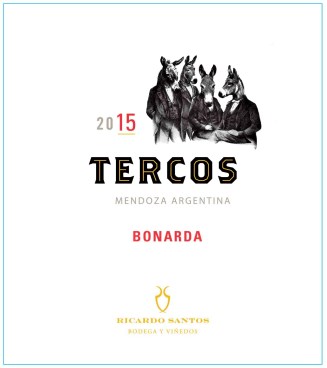
Tercos Bonarda 2015

W Tercos Bonarda 2015Bonarda from Tupungato, Uco Valley, Mendoza, Cuyo Region, Argentina

100% bonarda

13.9% alcohol by volume

Purchased: 12 July 2017 – $19.99

Opened: 8 September 2017

els:  9.0/10

James Suckling:  93

Insider: 92

Natalie Maclean:  90

Wine Align: 86

Wine Enthusiast: 82

Argentina is the world’s 6th largest producer of wine by volume, just behind the US and ahead of Australia. It produces about 6% of the world’s total wine. The country has in excess of 500,000 acres planted in grapes. Red grapes account for about 55% of the total grown in the country with rose and whites accounting for the rest.  The country grows more than 100 varietals of grapes but the 6 main ones make up almost half of the total acreage planted. Four varietals account for 79% of all red grapes planted and 42% of the total for all red, white, and rose grapes: Malbec 36% total/20% red, Bonarda 17%/9%, Cabernet Sauvignon 14%/7%, and Syrah 11%/6%.  Two varietals account for 35% of all white grapes planted or 7% of the total of all grapes: Torrontes Riojano 20% white/4% total and Chardonnay 15%/3%. Argentina has 4 main wine-producing regions: Atlantic, Cuyo, North, and Patagonia. Cuyo is the largest and most important wine-producing, macroeconomic region in central Argentina and includes the wine sub-regions of La Rioja, Mendoza, and San Juan; with Mendoza being the largest of the 3 by area, population, GDP, and wine production.

Argentina was the first South American country attempting to grow vines, beginning in Mendoza in the early 1800s.   The initial plantings came from the Bordeaux region of France, including the ubiquitous Malbec.  Eventually, Mendoza was producing world-class Malbec wines, on par or superior to those produced in France, mainly due to its high elevations in the foothills of the Andes, well-drained soils, and lots and lots of hot sunshine. Today the country produces 75% of the world’s Malbec.  The country’s 2nd most planted grape, on 47,000 acres, is Bonarda, aka Douce Noir, Corbeau, and Charbono accounting for almost all of the world’s total acreage.

Cuyo Region, in the western Andes foothills of central Argentina is the country’s main wine-producing area that includes the provinces of San Juan, San Luis, Mendoza, and La Rioja. The region covers a 450 miles, north to south, from the village of San Blas de los Sauces in the north to the small city of General Alvear in the south. The region accounts for almost 80% of country’s wine production. The area is one of the driest wine-producing areas of the world requiring some form of irrigation for the all the vineyards.

The Mendoza region, lapping up onto the eastern foothills of the youthful Andes, is the largest wine-producing area in all of Argentina, accounting for 65-75% of the country’s total. A third of the country’s vineyards are dedicated to Malbec with Mendoza also producing the lion’s share of that variety. The region’s vineyards range from 1600-5600′ above sea level. The Mendoza wine region is partitioned into another 5 sub-areas: Central Oasis, East Mendoza, North Mendoza, South Mendoza, and Uco Valley.

The Uco Valley, striking in a north-south direction, just east and parallel to the Andes Mountains, is 45 miles long and about 15 miles wide on average. The northern edge of valley is situated at the small town of San Jose and the southern limit is anchored by the tiny village of El Cepillo. The valley is crossed by the braided Tunuyan and Tupungato Rivers, sourced from the snow packs high in the Andes Mountains. There are over 60,000 acres of vineyards ranging from 2800-5600′ above sea level in the sub-region. The main varietals grown are Malbec, Cabernet Sauvignon, Merlot, Tempranillo, Pinot Noir, Chardonnay and Sauvignon Blanc. Malbec accounts for almost 45% of all acreage planted. Soils throughout the Uco Valley are alluvial and consist of a rocky, clayey sub-soil overlain by a stony, sandy surface. The soils are immature, infertile, and well-drained; perfect for growing grapes. The dry valley sits in the rain shadow of the mountains requiring irrigation for the vineyards. Growing season temperatures range from 50-85°F with rainfall averages of 1-3.75″ per month.

Tupungato is located in the northern third of the Uco Valley, in the shadow of the Tupungato volcano and about 40 miles south of Mendoza. About a third of the acreage is devoted to vineyards with Malbec and Chardonnay the undisputed kings of the area. The soils are immature, stony and well-drained. Growing season temperatures range from 50-85°F with rainfall ranging from 0.5-1.33″ per month.

Bonarda, also known as Douce Noir, Corbeau, and Charbono, is the country’s 2nd most planted grape.  It is planted on more than 47,000 acres which is more than 99% of the world-wide total. The grape is thought to have originated in northern Italy along the Po River valley 3000 years ago, first planted by the Etruscans and brought to Argentina by Italian immigrants. It is a thick-skinned, medium-sized blueish-black grape producing a deep red wine high in tannins.  It has aromas of black fruit, plums, and anise. A full-bodied wine with great structure and long aging potential.

Ricardo Santos, owner of the Norton Winery, was the first producer in Argentina to export Malbec wines to the US in 1972. Santos sold this winery in 1989 and purchased vineyards around Mendoza, Maipu and Russell. The Ricardo Santos Bodega and Vineyards, today run by Ricardo’s sons, Patricio and Pedro Santos, has its winery located just south of Mendoza in Russell, Maipu. The winery was built in 2005 and has a capacity 700,000 liters or 185,000 gallons per year.  Its air-conditioned cellars accommodate 300 oak barrels. The winery produces 5 reds and 1 white under two labels:  Ricardo Santos and Tercos.

Tercos was developed by Pedro and Patricio Santos. The wine’s iconic, humorous and possibly triple entendre wine label of 4-donkeys in 3-piece suits is suggestive of a play on the word stubborn, the literal Spanish to English translation of Tercos, insinuating the difficulty of producing a superb wine from the local dry and poor volcanic-alluvial soils, and finally, they may be donkeys, but they dress up rather nicely.

The Bonarda grape is grown at their Finca La Pitonisa vineyard, or in English, the Witch Estate, which is in the evening shadows of the inactive Andean stratovolcano Tupungato towering another 17,799′ over the 3600′ above sea level vineyards. The volcano contributes to the silica rich, sandy loams of vineyard soils, containing various amounts of aluminum, calcium, sodium, magnesium, zinc and iron which augment the flavors and body of this wine. The vines were planted between 1977 and 1990 placing them mostly into the old vine category of lower yield but concentrated grapes. The grapes for the 2015 vintage were harvested in the 3rd week of April.

The grapes were picked, crushed and fermented in stainless steel tanks for 23 days at 77°F.  In December the wine was transferred to 15,000 3/4 liter bottles.

This is a satisfying wine with a pleasing, dark ruby-red to violet color. The aroma is easy with berries, plums and raisins in the forefront with a hint of cloves and spice. The taste is very smooth all around and the balanced finish lasts well into your next sip.

Bonarda compliments so many dishes and entrees, but I usually take a simple path and prepare a plate of thinly sliced sausages such as hard salami and summer sausage with some mild cheddar. Toss in a handful of salted cashews and seedless grapes and you’re all set. Bon appetit.

An outstanding wine at a great price. Drink this year but it’s likely good until 2025. Decant and aerate for one hour, or more, before drinking.

$12.99 wine.com

Amidst the Mole

Tinker, Tailor, Soldier, Spy Tinker Tailor

Written by:  John le Carré

Published by: Alfred A. Knopf Incorporated

Copyright:  © 1974

David John Moore Cornwell, alias John le Carré, a son of a con-man, whose father was a sometimes Rich Man, Poor Man; worked for British Intelligence in the 1950s and 1960s but was betrayed in 1964 to the Russians by Kim Philby, a British KGB double agent working within the MI6.

Tinker, Tailor, Soldier, Spy is the fictionalized tale of the hunt for Philby, nom de guerre Gerald, by retired British spy, George Smiley. Smiley, the physical antithesis of James Bond; is an overweight, over the hill, myopic, failure in love; but intellectually superlative, standing shoulder to shoulder with Sherlock and Columbo.

The title of the book comes from a children’s counting rhyme that traces back to at least the late Renaissance:

Tinker, Tailor,
Soldier, Sailor,
Rich Man, Poor Man,
Beggar Man, Thief.

and was used for assigning code names to one of the five suspected Soviet moles in British Intelligence. Tinker, Tailor, Soldier, Poor Man and Beggar Man were all senior intelligence officers within the Circus, an euphemism for British Intelligence, with Smiley being Beggar Man.

John le Carré writes with heavy characterization to the point of distraction along with frequent time and space jumps that will often bewilder. The opening sentence “The truth is, if old Major Dover hadn’t dropped dead at Taunton races Jim would never have come to Thursgood’s at all.” is absolutely critical to the plot development but remains a complete mystery for most of the tale. Read carefully but do not tarry.

Enough Already

Alien ConvenantAlien: Covenant

Theaters:  May 2017

Streaming:  August 2017

Rated:  R

Runtime:  120-122 minutes

Genre:  Action – Adventure – Fantasy – Horror – Science Fiction – Thriller

els:  2.5/10

IMDb:  6.5/10

Amazon:  2.9/5 stars

Rotten Tomatoes Critics:  6.3/10

Rotten Tomatoes Audience:  3.3/5

Metacritic Metascore:  65/100

Metacritic User Score:  5.9/10

Awards:

Directed by:  Ridley Scott

Written by:  John Logan and Dante Harper, screenplay; Jack Paglen and Michael Green, story

Music by:  Jed Kurzel

Cast:  Michael Fassbender, Katherine Waterson, Billy Crudup

Film Locations:  Australia and New Zealand

Budget:  $97,000,000

Worldwide Box Office:  $240,900,000

The year is 2104, a little more than a decade since the ill-fated Prometheus was destroyed, denying humanity’s creators from undoing the birth of man, and the Weyland Corporation is sending another ship: the Covenant, carrying several thousands humans, to populate another, distant planet.  The ship has all its human occupants in stasis for the trip and all are watched over by a new and improved version of the psychopath David: Walter.  A starburst, looking a lot like a meteor shower, pierces the ship’s hull and kills the captain while he sleeps in his stasis chamber.  Walter wakes up the 14 members of the ship’s crew, including those married to each other to repair the ship.  The newly revived crew receives a human-like transmission from a nearby planet that appears to be a perfect place to start a new colony, better than their original destination.  The new captain, with the commonsense of a milk cow, diverts the ship putting in motion a series of explicable bad decisions that endangers everyone, the ship’s crew, the ship’s occupants, and the ship.

Samuel Coleridge, author of The Rime of the Ancient Mariner, stated that a written unbelievable narrative that was shown to have a “semblance of truth” could be enjoyed by the reader or audience by suspending judgement on the implausible parts. This is usually stated as the willing suspension of disbelief or to believe the unbelievable.  J.R.R. Tolkien, author of The Hobbit and The Lord of the Rings, took this concept in a different direction by suggesting that the narrative could have a secondary belief system within an inner consistency of reality.  Tolkien believed that suspension of disbelief was only required when the story’s plot line does not maintain an internally consistent fictional world.

Alien Covenant fails not because of poor direction or bad acting but because the writers of the story and screenplay put forth an unbelievable and implausible plot that destroys everything else the movie has to offer, and that’s before you even discover it is a complete rehash of the five previous Alien movies (I refuse to add in the Predator vs Alien movies).  The writers, mainly John Logan, somehow believe that the Peter Weyland Corporation is willing to put up a fortune of bitcoins and pieces of eight to build, outfit and send off a colossal starship, containing thousands of human embryos and adults, capable of traversing the vast parsecs of empty space, to find a suitable planet for human colonization; then staff the running of the ship with unintelligent and irrational beings that are incapable of assessing risk or following protocols, all the while compounding the silliness of their decision-making by having spouses or significant others amplifying their emotional buffoonery.  Gads, why not just leave it to Mother, Father, David or Walter.  With computers or androids running the show the writers can at least insert some plausible scenarios for illogical scenes that don’t have to rely on the characters and or audiences being absolute morons.  If  all else fails maybe the space faring chimps: Albert, Ham and Gordo have some offspring that are up for the task.  Hopefully Logan will return to writing plays and leave science fiction to those that can formulate plausible plots.

Alien Covenant goes where the previous Alien movies have already gone. Good androids, bad androids. Sniff and closely examine all gooey eggs, repeat endlessly. Find the Alien, lose the Alien. Burn, nuke, melt, freeze, shoot, chop, slice, dice, mince, atomize the Alien. How about we just bury the concept so deep that all the Alien acid combined will not be able to uncover it again.

Zombies — or Not

PredestinationPredestination.jpg

Theaters:  March 2014

Streaming:  February 2015

Rated:  R

Runtime:  97 minutes

Genre:  Drama – Mystery – Science Fiction – Thriller

els:  8.0/10

IMDb:  7.5/10

Amazon:  3.9/5 stars

Rotten Tomatoes Critics:  6.9/10

Rotten Tomatoes Audience:  3.7/5

Metacritic Metascore:  69/100

Metacritic User Score:  8.0/10

Awards:

Directed by:  Michael and Peter Spierig

Written by:  Michael and Peter Spierig (screenplay) Robert A. Heinlein (story- All You Zombies)

Music by:  Michael and Peter Spierig

Cast:  Ethan Hawke, Sarah Snook, Noah Taylor

Film Locations:  Melbourne, Australia

Budget:  $NA

Worldwide Box Office:  $5,386,852

Ethan Hawke, temporal agent and bartender, must find and eliminate the Fizzle Bomber before he explodes one last devastating bomb that will take thousands of lives.

For the child of God, time is linear and unidirectional; we are born, we live, we die; the beginning, the middle and the end are all planned out except you can choose what to do with God’s offered grace.  Predestination, the doctrine, the outcome is a certainty; Predestination, the movie, the outcome is in doubt.  For predestination versus free will, the doctrine, is not a contradiction because, for God, time is immaterial, all moments are present in their immediacy. For predestination versus free will, in this movie, it is not a contradiction because time is circular and the protagonist can Keep On Keeping On until he selects good over evil, death over life (Live Die Repeat and Groundhog Day).

The Spierig brothers are identical twins born in Germany, living and working in Australia, creating movies from the ground up.  They write, they direct, they produce, they create the music, but they don’t act. Predestination is their 3rd feature film.

Predestination is a faithful rendition of Heinlein’s All You Zombies with enough temporal displacement to develop a very twisted noodle. The movie provides enough clues that you should figure out the plot well before the end credits roll; but knowing the plot ending neither diminishes the fun nor un-scrambles your brain.

The directing, writing and acting are all superb, but the story is what puts it on my to watch again list.

Mans Origins

Vertebrate Palaeontology 4th EditionVertebrate Paleontology

Written by:  Michael Benton

Published by:  Wiley Blackwell

Copyright:  © 2015

Tracing our ancestry back in time is a popular pastime for a significant fraction of the population. Usually this involves investigating our direct descendants and nationalities and staying within the boundaries of a few generations of our species. Professor Benton takes our genealogy a tad further to the beginning of the Cambrian some half billion plus years ago and carries it to the present. Along the way we run into the rather unsettling ancestral tidbit that one of our giga-times great grandparents was an elongated, bulbous slug like organism in the subphylum Urochordata with a general name of sea squirt. Imagining that we evolved from one-celled organisms is conceivable and possibly non-repugnant, but making a stop along the way as a sea squirt just defies all conventions and manners of civilized evolutionary behavior. Laughing at us or with us seems a distinction worth exploring.

Another stop along the evolutionary highway was the once puzzling case of the ubiquitous conodonts. Into the later part of the 20th century, conodonts, mainly teeth like elements, were especially useful index fossils from the Cambrian until they disappeared from the record at the Triassic-Jurassic extinction event boundary, but no one knew what they were; what family the species belonged to or what they looked like. In the 1983 the mystery was solved with the discovery of eel like soft body imprints from Early Carboniferous rocks around Edinburgh, Scotland with additional, later discoveries coming from Wisconsin, USA and South Africa, which placed them firmly in the subphylum Vertebrata. Discovering that you were a fish in your past life is certainly an improvement over a lumpy sea squirt.

This book provides an exhaustive review of every major group of living and fossil vertebrates. The primary audience for this work is graduate students in geology or biology but even a layman, such as myself, will find this text not only highly readable and enlightening but immensely enjoyable. An appendix gives a cladistic scheme of all living and fossil vertebrates; Professor Benton refers to it as a conservative cladistic scheme, which adds an exclamation point to the books voyage through the tree of life.

Dr. Michael Benton is a British palaeontologist and professor in the School of Earth Sciences at the University of Bristol.  He was elected a Fellow of the Royal Society of London for Improving Natural Knowledge in 2014.

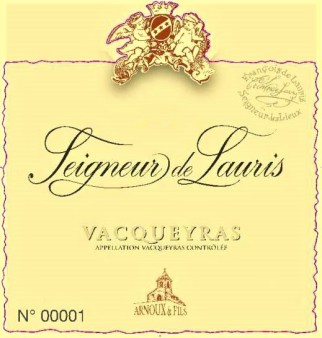
Arnoux et Fils Vacqueyras Seigneur de Lauris 2012

W Vacqueyras 2012Rhone Red Blends from Vacqueyras AOC, Rhone Valley, France

70% grenache

30% syrah

14.0% alcohol

Purchased:  12 July 2017 – $19.99

Opened:  29 August 2017

els:  9.0/10

Vinous:  93

Stephan Tanzer: 93-91

The Wine Advocate:  90


Cellar Tracker:  88

Gilbert and Gaillard:  87

France is the 2nd largest producer of wine in the world, just behind Italy and  ahead of Spain, representing about 21% of the global wine market.  The country is responsible for creating some of the most recognizable old world wines on the planet, from the bubbly Champagnes in the cool north to world-class Bordeaux along the Garonne and Dordogne Rivers to the GSMs in the warm Mediterranean south. There are 17 major wine-producing regions in the country along with another 28 smaller areas, all growing 96 varieties of predominate grapes with Merlot and Grenache the most common. Reds account for almost 70% of the 2 million plus acres planted in vines, with whites accounting for the remainder. As with the other major European wine producers, France’s vineyard acreage has been shrinking over the last couple of decades due to less demand from their home population and increased market pressures from new world producers.

The Rhone Valley wine region of southern France, extending 155 miles along  both sides of the north-south river, situated between the Massif Central to the west and the Alps to the east, produces some of the truly great red blends in the world. The wineries in this valley have practiced and perfected their craft since the Greeks came to Massilia (modern Marseille) and planted their vines in the 4th century BC. The Romans, knowing a good thing when they see it, defended Massilia from the Gaul’s in the second century BC, protecting and expanding the Rhone wine trade throughout the Mediterranean. The wines, especially from the right bank of the Rhone, have been the favorites of kings and popes since the Latin and Greek Churches parted company in 1054. In the 14th century the Latin Popes set up residency on the right bank of the Rhone at Avignon and controlled the area until the 18th century, all the while extending and perfecting the local vineyards.  In the 20th century, Rhone wineries were instrumental in codifying French laws, AOCs, to regulate the type and quality of wines produced.

Today the Rhone Valley is France’s second largest wine-producing region of over 5300 growers and producers spread over 250 communes, containing 28 appellations, and growing 27 varieties of grapes. Syrah, Grenache, and Mourvedre red grapes are the most common by acreage planted. In 2016 the region produced 80 million gallons and sold 372 million bottles of wine, produced from 175,000 acres of vines. More than 80% of the wine produced is red. A little less than a third of that wine is exported, mainly to the UK, Belgium, and the US.

Vacqueyras AOC, located at the foot of  Dentelles de Montmirail, is 14 miles east of the Rhone, 8-9 miles east of Orange, and 60 miles north-northwest of Marseille. The AOC sits along the left-bank of the Ouveze River, a tributary of the Rhone. Vacqueyras’ history goes back to the Romans in the 2nd century BC with first written proof of wine making recorded in the 15th century AD tax rolls. In 1937, Vacqueyras was added to the Cotes du Rhone area. In 1955, it became a Cotes du Rhone Village. In 1967, it became a named Cotes du Rhone village. Finally, in 1990, it obtained its AOC status. The area has 3500 acres of planted vines with red grapes comprising 97% of all grapes grown. Grenache, Syrah, and Mourvedre account for 90% of all vines planted. The area produced 12,000 gallons of wine in 2016. The soils are generally alluvial and glacial, sandy-clay with pebbles. The area enjoys a Mediterranean climate with growing season temperatures ranging from 50-80°F and rainfall ranging from 2.0-2.75″ per month.

Grenache grapes likely originated in Aragon in north central Spain. It is the 7th most commonly grown grape in the world, planted on about 455,000 acres and producing about 4% of all harvested grapes. France is the largest grower of this grape followed by Spain and is the most common grape grown in the Rhone valley. The grape is used to produce single varietals and blends. A dark-blueish, large, thick-skinned grape that produces medium to full-bodied wines high in alcohol but with medium acidity and tannins.  It is high in dark fruit and spice flavors that mellow with age.

Syrah grapes were originally thought to have originated in Persia or Syria but recent DNA analyses has shown its roots to be in Savoy, a region at the junction of France, Switzerland, and Italy, and the Ardeche region on the eastern edge of the Rhone Valley.  The grape is the 6th most grown grape in the world, planted on about 460,000 acres and producing a little more than 4% of all harvested grapes. France is the largest producer of this grape and is used to produce single varietals and blends. A small to medium-sized grape, deep purple in color, producing full-bodied wines high in alcohol and acidity with medium tannins. The wines have flavors of red and black fruits, and spice.  The wine ages well, developing aromas of leather and licorice over time.

In 1717, the Count Francois de Castellanne, de Lauris, de Vassadel, de Gerard, Chevalier marquis of Ampuis, de Lagneroux, Vacqueyras, gave Pierre Bovis, an ancestor of the Arnoux family a vineyard. Fortunately he didn’t make Pierre name the vineyard after him. Today the estate is run by Marc and Jean-Francois. Arnoux et Fils’ winery, on the right bank of the Rhone River produces it blends from low yield vineyards as prescribed by AOC rules.

The family has 100 acres of vineyards at the foot of the Dentelles de Montmirail, loosely translated as lacy, adorable mountains. These mountains formed from late Mesozoic to present day tectonic uplift, causing the nearly vertical placement of the originally horizontal, Late Jurassic-Oxfordian fine-grained basinal carbonates. The carbonates are the source of the poor argillaceous, limestone soil mixed with round stones  of the winery’s vineyards. The vines are more than 50 years-old. As stated above the vineyards enjoy a Mediterranean climate with growing season temperatures ranging from 50-80°F and rainfall ranging from 2.0-2.75″ per month, with the vines and soil being kept cool and dry by the strong mistral winds coming out of the northwest.

The grapes were hand-picked, partially de-stemmed, and spent 15 days fermenting in vats. The wine is then aged 18 to 24 months in oak barrels, 2/3 new and 1/3 used.  The wine is partially aged in the winery’s underground cellar for 12 to 18 months.

This wine has beautiful clear garnet hues which just beg you to enjoy outside on a Willie Nelson “Uncloudy Day“. Powerful aromas meet your nose with hints of raspberry, currant, black cherry, and prunes.  Whispers of mushrooms and cloves add to this delightful fragrance of liquid comfort. The tannins are smooth and easy, providing a nice balanced finish now and for years to come.

Enjoy while nibbling on some small chunks of pungent goat cheese or make a meal of it and grill up a rib-eye. Smother your steak with a red wine, peppercorn sauce.  Start with a tablespoon of butter, the real stuff, 2-3 tablespoons of finely chopped onions, a tablespoon of crushed peppercorns, a sloppy tablespoon of cognac (optional), a half cup of red wine, a cup of beef stock, and a quarter cup of heavy cream. Cook the butter, onions, and peppercorns over medium heat until the onions are soft, less than 10 minutes. Add in the cognac and reduce to nothing. Add the wine and the beef stock, bringing to a boil, reducing everything by 2/3. Add in the cream and allow to thicken.  Salt to taste and serve over a hot, juicy steak.

An outstanding wine at an ok price. Drink this year but likely good until 2022-2027. Decant and aerate for one hour, or more, before drinking.

$19.99 Wine.com