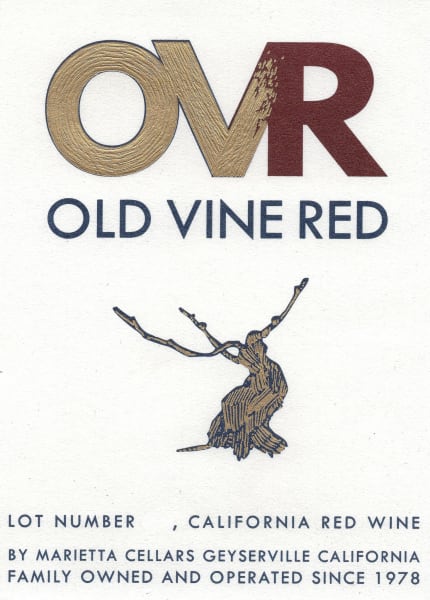
Marietta Cellars Old Vine Red Lot 74

Other Red Blend from Sonoma County, California

Vintages from 2019, 2020, 2021

Zinfandel (predominate), Syrah, Petite Sirah, Carignan, Grenache, Barbera

Purchase Price: $9.24

Robert Parker 93,Wilfred Wong 91, ElsBob 91

ABV 13.5%

A medium-to-dark purple wine with aromas of black fruits, a touch of earthy musk; medium bodied, supple but tannic, dry, with a medium finish. This wine will pair well with almost any food or as an afterwork refreshment.

An excellent table wine at a great price. I picked it up for under $10 but the lowest price I’ve seen lately is still a very reasonable $15.

Swollen Caricatures

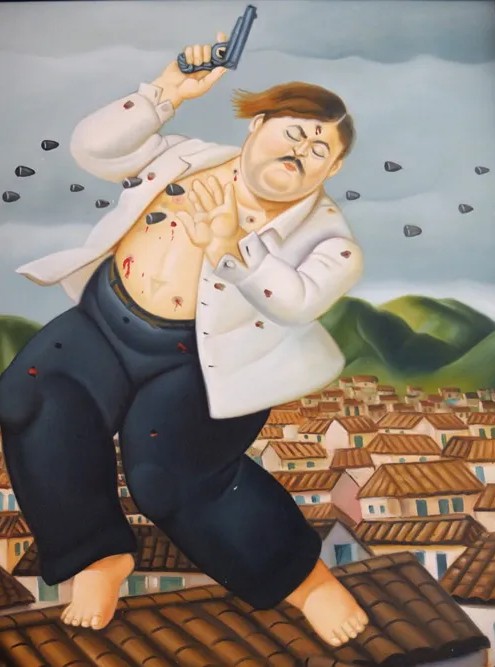
Fernando Botero Angulo, 1932-2023, was a Columbian practitioner of figuraism in paint and sculpture, a style where reality is discernable but changed to reflect the artist’s interpretation of his or her world. His unique style has taken on a life of its own and has become known as Boterismo where he exaggerates reality by inflating his objects, mimicking a fat farm on a carbo diet, injecting, according to some, a humor inherent in his plus sized models but it all seems so melodramatic. A melancholic need to explore life’s downsides, forcing the viewer to share not the beauty of life but its complexities and vulnerabilities. There is no happiness in his paintings, just a humorless life.

His style, not far removed from Legar’s Tubism, was the artist’s attempt to find himself and to relieve the self-inflicted anxiety that came from his mode of outward expression not matching his inward vision. He states that “…the moment comes when the painter manages to master the technique and at the same time all of his ideas become clear: at that point his desire to transpose them faithfully onto the canvas becomes so clear and compelling that painting becomes joy itself.”

Botero’s 1999 painting, “The Death of Pablo Escobar”, a mafioso interpretation of Chagall’s “Fidler on the Roof”, was an attempt to capture the violence that the drug kingpin brought to Columbia and the world. Standing atop Columbian society, Escobar was laid low by his chosen swordian method of rule: bullets. The artist’s son Juan Carlos Botero states that his father wanted to reflect on the magnitude of the tragedy that Escobar’s actions meant for Columbia, but he also magnified the beast in the man, reminding the world that Columbia and Escobar were once synonymous. A cruel man ruling over a dysfunctional society that he created.

Source: Botero by Rudy Chiappini, 2015. Graphic: The Death of Pablo Escobar by Botero, 1999.

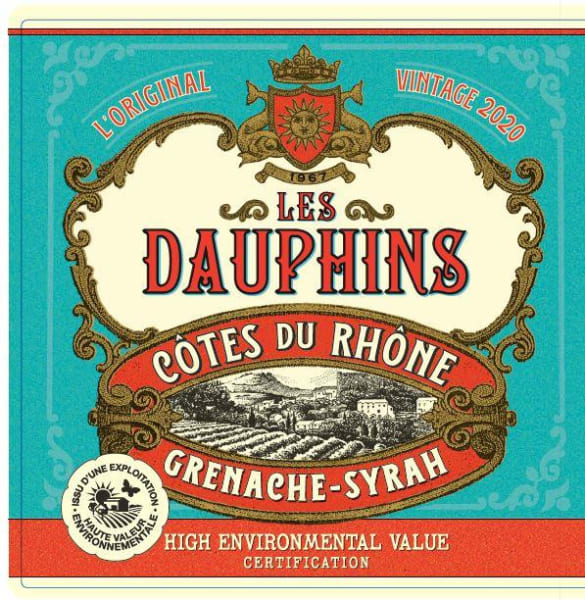
Cellier des Dauphins Les Dauphins Cotes du Rhone Rouge 2020

Rhone Red Blend from Cotes du Rhone, Rhone, France.

Grenache 80%, Syrah 20%

Purchase Price: $13.99

Wine Enthusiast 90, Wine Searcher 87, ElsBob 88

ABV 14.0%

Aromas of black fruits, spice; medium-full bodied, semi-bold, tanninc, with an easy short finish. A good wine to pair with pizza or strong cheese.

A very good fine wine at a fair price.

Geo Anomalies

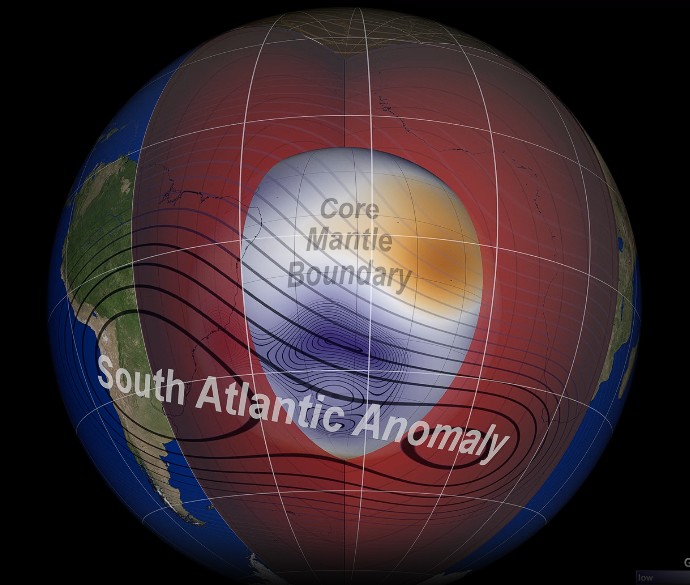
NASA has identified the South Atlantic Magnetic Anomaly (SAA) as a region off the coast of South America, where Earth’s magnetic field is significantly weaker. This weakening reduces magnetic shielding, exposing satellites and spacecraft to higher levels of radiation and posing a risk to their operation. Understanding the causes and implications of the SAA is essential for addressing these LEO challenges.

One hypothesis suggests that irregularities at the core-mantle boundary disrupt the geodynamo, the mechanism generating Earth’s magnetic field. The anomaly’s alignment with submarine volcanic features hints at possible links between mantle-crust interactions and magnetic disturbances. Additionally, a hotspot near the Mid-Atlantic Ridge corresponds to a geomagnetic intensity minimum at the core-mantle boundary, implying that thermal and compositional anomalies in the mantle may affect convection in the molten outer core, creating localized variations in the magnetic field.

Further research using subsurface imaging will help in uncovering the internal processes shaping Earth’s magnetic field and enhancing our understanding of the planet’s protective geodynamo.also assist in predicting magnetic anomalies and their effect on LEO space flight in the future.

Source: NASA. Graphic. Core Geomagnetic Anomaly, NASA.

Bottle Bottoms

The bottom of your wine bottle is more varied and interesting than one would initially expect. They come flat, convex, textured, embossed, thickened, punted, and two-tiered. As varied as Samwise Gamgee’s potato servings.

Starting with the easiest to manufacture and thus likely the cheapest is the flat bottom wine bottle. And because it doesn’t conform to historical and aesthetic traditions it’s also the rarest. The flat bottom is more likely to be encountered in the spirit world, but Aldi-Chapter and Verse and Garcon wine labels sell flat bottoms, generally to the casual wine enjoyment crowd, with wines rated as good in the 83–85-point range. Interesting enough Garcon bottles with flat bottoms are also squashed into a flat oval like a quarter mile running track, so they fit into UK letterbox openings.

Although rare, a very slight convex bottom is also used on some bottles, mostly liqueurs such as Galliano for aesthetic reasons. The bottles that employ this feature require some additional features to keep them upright on store shelves.

Textured and embossed bottoms are a common feature in the fine wine market. The textured bottoms are mainly for stability, keeping the bottle in one place on a wet surface such as bar or table. Occasionally practical details such as volume or manufacturing symbols are embossed on the bottom of the bottle, with higher end wines also adding in branding, batch numbers, and other unique marks.

Thickened bottoms are usually restricted to bottles needing extra stability when standing upright or to supply structural support for wines under pressure such as Champagne or Prosecco.

Which brings us to the ever-present punt on the bottom of almost all retail wine bottles. They have been in use for centuries creating the classic lost-to-the-past conundrum of why it was there in the first place. This forgotten history has created myriad possibilities for the small inward cone at the bottle’s base. In manufacturing the punt ensures a more consistent base plus it makes the bottle stronger. On the practical side it is theorized that the punt helps collect sediment at the bottom, improves grip on the bottle, or it helps create the illusion that the bottle has a larger volume.  Then there is aesthetics, a punt just looks cool. In the end no one knows why it exists, but everyone has a theory.

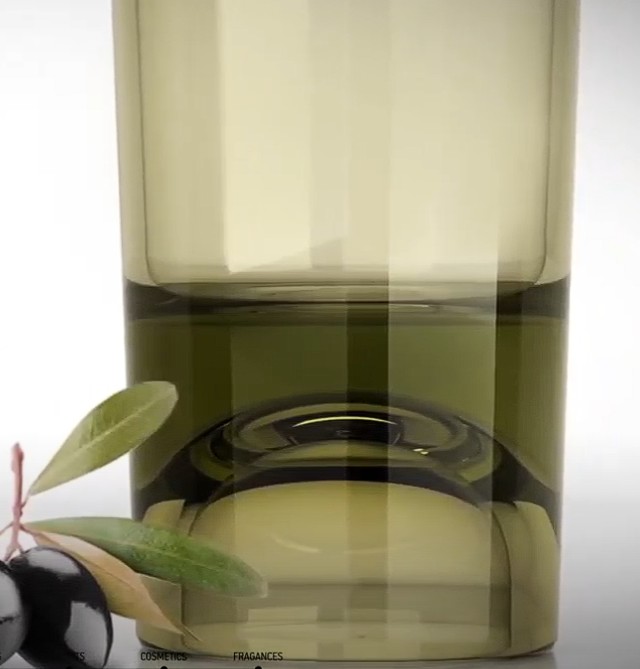
Finally, there are two-tiered bases where a flat bottom covers over the punt creating a hollow enclosed cavity. An example is the DobleAlto dual tiered base bottle that mixes and matches the order of the punt and flat bottom such as shown in the graphic where the flat bottom is above the punt. The two-tier base may have been invented for structural integrity reasons but most likely it was a way to make a product stand out from its competitors.

Getting to the bottom of bottoms is an involved process. Happy investigations and cheers.

Graphic: DobleAlto bottle from Global Package.
April Fools

April Fool’s Day brings pranks, jokes, and ‘kick-me’ notes to the consternation of almost all. The silliness has its foundations a long way in the past, nearly 450 years ago by some estimates, and is still going strong.

While its actual roots are debated, one popular explanation suggests that the origins of April Fool’s Day go back to the change from the Julian to the Gregorian calendar which occurred on 15 October 1582. Under the Julian calendar the new year began on April 1 and was moved to January 1st under the new calendar.

The transition to the new calendar was announced in Rome by Pope Gregory and was quickly adopted in Catholic countries such as Spain and Portugal but other areas found its adoption was slower, either through slow communications, religious differences, or just resistant to change.

Since the change over to the new calendar was slow, some people and communities continued to celebrate the New Year on April 1st and were roundly mocked as April Fools. This mockery quickly morphed into jokes, both vernacular and practical, which continued to this day.

The BBC has become known for their irreverent April Fool’s jokes. In 1957 they showed their viewers a clip of Swiss farmers harvesting spaghetti from trees, with many in their audience calling in to find out how they could grow their own spaghetti trees. In 1980 the BBC told its listeners that Big Ben was going to a digital readout and followed that up with an announcement that clock hands would be sold off to the first four that called in.