KISS–Not

An international team of researchers concluded in the January 2025 Proceedings of the National Academy of Sciences publication that Ockham’s Razor may need a whetstone. The authors state, “The preference for simple explanations, known as the parsimony principle, has long guided the development of scientific theories, hypotheses, and models,” but accuracy is likely sacrificed when modeling complex systems.

While acknowledging that simple models can be useful and provide accurate outcomes, in recent years, success has been demonstrated using highly complex models for scientific research, such as understanding protein folding and modeling climate over time. Their research also suggests that simple models inherently tend to have built-in biases, leading to predictions that support the initial hypothesis or narrative.

They suggest that the predictive quality of a model may improve by “Progressing from more complex to simpler models. Using more complex models, particularly in the initial stages of scientific exploration when prior knowledge is limited, can be instrumental in uncovering underlying structures in the data… Once we have a successful complex model capturing the structure of the data, this model can be effectively compressed into a more parsimonious account for future use.”

Source: Is Ockham’s razor losing its edge? New perspectives on the principle of model parsimony by Dubova etal, PNAS, 2025. Graphic: iStock Photo, licensed.

Die, Die Again

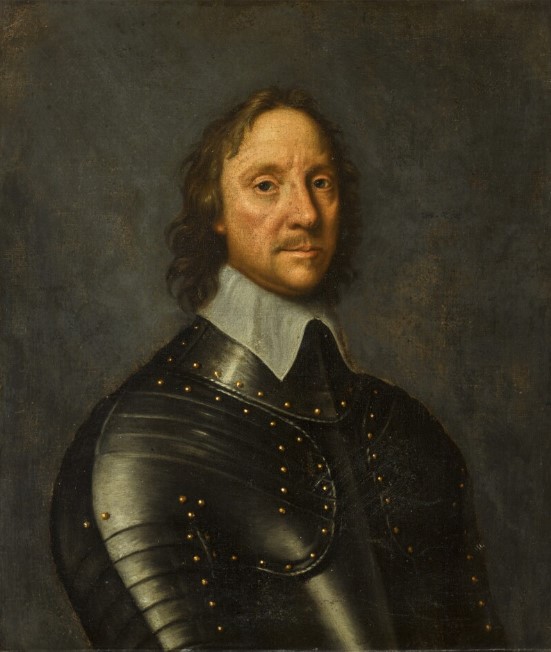
On 30 January 1661, Oliver Cromwell, Lord Protector of England, Scotland, and Ireland, suffered his second death. His first death, possibly from malaria or sepsis, occurred on 3 September 1658. On that day a windstorm of supposedly hurricane strength occurred, which some claimed was the devil coming to collect his due. He was buried with honors almost two months later on 10 November 1658, at the east end of Henry VII’s chapel in Westminster Abbey.

After Cromwell’s first death, the monarchy was restored to power. The new king, expressing his gratitude to Cromwell for giving the country a taste of democracy, had his body exhumed, in preparation for his second death. His body was then hung in chains, a common fate for traitors, then decapitated, with his head placed on a spike that remained on display until 1685. His body, sans the head, was then unceremoniously thrown into a pit.

Source: History Today. World History. RMG. Graphic: Portrait of Oliver Cromwell from the studio of Robert Walker, Property of Sir Brooke Boothby.

Odysseus Cometh

The Return: After 20 years of epic battles and mythical monsters, Odysseus (Ralph Fiennes) finally returns to Ithica—an island that seems more like a foreign land than his home. Time hasn’t been kind to our hero, and he’s got a mountain to climb to reclaim his place. Meanwhile, his devoted wife Penelope (Juliette Binoche) clings to hope, even as suitors swarm like wolves to sheep, eager to force her into an unwanted marriage. She faces a grim ultimatum: choose a new husband, or they’ll choose for her—and her son’s life hangs in the balance.

This film is a masterclass in staying true to the source material, with a fresh twist: Odysseus, the weary warrior, must navigate the perils of explaining his prolonged absence and wrestling with a hometransformed by time and neglect.

While the movie may not be packed with non-stop action, it more than compensates with stellar direction from Paolini and powerful performances from Fiennes and Binoche. One medium sized gripe: Fiennes’s tendency for soap operish dramatic pauses, which he also used in excess in “Conclave,” often exceeds the patience of viewers. When William Shatner’s dramatic word chop fades from memory Fiennes Alzheimer pause memes will pick up from that point forward.

Genre: Drama–Great Books–Suspense

Directed by: Uberto Pasolini

Screenplay by: John Coilee, Edward Bond, Uberto Pasolini

Music by: Rachel Portman

Cast: Ralph Fiennes, Juliette Binoche

Film Location: Greece and Italy

ElsBob: 7.0/10

IMDb: 6.2/10

Rotten Tomatoes Critics: 77%

Rotten Tomatoes Popcornmeter: 76%

Metacritic Metascore: 67%

Metacritic User Score: 6.2/10

Theaters: 6 December 2024

Runtime: 116 minutes

Budget: $

Box Office: $899,575

Source: Rotten Tomatoes, IMDb, Metacritic. Graphic: The Return Poster and Trailer, copyright Bleecker Street.

Top Six Wine Varietals by Volume Sales in the US for 2024

  1. Chardonnay – The white for the win. Chardonnay is the most planted grape in the world. Wine label shown is a 98-100 rated 2022 Chardonnay from Argentina priced around $140.
  2. Cabernet Sauvignon – Always popular, this red comes in a close second. The grape is a cross between Cabernet Franc and Sauvignon Blanc.
  3. Pinot Grigio/Gris – A dry, acidic favorite among white wine enthusiasts. Pinot Grigio and Pinot Gris are the same grape, just with an Italian and French name, respectively.
  4. Merlot – High sales volume but not necessarily high dollar amounts compared to other wines on this list. Merlot is more affordable due to higher yields, it can grow almost anywhere, and it doesn’t need to be aged as long as Cabernet Sauvignon.
  5. Sauvignon Blanc – Increasing in popularity every year. A lighter-bodied white with more acidity than Chardonnay.
  6. Pinot Noir – Consumers love this wine’s complex flavors. It’s a medium dry, medium-bodied wine that ages well and makes for a nice sipping wine.

My Friend Can Stick Around

The Weight” by Robbie Robertson is one of The Band’s best-known songs. It was released on their 1968 breakout album, Music from the Big Pink. It is ranked among the greatest rock songs of all time by Rolling Stone and the Rock and Roll Hall of Fame.

The song’s narrative is a commentary on the impossibility of doing good, emphasizing that morality and virtue require effort. Jake Grogan quotes Robertson philosophically explaining his song as the weight placed on one’s shoulders when fulfilling a favor: “The Weight was this very simple thing. Someone says, ‘Listen, would you do me this favor? When you get there, will you say hello to somebody, or will you give somebody this, or will you pick up one of these for me? … I’ve only come here to say ‘hello’ for somebody, and I’ve got myself in this incredible predicament.

Trivia: The opening line of the song, “I pulled into Nazareth, was feelin’ about half past dead,” refers to Nazareth, Pennsylvania, where Martin Guitars manufactures their instruments.

Source: Origins of a Song by Jake Grogan, 2018. Graphic: The Weight video by Robbie Robertson and Ringo Star, 2018 Universal Music Publishing.

Brunelleschi’s Dome

Filippo Brunelleschi, a goldsmith, engineer, and relatively inexperienced architect, completed the largest masonry dome in the world in 1436—a record that has never been broken. The world now knows it as Brunelleschi’s Dome, which sits atop the Cathedral of Saint Mary of the Flower in Florence, Italy.

When completed, the dome was 52 meters (171 feet) high, with an exterior diameter of 45.5 meters (149 feet) and an interior diameter at its base of 41 meters (135 feet). The base of the dome sat above the crossing of the Cathedral, which was 55 meters (180 feet) above the ground. Atop the dome was a lantern measuring 21 meters (69 feet) in height, bringing the entire Cathedral structure to a remarkable 128 meters (420 feet). While it was not the tallest structure in the world at the time—Lincoln Cathedral in England, at 160 meters (525 feet), held that distinction—it was certainly an impressive architectural feat.

Trivia: Brunelleschi developed an ingenious mechanical lift to raise materials up to the dome. The modern world knows what that device looked like and how it worked because a young Leonardo da Vinci sketched the hoist when he was apprenticed to the Florentine painter Verrocchio beginning in 1466. Due to that sketch, Leonardo was sometimes mistakenly given credit for inventing the hoist.

Source: Brunelleschi’s Dome by Ross King, 2000. Graphic: Brunelleschi’s Dome by National Geographic, 2013-2019.

Put Your Lights On

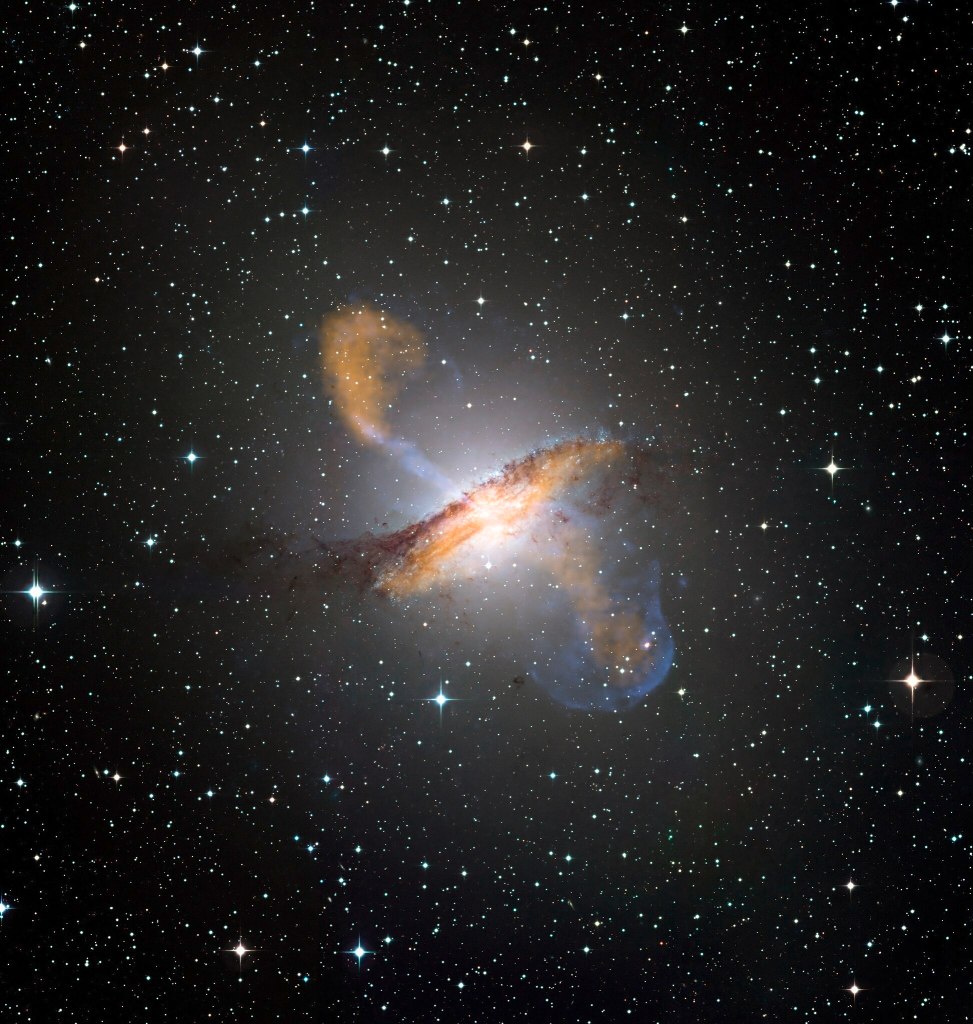
A distant galaxy at the edge of the universe and the beginning of time has revealed a remarkable discovery by Yale researchers. They have identified a variable quasar that rapidly brightens as its astrophysical jets periodically align with the position of Earth.

The researchers believe that this quasar, and others like it, played a significant role in bringing light into the early dark universe, alongside massive early stars which preceded the quasars.

Quasars are supermassive black holes at the centers of early galaxies, spinning at relativistic speeds. These early galaxies contained substantial unincorporated material, primordial gas clouds akin to present-day nebulae, which were easily captured by the black hole’s gravity. Near the event horizon of the black hole, this matter is caught in a ‘turbulent’ vortex, creating massive astrophysical jets. These jets, partially composed of ionized plasmas, are expelled at relativistic speeds, extending up to hundreds of light-years from the black hole and perpendicular to its event horizon. As the ionized hydrogen plasmas capture electrons from the neutral hydrogen in the early universe, photons are released, contributing to the illumination of the cosmos.

Thomas Connor, an astronomer at the Chandra X-Ray Center and co-corresponding author of the study, states, “[This] epoch of reionization is considered the end of the universe’s dark ages.”

Trivia: The song Put Your Lights On was written by Erik Schrody (Everlast) and performed with Santana on his 1999 album Supernatural. He wrote the song while recovering from a heart attack, pondering the hope that exists in life.

Source: This Quasar May Have Helped Turn the Lights on… by Shelton, Yale, 2025. Graphic: Black Hole Outflows from Centaurus A, ESO, 2009.

1556 Shaanxi Earthquake

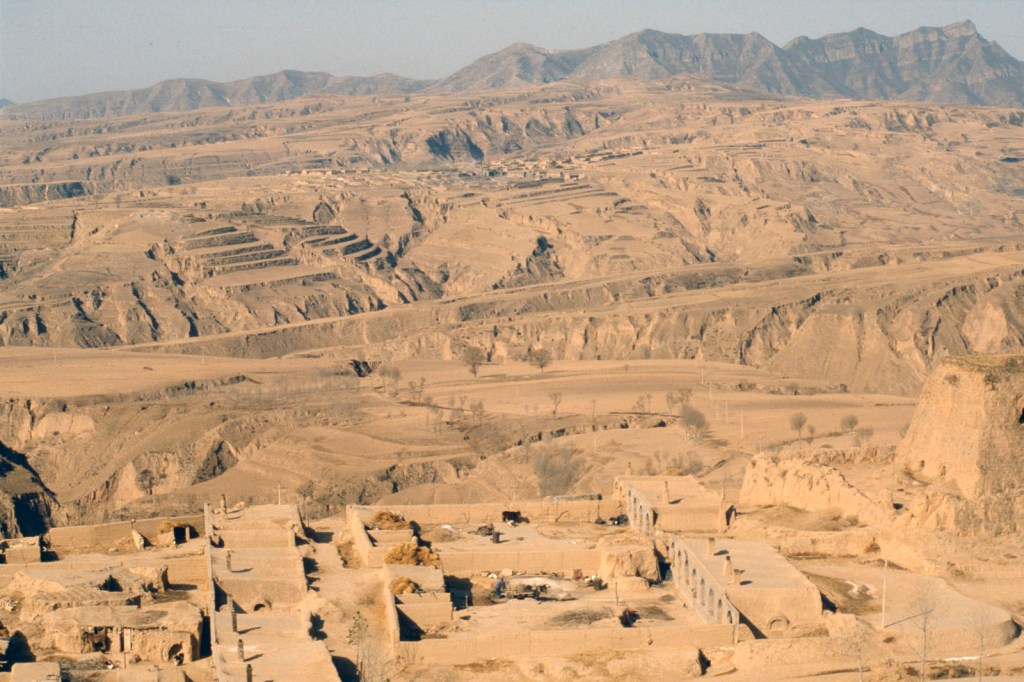
23 January 1556, a massive earthquake with a magnitude estimated between 7 and 8 struck Shaanxi, China, resulting in the tragic loss of upwards of 830,000 lives. The quake hit late in the evening, when most people were at home, leading to widespread destruction as homes were buried by landslides and collapsed structures.

This devastating extensional earthquake occurred in the Wei River Valley, part of the Weihe-Shanxi Rift system. Faults in the region indicate that vertical movement of up to 25 feet might have occurred during the tremor or multiple quakes.

The Wei River Valley is also renowned for its extensive loess deposits—glacially created windblown silt and fine sand—that have shaped the landscape into a series of terraces and rolling hills. In the 16th century, local inhabitants carved out caves, known as yaodongs, in these loess deposits for shelters. Tragically, during the earthquake, these caves and above-ground shelters collapsed, burying most of the inhabitants alive.

Source: Shaanxi Earthquake by Smith, 2021, Nature World News. Graphic: Loess Landscape Near Shanxi, China by Till Niermann, public domain.

Iron Lion

Kraven the Hunter: Kraven (Aaron Taylor-Johnson) goes on a lion hunt led by his overbearing and unsympathetic widowed father (Russell Crowe). During the hunt, Kraven is fatally mauled by an almost mythic lion but is saved by a potion, mixed with some of the lion’s blood, given to him by a future voodoo priestess, Calypso. The serum grants Kraven superhuman strength, speed, and senses, which he uses to hunt criminals, poachers, and other enhanced baddies.

Kraven could have been a better film. It’s a 95-minute movie crammed into 127 minutes. The most serious flaws are the CGI effects, the ending, and an excess of unnecessary drama. The subpar CGI disrupts the immersion in an action-heavy movie, while the ending focuses too much on setting up sequels and spinoffs, detracting from the action scenes. Resolving his father issues would have served as a fitting end to the movie, but the writers were likely beholden or burdened by the suits on the business end of the studio lot.

Genre: Action—Adventure—Drama–Thriller

Directed by: J.C. Chandor

Screenplay by: Richard Wenk, Art Marcum, Matt Holloway

Music by: Benjamin Wallfisch, Evgueni Galperine, Sacha Galperine

Cast: Aaron Taylor-Johnson, Ariana DeBose, Russell Crowe

Film Location: Iceland, London, Scotland

ElsBob: 5.5/10

IMDb: 5.4/10

Rotten Tomatoes Critics: 16%

Rotten Tomatoes Popcornmeter: 74%

Metacritic Metascore: 35%

Metacritic User Score: 4.5/10

Theaters: 13 December 2024

Runtime: 127 minutes

Budget: $110-130 million

Box Office: $59.5 million

Source: Rotten Tomatoes, IMDb, Metacritic. Graphic: Kraven the Hunter Trailer, copyright Sony.

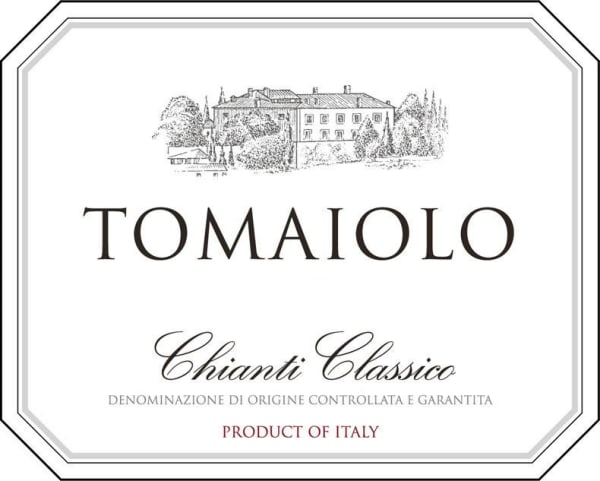
Tomaiolo Chianti Classico 2020:

Sangiovese from Chianti, Tuscany, Italy

100% Sangiovese

Purchase Price: $14.99

Wilford Wong 90, ElsBob 90

ABV 12.5%

Ruby red in color, aromas of red fruits, medium bodied, slightly tannic, slightly dry, acidic. Ideal with roasted or grilled meats, and naturally, pasta.

An excellent table wine at a fair price of $15 although the wine now appears to be selling for about $20.