Nothing Against the State

The title to this post is from Mussolini’s quote: “All within the state, nothing outside the state, nothing against the state.”  The phrase is assigned to fascist ideology, but it is right at home within any authoritarian government.

Below is a partial listing of 20th century sanctioned murder by governments:

  • Mao’s Great Leap Forward: 15-55 million deaths. Chinese communism. 1958-1962
  • The Holocaust: 5-17 million deaths. German Nazis. 1939-1945
  • Ukrainian Holodomor: 1.8-7.5 million deaths. Russian communism. 1932-1933
  • Soviet WWII Prisoners: 3.3-3.5 million deaths. German Nazis. 1941-1945
  • Khmer Rouge Killing Fields: 1.3-3 million deaths. Khmer Rouge/Cambodian communism 1975-1979
  • Polish Genocide: 1.8-3.0 million deaths of non-Jews. 3.0 million Jews included in the Holocaust post above. German Nazis. 1939-1945.
  • Bangladesh Genocide: 300,000-3 million deaths. Pakistani military dictatorship. 1971
  • Polish Gentile Genocide: 1.2-1.8 million deaths. German Nazis. 1939-1945
  • Kazakh Genocide: 1.3-1.75 million deaths. Kazakh communism. 1931-1933
  • Russian Gulag: 1.6 million deaths (possibly more). Russian communism. 1920s to 1953
  • Armenian Genocide: 700,000-1.5 million deaths. Young Turks/Ottoman Empire. 1915-1922
  • Greek and Pontic Genocide: 300,000-1.2 million deaths. Ottoman Empire. 1914-1922
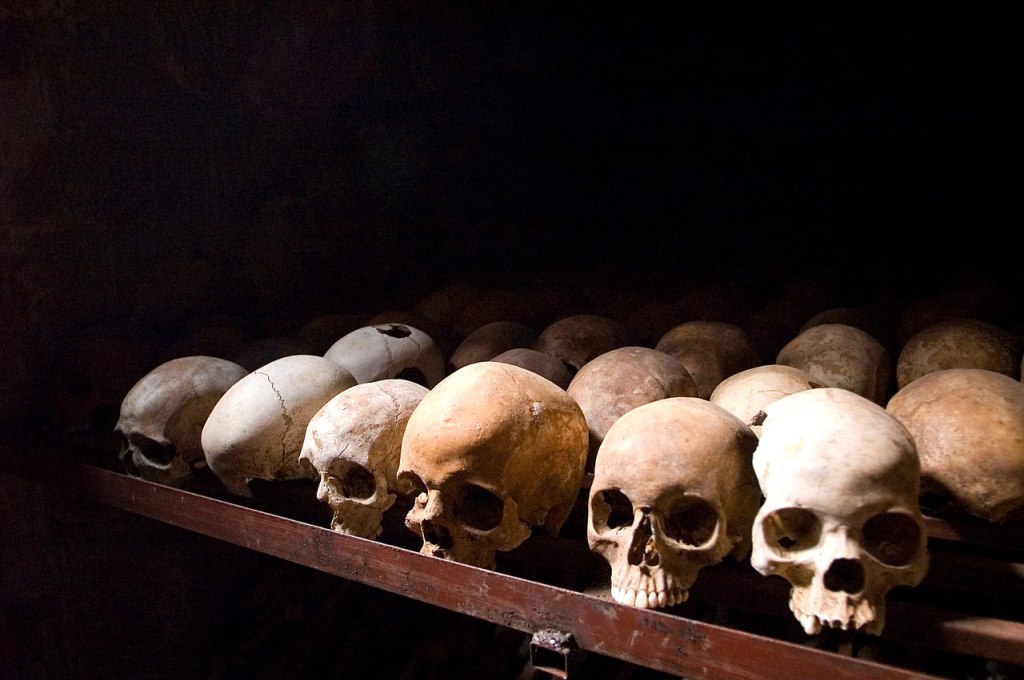
  • Rwandan Genocide: 500,000-1 million deaths. Rwandan dictatorship or totalitarian state. 1994
  • Ustasha Genocide: 357,000-600,000 deaths. Croatia fascists encouraged by the Nazis. 1941-1945
  • Dafur Genocide: 100,000-500,000 deaths. Sudanese Arab dictatorship and Arab militia. 2003-Present
  • East Timor Genocide: 85,000-200,000 deaths. Indonesian military dictatorship. 1974-1999

Source: Wikipedia, Independent, History.com, News.Stanford, Hoover.org. Graphic: Nyamata, Rwanda Memorial Site, by Fanny Schertzer, 2007, GNU Free Documentation License.
The KISS Principle and Skunks:

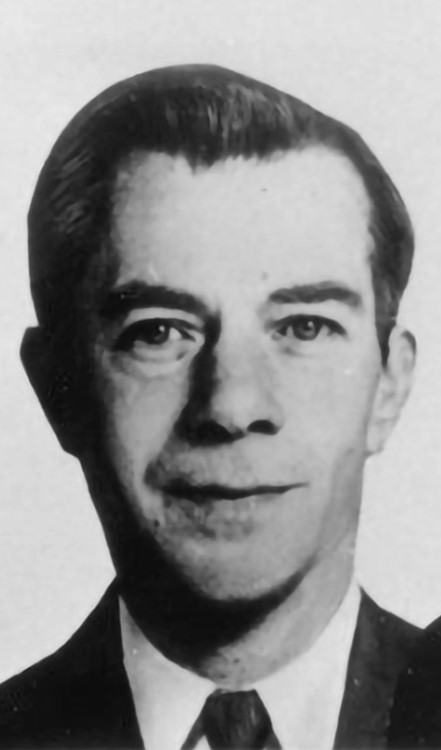
Willie Sutton, bank robber and writer, supposedly quipped when Mitch Ohnstad, a reporter asked him why he robbed banks: “Because that’s where the money is”.

In Sutton’s autobiography, he denied saying that he robbed banks because that’s where the money was, but he did say that he enjoyed robbing banks. It is estimated that he stole upwards to two million dollars from more than 100 banks over four decades starting in the 1920s.

His quaint response that he didn’t utter, has evolved into a rule of thumb for medical students now known as Sutton’s Law. It’s an instruction for medical students, and practitioners to accept the most likely diagnosis rather than spending inordinate amounts of time and money exploring all possible answers.

In accounting, a variant to Sutton’s Law is used to find savings in a budget, stating that the biggest savings will be found where the greatest costs occur.

Along a similar path of logic Occam’s Razor, attributed to the 14th century Englishman, William Ockham, states that when confronted with competing hypotheses to any given set of data one should select the least complicated proposition or as it is usually stated “The simplest explanation is usually the best one.”

Adding it all up leads one to the KISS Principle: Keep It Simple Stupid, first formulated by Kelly Johnson, lead engineer at Lockheed’s Skunk Works.

Source: Sutton, Where the Money Was: Memoirs of a Bank Robber, 1976. Kaplan et al, Harvard BS, 1998, MSN, Wikipedia. Graphic: Sutton, DOJ, public domain.

The Press as Journalists

Civil War:

Theaters: 12 April 2024

Streaming: 24 May 2024

Runtime:  109 minutes

Genre:  Action – Drama – Suspense – Thriller – War

Els:  6.0/10

IMDB:  7.5/10

Rotten Tomatoes Critics:  81/100

Rotten Tomatoes Audience:  71/100

Metacritic Metascore:  75/100

Metacritic User Score:  6.3/10

Directed: Alex Garland

Screenplay: Alex Garland

Music:  Ben Salisbury and Geoff Barrow

Cast: Kristin Dunst, Wagner Moura, Cailee Spaeny

Film Locations:  Georgia, Philadelphia, England

Budget:  $50 Million

Worldwide Box Office:  $112.8 Million

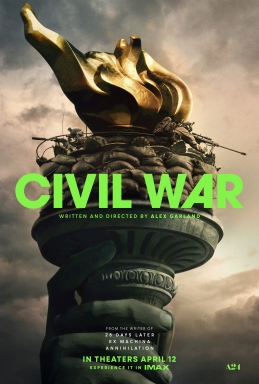
During the end game of a future U.S. civil war, four Reuters’ journalists embark on a road odyssey from New York City to Washington D.C., through war-torn countryside and active battles, all in an attempt to interview the President of the U.S.

Civil War is not the movie you were expecting to see. This is a movie about the four journalists’ reaction to the war. It’s a movie about their fears, cowardice, and courage. In the end it is all about them. It is not a movie about what, why, and how the war came about; the war is just background except at the very end were the audience learns that the President is a gutless swine.

Source: IMDb. Rotten Tomatoes. Metacritic. Graphic: Civil War movie poster, A24, DNA Films.

The Beatles’ Get Back

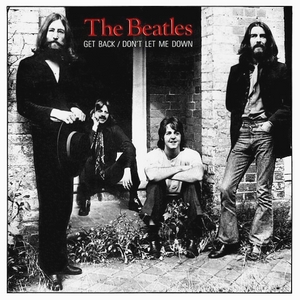
Get Back was released as a single 55 years ago in April of 1969 and as the final track on the album Let It Be in May of the following year. The song was recorded by The Beatles and Billy Preston at the band’s London Apple Studios.

Preston’s relationship with The Beatles goes back to 1962 when George Harrison met him while he was touring with Little Richard, and they became friends. George Harrison, after catching Presten at a Ray Charles show in London, invited him to play the electric piano for the recording of Get Back.

Preston, while in the studio, is credited with reducing the tension that was tearing the group apart, allowing them to finish what was to be the final Beatles’ album. His presence in the studio was so appreciated that he was given credit for the song, the first and last time The Beatles ever shared that honor.

Get Back, reached number one in the UK, the U.S., and a least 7 other countries. The song was the first single released in true stereo by the Beatles in the U.S.

Jojo was a man who thought he was a loner
But he knew it couldn’t last
Jojo left his home in Tucson, Arizona
For some California grass

Source: The Beatles. Graphic: Sleave for UK Reissue of Get Back, Apple Corps, 1982.

A Modern Golden Fleece

The question has been making its rounds on social media asking if the U.S. should sell off 20% of the U.S. gold reserves to pay off the debt?

The answer is no.

If I did the math correctly, selling 20% of U.S. gold stocks, 1476 tonnes, at the current price of $2345/oz equals about $462 billion.  A tonne is 2202 pounds. If you are referring to the U.S. debt of $34 trillion then money from the gold sale would only amount to a little more 1% of the total debt.

On a different note, the U.S. used to have more than 18,144 tonnes of gold or $1.5 trillion in today’s dollars. Due to the consequences of 1944 Brenton Woods agreement and the failure of the Kennedy/Johnson/Nixon administrations to stop the ability of foreigners to change dollars into gold, the gold supply was reduced to 7379 tonnes.

Changing the subject again, the Chinese have been on a gold buying spree since 2023. The People’s Bank of China bought 735 tonnes of gold in 2023 and their private sector bought an additional 1411 tonnes. In January of this year alone China has purchased 228 tonnes. All this buying has helped to drive up the price of gold by about 27% since January of 2023.

A better question to explore is why are the Chinese buying so much gold?

Phaedo

Phaedo is the fourth and final Socratic dialogue by Plato (the others being Euthyphro, Apology, and Crito) discussing the day Socrates was put to death by the Athenian state. Phaedo, who was with Socrates on the day of his death, is in the Greek city of Phlius at a later time and is asked by his friend Echecrates to tell him all about that eventful day.

The dialogue begins with Socrates proposing that a philosopher should look forward to death, but it is immoral for one to take his own life. He posits that the soul is immortal and one’s life should be geared to keeping one’s soul pure. He then provides three, or four depending on interpretations, arguments for the immortality of the soul. First, he puts forth the cyclical argument that death follows life which is followed by death and so on. Second, he proposes that we are born knowing what our souls knew before birth, we just can’t remember it until the proper questions are raised. Finally, Socrates puts forth the Affinity argument which states that the body is mortal and visible, and the soul is immortal and invisible.

After these arguments Socrates introduces Forms, actually a Platonic idea, the fourth argument according to some, sometimes known as the two-world theory where reality is set against what our senses tell us. Our senses give us a visible but imperfect perception of the world as opposed to Forms which are only conceived in one’s mind and are invisible and unchanging.

At the end of the dialog Socrates tells his audience the myth of Er, a discussion of where to soul goes upon death. He then says his goodbyes, drinks hemlock, and slowly dies.

The Phaedo is more a compilation of Plato’s beliefs than a thorough discussion of Socratic philosophy, especially the discussions of Forms.

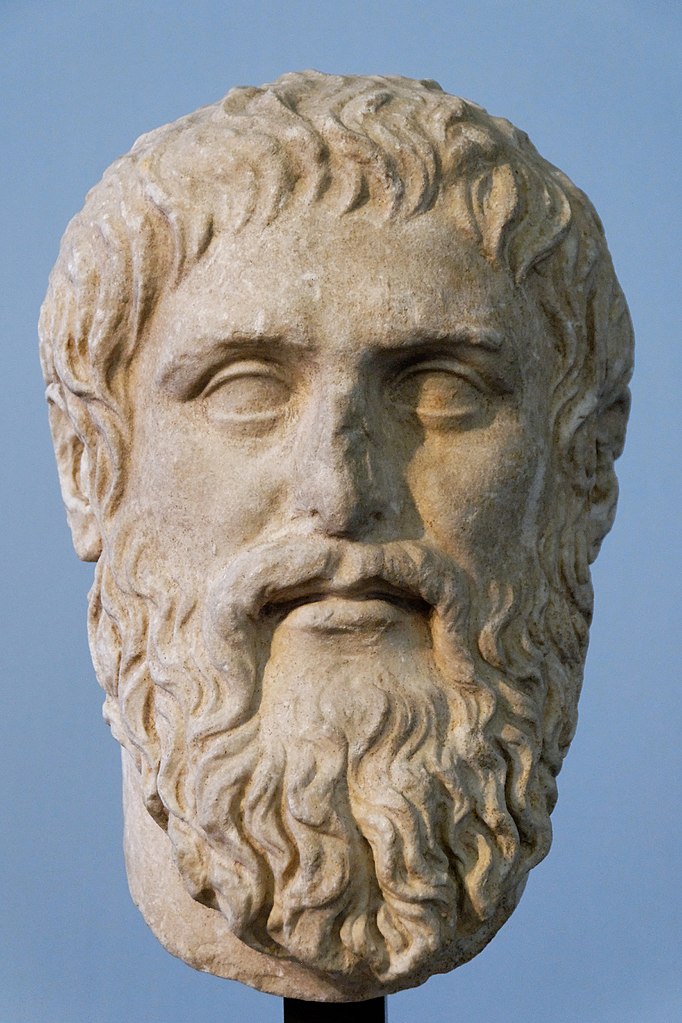
Source: Ancient Greek Philosophers, translated by Benjamin Jowett, published 2018. Phaedo by Tim Connolly, Internet Encyclopedia of Philosophy. Graphic: Copy of a Bust of Plato, original by Silanion. Photo of bust by Nguyen, 2009.

Journalism – Stephen Glass:

Stephen Glass was an American serial fabrication specialist or as they call it in the trade, a journalist, working for The New Republic from 1995 to 1998. He was a rising star in the profession, a young Turk with a strong work ethic but he was manipulative and emotionally controlling towards his superiors. And just about everything he wrote was a lie. For his severe allergic reaction to telling truth, he was fired from The New Republic in 1998.

Buzz Bissinger in Vanity Fair wrote, “The New Republic, after an investigation involving a substantial portion of its editorial staff, would ultimately acknowledge fabrications in 27 of the 41 bylined pieces that Glass had written for the magazine in the two-and-a-half-year period between December 1995 and May 1998. In Manhattan, John F. Kennedy Jr., editor of George, [Glass contributed to other publications while working full time at The New Republic including George] would write a personal letter to Vernon Jordan apologizing for Glass’s conjuring up two sources who had made juicy and emphatic remarks about the sexual proclivities of the presidential adviser and his boss. At Harper’s, Glass would be dismissed from his contract after a story he had written about phone psychics, which contained 13 first-name sources, could not be verified.”

A 2003 critically acclaimed biographical movie covering Glass’s scandal as a journalist, Shattered Glass, explores what happens when a profession loses the public’s trust. Except it never really answers that question or even why Glass could not tell the truth. Other than that, the audiences loved it.

He currently works as a paralegal at the law firm Carpenter, Zuckerman & Rowley, serving as the director of special projects and trial-team coordinator.

Source: Michael Noer in Forbes, 2014. Buzz Bissinger in Vanity Fair, 2007. The Famous People. IMDb. Graphic from TMDB.

Priorities

NASA has farmed out a considerable portion of its science and engineering programs to the private sector so it can concentrate on the critical issues that will get some of humanity’s eggs off this planet.

NASA’s budget for 2023 was $25.4 billion.

Source: Briley Lewis, Popular Science, 22 May 2024. Graphic: DALL.E 3 generated.

Where the Money Was:

Bonnie Parker and Clyde Barrow of Bonnie and Clyde notoriety were Texas born bank robbers, bandits, and murderers who were ambushed and killed by the police on a rural road in Bienville Parish, Louisiana on 23 May 1934. Six police officers, acting on information provided by a father of one Barrow Gang member, waited along the road for Bonnie and Clyde’s Ford to come along and when it did, they perforated the vehicle with all the ammunition they had, a total of 130 bullets. The coroner’s report stated that Bonnie received 26 bullet wounds and Clyde 17. Others claimed that they were shot more than 50 times each.

Bonnie and Clyde, during the Great Depression, roamed Texas, and its adjoining states, preying upon any establishment that had money on the premises, banks, gas stations, small stores, and for the ultimate in depravity, funeral homes. During prison breaks and robberies, they murdered at least nine police officers and four civilians.

Source: All That’s Interesting, FBI. Graphic: Bonnie and Clyde by the Barrow Gang, c. 1932, Library of Congress.

Come Together, Right Now:

Godzilla vs. Kong.

Theaters: 24 March 2021

Streaming: ~Mid-May 2021

Runtime:  113 minutes

Genre:  Action – Sci-Fi — Thriller

Els:  8.0/10

IMDB:  6.3/10

Rotten Tomatoes Critics:  76/100

Rotten Tomatoes Audience:  91/100

Metacritic Metascore:  59/100

Metacritic User Score:  7.1/10

Awards: — A few minor awards mainly for special or visual effects

Directed by: Adam Wingard

Music by:  Tom Holkenborg

Cast: Alexander Skarsgard, Rebecca Hall, Kaylee Hottle

Film Locations:  Hawaii, Australia, Hong Kong

Budget:  $155-200 Million

Worldwide Box Office:  $470.1 Million

The best Godzilla-Kong Monster Mash movie. Better by a King Kong leap than the 2014 and 2024 films.

Godzilla meets Kong on the field of battle, which just so happens to be a major city and, in this case, Hong Kong. Godzilla fights King Kong in Hong Kong. Admittedly that phrase has a certain bouncy cadence to it, akin to the Ali-Frazier 1975 fight, Thrilla in Manila.

This is an action movie with the stars duking it out and tearing down a few buildings in the process. Plot, direction, screenplay, character development, and acting take second fiddle to the teeth chomps and fisticuffs, but those are likable features, not bugs.

Sources. IMDb. Rotten Tomatoes. Metacritic. Screen Rant. Wikipedia.