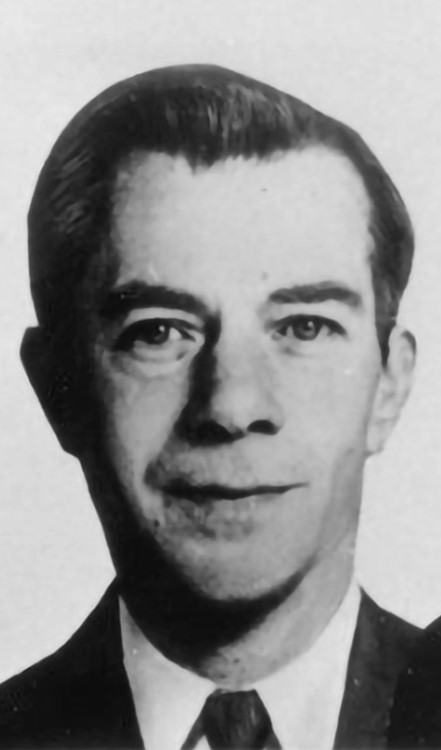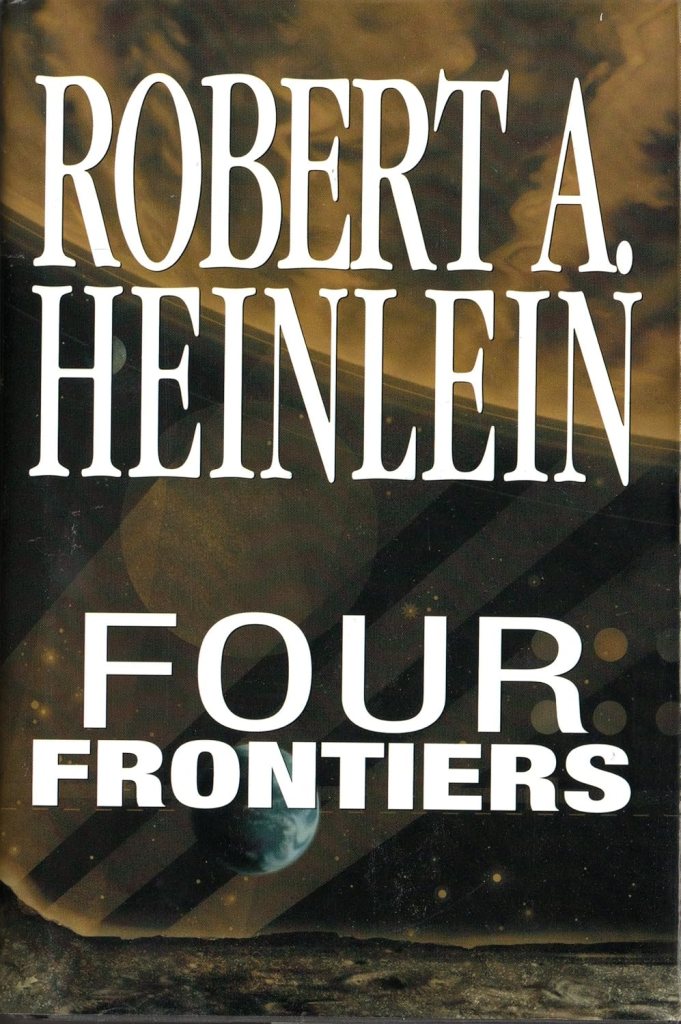
Robert Heinlein (1907–1988) belonged to the groundbreaking mid-20th-century trio of hard science-fiction writers often grouped together as the field’s “Big Three”: Heinlein, Isaac Asimov, and Arthur C. Clarke. Asimov built his epics, mainly the Foundation series, on the cycles of human civilization and logical progression, while Heinlein favored brisk narratives grounded in plausible engineering. Clarke filled his fiction, including the Rama series, with cosmic wonder and exploratory grandeur; Heinlein, by contrast, kept his technological futures close to the practical limits of the present. All three could lapse into pedantry, but Heinlein and Asimov learned to compress their exposition into engaging, digestible, sometimes enjoyable bursts. Asimov remained the analytic scientist, Clarke the futurist dreamer, and Heinlein the engineer-storyteller with a taste for adventure.
Heinlein began his writing career in the late 1930s with the short story, sometimes described as future histories but more accurately they were brief, idea driven social experiments. Philosophical and political provocations disguised as tales of the future. In his early years Heinlein was what Azimov described as a “flaming liberal” heavily influenced by his far-left wife, Leslyn. His stories from this period centered on Rooseveltian New Deal themes and very liberal politics. After the war he divorced Leslyn and married Virginia, a rock-ribbed conservative at which point the author discovered individual liberty and the rights of man.
In 1947, Heinlein published his first novel, Rocket Ship Galileo, the first of thirteen books now known as his juvenile novels. Technically, it was his second written novel. His first, written in 1939, was not published until 2003. And both these novels document a writer fighting, struggling to find a voice and an audience.
Rocket Ship Galileo, the earliest of Heinlein’s juveniles, is clumsy in structure, thin in characterization, and constantly interrupted by pedantic lectures that freeze the story in place and launch the reader into a hazy galactic void. At times, it reads like a Boy Scout manual welded to a pulp adventure, a work of yellowing paper stock, serving as a visible watermark of a first effort. Yet even in this awkward beginning, the impulses that would define Heinlein’s later work are already visible: a celebration of competence, a belief that teenagers can shoulder adult responsibility, and an instinct for treating engineering as adventure rather than a paycheck. Fortunately, by his second juvenile novel, he was beginning to find his groove in his literary space.
His second juvenile: Space Cadet, Heinlein loses some, but not all, of the stiffness of its predecessor, the storytelling is more controlled, the protagonist has a clearer arc, and the world feels more lived‑in. Heinlein is no longer lecturing at the reader; he’s beginning to build a world the reader can inhabit. It’s the first sign that he understands how to shape and guide a juvenile novel rather than simply assemble one from random thoughts guided by his slide-rule.
And the third time was the charm. Red Planet marks the real breakthrough. Here Heinlein finally integrates his didactic impulses into the story instead of stopping the narrative to deliver them. The pacing works, the characters feel like actual young people rather than mouthpieces, and the stakes emerge naturally from the world rather than being imposed from above. It’s the first juvenile that reads like the work of a confident storyteller rather than a talented engineer trying to write science fiction.
By Farmer in the Sky, Heinlein has become the writer people know and remember. The novel reflects the ideological shift Asimov famously noted; the move from the “flaming liberal” of the early 1940s to the postwar champion of individualism, self‑reliance, and the government be damned. The frontier ethos is fully formed, the suspicion of bureaucracy is unmistakable, and the competence ethic is elevated to a moral principle. It’s also the first juvenile that stands comfortably as an adult novel, not just a boys’ adventure.
My only real lament with Farmer in the Sky is the abrupt introduction of a crystalline ancient civilization in the final chapters. The idea is more imaginative than Heinlein usually allowed himself, and its tone is far closer to Clarke’s cosmic motifs than to Heinlein’s engineering realism. It could have served as a superb launching point for a more expansive, Clarkeian exploration of deep time and alien intelligence, but sadly, he never pursued it.
Across all four books, one confining trait remains constant: Heinlein never imagines a future very far removed from the technology he personally understood. His worlds are full of microfilm, rock crushers, slide rules, and mechanical systems. Even when he writes about space travel or Martian colonies, the machinery is always something he could diagram, calculate, or build. The applied science of his time rules his future. His futures are grounded in engineering reality, not speculative fantasy, and that constraint shapes the tone of the juveniles as much as their plots.
Taken together, these early novels show a writer evolving rapidly; from a shaky, almost amateurish beginning (I’m being kind) to a confident command of narrative, theme, and character. Their flaws are real, but so is the trajectory. By the time Heinlein reached Farmer in the Sky, he had become the storyteller who would dominate mid‑century science fiction and put him on the same plane as Asimov and Clarke.
To thoroughly understand Heinlein, it helps to start with his juveniles.