Speak Softly and Scream Murder:

Hostiles

Theaters: 2 September 2017

Streaming: 18 April 2018

Runtime:  133 minutes

Genre:  Drama-Historical Fiction-Western

Els:  6.0/10

IMDB:  7.2/10

Rotten Tomatoes Critics:  70/100

Rotten Tomatoes Audience:  76/100

Metacritic Metascore:  65/100

Metacritic User Score:  7.2/10

Awards: 4 Wins all minor

Directed by: Scott Cooper

Music by:  Max Richter

Cast: Christian Bale – Rosamund Pike – Wes Studi

Film Locations:  Arizona – Colorado – New Mexico

Budget:  – $39 Million

Worldwide Box Office:  $35.7 Million

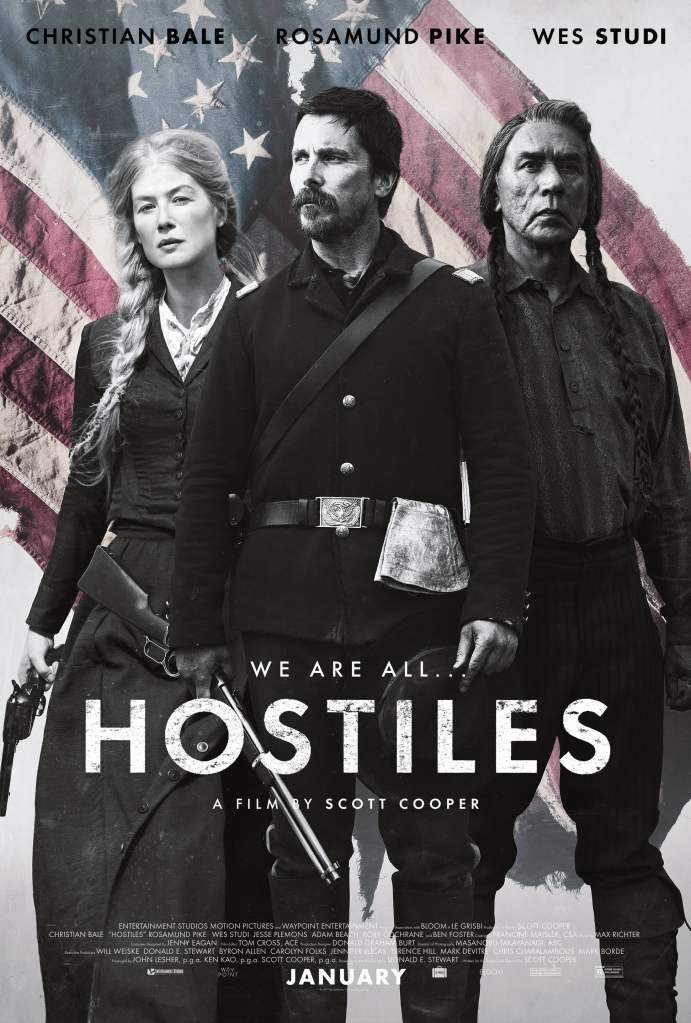
In the late 1800s U.S. Calvary Captain Joseph Blocker (Bale) is ordered, as a final assignment before retirement, to escort his battlefield enemy, Cheyenne Chief Yellow Hawk (Studi) from New Mexico to his home in Montana. The trip north is filled with anger and violence with reconciliation between whites and reds a distant probability.

The movie is exceptionally well acted along with gorgeous and stunning photography and as a bonus Cooper added a deft piece from matinee westerns of yore to the movie by having Ryan Bingham perform his original song “How Shall a Sparrow Fly” while also playing the part of Calvary Sergeant Paul Malloy. I haven’t witnessed a singing, acting role since John Ford’s “Rio Grande” film starring John Wayne where Ken Curtis of “Gunsmoke” fame sang with his fellow “Sons of the Pioneers“. 

The movie’s Achilles’ heel is the story, worthy of an eighth-grade film project; bland, risk-free, and unsatisfying with all plot lines stuck in neutral not able to engage either the characters or the audience.

Source: IMDB
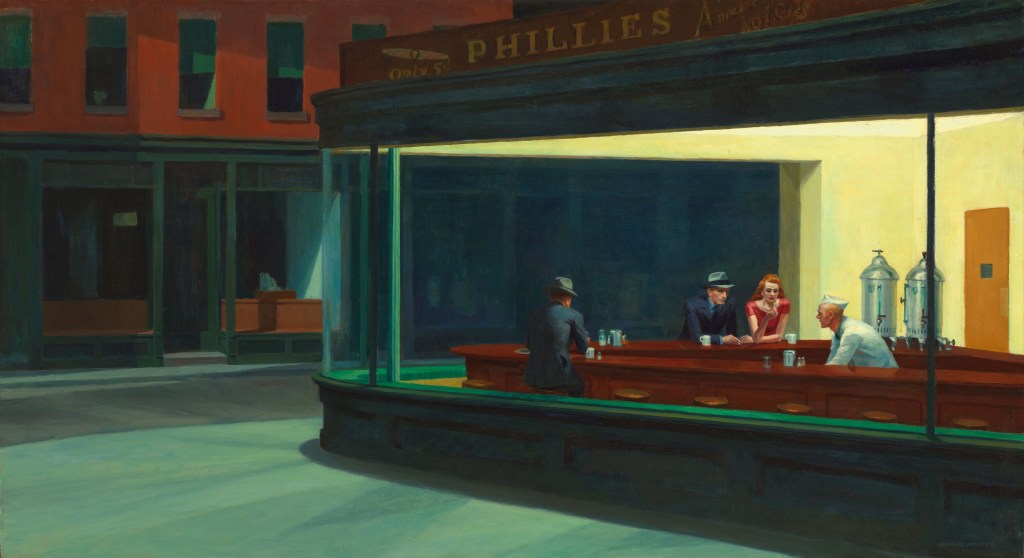
Nighthawks:

Edward Hopper’s 1942 painting, “Nighthawks” was his best-known piece of art. He commented that, “Nighthawks seems to be the way I think of a night street. I didn’t see it as particularly lonely. I simplified the scene a great deal and made the restaurant bigger. Unconsciously, probably, I was painting the loneliness of a large city.” Later, he again downplayed the loneliness aspect of the painting by stressing that it was just “a restaurant on Greenwich Avenue where two streets meet”.

Source: Hopper by Rolf G. Renner, Taschen, 2020 originally published 1991. Painting, “Nighthawks” by Hopper owned by Daniel Rich. Public domain.

Issac Newton and Leonardo Da Vinci:

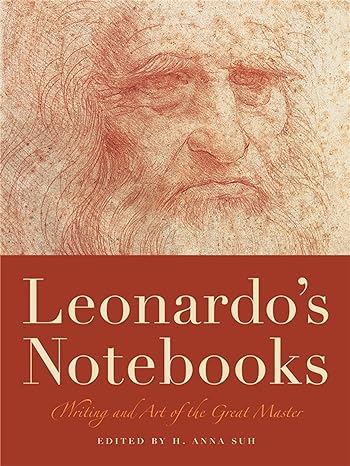
Leonardo Da Vinci and Issac Newton were both consummate note takers. They recorded their thoughts, ideas, and anything else that struck their fancy in innumerable notebooks and loose sheets of paper.

Paper was expensive so they both wrote small and covered every inch of paper with drawings and script.

Newton wrote in Latin, Greek, and English with most subject titles in Latin and the text in Greek. To save space his letters were an eye straining one sixteenth of an inch high. An estimated 4000 pages with around 285,000 words plus drawings of his writings have been found to date.

Leonardo wrote in Tuscan Italian, with the text written in a right to left mirror style which some believe he did because he was left-handed, as, by-the-way so was Newton. 13,000 pages of Leonardo’s notes have been found which is believed to be only about a fifth of the total.

Source: “Isaac Newton” by James Gleick, 2003. “Leonardo’s Notebooks” Edited by H. Anna Suh, 2005. “Leonardo Da Vinci” by Walter Isaacson, 2017. Graphic of da Vinci and Newton AI generated.

The Mortal Soul

Let no one be slow to seek wisdom when he is young nor weary in the search thereof when he is grown old. For no age is too early or too late for the health of the soul.”

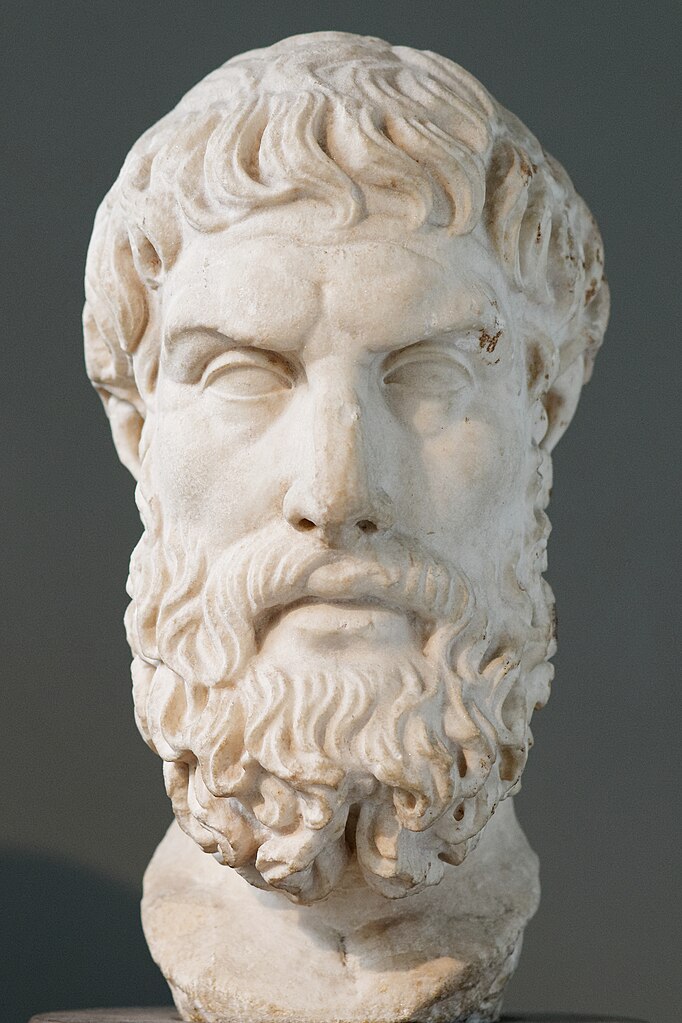
So begins the third and fourth century BC Greek philosopher, Epicurus in his letter to Menoeceus, although who Menoeceus was, has been lost to the ages. Epicurus was a Greek philosopher born on the island of Samos in the Aegean Sea off the coast of Turkey. He established a school next to Plato’s in Athens and taught that one’s purpose in life was to lead a happy, tranquil, self-sufficient life, a pleasant life, and not to fear death.

Epicurus taught that after death there is nothing. Death is/was the end of the body and soul; teaching that self-guilt and shame were the only methods available to prevent the world from overflowing with psychopaths. This is not far from the current Pope’s thoughts on Hell being an empty shell, a place of nothingness. Socrates, on the other hand, taught that the soul is eternal, and one must strive to keep it bright and shiny.

Epicurus ended his letter to Menoeceus, “Meditate therefore on these things (a pleasant life) and things akin to them night and day by yourself, and with a companion like to yourself, and never shall you be disturbed waking or asleep, but you shall live like a god among men. For a man who lives among immortal blessings is not like to a mortal being.”

Sources: “Ancient Greek Philosophers”, numerous translators, published 2018 and Manchester.edu (Indiana). Photo of a bust of Epicurus by Nguyen, public domain.

The Big Sleep

She came over near me and smiled with her mouth and she had little sharp predatory teeth, as white as orange pith and shiny as porcelain. They glistened between her thin too taut lips. Her face lacked color and didn’t look too healthy.

“Tall, aren’t you?” she said.

“I didn’t mean to be.” (said Marlow)

Her eyes rounded. She was puzzled. She was thinking. I could see, even on that short acquaintance, that thinking was always going to be a bother to her.

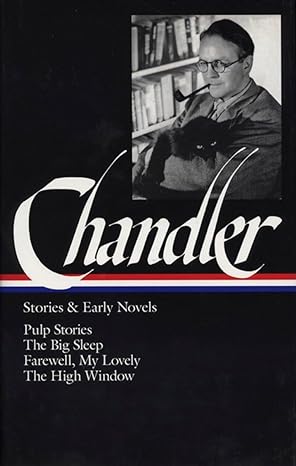
The above excerpt is from Raymond Chandler’s first Philip Marlowe novel: “The Big Sleep”, published in 1939. Marlowe is a hard, introspective private eye dreamed into existence from Chandler’s cynical but playful mind, creating the quintessential detective and crime novel of the 20th century.  “The Big Sleep” has been ranked as one of the best 20th century novels by The Guardian, Time Magazine, Le Mond, and at least 20 other current best book lists.

The 1946 movie adaptation of the book starring Humphrey Bogart and Lauren Bacall with the screenplay by William Faulkner achieved a Metascore of 86 and a user score of 8.0. The Telegraph, critiquing the movie, in 2004 stated that “The Big Sleep is the best scripted, best directed, best acted, and least comprehensible film noir ever made.”

Chandler was 44 years old, an out of work alcoholic, before he wrote his first piece, a short story, “Blackmailers Don’t Shoot”.  “Blackmailers” was the warm-up private eye mystery that would evolve, over the course of the next six years, into his first Philip Marlowe novel: “The Big Sleep”.

Source. Chandler: Stories and Early Novels published by Library of America, 1995. The 100 Greatest Literary Characters by Plath et al published by Rowman and Littlefield, 2019. Graphics: Warner Bros’ 1946. “The Big Sleep” and book cover.

Paul Revere Rides

On the evening of the 18th of April 1775 Paul Revere galloped through the countryside of Massachusetts to warn the populace that British were coming by water: one if by land, two if by water.

The next day the British, after crossing the Charles River from the Boston side, marched on Concord to try and capture colonial military supplies that had been stored there. The patriots knew of the British plans and moved most of their military equipment elsewhere.

The British had to pass through Lexington as they marched their way to Concord. The first shots between the British and Americans were fired at sunrise at Lexington, signaling the beginning of the Revolutionary War. After a minor skirmish in Lexington the British continued on their way to Concord.

The British marched to Concord with 700 troops and the Americans were eventually able to muster about 3500 militiamen although they only had about 77 at Lexington. During the Battles of Lexington and Concord on that day the British suffered 273 losses and the Americans 95.

Source: History.com and “The Many Rides of Paul Revere” by James Giblin published 2007. Photo of a painting showing Paul Rever’s Midnight Ride by Office of War Information http://www.archives.gov.

Hey Joe

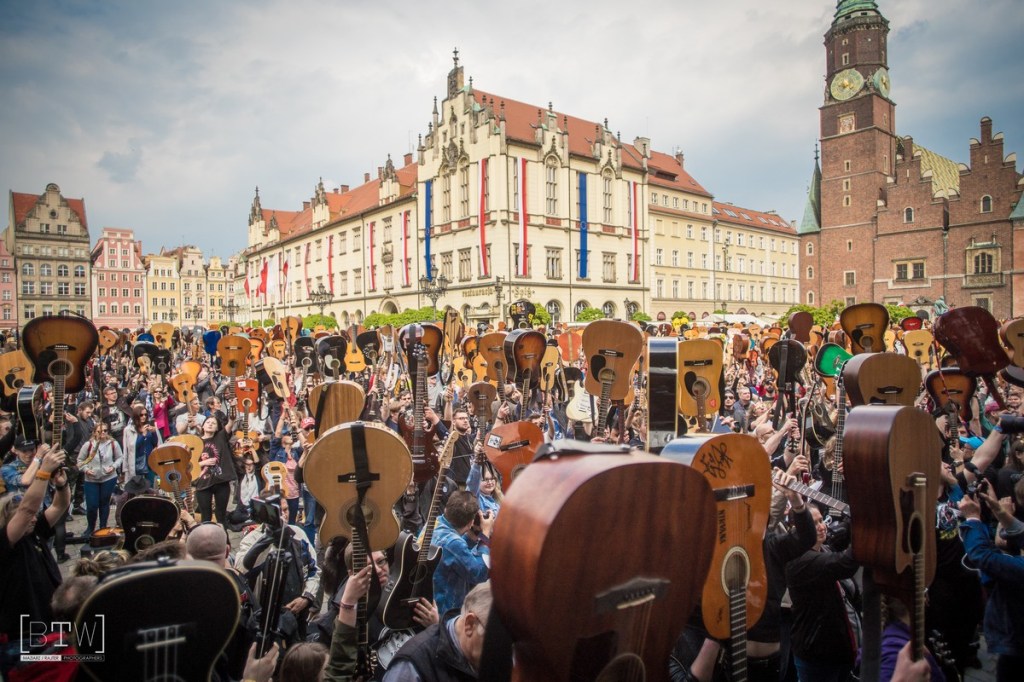
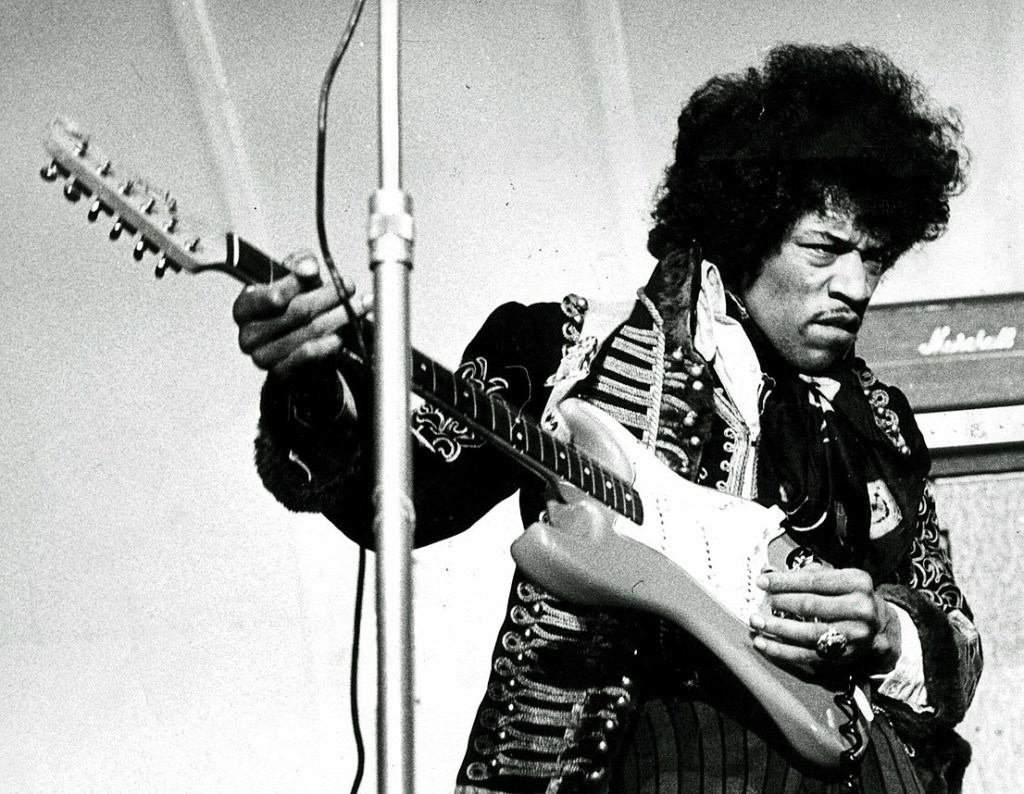
It’s that time of the year when guitarists and Jimi Hendrix fans everywhere trek to Poland for the annual “Thanks Jimi Festival”; a yearly guitar freakout where thousands from Poland and elsewhere gather to try and set a record for number of people playing Jimi Hendrix’s “Hey Joe” simultaneously.

The gig’s history goes back to a Blues Express workshop in 1997 where Leszek Cichonski, a Polish blues guitarist, found himself on stage with 17 other guitarists playing “Hey Joe” thus providing the incentive to answer the theological question of how many guitarists can fit into Wroclaw, Poland’s Main Market Square on the first day in May every year. Below is a list of the records, which, apparently, always need to be broken because the theological limit hasn’t been reached yet.

  • In 2003 “Hey Joe” was played by 588 guitarists.
  • In 2004 the number expanded to 916.
  • In 2005 it went up to 1201.
  • In 2006, 1581.
  • In 2012, 7273. The musicians were led by Jimi Hendrix’s brother, Leon Hendrix.
  • In 2019, 7423.
  • In 2020, because of Fauci cruelty and madness, the event was held online, and 7998 guitarists strummed and boomed out the five chords of “Hey Joe”.
  • In 2023, 7967 guitarists played.

The “Thanks Jimi Festival” will go live again for another record on 1 May 2024.  At this year’s festival thousands will join in and play 10 songs:

  1. Hey Joe by Jimi Hendrix, released as a single in 1966
  2. Foxy Lady by Jimi Hendrix, released on the album “Are You Experienced? in 1967
  3. Voodoo Child by Jimi Hendrix, released on the album “Electric Ladyland” in 1968
  4. Smoke on the Water by Deep Purple, released on the DP album “Machine Head” in 1972. Added to the festival lineup in 2009. The song was written in December 1971. Jimi died on 18 September 1970
  5. Little Wing by Jimi Hendrix, released on the album “Axis: Bold as Love” in 1967
  6. Wild Thing by the Troggs, released in 1966. Jimi played this song live at the Monterey International Pop Festival in 1967 aka The Summer of Love
  7. Red House Blues by Jimi Hendrix, released on the British version of “Are You Experience” in 1967
  8. Thanks Jimmi, by Leszek Cichonski
  9. Kiedy byłem małym chłopcem (When I was a little boy), Composition by Tadeusz Nalepa
  10. Like a Rolling Stone, by Bob Dylan. This song was usually performed at Hendrix’s live shows

Long live Jimi.

Source: Everything you need to know about the Guitar World Record (https://heyjoe.pl/summary/). Photo of Wroclaw, Poland’s Main Market Square during the “Thanks Jimi Festival.” Photo of Hendrix in Sweden, 1967. Public domain.

Clap for the Wolfman

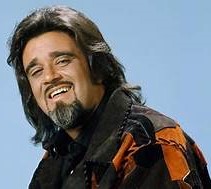
Robert “Bob” Weston Smith, born in New York in 1938 recreated himself as Wolfman Jack while working as a DJ at a country music radio station in Shreveport Louisianna in 1962.

Looking for something different, where he could make big money, he headed to Mexico to broadcast on the 250,000-watt monster: XERF. The station was so strong that it could reach most of the continental U.S.

He initially went down to Mexico to work as a DJ but when he arrived, allegedly, he found that the radio station was in receivership, and he eventually gained control. In 1970 the Mexican government took control of XERF, and the Wolfman was out of a job.

In 1972 he bounced back co-hosting NBC’s late night music series; “The Midnight Special.” In 1973 George Lucas, a fan of his radio programs, offered him a part, as himself, in the hit classic film “American Graffiti.” Shortly after the success of the film, with his fame in the stratosphere, he began to distribute “The Wolfman Jack Radio Show”, eventually reaching over 2000 stations in 53 countries. He appeared in 87 TV shows and films and was the subject of at least five records including the “The Guess Who’s-Clap for the Wolfman.

On July 1, 1995, Wolfman Jack died of a heart attack at his home in Belvidere, North Carolina, but “The Wolfman Jack Radio Show” is still on the air, every night, somewhere in the world.

Source: https://bighits981.com/on-air/wolfman-jack

Teen Picasso

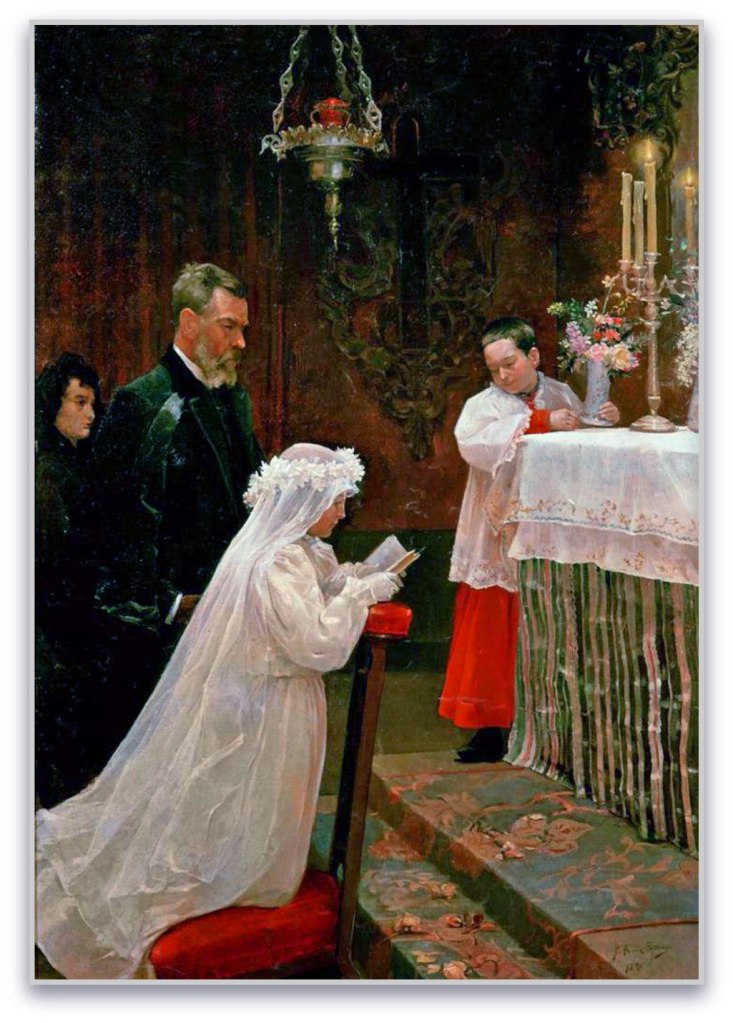
Picasso was recognized as a child prodigy at a very young age. He began to paint with oils when he was eight and by the time he was thirteen he was selling his work. At the age of fourteen, he was admitted to the prestigious Barcelona art school: La Lonja. At the age of fifteen he made his official entry into the professional art world, presenting the painting, “The First Communion” shown to the right, at the Third Exhibition of Fine Arts and Artistic Industries in Barcelona.

Science and Charity” shown to the left is one of Picasso’s most accessible paintings. He painted it in 1897 at the age of 15. This painting was the culmination of his academic studies and he soon after abandoned this style in pursuit of a more personal, albeit inscrutable, approach to art.

Source: Picasso by Carsten-Peter Warncke. Published 2001. Original publication 1998.

Space Elevators

Arthur C. Clarke in his 1979 sci-fi novel, The Fountains of Paradise, builds a space elevator on Earth as a solution to the monetary and technical expense of Earth-based rockets.

A space elevator is a conceptual solution for a low-cost, low energy planet-to-space transportation system. The challenge to building the elevator is finding a material strong enough to withstand the immense compressional and tensional forces that with a counterweight balance, would be 44,490 miles long (71,600 km). Carbon nanotubes offer a possible solution but currently they are only strong enough to work on Mars or the moon.

This is not Clarke’s best novel, but he thoroughly explains the concept of a space elevator and a lot of the engineering problems that would need to be solved to build one. The solutions to all the problems are solved by the book’s protagonist, Dr. Vannevar Morgan, a thinly veiled character that likely refers to himself as Arthur C. Clarke when he is among friends.

As an aside, both within the book and as a reader, he spends 5-6 pages harping on his belief there is no God. Why he does so is a mystery since it adds nothing to his story and in the end, it is a pointless, garrulous, one-sided debate.