In February 2008, The New York Times published an anonymously sourced front-page story accusing Senator and Republican presidential candidate John McCain of having an improper relationship with telecommunications lobbyist Vicki Iseman. Both McCain and Iseman denied the allegations.
Critics blasted the paper for running a front-page story based on slender and anonymous sourcing. Steve Schmidt, McCain’s campaign advisor, sneered, “It was something that you would see in The National Enquirer.” A few days after the story ran, Times ombudsman Clark Hoyt criticized it for being short on facts, writing, “If you cannot provide readers with some independent evidence, I think it is wrong to report the suppositions or concerns of anonymous aides…“
Vicki Iseman sued The New York Times for defamation in December 2008. The case was settled a few months later, but the Times did not issue a retraction. They did, however, publish a clarifying note stating that they did not intend to imply an improper relationship between Iseman and McCain. John Dean, writing for Verdict, commented on the absurdity of the defamation agreement, stating, “Rather than apologize and/or retract, they [the Times] would merely say what they said is not what they meant, and that readers should not be fooled into understanding what they read as saying what everybody thought it said.”
Source: Times Hit Piece Dying on Media Vine by Clay Waters, 2008. Who Won…by John Dean, Verdict, 2013.
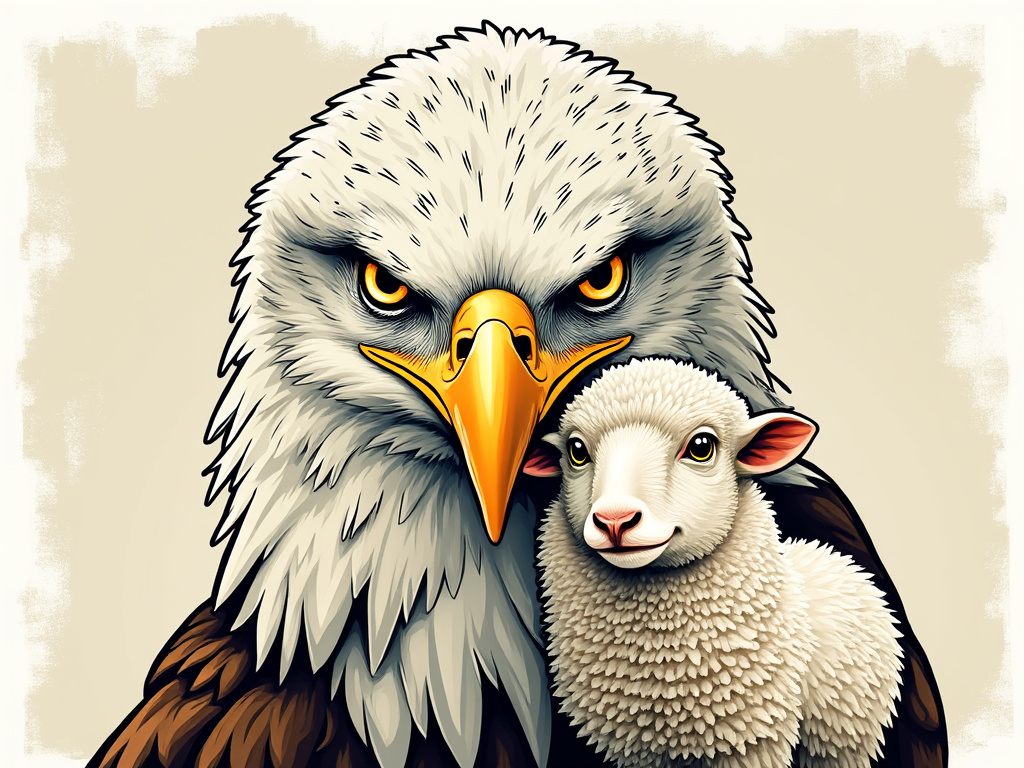
Thomas Hobbes, a 17th-century philosopher and author of Leviathan, argued that humans are driven by self-interest and the instinct for survival, which can be inherently self-destructive. To curtail our tendency to drift towards chaos and early death, he proposed his social contract theory, where we sacrifice some freedoms to the state in exchange for safety, peace, and security.
Hobbes recognized that surrendering freedoms may lead to tyranny. He said that if the state becomes oppressive, the social contract is broken, and citizens are no longer bound to submit to its authority. He argued that the contract is rational and valid only as long as the benefits outweigh the costs.
Thomas Jefferson used a similar argument in the Declaration of Independence, stating: “That whenever any Form of Government becomes destructive of these ends, it is the Right of the People to alter or to abolish it, and to institute new Government, laying its foundation on such principles, and organizing its powers in such form, as to them shall seem most likely to effect their Safety and Happiness.“
Source: Hobbes’s Moral and Political Philosophy, SEP 2022. Graphic: AI generated.
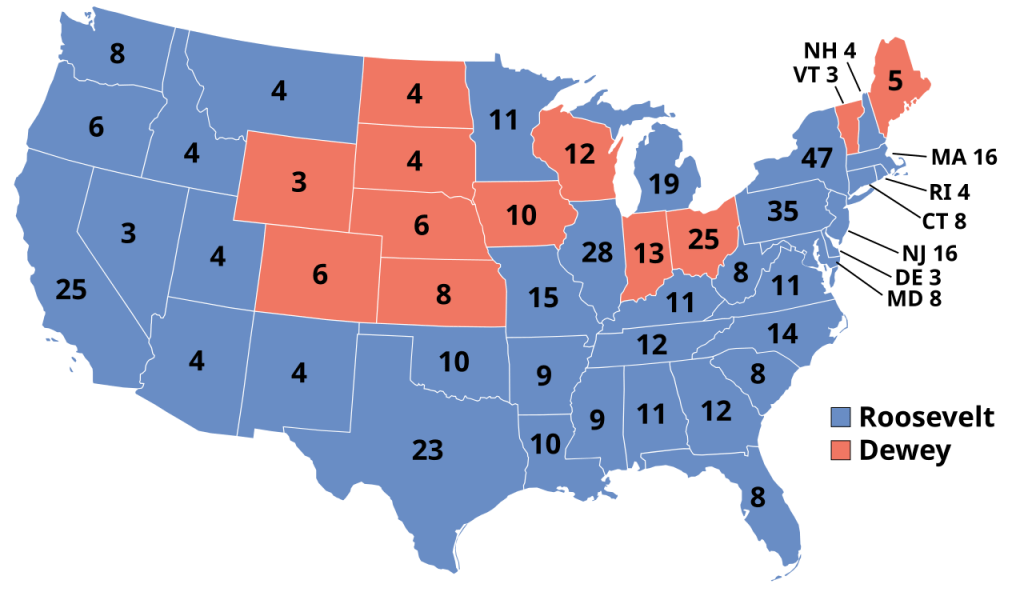
On Tuesday, 7 November 1944, Franklin D. Roosevelt won his fourth term as President of the United States, defeating Republican Thomas E. Dewey of New York.
Few states in the 1944 election had a primary system in place to vote for party nominees, instead choosing delegates to the national nominating convention through party caucuses or state conventions. The real job of selecting the party’s nominees occurred at the national conventions with little to no input from the voting public.
Democrats, concerned that Roosevelt might not live to complete his term, replaced the sitting left-wing and economically illiterate Vice President Henry A. Wallace with the Missouri Senator Harry S. Truman.
Roosevelt died on 12 April 1945, less than three months into his new term, with Truman assuming the presidency that same day.
Truman ordered the dropping of the first atomic bomb on Hiroshima on August 6, 1945, less than six months into his presidency, proving that holding the highest office in the land is fraught with uncertainty and requires unimaginable determination and strength.
Graphic: Electoral College Results for the 1944 Presidential Election.
USA Today, in a 2005 story, revealed that the younger Bush White House had paid columnists to promote the president’s ‘No Child Left Behind’ policy, that he signed into law in 2002.
The Bush’s Education Department paid Armstrong Williams, Maggie Gallagher, and Michael McManus thousands of dollars to give favorable coverage in print, radio, and television. Williams was paid the most, $241,000 to write positive NCLB articles for his syndicated column at the Tribune Co., and speak glowingly about it on his TV and radio programs. The Tribune Co., his syndicator, dropped his column after the pay-to-print arrangement was discovered. The media in 2005 considered the pay-to-promote practice insidious, abhorrent, and unethical.
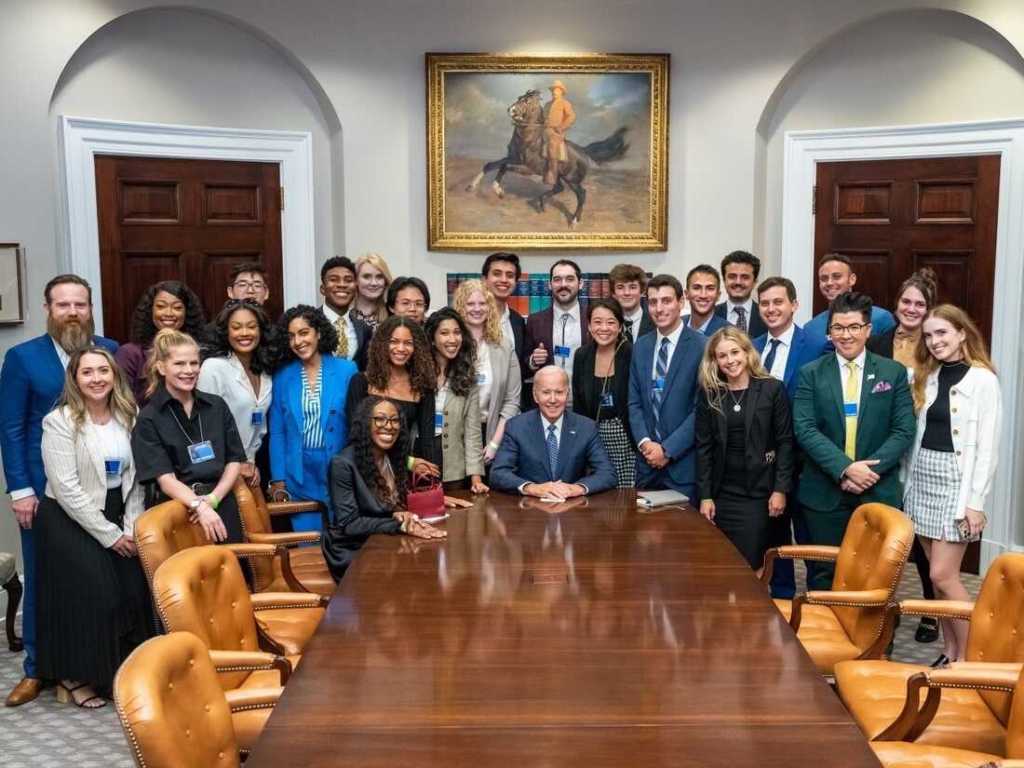
It has been reported that the Biden administration, through a political action committee, has paid at least 1 million dollars to approximately 150 social media influencers to promote its policies. These include Harry Sisson, Vivian Tu, and Awa Sanneh among others, all active on TikTok, X, and Instagram. While these payments and influencers were disclosed, the process has been less than transparent and generally, the influencers do not state upfront what posts are paid for by the Biden administration or the PACs controlled by its administration.
What was considered unethical behavior 20 years ago is standard operating procedure today.
Source: The Top 12 Journalism Scandals by Tony Rogers, ThoughtCo., 2023. The Conversation, 2024. Graphic: Influencers, Morgan MacNaughton/Palette Management.
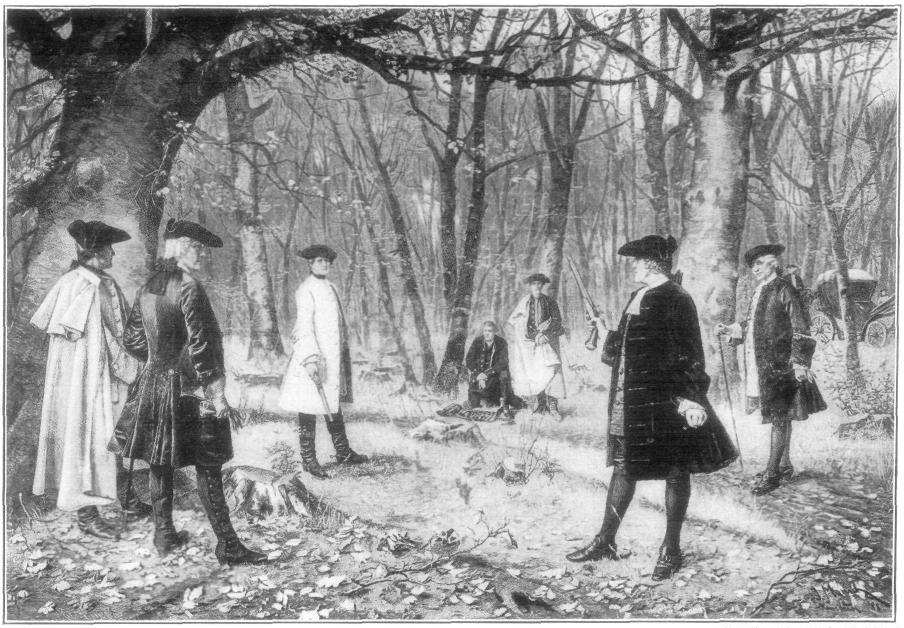
220 years ago on 11 July 1804 Aaron Burr, Vice President of the US challenged and mortally wounded, in a duel, the US Secretary of the Treasury, Alexander Hamilton.
Burr claimed that Hamilton smeared his name by stating that he was a dangerous man and should not be in control of a government. Burr demanded a public apology. Hamilton refused to acknowledge, much less apologize to Burr for the alleged smear, triggering Burr to challenge Hamilton to a duel.
The duel occurred near Weehawken, New Jersey, across the Hudson from Manhattan, and both men fired one round. Hamilton was hit in his side near the hip and died the next day from the wound.
Dueling at the time was illegal but Burr escaped without any charges being brought, although his political career lay in tatters.
Source: The Hamilton-Burr Duel by Josh Wood, Origins, 2019. Graphic: Hamilton-Burr Duel after a painting by J. Mund, public domain.220
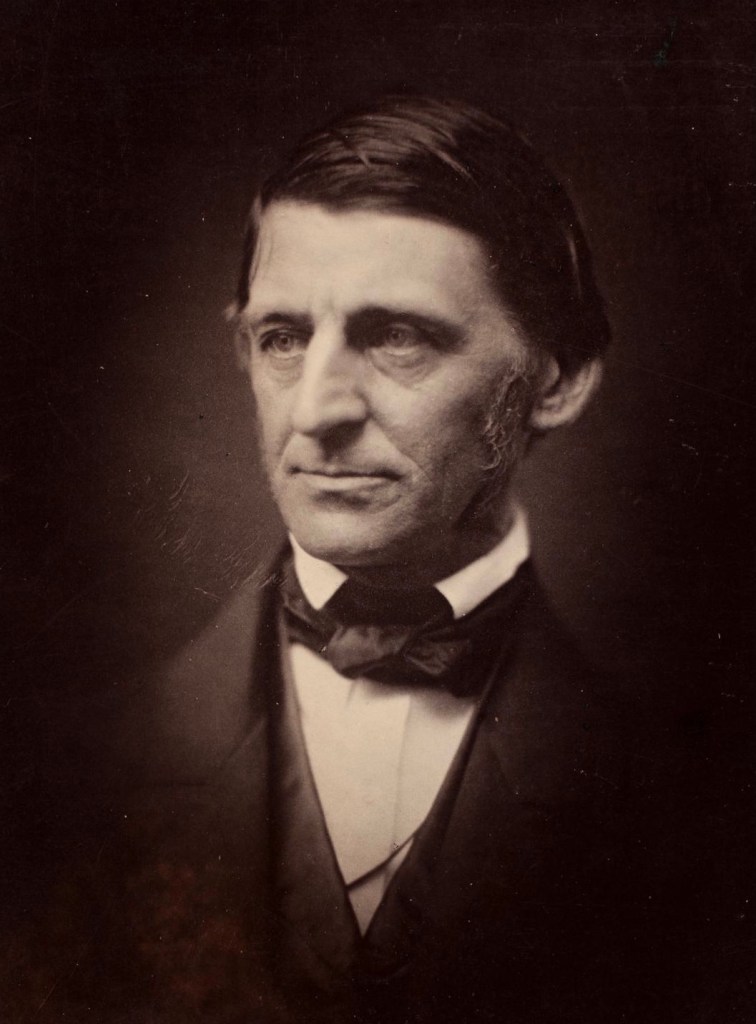
Ralph Waldo Emerson, author of the transcendental essay, “Self-Reliance” is often credited with saying, “When you strike at a king, you must kill him.” The exact setting and time for the quote is unknown but Ann Althouse believes it was said during a conversation with Oliver Wendell Holmes Jr., one of the most widely cited Supreme Court justices, after Holmes attacked Plato. Emerson’s parried with the quote above, meaning that if you strike at the philosopher king you must be thorough.
Niccolò Machiavelli, in his book “The Prince”, didn’t specifically mention the need to “kill the king” however, he did say, “If an injury has to be done to a man it should be so severe that his vengeance need not be feared,” and he also added “People should either be caressed or crushed. If you need to injure someone, do it in such a way that you do not have to fear their vengeance.”
Source: The Prince, Machiavelli. Emerson, Althouse Blog, 2019. Graphic: Emerson by Hawes, 1857, Public Domain.
The adage, History doesn’t repeat itself, but it often rhymes, or less succinctly, historical, and current events may not unfold in the same manner, but they often follow similar patterns or themes. As an example, the rise of authoritarianism usually follows, and rhymes, with the erosion of democratic norms, intolerance of dissent, animosity towards religious or ethnic minorities, economic instability, isolation of true democratic countries, and war.
This quote is often attributed to Mark Twain but no collaborating evidence for him saying exactly this has ever been found. He did say something similar, in a novel he wrote with Charles Warner, the 1874 The Gilded Age: A Tale of To-Day that “History never repeats itself, but the Kaleidoscopic combinations of the pictured present often seem to be constructed out of the broken fragments of antique legends.” The quote in its entirety is sentence that Twain could never write, it had to have come from his co-author.
Austrian American psychoanalyst Theodor Reik, a student of Freud, published an essay in 1965, “The Unreachables” where he wrote: It has been said that history repeats itself. This is perhaps not quite correct; it merely rhymes. There are recurring cycles, ups and downs, but the course of events is essentially the same, with small variations. It has been said that history repeats itself. This is perhaps not quite correct; it merely rhymes.
Regardless of whomever said, History doesn’t repeat itself, but it often rhymes were astute observers of history and life.
Source: Quote Investigator, 2014. Graphic: Publicity photo of Reik, 1920s, public domain.
“At the end of the day, I’m fighting for the things I said I’d fight for.” – Ron DeSantis
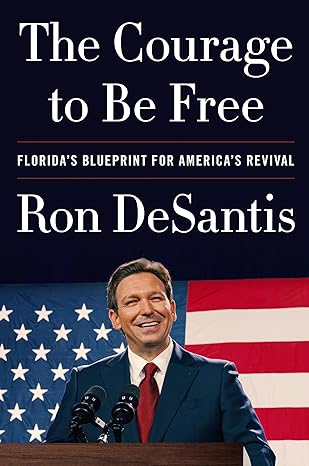
Courage to Be Free is the Florida governor’s biography with a good measure of politics, vision and American government thrown in. It’s a simple read from someone selling himself as an authentic American and an honest and ethical broker who supports the citizens through good government.
Ron Desantis was born in Jacksonville, Florida in 1978, married Casey Black in 2009, and has three children, two girls and a boy. He attended Yale and graduated in 2001 with a B.A. A year later he entered Harvard and graduated with a law degree in 2005. During law school he was commissioned as an officer in the U.S. Navy. In 2007 he was assigned as a legal advisor to SEAL Team One in Fallujah, Iraq where he was awarded the Bronze Star.
In 2012 he was elected to the U.S. House of Representatives and was re-elected in 2014 and 2016. DeSantis decided not to run for re-election to the House for the 2018 term but instead competed for the Florida governorship which he won. He won re-election in 2022 and as he is term limited by Florida law will not seek that office in 2024. Since he has dropped out of the Presidential race what he does next is an open question.
The first half of Desantis’ book is dedicated to his biography followed by his vision of government and national policy. He draws heavily on the expository essays and articles within the Federalist Papers and their vision for a constitutional republic. The authors of the Federalist Papers, Madison, Hamilton, and Jay argue strenuously for a republican form of government and against direct democracy which one could paraphrase in slang terms as mob rule. DeSantis agrees.
His political philosophy is simple in principle, excoriatingly difficult in execution. Encapsulating his thoughts he states, “The right path forward is not difficult to identify; it just requires using basic common sense and applying core American values…” He follows this up with his blueprint for Florida and America: “Be willing to lead, have the courage of your convictions, deliver for your constituents, and reap the political rewards.” Reaping the political rewards sounds like every politician that has ever walked the face of this Earth and I don’t recognize that as a positive trait.
Literary Criticism:
Courage to Be Free was a number one bestseller in the New York Times, Wallstreet Journal, Amazon, and Publisher’s Weekly shortly after it was released in 2023. Although sales figures are almost impossible to find, for free, the book had an initial print run of 250,000. There hasn’t been a second printing.
Hagiographies are one sided affairs with nary a discouraging word to be found, with sainthood lurking right around the corner. DeSantis autobiography is a hagiography but in fairness one doesn’t provide his opposition with free negative research when your goal is to introduce yourself to the public.
This book had only one purpose, to launch DeSantis into the 2024 presidential Republican primary in the best possible light and as a bonus, get your targeted audience to pay for it by purchasing the book. It admirably accomplishes the task, but it certainly is not a literary masterpiece, rather it reads like a college term paper completed under duress. Simple, direct, with no flowery prose or memorable lines. If you want to learn something about this man, give it perusal, a quick read is all it needs and watch one or two of his Republican primary debates for additional elucidation.
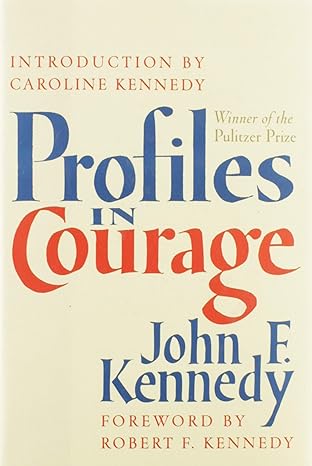
The only reason I read this book was because of the title: The Courage to Be Free. It reminded me of the title of John F. Kennedy’s Profiles in Courage. Kennedy’s book employs a better writing style but that is because Kennedy didn’t author his book. In a previous post I stated who did and I’ll leave it to you to look it up if you are curious. In the end both are about embellishing their respective reputations. Mission accomplished.
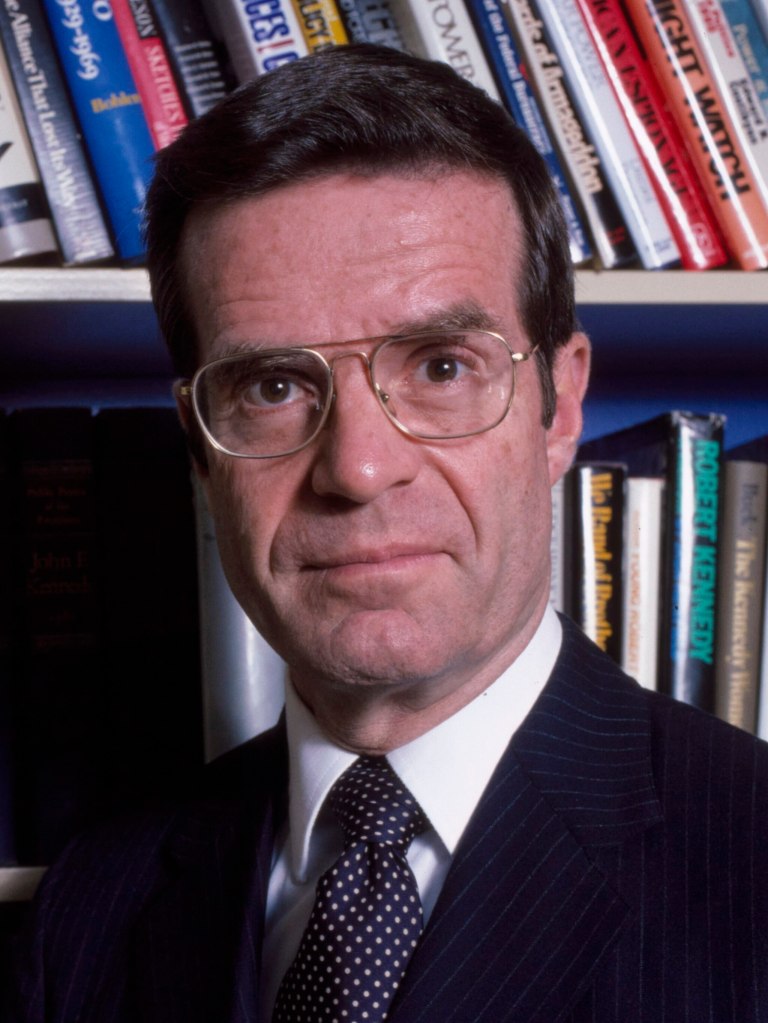
Ted Sorensen, died in 2010 at the age of eighty-two, was White House counsel and speechwriter for President Kennedy and speechwriter for Lyndon Johnson from 1961-1964. In the early days of Kennedy’s administration, he assisted in drafting the President’s inaugural speech in which the famous line, “Ask not what your country can do for you; ask what you can do for your country.”
Initially Sorensen was limited to domestic issues within the administration but after the April 1961 Bay of Pigs fiasco, a 24-hour failed attempt to overthrow Castro, which ostensibly Sorensen bitterly opposed, Kennedy asked him to help with foreign policy going forward.
Eighteen months later in October 1962, the Cuban Missile Crises gripped the nation and the world. The Soviets were staging nuclear missiles in Cuba just ninety miles from U.S. shores. The U.S. responded with a naval blockade of Cuba along with the threat of invading the island. Soviet First Secretary Khrushchev offered to remove the missiles if the U.S. promised not to invade Cuba. Khrushchev also added an additional condition less than 24 hours later, insisting that the U.S. also remove their missiles from Turkey. The President was inclined to accept the Khrushchev’s initial proposal, but the second condition took them by surprise. McGeorge Bundy, Kennedy’s national security advisor, suggested that the administration just ignore the second proposal and proceed with accepting the conditions from the first offer. Sorensen collaborated with the president and Robert Kennedy in drafting a letter agreeing to the Soviet leaders’ initial terms; missiles out of Cuba and the U.S. will not invade the island. Meanwhile, unbeknownst to most, Robert Kennedy was meeting with Soviet Ambassador Anatoly Dobrynin agreeing to also remove U.S. missiles from Turkey. This was a secret agreement that the Soviets agreed never to make public. Truth and lies. War averted.
Sorensen was also involved with Kennedy and the Vietnam War. Sorensen wrote in his memoir that the President was “determined not to lose Vietnam to communism” and that he “believed that only the South Vietnamese could win it.” Sorensen also wrote that Kennedy “never accepted the advice of those who urged him to send American combat troops to Vietnam” and that Kennedy did not believe in the Domino Theory. By 1962 the Kennedy administration had increased U.S. military personnel in Vietnam, from less than eight hundred under Eisenhower, to about 9,000 during his administration. Others have also said that Kennedy accepted without serious question the basic tenets of the Domino Theory. Sorensen also claimed that Kennedy had a secret plan to withdraw US advisers from Vietnam after the 1964 election although no one has ever been able to find any evidence to support this claim.
On 22 November 1963 Kennedy was assassinated in Dallas, Texas. Sorensen was riding in a car behind the president’s limousine when the shots were fired. Sorensen stayed on briefly after Kennedy’s death to assist the new president, Lyndon Johnson, as a speechwriter but left the White House in 1964.
Sorensen remained loyal to the Kennedy family, supporting Robert (Bobby) F. Kennedy’s presidential campaign in 1968 and attempting to provide damage control for Ted Kennedy’s Chappaquiddick drunk driving episode that resulted in the senseless death of Mary Jo Kopechne in 1969.
FootnoteB
Kennedy Biography:
“The greater our knowledge increases, the greater our ignorance unfolds.” JFK
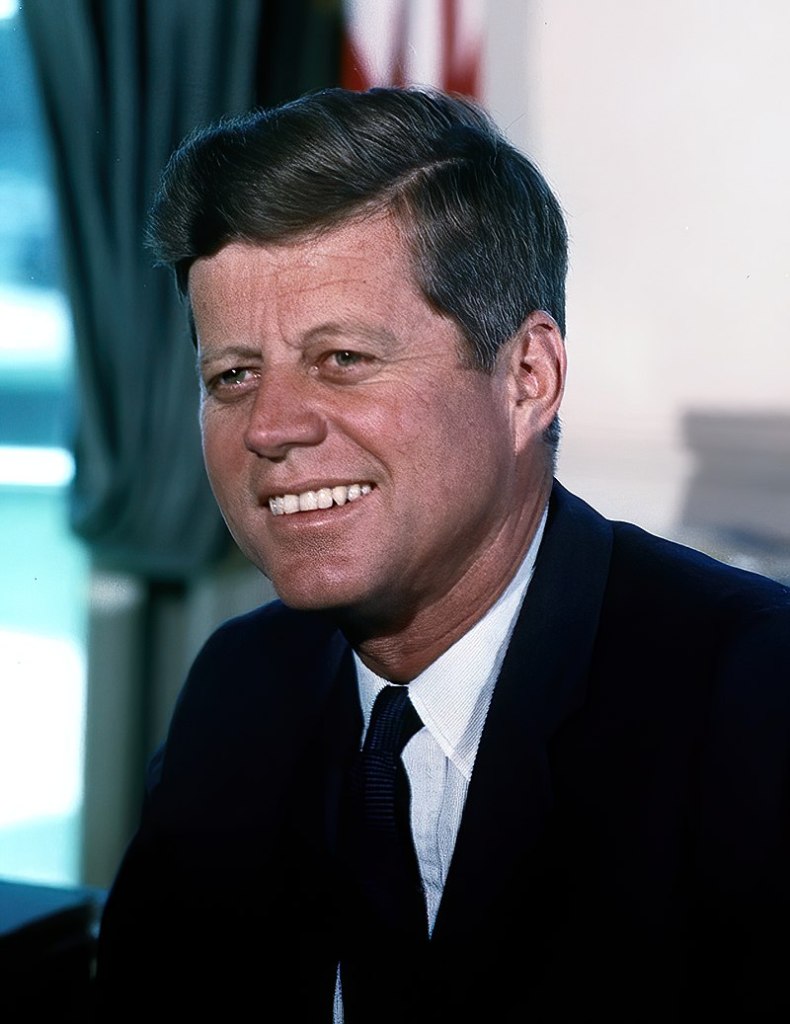
John Fitzgerald Kennedy, assassinated in 1963 at the age of forty-six, was the charismatic 35th president of the United States remembered as much for his initiatives, which were many as his accomplishments, which were few.
JFK, born into a wealthy New England family, the second oldest of nine siblings, educated at the best schools but he was a poor student academically, having interests only in history and girls. Near the end of his studies at Harvard he finally pulled himself together enough to author a commendatory analysis, as his senior thesis, of England’s lack of preparation for WWII. The thesis relied heavily on his father’s contacts and position as the U.S. ambassador to England. His thesis was soon published in book form, titled Why England Slept, and sold 80,000 copies in England and the U.S.
He joined the U.S. Navy after Harvard and commanded a torpedo boat in the South Pacific during WWII. His boat was split into two by a Japanese warship, killing two of his sailors and permanently injuring his back. He and his remaining sailors managed to swim to a nearby island and were rescued six days later.
In 1952 he ran for the U.S. senate from Massachusetts challenging the Republican incumbent Henry Cabot Lodge. Kennedy won the race and became a rising star in Democratic politics.
After the election to the senate, he married Jacqueline Bouvier in 1953. They had three children: Caroline, John Jr., and Patrick Kennedy.
While recovering from back surgery in 1956, due to his WWII naval injury, he began his book, Profiles in Courage, with Ted Sorensen, which won him a Pulitzer in 1957.
After 8 undistinguished years in the senate, he ran for president in 1960 against Richard Nixon. He won, becoming the second youngest president ever elected. He served as president for three short years, being assassinated by Lee Harvey Oswald in Dallas, Texas on 22 November 1963. His domestic and foreign policy initiatives were significant but due to his limited time in office he saw few results or conclusions related to his governing vision. A few of his strategies, visions, and world events during his presidency are listed below:
Creation of the Peace Corps in 1961
Increased U.S. involvement in Vietnam 1961-1963
Bay of Pigs Invasion 1961
Soviet construction of the Berlin Wall in 1961
Cuban Missile Crises 1962
Desegregation of Mississippi colleges in 1962
Nuclear Test Ban Treaty with Great Britain and the Soviet Union 1963
Sent the Civil Rights Act to Congress in 1963 (passed into law in 1964)
Proposed sweeping tax cuts in 1963 (Revenue Act passed in 1964)
Profiles in Courage:
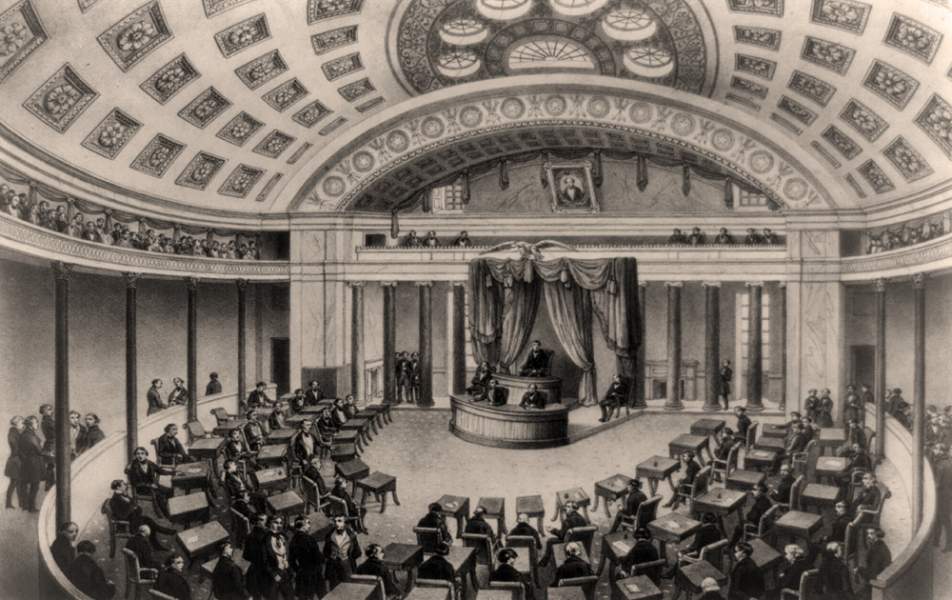
Profiles in Courage is a compilation of vignettes describing eight senators’ actions that bucked their party and sometimes popular public sentiment to help pass legislation. Each vignette is preceded by a short ‘Time and Place‘ chapter that sets the stage and mood of the country at the time.
Federalist John Quincy Adams, from Massachusetts, broke with his party and sided with the Republicans. The Republicans became better known as the Democrat-Republicans which eventually became just the Democrats. The Federalist party morphed into the Republicans with a slight stop-over as Whigs. Using today’s terms Adams broke with the Republicans and sided with the Democrats. Adams courage was for shutting down the Massachusetts economy by voting for the Embargo Act of 1807. The act attempted to punish the English for their impressment of American sailors and disrespecting American sovereignty. War with England occurred shortly after in 1812.
Federalist and Whig Daniel Webster, also from Massachusetts, spoke in favor of the Compromise of 1850. The Compromise of 1850 was five separate bills concerning slavery status in various states and the District of Columbia, California state admission to the Union, boundary disputes between the states, and assumption of Texas debt by the Federal government. The bills broke mainly along geographic lines, northern states versus southern states with party loyalty playing a secondary role. The Compromise of 1850 kicked the slavery issue down the road and postponed the civil war for ten years. At the time it was believed the compromise would settle the issue permanently. The consequence of voting in favor of the Compromise was to allow the north to grow stronger, economically and militarily, and the south to weaken.
Democrat Thomas Hart Benton, from Missouri, was a staunch anti-slavery politician but remained in the pro-slavery Democratic Party, hating Republicans more than slavery. This was called courageous.
Democratic-Republican (Democrat) Sam Houston, from Texas, voted against the Kansas–Nebraska Act of 1854, which would have allowed the voters of those two states to decide on the slavery question themselves effectively repealing the Missouri Compromise. Houston wanted to uphold the Missouri Compromise which would have banned slavery in Kansas and Nebraska. Texas was a pro-slavery state thus Houston’s vote was condemned as treasonous in his home state. Houston eventually left the Democrat Party.
Republican Edmund G. Ross, from Kansas, voted for acquittal in the Democrat Andrew Johnson’s impeachment trial. As a result of Ross’s vote, along with six other Republicans, Johnson’s presidency was saved, and the stature of the office was preserved. The charges against Johnson were insubstantial and without legal merit or in other words it was all about politics.
Democrat Lucius Lamar, from Mississippi, eulogized anti-slavery Republican Charles Sumner on the Senate floor and made other efforts to mend ties between the North and South during Reconstruction. Charles Sumner was a nominal Republican having thoroughly alienated his standing with presidents, Lincoln, and Grant. Lamar eventually convinced the voters of Mississippi that his tactics were correct, and they were wrong.
Republican George Norris, from Nebraska, opposed Republican Joseph Gurney Cannon’s autocratic power as Speaker of the House, spoke out against arming U.S. merchant ships during the United States’ neutral period in World War I, and supported the presidential campaign of Democrat Al Smith, the first Catholic to be a major party nominee.
Republican Robert A. Taft, from Ohio, criticized the post-WWII Nuremberg Trials that were trying Nazi war criminals under ex post facto laws. His whole argument revolved around fairness to the accused. Taft may have had the law on his side, but it was like a lawyer getting his guilty as sin, ax murdering client off Scott-free due to a technicality. Tone-deaf would be a better adjective to describe Taft rather than courageous.
FootnoteC
Literary Criticism:
I’ve always wanted to read this book. It just took a long time to get around to it. I heard and read glowing terms of its contents since I was in high school and the few snippets I had read were interesting. I should have left matters at that.
Profiles in Courage is a pedestrian book with little new to add to the history and biography of the eight senators covered. The analysis is light and generally one sided which can be summed up as voting for Democrats is courageous, voting against Democrats isn’t. Kennedy was awarded a Pulitzer for this book. It is always good to be born and raised on the right side of the tracks.
AuthorshipNote:
In 1957 Drew Pearson, journalist, stated on The Mike Wallace Interview show that “John F. Kennedy is the only man in history that I know who won a Pulitzer Prize for a book that was ghostwritten for him.” Pearson added that Ted Sorensen, Kennedy’s advisor, and speech writer authored the book. Joseph Kennedy’s, JFK’s father, response was to sue Pearson and ABC, the network broadcasting Mike Wallace’s show. ABC made a retraction and issued an apology.
Herbert Parmet, historian, and biographer, wrote in his 1983 book Jack: The Struggles of John F. Kennedy that Kennedy developed the concepts and provided direction for Profiles in Courage, but it was Sorensen who wrote the bulk of the book. The essays in the first and last chapters were likely written by John F. Kennedy.
Sorensen in his 2008 memoir, Counselor: A Life at the Edge of History stated that he helped write Profiles in Courage. Sorensen admits that he wrote “a first draft of most of the chapters” and “helped choose the words of many of its sentences“. He also wrote: “While in Washington, I received from Florida almost daily instructions and requests by letter and telephone – books to send, memoranda to draft, sources to check, materials to assemble, and Dictaphone drafts or revisions of early chapters“.

 elsToday