The Mortal Soul

“Let no one be slow to seek wisdom when he is young nor weary in the search thereof when he is grown old. For no age is too early or too late for the health of the soul.”

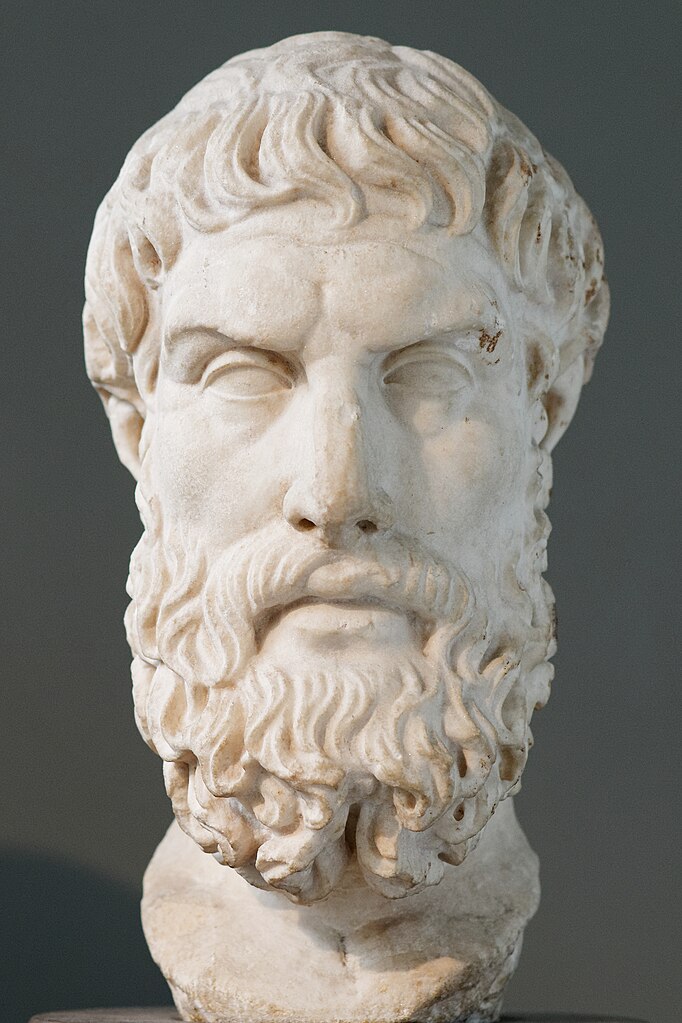
So begins the third and fourth century BC Greek philosopher, Epicurus in his letter to Menoeceus, although who Menoeceus was, has been lost to the ages. Epicurus was a Greek philosopher born on the island of Samos in the Aegean Sea off the coast of Turkey. He established a school next to Plato’s in Athens and taught that one’s purpose in life was to lead a happy, tranquil, self-sufficient life, a pleasant life, and not to fear death.

Epicurus taught that after death there is nothing. Death is/was the end of the body and soul; teaching that self-guilt and shame were the only methods available to prevent the world from overflowing with psychopaths. This is not far from the current Pope’s thoughts on Hell being an empty shell, a place of nothingness. Socrates, on the other hand, taught that the soul is eternal, and one must strive to keep it bright and shiny.

Epicurus ended his letter to Menoeceus, “Meditate therefore on these things (a pleasant life) and things akin to them night and day by yourself, and with a companion like to yourself, and never shall you be disturbed waking or asleep, but you shall live like a god among men. For a man who lives among immortal blessings is not like to a mortal being.”

Sources: “Ancient Greek Philosophers”, numerous translators, published 2018 and Manchester.edu (Indiana). Photo of a bust of Epicurus by Nguyen, public domain.

Exploration 17: Time

I have a few questions. If time didn’t exist–

  • How old would you be when you die?
  • How would you separate your birth from that of your mother’s?
  • Would you be self-aware?
  • Or in a slightly diffent form, would life be possible?
  • What form would E=mc2 and F=ma take?
    • E and F=m–some form of a n-dimensional black hole?
    • E and F=0–absolute zero temp, nothingness? This seems silly.
  • What form would physics, the universe, and everything take without time?
  • Would mathematics be any different?
    • If mathematics is constant what would the metaphysical ramifications be?

Is time artificial, a construct, a rationalization for something we do not understand?

I’ll stop now.

Explorations: 4

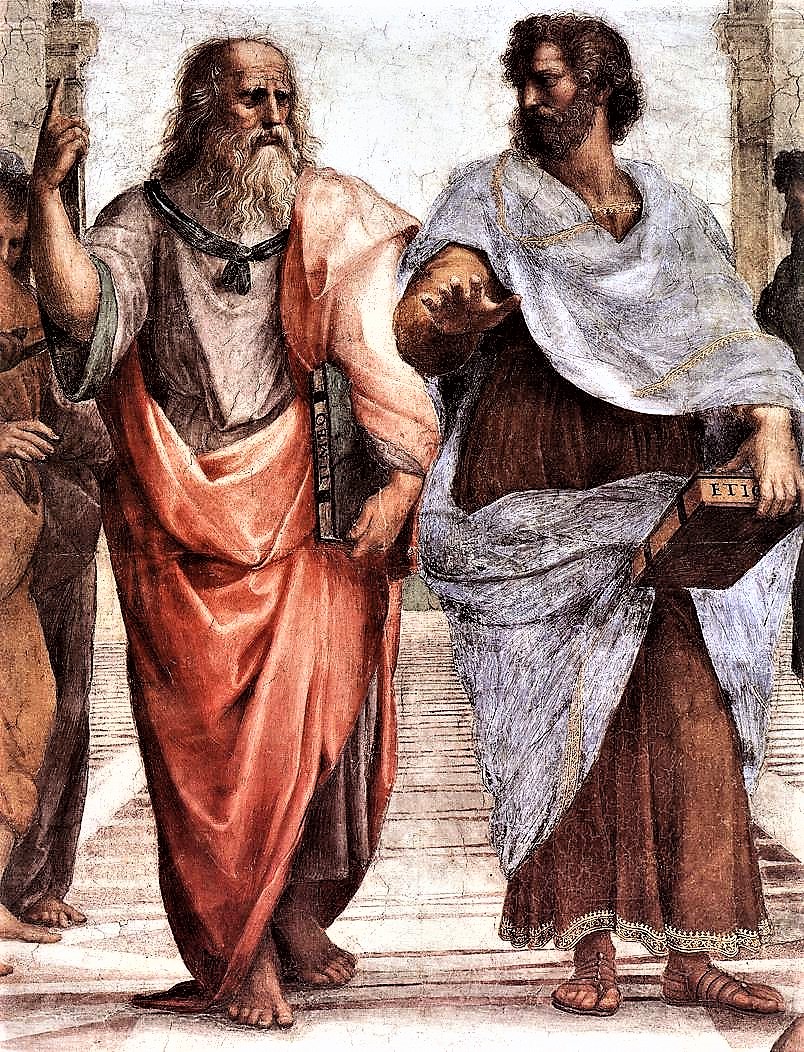
E Plato Aristotle.jpg

Plato and Aristotle cropped from Raphael’s School of Athens

Aristotle, the father of western philosophy, strongly influenced the U.S. founding fathers’ beliefs in individuality and man’s purpose, illustrated by Thomas Jefferson’s first sentence of the preamble to the U.S. Declaration of Independence; We hold these truths to be self-evident, that all men are created equal, that they are endowed by their Creator with certain unalienable Rights, that among these are Life, Liberty and the pursuit of Happiness. 

The pursuit of happiness was Aristotle’s belief of man’s purpose, his end, his goal, his telos; the pursuit of happiness, the pursuit of fulfillment, the pursuit of excellence, or using Aristotle’s term, the pursuit of virtue: man’s purpose, man’s telos.

Darwin’s theory of evolution assumes that all organisms reach their present state through natural selection, random processes, accidental design, anti-telos. Organisms evolving with a purpose implies intelligent design, which entails religion, not science, except that it can be argued that the intent of an organism’s evolution is to enhance its ability to survive, which is a purpose, an end, a goal: telos.