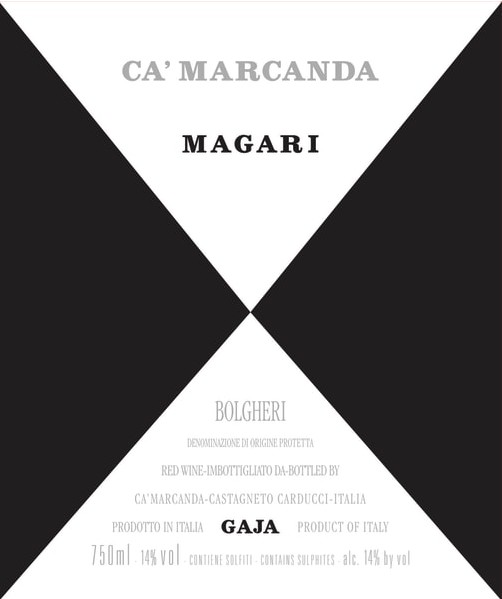
Gaja Ca’Marcanda Magari 2022

Bordeaux Red Blend from Bolgheri, Tuscany, Italy

Cabernet Franc, Cabernet Sauvignon, and Petit Verdot

Purchase Price: $139 (Restaurant)

Wine Enthusiast 96, James Suckling 95, Jeb Dunnuck 95, Wine Spectator 93, Decanter 93, Vinous 91, ElsBob 94

ABV 14.5%

A dark red, full-bodied wine with aromas of black fruits, silky tannins, and remarkable balance. The long, enjoyable finish paired exceptionally well with our main courses of Osso Buco and Braised Italian Ribs.

A superb fine wine, currently retailing between $80–$120. Drink now or hold for 5–10 years. Cheers.

Trivia: Ca’Marcanda, GAJA’s estate in Bolgheri with roots in Barbaresco, Piedmont, part of the Wilson Daniels portfolio, was acquired in 1996 after 18 distinct and arduous negotiations with the previous owners. The name comes from a Piedmontese dialect expression meaning “The House of Endless Negotiations”, a nod to the persistence and diplomacy required to secure the land.

By Italian cultural standards, the name is not a slight but a compliment. Negotiation is seen as an art form, a process of relationship-building, emotional intelligence, and mutual respect. Naming the estate Ca’Marcanda honors that tradition: a story of tenacity, dialogue, and reverence for the craft of agreement, worn as a badge of honor by both buyer and seller.

Tuscan Wines

Like many renowned wine-producing regions, Tuscany boasts a variety of iconic blends. Some, such as Chianti, are strictly regulated, while others, like Super Tuscans and Tuscan Blends, allow for more creative liberty.

Chianti must contain at least 80% Sangiovese, with the remaining 20% permitted to include Canaiolo, Colorino, Cabernet Sauvignon, and/or Merlot. Winemakers also have the option to produce 100% Sangiovese Chianti. These wines fall under Italy’s DOCG system, which regulates blend composition, sourcing, and aging across four levels: DOC, Classico DOCG, Superiore DOCG, and Classico Gran Selezione DOCG.

Super Tuscan is a militant category that emerged in the 1960s and 1970s when winemakers wanted more freedom from the strict regulations of Chiantis. Super Tuscans often blend Sangiovese with international grapes like Cabernet Sauvignon, Merlot, or Syrah, creating bold, structured wines. Since they don’t conform to traditional Chianti regulations, they are labeled under the IGT system, which allows more leeway. Actually, a lot of leeway. IGT wines can be produced in any of Tuscany’s 10 provinces from any grape or form imaginable: red, white, sweet, dry, or sparkling.

Then there are Tuscan Blends, a general term for wines made in Tuscany that mix different grape varietals. This could include Chianti-style blends, Super Tuscans, or other unique regional combinations. Unlike Chianti or Super Tuscans, “Tuscan Blend” isn’t an official classification; it’s more of a descriptive term for any blended wine from this region otherwise known in the rest of the world as a “Red Blend” or “Other Red Blend”.

Graphic: A traditional Chianti Bottle.

Nebbiolo Grapes

Nebbiolo is an Italian grape variety predominantly associated with the Piedmont region in northwest Italy, near the borders of France and Switzerland. Indigenous to this area, it boasts a long history of cultivation. Evidence indicates that wines made from Nebbiolo have been produced in the region since at least the first millennium AD, with the earliest recorded mention of the grape dating back to the 13th century in the vicinity of Turin.

Today, Nebbiolo is the cornerstone of several renowned wines, including Barolo and Barbaresco. These wines are notable for their clarity, often drawing comparisons to Pinot Noir in appearance. However, they stand out for their medium- to full-bodied structure and complex profile, characterized by aromas of red fruit, pronounced tannins, vibrant acidity, and an extraordinary finish. Decanting is crucial to mellow the tannins and enhance their drinkability.

Nebbiolo wines pair exceptionally well with rich, fatty dishes such as ribeye steak and meals featuring acidic components, including meat ragù and hearty pasta sauces.

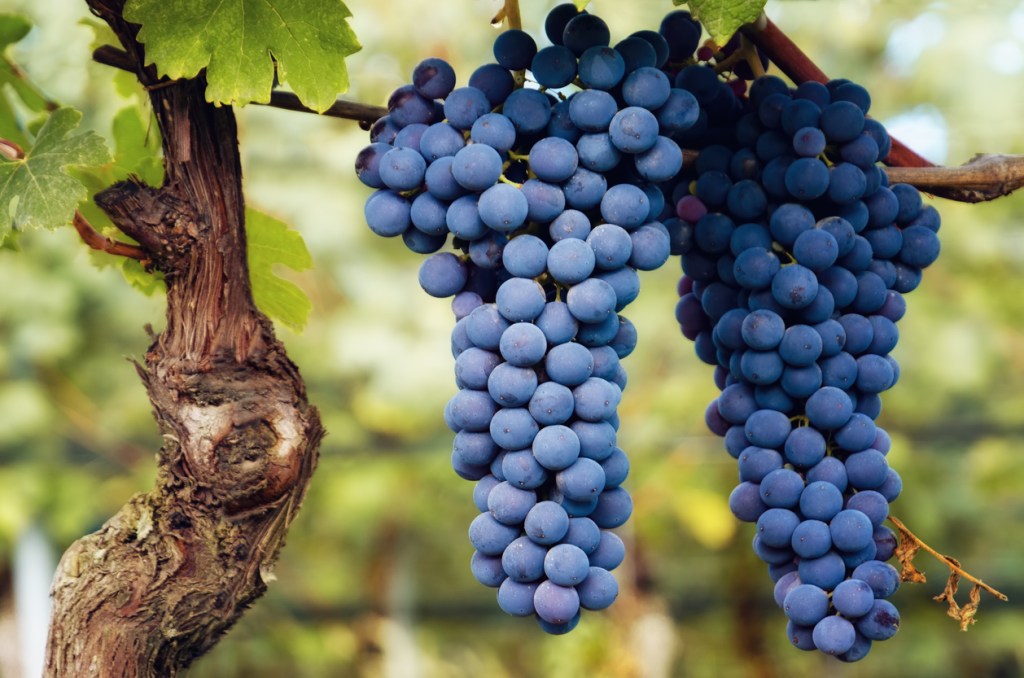
Graphic: A bunch of Nebbiolo Grapes by Cristiano Alessandro, Licensed.

Michelangelo, Medici, and Florence

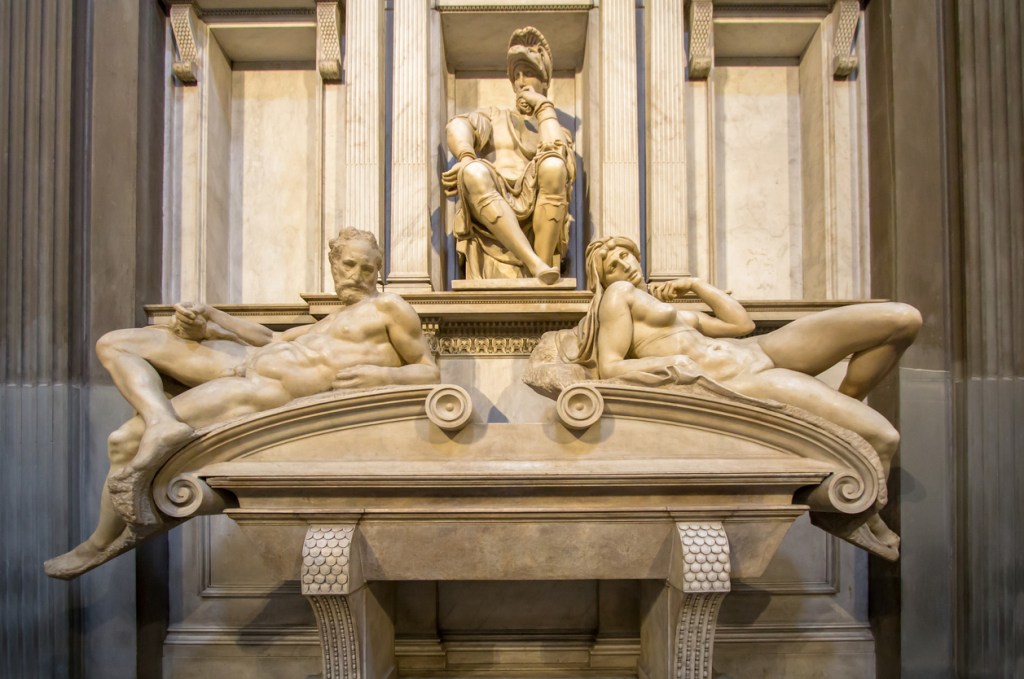
Tomb of Lorenzo II de Medici and below lying on the sarcophagus two sculptures ‘Dawn and Dusk’ in Medici Chapel, Florence, Italy

Florence, the Medici family, and the Renaissance are inextricably linked, forming a vibrant nexus of world-shaping brilliance and energy. After Lorenzo the Magnificent’s death in 1492, Michelangelo emerged as the towering figure of art and beauty during the High Renaissance, spanning the late 15th and early 16th centuries.

Michelangelo’s unparalleled artistic mastery endured for nearly fifty years beyond his death in 1564, yet with the passing of Ferdinando I de’ Medici in 1609, Baroque masters like Caravaggio and Bernini ascended as Europe’s preeminent talents.

Michelangelo navigated a delicate balance with the shifting demands of his Medici patrons, fiercely defending his artistic vision while securing payment, often with friction. The expectations of the Medici popes, Leo X (1513–1521) and Clement VII (1523–1534), frequently clashed—both in timing and creative intent—with his ambitions. This tension, happily, fueled his masterpieces, including the Sistine Chapel ceiling (1508–1512) and the Last Judgment (1536–1541).

The image depicts the Tomb of Lorenzo II de’ Medici, a work Michelangelo sculpted between 1524 and 1531.

Source: The Medici, Michaelangelo…Florence, Essays by Acidini…2002. Graphic: Tomb of Lorenzo II de Medici, Michelangelo, 1524-1531. CAHJKT iStock Photo Licensed.

Brunelleschi’s Dome

Filippo Brunelleschi, a goldsmith, engineer, and relatively inexperienced architect, completed the largest masonry dome in the world in 1436—a record that has never been broken. The world now knows it as Brunelleschi’s Dome, which sits atop the Cathedral of Saint Mary of the Flower in Florence, Italy.

When completed, the dome was 52 meters (171 feet) high, with an exterior diameter of 45.5 meters (149 feet) and an interior diameter at its base of 41 meters (135 feet). The base of the dome sat above the crossing of the Cathedral, which was 55 meters (180 feet) above the ground. Atop the dome was a lantern measuring 21 meters (69 feet) in height, bringing the entire Cathedral structure to a remarkable 128 meters (420 feet). While it was not the tallest structure in the world at the time—Lincoln Cathedral in England, at 160 meters (525 feet), held that distinction—it was certainly an impressive architectural feat.

Trivia: Brunelleschi developed an ingenious mechanical lift to raise materials up to the dome. The modern world knows what that device looked like and how it worked because a young Leonardo da Vinci sketched the hoist when he was apprenticed to the Florentine painter Verrocchio beginning in 1466. Due to that sketch, Leonardo was sometimes mistakenly given credit for inventing the hoist.

Source: Brunelleschi’s Dome by Ross King, 2000. Graphic: Brunelleschi’s Dome by National Geographic, 2013-2019.

Tomaiolo Chianti Classico 2020:

Sangiovese from Chianti, Tuscany, Italy

100% Sangiovese

Purchase Price: $14.99

Wilford Wong 90, ElsBob 90

ABV 12.5%

Ruby red in color, aromas of red fruits, medium bodied, slightly tannic, slightly dry, acidic. Ideal with roasted or grilled meats, and naturally, pasta.

An excellent table wine at a fair price of $15 although the wine now appears to be selling for about $20.

Leonardo da Vinci, Niccolo Machiavelli, and Cesare Borgia:

Leonardo, dreamer, artist, and scientist; Cesare Borgia, Cardinal, murderer, duplicitous tyrant; and likely subject of Niccolo Machiavelli’s book: The Prince, were holed up together for three months during the Renaissance winter of 1502-1503 in the five blocks by eight blocks Italian walled garrison town of Imola.

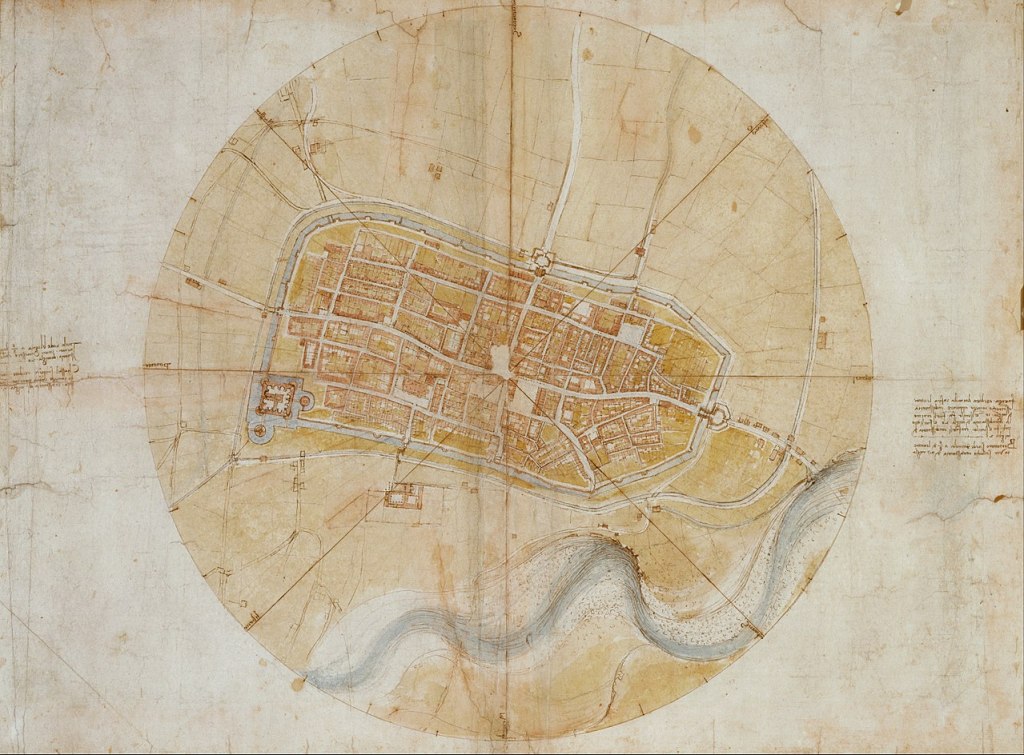
According to Walter Isaacson in his 2017 “Leonardo da Vinci” biography he states that, “While he was in Imola with Machiavelli and Borgia, Leonardo made what may be his greatest contribution to the art of war. It is a map of Imola… It is a work of beauty, innovative style, and military utility…Drawn in ink with colored washes and black chalk… The aerial view is from directly overhead, unlike most maps of the time. On the edges he specified the distances to nearby towns, useful information for military campaigns…”

Cesare Borgia (1475-1507), backed by his father Pope Alexander VI, was on a military campaign to carve out his own personal princedom, by hook, crook or force. He had moved his court to Imola to further plans for his conquest of the area. Leonardo da Vinci (1452-1519) was there because he had signed on as Borgia’s chief military engineer. Leonardo’s task was to reinforce castles and defenses in the region and construct new military machines based on his notebook designs such as his rapid-fire projectile weapon, armored car, helicopter, and giant crossbows; none of which were ever built in his lifetime. Niccolo Machiavelli (1469-1527), was dispatched by the Florentine authorities as a diplomat to discern Borgia’s intentions towards the city and dissuade him, if possible, from attacking Florence.

As an aside, Friedrich Nietzsche (1844-1900), German philosopher and critic, introduced the concept of Ubermensch: an idealized individual who transcends conventional morality and societal norms. Nietzsche elevated Borgia to this lofty status. Borgia’s daring, ruthlessness, and strategic cunning seemed to align with the philosopher’s ideals of a powerful individual who creates his own fate. Many have split hairs with Nietzsche’s concept of Ubermensch but when one creates his own morality it is hard to distinguish the end result from that of a psychopath.

Shown above is Leonardo’s map of Imola drawn in 1502-03. Public domain.

Shown above right is a Friedrich Nietzsche, circa 1975. Photo by Friedrich Hartmann. Public domain.

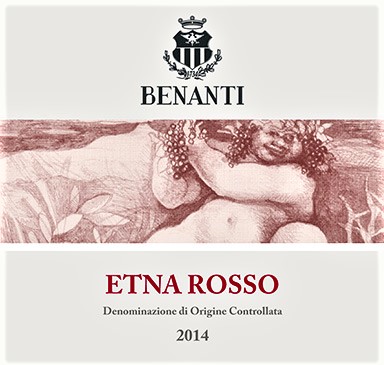
Benanti Etna Rosso 2014

W Etna 2014Other Red Blends from Etna, Mount Etna, Sicily, Italy

80% nerello mascalese

20% nerello cappuccio

13.5% alcohol

Purchased: 21 September 2017  –  $19.99

Opened: 27 March 2018

els:  9.1/10

Wine Enthusiast:  94

Cellar Tracker:  89

The ancient Greeks arrived in southern Italy and Sicily 3000 to 2800 years ago, planting vines, among other, lesser endeavors,  laying the ground work for an extensive Greek tourism outpost in the Iron Age. The Etruscans were quick studies and turned Tuscany into a wine haven soon after.  Then came the Romans expanding the wine trade to their known world, much to everyone’s satisfaction. Italy is the number one producer of wine in the world with a 2017 output in excess of 1 billion gallons versus world-wide production of about 6.5 billion gallons. The greatest amount of Italian wine, by volume, is exported to Germany but the greatest amount by monetary value, is exported to the US.  There are 4 main producing areas in the country; northeast, northwest, central and southern plus the islands, all further divided up into 20 regions, 408 DOCs and DOCGs, growing 396 prime varieties of grapes. White wine accounts for 54% of all wine produced in Italy with the remainder being red or rose. Sangiovese and Trebbiano grapes are the most common varieties planted.

Sicily, the largest island in the Mediterranean located near the western toe of Italy, likely was one of the first Italian areas the sea-faring Greeks planted vines on. They set up a robust trade in wine that continued with the Phoenicians and Romans. Today, Sicilian wine and food go hand in hand, creating gastronomic delights worldwide.  The island is the 4th largest producer of grapes and wine in Italy by volume; equaling more than 10% of the country’s total. 58% of Sicily’s wine is white, slightly higher than Italy as a whole. There is 1 DOCG, 23 DOCs, and 7 IGPs on the island. About 25% of all wines produced are DOC or DOCG. Sicily produced 140 million gallons of wine in 2016.  Catarrato and Nero d’Avola grapes are the most common grapes grown, amounting to 34% and 16% by acreage, respectively.

Etna DOC wraps around Mount Etna in eastern Sicily, covering the entire mountain slopes, except the northwest quadrant, from top to bottom, from the plains to more than 3500′ above sea level, covering it all in 5000 acres of vines. The vineyards contain some of the oldest vines in all of Europe, many over 100 years and some as old as 200 years. Four wines can be produced under the DOC. 1) Bianco: Carricante (minimum 60%), Catarratto (no more than 40%). 2) Bianco Superiore: Carricante (minimum 80%), Catarratto or Minnella (no more than 20%). Grapes have to come exclusively from the Milo area. 3) The most common DOC wine is Rosso or Rosato: Nerello Mascalese (minimum 80%), Nerello Cappuccio or Mantellato (no more than 20%). 4) Spumante: Nerello Mascalese (minimum 60%). More than 70% of the grapes produced in the DOC are Nerello Mascalese and Nerello Cappuccio. The volcanic soils contain a large percent of sand with clays and are very rich in minerals. Because of the elevation and azimuthal changes around the mountain, temperatures and rainfall vary dramatically from place to place.

The Nerello Mascalese grape, thought to have originated on the Mascali plain at the foot of Mount Etna, is possibly a child of the Sangiovese grape plus some other unknown variety. The grape is dark-skinned (nero-Italian for black), producing medium-bodied, dry wines with fairly high acidity. It is the dominate grape in Rosso wines.

Nerello Cappuccio, almost always used in blended wines, thrives on the higher elevations of Mount Etna. It is a sweet, dark-skinned grape with high tannins and acidity. It is usually blended with Nerello Mascalese to soften it up and add a brilliant ruby color.

The Benanti family winery, its origins dating back to the late 1800s, near the southeastern foot of Mount Etna in Catania, was revived and updated by Giuseppe Benanti in 1988.  After many years of studying the local terroir he brought the proud grapes of the past into the modern world of wine making.  His Etna vineyards are located on the northern, eastern, and southern slopes of the volcano. The company has additional vineyards in the southern tip of Sicily at Pachino and also at Pantelleria, a small island of the southwest coast of Sicily.

The Benanti vineyards are on the northern, eastern and southern slopes of Mount Etna from 1500 to 3000′ above sea level, totaling about 30 acres and producing about 30,000 cases per year.. The vines are 10 to 60 years-old growing in sandy volcanic soils.  The vines grow with-in a highly variable humid, mountain climate with lots of sun.

The grapes are hand-picked in October, de-stemmed, crushed and fermented at 77°F in stainless steel vats coupled with a 3 week maceration. 80% of wine matures in stainless steel tanks while the remaining 20% is aged in French oak barrels for 8-10 months. They are further aged in the bottle for 2-3 months.

A brilliant pale ruby-red to a pale tawny wine with a tawny rim. A perfume of cherries and dark fruits. Light, dry and acidic with a wonderful, long finish.

I find this wine similar in structure to Pinot Noirs and Burgundies. I drank this wine while nibbling on strawberries and apples slices which I found very satisfying.  It is a light wine and I would pair it with light fare such as a minestrone or Italian wedding soup.

An outstanding wine at an ok price. Drink this year but likely good until 2021-2022. Decant and aerate for one hour, or more, before drinking.

$16.98-21.99 wine-searcher.com
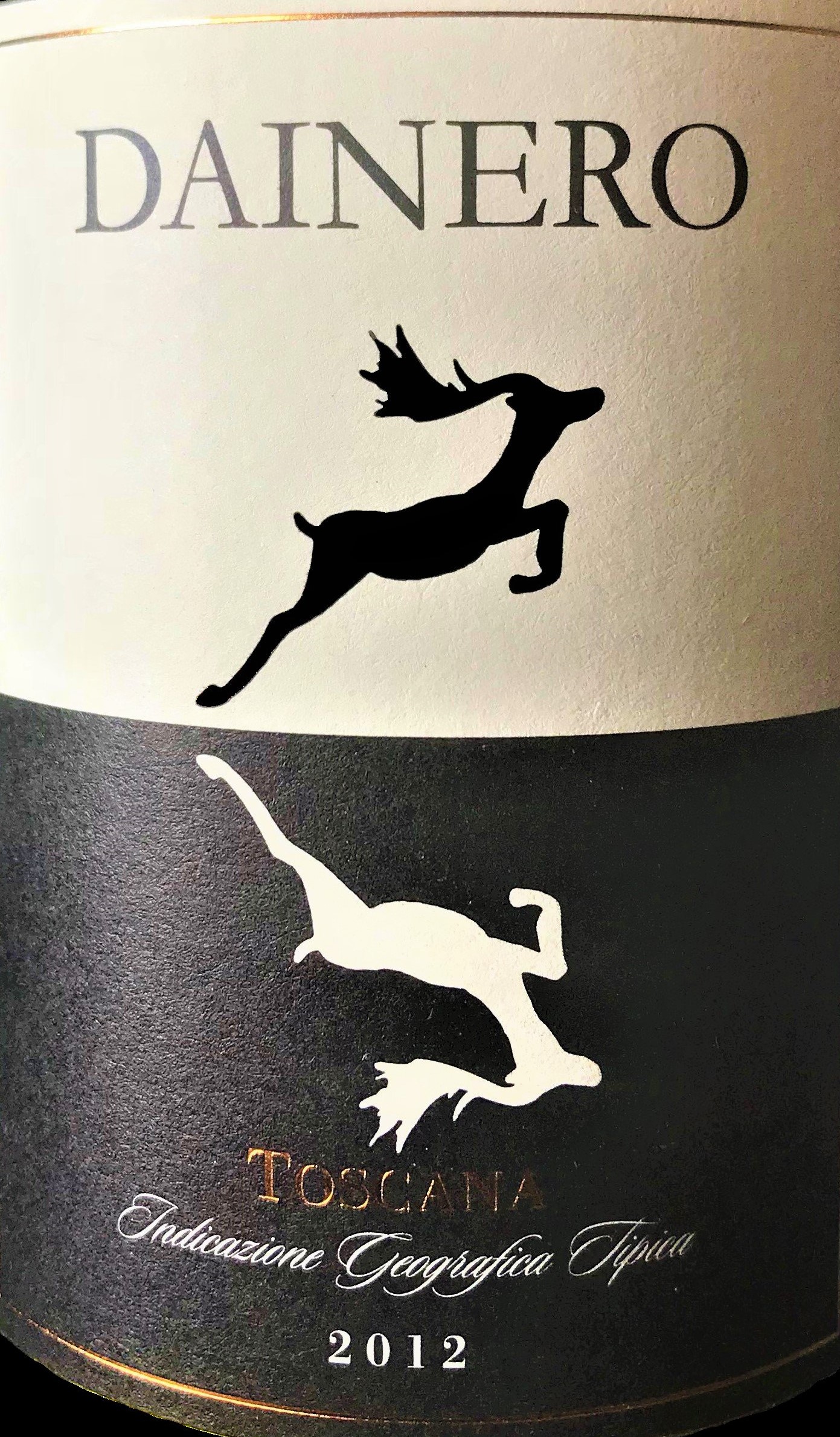
Castiglion del Bosco Dainero 2012

W Dainero 2012Merlot from Riparbella, Pisa, Tuscany, Italy
90% merlot

10% sangiovese

13.5% alcohol

Purchased: 6 March 2017  –  $16.99

Opened: 28 Feb 2018

els: 8.5/10

James Suckling: 92

Wine Spectator: 90

Cellar Tracker:84

Tuscany, a central Italian region bounded by the Tyrrhenian Sea on the west and the Apennines Mountains on the east, is a name synonymous with Italian Renaissance art, ancient history, landscapes of exquisite beauty, and wine. Its wine history dates back to the enigmatic but successful Etruscans in the 8th century BC, growing rich by trading their wine with the Gauls to the north and the Romans and Greeks to the south and east. The aura and renown of Iron Age Tuscany wine secured its perpetuation through the endless generations of Romans, Christian monks, Florentine merchants, Medicis, Hapsburgs, Bourbons, Bonapartes and todays modern Italians. Good wine and time immemorial happily going hand in hand.

Tuscany has the third highest quantity of acres planted in vines in the country but because of its extremely poor soils and the wine makers emphasis on lower yields, it is only sixth in volume, producing just shy of 300,000,000 liters of wine in 2016. The area has a plethora of DOCG and DOC wine regions plus 5 IGT sub-regions that will bewilder even the most diligent and attentive of students and that’s before the Super Tuscans enter into the smorgasbord of categories; all with their rules about grape varieties and percentages spread over a bursting profusion of wineries and vineyards. The better known regions include: Brunello di Montalcino producing rich, full-bodied sangiovese wines; Chianti and Chianti Classico producing the famous medium-bodied wines; and Bolgheri, the region that first produced the well received Super Tuscans.

Merlot is the 3rd most planted grape in the world and 5th most common in Italy. It is one of the primary grapes for Bordeaux blends and is very popular as a stand alone variety. It is a dark blue to purple grape with a soft, velvety structure with medium tannins and low acidity, producing dark fruity flavors.

Sangiovese is the most planted grape in Tuscany and all of Italy, deriving its name from the Latin for the “blood of Jupiter”. It is possible that this grape dates back to the time of Etruscans and is closely related to the Ciliegiolo grape. A sangiovese wine has an earthy cherry flavor that readily acquires a taste of vanilla and oak after aging in barrels.  The tannins are not too strong but the acidity is high.

The Castiglion del Bosco traces its heritage back to 1100 AD when the castile was built and in the 13th century the family owners added stone walls around the castile. Skipping forward a few years to 1967 the estate joins with a few other local families to found the Brunello di Montalcino wine association. Brunello eventually becomes one of the first Italian wines to be granted the DOC and DOCG categories. Massimo Ferragamo, in 2003, purchased Castiglion del Bosco to add to his winery in Riparbella. By the end of the decade he has added guest villas and a golf course to the Castiglion del Bosco estate.

Dainero is produced from the grapes grown at Castiglion del Bosco’s 25 acres of vineyards at Riparbella, less than 8 miles from the western coast and just north of the Bolgheri wine region. The vineyards are located within the wide-ranging Toscana IGT appellation. The vineyards enjoy an Mediterranean  to a sub-continental climate with cool ocean breezes drafting over the 1475′ above sea level west-facing, vine-covered hills.  The iron-rich, alluvial, clayey soils containing metamorphic gravels and pebbles, ensure that the vines are well-drained, healthy and stable. The vineyards are planted with Merlot, Cabernet Franc, Cabernet Sauvignon, and Petit Verdot. The diurnal growing season temperature-range for the vineyards is 50-85ºF with rainfall averaging 3-4″ per month.

The Merlot grapes were harvested during the first part of September while the Sangiovese grapes were harvested during the last part of this month. The grapes are processed at the Castiglion del Bosco cellars. After sorting the grapes they are gravity fed into steel tanks and fermented for 15 days at 82ºF .  The wine spends 6 months in French oak barrels, 30% of which is new and 70% old.  The wine then spends 6 months in the bottle before it’s marketed to the public.

A ruby-red wine trending towards purple with a tawny rim. Aromas of black fruits, currants, and spice. A medium to full-bodied, balanced and structured, but somewhat thick in the mouth.  The tannins and acidity are working well together producing a slightly sharp and long finish. I rated this wine at 8.5/10 mainly because I believe it is past its prime, not as clear and crisp as it should be.  The wine likely peaked about a year ago.

Enjoy this wine with a dish of spaghetti and Italian sausage.  A platter of hard cheeses would also do this wine justice.

A good wine that you shouldn’t spend more than $10 on. Drink this year. Decant and aerate for one hour, or more, before drinking.

$9.99-20.24 wine-searcher.com


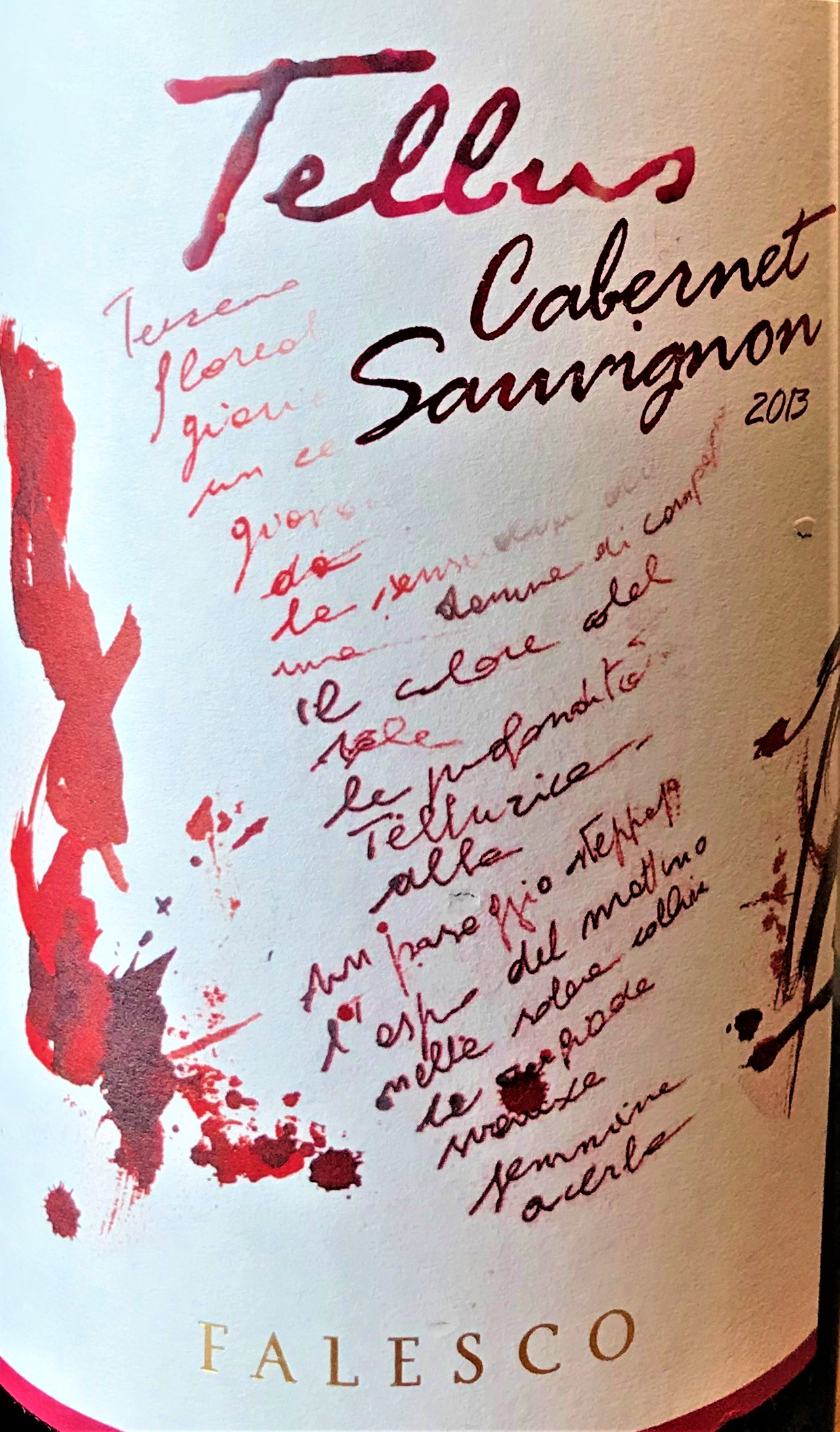
Falesco Tellus Cabernet Sauvignon 2013

W Tellus 2013Cabernet Sauvignon from Montecchio, Terni Province, Tiber Valley, Umbria, Central Italy, Italy

100% cabernet sauvignon

13.4% alcohol

Purchased: 6 March 2017 – $14.99

Opened: 18 Feb 2018

els: 8.9/10

James Suckling: 92

Wine Advocate: 90

Wine Spectator: 88

Cellar Tracker: 87

Umbria in central Italy is one of the 20 political regions and also one of the 20 wine regions in Italy.  This land-locked area is one of the smallest wine regions, 15th by vine acres planted, and 17th by wine volume produced, in Italy and is totally eclipsed by its larger and more famous adjacent northern neighbor: Tuscany.  This wine region maintains 4 levels of quality: DOCG, DOC, IGT, and table wine. The region grows Sangiovese and Sagrantino in profusion but recently, better known, non-indigenous grapes have successfully taken root in the area such as: Chardonnay, Pinot Nero, and Cabernet Sauvignon. The wine region is famous for its Orvieto wine, a sweet or a dry white wine blend of lesser known grapes such as: Procanico, Verdello, Grechetto, Canaiolo Bianco, and Malvasia Toscana.  This wine is named after the town of its origin, which is also the home of Nobelist: Enrico Fermi.

Cabernet Sauvignon is a cross, believed to have occurred naturally sometime in the 1600s in France, between Cabernet Franc and Sauvignon Blanc grapes. It is now the most widely planted grape in the world. In terms of acreage planted in this grape, Italy has the 8th largest plantings in the world, behind Argentina and ahead of South Africa. A thick-skinned grape that’s relatively easy to grow and maintain, exhibiting high tannins and acidity, along with cool climate-grown aromas of peppers and currants.

Brothers Riccardo and Renzo Cotarella, founded the Falesco winery in 1979 near the southwestern edge of the Umbria region. Falesco provides wines to Leonardo LoCascio Selections, a Winebow Group company that imports and distributes the family’s wines in the US.  The winery produces 4 IGT wines: Chardonnay, Merlot, Cabernet Sauvignon and a white blend. Additionally it produces a DOC white blend based on the Trebbiano grape.

The vineyards are located about a half mile east of the Tiber river and 4 miles west of the Apennines Mountains. There are 925 acres planted with various grapes which produce 2.6 million bottles of wine every year. The Cabernet Sauvignon grapes are grown on 25 acres of calcareous clay at 990′ feet above sea level. The growing season diurnal temperature range is 55-85ºF.  Rainfall is plentiful during the growing season ranging from  1.5-5.5″ per month.  Occasionally, there may be a few days of snow in January or February but it doesn’t accumulate and it shouldn’t have any lasting detrimental affects on the vines.

The grapes are picked in early September then fermented and macerated for 15 days in stainless steel tanks. The wine is then racked into oak barrels for malolactic fermentation. A final 5-month racking, before bottling, occurs in new, 60-gallon French oak barrels. The winery targets a production of 80,000 bottles for this wine. These are young vines and 2013 was the first crop and vintage for the Tellus, a Latin word for Earth, Cabernet Sauvignon label. Not a bad first effort.

A ruby-red wine with a garnet rim. Aromas of blackberries and plums, with a hint of vanilla and spice. A medium-bodied wine with mellow tannins. A very nice, medium finish.

A good wine at a fair price. Try with a traditional Umbra dish of truffles pasta. An easy dish of fettucine, shallots, heavy cream, truffle shavings, truffle butter and butter.  Add some spicy meatballs on the side to complete the meal. Drink now, but should last until 2020-2023.

$10.89-21.99  wine-searcher.com