Exploration 21: Change in the Weather

Change in the weather, change in the weather
Something's happening here
Change in the weather, change in the weather
People walkin' 'round in fear
Change in the Weather-John Fogerty-Eye of the Zombie (Album)-1986

Weather and climate are often confused as being the same, but they are definitely not the same. Weather is what you worry about when you’re planning a trip to the beach or a hike in the mountains. Weather patterns occur for a few days, a few weeks, maybe even for a few years then those patterns dissipate, and everything reverts to the mean. The 1930s, in the plain states of North America, experienced a prolonged drought, hot temperatures, and high winds, putting dirt into everything everywhere. These conditions lasted about a decade then the weather returned to what most would call normal conditions. Exceptionally cold winters show up every 20-40 years, lasting until you finally decide to move to Florida and then they’re over.

The point is that weather events can set temperature and precipitation records for that day or that year but then it all settles down with a retreat from the extremes back to normal conditions. This is not a change in climate, just a change in the weather.

Climate is a long-term event that has a period of at least 30 years and usually a lot longer and the changes tend to last for 100s of years. Climate is something you shouldn’t worry about. It may impact your grandchildren or great grandchildren, but you are going to live out your life in blissful happiness of carping about the rainstorm ruining your tennis game and succulents, but it will not be an end of life as you know it or your life, or your neighbor’s life, just another day riding out the storm. Then it’s gone.

When the climate does change volcanoes seem to have an overwhelming part to play in initiating the change. To cause climate change really big explosive volcanos are needed, not the run of the mill Mt. St. Helens or Mt. Pinatubo variety. They were spectacular for sure, and they did drop the temperatures for a year or two, but they were not climate changing volcanoes. On the Volcanic Explosive Index scaled from 1-8, 8 being an absolute monster, Mt. St. Helen and Mt. Pinatubo were mere kiddies throwing tantrums, only VEI 5 and 6s, respectively. Big but the grownups just smile at their antics.

Climate changing volcanoes need to be rated in the 7 and 8 categories. These VEI 7 and 8 volcanoes eject 100-1000s of cubic kilometers of material into the troposphere and stratosphere affecting climate for 100s or years. One VEI 8 volcano can likely initiate global cooling by itself, but VEI 7 volcanic eruptions will likely need an assist from several smaller volcanic eruptions to affect climate change. There have been no VEI 8 volcanoes in the Holocene and only 4 VEI 7 volcanoes have erupted in the last 10,000 years: Mazama 5700 BC, Kikai 4300 BC, Samala 1257 AD, and Tambora 1815 AD.

Tambora cooled the Earth by about 5.5 degrees Fahrenheit and led to a year without summer in 1816. This year was also referred to as “Eighteen Hundred and Froze to Death” and the “Poverty Year” because of the extreme weather conditions. In New England, for instance, six inches of snow fell in June and every month of the year had a hard frost. These conditions led to hoarding and significant price increases for agricultural commodities, causing many people to go hungry. It is estimated that tens of millions of lives were lost to the volcano, either directly from the explosion or indirectly from starvation due to crop failures and disease. Tambora was a massive volcano but even it by itself was insufficient to cause any lasting climate change. A few years after Tambora or for that matter, Mazama and Kikai, the weather returned to normal. Samala is a different matter and it’s discussed below.

Be happy, don’t worry. Below are some examples of when the climate really did change and luckily for us, we are not due for anything life changing for a few hundred more years.

Pre-Holocene and Holocene Climate Changes:
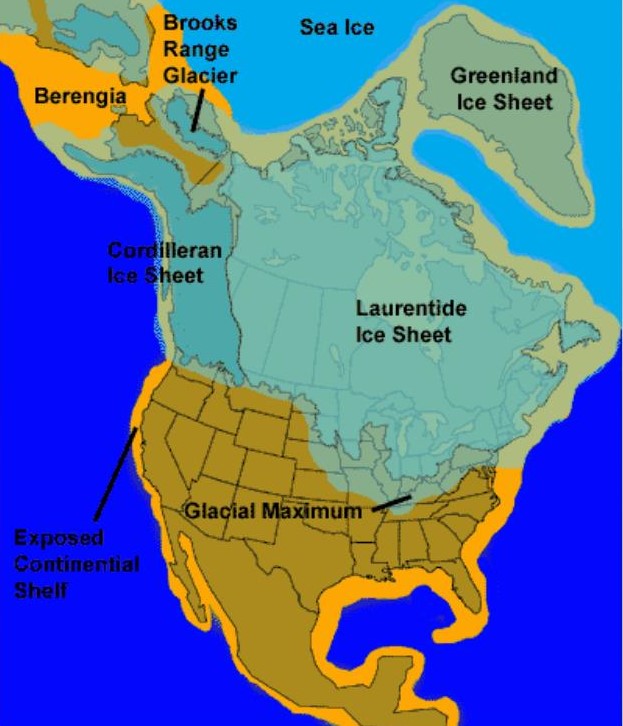
FootNoteA
  • The Wisconsin glaciation, North America’s last occurrence of continental glaciers, began between about 100,000 and 75,000 years ago and ended about 11,000 years ago. At its peak, the ice sheets, in places almost 2 miles thick, covered most of Canada, the Upper Midwest, and New England, as well as parts of Idaho, Montana, and Washington. The Cordilleran Ice Sheet, which covered the area between the Rocky Mountains and the Pacific coast, had expanded south as far as the state of Washington. The Laurentide Ice Sheet, which covered the eastern four-fifths of the continent, had advanced as far as southeastern South Dakota, northern Iowa, central Illinois, Indiana, Ohio, and northern Pennsylvania and New Jersey. The Earth’s tilt is one of the likely contenders for the formation of Wisconsinian glaciers although some speculate it may have been due to a decrease in CO2.
  • The Last Glacial Maximum, LGM, the greatest extent of the Wisconsinan ice sheets, occurred approximately from 26,000-20,000 years ago. The beginning of the end of the LGM in the northern hemisphere commenced around 20,000-19,000 years ago with the West Antarctica ice sheet starting to decline in size around 15,000-14,000 years ago. The West Antarctica melting of the glaciers led to a rise in the sea levels of approximately fifty feet in three hundred years. The current rate of sea level rise is approximately 14 inches per 100 years. The seas from 14,000-6500 years ago rose 360 feet due to world-wide melting of the Wisconsinian aged glaciers. The melting of glaciers from the LGM is attributed to changes in the Earth’s orbit or more solar energy hitting the northern hemisphere, along with the rise in CO2 which came from the overturning of the deep waters in the Southern Ocean.
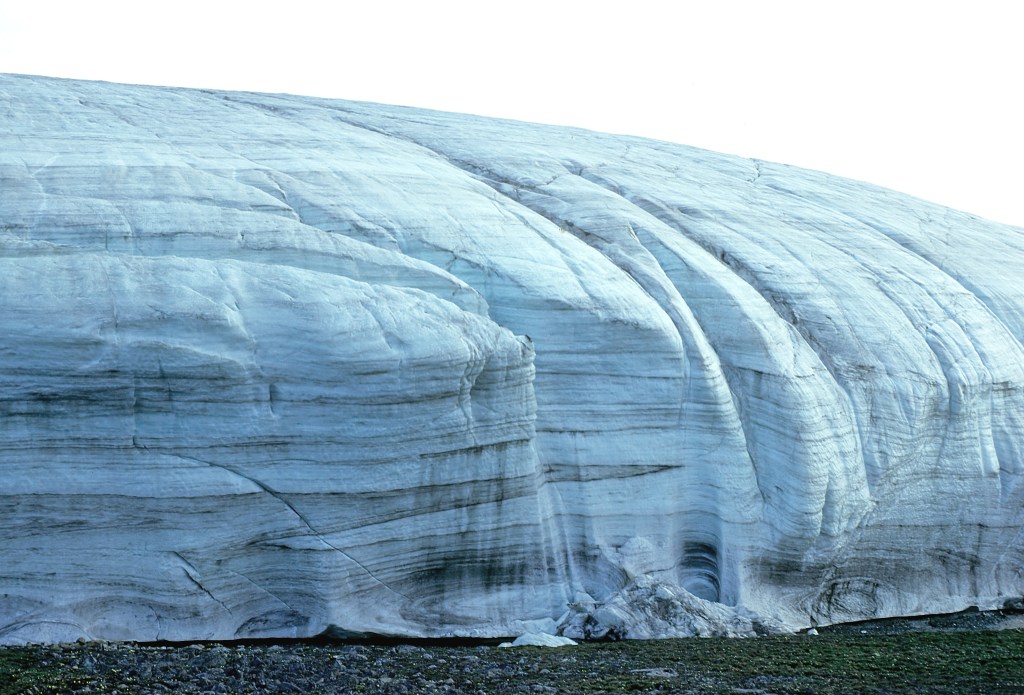
FootNoteB
  • The Younger Dryas period saw a return to glacial conditions approximately 12,900-11,700 years ago. During this time, temperatures fell 7-18 degrees Fahrenheit, with this drop occurring within one hundred years; overnight in geological time. There is no consensus on the cause of this return to glacial conditions but two of the leading contenders are enormous amounts of fresh water from melting glaciers mixing with the sea water causing the ocean currents to slow down, leading to a cooler Europe and North America along with increased Arctic Sea ice. It is also believed that increased fresh water into the seas can also cause warming, so scratch your head and buyer beware. The other possibility is increased volcanic activity.
FootNoteC
  • The Neoglacial Period occurred about five thousand years ago, around the time of the beginning of the Early Dynastic Period in Egypt and continued until the medieval warm period. During this period glaciers advanced globally. Temperatures were thought to be about 0.5-degree Fahrenheit cooler than today. The 26,000-year Milankovitch cycle is thought to be the cause of cooling. This cycle affects the tilt of the Earth and thus the amount of sunlight reaching the planet’s poles.
  • The Medieval Warm Period (MWP) or the Medieval Climate Optimum or the Medieval Climatic Anomaly, occurred from approximately 950-1250 AD. It is predominately a Northern Hemispheric event that raised temperatures 3- or 4-degrees Fahrenheit. Europe during this period reported alpine tree lines rising in elevation and increased crop yields. Why MWP occurred is poorly understood and potential causes include increased solar activity and or reduced volcanic activity. This period was followed almost immediately by the Little Ice Age.
  • The Little Ice Age was a time of regional cooling beginning in the 14th century and continuing into the mid-19th century or 1300-1850. Evidence from glacial advances throughout the world suggests that the cooling did not occur at the same time everywhere. The cooling is estimated to have been 2-3.5 degrees Fahrenheit lower than present temperatures. Various theories have been brought forward for why the temperatures dropped during this period but heightened volcanic activity is the favored cause. On the island of Lombok in Indonesia in 1257 the volcano Samalas erupted with a VEI of 7, making it one of the largest volcanic explosions in the last 10,000 years. Before and after Samala erupted another three smaller volcanic eruptions in 1230, 1276, and 1286 followed suit which likely led to increased cooling due to excessive volcanic material in the troposphere and stratosphere. These smaller eruptions are inferred from other data, but the exact volcanoes are unknown.
  • The Modern Warm Period followed the Little Ice Age, and the Earth is still in the midst of this climate period.

References and Readings:

FootNotes:

  • FootNoteA: Extent of Wisconsinian Glaciers. Idaho Museum of Natural History. No date
  • FootNoteB: Ellesmere Island Glacier. By Matti&Keti, and Lorenz King. Wikipedia. 1978
  • FootNoteC: Mt. Fuji. By Dall E 3. 2024

Explorations 12: If I had a Hammer

If I had a hammer
I’d hammer in the morning
I’d hammer in the evening
All over this land

Songwriters: Lee Hays and Pete Seeger.

Seeger and Hays’ ‘If I had a Hammer’, a song about justice and freedom, was first played by the writers at a testimonial dinner in 1949 supporting the US Communist Party. 1949 was the same year Seeger finally wised up to his former friend, and hero Joseph Stalin, disowning him for being the butcher that he had been all along. The song was eventually rebranded to support the civil rights and labor movements of the 1950s and 60s. After the Civil Rights Act of 1964 and Lyndon Johnson’s mid-sixties Great Society War on Poverty programs passed at the Federal level, the song found a new home among the environmentalists. With only a hammer in your fist all the world’s problems big, small, and imagined are nails.

Below are a few recent and past headlines concerning climate change which taken in aggregate are a mash of the silly. Climate change in today’s jargon, by the way, equals global warming. Models of any kind, whether on population, food, weather, climate, prices, crime, are not reliable more than a few years into the future and in the case of weather a few days at most.

Fresh water is bad.

Small Lakes Keep Growing Across The Planet, And It’s a Serious Problem

Science Alert reports (5 December 2022): “A new study has revealed that small lakes on Earth have expanded considerably over the last four decades – a worrying development, considering the amount of greenhouse gases freshwater reservoirs emit.”

Frozen fresh water is good, but it could turn into fresh water.

Climate Change: Kilimanjaro’s and Africa’s Last Glaciers to go by 2050, Says UN

BBC reports (3 November 2022): “Glaciers across the globe – including the last ones in Africa – will be unavoidably lost by 2050 due to climate change, the UN says in a report.”

Salt water is good.

Great Salt Lake Could Disappear by 2027 Researchers Warn

Axios reports (9 January 2023): “If the Great Salt Lake continues to shrink at its current rate, it could disappear in the next five years, according to researchers from more than a dozen universities and environmental organizations.”

Salt water is double good because it’s main use is to make frozen water for Hollywood A-listers.

36 Year Timelapse Shows How Much The Great Salt Lake Has Shrunk

Unofficial Networks reports (5 May 2022): “The Great Salt Lake has decreased twenty feet in elevation from the record high set in 1985 to the record low achieved last year. … Pray to whatever god, gods, higher power, or whatever you believe in. Utah, and the American west need water, badly. (Editor’s note: the Great Salt Lake is not a source of drinking or irrigation water, but it is the primary source of water for the snow that falls on the Sundance Resorts. When it melts in the spring it turns into bad fresh water.)

Frozen fresh water is still good, and fortuitously the bad fresh water will take longer to appear.

Half of World’s Glaciers will Vanish by Year 2100 Due to Global Warming, Study Says

UPI reports (6 January 2023): “Half of the world’s glaciers will melt and disappear before the turn of the next century, according to alarming new research that predicts greater fallout from global warming despite meaningful efforts in recent years to address environmental concerns.

Frozen fresh water is still good even if you must admit your models are bad.

Glacier National Park is Replacing Signs That Predicted Its Glaciers Would be Gone by 2020

CNN reports (8 January 2020): “The signs at Glacier National Park warning that its signature glaciers would be gone by 2020 are being replaced.

The signs in the Montana park were added more than a decade ago to reflect climate change forecasts at the time by the US Geological Survey, park spokeswoman Gina Kurzmen told CNN.

In 2017, the park was told by the agency that the complete melting off [sic] of the glaciers was no longer expected to take place so quickly due to changes in the forecast model, Kurzmen said.”

Frozen water could be bad when it appears but it’s hard to tell because the models are not good.

Snowfalls are Now Just a Thing of the Past

The Independent reports (20 March 2000): “Britain’s winter ends tomorrow with further indications of a striking environmental change: snow is starting to disappear from our lives. …Heavy snow will return occasionally, says Dr. Viner, but when it does we will be unprepared. …Snow will probably cause chaos in 20 years’ time, he said.”

Fact or Fiction

After the Ice: A Global Human History, 20,000-5000 BC B After Ice 2003

Written by:  Steve Mithen

Published by:  Harvard University Press

Copyright:  © 2003

The Earth has experienced at least 6 major episodes of glaciation in the past. Three in the Pre-Cambrian, which is a time older than 0.542 billion years (Ga) and three in Phanerozoic, a time younger than 0.542 Ga. All appear to have had a profound effect on life on Earth; not so much the beginning of  any particular ice age but what occurred when the glaciers melted. The first glaciation, Pongola, occurred from approximately 2.9 to 2.75 Ga. The end of this glacial period saw a build up of oxygen in the oceans until it reached critical levels and began charging the atmosphere. Around 2.45 Ga, oxygen levels reached levels sufficient to cause cooling of the Earth, by removing greenhouse gases, and thus starting the second glacial period, the Huronian from 2.4 to 2.1 Ga. Shortly before or after the glaciers melted, around 2.2 to 1.6 Ga, eukaryotes, cells with a nucleus, appeared. Eukaryotes are everywhere, you, your cat, your flowering plants that your cat eats, the spiders in the corner of your bedroom that your cat will not eat, everywhere. Next up is the Cryogenian, a glacial period in Earth’s history occurring from 0.720 to 0.635 Ga. Shortly after they melted, the ozone layer was created, a cloak desperately needed to protect life from the harmful rays of the sun.  The Cambrian Explosion of life followed the ozone creation.  Moving on to the next glacial, the Andean-Saharan, occurring from 0.450 to 0.420 Ga, predominately in the Silurian Period but also sucking up some of its predecessor’s, the Ordovician, time. This glaciation is followed by significant accumulation of life, plants and animals, moving beyond strictly marine habitats to occupy solid land and Amazon distribution centers. The Karoo Ice Age, from 0.360 to 0.260 Ga, is followed by the largest extinction event this planet has ever seen, occurring at the end of the Permian and the beginning of the Triassic.  At this point glacial melting does not appear to be the causative event for the extinctions but may have provided a nudge. The final event, known as the Quaternary Glaciation, started 2.58 million years ago and is still active today. Currently we are within what is called an inter-glacial period. These inter-glacials are preceded and followed by glaciers marching towards and receding from lower latitudes.  Note to self and you: these glacial periods last much, much, much longer than 2.58 million years. With the exception of Antarctica and Greenland, the current set of glaciers reached their maximum extent about 20-25,000 years ago and have slowly retreated, essentially disappearing  by 9600 years ago. Around 25,000 years ago, human populations started to increase.  By 9600 years ago his technological progress exploded.

Dr. Steven Mithen, the author of After the Ice, attempts to record our history from when the ice sheets began their retreat to the time the Sumerians first developed a system of writing 5000 years ago, a period partially covered by what we now call with the broad brushed term; pre-history.  Dr. Mithen primarily uses an archeologist’s box of tools to decipher ancient Homo sapiens sapiens style of living, their diet, housing, religion, culture; their existence and growth as a species, all from a time when our ancestors were not consciously plastering their material world with sticky notes.

After the Ice is a global tour of archeological finds and their interpretations, from our hunter-gather roots in the Pleistocene to a more sedentary and cosmopolitan life as a farmer, artist, city-dweller; parsing one continent at a time. There is little in the way of original research in this book, more a compendium of secondary source material, known sites, and the results obtained from them. Exactly what I was looking for when I picked up this book to read.

The author covers most of the major sites and imparts to us what all the shell debris, bone carvings, and flint scrapings mean. He does this beautifully and when confronted with differing possible interpretations, he carefully constructs a point-counterpoint argument to help resolve the issues.  His discussion and synopsis of the initially controversial, Monte Verde site in Chile, which ultimately pushed humanity’s origins in the Americas back about 2500 years, from Clovis times to 14,500 years ago, was expertly relayed to the reader, leaving little room for alternate meanings: a real education one may add.

This book and author excel when relating the artifacts found and their possible meanings and its thoroughly fascinating stuff, but he manages to turn the affair into an awful, muddled mess of narrative excess by introducing a time-traveling archaeologist, John Lubbock, to add color to the play-by-play.  John Lubbock, who actually was an eminent archeologist in the late 1800s, observes humans at various times and places in our pre-history, providing second person comments on the existing state of humanity and the world.  It’s all a bit much and very distracting, annoying even.  An all too common example; meaning to give an example, I just opened the book, put my finger down and copied whatever was there:

Lubbock left the cave at Lukenya Hill with a hunting party late one afternoon.  As they walked, spider’s webs within the grass were illuminated by the setting sun, momentarily exposed in a narrow band between clouds and distant mountains.

Keep in mind this happened 1000s of years before writing was invented so this is little more than pure unadulterated fiction. To add authenticity and license to his fiction he occasionally appends a footnote. And it’s liberally interspersed throughout the book amounting to equal parts Lubbock fantasy to Mithen facts.  Take out Lubbock and the book goes from a blathering 600 pages of confusion to 300 pages of something that may be worth reading. Mithen just can’t seem to make up his mind, does he want to write a factual history or historical fiction.  Actually he did make up his mind, he decided to do both.

I initially tried to skim Lubbock’s narrative and just stick with Mithen’s discussion but the author so intertwines them both that bypassing one makes nonsense of the other. This could have, should have been a great book dealing with the world’s archeological quest to unravel our past.  There are moments in the book where Mithen brings his and his colleagues’ science to life but in the end it just too dang hard to enjoy the meat when he coats the entire thing in Lubbock’s wispy, sticky cotton candy.

I am once again on the lookout for a decent account of humanity’s pre-history.