It Rhymes

The adage, History doesn’t repeat itself, but it often rhymes, or less succinctly, historical, and current events may not unfold in the same manner, but they often follow similar patterns or themes. As an example, the rise of authoritarianism usually follows, and rhymes, with the erosion of democratic norms, intolerance of dissent, animosity towards religious or ethnic minorities, economic instability, isolation of true democratic countries, and war.

This quote is often attributed to Mark Twain but no collaborating evidence for him saying exactly this has ever been found. He did say something similar, in a novel he wrote with Charles Warner, the 1874 The Gilded Age: A Tale of To-Day that “History never repeats itself, but the Kaleidoscopic combinations of the pictured present often seem to be constructed out of the broken fragments of antique legends.” The quote in its entirety is sentence that Twain could never write, it had to have come from his co-author.

Austrian American psychoanalyst Theodor Reik, a student of Freud, published an essay in 1965, “The Unreachables” where he wrote: It has been said that history repeats itself. This is perhaps not quite correct; it merely rhymes. There are recurring cycles, ups and downs, but the course of events is essentially the same, with small variations. It has been said that history repeats itself. This is perhaps not quite correct; it merely rhymes.

Regardless of whomever said, History doesn’t repeat itself, but it often rhymes were astute observers of history and life.

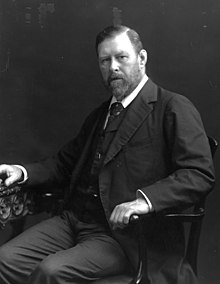
Source: Quote Investigator, 2014. Graphic: Publicity photo of Reik, 1920s, public domain.

Anna Karenina

Happy families are all alike; every unhappy family is unhappy in its own way.” So begins Leo Tolstoy’s epic 19th century Russian novel, Anna Karenina. A beginning line that is not only one of literature’s great openings, but it indubitably stages an existential story that transcends time, culture, and humanity: a diegesis of love and misery.

Love and misery where mental and societal control is lost to emotional need. When Anna’s lover, Vronsky, pleads with her to respect her mother’s needs and his duty, she snaps, “Respect was invented to cover the empty place where love should be. And if you don’t love me anymore, it would be better and more honest to say so.” (chapter 24)

Anna Karenina through time has consistently ranked as one of the greatest novels ever written. Encyclopaedia Britannica lists it as the number one novel of all time.

Sources: Leo Tolstoy, Anna Karenina, serialized in 1875, published in book form in 1878. Plath et al, The 100 Greatest Literary Characters, published in 2019. Enclyclopaedia Britannica, 12 Novels Considered the “Greatest Book Ever Written”, by Jonathan Hogeback.

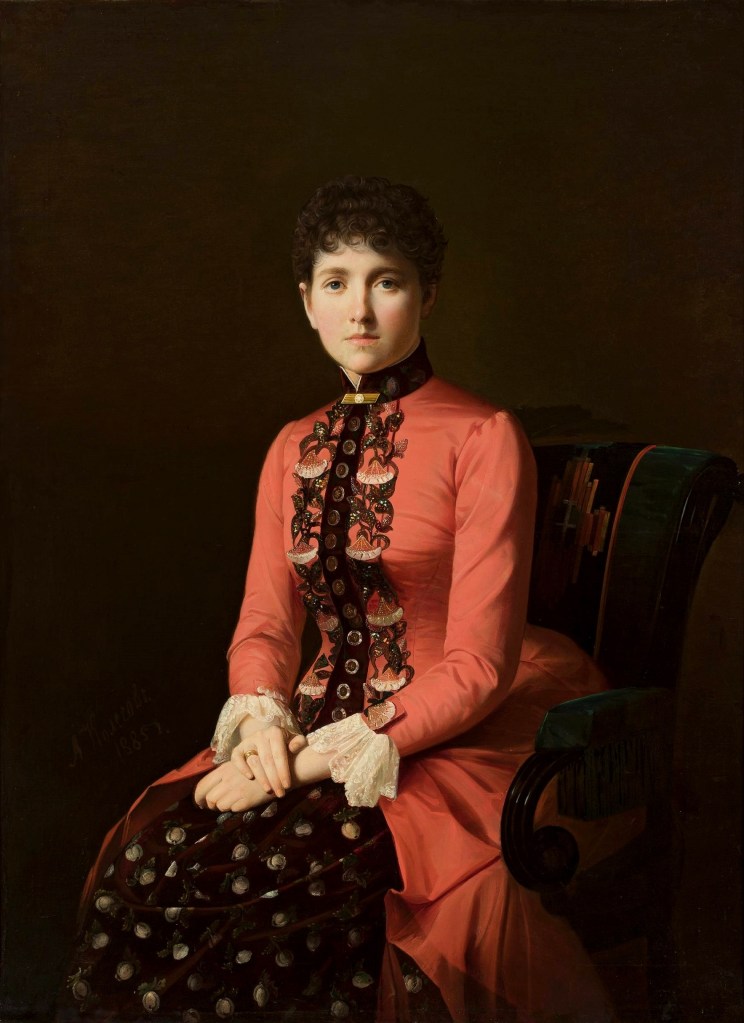
Aleksey Kolesov, “Portrait of a Young Woman” (Anna Karenina), 1885. Public domain, via Wikimedia Commons

Frankenstein, or The Modern Prometheus

It was the year without summer. During the year 1816, temperatures in Europe were the coldest of any recorded between 1766 and 2000. Across the pond in New England frost occurred every month of the year and six inches of snow fell in June. Crops failed, food was scarce, and people died unpleasantly premature.

There was no summer that year because in 1815 the Indonesian volcano, Mount Tambora, had a fit and blew its top, more or less straight up into the stratosphere. The amount of material injected into the upper atmosphere blocked the sunlight and caused global cooling.

Meanwhile, not to let bad weather forestall important matters, Lord Bryon while vacationing in Geneva, challenged his two companions, Percy Shelly, and Mary Godwin, the soon to be Mary Shelly, to a contest of who could write the best ghost story. Lord Bryon and Percy soon abandoned the project, but Mary persevered and published her Frankenstein two years later, giving birth to the monster with no name, countless movies, myths, legends, and frightful nights for children everywhere.

In the tenth chapter of her epistolary novel, Frankenstein, or The Modern Prometheus, we finally meet her fictional monster to learn not only that it lives, but it also speaks grammatically correct King’s English. Shelly cast her monster as Lucifer from the pages of Milton’s Paradise Lost. The monster, addressing its creator, Victor Frankenstein, speaks of profound loneliness, “The fallen angel becomes a malignant devil. Yet even that enemy of God and man had friends and associates in his desolation; I am alone.”

In the end the monster wishes to die but the author leaves those matters in the reader’s hands.

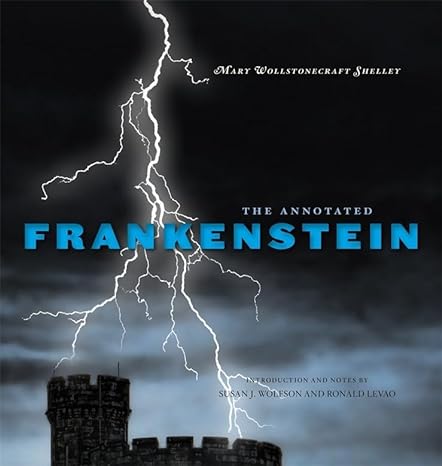
Sources Frankenstein by Mary Shelly. First published in 1818. The 100 Greatest Literary Characters by Plath et al, published 2019. Cover from a 2012 edition of Frankenstein shown below.

Great Characters in Fiction: Captain Ahab

“I’ll chase him round Good Hope, and round the Horn, and round the Norway Maelstrom, and round perdition’s flames before I give him up.” – From Chapter 36-The Quarter-Deck of Melville’s Moby Dick. Published 1851.

FootNoteA

“Some know him by his peg leg…Others by the white scar that runs head to toe, the result of an unfortunate encounter witha lightning bolt. Still others by his entourage of harpooner henchmen with names like Fedallah, Daggoo, Tashtego, and Queequeq.

Mostly, readers know him because he’s shorthand for any intense, self-destructive fixation…

He, of course, is Captain Ahab…”

Excerpt from “The 100 Greatest Literary Characters”. By Plath, Sinclair, and Curnutt. 2019.

FootNoteB:

The book also has one of the great opening lines in all of literature: “Call me Ishmael.” The narrator introduces himself to the reader in three words. How simple and straightforward can one get? In a few more lines he sets the stage for how he will tell his story. “With a philosophical flourish Cato throws himself upon his sword: I quietly take to the ship.”

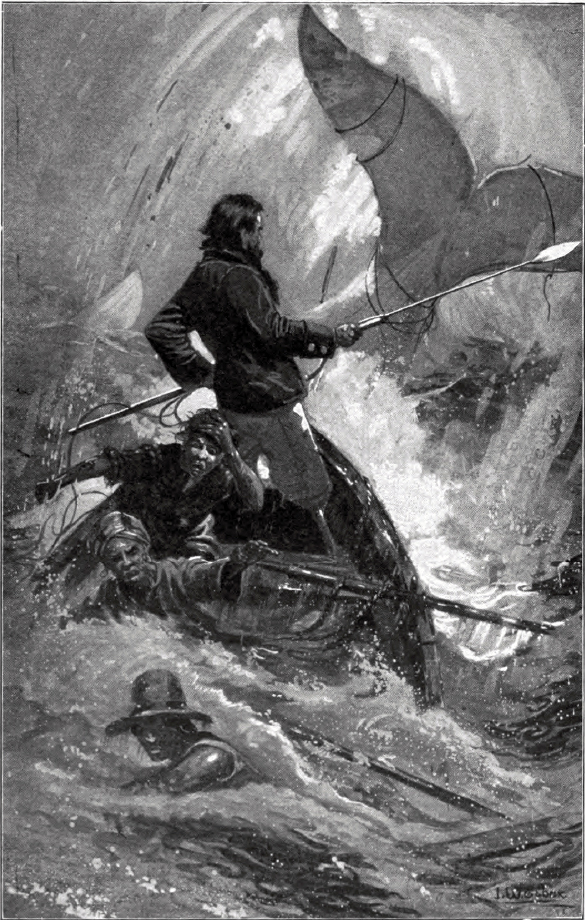
FootNoteA: Illustration of the final chase of Moby-Dick. By I.W. Taber. 1902. In Moby-Dick. Charles Scribner’s Sons, New York. Public Domain.

FootNoteB: Illustration below from an early edition of Moby Dick – 1892. C.H. Simonds Co. Public Domain.