Black swans are rare and unpredictable events, what the military calls “unknown unknowns“, that often have significant, domain-specific impacts, such as in economics or climate. Despite their unpredictability, societies tend to rationalize these occurrences after the fact, crafting false narratives about their inevitability. COVID-19, for instance, ripples across multiple domains, beginning as a health crisis but expanding to influence the economy, legal systems, and societal tensions. As a human-made pathogen, its risks should have been anticipated.
Black swans throughout history are legendary. Examples include the advent of language and agriculture, the rise of Christianity (predicted yet world-changing), and the fall of Rome, which plunged the Western world into centuries of stagnation. Islam (also predicted), the Mongol conquests, the Black Death, and the Great Fire of London shaped and disrupted societies in profound ways. The fall of Constantinople, the Renaissance, the discovery of America, the printing press, and Martin Luther’s Reformation brought new paradigms. More recently, the Tambora eruption (“the year without a summer”), the Great Depression, WWII brought unforeseen disruptions to economies and geopolitics, the Manhattan Project, Sputnik, the fall of the Berlin Wall, and the rise of PCs and the internet altered the trajectory of human progress. Events like 9/11 and the iPhone have similarly reshaped the modern world. While black swans may be rare, they are not inevitable. We should expect moments of dramatic collapse or unanticipated brilliance to recur throughout history.
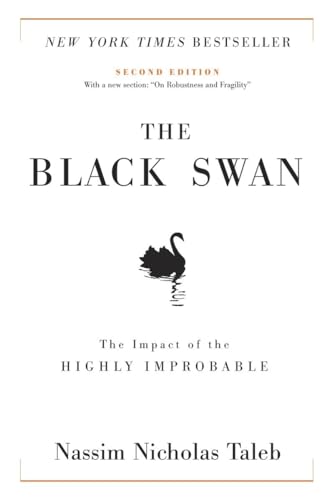
Nassim Taleb, author of the 2007 book The Black Swan, suggests several approaches to mitigate the effects of such events without needing to predict them. His recommendations include prioritizing redundancy, flexibility, robustness, and simplicity, as well as preparing for extremes, fostering experimentation, and embracing antifragility: a concept where systems not only withstand shocks but emerge stronger.
Through the lens of history, black swans appear as a mix of good and bad, bringing societal changes that were largely unanticipated before their emergence. As history has shown, predicting the impossible is just that: impossible. What might the next frontier be, the next black swan to transform humanity? Could it be organic AI, a fusion of human ingenuity and machine intelligence, unlocking potential but posing profound risks to free will, societal equilibrium, and humanity’s very essence? (Next week—preparing for a black swan: an example.)
 elsToday