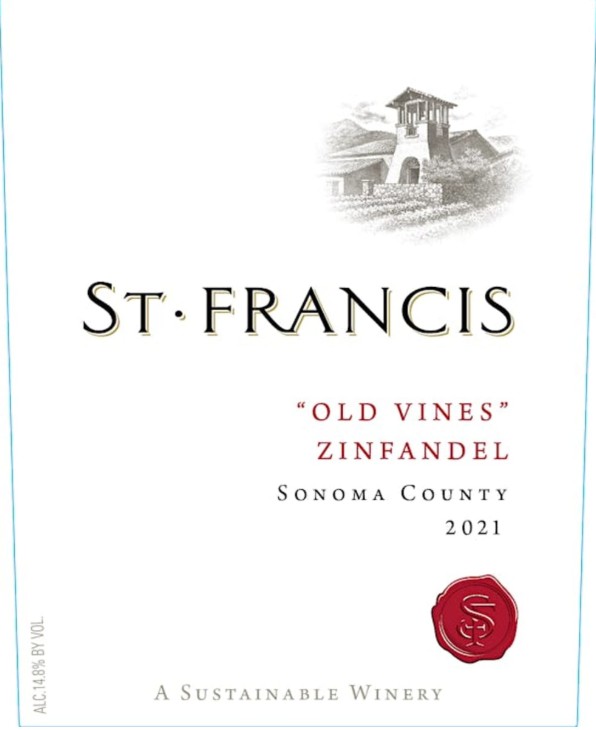
Zinfandel from Sonoma County, California
Zinfandel 83%, Petite Sirah 17%
Purchase Price $19.99
Wine Spectator 90, Wine Enthusiast 88, ElsBob 88
ABV: 14.8%
A clear, crisp ruby red wine with sparkling flavors of cherries and raspberries. Medium-bodied with a fairly short finish. Will pair well with rich spicy foods.
A very good fine wine but overpriced at $20. A fair price would be $12 or less. Current prices $16-20.
Trivia: The St. Francis Winery sources its old‑vine Zinfandel, 60 to 100 years old, from a mosaic of small, family‑owned vineyards across Sonoma County, including some of its own estate parcels. Dry Creek Valley, Russian River Valley, and Sonoma Valley are the classic AVAs for old vine Zinfandel, and no single winery holds enough old‑vine acreage to produce a meaningful volume alone. St. Francis relies on long‑standing relationships with these growers, making this wine neither a négociant bottling nor a strictly estate‑grown one, but a true grower‑partner expression.
The winery takes its name from St. Francis of Assisi, the patron saint of animals and the nature. Themes of reverence for creation, harmony with the land, and care for living things shape the winery’s identity.
St. Francis of Assisi founded the Order of Friars Minor, the Franciscans, and inspired both the Poor Clares and the Third Order for laypeople. He embraced absolute poverty as the spiritual core of his movement. In 1224 he received the stigmata, becoming one of the earliest and most famous stigmatics in Christian history. His life remains a model of humility, peace, and solidarity with the poor, a faithful imitation of Christ. This ideal of poverty has deep roots in Christianity. In the early Church, renouncing wealth was a way of rejecting the Roman system of power and status. The Desert Fathers of the 3rd to 5th centuries carried this impulse into the wilderness of Egypt and Palestine, seeking God in radical simplicity. For them, poverty created an interior stillness: freedom from the noise of desire (from material possessions), a state they called apatheia. The word is Greek, meaning “without passion,” but in the ancient world it carried a positive sense of clarity and freedom rather than the negative connotation the modern term “apathetic” suggests.

