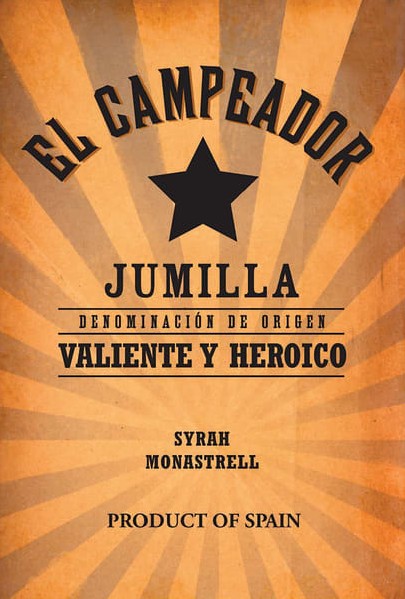
Artiga & Fustel El Campeador 2022

Other Red Blends from Jumilla, Spain

Syrah 50%, Monastrell 40%, Cabernet Sauvignon 10%

Purchase Price: $11.99

James Suckling 90, ElsBob 91

ABV 14.5%

A dense dark purple color, medium to full body, aromas of black fruit and spice. On the palate it is acidic, noticeable tannins but smooth, with a long finish.

An excellent fine wine at a great price. Recent prices are in the $14-17 range. Drink now. Cheers.

Trivia: Jumilla is a wine DO of the Murcia region near the Mediterranean in southeastern Spain. Monastrell (Mourvedre) is the dominant grape grown in this hot, arid region. In good years the DO produces about 100 million bottles of wine but the area has experienced severe droughts for the last couple of years and as such yields have decreased by 50-80%. 2024 yields supplied enough grapes to produce approximately 45 million bottles of wine. On the brighter side the grapes were said to have achieved “perfect ripeness” but with only average sugar levels.

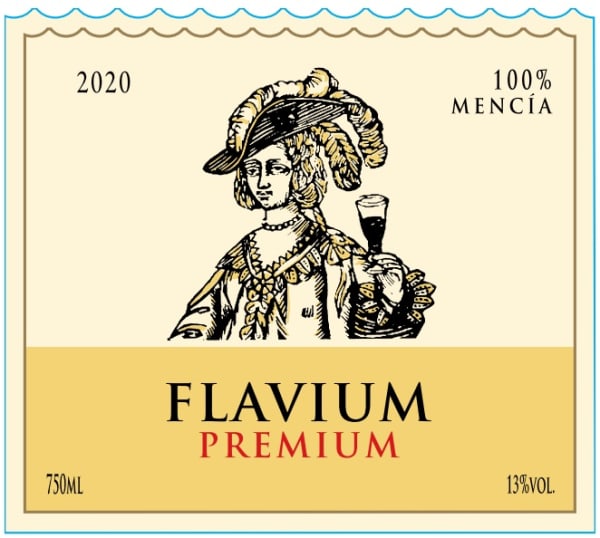
Vinos de Arganza Flavium Premium Crianza Mencia 2020

Mencia from Bierzo, Spain

Purchase Price: $12.99

James Suckling 90, ElsBob 90

ABV 13.0%

A deep garnet color with aromas of black fruits, plum, and spice. Medium-full body, medium acidity, tannic with a hint of black pepper and slate. Will pair well with red meat and spicy vegetable dishes.

An excellent table wine at a great price. I’ve seen this wine listed as low as $11—well worth picking up a few bottles at that price. Drink now. Cheers.

Trivia: Bierzo is Spanish DOP wine region in northwest Spain that has grown grapes since the time of the Greeks and Romans, but it was the monks of the Middle Ages who brought the area viticulture into prominence. Currently the DOP has 1030 growers and 74 wineries, covering less than 6000 acres, producing in aggregate about 7 million bottles of wine each year.

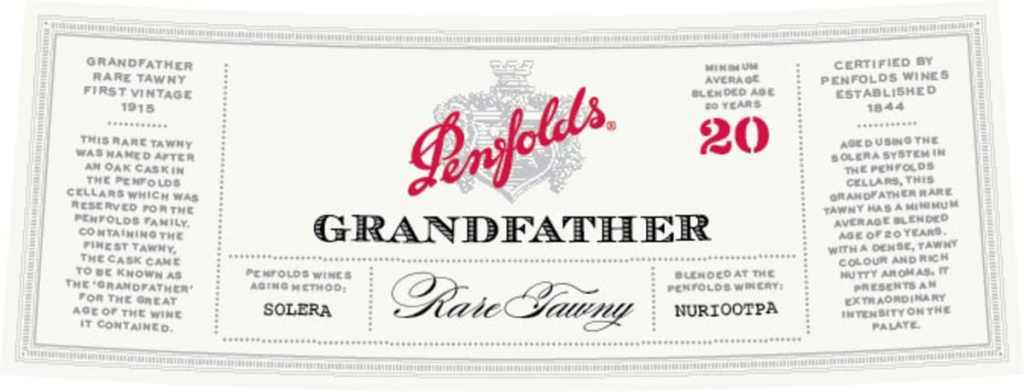
Penfolds Grandfather Rare Tawny

Port from Australia

Predominately but not limited to Shiraz, Grenache, Mataro, and Cabernet

Purchase Price: $99.99

ElsBob 92

ABV 19.0%

A deep tawny color with aromas of licorice and raisins, full-bodied, sweet with a long finish. A perfect after dinner dessert wine.

An excellent non-vintage port at a fair price. If you look around, you might find it for about $80. Drink now. Cheers.

From Penfolds Overview: With each vintage, varietal batches are selected for Grandfather. These batches are individually aged in seasoned old oak casks before being blended together at 14 years of age. This blend is then introduced into the ‘Grandfather Solera’. This Solera consists of six stages that are designed to fully integrate all components offering consistency and freshness with a final minimum average blended age of 20 years. (Ed. Current vintages in the Solera range from 1960-2004.)

World’s Best Vineyard 2024

The World’s Best Vineyards, known for curating exceptional wine tourism destinations, publishes an annual list of the top vineyards worldwide. Their selections highlight not only wine quality but also the visitor experience, including tastings, accommodations, and unique attractions at the vineyard and in its surrounding area.

For 2024, the title of the best vineyard in Europe, and the world, has been awarded to Bodegas de los Herederos del Marqués de Riscal, situated in the small but charming town of Elciego, Spain, at the southern edge of the Rioja Alavesa wine region in northern Spain.

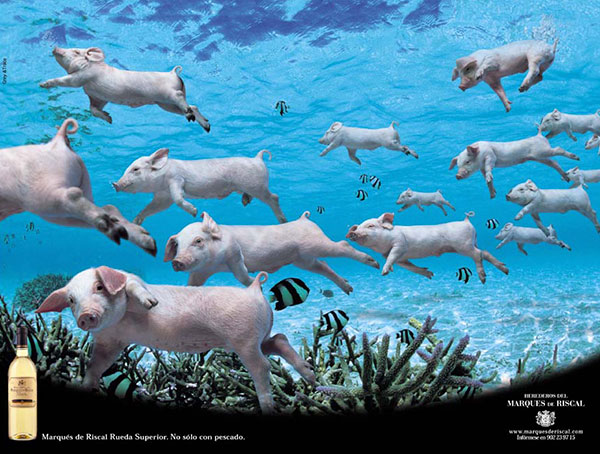
With a legacy spanning over 160 years, the vineyard and winery trace their origins back to 1858. Their first Rioja wine was produced just four years later, in 1862. For over a century, Marqués de Riscal crafted only red wines until they daringly broke with tradition and local reverence in 1972 by introducing their first white wine from Rueda. This leap into white winemaking is honored on their website with a whimsical and enigmatic photograph of the swimming pigs of the Bahamas. The choice of imagery invites unlimited speculation: pigs fly, pigs swim, white wine in Rioja, let your imagination freely wander.

In 2006, Marqués de Riscal expanded its offerings with the inauguration of the City of Wine, a striking complex featuring a hotel and entertainment facilities crowned by a “billowing titanium and stainless-steel roof;” designed by architect Frank Gehry. Visitors to the City of Wine can immerse themselves in the vineyard’s rich history and culture while enjoying luxurious relaxation at the Spa Vinothérapie Caudalie, fine dining at multiple restaurants, shopping at the wine boutique, or even celebrating their love with a wedding, perfect for couples old and young.

Oh, and enjoy the wines: Tempranillo, Tempranillo Blends, Tempranillo/Graciano, Garnacha/Viura, Verdejo, and Sauvignon Blanc. The Marques de Riscal Reserva Rioja’s (Tempranillo) various vintages are consistently rated in the 88-91 range and sell for about $25. Cheers.

Source: World’s Best Vineyards. Marques de Riscal Vineyard. Graphic: Swimming Pigs of the Bahamas.

Bottle Bottoms

The bottom of your wine bottle is more varied and interesting than one would initially expect. They come flat, convex, textured, embossed, thickened, punted, and two-tiered. As varied as Samwise Gamgee’s potato servings.

Starting with the easiest to manufacture and thus likely the cheapest is the flat bottom wine bottle. And because it doesn’t conform to historical and aesthetic traditions it’s also the rarest. The flat bottom is more likely to be encountered in the spirit world, but Aldi-Chapter and Verse and Garcon wine labels sell flat bottoms, generally to the casual wine enjoyment crowd, with wines rated as good in the 83–85-point range. Interesting enough Garcon bottles with flat bottoms are also squashed into a flat oval like a quarter mile running track, so they fit into UK letterbox openings.

Although rare, a very slight convex bottom is also used on some bottles, mostly liqueurs such as Galliano for aesthetic reasons. The bottles that employ this feature require some additional features to keep them upright on store shelves.

Textured and embossed bottoms are a common feature in the fine wine market. The textured bottoms are mainly for stability, keeping the bottle in one place on a wet surface such as bar or table. Occasionally practical details such as volume or manufacturing symbols are embossed on the bottom of the bottle, with higher end wines also adding in branding, batch numbers, and other unique marks.

Thickened bottoms are usually restricted to bottles needing extra stability when standing upright or to supply structural support for wines under pressure such as Champagne or Prosecco.

Which brings us to the ever-present punt on the bottom of almost all retail wine bottles. They have been in use for centuries creating the classic lost-to-the-past conundrum of why it was there in the first place. This forgotten history has created myriad possibilities for the small inward cone at the bottle’s base. In manufacturing the punt ensures a more consistent base plus it makes the bottle stronger. On the practical side it is theorized that the punt helps collect sediment at the bottom, improves grip on the bottle, or it helps create the illusion that the bottle has a larger volume.  Then there is aesthetics, a punt just looks cool. In the end no one knows why it exists, but everyone has a theory.

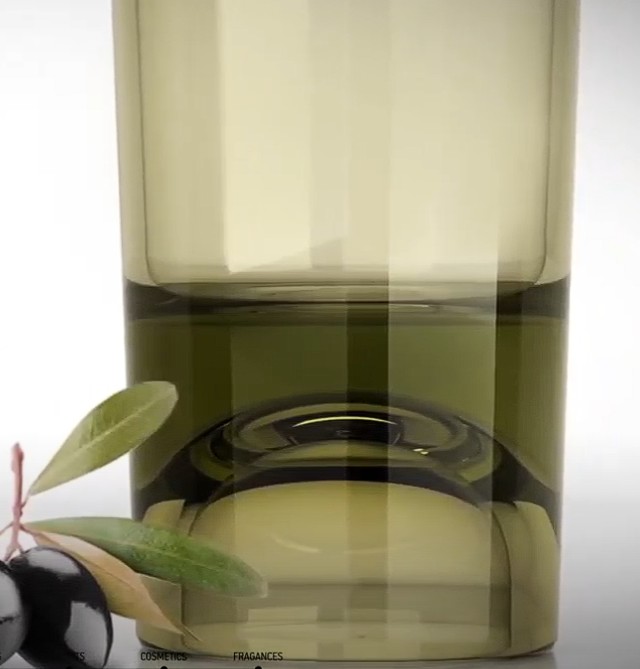
Finally, there are two-tiered bases where a flat bottom covers over the punt creating a hollow enclosed cavity. An example is the DobleAlto dual tiered base bottle that mixes and matches the order of the punt and flat bottom such as shown in the graphic where the flat bottom is above the punt. The two-tier base may have been invented for structural integrity reasons but most likely it was a way to make a product stand out from its competitors.

Getting to the bottom of bottoms is an involved process. Happy investigations and cheers.

Graphic: DobleAlto bottle from Global Package.
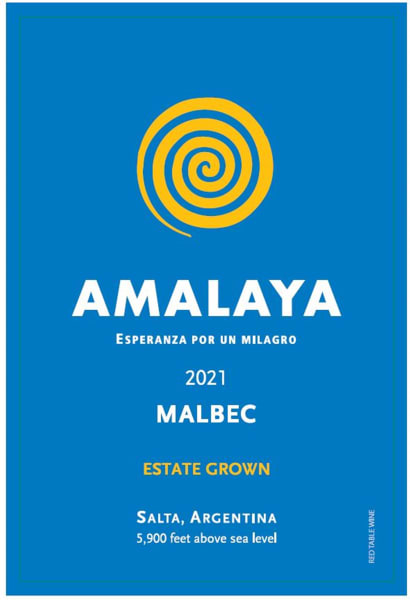
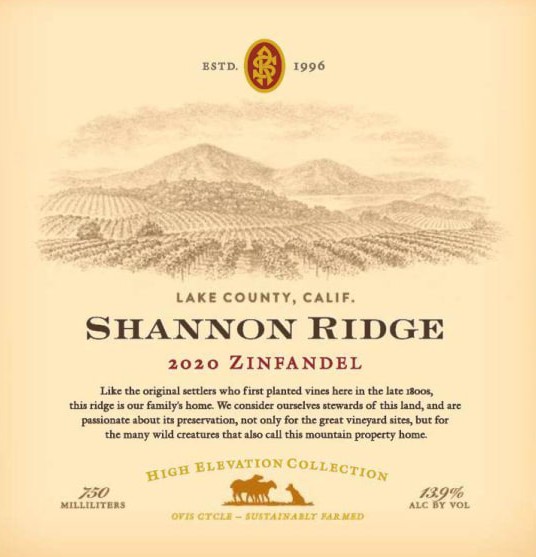
Shannon Ridge High Elevation Zinfandel 2020

Zinfandel from Lake County, North Coast, California

Purchase Price: $11.99

Wine Enthusiast 92, ElsBob 91

ABV 13.9%

Aromas of red cherry, blackberry and spice; full-bodied, semi-dry, soft to medium acidic, with smooth to moderate tannic, peppery finish. Will pair well with beef or chicken and, better yet, as an accompaniment to a cheese, grape, and salami board.

A very good fine wine, remarkable priced. I’ve seen it retail recently for $17 which is still a great price for this wine.

The First English Wine Auction

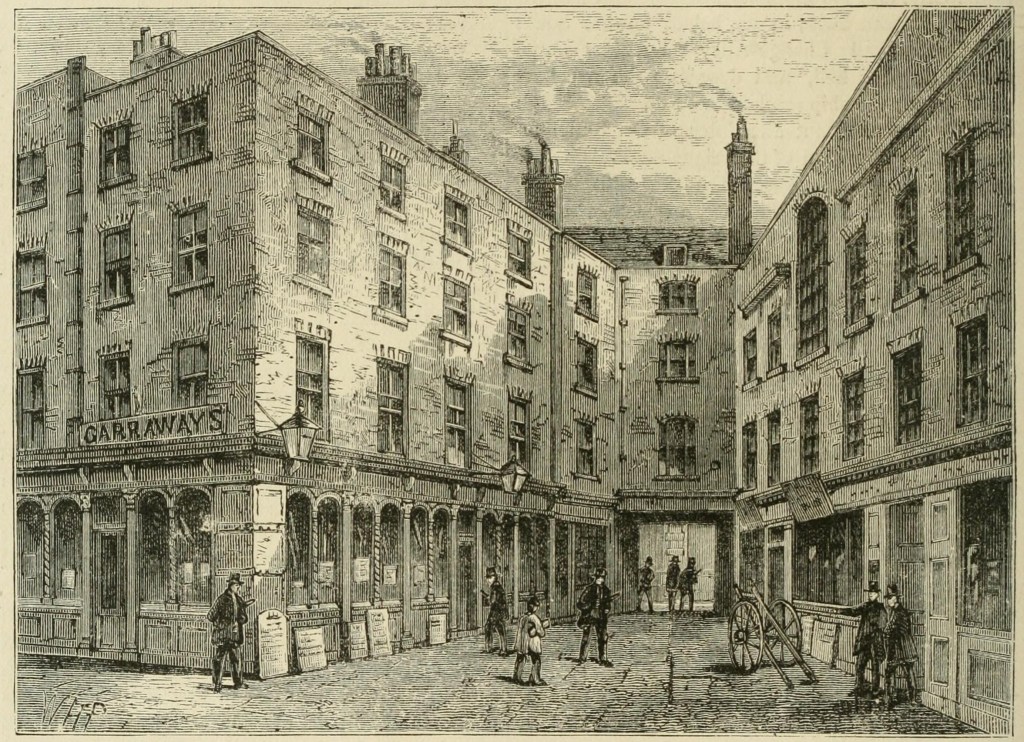
On 20 February 1673, London’s Garraway’s Coffee House, located just north of London Bridge and the Tower of London, held the first recorded wine auction in England. Instead of the traditional “going, going, gone” and a bang of a gavel method, this auction was conducted “to the candle.” In this form of bidding, participants could place bids until a one-inch candle burned out, which typically took only a minute or two. The purpose of this method was to create an unpredictable end time, preventing last-second bids and encouraging bidders to make their best offers early.

London coffee houses in general, and Garraway’s in particular, served as trading houses for commodities and shares. At Garraway’s, tea merchants and trading shares in companies associated with South Sea trade were the main order of business. All that remains today of the coffee house is a plaque informing the public that people of quality frequented this area.

Trivia: Garraway’s Coffee House appears in at least two of Charles Dickens’ novels: The Pickwick Papers and Little Dorrit. In Chapter 37 of The Pickwick Papers, Samuel Pickwick meets his lawyer, Mr. Serjeant Snubbin, at Garraway’s to discuss his case, where he is being sued by his landlady for breach of promise. The opposing lawyer for the landlady is the theatrical blowhard, Mr. Serjeant Buzfuz. Dickens remains the absolute master of character names. In Chapter 21 of Little Dorrit, Arthur Clennam visits “wharves, docks, the Custom House, Garraway’s Coffee House, and the Jerusalem Coffee House” as he attempts to piece together his family’s business and financial affairs.

Source: This Day in Wine History. Novels of Dickens. Wikipedia. Graphic: Photo of Garraway’s Coffee House, 1873. Public Domain.

Old Soul Petite Sirah 2021

Petite Sirah from Lodi, California

Purchase Price: $12.99

Wine Enthusiast 91, ElsBob 90

ABV 14.5%

Purplish red in color, aromas of black fruits, full-bodied, semi-dry with a tannic finish. The high tannic finish makes it a difficult sipping wine but will pair nicely with spicey, fatty foods. Try it with barbecued beef ribs or roasted pork.

An excellent fine wine at a very reasonable price. Petite Sirah is some of the best value wine on the market.

Trivia: Petite Sirah is a cross between Syrah and the very rare grape, Peloursin. It is called ‘petite’ because of its small grapes. The wine is one of the most opaque varietals known, with a cloudy look suggesting that it should be filtered but that’s just a natural characteristic of the wine.

Top Six Wine Varietals by Volume Sales in the US for 2024

  1. Chardonnay – The white for the win. Chardonnay is the most planted grape in the world. Wine label shown is a 98-100 rated 2022 Chardonnay from Argentina priced around $140.
  2. Cabernet Sauvignon – Always popular, this red comes in a close second. The grape is a cross between Cabernet Franc and Sauvignon Blanc.
  3. Pinot Grigio/Gris – A dry, acidic favorite among white wine enthusiasts. Pinot Grigio and Pinot Gris are the same grape, just with an Italian and French name, respectively.
  4. Merlot – High sales volume but not necessarily high dollar amounts compared to other wines on this list. Merlot is more affordable due to higher yields, it can grow almost anywhere, and it doesn’t need to be aged as long as Cabernet Sauvignon.
  5. Sauvignon Blanc – Increasing in popularity every year. A lighter-bodied white with more acidity than Chardonnay.
  6. Pinot Noir – Consumers love this wine’s complex flavors. It’s a medium dry, medium-bodied wine that ages well and makes for a nice sipping wine.