The Art of Growing Without Burning Out: A Realistic Guide to Sustainable Self-Improvement

(Note: The following is a guest post by Emilia Ross. She is a life coach who specializes in helping individuals navigate their personal and professional lives. Visit her site at Schedule-Life.com)

TL;DR

Self-improvement isn’t a sprint; it’s a system. Focus on progress over perfection, rest as a form of discipline, and build structures that sustain growth instead of draining it. Below you’ll find a mix of checklists, tables, and insights to help you evolve without self-destructing.

Why Self-Improvement Sometimes Backfires

Let’s face it: the culture of constant optimization can turn even the most grounded person into a restless machine chasing “better.” Motivation spikes, then collapses. Rest feels like regression. Sound familiar?

That’s because burnout is often disguised as dedication. Sustainable personal growth demands balance — between doing and being, striving and stillness.

Quick Reference Table: Burnout vs. Balanced Growth

DimensionBurnout ModeBalanced Growth Mode
Energy UseConstant output with no recoveryAlternates exertion and rest intentionally
Goal DesignPerfectionism & endless listsDefined milestones and review pauses
Emotional StateIrritable, anxious, detachedCurious, reflective, emotionally steady
Feedback LoopValidation-seekingLearning-oriented
Core Belief“I must do more.”“I can do better sustainably.”

The Core Mindset Shift

Think in systems, not goals. Systems (habits, environments, routines) reduce decision fatigue and preserve energy. A system can include:

  • Morning ritual to anchor focus
  • Sleep/wind-down hygiene
  • Scheduled reflection every Sunday
  • Weekly “digital detox” hour

Resources like Evernote can support structured consistency — just don’t let the tool become another task.

Self-Improvement Without Overwhelm: Mini-Checklist

  1. Define one “north star” outcome — not ten micro-goals.
  2. Design micro-habits that take <10 min (e.g., journaling one line).
  3. Schedule recovery as non-negotiable.
  4. Rotate focus — physical → mental → social → creative.
  5. Reflect weekly: What worked? What felt forced?
  6. Reassess quarterly — evolution beats escalation.
  7. Celebrate plateaus; they’re proof of consistency.

Use free habit-tracking tools like Loop Habit Tracker or community boards on Coach.me to visualize patterns.

FAQ

Q: Isn’t taking breaks just procrastination?
 A: Not if it’s deliberate. Strategic rest prevents cognitive depletion — the silent killer of motivation.

Q: How do I know I’m improving at all?
 A: Track lagging indicators (energy, sleep, joy) instead of vanity metrics like hours worked.

Q: What if I lose momentum?
 A: Adjust, don’t abandon. Momentum dips signal recalibration, not failure.

Q: Can structure kill creativity?
 A: Only rigid structure. Think of it as rhythm — predictability that frees mental space.

How-To: Build a Sustainable Growth Loop

  1. Audit your baseline. Where do your time and attention go? Try a week with RescueTime.
  2. Identify friction points. Which habits drain vs. feed you?
  3. Prototype a single change. Treat habits like experiments.
  4. Automate stability. Use reminders, not willpower
  5. Review outcomes monthly. Journal with prompts like “What made me feel lighter this month?”
  6. Iterate. Drop what doesn’t serve. Multiply what does.

Education as a Catalyst for Growth

Continuous learning doesn’t just sharpen skills — it deepens self-trust. Formal education can act as structured self-improvement when balanced with life’s demands. Earning a degree can enhance career mobility, improve confidence, and create networks that accelerate opportunity.

For those balancing work and growth, an online degree offers flexibility without losing rigor. You can learn more about programs that strengthen competencies in systems, networking, scripting, and data management — particularly useful if cybersecurity or IT leadership is part of your professional evolution.

Spotlight Product: Calm’s Daily Move

Integrating physical and mental alignment boosts sustainable growth. Apps like Calm’s Daily Move combine micro-workouts with mindfulness cues — five-minute sessions that regulate your nervous system, not overclock it.

Conclusion

Self-improvement that lasts feels quiet, not frantic. It’s a slow accumulation of small, reversible experiments that expand capacity rather than deplete it. Growth done right feels like breathing: effort, release, repeat.

BLS or BS Employment Statistics

Every first Friday of the month markets gather like sinful parishioners awaiting Pavlov’s bell, the gospel according to the Bureau of Labor Statistics (BLS). The numbers descend from the mount, etched in holy government letterhead. Jobs added, jobs lost, unemployment rate up, unemployment rate down, labor force swelling or shrinking. And the market screams, up or down, as if the deity of statistics has spoken to the profits of capitalism.

Expectations unmet? The elevator drops. Expectations exceeded? Euphoria ascends. Every stinking first Friday the ritual repeats. Buyers and sellers beware.

The markets, seasoned by countless cycles of god-awful truth and revision, know the numbers are suspect. Model-based, massaged and provisional, destined for downward revisions not once, not twice, but likely thrice. And everyone knows this. Logic says to remain circumspect. Religion says yell hallelujah.

But they react like Charlie Brown charging towards Lucy’s planted football, full of conviction and hope that this time it’s real. No, it’s a con of smoke and mirrors, a ritual sealed with a wink and nod from Lucy. A trust not earned.

For Charlie Brown, it’s not just a kick, but a ritual of belief. A sprint to a promise of truth and redemption. This first Friday, the numbers will be true. This time the markets aren’t the chump. But then the revisions put you flat on your back in the muddy turf.

This isn’t market ignorance, just the willful need to believe. To believe in a clear signal in a noisy world. Maybe this Lucy keeps her word. Maybe this time the BLS can count timecards.

The U.S. labor market is a statistical mirage and the BLS is the magician. A clumsy one at that. Given the scale of the U.S. labor force the BLS sample is statistical noise superimposed on a trendline, and the trend itself shaped by the unreliable Birth-Death Model.

The Birth-Death Model estimates job creation from new businesses (births) and closed businesses (deaths) that aren’t captured in their monthly survey sample. The BLS’s Current Employment Statistics (CES) survey covers about 122,000 businesses each month, but it can’t track firms that just opened or shut down. Since new firms don’t immediately appear in the sample, and closed firms may linger as ghosts in the data, the BLS uses a statistical model to estimate their net effect on employment.

The model has two main components. Imputed deaths are estimated from trends for similar firms. For example, if 3 out 4 newly created restaurants fail annually, the model adjusts employment accordingly. The other component forecasts net job changes using historical data from the Quarterly Census Employment and Wages (QCEW).

The model’s assumptions presume that today’s labor market mirrors yesterday’s. It somewhat works in stable times but thoroughly breaks down when the sharp kinks of recessions and recoveries are introduced into the system. Also, business owners fail to report their failures, quickly—go figure. BLS just finds it is too much work to keep track of them all. A brief detour, if you’ll indulge it, is worth mentioning here. I was standing in line at the local US Post Office and a customer in front of me, after much back-and-forth discussion, showed a photo of a misdelivered package to the postal clerk. The clerk lit up in cheerful vindication. “Oh that wasn’t us. We don’t have time to take pictures of our deliveries.” The BLS operates with similar blind spots. Ghosts in the data, and no time to chase them.

Now back to our regularly scheduled harangue. All the BLS assumptions in their Birth-Death Model leads to inevitable revisions. The model is the altar. The CES survey, is the smoke, wafting over a ritualized trend.

In practice, this means employment is overstated during downturns and understated during booms with the actual numbers taking another 3-12 months to correct. By then, the market had moved on. The altar cleared. The smoke dispersed. And the ghosts remain.

But there is hope, but only for the patient.

ADP, Automatic Data Processing, offers a monthly employment snapshot that often outpaces the BLS. Released each Wednesday before the government’s numbers, the ADP National Employment Report draws from payroll data covering 26 million workers. No government jobs. No statistical smoke. Just raw payrolls. It consistently lands closer to the QCEW gold standard, though still misses the mark, just not as wildly as the BLS.

Between March 2024 and March 2025, QCEW, the altar of actual payroll filings, reported a net gain of 675,000 jobs. BLS, guided by surveys and the Birth-Death Model, claimed 1.79 million. ADP, closer but still adrift, reported 1.69 million.

Together, ADP and BLS conjure the headlines that move markets. But their numbers are unreliable. Why bother? A million-job error in a labor force of 167 million is less than 1%. A rounding error. A statistical ghost.

Ghosts in the data. Smoke in the temple. Floating through the firmament. By the time the truth arrives the markets have moved on.

Building Confidence, Living Boldly: A Practical and Playful Guide to Becoming Your Best Self

(Note: The following is a guest post by Emilia Ross. She is a life coach who specializes in helping individuals navigate their personal and professional lives. Visit her site at Schedule-Life.com)

Confidence isn’t a personality trait — it’s a skill you can build. Whether you’re chasing a promotion, learning to dance, or just trying to quiet that inner critic, confidence grows from small wins compounded daily.
You don’t need to reinvent yourself. You just need to strengthen what’s already there — the habits, people, and moments that make you feel most alive.

The Takeaway
Confidence = habits + people + purpose.
Start small, speak kindly to yourself, set micro-goals, and spend more time around those who remind you who you are — not who you’re not.


How Confidence Works
Confidence grows from three layers of daily practice:

LayerWhat It MeansQuick Actions
MindTraining your thoughts to support, not sabotage you.Practice three minutes of gratitude journaling daily.
BodyMoving and nourishing yourself so your mind believes you’re capable.Go for a 20-minute walk or stretch after work.
CommunitySurrounding yourself with people who lift you.Schedule one call a week with someone positive.


FAQ – Confidence Myths Busted
Q1. Is confidence something you’re born with?
–No. It’s learned through repetition and reflection, like a muscle you strengthen over time.
Q2. What if I constantly compare myself to others?
–That’s normal. Shift from comparison to curiosity: what can you learn from them?
Q3. How do I stay confident when I fail?
–See mistakes as feedback, not failure. Every confident person has a “failure résumé.”

Step-by-Step Checklist: How to Boost Your Confidence

  1. Set one daily micro-goal.
    –Example: “Speak up once in today’s meeting.”
  2. Do something uncomfortable — on purpose.
    –Confidence grows when comfort zones shrink.
  3. Keep a “proof list.”
    –Record moments when you acted bravely or made progress.
  4. Declutter your digital world.
    –Unfollow accounts that drain you. Follow those that educate or inspire.
  5. Revisit your wins weekly.
    –Confidence thrives on reflection, not randomness

Make Connection Your Secret Weapon
Confidence isn’t built in isolation — it’s nurtured through connection. Invite friends over for a dinner, a movie night, or a simple get-together to celebrate everyday life. Spending time with people who make you laugh, listen, and care reminds you that you’re already enough.
To make your gathering special, use a free invitation maker to stand out. You can customize templates, adjust fonts, add images, and design something that perfectly matches your style. It’s easy, creative, and adds a personal touch to your confidence practice.

Helpful Tools and Resources
Here are some tools and platforms that can support your confidence journey:


Product Spotlight: The Momentum Journal
Sometimes structure helps. The Momentum Journal offers a clean, minimalist layout for tracking daily progress, gratitude, and personal wins. It’s designed to help you see your growth — a simple but powerful confidence booster. 

Seven Fast Habits for Everyday Confidence

  1. Smile at strangers.
  2. Speak slowly; it signals calm assurance.
  3. Wear something that makes you feel strong.
  4. Do one thing you’ve been avoiding.
  5. Compliment others sincerely.
  6. Stand or sit tall; posture changes perception.
  7. Celebrate small wins like big ones.

Confidence isn’t the absence of fear — it’s the courage to move forward despite it. Start small, stay consistent, and surround yourself with people and tools that help you grow. Your best life isn’t waiting for a perfect moment; it’s unfolding right now, one intentional, brave step at a time.

Managing Stress in Everyday Life: Strategies for Calm and Clarity

(Note: The following is a guest post by Emilia Ross. She is a life coach who specializes in helping individuals navigate their personal and professional lives. Visit her site at Schedule-Life.com)

Stress is an unavoidable part of modern life, affecting everything from focus and energy to overall well-being. The good news is that with the right strategies, it can be managed — even transformed — into a source of strength and clarity. By combining mindful awareness, physical movement, and small daily rituals, anyone can reduce overwhelm and regain control. This article explores proven methods to help you create calm, build resilience, and thrive amid life’s everyday pressures.


Quick Summary

Stress is a natural signal, not an enemy. When managed through awareness, structure, and small, consistent practices, it becomes a guide to better energy and focus. Core strategies include mindful awareness, physical activity, digital boundaries, and restorative routines.


Understanding Everyday Stress

Stress arises when your perceived demands exceed your perceived capacity. While occasional stress can improve performance, chronic stress erodes resilience. Learning to interpret and respond — not just react — is key.


The Foundations of Stress Management

1. Awareness First

Recognize your triggers. Start with a simple journal or app like Daylio to log moments of tension and what caused them. Awareness precedes regulation.

2. Physical Reset

Move your body regularly. Even a 10-minute walk, yoga session on Yoga With Adriene, or quick stretch can interrupt stress loops and lower cortisol.

3. Mental Reframing

Your interpretation drives your physiology. Practices like cognitive reframing teach you to challenge unhelpful patterns.

4. Social Anchors

Stay connected. Meaningful interactions — a chat with a friend, a shared meal — activate oxytocin, a natural stress buffer. Try setting small rituals like “Sunday check-ins” or joining supportive communities.


Checklist: Daily Stress Reset Protocol

✅ Breathe deeply for 2 minutes, twice daily
✅ Take one screen-free walk
✅ Replace doomscrolling with reading or music
✅ Hydrate before caffeine
✅ Schedule downtime intentionally
✅ Reflect before bed — one gratitude note


How-To: Build a Personal Stress Management Routine

  1. Identify Your Stress Type: Physical (tension, fatigue), emotional (irritability), or cognitive (racing thoughts).
  2. Set Micro Habits: Replace “I’ll work out daily” with “I’ll stretch for 5 minutes after waking.”
  3. Design Your Calm Space: Add soothing cues — natural light, calm scents, a playlist from Spotify’s Peaceful Piano.
  4. Track Feedback: Review weekly — what helped most?
  5. Adjust: Stress evolves. So should your system.

Table: Practical Methods for Stress Regulation

CategoryStrategyTools/ResourcesFrequency
PhysicalWalking, yoga, or light exerciseYoga JournalDaily
EmotionalJournaling or gratitude writingPenzu3x per week
CognitiveBreathing and reframingCalmDaily
SocialConnect with othersMeetupWeekly
EnvironmentalDeclutter, scent therapyIKEA Home InspirationAs needed

Safe, Natural Approaches for Relaxation

Beyond conventional stress relief, several natural approaches can help stabilize your mood and improve focus:

  • Ashwagandha: A well-researched adaptogen known to lower cortisol and improve resilience.
  • THCa: Found in THCa-based wellness products, it offers calming effects without intoxication, supporting relaxation safely when used responsibly. Explore the properties of THCa distillate
  • Meditation & Breathwork: Practices like alternate-nostril breathing and guided meditations on Insight Timer balance the nervous system naturally.

Finding Fulfillment Through Growth

Sometimes, stress signals that it’s time for change. Many find renewal by investing in education or skill-building. Returning to school — especially online — allows flexible growth without overwhelming your schedule. If you work in healthcare, you can choose an online healthcare administration degree to expand leadership potential and influence systemic improvements. Online programs also offer the freedom to learn at your own pace while balancing life and work.


Spotlight: Product That Promotes Relaxation


Weighted blankets have gained traction for their deep-touch stimulation, helping reduce anxiety and improve sleep quality. Brands like Gravity Blanket are designed to emulate therapeutic pressure, creating calm for the body and mind.


FAQs

Q1: What’s the fastest way to calm down in a tense moment?
A: Try box breathing — inhale 4s, hold 4s, exhale 4s, hold 4s. Repeat for 1–2 minutes.

Q2: Can stress ever be good?
A: Yes. Short bursts can boost motivation and focus. Chronic stress, however, leads to burnout.

Q3: How much exercise is enough?
A: Even 20 minutes of moderate movement per day can lower stress hormones.

Q4: Should I eliminate caffeine?
A: Not necessarily — balance it with hydration and don’t consume it late in the day.

Q5: What’s a simple bedtime habit to improve calm?
A: Write down three things you’re grateful for — it rewires attention away from worry.


Glossary

  • Cortisol: The primary stress hormone regulating alertness and energy balance.
  • Adaptogen: A natural compound that helps the body adapt to stress.
  • Mindfulness: Non-judgmental awareness of the present moment.
  • Homeostasis: The body’s tendency to maintain internal balance.
  • Neuroplasticity: The brain’s ability to change through experience.

Managing stress is ultimately about creating balance, not chasing perfection. Small, consistent habits — from mindful breathing to intentional rest — can dramatically shift how you experience daily challenges. By recognizing your limits and building supportive routines, you strengthen both emotional and physical resilience. With practice, calm becomes less of a goal and more of a natural way of living.

Graphic: Freepik.

Drunken Monkey Hypothesis–Good Times, Bad Times

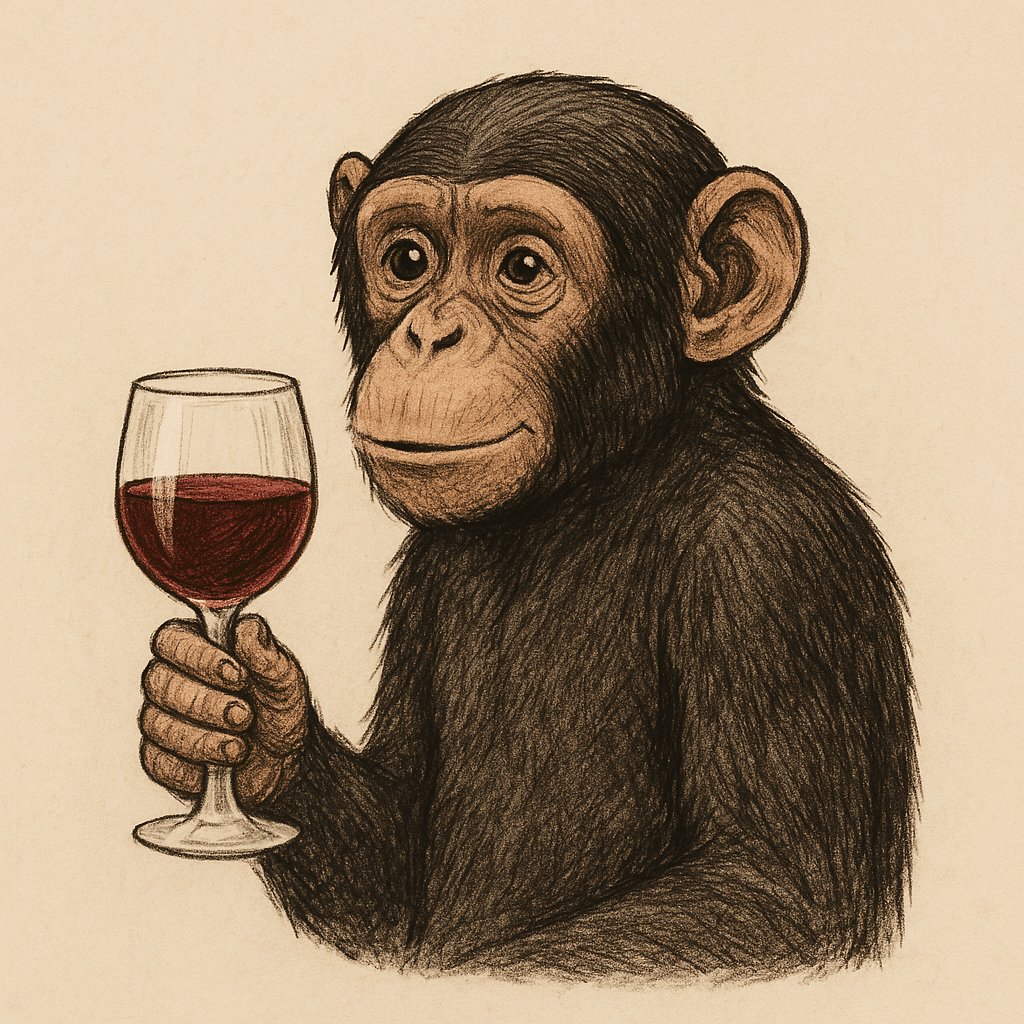
In 2004, biologist Robert Dudley of UC Berkeley proposed the Drunken Monkey Hypothesis, a theory suggesting that our attraction to alcohol is not a cultural accident but an evolutionary inheritance. According to Dudley, our primate ancestors evolved a taste for ethanol (grain alcohol) because it signaled ripe, energy-rich, fermenting fruit, a valuable resource in dense tropical forests. Those who could tolerate small amounts of naturally occurring ethanol had a foraging advantage, and thus a caloric advantage. Over time, this preference was passed down the evolutionary tree to us.

But alcohol’s effects have always been double-edged: mildly advantageous in small doses, dangerous in excess. What changed wasn’t the molecule, it was our ability to concentrate, store, and culturally amplify its effects. Good times, bad times…

Dudley argues that this trait was “natural and adaptive,” but only because we didn’t die from it as easily as other species. Ethanol is a toxin, and its effects, loss of inhibition, impaired judgment, and aggression, are as ancient as they are dangerous. What may have once helped a shy, dorky monkey approach a mate or summon the courage to defend his troop with uncharacteristic boldness now fuels everything from awkward first dates, daring athletic feats, bar fights, and the kind of stunts or mindless elocutions no sober mind would attempt.

Interestingly, alcohol affects most animals differently. Some life forms can handle large concentrations of ethanol without impairment, such as Oriental hornets, which are just naturally nasty, no chemical enhancements needed, and yeasts, which produce alcohol from sugars. Others, like elephants, become particularly belligerent when consuming fermented fruit. Bears have been known to steal beer from campsites, party hard, and pass out. A 2022 study of black-handed spider monkeys in Panama found that they actively seek out and consume fermented fruit with ethanol levels of 1–2%. But for most animals, plants, and bacteria, alcohol is toxic and often lethal.

Roughly 100 million years ago in the Cretaceous, flowering plants evolved to produce sugar-rich fruits, nectars, and saps, highly prized by primates, fruit bats, birds, and microbes. Yeasts evolved to ferment these sugars into ethanol as a defensive strategy: by converting sugars into alcohol, they created a chemical wasteland that discouraged other organisms from sharing in the feast.

Fermented fruits can contain 10–400% more calories than their fresh counterparts. Plums (used in Slivovitz brandy) show some of the highest increases. For grapes, fermentation can boost calorie content by 20–30%, depending on original sugar levels. These sugar levels are influenced by climate, warm, dry growing seasons with abundant sun and little rainfall produce sweeter grapes, which in turn yield more potent wines. This is one reason why Mediterranean regions have long been ideal for viticulture and winemaking, from ancient Phoenicia to modern-day Tuscany, Rioja, and Napa.

The story of alcohol is as ancient as civilization itself. The earliest known fermented beverage dates to 7000 BC in Jiahu, China, a mixture of rice, honey, and fruit. True grape wine appears around 6000 BC in the Caucasus region (modern-day Georgia), where post-glacial soils proved ideal for vine cultivation. Chemical residues in Egyptian burial urns and Canaanite amphorae prove that fermentation stayed with civilization as time marched on.

Yet for all its sacred and secular symbolism, Jesus turning water into wine, wine sanctifying Jewish weddings, or simply easing the awkwardness of a first date, alcohol has always walked a fine line between celebration and bedlam. It is a substance that amplifies human behavior, for better or worse. Professor Dudley argues that our attraction to the alcohol buzz is evolutionary: first as a reward for seeking out high-calorie fruit and modulating fear in risky situations, but it eventually became a dopamine high that developed as an end in itself.

Source: The Drunken Monkey by Robert Dudley, 2014.

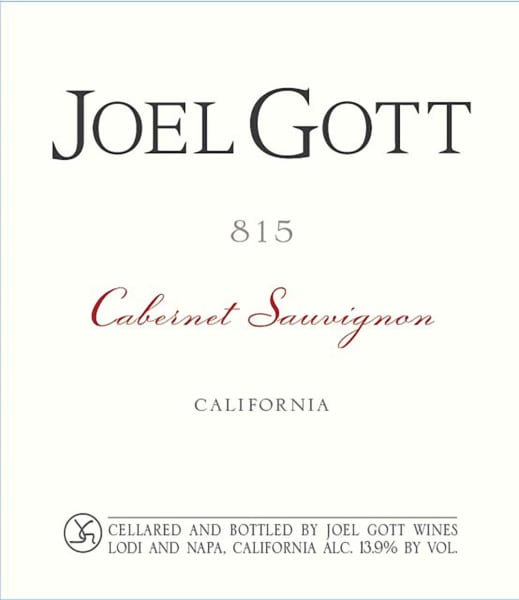
Joel Gott Blend No. 815 Cabernet Sauvignon 2021

Cabernet Sauvignon from Lodi and Napa California

100% Cabernet Sauvignon 

Purchase Price: $14.97

James Suckling 90,Decanter 90,Wine Spectator 89, ElsBob 90-91

ABV 13.9%

A deep ruby to a dark purple wine with aromas of black fruits, a taste of vanilla and spice; medium-full bodied, smooth tannins, dry, slightly acidic, with a medium finish. This wine will pair well with beef, lamb and chocolate desserts.

An excellent fine wine at a great price that is just entering its peak age range. Cheers.

Natural Law—Point Counterpoint

Version 1.0.0

The notions of right and wrong, justice and injustice, have there no place. Where there is no common power, there is no law; where no law, no injustice.” — Leviathan by Thomas Hobbes

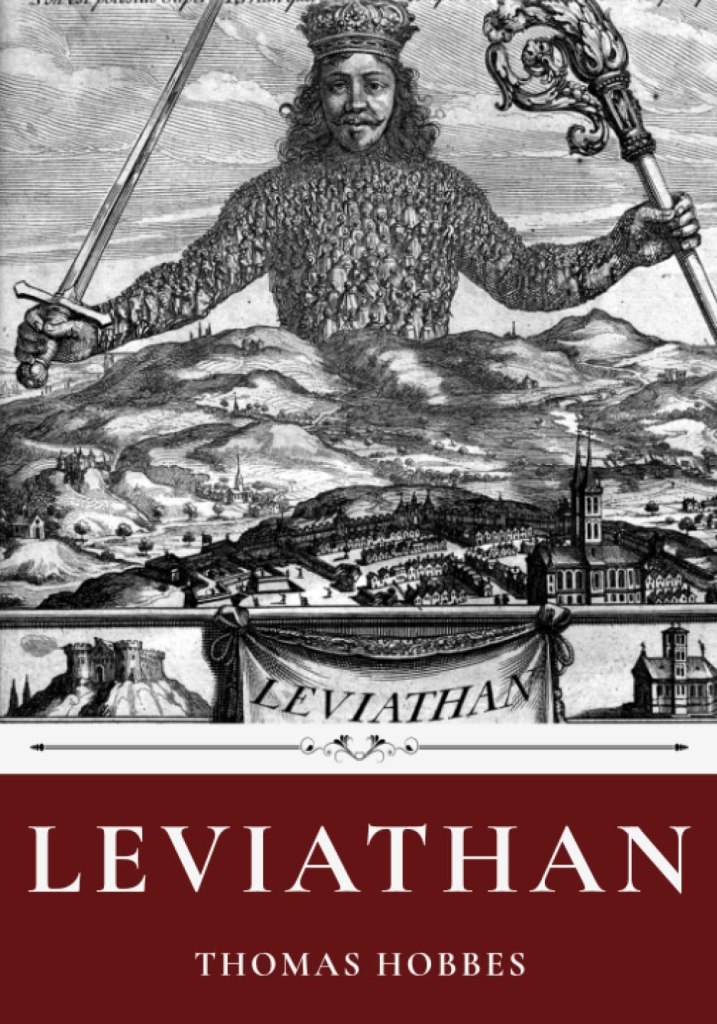
Thomas Hobbes saw human nature as a cauldron of chaos. In his state of nature, life is “nasty, brutish, and short,” a “war of all against all” where self-preservation is the only natural law. Shaped by Thucydides’ tales of strife and Machiavelli’s ruthless pragmatism, Hobbes cast man’s self-interest as a destructive force that casts morality aside. His remedy to avert chaos: a towering sovereign, ideally a monarch, to crush anarchy with an iron fist. The social contract trades liberty for security, forging laws as human tools to bind the beast within. Yet Hobbes stumbled: he failed to grasp power’s seductive pull. He assumed his Leviathan, though human, would rise above the self-interest he despised, wielding authority without buckling to its corruption.

Reason, which is that law, teaches all mankind…that being all equal and independent, no one ought to harm another in his life, health, liberty, or possessions.” — Second Treatise of Government by John Locke

John Locke painted a gentler portrait of man than did Hobbes. He rooted natural law in reason and divine will, granting all people inherent rights to life, liberty, and property. His state of nature is peaceful yet imperfect, marred by the “want of a common judge with authority,” leaving it vulnerable to human bias and external threats. Optimistic, Locke envisioned a social contract built on the consent of the governed, protecting these rights through mutual respect and laying the groundwork for constitutional rule. Where Hobbes saw a void to be filled with control, Locke trusted reason to elevate humanity, crafting government as a shield, not a shackle.

Hobbes and Locke clash at the fault line of power. Hobbes’s sovereign, meant to tame chaos, reflects the rulers’ thirst for dominance, but his naivety about power’s effect cracks his foundation. Locke’s ideals, morality, reason, rights, empower the ruled, who yearn for liberty after security sours. Hobbes missed the flaw: rulers, driven by the same self-interest he feared, bend laws to their will, spawning a dual reality—one code for the governed, another for the governors. Locke’s vision of freedom and limited government inspires their soul, while Hobbes’s call for order fortifies their bones with courts, police, and laws of men. The U.S. Constitution marries both, yet scandals tip the scales: power corrupts, and liberty frays as safeguards buckle under the rulers’ grip.

Hobbes and Locke both accept the imperfection of man but take different paths to mitigate that imperfection with workable safeguards. Hobbes insists on the rule by law but drafted by imperfect man and applied with a Machiavellian indifference with no solution for absolute powers corrupting influence. Locke also chooses to rule by law but guided by morality, God and the will to depose of despots.

Sources: Leviathan, Thomas Hobbes; Second Treatise of Government, John Locke. Graphic:Original Leviathan frontispiece, a king composed of subjects, designed with Hobbes’s input.

Birthplace of Wine

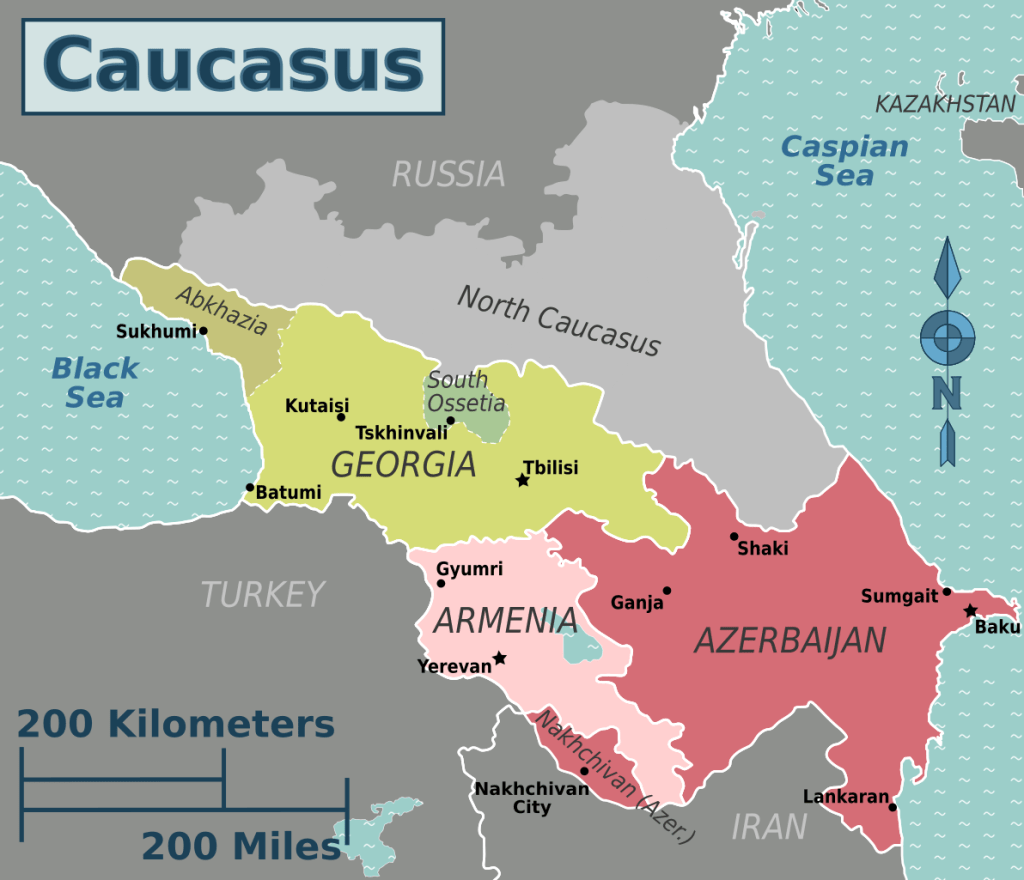
The modern grape (Vitis vinifera subsp. vinifera) is believed to have evolved from its wild ancestor, Vitis vinifera subsp. sylvestris, native to a broad region spanning the Caucasus Mountains (present-day Armenia, Georgia, and Azerbaijan) to the Mediterranean. This area offered ideal conditions for wild grapevines to flourish after the retreat of the Pleistocene glaciers, with its temperate climate and poor, rocky soils providing excellent drainage on rolling hills and mountainsides.

Archaeological evidence suggests that the domestication of grapes likely began in the South Caucasus region between 6,000 and 8,000 years ago. It’s possible that early farmers selectively cultivated wild grapevines, favoring those with the juiciest and most flavorful fruit, gradually developing them into the domesticated grape varieties familiar to us today.

In modern-day Georgia, approximately 30 miles (50 km) south of Tbilisi, evidence of grape wine production dates back to 6000–5800 BC. At the sites of Gadachrili Gora and Shulaveris Gora—Gora or hills are akin to the “tels” of the Levant—researchers have unearthed ancient pottery fragments containing chemical traces of wine, such as tartaric acid. These findings indicate that the inhabitants of this region were cultivating grapes and fermenting them into wine as early as 8,000 years ago.

This positions Georgia as a leading candidate for the “birthplace of wine,” with a merry winemaking tradition that has persisted through millennia.

Source: Oldest Evidence of Winemaking by Andrew Curry, National Geographic, 2017. Graphic: Caucasus Region by Peter Fitzgerald, modified by Travelpleb, Wikimedia Commons.

Looking In All the Wrong Places

Johnny Lee’s 1980 recording of “Lookin’ for Love” in all the wrong places is a mantra that most scientists and engineers eventually learn. Not love, but when confronted with the conundrum of not finding an object where it should be, the first response, before questioning the theory, is to look elsewhere.

This is further encapsulated in Arthur Conan Doyle’s “Fate of the Evangeline” when Holmes quips, “Exclude the impossible and what is left, however improbable, must be the truth.”

Recent research suggests that Earth and Mars originally had higher concentrations of moderately volatile elements (MVEs), such as copper. These elements were likely abundant in the early formation of Earth and Mars but were depleted by violent cosmic events, such as collisions with meteorites.

These collisions during planetary formation caused large-scale vaporization, leading to the loss of these crustal sources of MVEs into space but not necessarily those present in the mantle or core. While this new understanding challenges traditional theories about why MVEs are not in higher concentrations on Earth, it may also mean that we need to look not only to space for the lost MVEs but also to other deeper and less explored crevices and crannies here on Earth.

Additional areas of exploration on Earth may include hydrothermal vents on the ocean floors, deep crustal and mantle areas, tectonic boundaries, and active volcanic provinces.

Source: …Earth’s Missing Elements by Kim Baptista ASU, 2025. Lookin’ for Love written by Morrison, Ryan, and Mallette. Graphic: Earth Collision, Grok, 2025.

Money for Nothing

In 1985 Dire Straits released their 5th studio album “Brothers in Arms”, becoming their most successful album while attaining several firsts for the band and British music. It was the first album to sell over a million CDs and the first British album to go 10x Platinum in the UK, eventually reaching 14x platinum.

The whimsical, tongue in cheek firmly planted, “Money for Nothing”, the 2nd track on “Brothers in Arms” was to become their greatest commercial success reaching No. 1 on the Billboard Hot 100 in the United States and winning the Grammy Award for Best Rock Performance by a Duo or Group with Vocal. The song’s partially animated music video was a staple on MTV when the channel focused on music videos.

Mark Knopfler got the idea from listening to hardware store employees who thought rock stars had it easy. He, however, found a successful musician’s life exhausting. In 2009, he remarked, “If anyone can tell me one good thing about fame, I’d be very interested to hear it.”

Source: PDMusic.org. Knopfler…by Ian Young, BBC, 2009. Graphic: Money for Nothing—Dire StraitsVEVO.