Bilbo’s goodbye at his 111th birthday party:“I don’t know half of you half as well as I should like, and I like less than half of you half as well as you deserve.”
Oscar Wilde, a virtuoso for expressing dripping contempt. “Some cause happiness wherever they go; others whenever they go.”
Dorothy Parker, a sharp tongue and deceptive digs, “If you want to know what God thinks of money, just look at the people He gave it to.“
Mark Twain, a master of eye pokes, “I didn’t attend the funeral, but I sent a nice letter saying I approved of it.”
The World’s Best Vineyards, known for curating exceptional wine tourism destinations, publishes an annual list of the top vineyards worldwide. Their selections highlight not only wine quality but also the visitor experience, including tastings, accommodations, and unique attractions at the vineyard and in its surrounding area.
For 2024, the title of the best vineyard in Europe, and the world, has been awarded to Bodegas de los Herederos del Marqués de Riscal, situated in the small but charming town of Elciego, Spain, at the southern edge of the Rioja Alavesa wine region in northern Spain.
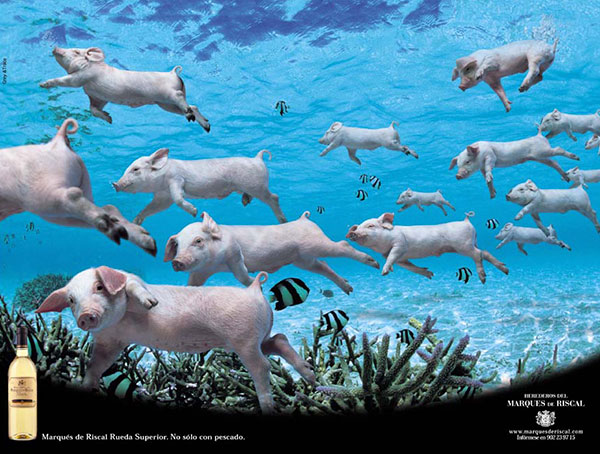
With a legacy spanning over 160 years, the vineyard and winery trace their origins back to 1858. Their first Rioja wine was produced just four years later, in 1862. For over a century, Marqués de Riscal crafted only red wines until they daringly broke with tradition and local reverence in 1972 by introducing their first white wine from Rueda. This leap into white winemaking is honored on their website with a whimsical and enigmatic photograph of the swimming pigs of the Bahamas. The choice of imagery invites unlimited speculation: pigs fly, pigs swim, white wine in Rioja, let your imagination freely wander.
In 2006, Marqués de Riscal expanded its offerings with the inauguration of the City of Wine, a striking complex featuring a hotel and entertainment facilities crowned by a “billowing titanium and stainless-steel roof;” designed by architect Frank Gehry. Visitors to the City of Wine can immerse themselves in the vineyard’s rich history and culture while enjoying luxurious relaxation at the Spa Vinothérapie Caudalie, fine dining at multiple restaurants, shopping at the wine boutique, or even celebrating their love with a wedding, perfect for couples old and young.
Oh, and enjoy the wines: Tempranillo, Tempranillo Blends, Tempranillo/Graciano, Garnacha/Viura, Verdejo, and Sauvignon Blanc. The Marques de Riscal Reserva Rioja’s (Tempranillo) various vintages are consistently rated in the 88-91 range and sell for about $25. Cheers.
Source: World’s Best Vineyards. Marques de Riscal Vineyard. Graphic: Swimming Pigs of the Bahamas.
The bottom of your wine bottle is more varied and interesting than one would initially expect. They come flat, convex, textured, embossed, thickened, punted, and two-tiered. As varied as Samwise Gamgee’s potato servings.
Starting with the easiest to manufacture and thus likely the cheapest is the flat bottom wine bottle. And because it doesn’t conform to historical and aesthetic traditions it’s also the rarest. The flat bottom is more likely to be encountered in the spirit world, but Aldi-Chapter and Verse and Garcon wine labels sell flat bottoms, generally to the casual wine enjoyment crowd, with wines rated as good in the 83–85-point range. Interesting enough Garcon bottles with flat bottoms are also squashed into a flat oval like a quarter mile running track, so they fit into UK letterbox openings.
Although rare, a very slight convex bottom is also used on some bottles, mostly liqueurs such as Galliano for aesthetic reasons. The bottles that employ this feature require some additional features to keep them upright on store shelves.
Textured and embossed bottoms are a common feature in the fine wine market. The textured bottoms are mainly for stability, keeping the bottle in one place on a wet surface such as bar or table. Occasionally practical details such as volume or manufacturing symbols are embossed on the bottom of the bottle, with higher end wines also adding in branding, batch numbers, and other unique marks.
Thickened bottoms are usually restricted to bottles needing extra stability when standing upright or to supply structural support for wines under pressure such as Champagne or Prosecco.
Which brings us to the ever-present punt on the bottom of almost all retail wine bottles. They have been in use for centuries creating the classic lost-to-the-past conundrum of why it was there in the first place. This forgotten history has created myriad possibilities for the small inward cone at the bottle’s base. In manufacturing the punt ensures a more consistent base plus it makes the bottle stronger. On the practical side it is theorized that the punt helps collect sediment at the bottom, improves grip on the bottle, or it helps create the illusion that the bottle has a larger volume. Then there is aesthetics, a punt just looks cool. In the end no one knows why it exists, but everyone has a theory.
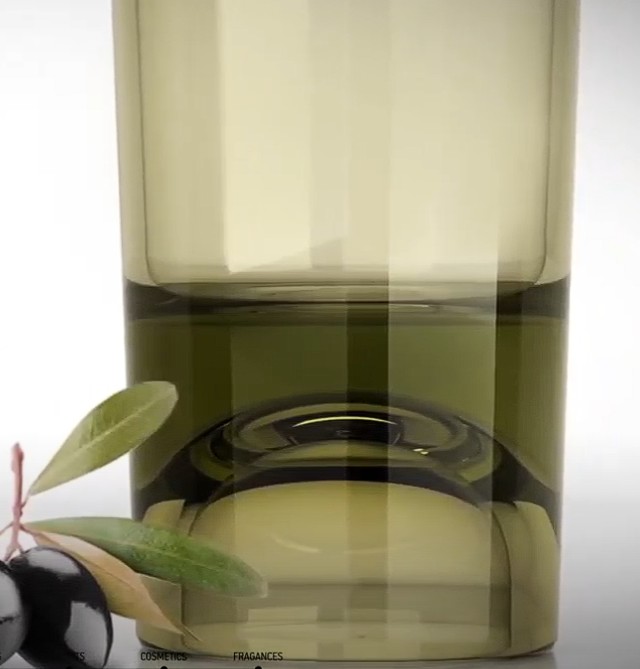
Finally, there are two-tiered bases where a flat bottom covers over the punt creating a hollow enclosed cavity. An example is the DobleAlto dual tiered base bottle that mixes and matches the order of the punt and flat bottom such as shown in the graphic where the flat bottom is above the punt. The two-tier base may have been invented for structural integrity reasons but most likely it was a way to make a product stand out from its competitors.
Getting to the bottom of bottoms is an involved process. Happy investigations and cheers.
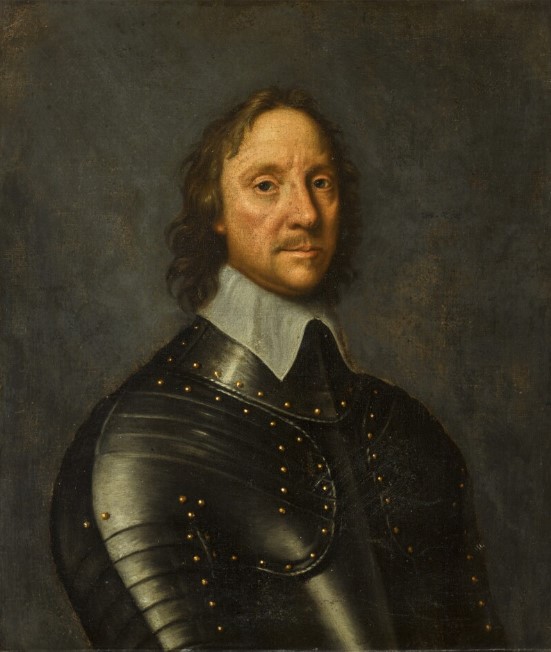
On 30 January 1661, Oliver Cromwell, Lord Protector of England, Scotland, and Ireland, suffered his second death. His first death, possibly from malaria or sepsis, occurred on 3 September 1658. On that day a windstorm of supposedly hurricane strength occurred, which some claimed was the devil coming to collect his due. He was buried with honors almost two months later on 10 November 1658, at the east end of Henry VII’s chapel in Westminster Abbey.
After Cromwell’s first death, the monarchy was restored to power. The new king, expressing his gratitude to Cromwell for giving the country a taste of democracy, had his body exhumed, in preparation for his second death. His body was then hung in chains, a common fate for traitors, then decapitated, with his head placed on a spike that remained on display until 1685. His body, sans the head, was then unceremoniously thrown into a pit.
Source: History Today. World History. RMG. Graphic: Portrait of Oliver Cromwell from the studio of Robert Walker, Property of Sir Brooke Boothby.
With apologies to Philip K. Dick, Cornell researchers have developed a novel way to control their ‘biohybrid’ robots by utilizing mycelia’s natural electrical signals.
Rob Shepherd, head of Cornell’s Organic Robotics Lab says, ‘By growing mycelium into the electronics of a robot, we were able to allow the biohybrid machine to sense and respond to the environment.’
Choose your hallucination, ‘Blade Runner’ or ‘The Matrix’.
Source: Science Daily and Cornell University, September 2024. Graphic: Shrooms and Robodogs. DALL E 3
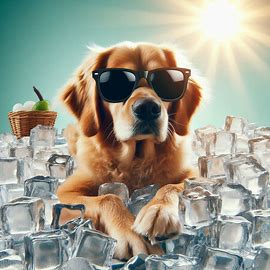
‘Now came the dog days—day after day of hot, still summer, when for hours at a time light seemed the only thing that moved…’ A narrative of peace from Richard Adams’ 1972 novel: ‘Watership Down’ during the interval when Hazel and his fellow rabbits were settling into their new home.
Some Greeks believed that the dog days of summer began when the Dog Star Sirius, thus the name, popped into the night sky on the 19th of July each year. Homer grimly stated that the appearance of the star ‘brought evil portent, …heat and fevers.’
The Old Farmer’s Almanac places the dog days from 3 July through August 11. Others put them from 23 July through 23 August.
Source: Watership Down by Richard Adams, 1972. Iliad by Homer. The Old Farmer’s Almanac. Graphic: Dog Days, AI generated, 2024.
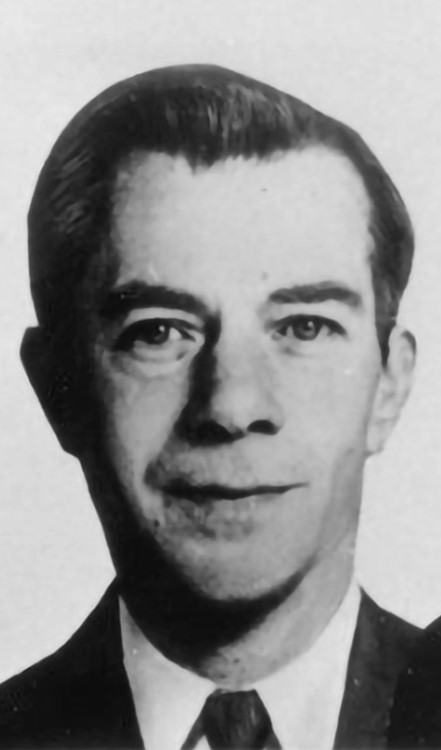
Willie Sutton, bank robber and writer, supposedly quipped when Mitch Ohnstad, a reporter asked him why he robbed banks: “Because that’s where the money is”.
In Sutton’s autobiography, he denied saying that he robbed banks because that’s where the money was, but he did say that he enjoyed robbing banks. It is estimated that he stole upwards to two million dollars from more than 100 banks over four decades starting in the 1920s.
His quaint response that he didn’t utter, has evolved into a rule of thumb for medical students now known as Sutton’s Law. It’s an instruction for medical students, and practitioners to accept the most likely diagnosis rather than spending inordinate amounts of time and money exploring all possible answers.
In accounting, a variant to Sutton’s Law is used to find savings in a budget, stating that the biggest savings will be found where the greatest costs occur.
Along a similar path of logic Occam’s Razor, attributed to the 14th century Englishman, William Ockham, states that when confronted with competing hypotheses to any given set of data one should select the least complicated proposition or as it is usually stated “The simplest explanation is usually the best one.”
Adding it all up leads one to the KISS Principle: Keep It Simple Stupid, first formulated by Kelly Johnson, lead engineer at Lockheed’s Skunk Works.
Source: Sutton, Where the Money Was: Memoirs of a Bank Robber, 1976. Kaplan et al, Harvard BS, 1998, MSN, Wikipedia. Graphic: Sutton, DOJ, public domain.
The question has been making its rounds on social media asking if the U.S. should sell off 20% of the U.S. gold reserves to pay off the debt?
The answer is no.
If I did the math correctly, selling 20% of U.S. gold stocks, 1476 tonnes, at the current price of $2345/oz equals about $462 billion. A tonne is 2202 pounds. If you are referring to the U.S. debt of $34 trillion then money from the gold sale would only amount to a little more 1% of the total debt.
On a different note, the U.S. used to have more than 18,144 tonnes of gold or $1.5 trillion in today’s dollars. Due to the consequences of 1944 Brenton Woods agreement and the failure of the Kennedy/Johnson/Nixon administrations to stop the ability of foreigners to change dollars into gold, the gold supply was reduced to 7379 tonnes.
Changing the subject again, the Chinese have been on a gold buying spree since 2023. The People’s Bank of China bought 735 tonnes of gold in 2023 and their private sector bought an additional 1411 tonnes. In January of this year alone China has purchased 228 tonnes. All this buying has helped to drive up the price of gold by about 27% since January of 2023.
A better question to explore is why are the Chinese buying so much gold?
a word or phrase that results from a mishearing especially of something recited or sung. (Merriam-Webster)
a word or phrase that is misinterpreted as another word or phrase, usually with an amusing result. (Collins)
also known as oronyms
the word originates with journalist Sylvia Wright, who wrote a column in the 1950s in which she recounted hearing the Scottish folksong The Bonny Earl of Morray. Wright misheard the lyric “Oh, they have slain the Earl o’ Morray and laid him on the green” and thought it was “Oh, they have slain the Earl o’ Morray and Lady Mondegreen.” (Merriam-Webster)
“In love, as in life, one misheard word can be tremendously important. If you tell someone you love them, for instance, you must be absolutely certain that they have replied ‘I love you back’ and not ‘I love your back’ before you continue the conversation.” (Lemony Snicket, Horseradish: Bitter Truths You Can’t Avoid. HarperCollins, 2007)
“The interesting thing about mondegreens is that the mis-hearings are generally less plausible than the intended lyrics.” (Steven Pinker, The Language Instinct: How the Mind Creates Language. William Morrow, 1994), but they are usually more interesting and amusing.
I was out for a walk in the neighborhood the other day, early October snow crunching beneath my sneakers, iPods keyed into a blues mix, when Tony Joe White’s first and only hit ‘Folk SallyAnnie‘ started playing; a song I’ve heard a hundred times before, except for the first time I listened to the intro. In the intro Tony Joe White explains who ‘Folk Sally’ is and I learned, as I said, for the first time, that ‘Folk Sally‘ is a plant similar to a turnip green, ‘except it ain’t‘ and the po’r folk of Louisiana picked it in the wild for their dinner. At this point I realized what I had been hearing for decades wasn’t ‘Folk Sally Annie‘ but ‘Polk Salad Annie‘. Chorus below:
‘Polk salad Annie, polk salad Annie Everybody said it was a shame ‘Cause her momma was a-workin’ on the chain gang (A mean, vicious woman) Uh!‘
It just goes to show ya that even with ears wide open you may not be hearing reality. I remember listening to an FM station many years ago that did a three- or four-hour show consisting of call-in requests by listeners who couldn’t remember the title of the song, just a snippet of the lyrics, which they amusingly mis-quoted. These misheard lyrics are what are commonly known as mondegreens or oronyms. Words one hears but interpretes wrongly. It was a great show of great music and amusing stories of the misinterpreted.
FootnoteA
A story I ran across a few years ago, I no longer remember the names of those involved, relates a father’s advice to his 10-year-old son when he was leaving for grade school one morning. His father holds him back for a few seconds and tells him, “Remember son. ‘Knowledge is power. France is bacon‘.” With this consul he sends his son off to class. His son pondered this remarkable piece of advice all the way to school and most of the rest of that day. ‘Knowledge is power. France is bacon.’ The ‘knowledge is power‘ part he understood but he was totally perplexed by the ‘France is bacon‘ bit. What could that mean? Years later he stumbled across a quote in one of his high school textbooks which said, ‘knowledge is power‘. It was attributed to forteenth and fifteenth century English philospher Francis Bacon.
The brain is a remarkable organ. If it recieves something blurred or indistinct it will fill in the blanks or gaps and we are never the wiser, for a while anyway. Hopefully.
Truly Great Lyrical Mondegreens:
“Every time you go away/you take a piece of meat with you” (for ” … take a piece of me with you,” by Paul Young)
“There’s a bathroom on the right” (for “There’s a bad moon on the rise” by Creedence Clearwater Revival)
“Excuse me while I kiss this guy” (for “Excuse me while I kiss the sky” by Jimi Hendrix)
“The girl with colitis goes by” (for “the girl with kaleidoscope eyes” by the Beatles)
“Dirty things done to sheep” (for “Dirty deeds done cheap” by AC/DC)
“Bring me an iron lung” (for “Bring me a higher love” by Steve Winwood)
“It doesn’t make a difference if we’re naked or not” (for “It doesn’t make a difference if we make it or not” by Bon Jovi)
“She knows Ohio stinks” (for “She knows the highest stakes” by Dixie Chicks)
“It’s too late, you’re gonna die” (for “It’s too late to apologize” by OneRepublic)
“There’s no happy ending, no hand relief” (for “There’s no happy ending, no Henry Lee.” by Train)
“I’m gonna take my horse to a hotel room” (for “I’m gonna take my horse to Old Town Road” by Lil Nas X)
Polk Salad Annie Original and Covers(Partial List):
Buddy Whittington, on his 2011 Six String Svengali guitar celebration album, paid tribute, with the song Back When Beano was Boss, to the legendary blues rock sound generated by Eric Clapton playing on a 1960 sunburst Gibson Les Paul Standard, which was plugged into a 45-watt Marshall amp, and a Dallas Rangemaster, on the 1966 bluesy rock album: John Mayall and the Bluesbreakers with Eric Clapton. The John Mayall album
1960 Les Paul Standard “Beano”. Photo by musiczoo.com.
became known as the “Beano Album” due to Clapton reading a comic called The Beano on the album cover photo; an overt act of rebellion during the album photo shoot, or as Clapton states in his autobiography: being “uncooperative”. As the album became known as the “Beano Album”, Clapton’s guitar, which was stolen in 1966 and never recovered, became known as the “Beano Burst”, continuing a tradition of musicians naming their instruments as one will name a pet or a lover.
Clapton made a habit of naming his guitars, as did many other guitarists, but because of his talent, his guitars went down into guitar lore as extremely expensive, and sought after, legends. One of the most expensive guitars that he, or anyone, ever sold was Blackie; so named because of its black finish, a rebuilt guitar from the parts of 1956
1964 Gibson SG “The Fool”. Photo by John Peden
and 1957 Stratocasters and was Clapton’s favorite Fender Stratocaster; brought in almost one million dollars at a 2004 charity auction. Brownie, so named because of its brown sunburst body color, was a 1956 Stratocaster that he used mainly with Derek and the Dominos. Clapton sold Brownie at a charity auction for almost one half million dollars in 1999. During Clapton’s time with Cream he mainly used a 1964 Gibson SG, known as The Fool; due to its psychedelic paint job done by the Dutch design collective also known as The Fool. This guitar passed through various hands, including Todd Rundgren and possibly George Harrison, eventually landing up in a private collector’s hands in the early 2000s.
On a closing note, Joe Bonamassa, no guitar slouch himself and a collector, stated in mid-2016 that he knew where “Beano” currently was, specifically on the east coast of the US. The announcement was taken as an opening for the possible return of the guitar but no public notice has been posted since.




 to the legendary blues rock sound generated by Eric Clapton playing on a 1960 sunburst Gibson Les Paul Standard, which was plugged into a 45-watt Marshall amp, and a Dallas Rangemaster, on the 1966 bluesy rock album:

 elsToday