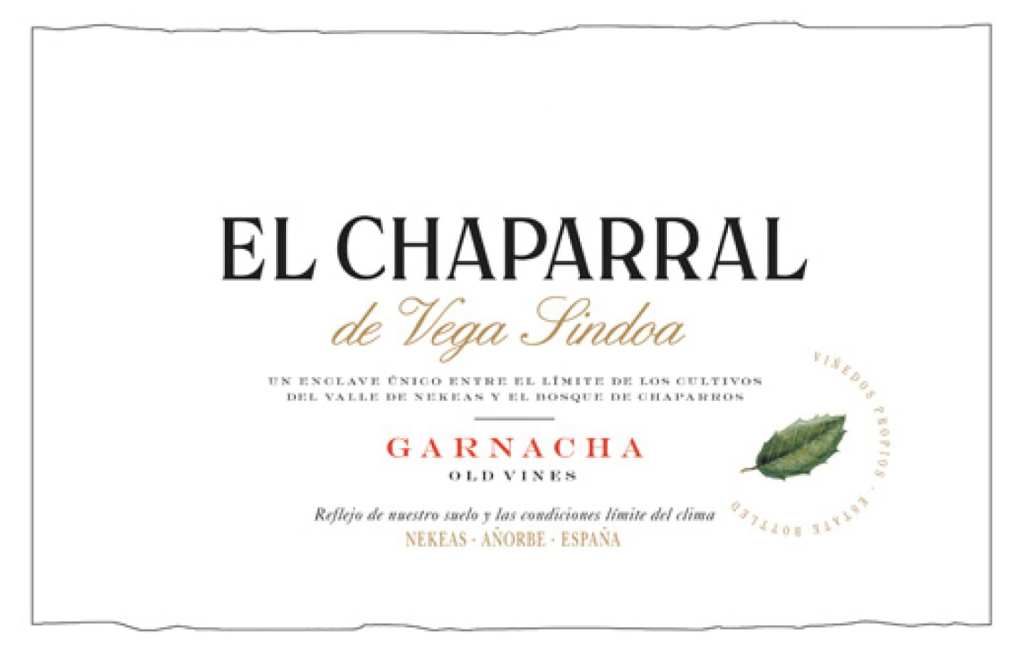
Bodegas Nekeas El Chaparral de Vega Sindoa Old Vines Garnacha 2021

Grenache from Valley of Valdizarbe, Navarra, Spain

Purchase Price $14.97

James Suckling 92, Cell Tracker 85, ElsBob 88

ABV 15%

A deep purple to garnet in color wine. Medium-full bodied with aromas of black fruit and spice. More tannic than smooth, very dry and medium acidity. A modest finish that will go well with acidic foods. Not a great sipping wine.

A very good fine wine at a fair price. Current prices range from $13-17.

Trivia: Spain’s Valley of Valdizarbe is the smallest wine subzone in Navarra, covering about 920 hectares (3.6 square miles). The valley lies directly on the Camino de Santiago (Way of St. James), where medieval pilgrims and Cistercian monks helped establish and refine viticulture traditions.

Winegrowing here dates back to the 2nd century BC, when Romans cultivated vines in the fertile valley, drawn by its strategic position as a trade route linking northern Europe with the Iberian Peninsula. By the 14th century, Valdizarbe wines were being shipped as far as the North Sea and English monasteries.

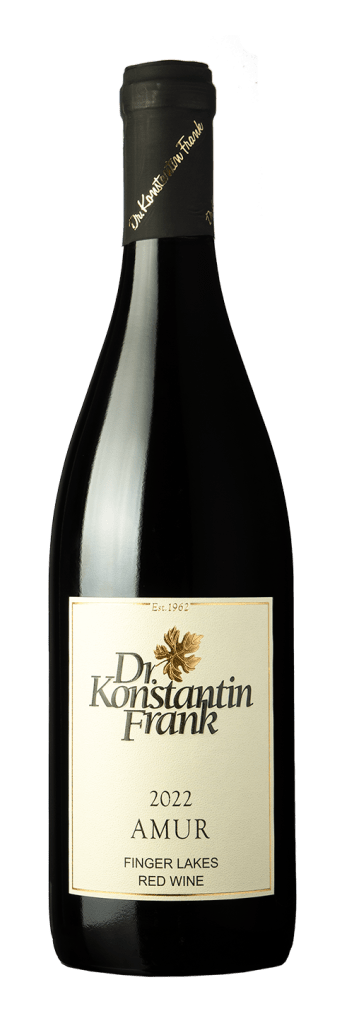
Dr. Konstantin Frank Amur 2022

Amur from Finger Lakes, NY.

Purchase Price: $34.99

ElsBob 89

ABV 12.0%

A deep red full-bodied wine with aromas mainly of dark fruits, firm tannins, and notable acidity. Overall, a rather subdued wine that is fitting for restrained foods with delicate flavors such as classic cheesecake or a chocolate mousse.

A very good table wine but overpriced. As a novelty though it is worth trying.

Trivia: Amur grapes tolerate extreme cold, surviving temperatures under      -40°F/-40°C (the cosmic duality of thermal frost). But they do require a fairly wet, subhumid to humid, growing season. They also ripen early, allowing for growing in the mid-latitudes, otherwise known as the snow-belt.

The roots contain rare compounds called oligostilbenes which have shown potential anti-inflammatory and anti-cancer properties in early studies. So don’t take any unnecessary chances: drink up.

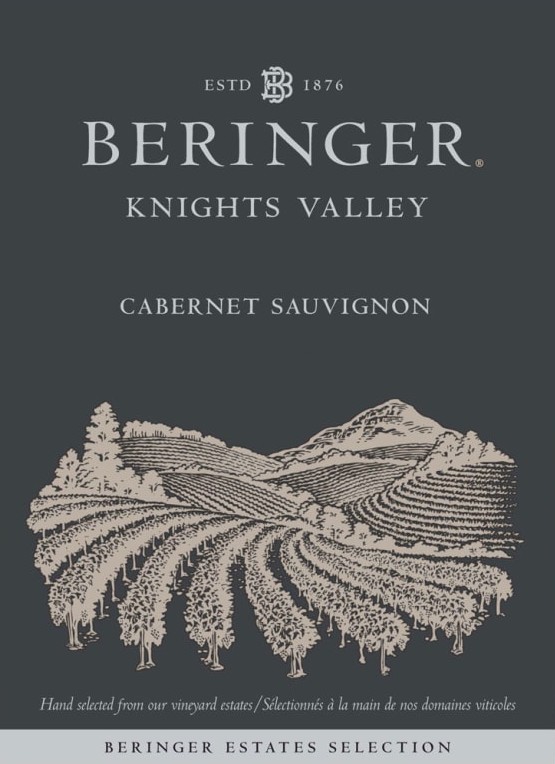
Beringer Knights Valley Cabernet Sauvignon 2019

Cabernet Sauvignon from Sonoma County, California

Cabernet Sauvignon 87%, Merlot 8%, Cabernet Franc 2%, Malbec 2%, Petit Verdot 1%

Purchase Price ~$40 (Gift)

James Suckling 94, Wine & Spirits 92, Robert Parker 90, ElsBob 91

ABV 14.5%

A dense deep ruby with a pale red rim. Full-bodied wine with aromas of cherries, blackberries, with hints of lavender and spice. On the palate, approachable tannins, crisp acidity, and beautiful long finish. A wine made to enjoy with ribeyes and filets.

An excellent fine wine at a slightly elevated price. The wine is hard to find but Beringer still offers it for sale on their website for $24 (half bottle).

Trivia: Knights Valley, originally known as Mallacomes Valley, was granted to José de los Santos Berryessa by the Mexican governor in 1843. In 1853, Thomas B. Knight, a native of Maine and a veteran of the Bear Flag Revolt of 1846, purchased much of Berryessa’s ranch. Knight renamed it Rancho Muristood and planted vineyards, fruit trees, and wheat. Mallacomes Valley gradually became known as Knights Valley. After Knight’s death in 1881, the property passed through numerous hands, and much of the land reverted to small farms and cattle ranches. By the mid‑20th century, viticulture returned when Beringer bought large tracts of land in the valley and initially focused on Cabernet Sauvignon and other Bordeaux varietals. They released their first Knights Valley wine in 1974.

Domaine Cabirau Maury Sec ‘Second Effort’ 2021

Red Blend Other from Languedoc-Roussillon, France

62% Grenache, 38% Syrah

Purchase Price: $14.00

Jeb Dunnuck 94, Rober Parker 90-93, ElsBob 92

ABV 14.5%

An opaque ruby colored wine, medium-full bodied, with powerful aromas of black fruit and pepper. Red berries on the palate with a wonderful long balanced finish.

An excellent fine wine at a ridiculous price. Current pricing ranges from $22-28.

Trivia: In the 12th century, Languedoc became the epicenter of the Cathar movement: a dualist Christian sect deemed heretical by the Catholic Church. Their beliefs challenged ecclesiastical authority and rejected materialism outright.

The Cathars held that a benevolent God created the invisible, eternal realm of spirit, while a malevolent demiurge, often equated with Satan, crafted the physical world. In contrast, Gnostic traditions dating back to Plato portrayed the demiurge not as evil, but as ignorant: a blind artisan who shaped the material realm without awareness of the higher divine source. For the Cathars, however, the true God was pure and transcendent, wholly uninvolved in the corrupt domain of matter. The physical world, including human bodies, was a prison of suffering, designed to entrap divine sparks of life: fallen souls of lost virtue, anchored in flesh.

For the Cathars, the goal was not to purify Earth but to escape it: to transcend flesh and return to its spiritual source. Their sole sacrament, the Consolamentum, was a spiritual baptism liberating the soul from the material world, often performed at death’s door. Readings from the Gospel of John, with emphasis on light and spirit, were central to this rite.

Their beliefs echo Socrates in the 5th century BC, who taught that man’s highest task was to keep his soul bright and shiny. Death, for Socrates, was not an end but a door to a new beginning in a higher realm of destiny for the safe-guarded virtuous soul.

The Cathar movement was ultimately extinguished, beginning with Pope Innocent III’s Albigensian Crusade in the 13th century and continuing through the Medieval Inquisition into the mid-14th century. Through the efforts to stamp out the sect it is estimated that between 200,000 and 1 million adherents were killed by hanging, burning, or other brutish methods. Raphael Lemkin, who coined the term genocide in 1944 to describe Nazi atrocities, recognized in the Cathar extinction a grim precedent: a spiritual lineage extinguished by fear that invisible truths might reshape visible order.

Centuries later, Deists such as American Revolutionary figures Washington, Jefferson, and Franklin embraced a belief in a benevolent Creator who did not intervene in human affairs. Like the Cathars and Socrates, they emphasized spiritual virtue over dogma, without dualist cosmology. The American Founders vision of divinity was rational, moral, and benevolent, interested in virtue, yet non-interfering in the affairs of man.

Bieler Pere et Fils La Jassine Cotes du Rhone Villages Rouge 2022

Rhone Red Blends from Cotes du Rhone Villages, Rhone, France

Grenache 60%, Syrah 40%

Purchase Price $14.99

James Suckling 90, ElsBob 91

ABV 14.5%

A medium purple with tawny rim and slightly opaque. A medium-full bodied wine with aromas plums, chocolate, and a whiff of tobacco. On the palate the tannins are easy and very well balanced with the acidity. A very nice finish. We enjoyed this with soft cheese and hard salami. Delicious.

An excellent fine wine at a very comfortable price. Current prices range from about $15-18.

Trivia: The Côtes du Rhône Villages appellation was officially established in 1967 to recognize superior-quality wines from select villages in the southern Rhone Valley. These wines rank above standard Cotes du Rhone but below Cotes du Rhone Crus (such as Chateauneuf-du-Pape).

The idea of distinguishing higher-quality Rhone valley wines began circulating in the 1950s. By 1953, five communes: Cairanne, Gigondas, Chusclan, Laudun, and Saint-Maurice-sur-Eygues were identified for their exemplary potential. Wineries could append their village name to the label if they met strict production standards, minimum alcohol levels of 12.5%, and grape composition of at least 50% Grenache, and 20% Syrah.

Today, 21 villages are allowed to include their name on the label, while others use the generic “Côtes du Rhône Villages” designation. Bieler Pere et Fils chose not to list their village, but their La Jassine Cotes du Rhone Villages Rouge 2022 originates from Valreas, located in the northern reaches of the Southern Rhone Valley.

On the label is rooster or classic French coq: a symbol of traditional farming, terroir authenticity and rural pride.

Michel de Montaigne Bergerac 2019

Bordeaux Red Blends from Southwest, France

Merlot 60%, Cabernet Franc 20%, Cabernet Sauvignon 20%

Purchase Price $16.99

Wine Enthusiast 90, Wilfred Wong 90, ElsBob 90

ABV 14%

A clear ruby to purple wine in color. A medium to full bodied wine with aromas of red and black fruits and spice. On the palate plums and cherries predominant with oak derivatives. The tannins are meaty and balanced with crisp acidity. A beautiful finish that will compliment most beef dishes.

An excellent fine wine at a very attractive price. Current prices range from $13.50-18.00.

Trivia:  Michel de Montaigne was likely the most influential philosopher of the 16th-century French Renaissance. A dyed-in-the-wool skeptic, a cantankerous crank whose motto Que sais-je? (“What do I know?”) enshrined his worldview; much like Socrates, who also claimed to know nothing. Montaigne questioned everything and taught that doubt was the only path to wisdom.

But he carried it too far: intellectually thin and logically obtuse. He believed that customs and morals were cultural artifacts, lacking any universal tether. Truth, for Montaigne, was a matter of perspective; malleable, contingent, shaped by accepted practice. One man’s cannibal was another man’s epicurean.

To anchor this relativism, he wrote: “We are, I know not how, double in ourselves, so that what we believe we disbelieve, and cannot rid ourselves of what we condemn.” A long-winded version of c’est la vie (“that’s life”), or more precisely, à chacun son goût (“to each his own”).

Experience was his shrine, but it lacked a foundation. No base of knowledge to anchor belief. A man easily swayed by his own prejudices and lack of a black and white moral code.

His philosophy of go-along-to-get-along, born of tolerance and introspection, risked becoming a prescription for annihilation, not of others, but of moral clarity and oneself. A path to accepting everything and believing nothing. A philosophy polished so smooth it reflects everything and reveals nothing.

Zenato Alanera Rosso 2020

Red Blends Other from Veneto, Italy

Corvina 70%, Rondinella 10%, Corvinone 10%, Merlot and Cabernet Sauvignon 10%

Purchase Price: $15.99

Wine Enthusiast 90, ElsBob 91

ABV 13.5%

A medium garnet with a tawny rim in color. A medium-bodied wine with aromas of cherries and coffee. On the palate a touch of sweetness and plums, easy tannins and an acidity that provides a refreshing finish.

An excellent table wine at very nice price. Current price is about $17.00.

Trivia: Veneto wine region of northeastern Italy stretches from the canals of Venice to the Alpine foothills. Viticulture here dates to Roman times, with early vineyards tended by local tribes. During the height of the Venetian Republic, paralleling the fortunes of Florentine Renaissance, Veneto became a hub for wine blending and trade, shipping its product throughout the Mediterranean Basin, Byzantine and Ottoman Territories, Northern Europe, and along the Silk Road all the way to Mongolia. This hemispheric reach not only spread winemaking techniques but elevated the reputation of Veneto wines.

At the end of Republic in the 1797 winemaking was in a slow, constant decline. The erosion of trade routes, driven by the Republic’s ossified and hidebound bureaucracy and maritime collapse, decimated the region’s commercial infrastructure. Recovery began in the late 18th and into the 19th century, not as a revival of trans-national trade but as a scientific and agrarian rebirth. Improved farming techniques and increased vineyard plantings were initially focused on local consumption. Today, Veneto is Italy’s top wine-producing region, accounting for roughly 25% of the country’s output and over 35% of its exports. Prosecco and Pinot Grigio occupy the region’s power positions in volume, anchoring its global presence.

Stags’ Leap Winery Petite Sirah 2020

Petite Sirah from Napa Valley, California

Purchase Price: $19.00

James Suckling 94, Gismondi 92, Wine Enthusiast 92, Cellar Tracker 92, Robert Parker 90, Wine and Spirits 89, ElsBob 89

ABV 14.5%

A very dark ruby, purple hue wine with aromas of black fruits. On the palate more of a red fruit, cherry flavor, with a little spice, mainly pepper. High in acidity and tannins, medium-full bodied, with very little balance. Fortunately, the finish is short. To help smooth out the acidity and tannic nature of this wine try it with aged cheeses such as Gouda or tomato-based dishes like pasta or pizza.

A very good fine wine overpriced at $19. If you can find it under $12 give it a try. Current prices range from about $28-65. A decent wine but far below Stags’ Leap quality reputation. I’m surprised they put their label on this one.

Trivia: Stag’s Leap Winery is located along the Silverado Trail in Napa Valley. The trail originally built in 1852, links the cinnabar mines (HgS, mercury sulfide) on Mount St. Helena in the north to San Pablo Bay, the estuarine gateway to San Francisco Bay; natural bookends to the valley. In addition to abundant mercury deposits, the mines also yielded silver, sparking a short-lived silver rush beginning in 1858.

Highwayman Black Bart preyed on stagecoaches along the trail in the 1880s, adding to the outlaw mystique of the region, and inspiring a minor character in The Simpsons. The non-Simpson Bart left rhymed messages at the scene of his robberies earning the moniker ‘The Poet Bandit.’ He was captured in 1883 and served 4 years in San Quentin, regrettably missing Johnny Cash’s concert by about 81 years.

In 1880, Robert Louis Stevenson honeymooned in Napa Valley with his wife Fanny, spending the summer squatting in an abandoned bunkhouse at the Silverado Mine (a spendthrift, to be sure–actually, he was broke, destitute, poor, penniless, and sick), on the slopes of Mount St. Helena. The experience led to his travel memoir The Silverado Squatters, which, while not a blockbuster, did manage to sell enough to justify a second printing. Interestingly, it can still be purchased from independent publishers. It’s a short book of about 100+ pages. Give it a read and compare it with the Bermuda travelogues of his contemporary, Mark Twain.

Cigar Box Old Vine Malbec 2022

Malbec from Mendoza, Argentina

Purchase Price: $13.99

Tasting Panel 93, Wine Enthusiast 85, ElsBob 89

ABV 14.5%

A dark purple wine, with aromas of red fruit and spices traveling through you at speed of wow. On the palate a rush of cherries with a smooth medium finish.

A very good fine wine at a great price. Current prices range from $12-18.

Trivia: Cigar Box Old Vine Malbec gets its name from the first winemaker’s impression of the wine. The vintner reportedly detected a subtle aroma reminiscent of a cigar box, a blend of cedarwood, spice, and aged tobacco often found in oak-aged reds. The name stuck.

Vinos de Arganza Flavium Seleccion Mencia 2021

Mencia from Bierzo, Spain

Purchase Price: $14.97

Wine Enthusiast 93, Wilfred Wong 91, ElsBob 92

ABV 13%

A concentrated dark ruby color. Aromas of black and blue fruit coupled with a hint of spice, sporting a very smooth red fruit taste and a beautiful lasting finish.

An excellent table wine at a fantastic price. Current price ranges from $10-18.

Trivia: Just southwest of Vinos de Arganza lay the largest open-pit gold mine in the Roman Empire. Known as Las Médulas, it was worked by a method called ruina montium: “wrecking of the mountains”, a form of hydraulic mining that would later see service in the gold rush days of California. As Pliny the Elder described in 77 AD, Roman engineers diverted water from the Cantabrian and La Cabrera mountains into vast reservoirs, then released it in violent surges to erode entire hillsides and expose gold-bearing sediment.

Centuries later, the same principle of hydraulic head would be artistically employed for music and water sculpture: the Fountain of the Organ at Tivoli, north of Rome, used gravity-fed water to power its jets and to also force air through the pipes of a Renaissance organ.

Pliny estimated an annual yield of 20,000 Roman pounds of gold (1 Roman pound ≈ 0.72 English pounds). Over the mine’s 250-year lifespan, from the 1st through the 3rd century AD, approximately 58 million ounces of gold were extracted. At today’s prices, that would be worth over $225 billion, a fortune that once flowed through imperial treasuries, legion payrolls, and massive Roman infrastructure projects.