Matt Taibbi—First Amendment Absolutist:

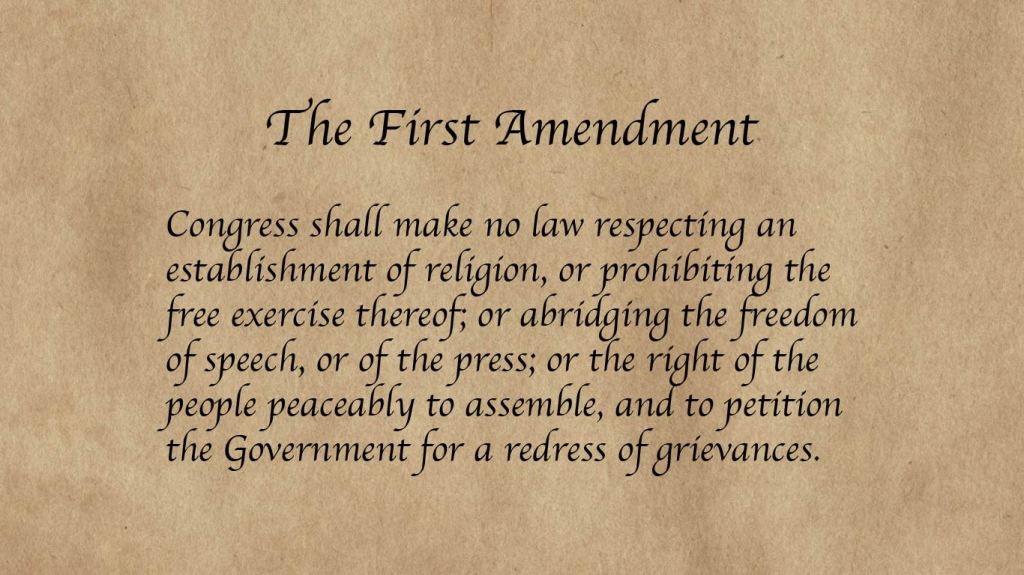
Taibbi delivered a righteous and necessary speech on the need to preserve the First Amendment to the Constitution, in particular the right to free speech at a ‘Recue the Republic’ gathering in Washington D.C. on 29 September 2024.

Taibbi makes the pertinent point that the current government efforts to eliminate dis-or-misinformation from the public discourse is not the real goal but that “The endgame is getting us to forget we ever had anything to say.”

He continues that the writers of the constitution’s Bill of Rights were absolutist in how the First Amendment could be interpreted, stating: [James] Madison [author of the First Amendment] famously eschewed the word toleration or tolerance when it came to religion and insisted on the words freedom or liberty instead. This became the basis for the Virginia Declaration of Rights, which in turn became the basis for the Bill of Rights. That’s why we don’t have “toleration of religion” or “toleration of speech.” We have freedom of speech.”

Read the entire speech, link below. It’s a quick read and entertaining to boot.

Source: My Speech in Washington: “Rescue the Republic” (racket.news). Graphic: First Amendment, Melissa Randall, LibreTexts.

Mind Control

Ted Kaczynski, a domestic terrorist known as the Unabomber, had his 35,000-word anti-technology manifesto published on this day in 1995 by The New York Times and The Washington Post.

Kaczynski was a math prodigy and entered Harvard at the age of 16. While working towards a BA in math he participated in a Harvard psychology study that attempted to understand how to manipulate one’s psyche.

The study was led by Henry Murray, a former U.S. intelligence employee. Some have suggested that Murray was working with or under the CIA’s MKUltra program. This program tested procedures and drugs to lower individuals’ defenses during interrogation and brainwashing.

Source: NBC News. Sott.net. Graphic: Movie poster and trailer, copyright Cinedigm.

Nixon’s Price Controls

Nixon announced wage and price controls this week in 1971 to combat an inflationary problem caused by Johnson’s and Nixon’s excessive war and domestic government spending.

In a nationally televised address to the nation in August of 71, he ordered a 90-day freeze on all prices and wages. After the 90 day freeze any increases in wages or prices would have to be approved by the federal government.

By the summer of 1972 it was obvious that the controls weren’t providing any positive benefits and lots of negative ones, including empty store shelves.  Treasury Secretary George Shultz in 1973 told Nixon that at least we learned ‘that wage-price controls are not the answer’ for fighting inflation.

Milton Friedman predicted the program’s ‘utter failure’ and the re-ignition of inflation in the near future. After all the controls were removed in the spring of 1974 inflation shot up to 11 percent and stayed high until Paul Volcker created two recessions in 1980 and 1981-1982 to finally end the inflationary pressures from the late 60s through the early 80s.

Theodor Reik said in 1965, ‘history may not repeat itself, it merely rhymes’. In this case it will likely repeat itself.

Source: Nixon’s Price Controls by Gene Healy, 2011, Cato.org. Graphic: Orissapost.com, 2021.

The Bears Are Fine

Bjorn Lomborg in the WSJ comments that The Washington Post, Al Gore, World Wildlife Fund, and others predicted in the early 2000s that the end was near for the polar bears due to melting Arctic sea-ice. Starvation and extinction was imminent.

Present estimates peg polar bear populations somewhere between 22-32,000. This is up substantially from a 1960s population estimate of 12,000.

The increase in population numbers is almost totally due to the end of hunting of the species with the loss of Arctic sea-ice having little discernible effect of the bears numbers.

Australia’s Great Barrier Reef is growing not shrinking. The Pacific atolls are also growing, not sinking into the ocean. And across the planet for every person that dies of heat 9 people die of cold.

Source: Polar Bears, Dead Coral and Other Climate Fictions – WSJ by Lomborg, 2024. Graphic: Photo of Polar Bears, Public Domain.

A Deadly Political Duel

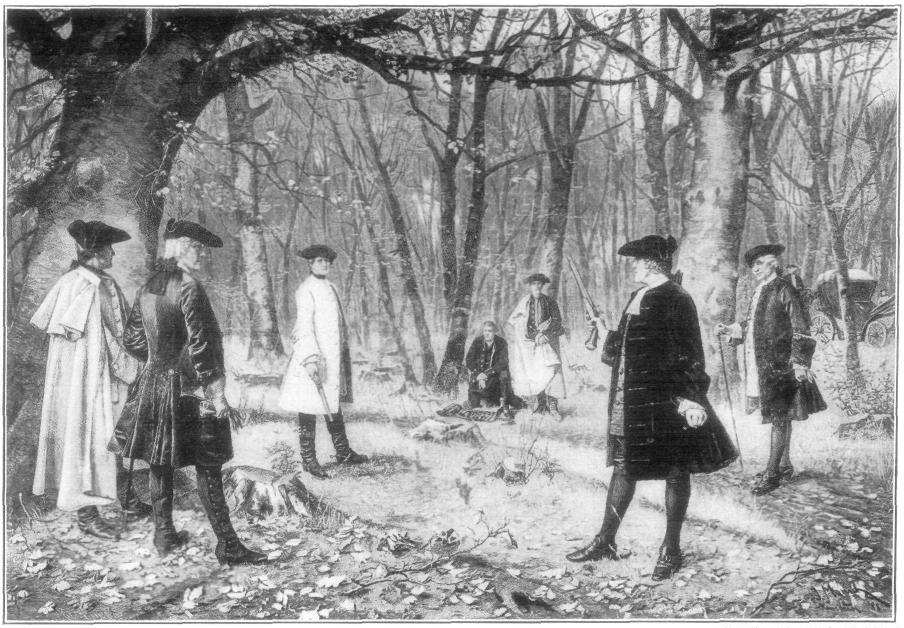
220 years ago on 11 July 1804 Aaron Burr, Vice President of the US challenged and mortally wounded, in a duel, the US Secretary of the Treasury, Alexander Hamilton.

Burr claimed that Hamilton smeared his name by stating that he was a dangerous man and should not be in control of a government. Burr demanded a public apology. Hamilton refused to acknowledge, much less apologize to Burr for the alleged smear, triggering Burr to challenge Hamilton to a duel.

The duel occurred near Weehawken, New Jersey, across the Hudson from Manhattan, and both men fired one round. Hamilton was hit in his side near the hip and died the next day from the wound.

Dueling at the time was illegal but Burr escaped without any charges being brought, although his political career lay in tatters.

Source:  The Hamilton-Burr Duel by Josh Wood, Origins, 2019. Graphic: Hamilton-Burr Duel after a painting by J. Mund, public domain.220

Declaration of Independence

Calvin Coolidge’s “Speech on the 150th Anniversary of the Declaration of Independence” not only celebrates America’s Declaration of Independence but its greatest gift to humanity; that our Creator endowed us with certain unalienable Rights: “among these are Life, Liberty and the pursuit of Happiness.”

Excerpt from Coolidge’s speech:

“…No…theory is adequate to explain or comprehend the Declaration of Independence. It is the product of the spiritual insight of the people.”

“…it was proposed to establish a nation on new principles, that July 4, 1776, has come to be regarded as one of the greatest days in history. Great ideas do not burst upon the world unannounced…This is especially true of the principles laid down in the Declaration of Independence. Three very definite propositions were set out in its preamble regarding the nature of mankind and therefore of government. These were the doctrine that all men are created equal, that they are endowed with certain inalienable rights, and that therefore the source of the just powers of government must be derived from the consent of the governed.”

Coolidge’s Full Speech:

We meet to celebrate the birthday of America. The coming of a new life always excites our interest. Although we know in the case of the individual that it has been an infinite repetition reaching back beyond our vision, that only makes it the more wonderful. But how our interest and wonder increase when we behold the miracle of the birth of a new nation. It is to pay our tribute of reverence and respect to those who participated in such a mighty event that we annually observe the fourth day of July. Whatever may have been the impression created by the news which went out from this city on that summer day in 1776, there can be no doubt as to the estimate which is now placed upon it. At the end of 150 years the four corners of the earth unite in coming to Philadelphia as to a holy shrine in grateful acknowledgement of a service so great, which a few inspired men here rendered to humanity, that it is still the preeminent support of free government throughout the world.

Although a century and a half measured in comparison with the length of human experience is but a short time, yet measured in the life of governments and nations it ranks as a very respectable period. Certainly enough time has elapsed to demonstrate with a great deal of thoroughness the value of our institutions and their dependability as rules for the regulation of human conduct and the advancement of civilization. They have been in existence long enough to become very well seasoned. They have met, and met successfully, the test of experience.

It is not so much, then, for the purpose of undertaking to proclaim new theories and principles that this annual celebration is maintained, but rather to reaffirm and reestablish those old theories and principles which time and the unerring logic of events have demonstrated to be sound. Amid all the clash of conflicting interests, amid all the welter of partisan politics, every American can turn for solace and consolation to the Declaration of Independence and the Constitution of the United States with the assurance and confidence that those two great charters of freedom and justice remain firm and unshaken. Whatever perils appear, whatever dangers threaten, the Nation remains secure in the knowledge that the ultimate application of the law of the land will provide an adequate defense and protection.

It is little wonder that people at home and abroad consider Independence Hall as hallowed ground and revere the Liberty Bell as a sacred relic. That pile of bricks and mortar, that mass of metal, might appear to the uninstructed as only the outgrown meeting place and the shattered bell of a former time, useless now because of more modern conveniences, but to those who know they have become consecrated by the use which men have made of them. They have long been identified with a great cause. They are the framework of a spiritual event. The world looks upon them, because of their associations of one hundred and fifty years ago, as it looks upon the Holy Land because of what took place there nineteen hundred years ago. Through use for a righteous purpose they have become sanctified.

It is not here necessary to examine in detail the causes which led to the American Revolution. In their immediate occasion they were largely economic. The colonists objected to the navigation laws which interfered with their trade, they denied the power of Parliament to impose taxes which they were obliged to pay, and they therefore resisted the royal governors and the royal forces which were sent to secure obedience to these laws. But the conviction is inescapable that a new civilization had come, a new spirit had arisen on this side of the Atlantic more advanced and more developed in its regard for the rights of the individual than that which characterized the Old World. Life in a new and open country had aspirations which could not be realized in any subordinate position. A separate establishment was ultimately inevitable. It had been decreed by the very laws of human nature. Man everywhere has an unconquerable desire to be the master of his own destiny.

We are obliged to conclude that the Declaration of Independence represented the movement of a people. It was not, of course, a movement from the top. Revolutions do not come from that direction. It was not without the support of many of the most respectable people in the Colonies, who were entitled to all the consideration that is given to breeding, education, and possessions. It had the support of another element of great significance and importance to which I shall later refer. But the preponderance of all those who occupied a position which took on the aspect of aristocracy did not approve of the Revolution and held toward it an attitude either of neutrality or open hostility. It was in no sense a rising of the oppressed and downtrodden. It brought no scum to the surface, for the reason that colonial society had developed no scum. The great body of the people were accustomed to privations, but they were free from depravity. If they had poverty, it was not of the hopeless kind that afflicts great cities, but the inspiring kind that marks the spirit of the pioneer. The American Revolution represented the informed and mature convictions of a great mass of independent, liberty-loving, God-fearing people who knew their rights, and possessed the courage to dare to maintain them.

The Continental Congress was not only composed of great men, but it represented a great people. While its Members did not fail to exercise a remarkable leadership, they were equally observant of their representative capacity. They were industrious in encouraging their constituents to instruct them to support independence. But until such instructions were given they were inclined to withhold action.

While North Carolina has the honor of first authorizing its delegates to concur with other Colonies in declaring independence, it was quickly followed by South Carolina and Georgia, which also gave general instructions broad enough to include such action. But the first instructions which unconditionally directed its delegates to declare for independence came from the great Commonwealth of Virginia. These were immediately followed by Rhode Island and Massachusetts, while the other Colonies, with the exception of New York, soon adopted a like course.

This obedience of the delegates to the wishes of their constituents, which in some cases caused them to modify their previous positions, is a matter of great significance. It reveals an orderly process of government in the first place; but more than that, it demonstrates that the Declaration of Independence was the result of the seasoned and deliberate thought of the dominant portion of the people of the Colonies. Adopted after long discussion and as the result of the duly authorized expression of the preponderance of public opinion, it did not partake of dark intrigue or hidden conspiracy. It was well advised. It had about it nothing of the lawless and disordered nature of a riotous insurrection. It was maintained on a plane which rises above the ordinary conception of rebellion. It was in no sense a radical movement but took on the dignity of a resistance to illegal usurpations. It was conservative and represented the action of the colonists to maintain their constitutional rights which from time immemorial had been guaranteed to them under the law of the land.

When we come to examine the action of the Continental Congress in adopting the Declaration of Independence in the light of what was set out in that great document and in the light of succeeding events, we can not escape the conclusion that it had a much broader and deeper significance than a mere secession of territory and the establishment of a new nation. Events of that nature have been taking place since the dawn of history. One empire after another has arisen, only to crumble away as its constituent parts separated from each other and set up independent governments of their own. Such actions long ago became commonplace. They have occurred too often to hold the attention of the world and command the admiration and reverence of humanity. There is something beyond the establishment of a new nation, great as that event would be, in the Declaration of Independence which has ever since caused it to be regarded as one of the great charters that not only was to liberate America but was everywhere to ennoble humanity.

It was not because it was proposed to establish a new nation, but because it was proposed to establish a nation on new principles, that July 4, 1776, has come to be regarded as one of the greatest days in history. Great ideas do not burst upon the world unannounced. They are reached by a gradual development over a length of time usually proportionate to their importance. This is especially true of the principles laid down in the Declaration of Independence. Three very definite propositions were set out in its preamble regarding the nature of mankind and therefore of government. These were the doctrine that all men are created equal, that they are endowed with certain inalienable rights, and that therefore the source of the just powers of government must be derived from the consent of the governed.

If no one is to be accounted as born into a superior station, if there is to be no ruling class, and if all possess rights which can neither be bartered away nor taken from them by any earthly power, it follows as a matter of course that the practical authority of the Government has to rest on the consent of the governed. While these principles were not altogether new in political action, and were very far from new in political speculation, they had never been assembled before and declared in such a combination. But remarkable as this may be, it is not the chief distinction of the Declaration of Independence. The importance of political speculation is not to be underestimated, as I shall presently disclose. Until the idea is developed and the plan made there can be no action.

It was the fact that our Declaration of Independence containing these immortal truths was the political action of a duly authorized and constituted representative public body in its sovereign capacity, supported by the force of general opinion and by the armies of Washington already in the field, which makes it the most important civil document in the world. It was not only the principles declared, but the fact that therewith a new nation was born which was to be founded upon those principles and which from that time forth in its development has actually maintained those principles, that makes this pronouncement an incomparable event in the history of government. It was an assertion that a people had arisen determined to make every necessary sacrifice for the support of these truths and by their practical application bring the War of Independence to a successful conclusion and adopt the Constitution of the United States with all that it has meant to civilization.

The idea that the people have a right to choose their own rulers was not new in political history. It was the foundation of every popular attempt to depose an undesirable king. This right was set out with a good deal of detail by the Dutch when as early as July 26, 1581, they declared their independence of Philip of Spain. In their long struggle with the Stuarts the British people asserted the same principles, which finally culminated in the Bill of Rights deposing the last of that house and placing William and Mary on the throne. In each of these cases sovereignty through divine right was displaced by sovereignty through the consent of the people. Running through the same documents, though expressed in different terms, is the clear inference of inalienable rights. But we should search these charters in vain for an assertion of the doctrine of equality. This principle had not before appeared as an official political declaration of any nation. It was profoundly revolutionary. It is one of the corner stones of American institutions.

But if these truths to which the Declaration refers have not before been adopted in their combined entirety by national authority, it is a fact that they had been long pondered and often expressed in political speculation. It is generally assumed that French thought had some effect upon our public mind during Revolutionary days. This may have been true. But the principles of our Declaration had been under discussion in the Colonies for nearly two generations before the advent of the French political philosophy that characterized the middle of the eighteenth century. In fact, they come from an earlier date. A very positive echo of what the Dutch had done in 1581, and what the English were preparing to do, appears in the assertion of the Rev. Thomas Hooker, of Connecticut, as early as 1638, when he said in a sermon before the General Court that—

“The foundation of authority is laid in the free consent of the people.”

“The choice of public magistrates belongs unto the people by God’s own allowance.”

This doctrine found wide acceptance among the nonconformist clergy who later made up the Congregational Church. The great apostle of this movement was the Rev. John Wise, of Massachusetts. He was one of the leaders of the revolt against the royal governor Andros in 1687, for which he suffered imprisonment. He was a liberal in ecclesiastical controversies. He appears to have been familiar with the writings of the political scientist, Samuel Pufendorf, who was born in Saxony in 1632. Wise published a treatise, entitled “The Church’s Quarrel Espoused,” in 1710, which was amplified in another publication in 1717. In it he dealt with the principles of civil government. His works were reprinted in 1772 and have been declared to have been nothing less than a textbook of liberty for our Revolutionary fathers.

While the written word was the foundation, it is apparent that the spoken word was the vehicle for convincing the people. This came with great force and wide range from the successors of Hooker and Wise. It was carried on with a missionary spirit which did not fail to reach the Scotch-Irish of North Carolina, showing its influence by significantly making that Colony the first to give instructions to its delegates looking to independence. This preaching reached the neighborhood of Thomas Jefferson, who acknowledged that his “best ideas of democracy” had been secured at church meetings.

That these ideas were prevalent in Virginia is further revealed by the Declaration of Rights, which was prepared by George Mason and presented to the general assembly on May 27, 1776. This document asserted popular sovereignty and inherent natural rights, but confined the doctrine of equality to the assertion that “All men are created equally free and independent.” It can scarcely be imagined that Jefferson was unacquainted with what had been done in his own Commonwealth of Virginia when he took up the task of drafting the Declaration of Independence. But these thoughts can very largely be traced back to what John Wise was writing in 1710. He said, “Every man must be acknowledged equal to every man.” Again, “The end of all good government is to cultivate humanity and promote the happiness of all and the good of every man in all his rights, his life, liberty, estate, honor, and so forth. …” And again, “For as they have a power every man in his natural state, so upon combination they can and do bequeath this power to others and settle it according as their united discretion shall determine.” And still again, “Democracy is Christ’s government in church and state.” Here was the doctrine of equality, popular sovereignty, and the substance of the theory of inalienable rights clearly asserted by Wise at the opening of the eighteenth century, just as we have the principle of the consent of the governed stated by Hooker as early as 1638.

When we take all these circumstances into consideration, it is but natural that the first paragraph of the Declaration of Independence should open with a reference to Nature’s God and should close in the final paragraphs with an appeal to the Supreme Judge of the world and an assertion of a firm reliance on Divine Providence. Coming from these sources, having as it did this background, it is no wonder that Samuel Adams could say “The people seem to recognize this resolution as though it were a decree promulgated from heaven.”

No one can examine this record and escape the conclusion that in the great outline of its principles the Declaration was the result of the religious teachings of the preceding period. The profound philosophy which Jonathan Edwards applied to theology, the popular preaching of George Whitefield, had aroused the thought and stirred the people of the Colonies in preparation for this great event. No doubt the speculations which had been going on in England, and especially on the Continent, lent their influence to the general sentiment of the times. Of course, the world is always influenced by all the experience and all the thought of the past. But when we come to a contemplation of the immediate conception of the principles of human relationship which went into the Declaration of Independence we are not required to extend our search beyond our own shores. They are found in the texts, the sermons, and the writings of the early colonial clergy who were earnestly undertaking to instruct their congregations in the great mystery of how to live. They preached equality because they believed in the fatherhood of God and the brotherhood of man. They justified freedom by the text that we are all created in the divine image, all partakers of the divine spirit.

Placing every man on a plane where he acknowledged no superiors, where no one possessed any right to rule over him, he must inevitably choose his own rulers through a system of self-government. This was their theory of democracy. In those days such doctrines would scarcely have been permitted to flourish and spread in any other country. This was the purpose which the fathers cherished. In order that they might have freedom to express these thoughts and opportunity to put them into action, whole congregations with their pastors had migrated to the Colonies. These great truths were in the air that our people breathed. Whatever else we may say of it, the Declaration of Independence was profoundly American.

If this apprehension of the facts be correct, and the documentary evidence would appear to verify it, then certain conclusions are bound to follow. A spring will cease to flow if its source be dried up; a tree will wither if its roots be destroyed. In its main features the Declaration of Independence is a great spiritual document. It is a declaration not of material but of spiritual conceptions. Equality, liberty, popular sovereignty, the rights of man — these are not elements which we can see and touch. They are ideals. They have their source and their roots in the religious convictions. They belong to the unseen world. Unless the faith of the American people in these religious convictions is to endure, the principles of our Declaration will perish. We can not continue to enjoy the result if we neglect and abandon the cause.

We are too prone to overlook another conclusion. Governments do not make ideals, but ideals make governments. This is both historically and logically true. Of course the government can help to sustain ideals and can create institutions through which they can be the better observed, but their source by their very nature is in the people. The people have to bear their own responsibilities. There is no method by which that burden can be shifted to the government. It is not the enactment, but the observance of laws, that creates the character of a nation.

About the Declaration there is a finality that is exceedingly restful. It is often asserted that the world has made a great deal of progress since 1776, that we have had new thoughts and new experiences which have given us a great advance over the people of that day, and that we may therefore very well discard their conclusions for something more modern. But that reasoning can not be applied to this great charter. If all men are created equal, that is final. If they are endowed with inalienable rights, that is final. If governments derive their just powers from the consent of the governed, that is final. No advance, no progress can be made beyond these propositions. If anyone wishes to deny their truth or their soundness, the only direction in which he can proceed historically is not forward, but backward toward the time when there was no equality, no rights of the individual, no rule of the people. Those who wish to proceed in that direction can not lay claim to progress. They are reactionary. Their ideas are not more modern, but more ancient, than those of the Revolutionary fathers.

In the development of its institutions America can fairly claim that it has remained true to the principles which were declared 150 years ago. In all the essentials we have achieved an equality which was never possessed by any other people. Even in the less important matter of material possessions we have secured a wider and wider distribution of wealth. The rights of the individual are held sacred and protected by constitutional guaranties, which even the Government itself is bound not to violate. If there is any one thing among us that is established beyond question, it is self-government — the right of the people to rule. If there is any failure in respect to any of these principles, it is because there is a failure on the part of individuals to observe them. We hold that the duly authorized expression of the will of the people has a divine sanction. But even in that we come back to the theory of John Wise that “Democracy is Christ’s government.” The ultimate sanction of law rests on the righteous authority of the Almighty.

On an occasion like this a great temptation exists to present evidence of the practical success of our form of democratic republic at home and the ever-broadening acceptance it is securing abroad. Although these things are well known, their frequent consideration is an encouragement and an inspiration. But it is not results and effects so much as sources and causes that I believe it is even more necessary constantly to contemplate. Ours is a government of the people. It represents their will. Its officers may sometimes go astray, but that is not a reason for criticizing the principles of our institutions. The real heart of the American Government depends upon the heart of the people. It is from that source that we must look for all genuine reform. It is to that cause that we must ascribe all our results.

It was in the contemplation of these truths that the fathers made their declaration and adopted their Constitution. It was to establish a free government, which must not be permitted to degenerate into the unrestrained authority of a mere majority or the unbridled weight of a mere influential few. They undertook the balance these interests against each other and provide the three separate independent branches, the executive, the legislative, and the judicial departments of the Government, with checks against each other in order that neither one might encroach upon the other. These are our guaranties of liberty. As a result of these methods enterprise has been duly protected from confiscation, the people have been free from oppression, and there has been an ever-broadening and deepening of the humanities of life.

Under a system of popular government there will always be those who will seek for political preferment by clamoring for reform. While there is very little of this which is not sincere, there is a large portion that is not well informed. In my opinion very little of just criticism can attach to the theories and principles of our institutions. There is far more danger of harm than there is hope of good in any radical changes. We do need a better understanding and comprehension of them and a better knowledge of the foundations of government in general. Our forefathers came to certain conclusions and decided upon certain courses of action which have been a great blessing to the world. Before we can understand their conclusions we must go back and review the course which they followed. We must think the thoughts which they thought. Their intellectual life centered around the meeting-house. They were intent upon religious worship. While there were always among them men of deep learning, and later those who had comparatively large possessions, the mind of the people was not so much engrossed in how much they knew, or how much they had, as in how they were going to live. While scantily provided with other literature, there was a wide acquaintance with the Scriptures. Over a period as great as that which measures the existence of our independence they were subject to this discipline not only in their religious life and educational training, but also in their political thought. They were a people who came under the influence of a great spiritual development and acquired a great moral power.

No other theory is adequate to explain or comprehend the Declaration of Independence. It is the product of the spiritual insight of the people. We live in an age of science and of abounding accumulation of material things. These did not create our Declaration. Our Declaration created them. The things of the spirit come first. Unless we cling to that, all our material prosperity, overwhelming though it may appear, will turn to a barren sceptre in our grasp. If we are to maintain the great heritage which has been bequeathed to us, we must be like-minded as the fathers who created it. We must not sink into a pagan materialism. We must cultivate the reverence which they had for the things that are holy. We must follow the spiritual and moral leadership which they showed. We must keep replenished, that they may glow with a more compelling flame, the altar fires before which they worshiped.

Source: Calvin Coolidge, 5 July 1926, Teaching American History. National Archives. Graphic: American Flag.
Pericles-Funeral Oration:

At the end of first year of the Peloponnesian War in 431 BC Athenians held the customary public funeral to honor the soldiers who gave their lives in the war against Sparta. As Thucydides records in his “History of the Peloponnesian War” the funeral was a procession of citizens that ushered ten cypress coffins representing the ten Athenian tribes plus one more for the soldiers not recovered from the field of battle to the public graveyard at Ceramicus.

Thucydides further states that “When the bodies had been buried, it was customary for some wise and prudent notable and chief person of the city, preeminent in honor and dignity, before all the people to make a prayer in praise of the dead, and after doing this, each one returned to his House. That time to report the praises of the first who were killed in the war, Pericles, son of Xanthippus, was chosen; who, having finished the solemnities made in the tomb, climbed on a chair, from where all the people could see and hear him, and gave this discourse.

Pericles’ speech was given not only as a tribute to the fallen, but a celebration of the Athenian citizens’ patriotism and urged them to honor the dead by continued support for the city and its democratic ideals.

The following is the first paragraph of the speech recorded by Thucydides:

Most of those who have spoken here before me have commended the lawgiver who added this oration to our other funeral customs. It seemed to them a worthy thing that such an honor should be given at their burial to the dead who have fallen on the field of battle. But I should have preferred that, when men’s deeds have been brave, they should be honored in deed only, and with such an honor as this public funeral, which you are now witnessing. Then the reputation of many would not have been imperiled on the eloquence or want of eloquence of one, and their virtues believed or not as he spoke well or ill. For it is difficult to say neither too little nor too much; and even moderation is apt not to give the impression of truthfulness. The friend of the dead who knows the facts is likely to think that the words of the speaker fall short of his knowledge and of his wishes; another who is not so well informed, when he hears of anything which surpasses his own powers, will be envious and will suspect exaggeration. Mankind are tolerant of the praises of others so long as each hearer thinks that he can do as well or nearly as well himself, but, when the speaker rises above him, jealousy is aroused and he begins to be incredulous. However, since our ancestors have set the seal of their approval upon the practice, I must obey, and to the utmost of my power shall endeavor to satisfy the wishes and beliefs of all who hear me.

Source: Richard Hooker, 1996, University of Minnesota, Human Rights Library. Graphic: Pericles Funeral Oration by Philipp Foltz, 1877, Public domain.

Florida Today

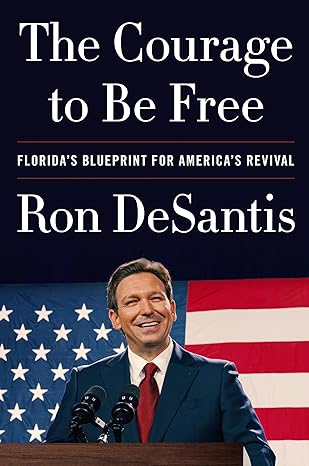
The Courage to Be Free

By Ron DeSantis

Broadside Books

Copyright: © 2023

AmazonPicture

DeSantis Biography and Courage to Be Free:

At the end of the day, I’m fighting for the things I said I’d fight for.” – Ron DeSantis

Courage to Be Free is the Florida governor’s biography with a good measure of politics, vision and American government thrown in. It’s a simple read from someone selling himself as an authentic American and an honest and ethical broker who supports the citizens through good government.

Ron Desantis was born in Jacksonville, Florida in 1978, married Casey Black in 2009, and has three children, two girls and a boy. He attended Yale and graduated in 2001 with a B.A. A year later he entered Harvard and graduated with a law degree in 2005. During law school he was commissioned as an officer in the U.S. Navy. In 2007 he was assigned as a legal advisor to SEAL Team One in Fallujah, Iraq where he was awarded the Bronze Star.

In 2012 he was elected to the U.S. House of Representatives and was re-elected in 2014 and 2016. DeSantis decided not to run for re-election to the House for the 2018 term but instead competed for the Florida governorship which he won. He won re-election in 2022 and as he is term limited by Florida law will not seek that office in 2024. Since he has dropped out of the Presidential race what he does next is an open question.

The first half of Desantis’ book is dedicated to his biography followed by his vision of government and national policy. He draws heavily on the expository essays and articles within the Federalist Papers and their vision for a constitutional republic. The authors of the Federalist Papers, Madison, Hamilton, and Jay argue strenuously for a republican form of government and against direct democracy which one could paraphrase in slang terms as mob rule. DeSantis agrees.

His political philosophy is simple in principle, excoriatingly difficult in execution. Encapsulating his thoughts he states, “The right path forward is not difficult to identify; it just requires using basic common sense and applying core American values…” He follows this up with his blueprint for Florida and America: “Be willing to lead, have the courage of your convictions, deliver for your constituents, and reap the political rewards.” Reaping the political rewards sounds like every politician that has ever walked the face of this Earth and I don’t recognize that as a positive trait.

Literary Criticism:

Courage to Be Free was a number one bestseller in the New York Times, Wallstreet Journal, Amazon, and Publisher’s Weekly shortly after it was released in 2023. Although sales figures are almost impossible to find, for free, the book had an initial print run of 250,000. There hasn’t been a second printing.

Hagiographies are one sided affairs with nary a discouraging word to be found, with sainthood lurking right around the corner. DeSantis autobiography is a hagiography but in fairness one doesn’t provide his opposition with free negative research when your goal is to introduce yourself to the public.

This book had only one purpose, to launch DeSantis into the 2024 presidential Republican primary in the best possible light and as a bonus, get your targeted audience to pay for it by purchasing the book. It admirably accomplishes the task, but it certainly is not a literary masterpiece, rather it reads like a college term paper completed under duress. Simple, direct, with no flowery prose or memorable lines. If you want to learn something about this man, give it perusal, a quick read is all it needs and watch one or two of his Republican primary debates for additional elucidation.

The only reason I read this book was because of the title: The Courage to Be Free. It reminded me of the title of John F. Kennedy’s Profiles in Courage. Kennedy’s book employs a better writing style but that is because Kennedy didn’t author his book. In a previous post I stated who did and I’ll leave it to you to look it up if you are curious. In the end both are about embellishing their respective reputations. Mission accomplished.

References and Readings:

Exploration 21: MK–U Fame

FootnoteA

Lime and limpid green, a second scene
A fight between the blue you once knew
Floating down, the sound resounds
Around the icy waters underground

Pink Floyd – Astronomy Domine: Written by Syd Barrett – Piper at the Gates of Dawn – 1967

Astronomy Domine“, a Latin phrase meaning “An Astral Chant to the Lord” leads off Pink Floyd’s debut album: “Piper at the Gates of Dawn” containing the rhyming cadence of nonsense some of which are noted above. Many have attributed these lyrics to a psychedelic experience induced by LSD, but others say nay–you decide. Leaving that aside, Syd Barrett in 1968 was thrown out of the band that he helped create, reportedly due to his excessive use of psychedelics and mental illness, cause, and effect some would say. Barrett’s family denied that he was mentally ill only that he was occupying a point on the autism spectrum. Roger Waters, Floyd bassist, the world’s best-known antisemite and Red Chinese apologist, said Barrett was schizophrenic. David Gilmour, the band’s guitarist, believed that LSD may not have been the root cause of Barrett’s aberrant behavior but it likely was the catalyst. Barrett died in 2006 at the age of sixty, a painter, a gardener, a recluse.

MKUltra, as I discussed in a previous post concerning Ken Kesey’s novel “One Flew Over the Cuckoo’s Nest“, was a covert CIA designed, funded, and operated psy-op to brainwash and mentally torture subjects with the aim of controlling human behavior. The CIA used drugs, such as LSD, electroshocks, hypnosis, sensory deprivation, isolation, verbal abuse, sexual abuse, radiation, and other sadistic depravities to achieve their objectives. The operation officially ran from 1953 to 1963 or 1973 depending on source, but there is speculation that it continued well beyond the previously mentioned dates. Allegedly, all CIA documents related to MKUltra were destroyed in 1973 by the order of CIA Director Richard Helms. The operation was revealed to the public by the U.S. Senate Church Committee in 1975 with additional information coming from the Rockerfeller and Pike Committees run from the Senate and House of Representatives, respectively. The program consisted of 162 projects at 86 institutions including colleges, mental hospitals, prisons, and drug companies and employed at least 185 “researchers”. MKUltra was unethical and illegal, causing widespread human destruction and death among the thousands of unknowing subjects with little or no known repercussions or consequences for the instigators or managers of the program.

It is estimated that at least a thousand, likely more, a lot more, prostitutes’ and their clients, enlisted military, CIA and other government employees, drug company employees, terminal cancer patients, prisoners, college and university students, and the vulnerable were selected, some voluntarily, some not, for the experiments which frequently did not end well. Over 1100 soldiers in the U.S. Army alone were administered LSD; with some of their stories discussed below.

Using government-employed prostitutes, read that opening phrase again, unsuspecting men were lured to CIA safe houses where they were drugged with LSD and observed. George Hunter White, the federal agent in charge of this sub-program of MKUltra, known as Midnight Climax, is quoted as saying in a letter to the head of the program, Sidney Gottlieb, that his work was, “…fun, fun, fun…Where else could a red-blooded American boy lie, kill, cheat, steal, rape, and pillage with the sanction and blessing of the All-Highest? High morals and ethics were not a requirement for employment at the CIA.

The agency also targeted individuals who were considered enemies of or threats to the government, including foreign agents and dissidents. The subjects were detained and coerced into participating in the experiments. Robert Kennedy’s assassin Sirhan Sirhan’s lawyer discussed in open court that his client may have been the subject of a MKUltra experiment but offered no evidence as proof.

The CIA experimented on their own employees, military personnel, and other government workers without their consent or knowledge. Frank Olson, a CIA scientist, was murdered because of his concerns over the program.

Some individuals were aware that they were participating in MKUltra experiments and consented to be part of the research such as Ken Kelsey mentioned above. These volunteers often included military personnel, government employees, and civilians who were recruited for specific studies. The late 50s early 60s crowd of bohemians and hippies were full of willing participants to experiment with LSD. No coercion needed.

 As a outgrowth of Nazi war crimes during WWII, the Nuremberg Code was established in 1947 and is still considered a fundamental document in the ethics of medical research. The Nuremberg Code was only six years before the onset of the MKUltra experiments.

Below is a compilation of some of the more notorious, famous, and not-so-famous subjects of MKUltra that are in the public records.

  • Harold Blauer, a minor talent in the professional tennis circuit during the 1930s, managed to reach the “Round of 16” in the U.S. Professional Tennis Tournament at Forest Hills in 1935 but lost to the eventual winner, Bill Tilden. Later in life, due to symptoms of depression, Blauer checked into the New York State Psychiatric Institute in 1952, where he was diagnosed as a “pseudo-neurotic schizophrenic” which in modern terms is called “borderline personality disorder”. The doctors believed his condition was improving and scheduled him for release from the institute. Inexplicably the doctors began injecting Blauer with a derivative of mescaline, MDA, a psychedelic compound like LSD and psilocybin and a close cousin of MDMA, better known in the night clubs as Ecstasy. The drug was developed by the German company Merck in 1912. One month after checking into the Institute Blauer was dead. The treating doctors were treating him under a classified agreement with the U.S. Army Chemical Corps, a front for the CIA’s MKUltra project. The doctors have stated that they did not know what they were injecting into Blauer. The CIA’s front man at the Institute was Dr. Paul Hoch. Hoch later became head of mental hygiene in New York and a professor at Columbia University. In 1975 the government admitted to Blauer’s family that the mescaline derivative injections caused his death. In 1987, the government, after being sued for Blauer’s death paid out $700,000 to his family.
  • Whitey Bulger was a crime boss heading up the Winter Hill Gang in Somerville, Massachusetts, a suburb of Boston and an FBI informant snitching on the Patriarca crime family. Prior to his criminal career in Boston, he was arrested for robbing a bank in Rhode Island. He was incarcerated in an Atlanta Federal prison for this crime in 1956, becoming an inmate participant of MKUltra in return for a lighter sentence. He was told the experiment was focused on finding a cure for schizophrenia. While in prison he was given large doses of LSD almost every day for 15 months. He claims that his violent tendencies in later life were due to the drug. Even though he was a protected informant for the FBI he was finally apprehended in California in 2011 and sentenced to two consecutive life terms in 2013. He was premeditatively murdered within 7 minutes of arrival at the high security Hazelton Prison in West Virgina in 2018. Who ordered his murder remains unknown.
  • Allen Ginsberg, who died in 1997, was an American poet, writer, and core member of the Beat Generation best known for his 1956 poem of lament “Howl“, a literary reaction to a bad peyote trip. Ginsberg became a volunteer in the MKUltra in the 1950s, but it is not exactly clear whether he was fully informed of the nature or purpose of the LSD experiments. After discovering that the experiments were a CIA operation he wrote, “Am I, Allen Ginsberg, the product of one the CIA’s lamentable, ill-advised, or triumphantly successful experiments in mind control?” A dual head scratcher of a question framed by a poet.
FootnoteC
  • Robert Hunter was the lyricist for the Grateful Dead, joining the band in 1967 but never playing on stage, who went on to write many of the band’s most memorable songs including: “Ripple“, “Truckin“, and “Terrapin Station“. He also participated, and was paid, in MKUltra experiments with LSD, psilocybin, and mescaline at Stanford University. He reported that his experiences were creatively formative for him. He went to sing the praises of LSD throughout the land. “Black Peter“, “Dark Star“, and “China Cat Sunflower” were all songs that he wrote while under the influence of LSD. He died in 2019 at the age of 78 in California.
  • Dr. Robert Hyde is credited with being the first American to take LSD. The doctor was a psychiatrist at Boston Psychopathic Hospital, where he was persuaded by the Viennese doctor, Otto Kauders, to try and prescribe LSD to treat schizophrenia in his patients. In 1949 Hyde obtained LSD from Sandoz Chemicals, the company where LSD was discovered in 1938. After taking the drug he didn’t experience any psychosis, but his colleagues found his behavior strange. Hyde went on to accept CIA funding to test LSD on one hundred patients. This was the first of many LSD experiment in the U.S. Robert Hyde continued his experiments on unwitting patients at the CIA’s center in Rhode Island and later at the Vermont State Hospital. It was never clear whether Dr. Hyde fully understood the purposes of MKUltra.
  • Candy Jones, an American model, and radio host claimed that she was hypnotized and brainwashed by an MKUltra agent in 1960 who later employed her as a courier and spy. She claimed the experiments on her resulted in her having a split personality. Jones also claimed that Dr. Gilbert Jensen was her CIA handler who hypnotized her and drugged her to bring forward a secondary personality named Arlene. This secondary personality was supposedly used for various covert missions. She claimed that the CIA trained her in every aspect of covert action, including explosives, close combat with improvised weaponry, disguise, and communications. Her experience is speculative and has never been proven but it is a great plot which was used in the 2010 movie Salt. Angelina Jolie as Evelyn Salt plays a double-agent who is mind-controlled by remnants of the former USSR secret service. 
  • Ted Kaczynski was an American mathematician and domestic terrorist better known as the Unabomber. While earning his undergraduate degree at Harvard he volunteered, in 1959, for a psychological study run by Dr. Henry Murray, a CIA employee working on the MKUltra project. Kaczynski, in the study was subjected to intense interrogation that were, in his own words, “vehement, sweeping, and personally abusive.” The aim was to psychologically break the subject and explore the effects of severe stress on the human psyche. He later became a recluse, living in the backwoods of Montana, and a long-distance murderer, mailing bombs to people who advocated for modern technology, injuring twenty-three and killing three. From his cabin in Montana, he developed a nihilistic, anti-capitalist, anti-technology political philosophy, writing a manifesto that opposed industrialization and rejected modern left-wing politics. After an intense manhunt he was captured in 1996 and died in prison in 2023. As a post-script, Timothy Leary began his research, in 1960, on psychedelics while at Harvard. While there is no evidence that Leary knew or ever met Kaczynski at Harvard, it has been said that Dr. Murray supervised Leary’s research into psychedelics.
  • Ruth Kelly a singer and waitress at the Black Sheep Bar in San Francisco, was unknowingly given LSD before performing on stage by George H. White, a veteran of the US Bureau of Narcotics or one of his men. White found Kelley attractive but uninterested and resistant to his advances. She was able to finish her set but rushed off to the hospital immediately afterward and wasn’t released until the effects of the LSD wore off. White headed up a part of the MKULTRA program called Operation Midnight Climax, a program that used prostitutes who gave their clients LSD, all the while agents behind one-way mirrors observed the effects of the drug. A CIA investigator later wrote that “The LSD definitely took some effect during her act.” White claimed he was trying to recruit Kelly for Operation Midnight Climax, which may have been true, but he may have had other motives. What became of Ms. Kelly after her run in with White is lost to the streets of San Francisco.
  • Ken Kesey was an American novelist who wrote “One Flew Over the Cuckoo’s Nest“. After finishing college at the University of Oregon he moved to California and enrolled in Stanford to study creative writing from 1958 to 1961 while simultaneously settling into the counterculture lifestyle gripping the area and the nation. In 1959 he volunteered for the CIA’s LSD mind experiments being run under the code name MKUltra. These experiments were conducted at a VA hospital in Menlo Park, just northwest of Stanford. At the same time in 1959 he accepted a position as an attendant in the hospital’s psych ward, working there while tripping on LSD. He began writing “One Flew Over the Cuckoo’s Nest” in 1959 or 60 (various sources give different dates).
FootnoteD
  • Charles Manson was a pimp, arsonist, thief, rapist, murder, and leader of the San Francisco Manson Family religious cult. He was born in Cincinnati, Ohio in 1934 to Kathleen Maddox, a 15- or 16-year-old prostitute and alcoholic. Manson took the last name of his mother’s first husband. Manson spent much of his teen years in juvenile reformatories and prison for theft and robbery. He was first sent to juvenile detention in 1947 which he promptly ran away from. From 1947 till 1967 Manson was sent to various prisons on various charges, eventually, at the age of thirty-two he was given his freedom. He had by that time spent sixteen years of his life behind bars. In prison he studied Scientology and continued with the practice for a brief period while he was in Los Angles after his release from prison. In 1967 he moved to San Francisco, collected a group of followers from the local street bohemians, and proclaimed himself a god. This group, known as Manson’s Family, was a communal religious cult who worshiped Manson and his teachings. In 1969, the Family carried out several notorious murders on Manson’s orders, including that of actress Sharon Tate, Roman Polanski’s wife. Manson was convicted of first-degree murder and conspiracy to commit murder in 1971. Manson died in prison in 2017 at the age of eighty-three, spending 62 years of his life locked up. If you discount his first 13 years of life, Manson was only a free man for 8 years in which he spent his non-incarcerated time almost entirely as a criminal and a con man. Whether Manson was part of the MKUltra experiments has always been highly controversial with little corroborating evidence to link him to the CIA experiments. Author Tom O’Neill explored the possibility but concluded that the theory was “far-out”, but he authored a book about it anyway. Some also insist that Manson and his followers were heavily into LSD which they obtained from the San Francisco Free Clinic, reportedly sourced through CIA connections. Manson was a troubled kid and thoroughly wacked-out street smart adult who had the ability to connect and schmooze with anyone. It is unlikely that the CIA could have made Manson any crazier than he already was.
  • Linda McDonald, a 25-year-old mother, was admitted to the Allan Memorial Institute in Montreal, Canada in 1963 for fatigue and depression, known today as post-natal depression, after the birth of her fifth child in five years. After 3 weeks of uneventful and normal evaluations, Ewen Cameron, a famous doctor with impecable credentials diagnosed Linda as a paranoid schizophrenic or possible manic depressive, better known today as bipolar disorder. Her husband was told that she would be institutionalized for the rest of her life if he didn’t agree to his “deep sleep” treatment, but Linda was not informed of the treatment plan, nor did she give her consent. Within a month she was comatose and subsequently spent 73 or 86 days in a barbiturate infused sleep. She was also subjected to 102 or 109 high doses of electroconvulsive treatments along with repetitious “depatterning” phrases continually playing under her pillow as she slept. At the end of the treatment her mind had been totally wiped clean, and to this day she remembers nothing of her life before leaving the clinic. She had been turned into an infant to the point her husband had to potty train her. When considering her yearly age, she starts from the day she left the clinic, her first 26 years do not exist to her. She tried to commit suicide twice the first two years away from the clinic. Ewen Cameron was a friend of Allen Dulles, head of the CIA, and his “Sleep Room” experiments were part of MKUltra. Fifty-five Canadian families are suing the government and the hospitals involved in MKUltra for monetary damages. The lawsuit was first filed in 2019 and continues to this day.
  • Frank Olson was an American bacteriologist and a biological warfare scientist who worked for the United States Army Biological Warfare Laboratories, and was an employee of the CIA. Olson was one of the few who knew the true nature of MKUltra and was against the project’s human experiment protocols. In a 1953 meeting in rural Maryland, during the early days of MKUltra, Olson was secretly dosed with LSD by his colleague and superior Sidney Gottlieb, head of the MKUltra program. Olson had a severe and traumatic reaction to the drug which continued for days. Nine days after being dosed, Olson plunged to his death from the window of the Hotel Statler in New York. The U.S. government first described his death as a suicide, and then as misadventure, while others alleged murder. In 1975 it was learned from the Rockefeller Commission that Olson was dosed with LSD without his knowledge. His family threatened to sue, and the government eventually agreed to a $750,000 settlement and an apology from President Gerald Ford. In 1994 Olson’s son had his father’s body exhumed to be buried next to his mother. The family after exhumation had a second autopsy performed. The team that examined the body concluded that Frank Olson was murdered before being thrown out of the hotel window. The CIA’s manual of assassination says the most efficient “accident”, in a simple assassination is a fall from seventy-five feet or more onto a solid surface. Frank Olson stayed on the 13th floor of the Hotel staler, approximately 130 feet above the surface. It is believed that Allen Dulles and Richard Helms were directly involved in Frank Olson’s death.
  • Wayne Ritchie, deputy US marshal, veteran of the Marine Corps, claims that he was unknowingly dosed while at a holiday party with other federal officers in December 1957. In a sworn deposition given as part of the lawsuit Ritchie later filed, Ira Feldman, a CIA agent involved in the MKUltra program, nonchalantly explained the manner in which he observed the people he had secretly drugged with LSD: “You just sit back away and let them worry, like this nitwit, Ritchie,” he said, acknowledging that Ritchie’s dosage was “a full head”. He said Ritchie was dosed because he “deserved to suffer.” Shortly after being exposed to LSD, Ritchie armed himself with his government-issued service revolvers and attempted to rob a bar in the Fillmore District. During the robbery attempt, he was knocked out by another customer, and arrested by police a brief time later. He pleaded guilty to attempted armed robbery and was sentenced to five years of probation and a fine of $500. 40 years after the incident, Ritchie learned of the CIA’s MKULtra program that covertly drugged people in the San Francisco area with LSD. He filed suit, which was dismissed, but the court acknowledged that it was quite possible that the CIA drugged Ritchie.
  • Jimmy Shaver, an airman at the Lackland Air Force Base in San Antonio, Texas, with no previous criminal record, was accused of the rape and murder of a 3-year-old girl, Chere Jo Horton on the night of 4 July 1954. When Shaver was found he was shirtless, covered in blood, and in a “trance-like” state.  He was arrested and interrogated, during which he didn’t recognize his wife and insisted that another man was responsible, claiming to have lost all memory of the incident. Eventually, Shaver signed a statement taking full responsibility, saying the evidence was overwhelming and that he must have committed the heinous crime. Shaver 4 years later was executed on his 33rd birthday for the rape and murder of Chere Jo Horton. In 2019 it was revealed that Shaver was unknowingly used by MKUltra as one of its subjects in mind control. 
  • James Stanley joined the U.S. Army when he was 15 years old and by the time he was twenty he had been promoted to master sergeant which in these modern times takes about 20 years for a private to get promoted to MSG. To say he had a promising career in the Army ahead of him would be an understatement. Then he volunteered to test gas masks in 1958 at Edgewood Arsenal, a chemical weapons facility. While testing the masks the drinking water provided to him was secretly laced with LSD. It has been speculated that the testing of gas masks was a ruse while observing his reaction to LSD the real purpose of the experiment. Stanley began experiencing significant negative effects after being given the LSD. He suffered from hallucinations, memory loss, incoherence, and a personality change. He had spells of uncontrolled violence that destroyed his family and likely impacted his career as a soldier. He left the Army in 1969 and his marriage was dissolved one year later. The testing he was subjected to was done under the MKUltra project. He did not learn that he was exposed to LSD until 1975, when the Army followed up on the experiment by contacting him. He then realized that his odd behavior and feelings of confusion were the result of chemical testing that he had not agreed to. He sued the Army for the testing but lost his case. According to the Supreme Court, it didn’t matter whether his allegations were true. He lacked standing to sue because military personnel can’t sue the government or their superiors for damages, no matter how severe or even unconstitutional they may be. Dissenting Justices Brennan and Marshall write, “…it is important to place the Government’s conduct in historical context. The medical trials at Nuremberg in 1947 deeply impressed upon the world that experimentation with unknowing human subjects is morally and legally unacceptable. The United States Military Tribunal established the Nuremberg Code as a standard against which to judge German scientists who experimented with human subjects. Its first principle was: “The voluntary consent of the human subject is absolutely essential.” In 1994, Congress passed a private claims bill to remedy the CIA’s wrongful treatment of Stanley. In 1996, an arbitration panel awarded Stanley $400,577, which was the maximum amount allowed under the bill, after a 2-1 vote. There is no public record of who the people on the arbitration panel were.

On 22 January 2024 the FDA (the Food and Drug Agency) finalized new rules relaxing the need for informed consent when experimenting on human subjects with drugs.

FootnoteA: Piper at the Gates of Dawn Album Cover. Pink Floyd. EMI Columbia. 1967

Footnote B: CIA official crest.

FootnoteC: Allen Ginsberg, Timothy Leary, and John C. Lilly. Photo by Philip H. Bailey. CC-By-SA 1991

FootnoteD: Charles Manson in a Courtroom During his Murder Trial. Getty Images. 1970

More Grease

Great Society: A New History

By Amity Shlaes

Published by Harper

Copyright: © 2019

Amity Shlaes, age 62, is the Presidential Scholar at the King’s College, a Christian, classical liberal arts school in Manhattan where she teaches Coolidge, the subject of her most recent book. She previously taught at New York’s Stern School of Business, also in Manhattan where she lectured on Great Depression economics, a subject of her third book which was released in 2007. She is chairwoman of the board of the Calvin Coolidge Presidential Foundation of Plymouth, Vermont, and chairs the jury for the Manhattan Institute’s Hayek Book Prize located in, well–Manhattan. Shlaes is a past trustee of the German Marshall Fund, a public policy think tank promoting cooperation between North America and Europe, initially funded by the West German government as a memorial to the post WWII Marshall Plan. In the early 2000s she was a senior fellow of economic history at the Council on Foreign Relations, a think tank specializing in U.S. foreign policy and international relations.

Shlaes and Sauvik Chakraverti shared the inagural $15,000 Bastiat Prize, a journalism award given by the Reason Foundation, in 2002 for her political economy writing. (Chakraverti received the award for being the greatest libertarian ever.) She gave the 2004 Bradley Lecture, an American Enterprise Institute program series, on the Schechter vs United States Supreme court case that invalidated parts of the legal and regulatory over-reach during the FDR administration. Shlaes received the $50,000 Hayek Book Prize in 2007 for “The Forgotten Man: A New History of the Great Depression. She also recieved the 2007 New York City Deadline Club award, a journalistic Pulitzer type award for opinion writing. Shlaes recieved the 2021 $250,000 Bradley Prize from the Milwaukee based Lynde and Harry Bradley Foundation, a grassroots and faith-based philanthropic organization, for her work on economic history.

Amity Shlaes has five New York Times bestsellers: The Greedy Hand: How Taxes Drive Americans CrazyThe Forgotten Man: A New History of the Great Depression, The Forgotten Man: Graphic Edition, Coolidge, and Great Society: A New History.

Shlaes has written for numerous publications over years including The New Republic, The New Yorker, the Spectator of London, The New York Times, The Washington Post, the National Review, the Wall Street Journal, The American Spectator, Foreign Affairs, Bloomberg News, and Die Zeit. She currently writes a column for Forbes.

Great Society: A New History details Lyndon Johnson’s efforts as president to eliminate poverty in United States. On 22 November 1963, a few hours after the assassination of John Kennedy, Lyndon Johnson was sworn in as the 36th president of the United States. Johnson inherited a robust, growing economy with low unemployment. As a life-long politician, inheriting a healthy economy was not something he believed he could run on for the 1964 presidential election and win. He chose to finish Kennedy’s sensible initiatives on tax rate cuts, budget reduction and civil rights guarantees to all while he worked out the details for his own signature plans that became known as the War on Poverty. The purpose of his strategy was not only to eliminate poverty but expand federal government involvement in education, health and finances for the elderly, and providing aid to the working poor and unemployed. Between August 1964 and July 1965 Congress passed and Johnson signed four major programs that were the prime tactics behind the strategy for the War on Poverty. The first bill signed was the Economic Opportunity Act which created the Job Corps and Youth Corps, along with providing work, education, and training for young adults. Additional programs were geared towards college students, rural poor, and migrants. The second bill passed was the Food Stamp Act which provided nutritional subsidies for the poor. The Elementary and Secondary Education Act was the third bill passed and involved grants to schools and states to assist in the education of low-income families. The final bill passed was the Social Security Act of 1965 which created Medicare and Medicaid.

Proponents of the War on Poverty programs state that poverty rates decreased, as defined by the US government’s Census Bureau, from approximately 23% in 1958 to 11.3% in 1973. The Great Society programs were not fully funded and implemented until late 1965 to late 1966 at which time the poverty rates had already dropped below 15% without any of Johnson’s anti-poverty stimulants. Poverty rates since the passage of the Great Society programs have stubbornly remained between 11 and 15%. An alternate interpretation of the Great Society programs is that at best, they did nothing to reduce poverty to, at worst, they cemented poverty forever more into a narrow range between 11-15% of the population. Inflation adjusted cost estimates for the Great Society programs from inception to present are somewhere north of $60 trillion or a little more than a trillion dollars per year.

Shlaes tells us the story of Johnson’s War on Poverty. She begins with the Kennedy years and ends with Nixon, but it is all Johnson in between. Johnson fathered the Great Society, nursed his skinny stepson into the corpulent war in Vietnam, and left before he had to pay child support. She tells the story of the events and happenings that brought us the Great Society, but she tells the story through the people on the ground and in the halls of power. Michael Harrington and Tom Hayden, socialists with the Students for Democratic Society who crafted the Port Huron statement, a communist manifesto which played a starring role in the birth of the Great Society. Abbie Hoffman who took over SDS and morphed it into a violent Maoist offshoot called the Yippies who were always throwing a temper tantrum against something. Walter Reuther, UAW president and king maker for the Democrat party and money man for all things socialist. Sargent Shriver, poster child for the Peter Principle, was the actual architect of the War on Poverty. Daniel Patrick Moynihan, an intellectual with a heart and absolutely no common sense until his epiphany on cause and effect in 1980s. Burns and Nixon who had the dubious distinction of following Johnson like the men walking behind the elephant parade with a broom and an excessively big bucket and they will be hated for it forever. And Paul Volker the man who showed the nation the secret recipe to fix problems caused by fiscally prolificate politicians — a barrel of remarkably high interest rates.

Shlaes tells this story through the eyes of the men and women who were there. She tells their stories and doesn’t offer much in the way of opinion, neither good nor bad. Even in the end she plays the historian without interjecting herself into the story but the story snitches on itself: good intentions and bad ideas are not the basis for public policy.

Shlaes’ books:

Shlaes’ Lectures and Video:

(The picture of Amity Shlaes comes from the Great Society: A New History jacket back cover. The graph of poverty rates is derived from Census Bureau data.)