The Many Colors of Slavery

Those who deny freedom to others deserve it not for themselves.”—Abraham Lincoln

Whoever does not have two-thirds of his day for himself, is a slave, whatever he may be: a statesman, a businessman, an official, or a scholar.” — Friedrich Nietzsche

As the great continental glaciers receded at the end of the Pleistocene, fertile land emerged, allowing for the transition from hunting and gathering to agriculture. Farming was labor-intensive, and with the rise of permanent settlements came the demand for constrained and controlled labor. Slavery, likely with first roots in Mesopotamia, though independent manifestation by the Pharaohs in ancient Egypt and other early civilizations, made it ubiquitous, and it has never disappeared.

From the bonded laborers of the Pharaohs to the structured servitude in Greece and Rome, from the transatlantic trade that brutalized African populations to the modern exploitation of migrant workers in sweatshops and the sex trades, slavery has evolved rather than vanished. Each era refines its own form of servitude; forced labor, insurmountable debt, bureaucratic entrapment, or corporate exploitation. It is a practice as ancient as prostitution and taxation, deeply embedded in human society, yet constantly shifting into less visible but equally insidious forms. As long as slavery remains profitable its existence will continue to indelibly stain humanities’ collective soul.

Slavery, and its ultimate contrast, freedom, was a persistent theme in the works of sci-fi author Robert A. Heinlein. With a piercing social awareness, Heinlein, who, in his early years, was described by Isaac Asimov as a ‘flaming liberal’—picked up the theme and horrors of slavery with his 1957 juvenile novel “Citizen of the Galaxy”; bringing the many forms of servitude into the personal history of a precocious kidnapped boy named Thorby. Citizen of the Galaxy is a planet-hopping, spacefaring critique of oppression, class structure, and the nebulous concept of freedom. Heinlein crafts a future where contrasting societies across the galaxy reflect varying degrees of servitude and autonomy, if not necessarily total freedom. Man rarely allows himself complete independence.

Heinlein through the lens of Thorby explores the various shades of slavery, beginning with the brutal, controlling enslavement and continuing to more subtle forms that the individual may not even recognize as confinement. (Partial plot giveaways beyond this point.) Escaping his initial enslavement by the graces of a kindly, strict, but loveable old cripple named Baslim, Thorby moves into a hierarchical, structured existence of spacefaring traders then onto a self-imposed, due to a thirst for justice, straitjacket of a corporate bureaucracy on his birth planet of Terra. A life story of how control can be imposed by others or by ourselves.

As Heinlein’s social perspectives evolved, his libertarian leanings took greater prominence in Citizen of the Galaxy. Through Thorby’s life journey, Heinlein emphasizes personal autonomy, resistance to tyranny, and the moral duty to fight injustice. Baslim, Thorby’s first mentor, symbolizes the idea that one person can stand against oppression and make a difference, even if it takes many miles and years to materialize.

This theme runs through much of Heinlein’s work, but here, it’s especially poignant because Thorby is powerless for much of the novel, making his eventual triumph all the more meaningful. Heinlein’s novels, Farnham’s Freehold, Friday, and Time Enough for Love, explore slavery and control, reinforcing humanity’s inherent need for freedom, or at the very least, breathing space.

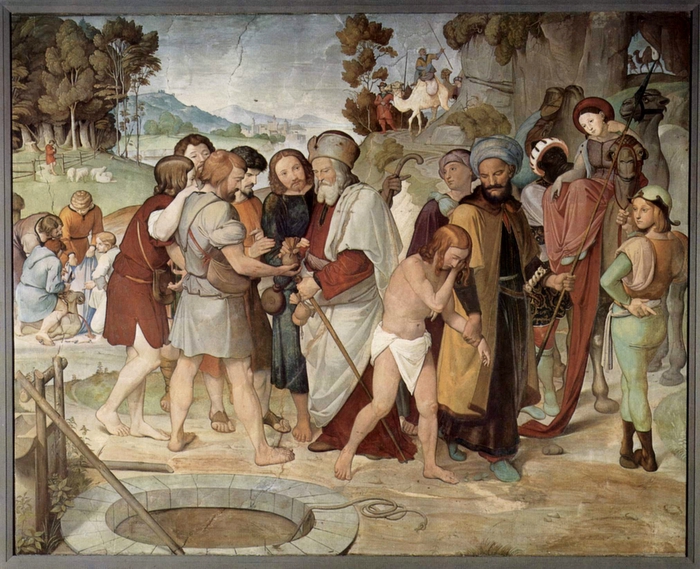
Source: Citizen of the Galaxy by Robert A. Heinlein, 1957. Graphic: Joseph Sold into Slavery by Friedrich Overbeck, 1816. Vanderbilt University. Public Domain.

Black Swans Part II

Last week, we introduced Taleb’s definition of black swans; rare, unpredictable ‘unknown unknowns’ in military terms, with major impacts, exploring historical examples that reshaped society post-event. This week I’m going to introduce a fictional black swan and how to react to them but before that the unpredictable part of Taleb’s definition needs some modifications. True black swans by Taleb definition are not only rare but practically non-existent outside of natural disasters such as earthquakes. To discuss a black swan, I am going to change the definition a bit and say these events are unpredictable to most observers but predictable or at least imaginable to some. Taleb would likely call them grey swans. For instance, Sputnik was known to the Soviets, but an intelligence failure and complete surprise to the rest of the world. Nikola Tesla anticipated the iPhone 81 years ahead of time. 9/11 was known to the perpetrators and was an intelligence failure. Staging a significant part of your naval fleet in Pearl Harbor during a world war and forgetting to surveil the surrounding area is not a black swan, just incompetence.

With that tweak out of the way, we’ll explore in Part II where Taleb discusses strategies to mitigate a black (grey) swan’s major impacts with a fictional example. His strategies can be applied to pre-swan events as well as post-swan. Pre-swan planning in business is called contingency planning, risk management, or, you guessed it, black swan planning. They include prioritizing redundancy, flexibility, robustness, and simplicity, as well as preparing for extremes, fostering experimentation, and embracing antifragility.

Imagine a modern black swan: a relentless AI generated cyberattack cripples the Federal Reserve and banking system, wiping out reserves and assets. Industry and services collapse nationwide and globally as capital evaporates, straining essentials, with recovery decades away if ever. After the shock comes analysis and damage reports, then the rebuilding begins.

The Treasury, with no liquid assets, must renegotiate debt to preserve global trust. Defense capabilities are maintained at a sufficient level, hopefully hardened, to protect national security, while the State Department reimagines the world to effectively bolster domestic production and resource independence while keeping the wolves at bay.

Non-essential programs, from expansive infrastructure projects, research, federal education initiatives, all non-essential services are shelved, shifting priorities and remaining resources to maintaining core social and population safety nets like Social Security and Defense. Emergency measures kick in: targeted taxes on luxury goods and wealth are imposed to boost revenue and redirect resources. Tariffs encourage domestic production and independence.

Federal funding to states and localities is reduced to a trickle. States and municipalities must take ownership of essential public services such as education, water, roads, and public safety. The states are forced to retrench and innovate, turning federal scarcity into local progress.

Looking ahead, resilience becomes the first principle. Diversification takes center stage, with the creation of a sovereign wealth fund based on assets like gold, bitcoin, and commodities, bolstered by states that had stockpiled reserves such as rainy-day funds, ensuring financial stability. Local agriculture, leaner industries and a realigned electrical grid, freed from federal oversight, innovate under pressure, strengthening a recovery. Resilience becomes antifragility, the need to build stronger and better in the face of adversity. And finally, the government must revert to its Lockean and Jeffersonian roots, favoring liberty and growth over control, safety, and stagnation: anti-fragility.

Source: The Black Swan by Nassim Nicholas Taleb, 2007. Graphic: The Black Swan hardback cover.

The Legacy of John Locke

The English Bill of Rights was signed into law on 13 February 1689, creating the constitutional monarchy that still exists today, albeit with the monarchy reduced to a figurehead status.

The coronation of William III and Mary II was conditional on their agreeing to the terms stipulated in the Bill of Rights, which included, among others, free speech for members of Parliament, the freedom to bear arms for self-defense, freedom from cruel and unusual punishment, and the establishment of due process.

The Bill of Rights was primarily drafted by members of the English Parliament in response to the abuses of power by King James II, who was overthrown in the Glorious Revolution of 1688.

John Locke’s “Second Treatise of Government” had a significant influence on the English Bill of Rights of 1689. Locke was a proponent of natural rights, the social contract, and the separation of powers, which were foundational to the development of constitutional government. His work emphasized that government should be based on the consent of the governed and that individuals have inherent rights to life, liberty, and property.

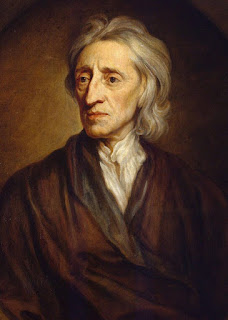
Source: JohnLocke.net. Graphic: John Locke, 1697, Public Domain.

The Mystic

Rasputin: Dark Servant of Destiny.  Grigori Rasputin, often referred to as the “Mad Monk,” was a peasant with a fondness for madeira, cheap steaks, and prostitutes. He seemingly cured the Tsar’s son, Alexei, returning him to health by a gift from God: the power of faith.

Rasputin, living by the Russian proverb “You can’t avoid that which is meant to happen,” accepted his fate and was welcomed by the Empress and her son into the royal household with open arms. However, he was later expelled from the royal household by the Tsar and his handlers for violating another Russian proverb: “Don’t bring your own rules into someone else’s monastery.”

Rasputin: Dark Servant of Destiny, a 1996 HBO TV movie seen by almost no one, is Alan Rickman’s tour de force. It provides an exquisite emotional interpretation of religious fervor and mystical power. The film brings the myth of Rasputin into the realm of authenticity and historical plausibility.

The film recreates Rasputin’s madness amidst the early 20th-century events that predated and possibly presaged the madness of events set into motion by Lenin in 1917 (Rasputin was murdered towards the end of 1916). These events led to what Orwell succinctly summarized in “Animal Farm” when the new boss replaced the old boss: “The creatures outside looked from pig to man, and from man to pig, and from pig to man again; but already it was impossible to say which was which.

Genre: Biographical, Drama, Historical

Directed by: Uli Edel

Screenplay by: Peter Pruce

Music by: Brad Fiedel

Cast: Alan Rickman, Greta Scacchi, Ian McKellen, Freddie Finlay

Film Location: Budapest, Hungary and St. Petersburg, Russia

ElsBob: 7.0/10

IMDb: 6.9/10

Rotten Tomatoes Critics: -%

Rotten Tomatoes Popcornmeter: 79%

Metacritic Metascore: -%

Metacritic User Score: -/10

Theaters: 23 March 1996

Runtime: 135 minutes

Source: Rotten Tomatoes, IMDb. Graphic: Rasputin Movie Trailer, copyright HBO.

Cupid and Psyche

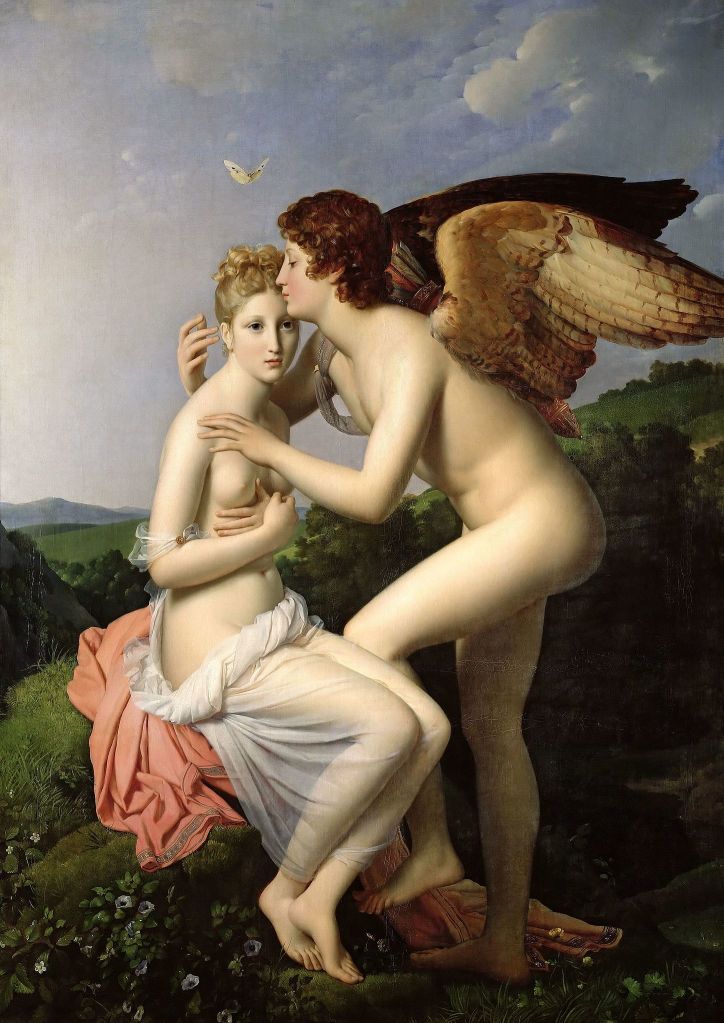
Cupid and Psyche is the timeless tale of love’s conquering power, overcoming all obstacles in its path. It symbolizes the union of the soul with desire, transcending to a love that goes beyond the physical and the mortal.

The only extant writings of Cupid and Psyche is known from Apuleius’s romance “The Golden Ass,” composed in the 2nd century AD. The tale is likely to have been known as early as the 4th century BC, and Cupid is known as far back as the 8th century BC from Hesiod’s “Theogony.”

In the myth of Cupid and Psyche, with Cupid’s mother Venus as the antagonist, the characters metaphorically act out various emotions and experiences, both mortal and immortal.

Psyche,a mortal more beautiful than the goddess Venus, represents the soul (in Greek, Psyche means soul) and its journey from the tragedy of human life to the transformative power of love for everlasting spiritual fulfillment.

Cupid, tasked by his mother Venus to destroy Psyche for possessing beauty beyond that of a mortal, instead falls in love with her. Cupid embodies love and desire, and the emotional power and unpredictability that it brings to a relationship.

Venus, the goddess of love and beauty, represents jealousy and the obstacles that Psyche battles to realize the completion of her quest for emotional and spiritual fulfillment. Her trials for Psyche reflect the ever-present barriers to true love.

Cupid and Psyche is a story of transcendent transformation over the physical to the triumph of love and the immortality of the soul.

Trivia: In the painting by Gerard, the butterfly floating above Psyche’s head represents, rather redundantly, the soul.

Source: The Golden Ass by Apuleius. The Evolution of Cupid, Erlang Shen, Fatelines, 2022. Graphic: Cupid and Psyche by Francois Gerard, 1798, The Louvre, Public Domain.

Social Contract

Thomas Hobbes, a 17th-century philosopher and author of Leviathan, argued that humans are driven by self-interest and the instinct for survival, which can be inherently self-destructive. To curtail our tendency to drift towards chaos and early death, he proposed his social contract theory, where we sacrifice some freedoms to the state in exchange for safety, peace, and security.

Hobbes recognized that surrendering freedoms may lead to tyranny. He said that if the state becomes oppressive, the social contract is broken, and citizens are no longer bound to submit to its authority. He argued that the contract is rational and valid only as long as the benefits outweigh the costs.

Thomas Jefferson used a similar argument in the Declaration of Independence, stating: “That whenever any Form of Government becomes destructive of these ends, it is the Right of the People to alter or to abolish it, and to institute new Government, laying its foundation on such principles, and organizing its powers in such form, as to them shall seem most likely to effect their Safety and Happiness.

Source: Hobbes’s Moral and Political Philosophy, SEP 2022. Graphic: AI generated.

The Natural State of Man

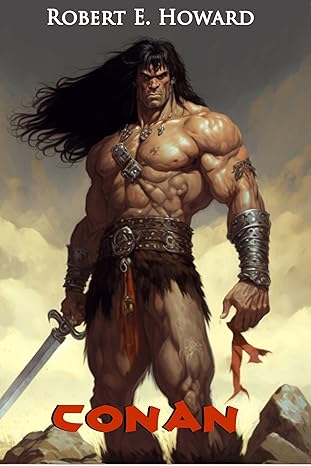
Robert Howard, 20th-century pulp fiction author and creator of Conan the Barbarian, believed that “barbarianism is the natural state of mankind. Civilization is unnatural. It is the whim of circumstance.”

Thomas Hobbes, 17th-century English philosopher best known for his social contract theory, attempted to justify that the authority of the state superseded the rights of man, believing that the natural state of man was war, that life was “solitary, poor, nasty, brutish, and short,” thus necessitating some higher authority to calm and tame the natural instincts of man.

Michael Huemer, professor of philosophy at UC Boulder, argues that “The current state of American society is a historical fluke, marked by extraordinarily low levels of exploitation, oppression, and injustice… The key sources of this happy state include such institutions as democracy, free markets, and modern science.”

I would add free speech coupled with property rights to the mix. Modern science is a double-edged sword that in the end, I would argue, is more a societal neutral force rather than a force against our true nature.

Huemer further maintains that before we tear down these stabilizing institutions, we should heed the advice of the Hippocratic Oath and first do no harm, stating, “If we undermine our current norms and institutions, the most likely result is not that we will be swept into a paradise… [but] the most likely result is that we will revert to something closer to the natural state of human beings.”

Huemer concludes with the observation that the 20th-century experiment called communism swept away all existing culture, norms, and institutions, resulting in 100 million deaths.

Source: Oxford Reference. Progressive Myths by M. Huemer, 2024. Graphic: Conan, Kindle Book Cover, Amazon.

Love and Happiness

The opening line to Tolstoy’s “Anna Karenina”, “All happy families are alike; each unhappy family is unhappy in its own way,” is frequently misunderstood to mean that all unhappy families are sadly similar in that negative dynamics are always present.

What Tolstoy and the original French proverb convey is that unhappy families suffer from unique dysfunctions, such as violence, substance abuse, or incest, while happy families have avoided these destructive traits.

In statistics, this concept is known as the ‘Anna Karenina Principle‘. It states that for an endeavor to be successful, every possible deficiency must be avoided, whereas for it to be unsuccessful, only one negative factor needs to be present.

A similar proverb from 16th or 17th-century Europe, “One bad apple spoils the whole barrel,” began as practical advice to apple farmers and evolved to describe how one negative influence can affect an entire group or family.

Russian authors like Tolstoy and Dostoevsky tend not to write about happy families because, in their view, there is no story, no moral, and no psychological depth without pain and suffering.

English author W. Somerset Maugham brought this idea back into the limelight with a twist when he wrote: “They say that happy people have no history, and certainly a happy love has none. They did nothing all day long and yet the days seemed all too short.”

There is no shame in happiness; life does not need drama or conflict to be meaningful.

Source: Anna Karenina by Tolstoy. Rain and Other South Sea Stories by W. S. Maugham. Graphic: Apple by Tembhekar. Public Domain.

Seeking God

95% of the universe is a mystery. About 68% is dark energy, which is believed to drive the accelerated expansion of the universe, though its exact nature is unknown. 27% is dark matter, which holds galaxies together and is believed to consist of one or more massive, yet unknown, particles.

Science Daily reports that researchers at the University of Michigan and five other institutions “have strengthened the case that matter becomes dark energy when massive stars collapse and become black holes.” This suggests that the universe’s expansion may be partly explained by the expansion of black holes through cosmological coupling. It also implies that black holes can gain mass without consuming matter, directly challenging the Standard Model of particle physics.

This either leads to the Big Freeze—infinite expansion through not quite infinite time—or the Big Crunch, where gravity eventually says ‘Enough!’ and collapses everything back into an infinitesimal point.

To sum up, we may or may not understand 5% of the universe, while the remaining 95% aligns with Socrates’ axiom from 6th century Greece—we essentially know nothing.

Source: University of Michigan. “Evidence Mounts for Dark Energy from Black Holes.” Science Daily. 2024. Graphic: Black Hole.

Epistemic Humility

Donald Rumsfeld, expanding on Socrates’ statement, “The only true wisdom is in knowing you know nothing,” pedantically states in the year 2002 that, “There are known knowns—things we know that we know. There are known unknowns—things we know we don’t know. But there are also unknown unknowns—things we don’t know we don’t know.

Which suggests that we all are pre-ordained to a life of study to shorten the list of unknowns and the embarrassment of being unprepared.

G.K. Chesterton anticipating that a lifetime, or something less than a lifetime of study has its dangers, warned in his 1908 collection of essays, “All Things Considered,” “Without education, we are in a horrible and deadly danger of taking educated people seriously.” Implying that a myopic education may allow for mastering a single subject but is ill-equipped to understand anything broader; unable to see the forest for the trees.

Which leads us to the 1973 “Magnum Force” with Clint Eastwood, wielding a Smith and Wesson Model 29 .44 magnum in a Dirty Harry hand, explaining to an unfortunate soul that “A man’s got to know his limitations,” highlighting the concept of epistemic humility: the recognition that one’s knowledge and understanding is always limited and to proceed accordingly.

Source: Socrates. G.K. Chesterton. Socratic-Method.com.  Graphic: Magnum Force poster, copyright Warner Bros.