The Legacy of John Locke

The English Bill of Rights was signed into law on 13 February 1689, creating the constitutional monarchy that still exists today, albeit with the monarchy reduced to a figurehead status.

The coronation of William III and Mary II was conditional on their agreeing to the terms stipulated in the Bill of Rights, which included, among others, free speech for members of Parliament, the freedom to bear arms for self-defense, freedom from cruel and unusual punishment, and the establishment of due process.

The Bill of Rights was primarily drafted by members of the English Parliament in response to the abuses of power by King James II, who was overthrown in the Glorious Revolution of 1688.

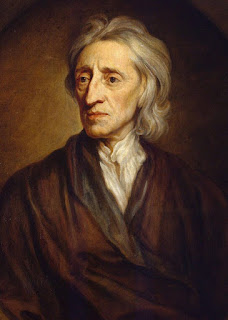
John Locke’s “Second Treatise of Government” had a significant influence on the English Bill of Rights of 1689. Locke was a proponent of natural rights, the social contract, and the separation of powers, which were foundational to the development of constitutional government. His work emphasized that government should be based on the consent of the governed and that individuals have inherent rights to life, liberty, and property.

Source: JohnLocke.net. Graphic: John Locke, 1697, Public Domain.

Falcon Heavy

Seven Years ago on 6 February 2018, SpaceX’s Falcon Heavy made its maiden voyage, carrying a Tesla Roadster with Starman in the driver’s seat. The rocket is designed to go beyond low Earth orbit but is not certified to carry any sentient biologics.

Recently, astronomers affiliated with Harvard announced the discovery of an asteroid in an orbit uncomfortably close to Earth. Further research by the red-faced researchers revealed that it was the Tesla roadster launched by SpaceX in 2018. The Tesla is in a heliocentric orbit and is currently on its second trip around the sun, according to Pearson.

To date, Falcon Heavy has inserted 11 payloads into GEO, GTO, HEO, LEO, and heliocentric orbits. It has up to 10 more missions scheduled through 2028. Eventually, the rocket will supposedly be retired when Starship is fully operational.

Source: US News. Person. CNET. Graphic: Falcon Heavy Demo Mission, 2018, copyright SpaceX. Falcon Heavy First Launch 6 February 2018, copyright SpaceX.

The Worst Known Natural Disasters

The three greatest loss of life from natural disasters all occurred in China. Almost 7 million people died in two catastrophic floods and an earthquake.

  1. 1931 China Floods:
    • Death Toll: Estimated around 4 million people.
    • Details: These floods, caused by the overflow of the Yellow River, Yangtze River, and Huai River during an unusually wet summer, led to one of the most catastrophic events in human history. The death toll was from drowning and post-flood starvation.
  2. 1887 Yellow River Flood, China:
  3. 1556 Shaanxi Earthquake, China:
    • Death Toll: Estimated around 830,000 people.
    • Details: 7-8 magnitude earthquake strikes …. China. Majority of inhabitants lived in loess-deposited caves, which collapsed when the quake struck.

Graphic: 1931 China Floods, china-underground.com

Die, Die Again

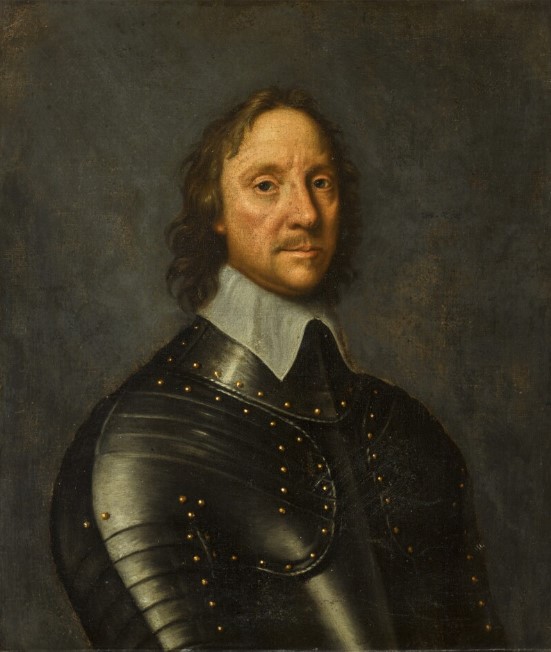
On 30 January 1661, Oliver Cromwell, Lord Protector of England, Scotland, and Ireland, suffered his second death. His first death, possibly from malaria or sepsis, occurred on 3 September 1658. On that day a windstorm of supposedly hurricane strength occurred, which some claimed was the devil coming to collect his due. He was buried with honors almost two months later on 10 November 1658, at the east end of Henry VII’s chapel in Westminster Abbey.

After Cromwell’s first death, the monarchy was restored to power. The new king, expressing his gratitude to Cromwell for giving the country a taste of democracy, had his body exhumed, in preparation for his second death. His body was then hung in chains, a common fate for traitors, then decapitated, with his head placed on a spike that remained on display until 1685. His body, sans the head, was then unceremoniously thrown into a pit.

Source: History Today. World History. RMG. Graphic: Portrait of Oliver Cromwell from the studio of Robert Walker, Property of Sir Brooke Boothby.

Odysseus Cometh

The Return: After 20 years of epic battles and mythical monsters, Odysseus (Ralph Fiennes) finally returns to Ithica—an island that seems more like a foreign land than his home. Time hasn’t been kind to our hero, and he’s got a mountain to climb to reclaim his place. Meanwhile, his devoted wife Penelope (Juliette Binoche) clings to hope, even as suitors swarm like wolves to sheep, eager to force her into an unwanted marriage. She faces a grim ultimatum: choose a new husband, or they’ll choose for her—and her son’s life hangs in the balance.

This film is a masterclass in staying true to the source material, with a fresh twist: Odysseus, the weary warrior, must navigate the perils of explaining his prolonged absence and wrestling with a hometransformed by time and neglect.

While the movie may not be packed with non-stop action, it more than compensates with stellar direction from Paolini and powerful performances from Fiennes and Binoche. One medium sized gripe: Fiennes’s tendency for soap operish dramatic pauses, which he also used in excess in “Conclave,” often exceeds the patience of viewers. When William Shatner’s dramatic word chop fades from memory Fiennes Alzheimer pause memes will pick up from that point forward.

Genre: Drama–Great Books–Suspense

Directed by: Uberto Pasolini

Screenplay by: John Coilee, Edward Bond, Uberto Pasolini

Music by: Rachel Portman

Cast: Ralph Fiennes, Juliette Binoche

Film Location: Greece and Italy

ElsBob: 7.0/10

IMDb: 6.2/10

Rotten Tomatoes Critics: 77%

Rotten Tomatoes Popcornmeter: 76%

Metacritic Metascore: 67%

Metacritic User Score: 6.2/10

Theaters: 6 December 2024

Runtime: 116 minutes

Budget: $

Box Office: $899,575

Source: Rotten Tomatoes, IMDb, Metacritic. Graphic: The Return Poster and Trailer, copyright Bleecker Street.

No One Shall Sleep

Nessun Dorma,” (No One Shall Sleep) an aria by Giacomo Puccini from the final act of his opera Turandot, is performed by an enigmatic tenor prince who seeks the hand of Princess Turandot. The Princess decrees that any suitor must solve three riddles to win her consent for marriage. The unknown prince answers all the riddles correctly, but the Princess still defers. He then proposes a counteroffer: if she can guess his name, she can have him executed, but if she cannot, she must marry him. In response, the Princess commands that none of her subjects shall sleep until they uncover his name.

Puccini’s opera, left incomplete at his death in 1924, offers a unique interpretation of Carlo Gozzi’s 18th-century play of the same name, which, in turn, drew inspiration from a 12th-century Persian fairy tale by Nizami as part of his poem collection titled Haft Peykar. In the fairy tale, a princess sets impossible riddles for her suitors.

Puccini retains three riddles from Nizami’s tale but alters the third one:

  1. What is born each night and dies each dawn? (hope)
  2. What flickers red and warm like a flame, but is not a flame? (blood)
  3. What is like ice but burns? (Princess Turandot)

(Nizami’s original 3rd riddle: What echoes with countless voices, yet has no voice of its own? (a letter))

Source: Grove Book of Operas edited by Stanley Sadie, 2006. Wikipedia. Graphic: Nessun Dorma by Pavarotti, 2023 copyright Warner Classics.

Cupid and Psyche

Cupid and Psyche is the timeless tale of love’s conquering power, overcoming all obstacles in its path. It symbolizes the union of the soul with desire, transcending to a love that goes beyond the physical and the mortal.

The only extant writings of Cupid and Psyche is known from Apuleius’s romance “The Golden Ass,” composed in the 2nd century AD. The tale is likely to have been known as early as the 4th century BC, and Cupid is known as far back as the 8th century BC from Hesiod’s “Theogony.”

In the myth of Cupid and Psyche, with Cupid’s mother Venus as the antagonist, the characters metaphorically act out various emotions and experiences, both mortal and immortal.

Psyche,a mortal more beautiful than the goddess Venus, represents the soul (in Greek, Psyche means soul) and its journey from the tragedy of human life to the transformative power of love for everlasting spiritual fulfillment.

Cupid, tasked by his mother Venus to destroy Psyche for possessing beauty beyond that of a mortal, instead falls in love with her. Cupid embodies love and desire, and the emotional power and unpredictability that it brings to a relationship.

Venus, the goddess of love and beauty, represents jealousy and the obstacles that Psyche battles to realize the completion of her quest for emotional and spiritual fulfillment. Her trials for Psyche reflect the ever-present barriers to true love.

Cupid and Psyche is a story of transcendent transformation over the physical to the triumph of love and the immortality of the soul.

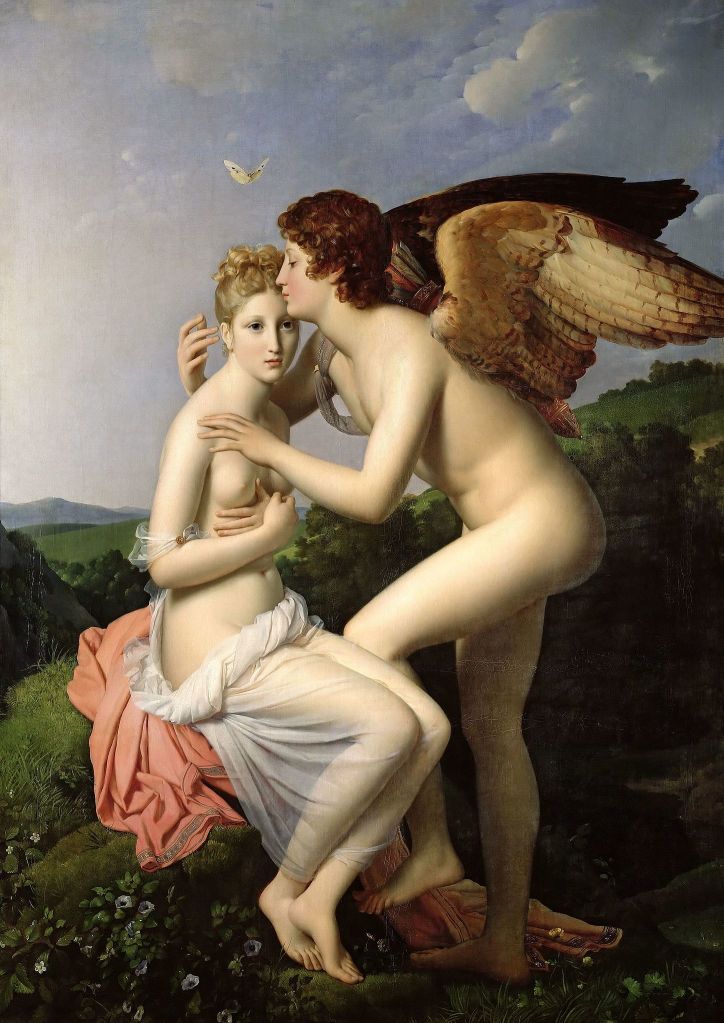
Trivia: In the painting by Gerard, the butterfly floating above Psyche’s head represents, rather redundantly, the soul.

Source: The Golden Ass by Apuleius. The Evolution of Cupid, Erlang Shen, Fatelines, 2022. Graphic: Cupid and Psyche by Francois Gerard, 1798, The Louvre, Public Domain.

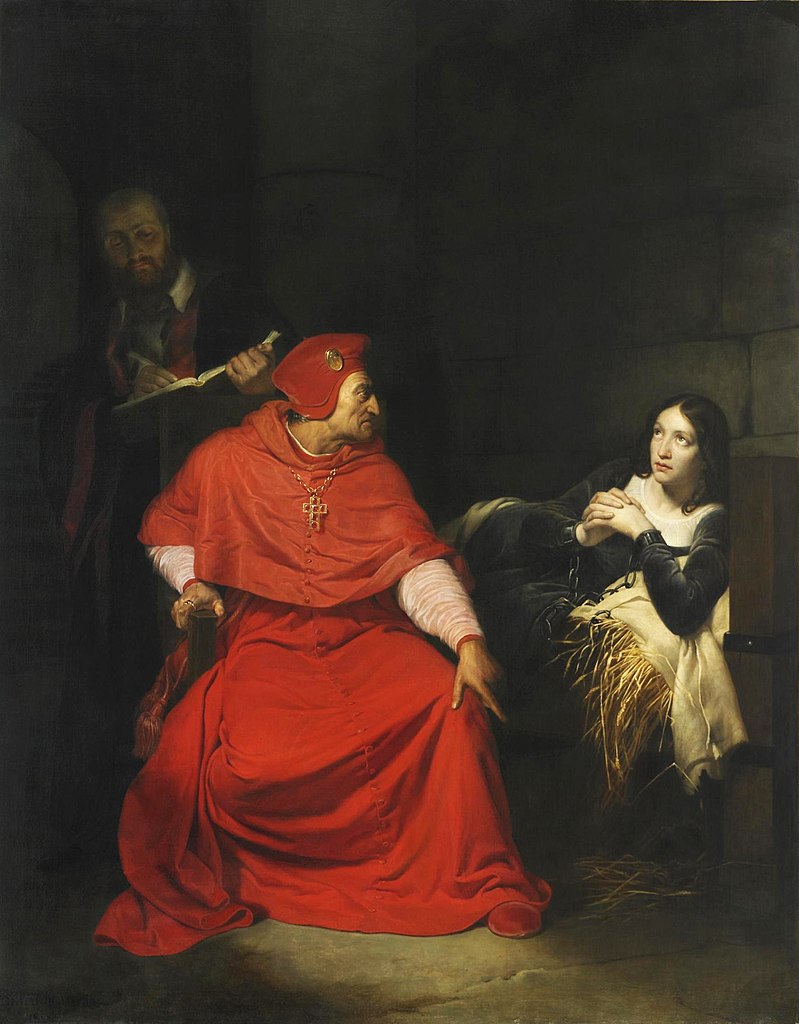
Joan of Arc’s Trial

The trial of Joan of Arc began almost 600 years ago, on 9 January 1431 in Rouen, France. She was captured by allies of the British during the siege of Compiègne in 1430 and tried for heresy. Her interrogation and trial began on 21 February 1431 and concluded on 24 May 1431.

Joan of Arc, also known as the Maid of Orléans, played a crucial role in liberating France from British control during the Hundred Years’ War. For her efforts the British burned her at the stake on 30 May 1431.

Joan of Arc was proclaimed a saint by Pope Benedict XV in 1920, who stated that her life was “proof of the existence of God.” She is the patroness saint of France and women.

Father Chatillon, rector of the Orléans Cathedral, where Joan of Arc attended Mass on 2 May 1429 while in the city to repel the British, commented that she “was a girl who was committed at 17 and died at 19, after having seen her mission through by liberating Orléans and by allowing Dauphin Charles VII to be king of France.”

Source: Tadie, NCR, 2020. Graphic: St. Joan of Arc is Interrogated by The Cardinal of Winchester in her Prison, Paul Delaroche, 1824, Public Domain.

Journalism – Denver Post 2024

I’ve been running a weekly post on the shortcomings and biases within the news media complex since April of 2024, starting with Walter Duranty of the New York Times covering for Stalin’s forced collectivization of Ukrainian farms in 1929. Duranty claimed in 1933 that no Ukrainian’s died of starvation even though estimates stated that up to 5 million did die from severe ‘food shortage’ in Timesman’s words.

I’ve attempted to cover just the most egregious and mendacious examples of media malpractice over the last 9 months amounting to about 30 posts spanning about 95 years of print and broadcast journalism. One thing that has become clear over that time is reporting hasn’t improved; fabrications, prevarications, and deceptions still appear to be the currency of the realm. Objective and factual journalism only appears when there are no winners or losers, a rare occurrence indeed.

So, let’s start off the new year with the Denver Post’s initial headline documenting the attempt on Trump’s life at his Butler rally on 13 July 2024: “Gunman Dies in Attack.” A major candidate for the presidency is almost killed and the paper’s concern is for the assassin.

After taking considerable flak for that headline the Post scrubbed the headline from their website and replaced it with “Trump is injured but ‘fine’…

Graphic: Front Page Denver Post, via Charlie Kirk, 14 July 2024, X.

Journalism – Hunter Biden’s Laptop and the FBI 2019-2020:

In October 2020, a few weeks before the election, the New York Post reported on the existence and contents of Hunter Biden’s laptop. Media sources other than the Post did not report on the laptop, supposedly due to concerns about the authenticity of the computer and its contents. Below is a partial timeline of FBI’s involvement in the laptop.

  • Summer 2019: John Paul Mac Isaac, owner of the computer repair shop, attempted to notify the FBI through his father that he had a laptop belonging to Hunter Biden. The FBI turned Isaac away.
  • October 2019: The FBI contacted Isaac’s father and eventually Isaac to discuss the laptop, which occurred during the impeachment of President Trump. That same month, Hunter Biden’s attorney contacted Isaac about the laptop, but nothing came of that interaction.
  • November 2019: The FBI authenticated the laptop as belonging to Hunter Biden and determined it was not part of any foreign disinformation campaign. The FBI authenticated the laptop, in part, by matching communications contained on the computer with intercepted 2017 communications from China. The FBI kept the authentication confidential, supposedly due to concerns over foreign disinformation.
  • December 2019: The FBI seized the laptop from Isaac under a subpoena issued by a Wilmington Grand Jury. The grand jury had been investigating Hunter Biden’s foreign financial dealings. The IRS was also notified that the laptop likely contained evidence of tax crimes.
  • Run-up to the 2020 Election: The FBI warned social media companies about potential foreign disinformation related to the laptop, which caused the story to be suppressed on Twitter and Facebook.
  • Post-2020 Election: The FBI continued to remain silent about the authenticity and contents of the laptop, citing concerns over foreign disinformation and ongoing criminal cases.

Sources: Morris and Fonrouge, NY Post, 2020. John Solomon, Just the News, 2020. Kerr and Simonson, Free Beacon, 2023. Oliver, Washington Examiner, 2023. Sperry, NY Post, 2023. Graphic: President Biden and his son Hunter, AP Photo/Visar Kryeziu).