The Natural State of Man

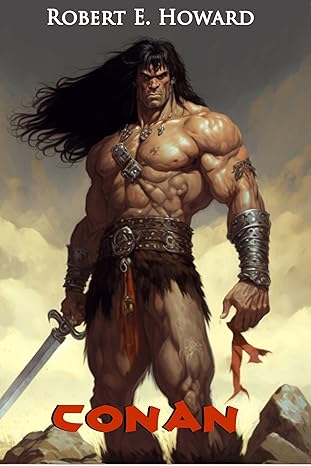
Robert Howard, 20th-century pulp fiction author and creator of Conan the Barbarian, believed that “barbarianism is the natural state of mankind. Civilization is unnatural. It is the whim of circumstance.”

Thomas Hobbes, 17th-century English philosopher best known for his social contract theory, attempted to justify that the authority of the state superseded the rights of man, believing that the natural state of man was war, that life was “solitary, poor, nasty, brutish, and short,” thus necessitating some higher authority to calm and tame the natural instincts of man.

Michael Huemer, professor of philosophy at UC Boulder, argues that “The current state of American society is a historical fluke, marked by extraordinarily low levels of exploitation, oppression, and injustice… The key sources of this happy state include such institutions as democracy, free markets, and modern science.”

I would add free speech coupled with property rights to the mix. Modern science is a double-edged sword that in the end, I would argue, is more a societal neutral force rather than a force against our true nature.

Huemer further maintains that before we tear down these stabilizing institutions, we should heed the advice of the Hippocratic Oath and first do no harm, stating, “If we undermine our current norms and institutions, the most likely result is not that we will be swept into a paradise… [but] the most likely result is that we will revert to something closer to the natural state of human beings.”

Huemer concludes with the observation that the 20th-century experiment called communism swept away all existing culture, norms, and institutions, resulting in 100 million deaths.

Source: Oxford Reference. Progressive Myths by M. Huemer, 2024. Graphic: Conan, Kindle Book Cover, Amazon.

Epistemic Humility

Donald Rumsfeld, expanding on Socrates’ statement, “The only true wisdom is in knowing you know nothing,” pedantically states in the year 2002 that, “There are known knowns—things we know that we know. There are known unknowns—things we know we don’t know. But there are also unknown unknowns—things we don’t know we don’t know.

Which suggests that we all are pre-ordained to a life of study to shorten the list of unknowns and the embarrassment of being unprepared.

G.K. Chesterton anticipating that a lifetime, or something less than a lifetime of study has its dangers, warned in his 1908 collection of essays, “All Things Considered,” “Without education, we are in a horrible and deadly danger of taking educated people seriously.” Implying that a myopic education may allow for mastering a single subject but is ill-equipped to understand anything broader; unable to see the forest for the trees.

Which leads us to the 1973 “Magnum Force” with Clint Eastwood, wielding a Smith and Wesson Model 29 .44 magnum in a Dirty Harry hand, explaining to an unfortunate soul that “A man’s got to know his limitations,” highlighting the concept of epistemic humility: the recognition that one’s knowledge and understanding is always limited and to proceed accordingly.

Source: Socrates. G.K. Chesterton. Socratic-Method.com.  Graphic: Magnum Force poster, copyright Warner Bros.

The Fall

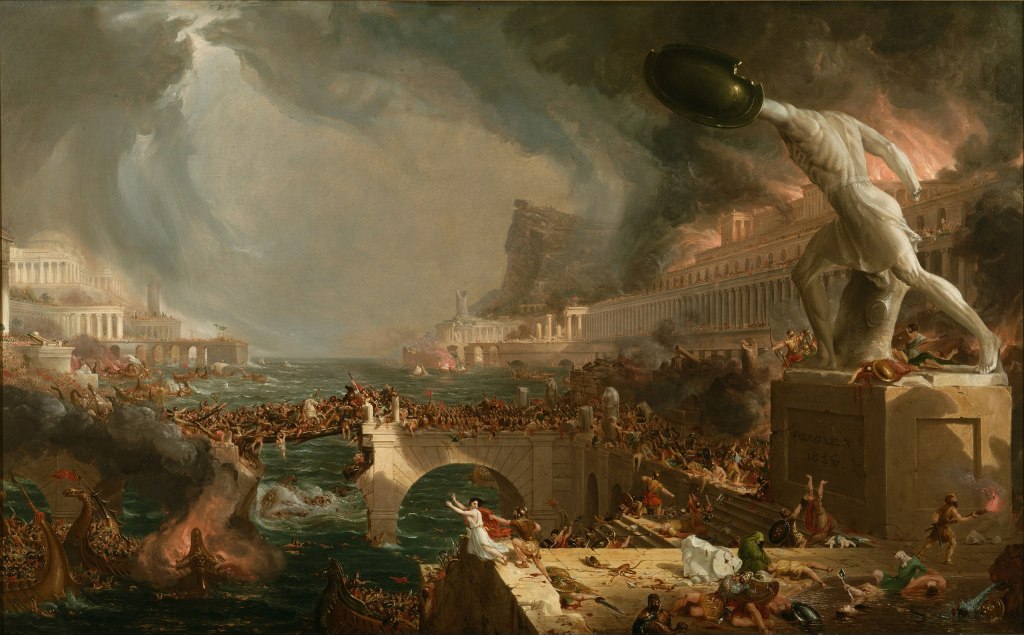
Edward Gibbons’ epilogue to his book, “The Decline and Fall of the Roman Empire”, mentions several factors that led to the collapse of the Empire:

  1. Barbarian Invasions: Incursions and settlements of Germanic tribes, Saxons, Huns, Alans, and others that overtaxed and weakened the Roman military and its infrastructure.
  2. Decline of Civic Virtue: Loss of a sense of civic duty and responsibility and the subsequent decay of public morality
  3. Christianity: Spiritual concerns took the focus away from civic duties. (Gibbons wasn’t an atheist but likely a deist or a detached Christian with a disdain for organized religion.)
  4. Economic Decay: The empire faced heavy taxation, inflation, and reliance on slave labor. Inflation was due to government corruption, excessive trade imports, military spending, and debasement of the currency.
  5. Political Corruption: A corrupt and unstable political system led to ineffective and nonsensical governance.
  6. Military Overextension: The Empire was too large to manage, resulting in an over-stretched military.

Marcus Aurelius in his book, “Meditations” also mentions the Antonine Plague years of 165-180 AD (a second outbreak occurring from 251-266 AD) as the primary cause of the Empire’s decline. The plague reduced Rome’s population, affecting its military’s ability to defend its borders, and the loss of labor to maintain its infrastructure.

Additional factors have also been mentioned by others, including: a disloyal military, civil wars, lead poisoning, and the always useful-climate change.

Source: “The Decline and Fall of the Roman Empire” by Edward Gibbons, 1776-1788. “Meditations” by Marcus Aurelius. Graphic: Destruction by Thomas Cole, 1836, from the series: The Course of Empire. New York Historical Society. Public Domain.

Amor Fati

Marcus Aurelius in “Meditations” reflects and instructs continuously on living harmoniously within the constructs of the universe, nature, and reason.

His philosophical foundation, Stoicism, meant living virtuously and rationally within a structured system that he believed was a manifestation of “Logos”, the rational principle that governs the universe. “Logos” can be understood as a divine rationality or intelligence that permeates and directs the universe.

Reason or “Logos” is the central pillar of Stoicism and is the guiding principle that governs the universe. Rational thought, rather than emotional impulse, is about seeking wisdom, demonstrating courage, seeking justice, and exercising temperance: living virtuously.

Nature means understanding that everything in life is interconnected, that all life is part of a larger, harmonious system governed by reason.

The Universe, to Stoics, is a well-ordered system where all actions happen for a reason. Stoics believed that one must live in harmony with the universe and embrace “Amor Fati”, accepting fate and focusing only on matters within one’s control.

Source: Meditations by Marcus Aurelius. Friedrich Nietzsche.

Life Goes On

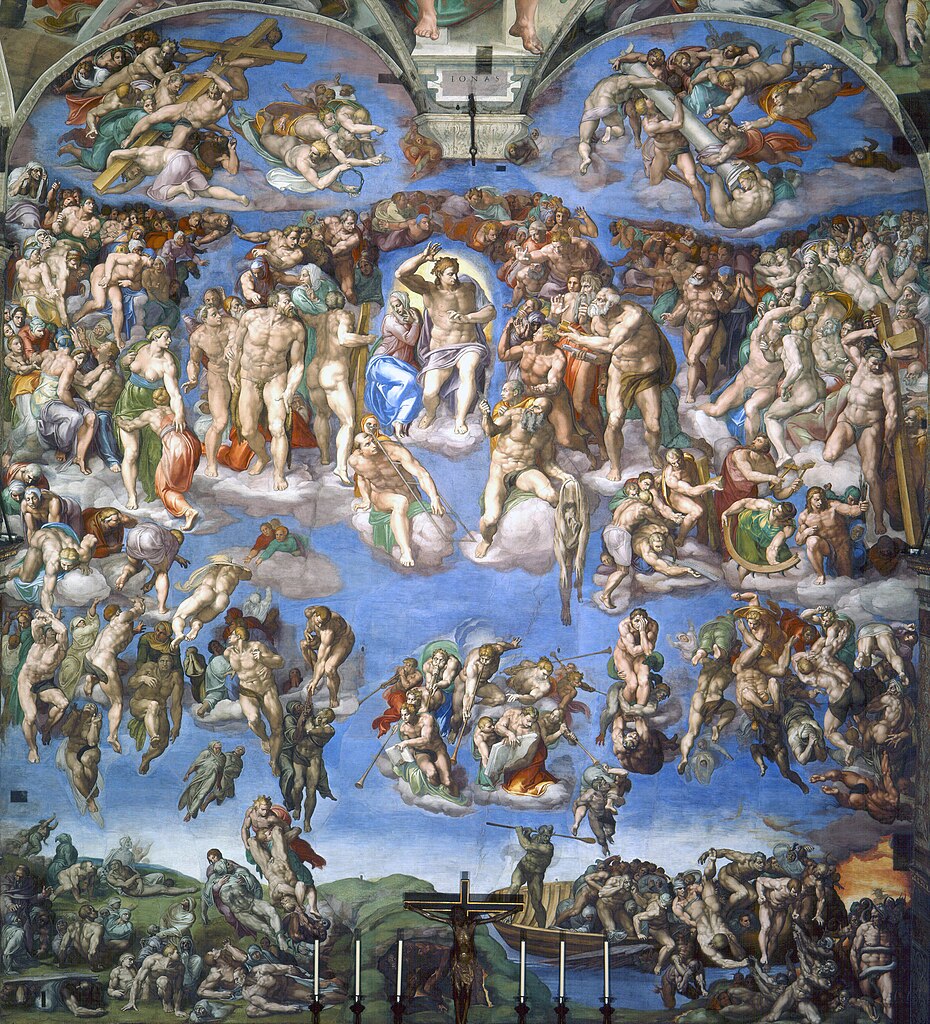
Marcus Aurelius, the last Stoic, stays his fear of death by believing that life’s pauses and changes are preludes to death of which we should not fear. He stated in Book IX of his Meditations: “[as you] …pass to the ages of your life, boyhood for instance, youth, manhood, old age; for each change of these was a death; was there anything to be afraid of?”

This comes directly from Heraclitus, a Greek philosopher and influencer of the first Stoic: Zeno, stating that, “The living and the dead, the sleeper and the watcher, the young and the old are the same.

St. Augustine in Confessions rephrases Marcus and Heraclitus with the joyful question; “And lo! My infancy died long since, and I am alive… Declare to me, your suppliant, did my infancy succeed to some age of mine that is also dead?

Joseph Butler, Christian apologist and philosopher, carries the thought to its logical conclusion, writing: “We have passed undestroyed through those many and great resolutions of matter, so peculiarly appropriated to us ourselves; why should we imagine death will be so fatal to us?”

Butler’s argument is that if we’ve survived many transformations throughout our lives, there’s no reason to believe that death would be our ultimate end. His view is grounded in the belief that our continued existence after death is consistent with the enduring nature of our existence during life.

Source: Meditations by Marcus Aurelius, edited by Farquharson. Graphic: The Last Judgement by Michelangelo, Sistine Chapel. Public Domain.

Thought for the Day

T.H. Huxley, Darwin’s Bulldog, anatomist, and autodidact, reflecting upon time and matter, makes the humorous connection that, “It is very possible that atoms which once formed an integral part of the busy brain of Julius Caesar may now enter into the composition of Caesar, the housedog in an English homestead.

Source: Elementary Physiology, T.H. Huxley, 1902. Graphic: English Sheepdog, AI generated.

The Last Stoic

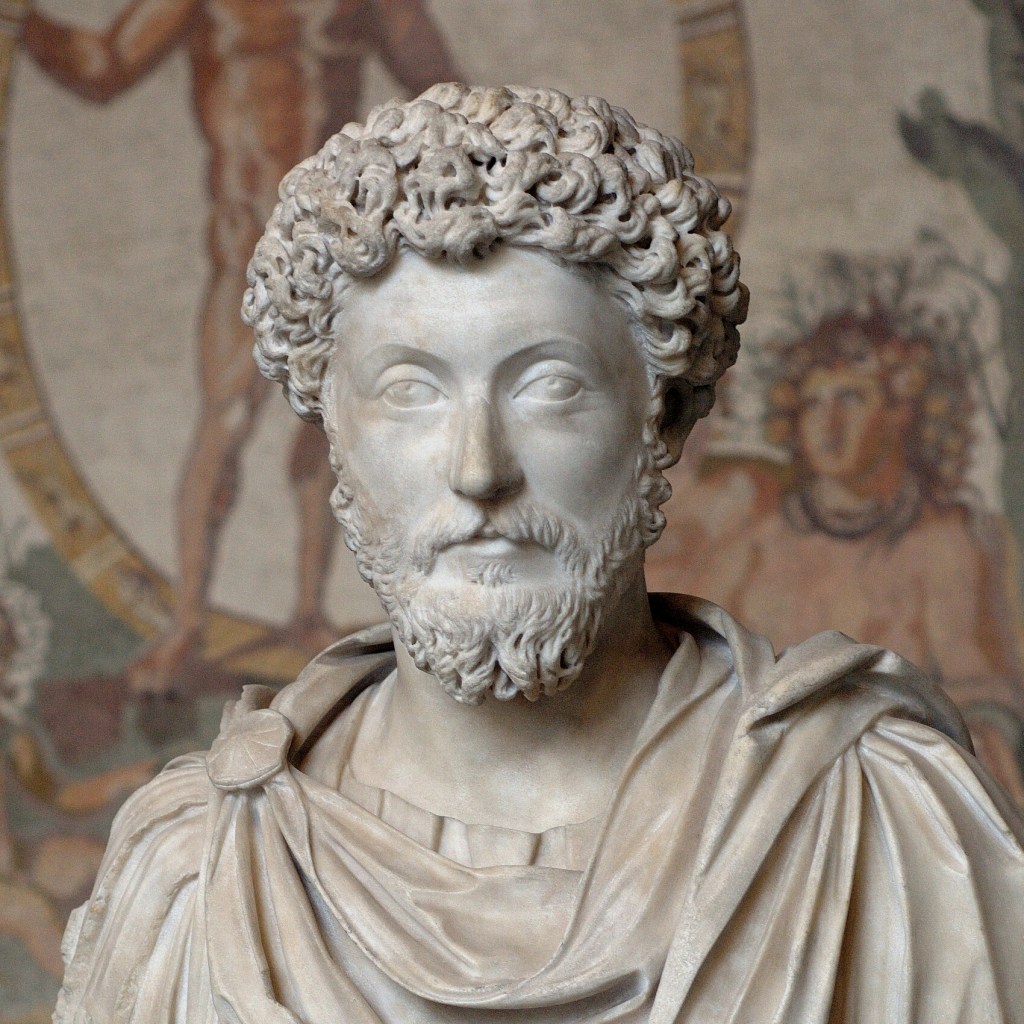
Marcus Aurelius Antoninus, Roman Emperor, soldier, stoic philosopher, stated in Book I of his Meditations that Plutarch’s nephew, Sextus taught him: “…life according to Nature, Dignity without pretense, solicitous consideration for friends, tolerance of amateurs and of those whose opinions have no ground in science.”

Marcus Aurelius, along with Alexander the Great are two rulers who came closest to Plato’s concept of a Philosopher-King. Plato believed that to rule justly and wisely required a thorough foundation in philosophical principles coupled with the skill to serve for the benefit of the state and the ruled rather than for personal gain.

Source: Meditations by Marcus Aurelius. Graphic: Bust of Aurelius extracted from Glyptothek Munich. Public Domain.

Journalism–Fox Butterfield

Fox Butterfield was a New York Times reporter that wrote several articles in the 1990s expressing total bewilderment about the ‘paradox’ between putting criminals in prison and the subsequent drop in crime. It wasn’t until the year 2000 that Butterfield finally started to acknowledge that locking up the criminals was responsible for the drop in crime in our streets.

James Taranto with The Wall Street Journal invented the term ‘The Butterfield Effect’ for Fox Butterfield and people in general who can’t accept facts or data that run counter to their beliefs. Another term for the ‘Butterfield Effect’ is cognitive dissonance.

Source: The Fox Butterfield Follis, Washington Examiner, 2000. Graphic: Cognitive Dissonance, de Castro, Contemplative Studies, 2020

The Noble Lie

In Plato’s Republic, a “Noble Lie” is a myth, or a falsehood knowingly propagated by the elites to maintain social harmony, or stated succinctly, to keep the plebs in their place and make sure they love it.

Plato believed that society required a class system led by philosophers who needed to create a lie that unites and binds the lower classes to the state. Without this binding myth the classes will turn on each other, and the government will fail.

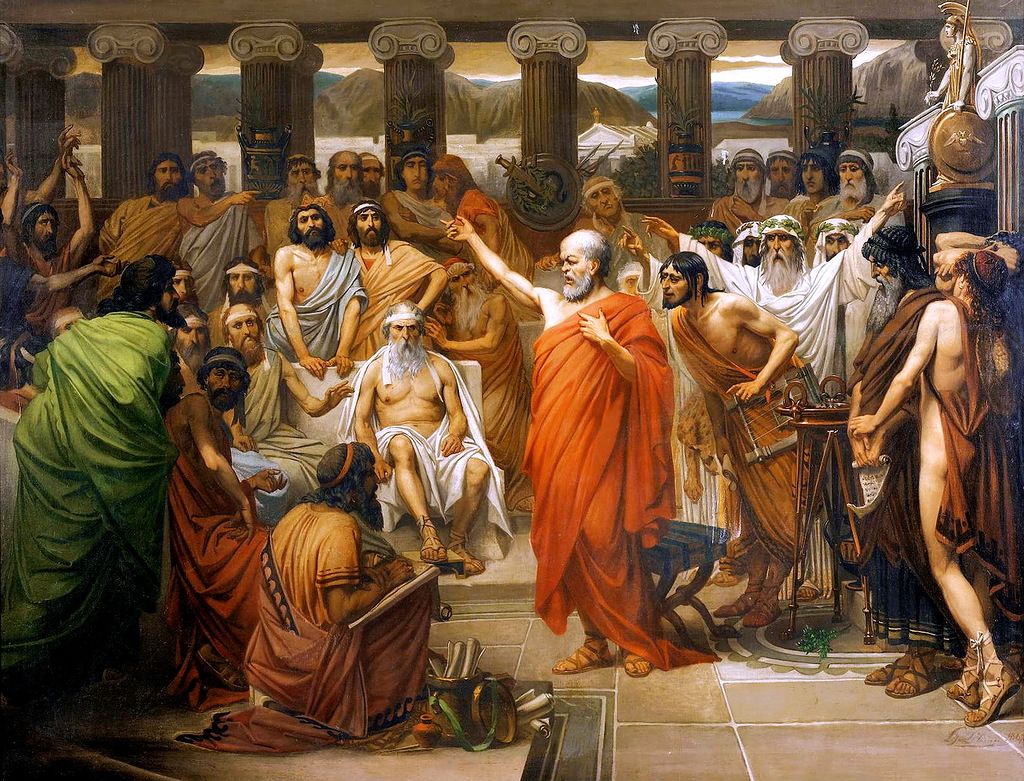
The Noble Lie myth promoted by Plato, via Socrates, was that the populace was born with hierarchical souls with the upper classes having better souls. Another myth was Karl Marx stating, “From each according to his ability, to each according to his needs,” formulating a classless society where goods and services were free.

Source: Plato’s Republic. A Noble Lie by Plato Intelligence. Introduction to Plato: The Noble Lie by Paul Krause, 2019, Minerva Wisdom. Graphic: Socrates’ Address by Lebrun, 1867, public domain.

End Times for Socrates

Plato documents Socrates’ final days in four books all written as dialogues. The first dialogue, ensuing shortly before Socrates’ trial for impiety and corruption of Athenian youth occurs between Socrates and the Athenian prophet, Euthyphro, who together attempt to define piety without success.

The second book, Apology, Socrates defends himself to the Athenian court, poorly in all respects, purposefully one suspects, confessing that his life’s quest is one of seeking wisdom, nothing more.

Crito is the third book in this series, and it takes place in Socrates’ prison cell after he has been found guilty of his crimes with his execution scheduled for the next day. Crito, a wealthy friend of Socrates, has come to urge him to escape. Socrates refuses and the ensuing dialogue revolves around justice and the damage to one’s soul through the actions of injustice.

In the fourth book Phaedo, a Greek philosopher, visits on the day of Socrates’ execution, and has a discussion centered on the immortality of the soul. Socrates offers four arguments for why the soul must be eternal while the body is mortal, firmly imprinting the duality of nature into the human psyche for endless generations to come.

Source:  Euthyphro, Apology, Crito, and Phaedo by Plato, 4th century BC. Graphic: Statue of Socrates by Drosis, Athens, Classical Wisdom.