Know Thyself

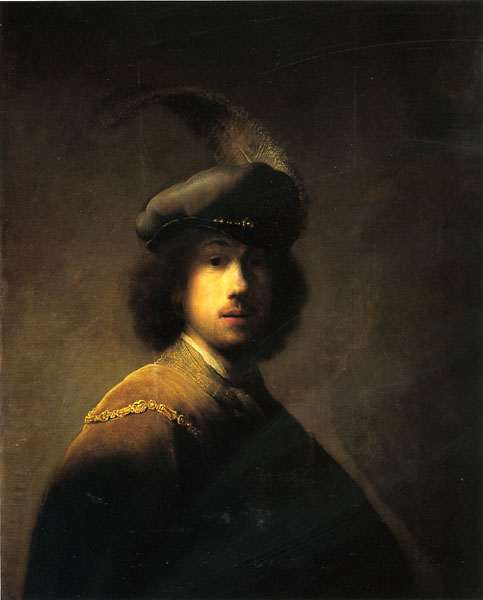
Draughtsman, etcher, painter, Rembrandt van Rijn, fascinated with the expressive face, inclined to acting out different character roles, inserting himself into the crowds to witness his subjects, shaping his public persona through his art, uncertain in youth, self-assured by mid-life, reflective towards the end, it is believed, with scholars still counting, that he created 40 to 50 paintings, 31 or 32 etchings, and 7 drawings of himself over a period of 44 years.

It is believed to be a record for self-portraits by a renowned artist.

The curator at the Museum of Fine Arts, Boston, C.S. Ackley writes that: “The artist used himself as a cheap model, studying his contorted features in the mirror.

A student of Rembrandt wrote in 1678 that a young budding artist should use a mirror to aid in the representation of the passions or emotions in order “to be at once performer and audience.”

To paraphrase the Delphic maxim: Know your art by studying yourself.

Source Rembrandt’s Journey by C.S. Ackley, 2003. ThoughtCo. 2019. Graphic: Rembrandt, Self-Portrait, Oil on Panel, 1629, Isabella Stewart Gardner Museum, Boston.

The Last Stoic

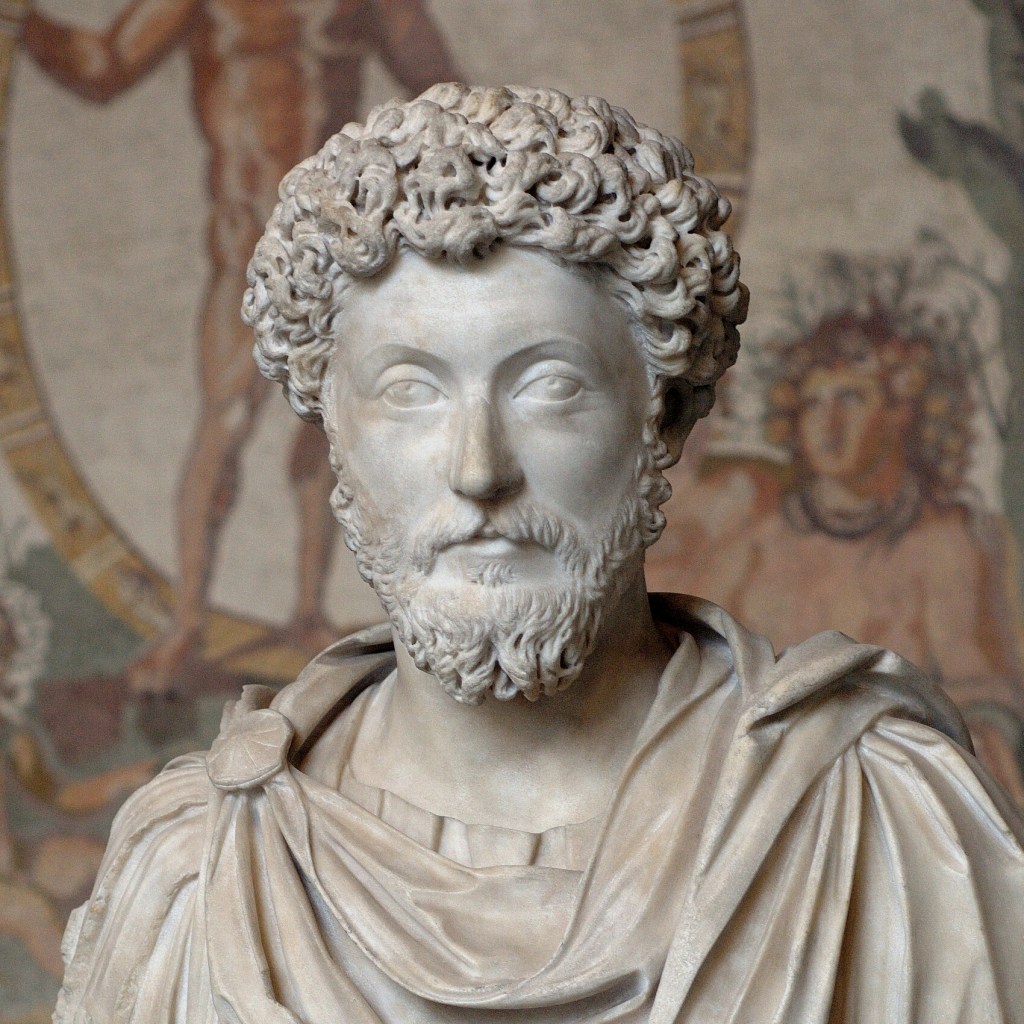
Marcus Aurelius Antoninus, Roman Emperor, soldier, stoic philosopher, stated in Book I of his Meditations that Plutarch’s nephew, Sextus taught him: “…life according to Nature, Dignity without pretense, solicitous consideration for friends, tolerance of amateurs and of those whose opinions have no ground in science.”

Marcus Aurelius, along with Alexander the Great are two rulers who came closest to Plato’s concept of a Philosopher-King. Plato believed that to rule justly and wisely required a thorough foundation in philosophical principles coupled with the skill to serve for the benefit of the state and the ruled rather than for personal gain.

Source: Meditations by Marcus Aurelius. Graphic: Bust of Aurelius extracted from Glyptothek Munich. Public Domain.

The Age of Metternich

Klemens von Metternich, under the Habsburgs, was the Foreign Minister, Chancellor of Austria and chief censor of word and speech in the immediate aftermath of the Napoleonic Era.

A strict monarchist, he attempted to suppress liberal democracies and nationalist movements by censoring the press, books, speech, and even tombstones through a process that became known as the Metternich System spanning the years from 1815-1848. This period subsequently became known as the Age of Metternich.

His system of censorship was implemented through the Habsburgs Court Police. Attacks against the monarchy, government, heads of state, religion, and immoral utterances were forbidden. The press was relentlessly controlled and censored. Violators of the censorship rules faced imprisonment, fines, confiscation of their works, and banning of publications.

The Metternich System collapsed when revolutionary idealism broke out in Vienna in 1848, and Metternich fled to England to save his skin.

Source: A Little History by E. H. Gombrich. Graphic: Metternich by Sir Thomas Lawrence 1814-1819.

Versailles

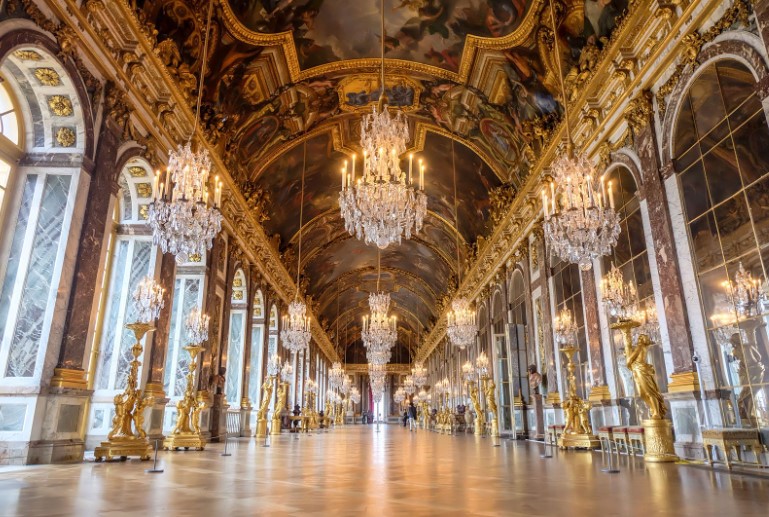
The Palace of Versailles is the modern definition of grand opulence. Opulence beyond the comprehension of the common man. Built as a tribute to, and glorification of, himself, King Louis XIV, who stood at the apex of the world stage in the 17th century.

He built the palace to move his court out of Paris, supposedly so he could exert more control over the French nobility.

Initial construction began in 1661 with the Grand Palace and its surrounding gardens and culminated in 1710 with the completion of The Royal Chapel. The entire estate covers about 2000 acres and various estimates suggest that Versailles would cost $2-50 billion to construct today.

The Hall of Mirrors, shown in the graphic, was added, along with the wings to the Grand Palace from 1678-1684.

Source: Versailles by Perouse de Montclos, 1991. Graphic: Hall of Mirrors, Britannica.

Western Taste–Georgian Style

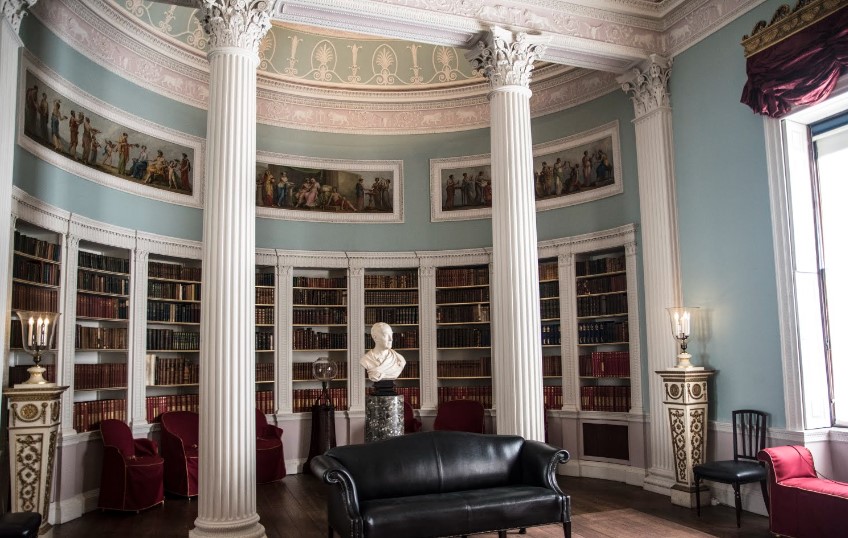
The Great Room or Library at Kenwood House in London, built from 1767-1770, was and still is considered the creme de la crème of English interior architecture during the reign of the Hanoverian Kings.

The designer of the Great Room, Robert Adam was a Scottish neoclassical architect during the Georgian Era. (All the Hanoverian Kings were named George.) This period spanned most of the 18th and early 19th centuries and Adam was singularly responsible for the revival of classical architecture throughout the west from 1760 till the end of the 18th century.

Trivia: Hanoverian King, George III, prime American Revolutionary War antagonist, ruled England during the height of Robert Adam’s influence on architecture and interior design.

Source: Robert Adam by Jeremy Musson and Paul Barker, 2017. Graphic: The Adam Library, Kenwood House on Hampstead Heath, Joe Adamczewski photo, copyright English Heritage.

The Hand of God

Guillaume de Laubier and Jacques Bosser in their book ‘Sacred Spaces: The Awe-Inspiring Architecture of Churches and Cathedrals’ capture the artistic wonderment and engineering marvels that sprang from the last two millennia of Christian faith. From St. Peter’s Basilica in Rome to St. Paul’s Cathedral in London and back to Barcelona’s Basilica de la Sagrada Familia, the authors showcase the magnificent architectural monuments to Christ that are unsurpassed in our contemporary world of concrete and steel. The beauty presented in these ‘Sacred Spaces’ were constructed with flesh and blood but only God could have provided the inspiration and the will to create them.

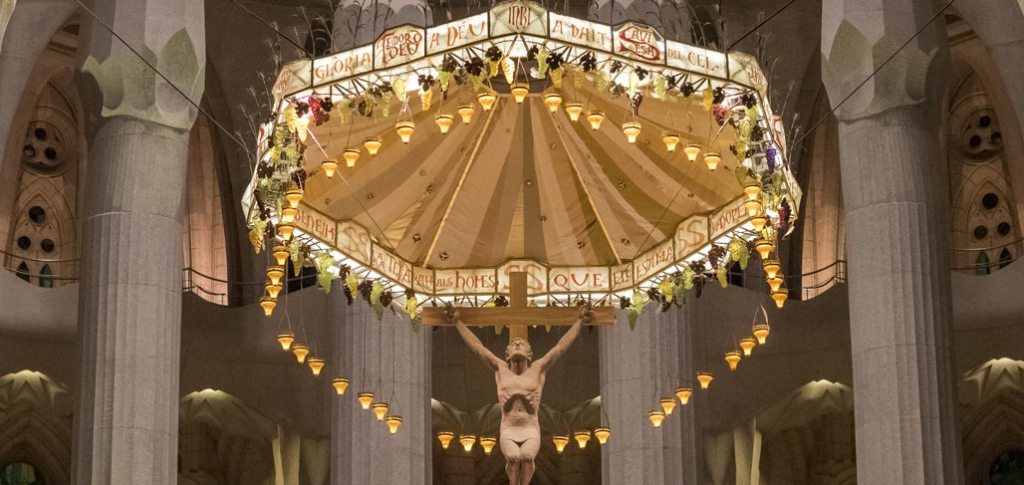
The photo is the baldachin, or canopy, which hangs in the Barcelona Sagrada Familia. It represents the Holy Spirit covering the cross of Christ and hangs below the representation of the Father (not shown), which taken together represent the Holy Trinity of Christian faith.

Source: Sacred Spaces: The Awe-Inspiring Architecture of Churches and Cathedrals by Jacques Bosser and Guillaume de Laubier, 2018. Graphic: The Baldachin: Representation of the Holy Spirit at the Sagrada Familia by Blog Sagrada Familia, 2018.

WIMPs

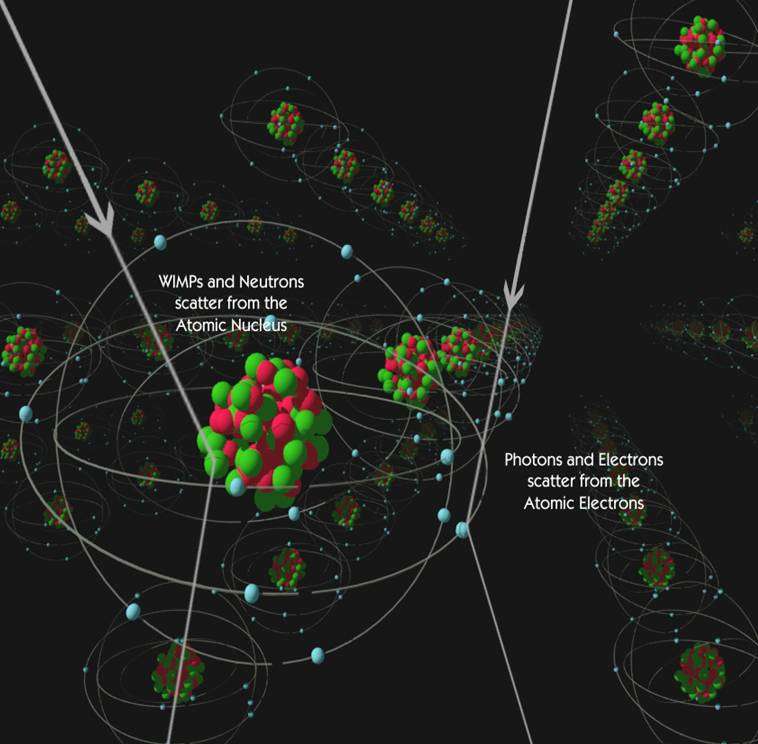
Weakly Interacting Massive Particles or WIMPs are hypothetical dark matter particles that supposedly make up 26-27% of the universe. They are only detectable through their gravitational effects.

In a recent ScienceNews article LUX-ZEPLIN researchers monitoring 10 metric tons of liquid xenon almost a mile below the surface in Lead, South Dakota have reduced the cross-sectional area that WIMPs can interact with normal matter by about 80%.

This reduced area of interaction implies that the particles are even weaker than previously thought. This would make them even harder to detect.  

Triva time: A cube that could hold 10 metric tons of xenon would need to be about 1.5 meters on a side.

Source: The Possibilities for Dark Matter…by Emily Conover, 2024, Science News. Graphic: WIMPs by University of California Berkley, 2013.

Zip It — Zip it Good

Today in 1893 Whitcomb Judson received approval for two patents on his ‘clasp-locker’ invention. An improved version was renamed the ‘zipper’ by B.F. Goodrich in 1923.

Zippers primary use early on was to close boots and tobacco pouches. A few years later they began to show up on jackets and by the late 1930s they replaced buttons on men’s pants.

Graphic: By Dominique Toussaint, 2006, Wikimedia Commons.

The Statue of Zeus at Olympia

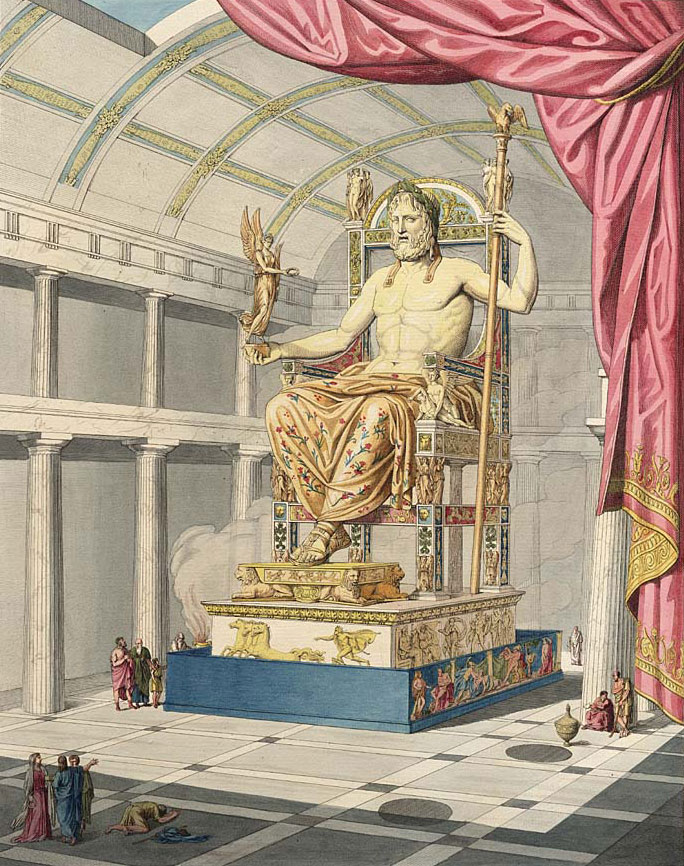
The 40’ tall statue, considered one of the seven wonders of the ancient world, was constructed by the Greek sculptor Phidias around 435 BC during the Golden Age of Athens and the time of Pericles.

The statue was composed of what the ancients called ‘chryselephantine’ or ivory, depicting flesh, and gold, which defined Zeus’ robes and ornaments. The ornaments included his scepter in his left hand and in his right hand he held a statue of Nike, Greek goddess of victory (Bulfinch reverses the hand order in his book on Greek mythology). He is seated on a throne of cedar encrusted with gold and precious stones.

Detailed descriptions of the statue come from the Greek geographer Pausanias and from numerous Greek and Roman coins and engraved gems.

The statue was housed in the Temple of Zeus at Olympia near the western coast of the Peloponnese peninsula and hasn’t been seen since the 5th or 6th century AD. It is believed to have been destroyed by an earthquake and or fire at Temple of Zeus or it was transported to Constantinople and destroyed by a fire there in 474 AD.

Source: Bulfinch’s Mythology edited by Richard Martin, 1991. Statue of Zeus by Britannica, 2024. Graphic: Olympian Zeus Statue as drawn by de Quincy, 1815, Public Domain.

Luckiest Man

When Lou Gehrig delivered his retirement speech to his fans at Yankee Stadium in 1939, he proved, not that he was the greatest baseball player ever, that went without saying, but that he was one of most humble humans to ever walk on this planet. A characteristic sorely missing from our society in the 21st century.

Forced to retire from the game he loved because of ALS, which would take his life two short years later, he told the world that I consider myself the luckiest man on the face of this earth.’

His full speech is listed below (will only take a minute to read).

“Fans, for the past two weeks you have been reading about the bad break I got. Yet today I consider myself the luckiest man on the face of this earth. I have been in ballparks for seventeen years and have never received anything but kindness and encouragement from you fans.

“Look at these grand men. Which of you wouldn’t consider it the highlight of his career just to associate with them for even one day? Sure, I’m lucky. Who wouldn’t consider it an honor to have known Jacob Ruppert? Also, the builder of baseball’s greatest empire, Ed Barrow? To have spent six years with that wonderful little fellow, Miller Huggins? Then to have spent the next nine years with that outstanding leader, that smart student of psychology, the best manager in baseball today, Joe McCarthy? Sure, I’m lucky.

“When the New York Giants, a team you would give your right arm to beat, and vice versa, sends you a gift – that’s something. When everybody down to the groundskeepers and those boys in white coats remember you with trophies – that’s something. When you have a wonderful mother-in-law who takes sides with you in squabbles with her own daughter – that’s something. When you have a father and a mother who work all their lives so you can have an education and build your body – it’s a blessing. When you have a wife who has been a tower of strength and shown more courage than you dreamed existed – that’s the finest I know.

“So I close in saying that I may have had a tough break, but I have an awful lot to live for.”

Source: Lou Gehrig’s Farewell Speech, lougehrig.com. Graphic: Lou Gehrig with the New York Yankees, 1923. Pacific and Atlantic Photos. Public Domain.