Mans Origins

Vertebrate Palaeontology 4th EditionVertebrate Paleontology

Written by:  Michael Benton

Published by:  Wiley Blackwell

Copyright:  © 2015

Tracing our ancestry back in time is a popular pastime for a significant fraction of the population. Usually this involves investigating our direct descendants and nationalities and staying within the boundaries of a few generations of our species. Professor Benton takes our genealogy a tad further to the beginning of the Cambrian some half billion plus years ago and carries it to the present. Along the way we run into the rather unsettling ancestral tidbit that one of our giga-times great grandparents was an elongated, bulbous slug like organism in the subphylum Urochordata with a general name of sea squirt. Imagining that we evolved from one-celled organisms is conceivable and possibly non-repugnant, but making a stop along the way as a sea squirt just defies all conventions and manners of civilized evolutionary behavior. Laughing at us or with us seems a distinction worth exploring.

Another stop along the evolutionary highway was the once puzzling case of the ubiquitous conodonts. Into the later part of the 20th century, conodonts, mainly teeth like elements, were especially useful index fossils from the Cambrian until they disappeared from the record at the Triassic-Jurassic extinction event boundary, but no one knew what they were; what family the species belonged to or what they looked like. In the 1983 the mystery was solved with the discovery of eel like soft body imprints from Early Carboniferous rocks around Edinburgh, Scotland with additional, later discoveries coming from Wisconsin, USA and South Africa, which placed them firmly in the subphylum Vertebrata. Discovering that you were a fish in your past life is certainly an improvement over a lumpy sea squirt.

This book provides an exhaustive review of every major group of living and fossil vertebrates. The primary audience for this work is graduate students in geology or biology but even a layman, such as myself, will find this text not only highly readable and enlightening but immensely enjoyable. An appendix gives a cladistic scheme of all living and fossil vertebrates; Professor Benton refers to it as a conservative cladistic scheme, which adds an exclamation point to the books voyage through the tree of life.

Dr. Michael Benton is a British palaeontologist and professor in the School of Earth Sciences at the University of Bristol.  He was elected a Fellow of the Royal Society of London for Improving Natural Knowledge in 2014.

On the Edge of Lake Superior

51J35ZHFQML._AC_US475_QL65_The Duluth Portfolio

Written by:  Craig and Nadine Blacklock

Published by:  Pfeifer-Hamilton

Copyright:  © 1995

Duluth Minnesota, situated on the northwestern edge of Lake Superior, was the largest port in the United States, by tonnage, in the early part of the 20th century due to the shipment of iron ore from the iron mines west of the lake through the city port to the smelting plants in Illinois and Ohio.  The city boomed during the first half of century not only because of iron but also the shipment of grain coming in from Midwest’s breadbasket and the build-up of steel related industries in Duluth.  The city’s population and industry peaked in the 1950s when the availability of high grade ore from the Iron Range declined and overseas competition crippled US steel production. In an attempt to combat the downward economic spiral the city focused on tourism to sustain its economy by emphasizing the natural beauty at the edge of Lake Superior.

Duluth sits on the rugged and steep hills of the ancient Duluth Complex which are blanketed with thick forests, crossed with a confusing array of brooks and streams, and accentuated with outcrops of timeless Pre-Cambrian igneous rocks. Nadine and Craig Blacklock have captured this natural beauty in a series of stunning color close-ups to never-ending panoramas of wood, water, and rock. The woodlands, the streams and of coarse, Lake Superior are showcased through the changing seasons of light and color.  The stunning autumn beauty of the Bardon Peak Park forest on an overcast day to the virgin delight of the snow capped evergreens, casting shadows at the Lester River on a cloudless winter’s day exhibit the beauty that is Duluth.

Human Nature Yesterday

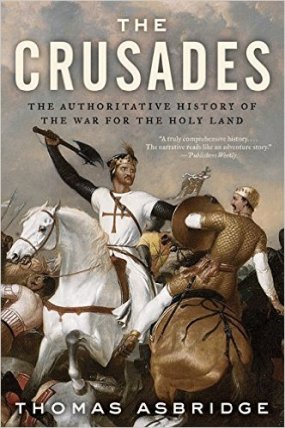
The Crusades: The Authoritative History of the War for the Holy Land

Written by:  Thomas Asbridge51c32nyzebl-_sx330_bo1204203200_

Published by:  HarperCollins

Copyright:  © 2010

In 1095 AD, during the high middle ages, the Byzantine Emperor Alexius Comnenus of Constantinople asked the Latin Pope Urban II for assistance in recovering parts of Asia Minor lost to the Seljuk Turks. The Pope responded, with less than altruistic motives towards his eastern Christian cousins, by embroiling western Europe and the Levant in 200 years of war which eventually became known as the Crusades.

Thomas Asbridge presents a compelling history of Christian struggles to seize control of the holy land from the Muslims, thus reviving the Islamic concept of jihad, while attempting to answer the questions of how these battles of conquest and religion reverberate through western history into our modern times.  Interesting enough Asbridge suggests that the crusades “belong in  the past” and inferences to todays apparent sequels are “misguided”.

This is a excellent and thoroughly researched march through the 11th and 12th centuries of western Europe and the Levant, bringing alive names of Richard the Lionheart and Saladin and others that Sir Walter Scott so richly romanticized in his historical 19th century novels, Ivanhoe and The Talisman.  The Crusades is a fast paced read with sufficient twists and turns in the narrative that you may suspect that this is a movie screenplay rather than a history.  This is a great read. Well worth your time.