String a Bow and Thread 12 Axe Rings

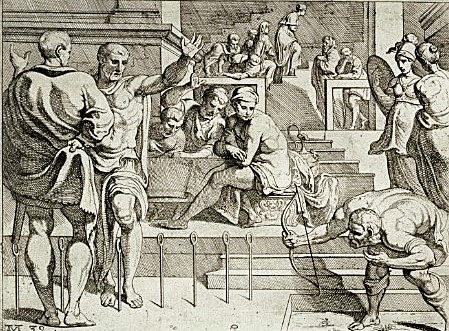
Ulysses upon leaving Troy traveled for 10 years before returning home to his wife Penelope only to find she doesn’t recognize him, and he has a house filled with suitors seeking his wife’s hand in marriage.

To prove he is the rightful husband and king he shoots an arrow through the rings of 12 axe heads. Upon completing the quest, he kills all suitors for his wife’s hand.

An Excerpt from Book 21 of Homer’s Odyssey:

So the great master drew the mighty bow,
And drew with ease. One hand aloft display’d
The bending horns, and one the string essay’d.
From his essaying hand the string, let fly,
Twang’d short and sharp like the shrill swallow’s cry.
A general horror ran through all the race,
Sunk was each heart, and pale was every face,
Signs from above ensued: the unfolding sky
In lightning burst; Jove thunder’d from on high.
Fired at the call of heaven’s almighty Lord,
He snatch’d the shaft that glitter’d on the board
(Fast by, the rest lay sleeping in the sheath,
But soon to fly the messengers of death).

Now sitting as he was, the cord he drew,
Through every ringlet levelling his view:
Then notch’d the shaft, released, and gave it wing;
The whizzing arrow vanished from the string,
Sung on direct, and threaded every ring.

Source: Bulfinch’s’ Mythology, 1867. Odyssey by Homer. Graphic: Ulysses by Theodore van Thulden, 1632, Public Domain.

Dog Days of Summer

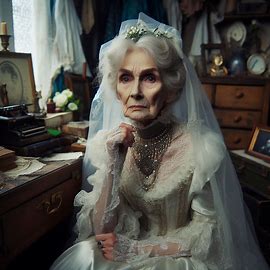
Now came the dog days—day after day of hot, still summer, when for hours at a time light seemed the only thing that moved…’ A narrative of peace from Richard Adams’ 1972 novel: ‘Watership Down’ during the interval when Hazel and his fellow rabbits were settling into their new home.

Some Greeks believed that the dog days of summer began when the Dog Star Sirius, thus the name, popped into the night sky on the 19th of July each year. Homer grimly stated that the appearance of the star ‘brought evil portent, …heat and fevers.’

The Old Farmer’s Almanac places the dog days from 3 July through August 11. Others put them from 23 July through 23 August.

Source: Watership Down by Richard Adams, 1972. Iliad by Homer. The Old Farmer’s Almanac. Graphic: Dog Days, AI generated, 2024.

The Divine Comedy:

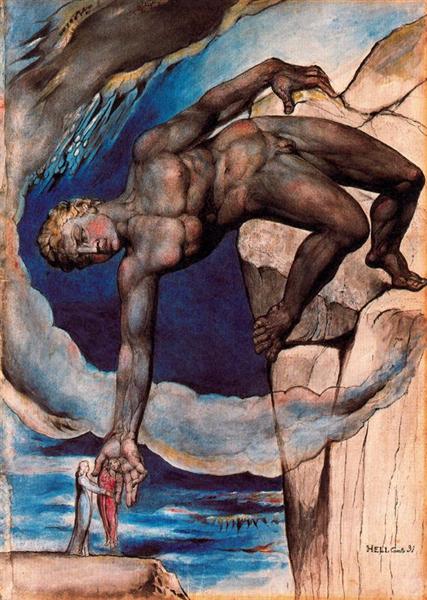
William Blake (1757-1827), in the final years of his life created 102 watercolors and 7 copper plates, most unfinished, for Dante’s ‘The Divine Comedy’. One of the more profound and captivating of these paintings is ‘Antaeus Setting Virgil and Dante into the Ninth Circle of Hell’.

The giant Antaeus, son of Neptune and Gaia, was invincible as long as he remained attached to his mother. Hercules, for his 11th task, had to defeat Antaeus but couldn’t if he touched the Earth, so he lifted him off the ground and strangled him to death.

The Ninth Circle is reserved for the treacherous and is subdivided into 4 rings. The first part is reserved for familial traitors and is named Caina as in Cain and Abel. The second ring, Antenora for Antenora of Troy is for national traitors. Ptolomaea for Ptolemy is the third ring for those who betray their guests. Finally, the inner ring is called Judecca for Judas Iscariot betrayer of Christ and is for the worst traitors: those who turn on their masters. At the center of the Ninth Circle resides Satan.

Finally, as an aside, Dante’s ‘The Divine Comedy’ shouldn’t be interpreted as The Divine Humor, but as The Divine Outcome. The author meant that comedy was the opposite of tragedy. Tragedies begin well and end badly, but Dante’s Comedy begins badly, in Hell, and ends well with Dante reaching his desired destination: Heaven.

Source: Will Blake, The Divine Comedy by David Bindman, 2000. The Divine Comedy by Dante Alighieri, circa 1321. Bulfinch’s Mythology, 1867. Graphic: Antaeus Setting Down Dante and Virgil in the Last Circle of Hell, Blake, 1827, Public Domain.

Dracula Lives

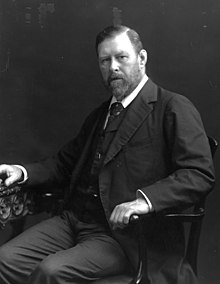
Irish author Bram Stoker wrote the quintessential horror story, Dracula during the early to mid-1890s, publishing it in 1897–except Stoker didn’t write it “as fiction but as a warning of a very real evil” according to J.D. Barker’s history of the book.

Many events in the book were not fiction. The ship Dmitri (Demeter in the book) did run aground in Whitby Harbor, and it was carrying crates of dirt that had originated from the European port of Varna. Mr. and Mrs. Jonathan Harker and Dr. Seward were friends of Stoker who supposedly supplied first person accounts of the tale to the author.

Stoker’s publisher, finding the book too frightening for the public, only agreed to publish the book if the first 101 pages were left out along with extensive revisions to the story which took a very clear story of vampires in our mist to one of fictional horror. In the 1980s the original manuscript showed up in rural Pennsylvania with the first 101 pages still missing and was purchased by Paul Allen of Microsoft fame.

Source: Dracula by Bram Stoker. J.D. Barker, Bram Stocker published by Time.com. Graphic: Bram Stoker, circa 1906, Public Domain.

The Rain in Spain

Irish playwright George Bernard Shaw finished writing his best loved play, Pygmalion, a story of English societal class stratification and transformation, in 1912 and it premiered in Germany, of all places, in October of 1913.

The play was inspired by the Greek myth where Pygmalion, a sculptor, fell in love with his ivory creation which was later recounted in Ovid’s Metamorphosis.

The play has been adapted to film and stage in various forms including Shaw’s 1938 film, Pygmalion. The film was then adapted as a Broadway hit musical in the 1956 My Fair Lady by Lerner and Loewe starring Julie Andrews and Rex Harrison, which was then recreated into the 1964 Academy Award winning, blockbuster film of the same name starring Audrey Hepburn and Rex Harrison.

A truly timeless story.

Source: Pygmalion by George Bernard Shaw, 1912. Myths Encyclopedia. Metamorphoses by Ovid, c. 8 AD. Classics.mit.edu/Ovid. Graphic: Mrs. Patrick Campbell as Eliza Doolittle, 1913, Public Domain.

The Most Unkindest Cut of All

Mark Anthony opens his famous, but fictional, eulogy to Julius Caesar with 7 words of endearment and authority; Aristotelian pathos and ethos, that have become as familiar as blue sky to fans of Shakespeare and English lit students everywhere: “Friends, Romans, countrymen lend me your ears”.

Julius Caesar, a tragedy by Shakespeare, written around 1599, was based on Caesar’s life and death as documented in Plutarch’s Parallel Lives.

With pathos, logos and a chariot laden with irony, Anthony turns initial honor for Brutus and Caesar’s ambition inside out. He brings honor to Caesar and lays ambition on Brutus, along with Cassius. He brings condemnation to the conspirators and love for Caesar.

The first few lines of Anthony’s Eulogy:

Friends, Romans, countrymen, lend me your ears; I come to bury Caesar, not to praise him.
The evil that men do lives after them;
The good is oft interred with their bones;
So let it be with Caesar. The noble Brutus
Hath told you Caesar was ambitious:
If it were so, it was a grievous fault,
And grievously hath Caesar answer’d it.
Here, under leave of Brutus and the rest–
For Brutus is an honourable man;
So are they all, all honourable men–
Come I to speak in Caesar’s funeral.
He was my friend, faithful and just to me:
But Brutus says he was ambitious;
And Brutus is an honourable man.
He hath brought many captives home to Rome
Whose ransoms did the general coffers fill:
Did this in Caesar seem ambitious?
When that the poor have cried, Caesar hath wept:
Ambition should be made of sterner stuff:
Yet Brutus says he was ambitious;
And Brutus is an honourable man.
You all did see that on the Lupercal
I thrice presented him a kingly crown,
Which he did thrice refuse: was this ambition?
Yet Brutus says he was ambitious;
And, sure, he is an honourable man.
I speak not to disprove what Brutus spoke,
But here I am to speak what I do know.
You all did love him once, not without cause:
What cause withholds you then, to mourn for him?
O judgment! thou art fled to brutish beasts,
And men have lost their reason. Bear with me;
My heart is in the coffin there with Caesar,
And I must pause till it come back to me.

Source: “Julius Caesar” by William Shakespeare, Act 3, Scene II. Plutarch’s Parallel Lives. Graphic: Marlon Brando as Mark Antony in the 1953 film “Julius Caesar”
The Big Sleep

She came over near me and smiled with her mouth and she had little sharp predatory teeth, as white as orange pith and shiny as porcelain. They glistened between her thin too taut lips. Her face lacked color and didn’t look too healthy.

“Tall, aren’t you?” she said.

“I didn’t mean to be.” (said Marlow)

Her eyes rounded. She was puzzled. She was thinking. I could see, even on that short acquaintance, that thinking was always going to be a bother to her.

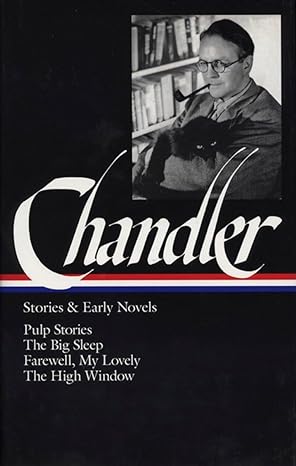
The above excerpt is from Raymond Chandler’s first Philip Marlowe novel: “The Big Sleep”, published in 1939. Marlowe is a hard, introspective private eye dreamed into existence from Chandler’s cynical but playful mind, creating the quintessential detective and crime novel of the 20th century.  “The Big Sleep” has been ranked as one of the best 20th century novels by The Guardian, Time Magazine, Le Mond, and at least 20 other current best book lists.

The 1946 movie adaptation of the book starring Humphrey Bogart and Lauren Bacall with the screenplay by William Faulkner achieved a Metascore of 86 and a user score of 8.0. The Telegraph, critiquing the movie, in 2004 stated that “The Big Sleep is the best scripted, best directed, best acted, and least comprehensible film noir ever made.”

Chandler was 44 years old, an out of work alcoholic, before he wrote his first piece, a short story, “Blackmailers Don’t Shoot”.  “Blackmailers” was the warm-up private eye mystery that would evolve, over the course of the next six years, into his first Philip Marlowe novel: “The Big Sleep”.

Source. Chandler: Stories and Early Novels published by Library of America, 1995. The 100 Greatest Literary Characters by Plath et al published by Rowman and Littlefield, 2019. Graphics: Warner Bros’ 1946. “The Big Sleep” and book cover.

Space Elevators

Arthur C. Clarke in his 1979 sci-fi novel, The Fountains of Paradise, builds a space elevator on Earth as a solution to the monetary and technical expense of Earth-based rockets.

A space elevator is a conceptual solution for a low-cost, low energy planet-to-space transportation system. The challenge to building the elevator is finding a material strong enough to withstand the immense compressional and tensional forces that with a counterweight balance, would be 44,490 miles long (71,600 km). Carbon nanotubes offer a possible solution but currently they are only strong enough to work on Mars or the moon.

This is not Clarke’s best novel, but he thoroughly explains the concept of a space elevator and a lot of the engineering problems that would need to be solved to build one. The solutions to all the problems are solved by the book’s protagonist, Dr. Vannevar Morgan, a thinly veiled character that likely refers to himself as Arthur C. Clarke when he is among friends.

As an aside, both within the book and as a reader, he spends 5-6 pages harping on his belief there is no God. Why he does so is a mystery since it adds nothing to his story and in the end, it is a pointless, garrulous, one-sided debate.

Anna Karenina

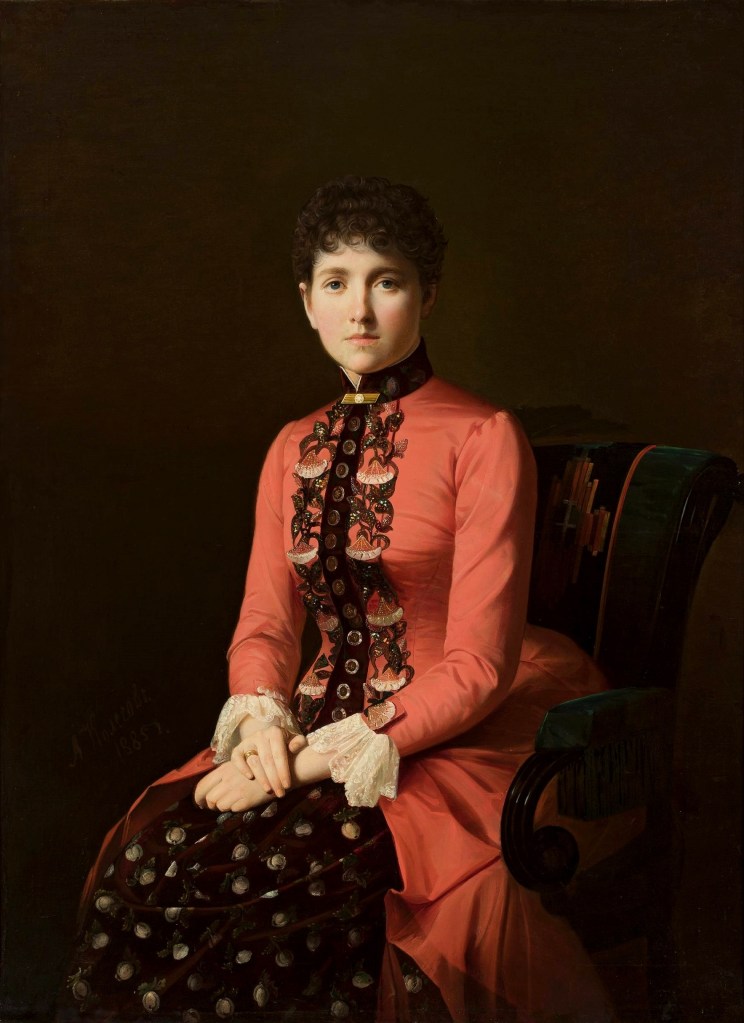
Happy families are all alike; every unhappy family is unhappy in its own way.” So begins Leo Tolstoy’s epic 19th century Russian novel, Anna Karenina. A beginning line that is not only one of literature’s great openings, but it indubitably stages an existential story that transcends time, culture, and humanity: a diegesis of love and misery.

Love and misery where mental and societal control is lost to emotional need. When Anna’s lover, Vronsky, pleads with her to respect her mother’s needs and his duty, she snaps, “Respect was invented to cover the empty place where love should be. And if you don’t love me anymore, it would be better and more honest to say so.” (chapter 24)

Anna Karenina through time has consistently ranked as one of the greatest novels ever written. Encyclopaedia Britannica lists it as the number one novel of all time.

Sources: Leo Tolstoy, Anna Karenina, serialized in 1875, published in book form in 1878. Plath et al, The 100 Greatest Literary Characters, published in 2019. Enclyclopaedia Britannica, 12 Novels Considered the “Greatest Book Ever Written”, by Jonathan Hogeback.

Aleksey Kolesov, “Portrait of a Young Woman” (Anna Karenina), 1885. Public domain, via Wikimedia Commons

Frankenstein, or The Modern Prometheus

It was the year without summer. During the year 1816, temperatures in Europe were the coldest of any recorded between 1766 and 2000. Across the pond in New England frost occurred every month of the year and six inches of snow fell in June. Crops failed, food was scarce, and people died unpleasantly premature.

There was no summer that year because in 1815 the Indonesian volcano, Mount Tambora, had a fit and blew its top, more or less straight up into the stratosphere. The amount of material injected into the upper atmosphere blocked the sunlight and caused global cooling.

Meanwhile, not to let bad weather forestall important matters, Lord Bryon while vacationing in Geneva, challenged his two companions, Percy Shelly, and Mary Godwin, the soon to be Mary Shelly, to a contest of who could write the best ghost story. Lord Bryon and Percy soon abandoned the project, but Mary persevered and published her Frankenstein two years later, giving birth to the monster with no name, countless movies, myths, legends, and frightful nights for children everywhere.

In the tenth chapter of her epistolary novel, Frankenstein, or The Modern Prometheus, we finally meet her fictional monster to learn not only that it lives, but it also speaks grammatically correct King’s English. Shelly cast her monster as Lucifer from the pages of Milton’s Paradise Lost. The monster, addressing its creator, Victor Frankenstein, speaks of profound loneliness, “The fallen angel becomes a malignant devil. Yet even that enemy of God and man had friends and associates in his desolation; I am alone.”

In the end the monster wishes to die but the author leaves those matters in the reader’s hands.

Sources Frankenstein by Mary Shelly. First published in 1818. The 100 Greatest Literary Characters by Plath et al, published 2019. Cover from a 2012 edition of Frankenstein shown below.