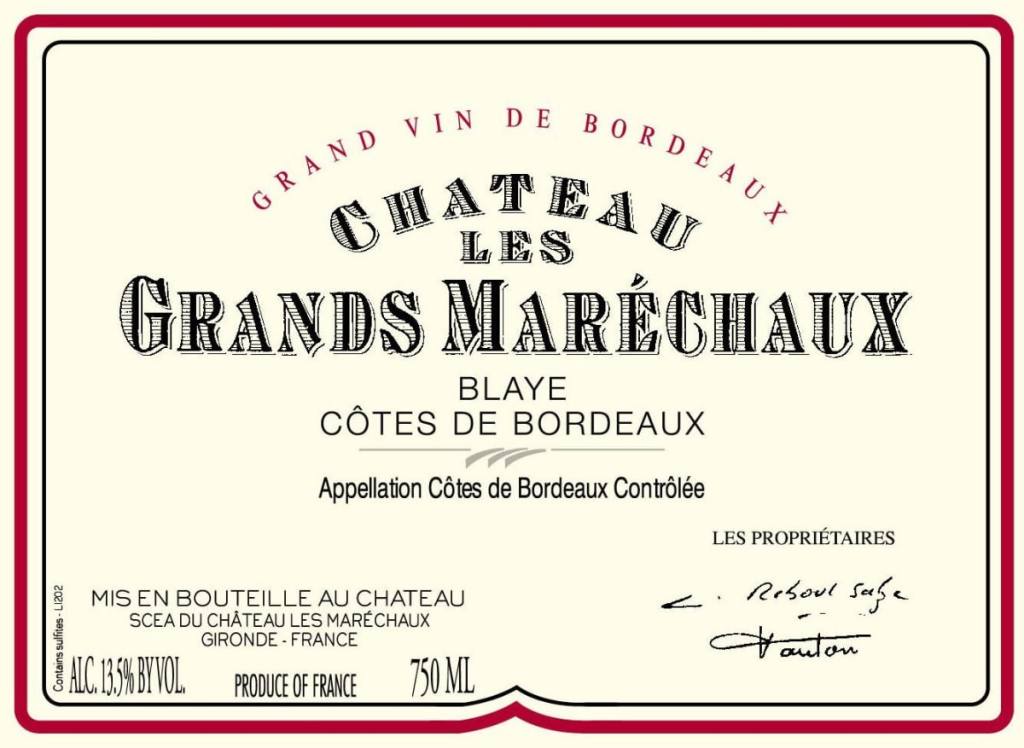
Bordeaux Red Blend from Bordeaux, France
Merlot, 84%, Cabernet Franc 9%, Cabernet Sauvignon 7%
Purchase Price $17.97
Wine Enthusiast 91, James Suckling 91, ElsBob 89
ABV14%
A medium purple wine with aroma of black fruits and a touch of cinnamon. Medium-bodied, bold, medium tannic with a nice fresh finish.
A very good fine wine at a tolerable price but on the high end. Don’t pay more than $15-16 though. Current prices are around $20.
Trivia: The Right Bank of Bordeaux is all about geology, which dictates the elemental structure for every bottle. Clay and limestone dominate the landscape, shaping not only the vineyards but the very character of the wines. Clay holds water and moderates temperature, slowing ripening and giving Merlot the conditions it needs to develop depth and supple density. Limestone, by contrast, drains freely and raises the natural acidity of the fruit, lending a kind of lifted tension that becomes especially clear in Cabernet Franc. Most Right Bank terroirs are some interplay of these two materials, and the wines reflect that structural duet.
Because the soils speak so clearly, the grape varieties are inevitable. Merlot thrives on the moisture and coolness of clay, producing wines that are plush, dark-fruited, and immediately generous. Cabernet Franc finds its ideal expression on limestone, where it gains aromatic precision and a firmer, more architectural frame. Cabernet Sauvignon plays only a minor role, appearing meaningfully only where gravel becomes plentiful, uncommon occurrence on this side of the river. The blends that emerge from these conditions are less stylistic and more like geological consequences.
Across the region, this soil–variety logic creates a coherent family of appellations. Saint‑Émilion’s limestone plateau and clay-limestone slopes yield vertical, structured wines shaped by Cabernet Franc. Pomerol’s blue clay produces Merlot of unusual depth and velvet. The surrounding satellites share these themes with less concentration but often remarkable value. And further north, in the Côtes de Blaye and Côtes de Bourg, estates like Château Les Grands Maréchaux work with the same clay‑limestone matrix, producing Merlot‑driven wines that are fresh, supple, and structurally clear despite their modest price. Taken together, the Right Bank’s identity is not a matter of marketing or prestige but of geology asserting itself. The wines share a recognizable signature, black plum and violet, fine chalky tannins, a rounded mid‑palate, and a fresh, lifted finish, all because the land insists on it.
 elsToday