The Many Colors of Slavery

Those who deny freedom to others deserve it not for themselves.”—Abraham Lincoln

Whoever does not have two-thirds of his day for himself, is a slave, whatever he may be: a statesman, a businessman, an official, or a scholar.” — Friedrich Nietzsche

As the great continental glaciers receded at the end of the Pleistocene, fertile land emerged, allowing for the transition from hunting and gathering to agriculture. Farming was labor-intensive, and with the rise of permanent settlements came the demand for constrained and controlled labor. Slavery, likely with first roots in Mesopotamia, though independent manifestation by the Pharaohs in ancient Egypt and other early civilizations, made it ubiquitous, and it has never disappeared.

From the bonded laborers of the Pharaohs to the structured servitude in Greece and Rome, from the transatlantic trade that brutalized African populations to the modern exploitation of migrant workers in sweatshops and the sex trades, slavery has evolved rather than vanished. Each era refines its own form of servitude; forced labor, insurmountable debt, bureaucratic entrapment, or corporate exploitation. It is a practice as ancient as prostitution and taxation, deeply embedded in human society, yet constantly shifting into less visible but equally insidious forms. As long as slavery remains profitable its existence will continue to indelibly stain humanities’ collective soul.

Slavery, and its ultimate contrast, freedom, was a persistent theme in the works of sci-fi author Robert A. Heinlein. With a piercing social awareness, Heinlein, who, in his early years, was described by Isaac Asimov as a ‘flaming liberal’—picked up the theme and horrors of slavery with his 1957 juvenile novel “Citizen of the Galaxy”; bringing the many forms of servitude into the personal history of a precocious kidnapped boy named Thorby. Citizen of the Galaxy is a planet-hopping, spacefaring critique of oppression, class structure, and the nebulous concept of freedom. Heinlein crafts a future where contrasting societies across the galaxy reflect varying degrees of servitude and autonomy, if not necessarily total freedom. Man rarely allows himself complete independence.

Heinlein through the lens of Thorby explores the various shades of slavery, beginning with the brutal, controlling enslavement and continuing to more subtle forms that the individual may not even recognize as confinement. (Partial plot giveaways beyond this point.) Escaping his initial enslavement by the graces of a kindly, strict, but loveable old cripple named Baslim, Thorby moves into a hierarchical, structured existence of spacefaring traders then onto a self-imposed, due to a thirst for justice, straitjacket of a corporate bureaucracy on his birth planet of Terra. A life story of how control can be imposed by others or by ourselves.

As Heinlein’s social perspectives evolved, his libertarian leanings took greater prominence in Citizen of the Galaxy. Through Thorby’s life journey, Heinlein emphasizes personal autonomy, resistance to tyranny, and the moral duty to fight injustice. Baslim, Thorby’s first mentor, symbolizes the idea that one person can stand against oppression and make a difference, even if it takes many miles and years to materialize.

This theme runs through much of Heinlein’s work, but here, it’s especially poignant because Thorby is powerless for much of the novel, making his eventual triumph all the more meaningful. Heinlein’s novels, Farnham’s Freehold, Friday, and Time Enough for Love, explore slavery and control, reinforcing humanity’s inherent need for freedom, or at the very least, breathing space.

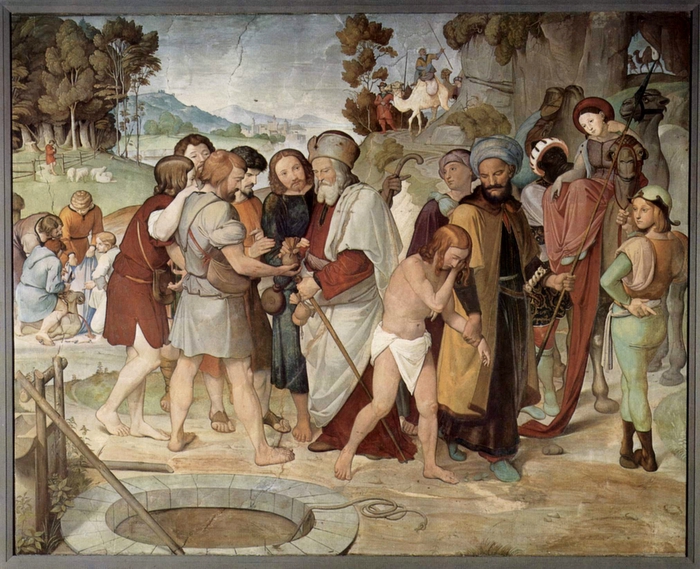
Source: Citizen of the Galaxy by Robert A. Heinlein, 1957. Graphic: Joseph Sold into Slavery by Friedrich Overbeck, 1816. Vanderbilt University. Public Domain.
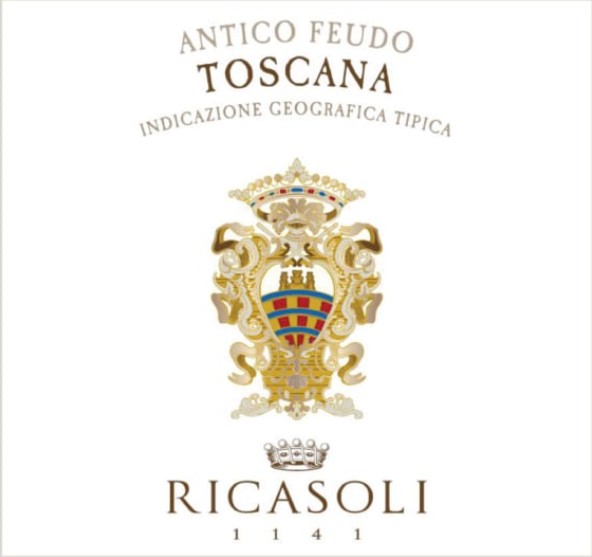
Barone Ricasoli Antico Feudo Toscana Rosso 2021

Tuscan Blends from Tuscany, Italy

Sangiovese 60%, Cabernet Sauvignon 25%, Merlot 15%

Purchase Price: $14.97

James Suckling 91, ElsBob 92

ABV 14.0%

A medium garnet with a tawny tinge in color, medium to full body, aromas of cherry and spice. On the palate it is acidic, the tannins are soft, with a long finish.

An excellent fine wine at a great price. Drink now. Cheers.

Trivia: The Ricasoli family claims their barony dates back to the court of Charlemagne in the 9th century and they officially began producing wine in 1141; making it the oldest continuously operating winery in Italy. The family is also known for creating the first Chiantis in 1872. Chiantis originally were a blend with the family’s recipe being 70% Sangiovese, 15% Canaiolo, and 15% Malvasia Bianca (a white grape). For much of its history, Chianti was made with a mix of red and white grapes. It wasn’t until 1996 that 100% Sangiovese was allowed to be called a Chianti. Today, Chianti must contain at least 80% Sangiovese, a testament that even perfection must be tinkered with.

Web of Dark Shadows

Cold Dark Matter (CDM) comprises approximately 27% of the universe, yet its true nature remains unknown. Add that to the 68% of the universe made up of dark energy, an even greater mystery, and we arrive at an unsettling realization: 95% of the cosmos remains unexplained.

Socrates famously said, “The only thing I know is that I know nothing.” Over two millennia later, physicists might agree. But two researchers from Dartmouth propose a compelling possibility: perhaps early energetic radiation, such as photons, expanded and cooled into massive fermions, which later condensed into cold dark matter, the invisible force holding galaxies together. Over billions of years, this dark matter may be decomposing into dark energy, the force accelerating cosmic expansion.

Their theory centers on super-heavy fermions, particles a million times heavier than electrons, which behave in an unexpected way due to chiral symmetry breaking: where mirror-image particles become unequally distributed, favoring one over the other. Rather than invoking exotic physics, their model works within the framework of the Standard Model but takes it in an unexpected direction.

In the early universe, these massive fermions behaved like radiation, freely moving through space. However, as the cosmos expanded and cooled, they reached a critical threshold, undergoing a phase transition, much like how matter shifts between liquid, solid, and gas.

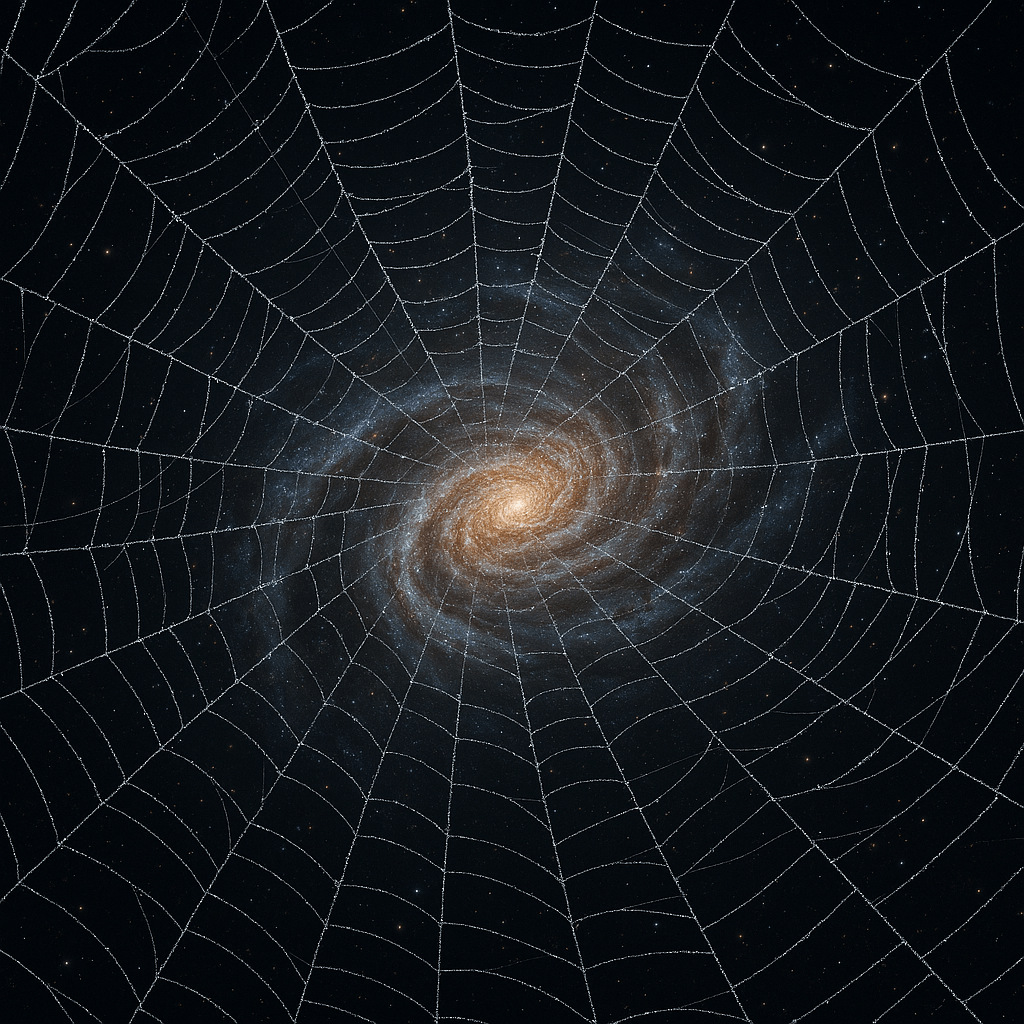
During this transformation, fermion-antifermion pairs condensed—similar to how electrons form Cooper pairs in superconductors, creating a stable, cold substance with minimal pressure and heat. This condensate became diffuse dark matter, shaping galaxies through its gravitational influence, acting as an invisible web counteracting their rotation and ensuring they don’t fly apart.

However, dark matter may not be as stable as once thought. The researchers propose that this condensate is slowly decaying, faster than standard cosmological models predict. This gradual decomposition feeds a long-lived energy source, possibly contributing to dark energy, the force responsible for the universe’s accelerated expansion.

A more radical interpretation, mine not the researchers, suggests that dark matter is not merely decaying, but evolving into dark energy, just as energetic fermion radiation once transitioned into dark matter. If this is true, dark matter and dark energy may be two phases of the same cosmic entity rather than separate forces.

If these hypothesis hold, we should be able to detect, as the researchers suggest, traces of this dark matter-to-dark energy transformation in the cosmic microwave background (CMB). Variations in density fluctuations and large-scale structures might reveal whether dark matter has been steadily shifting into dark energy, linking two of cosmology’s biggest unknowns into a single process.

Over billions of years, as dark matter transitions into dark energy, galaxies may slowly lose their gravitational cage and begin drifting apart. With dark energy accelerating the expansion, the universe may eventually reach a state where galaxies unravel completely, leaving only isolated stars in an endless void.

If dark matter started as a fine cosmic web, stabilizing galaxies, then over time, it may fade away completely, leaving behind only the accelerating force of dark energy. Instead of opposing forces locked in conflict, what if radiation, dark matter, and dark energy were simply different expressions of the same evolving entity?

A tetrahedron could symbolize this transformation:

  • Radiation (Energetic Era) – The expansive force that shaped the early universe.
  • Dark Matter (Structural Phase) – The stabilizing gravitational web forming galaxies.
  • Dark Energy (Expansion Phase) – The force accelerating cosmic evolution.
  • Time (Governing Force) – The missing element driving transitions between states.

Rather than the universe being torn apart by clashing forces, it might be engaged in a single, continuous transformation, a cosmic dance shaping the future of space.

Source: CDM Analogous to Superconductivity by Liang and Caldwell, May 2025, APS.org. Graphic: Galaxy and Spiderweb by Copilot.

Kinder Surrealism

I feel the need of attaining the maximum of intensity with the minimum of means. It is this which has led me to give my painting a character of even greater bareness.” Joan Miro.

Joan Miró (zhwahn mee-ROH, 1893–1983), a Catalan artist, began his career exploring Expressionism and Cubism before rejecting the rational world, which he found suffocating possibly depressing. He turned inward, merging an abstract dreamworld with Surrealism, ultimately evolving into a minimalist, conveying deep meaning through sparse, naïve brushstrokes and colors.

Symbolism became his hallmark; for Miró, the image was secondary to the message which was always open to interpretation. Initially inspired by Van Gogh and Cézanne, he later grew enamored with Picasso and Dalí, but it was Sigmund Freud who awakened his subconscious, plunging him into the mysteries of dreams and hallucinations. In pursuit of these visions, Miró intentionally induced states of hunger and exhaustion, risking madness to capture the fleeting essence of his dreamscapes. His dreams produced a primitive, childlike, whimsical innocence, with no explicit instructions for interpretation.

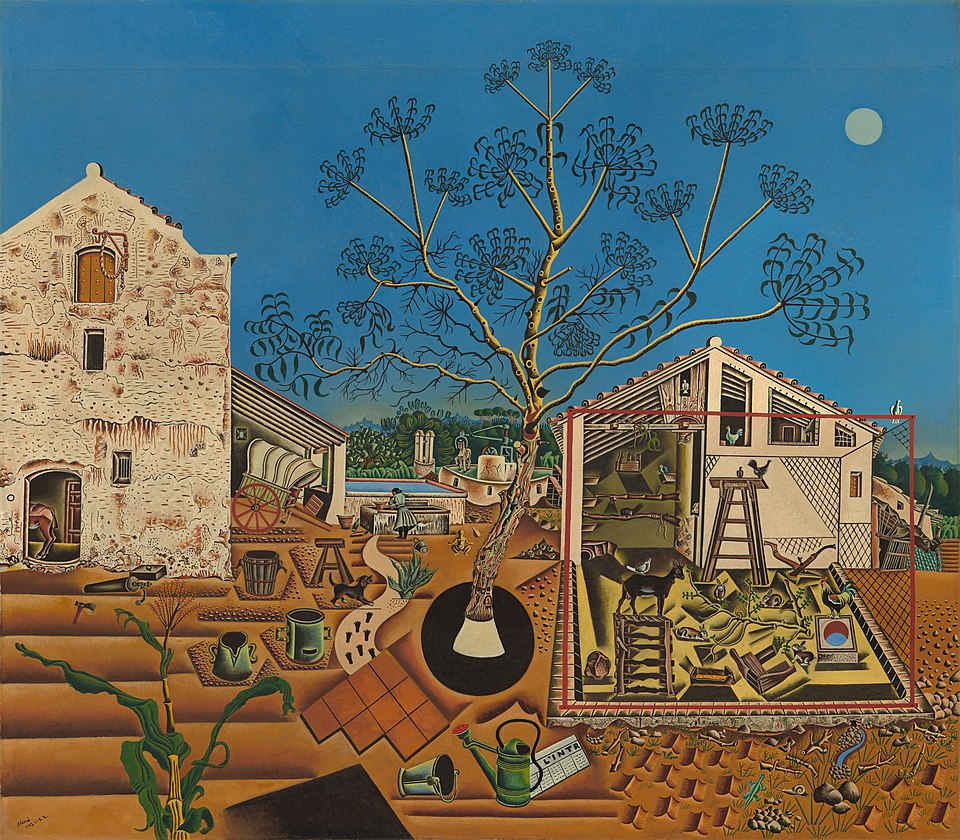
Miró’s early masterpiece, The Farm (1921–22), serves as a biographical snapshot of his life at 29, capturing the essence of his Spanish countryside upbringing and young adult life. This highly detailed precursor to his later Cubist and abstract works was purchased by Ernest Hemingway for 5,000 francs as gift to his wife.

By 2024, Miró’s works continue to command prices that place him among the top 25 most valuable artists worldwide. His Peinture (Étoile Bleue), or Painting (Blue Star), one of his best-known dreamscapes, sold for £23.6 million at a London Sotheby’s auction in 2012, equivalent to $37 million at the time, or approximately $31.5 million in today’s dollars.

Source: Miró by Gaston Diehl, 1979.  Graphic: The Farm (1921–1922), National Gallery of Art, Washington D.C. (Public Domain)

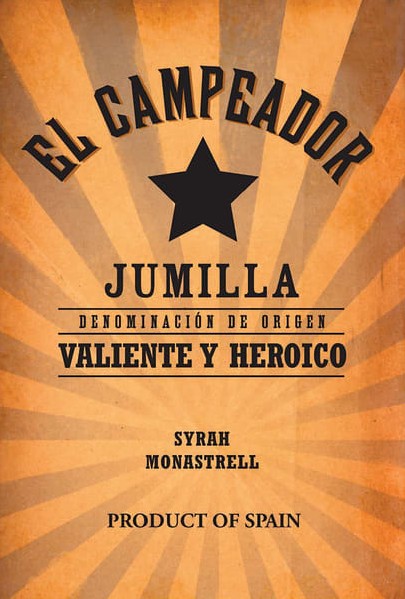
Artiga & Fustel El Campeador 2022

Other Red Blends from Jumilla, Spain

Syrah 50%, Monastrell 40%, Cabernet Sauvignon 10%

Purchase Price: $11.99

James Suckling 90, ElsBob 91

ABV 14.5%

A dense dark purple color, medium to full body, aromas of black fruit and spice. On the palate it is acidic, noticeable tannins but smooth, with a long finish.

An excellent fine wine at a great price. Recent prices are in the $14-17 range. Drink now. Cheers.

Trivia: Jumilla is a wine DO of the Murcia region near the Mediterranean in southeastern Spain. Monastrell (Mourvedre) is the dominant grape grown in this hot, arid region. In good years the DO produces about 100 million bottles of wine but the area has experienced severe droughts for the last couple of years and as such yields have decreased by 50-80%. 2024 yields supplied enough grapes to produce approximately 45 million bottles of wine. On the brighter side the grapes were said to have achieved “perfect ripeness” but with only average sugar levels.

Beelzebub Retold

 “No matter where or what, there are makers, takers, and fakers.” Heinlein: Time Enough for Love, 1973.

William Golding’s 1954 dystopian novel Lord of the Flies follows a group of stranded schoolboys who, without adult supervision, descend into savagery. Their initial attempt at cooperative survival deteriorates as fear and power struggles drive the strong to dominate the weak; order gives way to chaos, smothering courage beneath a blanket of terror.

While Lord of the Flies initially struggled in sales, Heinlein, perhaps one of its few early readers, found its premise of boys descending into barbarity overnight to be an absurd fiction. In response, he swiftly crafted Tunnel in the Sky, a sci-fi adventure that presents a striking contrast with a parallel plot: instead of chaos and savagery, his young survivors rise to heroic heights, confronting their primal fears with resilience and camaraderie.

The ninth of Heinlein’s thirteen juvenile novels (1947–1963), Tunnel in the Sky is framed as sci-fi but at its core,it’s an adventure story rooted in the conceptual school of literary romanticism. A story of survival wrapped in the timeless cloak of human values and existence. The novel uses sci-fi primarily as a means to transport young student survivalists to an uninhabited planet for their final class exam: surviving 5–10 days in a primitive, dangerous setting. After depositing the students on the planet, the novel’s sci-fi categorization reverts to Call of the Wild. A passing grade is assigned to those that were able to walk or crawl out alive.

After sending the students to the planet the transport mechanism malfunctioned and they are trapped alone on the planet with only a few provisions, maybe forever. With a few knives, limited medical supplies, and other paraphernalia that would fit in packs and pockets they are forced to search out each other to put together a workable society to provide food, shelter, and defense against the elements and native man-eating fauna. With expected fits and starts the kids put together a workable society that provides for their needs and a few wants eventually raising the question of whether they would even accept a rescue.

Heinlein was an incorrigible optimist and humanist. He believed humanity could and will solve all existential problems. To him Lord of the Flies was an impossibility. Humans want to live and self-interest eventually embraces “The needs of the many outweigh the needs of the few” (Spock-The Wrath of Khan).

In semitic languages such as Hebrew, Lord of the Flies is a literal translation of Beezlebub, who was initially a minor Philistine god that expelled flies, believed to be a source of sickness. Over time the Jews referred to him as a major demon and eventually Christianity elevated him to Satan himself. In Indo-European languages Beezlebub literally translates to Lord of the Jungle, one who conquers for the good of humanity: lebensraum. Golding’s Beelzebub represents dystopian destruction; Heinlein’s brings forth the utopian Lord of the Jungle.

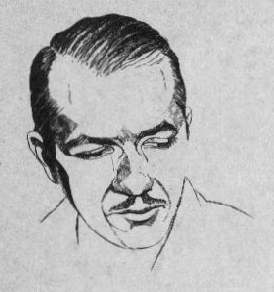
Source: Tunnel in the Sky by Robert Heinlein, 1955.  Graphic: Heinlein in Amazing Stories, 1953. Public Domain.

Tuscan Wines

Like many renowned wine-producing regions, Tuscany boasts a variety of iconic blends. Some, such as Chianti, are strictly regulated, while others, like Super Tuscans and Tuscan Blends, allow for more creative liberty.

Chianti must contain at least 80% Sangiovese, with the remaining 20% permitted to include Canaiolo, Colorino, Cabernet Sauvignon, and/or Merlot. Winemakers also have the option to produce 100% Sangiovese Chianti. These wines fall under Italy’s DOCG system, which regulates blend composition, sourcing, and aging across four levels: DOC, Classico DOCG, Superiore DOCG, and Classico Gran Selezione DOCG.

Super Tuscan is a militant category that emerged in the 1960s and 1970s when winemakers wanted more freedom from the strict regulations of Chiantis. Super Tuscans often blend Sangiovese with international grapes like Cabernet Sauvignon, Merlot, or Syrah, creating bold, structured wines. Since they don’t conform to traditional Chianti regulations, they are labeled under the IGT system, which allows more leeway. Actually, a lot of leeway. IGT wines can be produced in any of Tuscany’s 10 provinces from any grape or form imaginable: red, white, sweet, dry, or sparkling.

Then there are Tuscan Blends, a general term for wines made in Tuscany that mix different grape varietals. This could include Chianti-style blends, Super Tuscans, or other unique regional combinations. Unlike Chianti or Super Tuscans, “Tuscan Blend” isn’t an official classification; it’s more of a descriptive term for any blended wine from this region otherwise known in the rest of the world as a “Red Blend” or “Other Red Blend”.

Graphic: A traditional Chianti Bottle.

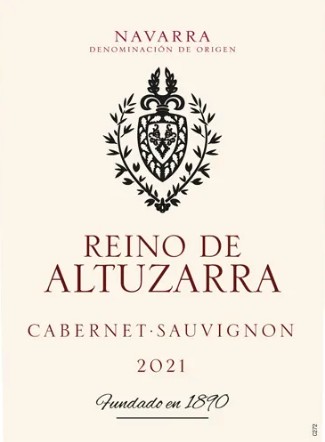
Bodegas Manzanos Reino De Altuzarra Cabernet Sauvignon 2021

Cabernet Sauvignon from Navarro, Spain

Purchase Price: $11.99

Wine Enthusiast 93, ElsBob 90

ABV 13.5%

A clear dark cherry red color, aromas of black fruit, licorice, and spice. On the palate it is acidic, subtle tannins, smooth, with a long finish.

An excellent table wine at a great price. Not as bold or complex as a Napa Cab but still interesting and worthwhile. Drink now. Cheers.

Posted

Ignoble Realism

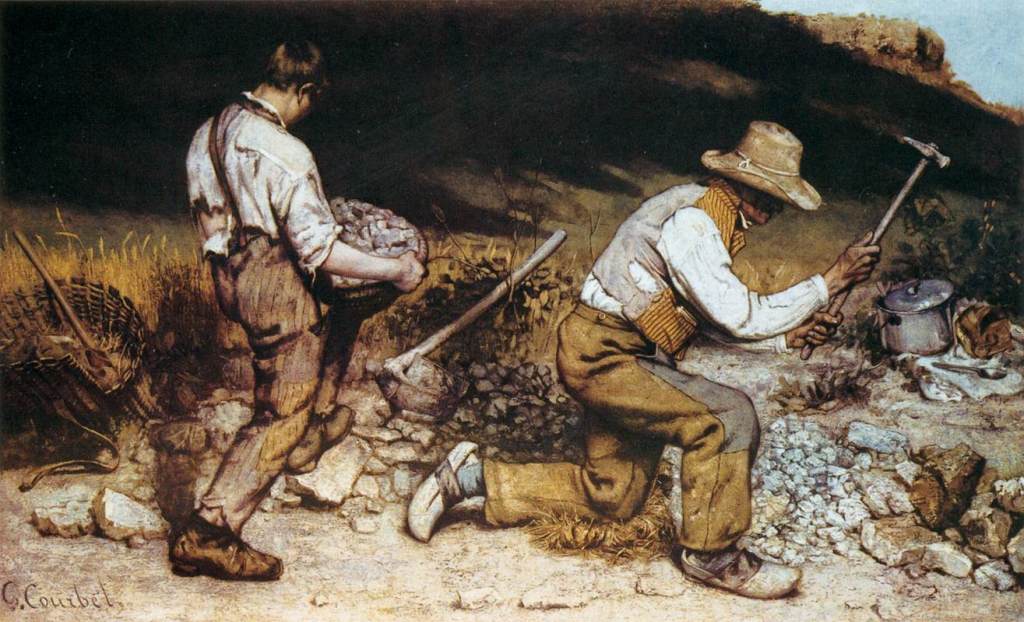
During the late 18th century French Revolution, the peasants laid their grievances at the feet of the nobles and took their heads in lieu of apology and retribution. As the years passed the revolutionary fervor subsided, Napoleon’s reign was brief yet transformative, and finally Louis XVIII, replacing Napoleon, restored the French nobility which brought peace to the land but also returned the country to the immoral customs of yore, not that they really went away, of avarice, promiscuity, and vice. Themes that Honoré de Balzac vividly paints in Old Goriot (Gor-e-u or Gor-e-ot), his greatest novel, first published in serial form in 1834; a fearless reflection of the Realist artistic movement taking shape in his time.

In this forlorn, unflattering critique of French society he uses a fine brush to sketch the uncomfortable and unseemly details of a decayed culture like a faded relic of indulgence, stripped of its former grandeur, except now the lower classes join the upper crust in a race to the dishonorable depths of unprincipled shame.

Honoré de Balzac’s Old Goriot tells the tale of unrequited, selfless paternal love thoroughly blind to the selfish indifference of his two young daughters, Delphine and Anastasie who have forsaken their father for wealth and prestige. Eugene de Rastignac, a young but poor law student, pursues the married Delphine with the blessings of her father with little thought about the moral implications of his ambitious desires or the Faustian struggles they entail. Vautrin, a criminal mastermind, enters the scene to put an exclamation point on the plot’s everything is inbounds, nothing is forbidden in early 19th century Parisian life. As Goriot dies alone, broke and broken, Eugene must decide his path in a city of corruption, indifference, and immorality. To succumb to the ruthless ambition of Parisian society or fight for a moral existence to save his soul.

Source: Old Goriot by Honoré de Balzac’s, 1834. Graphic: The Stone Breakers by Gustave Courbet, 1849 (Realism art movement).

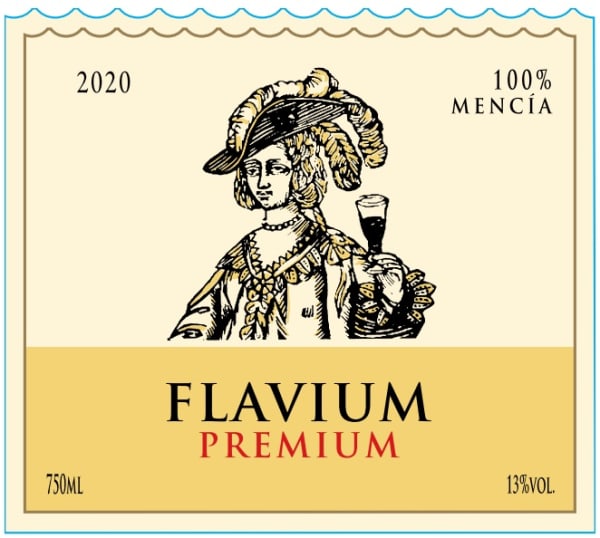
Vinos de Arganza Flavium Premium Crianza Mencia 2020

Mencia from Bierzo, Spain

Purchase Price: $12.99

James Suckling 90, ElsBob 90

ABV 13.0%

A deep garnet color with aromas of black fruits, plum, and spice. Medium-full body, medium acidity, tannic with a hint of black pepper and slate. Will pair well with red meat and spicy vegetable dishes.

An excellent table wine at a great price. I’ve seen this wine listed as low as $11—well worth picking up a few bottles at that price. Drink now. Cheers.

Trivia: Bierzo is Spanish DOP wine region in northwest Spain that has grown grapes since the time of the Greeks and Romans, but it was the monks of the Middle Ages who brought the area viticulture into prominence. Currently the DOP has 1030 growers and 74 wineries, covering less than 6000 acres, producing in aggregate about 7 million bottles of wine each year.