Journalism – Patricia Smith

Patricia Smith is very good at performance poetry, like freestyle rap battles without a beat, but as a journalist she could never quite grasp that poetry was fiction and journalism wasn’t. She could write, she was good with words and phrases, talents that journalism seeks out and rewards, but she would rather write a good story, usually fiction, than hit the pavement to flesh out the truth.

Patricia Smith began her career in journalism in the late 1970s as an entry level clerk at the Chicago Daily News, first as a typist and later as a music and entertainment reviewer. When the Daily News folded in 1978, she then worked as an entertainment writer for the Chicago Sun-Times from 1978 to 1990. She left the Sun-Times after it was discovered that she had written a review of a concert that she did not attend. In 1990 she moved to the Boston Globe, beginning as an entertainment critic, and eventually was made a reporter and the paper’s metro columnist. She was fired from the Globe in 1998 for fabricating characters and events in one of her metro columns. The Globe editors, after further investigation, believed that an additional 52 columns or hers contained fictional elements.

Source: New York Times, Chicago Tribune, Media Nation. Graphic: Patricia Smith
The KISS Principle and Skunks:

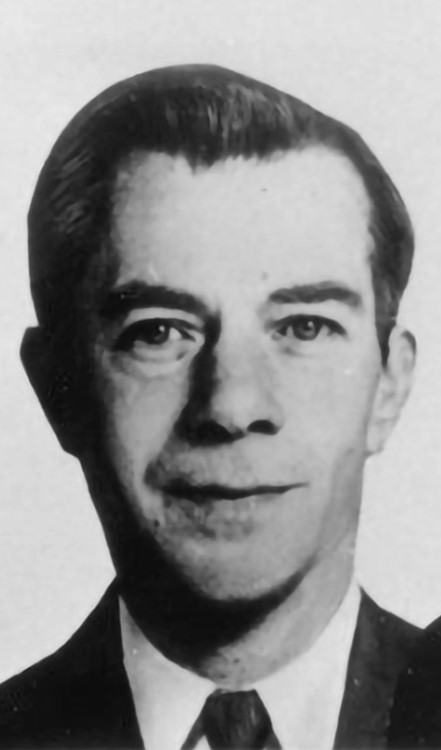
Willie Sutton, bank robber and writer, supposedly quipped when Mitch Ohnstad, a reporter asked him why he robbed banks: “Because that’s where the money is”.

In Sutton’s autobiography, he denied saying that he robbed banks because that’s where the money was, but he did say that he enjoyed robbing banks. It is estimated that he stole upwards to two million dollars from more than 100 banks over four decades starting in the 1920s.

His quaint response that he didn’t utter, has evolved into a rule of thumb for medical students now known as Sutton’s Law. It’s an instruction for medical students, and practitioners to accept the most likely diagnosis rather than spending inordinate amounts of time and money exploring all possible answers.

In accounting, a variant to Sutton’s Law is used to find savings in a budget, stating that the biggest savings will be found where the greatest costs occur.

Along a similar path of logic Occam’s Razor, attributed to the 14th century Englishman, William Ockham, states that when confronted with competing hypotheses to any given set of data one should select the least complicated proposition or as it is usually stated “The simplest explanation is usually the best one.”

Adding it all up leads one to the KISS Principle: Keep It Simple Stupid, first formulated by Kelly Johnson, lead engineer at Lockheed’s Skunk Works.

Source: Sutton, Where the Money Was: Memoirs of a Bank Robber, 1976. Kaplan et al, Harvard BS, 1998, MSN, Wikipedia. Graphic: Sutton, DOJ, public domain.