Love, Class, and Money

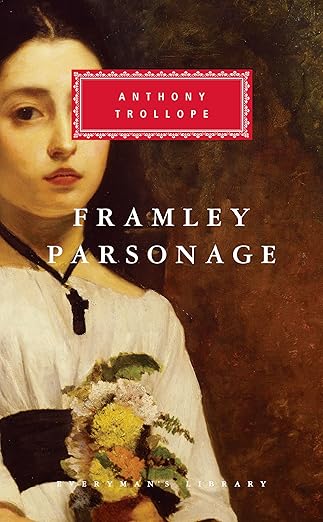
Framley Parsonage, by the Victorian author Anthony Trollope, is the fourth novel in the six-part Chronicles of Barsetshire series. This series is set in the fictional county of Barsetshire in the English countryside and details the social entwinings of the gentry, rich mercantile classes, clergy, and occasionally what we would today refer to as the comfortable middle class. The novels, which can be read in any order, revolve around themes of maintaining social status, finding love, marrying well, and money. Hypocrisy, chicanery, and snobbish attitudes often create dilemmas that Trollope, in a winding but satisfying narrative fashion, concludes as the reader wishes.

Framley Parsonage specifically details the misadventures of the amiable but horribly naive vicar, Mark Robarts, who is a boyhood friend of Lord Ludovic Lufton. Through this friendship, Ludovic’s mother, Lady Lufton, installs Robarts in the Framley Parsonage with a sufficient salary to support his young family’s basic needs. Through a misplaced sense of ambition, Robarts attempts to further his standing in life by associating with a parliament member, charlatan, and aptly named Mr. Sowerby, bringing humiliation and disgrace upon himself.

Trollope displays an absolute sense of enjoyment in writing this novel, skewering the political class with an abundance of wit and satire, along with exploring four marriage sub-plots that he resolves with appropriately deserved denouements of happiness or the lack thereof.

Source and Graphic: Framley Parsonage by Anthony Trollope, Publisher Everyman’s Library, 1994.
Class and Money

By Anthony Trollope

Published by Norilana Books

Copyright: © 2007

Original Copyright: © 1858

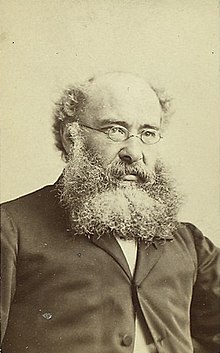
Anthony Trollop

Anthony Trollop was a successful English Victorian novelist with a bibliography that stretches to almost ninety novels and short stories plus numerous articles, letters, and a couple of plays. Before he obtained fame as a writer, he was unsuccessful in about everything else including politics, prostrating himself for a seat in the House of Commons in which he came in fourth in a field of, well, four.

His first major success as a writer came with his fourth novel in 1855, ‘The Warden’, the first book in the Barsetshire series, a collection of novels that made him famous and what he is most remembered for 125 years later. The series, which are loosely connected and can be read in any order, consist of six novels set in the fictional English county of Barsetshire. The county was a fictional composite recollection of his travels into the English countryside observing the bucolic, but poor life of the peasants juxtaposed with the landed gentry and nobility of 19th century England. The Chronicles of Barsetshire as the series came to be known deals almost exclusively with the Church of England clergy and landed gentry with peasantry narratives sporadically thrown in for local color. The gentry were a class below the British peerage but due to ownership of land were occasionally above them in wealth if not status.

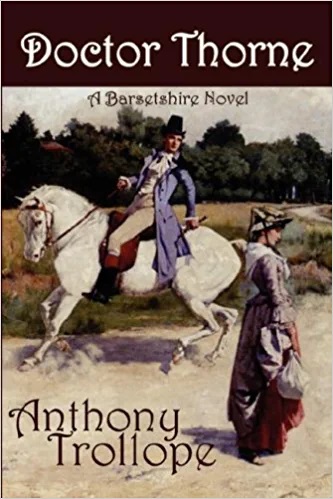
Doctor Thorne is the third novel in the Barsetshire series and is considered the best of the six. The novel revolves around the lives of Squire John Gresham’s of Greshamsbury family and their physician, Doctor Thorne, and his niece Mary. Gresham is slowly selling off his estate to pay debts, leaving little for his oldest son Frank to inherit in the years to come or for the family to live on in months to come. The only solution is for Frank to marry money. Frank loves Mary but Mary has no title or money. The story progresses as expected but the read is a romp anyway.

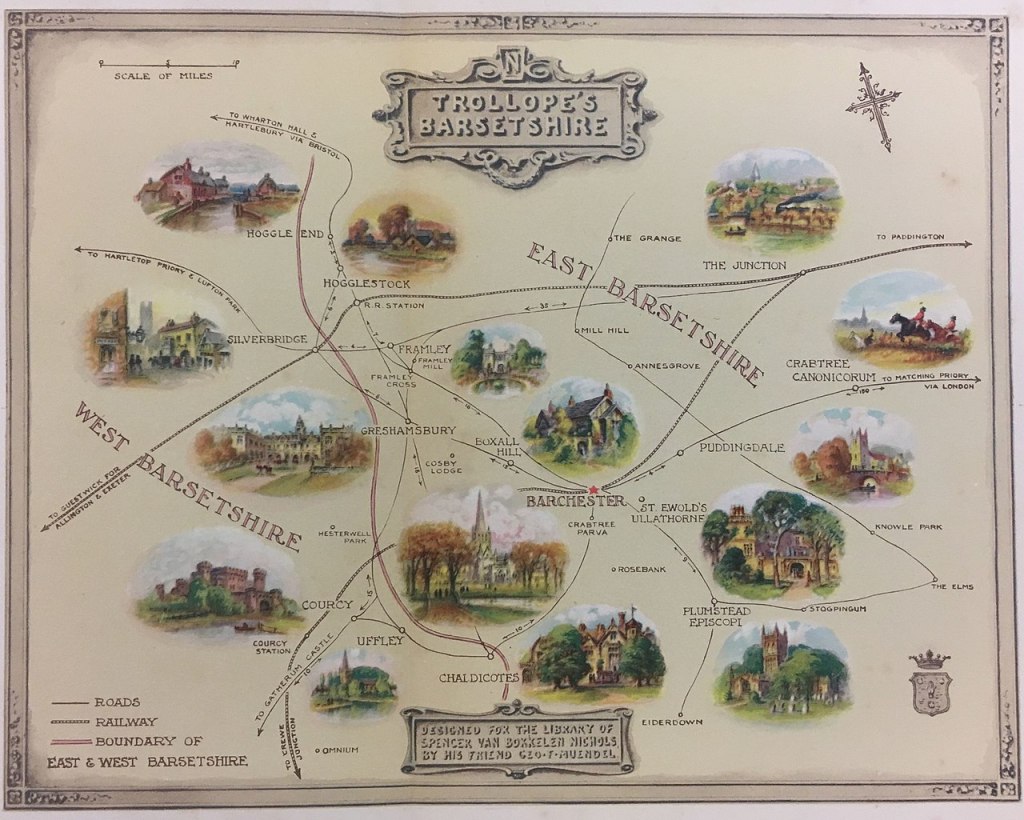
A fictional Map of Barsetshire – After Trollop – drawn by Spencer Van Bokkelen Nichols in 1925, painted by George Frederick Muendel.