Norman Rockwell, a name synonymous with American Realism, was a master of meticulous detail, yet he never failed to brush a thread of whimsy and rustic existence onto the canvases of his iconic paintings.
Norman Rockwell, an iconic painter of American life, was born on 3 February 1894 into a comfortable New York City family. His father, a lover of Charles Dickens, often sketched illustrations from books, planting early seeds of creativity in young Norman. His mother, overprotective yet proud of her English heritage, spoke often of her artistic but unsuccessful father, whose unrealized dreams seemed to echo in the household. Art wasn’t just a pastime for Rockwell; it pulsed through him, and by age 12, he had resolved to draw for a living, though painting would come later in his journey as an artist.
As a teenager, Rockwell pursued artistic training at the National Academy of Design and later at the Art Students League, where he studied under the influence of Howard Pyle, the renowned illustrator of boys’ adventure tales. Pyle, who had founded the school’s philosophy through his own teachings and legacy, left an indelible mark on Rockwell, shaping his lifelong passion for weaving narrative into art. Before he turned 16, Rockwell landed his first commission—four Christmas cards—a modest start for a boy already dreaming big. By 18, he was painting professionally full-time, his talent unfolding with the quiet determination of youth finding its purpose.
In 1916, Rockwell began his legendary run with The Saturday Evening Post, creating covers that would grace the magazine for the next 47 years. Over that span, 322 of his paintings became what the Post proudly dubbed “the greatest show window in America.” Through these works, Rockwell offered a mirror to the nation—sometimes nostalgic, often tender, always human—reflecting everyday moments that resonated deeply with millions.
While his career soared with the Post, city life never suited him. In 1939, he traded New York’s clamor for the rolling hills of Vermont, and later, in 1953, settled in Massachusetts. These rural landscapes became his muse, dominating his canvases for the first three decades of his career. Rockwell was no haphazard artist; he was methodical, even obsessive, following a rigorous six-step process to bring his visions to life: brainstorming ideas, sketching rough outlines, photographing staged scenes with real people, crafting detailed drawings, experimenting with color studies, and only then committing paint to canvas. Each step was a labor of love, a tip of the hat to the America he loved.
At the heart of his art was a simple, profound drive. As Rockwell himself put it, “Without thinking too much about it in specific terms, I was showing the America I knew and observed to others who might not have noticed.” His paintings weren’t just pictures, they were invitations to see the beauty in the ordinary, the dignity in the overlooked; we see not just an artist, but a storyteller who believed in the quiet goodness of people, brushstroke by brushstroke.
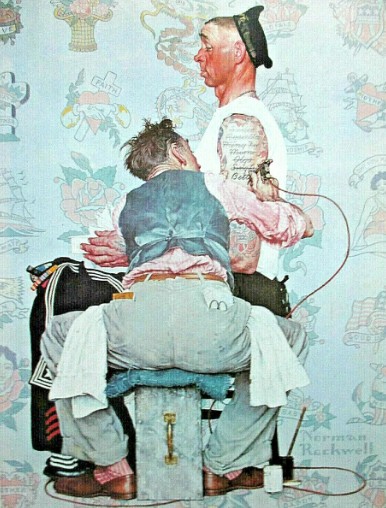
Source: The Norman Rockwell Treasury by Thomas S. Buechner, 1979. Norman Rockwell Museum. Graphic: The Tattooist by Norman Rockwell, 1944, The Brooklyn Museum.
Oh, when I look back now
That summer seemed to last forever
And if I had the choice
Yeah, I'd always wanna be there
Those were the best days of my life

Song written by Bryan Adams/Jim Vallance - Summer of 69 - Reckless album - Released 1985
BradburyBiography:
“All education is self-discovery.” Bradbury
Ray Bradbury, 1920-2012, was an American treasure, an exceptionally talented and prolific writer in multiple genres that included science fiction, horror, and mystery but his passion lay in the field of fantasy. He felt that fantasy, by his definition, was “a depiction of the unreal“. He took inspiration and pleasure from the fantastical works of Poe, Wells, and Verne and spent a lifetime mining his imagination for the unreal. Fantasy was where he could not only “create myths for the future” but warn society of the dangers of technology and conformity. In his words: “to prevent the future.”
FootnoteA
Bradbury was born in Waukegan, Illinois, a small town of 20-30 thousand people, at the time, north of Chicago, and came of age there during the Great Depression. It was a time when the future was murky, and he said he needed his imagination to see through the gloom. That imagination was fruitful and varied.
His writing was packed full of social commentary, especially Fahrenheit 451, but more on that in a bit. He wrote about the unreal side of the present but with an eye to the future. His prescient vision alerted us 75 years ago about the evils that will come from a monoculture dispensed from the organs of mass media and technology. He was afraid that it would keep society passive and ignorant. And ignorance has come to pass.
Bradbury never drove a car, but he did ride in them, he did not board a plane, heights bothered him, until he was in his sixties, and he never used a computer. He thought the internet was useless, perfectly encapsulating a flaw, maybe the major flaw in science fiction: predicting the future is hard and mostly wrong. Machines didn’t interest him but when he wrote about them, he just made it up as he went.
He initially corrected people when questioned about his “science fiction” writing, “I don’t write science fiction” he insisted. “I write fantasy. Fantasy is a depiction of the unreal.” In later interviews when referred to as a science fiction writer he just graciously accepted it and moved on. Science fiction he also said was “a depiction of the unreal but with an attempt to be faithful to reality.” He didn’t want to be faithful to reality. He stated that of all the stories he wrote, and it’s believed that there were more than a thousand of them, no one seems to be able to add them all up, Fahrenheit 451 is the only true science fiction he ever wrote. It not only has withstood the test of time as a classic piece of sci-fi literature, but it also was rendered into two motion pictures in 1966 and 2018. The former was only marginally bad with the latter being just flat out bad, proving the point that low budget sci-fi does not win any awards in Hollywood or with audiences.
FootnoteB
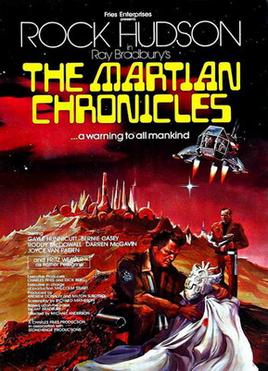
Bradbury made his mark in the literary world with The Martian Chronicles, a collection of loosely connected short stories released in 1950. The book chronicles the settlement of Mars, the home of Martians by Americans fleeing an Earth falling into a hellish abyss.
During the height of the second Red Scare beginning in 1947, Bradbury warned of government censorship with his fourth and possibly his greatest novel, Fahrenheit 451. The story initially appeared in book format in 1953 and was reprinted in the nascent publication Playboy in 1954. Fahrenheit 451 is the story of firemen not putting out fires but starting them. They burn books, and buildings with books to keep people ignorant and thus obedient. An obedient population was not a threat to the government.
Dandelion Wine:
FootnoteC
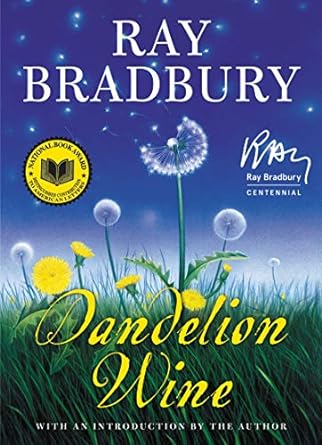
Dandelion Wine is Bradbury’s fifth novel and his most intimate creation. It is a loose collection of forty-nine semi-autobiographical short stories detailing a 12-year-old boy, Douglas Spaulding and his 10-year-old brother Tom, trying to stretch out the summer of 1928 into a never-ending triumph of pubescence experience in small town America.
In a 1974 introduction to Dandelion Wine, titled Just This Side of Byzantium…, Bradbury writes: “…Waukegan was Green Town was Byzantium with all the happiness that that means, with all the sadness that these names imply. The people there were gods and midgets and knew themselves mortal and so the midgets walked tall so as not to embarrass the gods and the gods crouched so as to make the small ones feel at home…Here is my (Bradbury’s) celebration,then, of death as well as life, dark as well as light, old as well as young, smart and dumb combined, sheer joy as well complete terror written by a boy who once hung upside down in trees, dressed in his bat costume with candy fangs in his mouth, who finally fell out of the trees when he was twelve and went and found a toy-dial typewriter and wrote his first ‘novel’.”
FootnoteD
About half of the chapters in the book were initially published, starting in 1946, as short stories in magazines such as Weird Tales (The Night), Charm (The Green Machine), and The Saturday Evening Post (The Happiness Machine). In 1957 all the stories were brought together into the book, Dandelion Wine. The title refers to Douglas’s grandfather making wine every summer from the petals of dandelions. Bradbury used the title as a metaphor for cramming all the joys and happenings of summer into one bottle. Or one book.
As a testament to the lasting appeal of the book, the 1971 crew of Apollo 15 named a lunar crater Dandelion. In 1986, as a testament to Bradbury’s lasting appeal as a writer, an asteroid was named after him called 9766 Bradbury.
And finally, in a 2010 interview with Universe Today a few years before his death, in reference to being buried on Mars, he said: “I don’t want to be the first live person to arrive there,” he said. “It’ll be too late. But I want to be the first dead person that gets there. I want to arrive in a Campbell’s soup can. Bury me on Mars in (a) thing called the Bradbury Abyss. They gotta name a place on Mars for me, and I will welcome that.” Maybe Elon Musk can help with this.
FootnoteE
Literary Criticism:
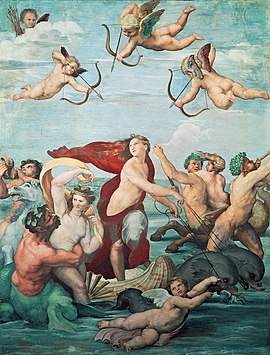
Ray Bradbury writes poetry as prose. Natural and chatty prose. Prose rich in explanation, metaphor, and image. Prose that is a joy to read, planting scenes in your mind that grow into a picture worthy of Raphael’s Triumph of Galatea.
Dandelion Wine is the extraordinary time in a boy’s life where innocence, friendship, and happiness occur without the weight of the substantial and ponderous adult years.
Read the snippet below from chapter 29 of Dandelion Wine, Summer’s Ice House and tell me you do not feel the chill.
Deep in winter they had looked for bits and pieces of summer and found it in furnace cellars or in bonfires on the edge of frozen skating ponds at night. Now, in summer, they went searching for some little bit, some piece of the forgotten winter...Summer’s Icehouse on a summer day! They said the words, laughing, and moved to peer into that tremendous cavern where in fifty, one-hundred, and two-hundred-pound chunks, the glaciers, the icebergs, the fallen but not forgotten snows of January…
Dandelion Wine is a masterpiece of prose, of imagination, and fantasy.
Bradbury Literary Awards:
World Fantasy Award for Life Achievement 1977
Prometheus Award for Fahrenheit 451 1984
Bram Stoker Award for Lifetime Achievement 1989
P.V. Helmerich Distinguished author Award 1994
Emmy Award for The Halloween Tree 1994
First Fandom Hall of Fame Award 1996
Science Fiction and Fantasy Hall of Fame Inductee 1999
Medal for Distinguished Contribution to American Letters 2000



 elsToday