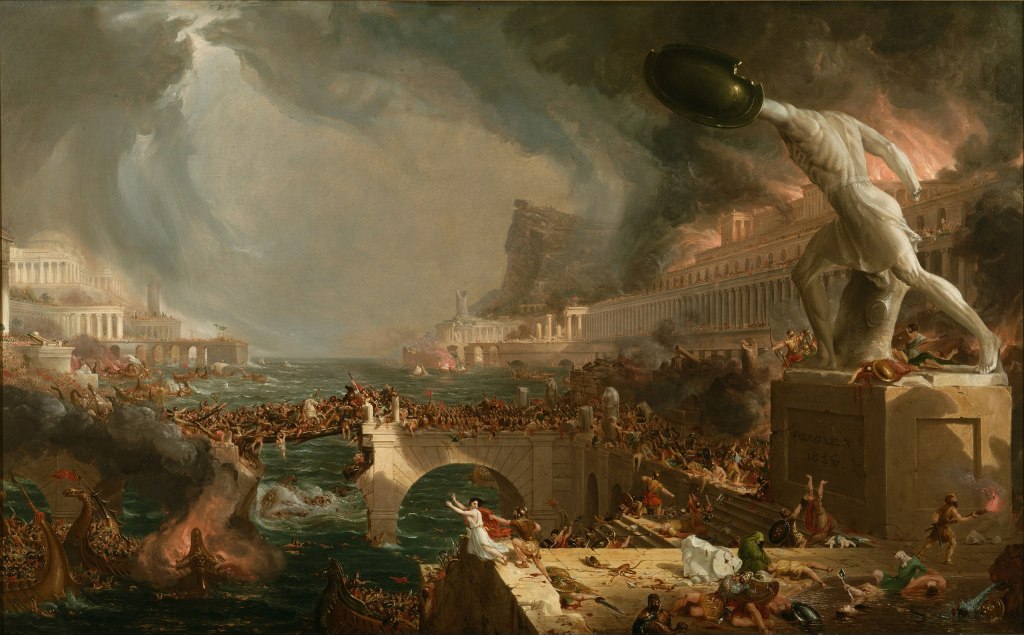
Edward Gibbons’ epilogue to his book, “The Decline and Fall of the Roman Empire”, mentions several factors that led to the collapse of the Empire:
- Barbarian Invasions: Incursions and settlements of Germanic tribes, Saxons, Huns, Alans, and others that overtaxed and weakened the Roman military and its infrastructure.
- Decline of Civic Virtue: Loss of a sense of civic duty and responsibility and the subsequent decay of public morality
- Christianity: Spiritual concerns took the focus away from civic duties. (Gibbons wasn’t an atheist but likely a deist or a detached Christian with a disdain for organized religion.)
- Economic Decay: The empire faced heavy taxation, inflation, and reliance on slave labor. Inflation was due to government corruption, excessive trade imports, military spending, and debasement of the currency.
- Political Corruption: A corrupt and unstable political system led to ineffective and nonsensical governance.
- Military Overextension: The Empire was too large to manage, resulting in an over-stretched military.
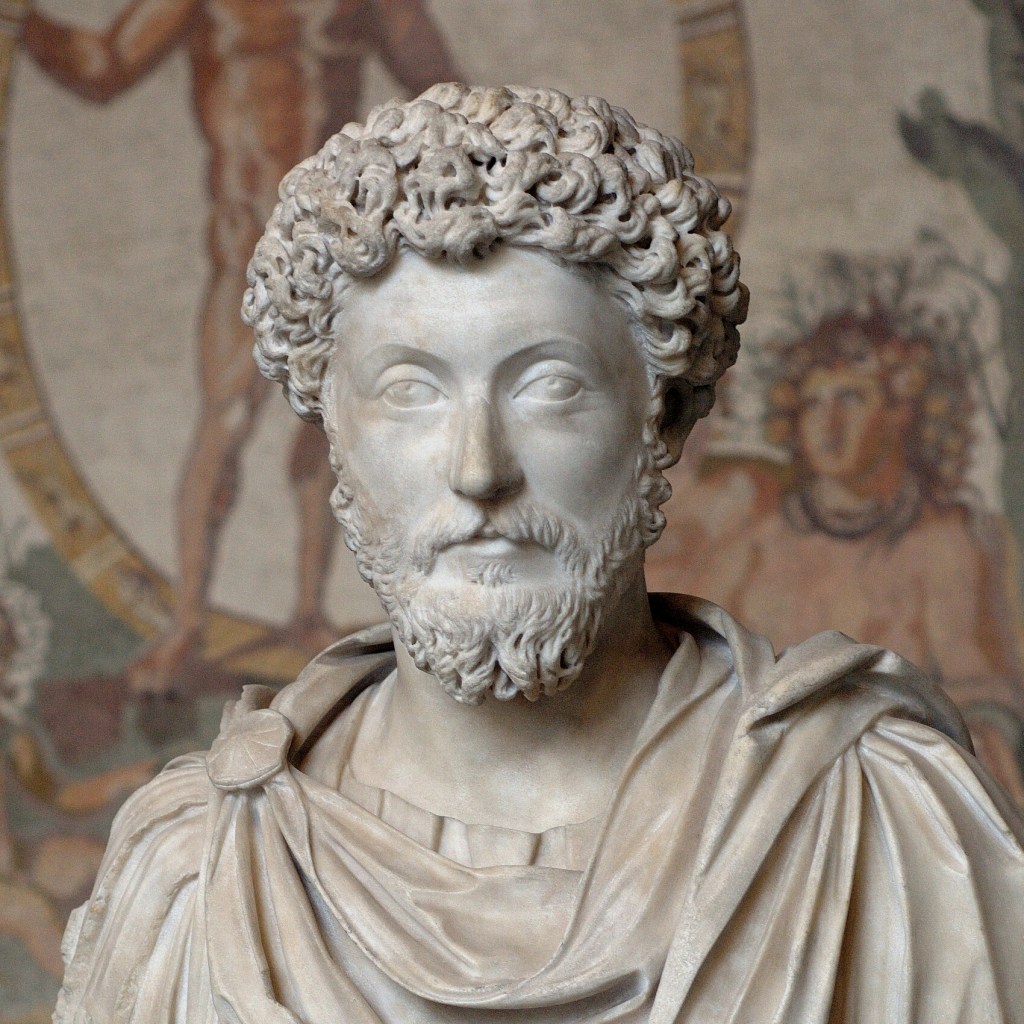
Marcus Aurelius in his book, “Meditations” also mentions the Antonine Plague years of 165-180 AD (a second outbreak occurring from 251-266 AD) as the primary cause of the Empire’s decline. The plague reduced Rome’s population, affecting its military’s ability to defend its borders, and the loss of labor to maintain its infrastructure.
Additional factors have also been mentioned by others, including: a disloyal military, civil wars, lead poisoning, and the always useful-climate change.
Source: “The Decline and Fall of the Roman Empire” by Edward Gibbons, 1776-1788. “Meditations” by Marcus Aurelius. Graphic: Destruction by Thomas Cole, 1836, from the series: The Course of Empire. New York Historical Society. Public Domain.


 elsToday