Monroe Doctrine

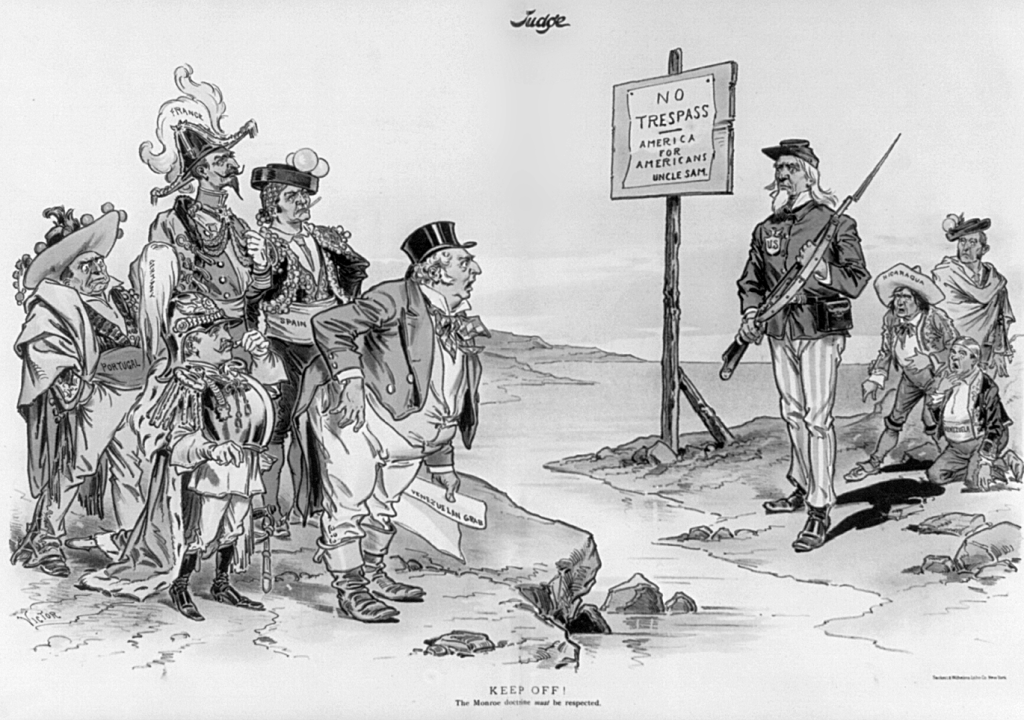
In 1823, President James Monroe issued what became known as the Monroe Doctrine, warning European powers against further colonization or interference in the New World. Though never codified into law or treaty, the doctrine became a guiding principle of U.S. foreign policy, invoked and reinterpreted by successive administrations to assert American influence in the hemisphere. Theodore Roosevelt expanded it, Barack Obama’s administration declared it obsolete, and Donald Trump revived its assertive tone. Its malleability is hailed by some as its strength, denounced by others as its greatest flaw.

The Monroe Doctrine became a symbolic fence around the Western Hemisphere, a firewall against nineteenth‑century imperial powers. Over the next two centuries, it evolved through corollaries, confrontations, and periods of dormancy. Today, in the shadow of Chinese expansion, mainly through its Belt and Road Initiative, Latin American states are drawn to twenty‑first‑century infrastructure with age‑old colonialism lurking in the background. But the Chinese buying influence in the hemisphere is aimed directly at the United States, seeking to erode its traditional dominance and reshape regional loyalties.

The Monroe Doctrine was intended to thwart enemies, potential and real, at the gate. With the exception of Cuba, it largely succeeded through the twentieth century. The 21st century now poses a test of whether the doctrine still has teeth.

If conflict with China is fated, then the United States must first secure its own backyard. The Western Hemisphere cannot be a distraction or a liability, a source of angst and trouble. Before turning its full strategic gaze toward the Middle Kingdom, the U.S. must seal the gates of the New World.

The Monroe Doctrine was written mainly by President Monroe’s Secretary of State, John Quincy Adams. It aimed to support Latin American independence movements from Spain and Portugal, while discouraging Russian influence in the Pacific Northwest and preventing the Holy Alliance: Russia, Austria, Prussia, and France, from restoring monarchs in the Americas. But the doctrine was not all sword: the United States also pledged not to interfere in Europe’s internal affairs or its colonies.

In the early 1800s, the United States lacked the ability to enforce such a bargain militarily. Britain, however, was more than willing to use its naval fleet to guarantee access to New World markets and discourage competition.

By the beginning of the twentieth century, Theodore Roosevelt invoked and expanded the doctrine, effectively making the United States the policeman of the Western Hemisphere. During the Cold War, it was used to counter Soviet influence in Cuba, Nicaragua, and Grenada.

By the 1970s the South American drug trade was declared a national security threat and the War on Drugs began with Colombia the epicenter of hostilities. In 1981, U.S. Congress amended the Posse Comitatus Act to allow military involvement in domestic drug enforcement, extending to Latin America. President Ronald Reagan’s 1986 National Security Decision Directive 221 declared drug trafficking a U.S. national security threat, authorizing military operations abroad, including in Colombia.

After the Cold War, the doctrine faded from explicit policy. In November 2013, Secretary of State John Kerry declared at the Organization of American States that “the era of the Monroe Doctrine is over,” framing a shift toward partnership and mutual respect with Latin America rather than unilateral dominance. By 2020 Colombia’s coca production had hit a new high.

Today, China’s Belt and Road Initiative, port construction and acquisitions, telecom infrastructure, and rare earth diplomacy have carved influence into Latin America and the Caribbean. In this context, the Monroe Doctrine was not asleep but, in a coma, its toes occasionally twitching.

Re-invigorating the Monroe Doctrine is not about making true allies and friends but removing vulnerabilities. The goal is not to bring these nations into the fold but to remove them from Beijing’s orbit.

By mid-2025 official statements claim that ~10% of the U.S. Navy is deployed to counter drug threats, ostensibly from Venezuela and Columbia. But fleet positioning hints at a different story. Most assets are stationed near Puerto Rico, the Virgin Islands, and Guantánamo Bay, closer to Cuba than Caracas. Surveillance flights, submarine patrols, and chokepoint monitoring center on the Florida Straits, Windward Passage, and Yucatán Channel.

This may suggest strategic misdirection. Venezuela is the declared theater, but Cuba is the operational keystone. The U.S. may be deflecting attention from its true concern: Chinese or Russian entrenchment in Cuba and the northern Caribbean.

The Monroe Doctrine began as a warning to monarchs across the Atlantic. In the late twentieth century, it morphed into a war on drugs. Today it reappears as a repurposed drug war, flickering as a warning to Beijing across the Pacific. Whether it awakens as policy or remains sleight of hand, its enduring role is to remind the world that the Western Hemisphere is not a theater for distraction but a stage the United States will guard against intrusion. In the twenty‑first century, its test is not whether it can inspire allies, but whether it can deny adversaries a foothold in America’s backyard.

Graphic: Monroe Doctrine by Victor Gillam, 1896. Public Domain.
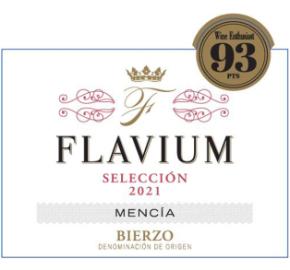
Vinos de Arganza Flavium Seleccion Mencia 2021

Mencia from Bierzo, Spain

Purchase Price: $14.97

Wine Enthusiast 93, Wilfred Wong 91, ElsBob 92

ABV 13%

A concentrated dark ruby color. Aromas of black and blue fruit coupled with a hint of spice, sporting a very smooth red fruit taste and a beautiful lasting finish.

An excellent table wine at a fantastic price. Current price ranges from $10-18.

Trivia: Just southwest of Vinos de Arganza lay the largest open-pit gold mine in the Roman Empire. Known as Las Médulas, it was worked by a method called ruina montium: “wrecking of the mountains”, a form of hydraulic mining that would later see service in the gold rush days of California. As Pliny the Elder described in 77 AD, Roman engineers diverted water from the Cantabrian and La Cabrera mountains into vast reservoirs, then released it in violent surges to erode entire hillsides and expose gold-bearing sediment.

Centuries later, the same principle of hydraulic head would be artistically employed for music and water sculpture: the Fountain of the Organ at Tivoli, north of Rome, used gravity-fed water to power its jets and to also force air through the pipes of a Renaissance organ.

Pliny estimated an annual yield of 20,000 Roman pounds of gold (1 Roman pound ≈ 0.72 English pounds). Over the mine’s 250-year lifespan, from the 1st through the 3rd century AD, approximately 58 million ounces of gold were extracted. At today’s prices, that would be worth over $225 billion, a fortune that once flowed through imperial treasuries, legion payrolls, and massive Roman infrastructure projects.

Goya: Beauty Unmasked

Francisco de Goya, a late 18th to early 19th century Spanish painter of the Romantic school, is a fascinating study in evolving style, a visual descent into deafness, isolation, and existential dread, though more philosophically, his lifelong disillusionment with civilization’s failure to embody the Enlightenment’s promised ideals of reason, justice, and human dignity. His art swung like a pendulum, from crisp detail to loose rendering to the raw emotion of a mind increasingly separated from reason.

As a court painter to the Spanish monarchy, Goya’s portraits became canvases for cynicism, derision, and paradox. He offered scathing critiques hidden beneath formal composition, and the court loved him for it. They mistook his precision for praise, even as he quietly dismantled their poise and splendor.

His colossal canvas Charles IV of Spain and His Family (110 × 132”) does not illustrate majesty or brilliance; it immerses the senses in familial estrangement and tedium. Awkward poses; lifeless gazes; a composition emotionally hollowed, drained of vitality and intent. These are not confident rulers but bored figures waiting for the dinner bell to summon a distraction: ceremonial chatter over fish soup and presentation of chocolates. In the background of the painting, Goya includes himself, brush in hand, an artist caught in the act of witnessing. It was a nod to Velázquez’s Las Meninas; Goya once said he “had only three masters: Nature, Velázquez, and Rembrandt”; but here, reverence turns to scorn. Goya didn’t flatter his subjects; he distorted the real, undermining not his own reverence for form, but theirs. His royal figures do not speak; they stare blankly, confirming that the emperor wears no clothes. He looked beneath the surface in search of beauty and instead found something far less attractive, an insignificant echo of a tired reality.

Goya’s notion of beauty, conventionally understood, remained intact. But in his subjects, he saw hypocrisy, a lie, elegantly draped, concealing the moral disfigurement beneath. This critique finds haunting expression in his etching Nadie se Conoce (“Nobody recognizes himself”), Plate No. 6 of Los Caprichos, where masked carnival patrons drift like phantoms of untruth. On the reverse of the plate, Goya inscribed his chilling reflection: “The world is a mask; the face, the costume, and the voice are all feigned. Everyone wants to appear what they are not, everyone deceives, and no one knows himself.”

Goya painted the existential. His late works: The Disasters of War, The Black Paintings, The Madhouse, Saturn Devouring His Son, reveal more of his suffering psyche than his technical ability. Anthony Cascardi argues in Francisco de Goya and the Art of Critique that Goya’s entire oeuvre is a sustained confrontation with Enlightenment ideals. Reason and beauty dissolve under his brush. Societal decay no longer whispers, it screams.

In style, Goya stands at the edge of the Impressionist movement, decades before its arrival. His gestural freedom, emotional brushwork, and psychological texture prefigure the rawness of Manet and even hint at Bacon’s existential grotesque. Paint becomes not just medium but mood, an extension of perception unraveling. Form overrides detail. But Goya moved to a darker rhythm, his brushwork shades where theirs shimmered. Where Monet dances with light, Goya wrestles with darkness. The Impressionists chose beauty over Goya’s emotional appeal, which ultimately served to mock his subjects’ feigned grace.

Unlike Picasso’s theatrical mockery, Goya’s assessment is surgical. He dispenses with pretense and seeks truth, not a truth easily embraced, but one rooted in the soul’s unpleasant, hidden recesses. Picasso once echoed a similar sentiment in a 1923 interview with The Arts: “Art is a lie that makes us realize truth, at least the truth that is given us to understand.” Art distorts to reveal what reality conceals, truth not always visible, but deeply felt. Superficial beauty without the soul is not art, it is a lie.

In contrast to today’s symbolic excess, where the subject is buried beneath concept and symbols, Goya’s portraits are revealing to the point of brutality. He doesn’t idealize; he removes the layers of deceit. The beast within becomes the subject. His cynicism is constant, his honesty sometimes absurd, but always truthful.

Goya takes a moral stance. His genius lies in the ability to paint the conscious with the unconscious, to render not just what he saw, but what he felt and feared, the form with the spiritual. His style matched his psyche. He painted the perceived rot beneath grandeur, the weariness behind powdered wigs, the absurdity beneath court spectacle.

Goya’s fame was built and balanced on a knife’s edge: he gave the rich what they wanted in form, while seeding beneath it a quiet, damning truth. That duality, beauty as lure, truth as blade, is Goya’s lasting contribution to art.

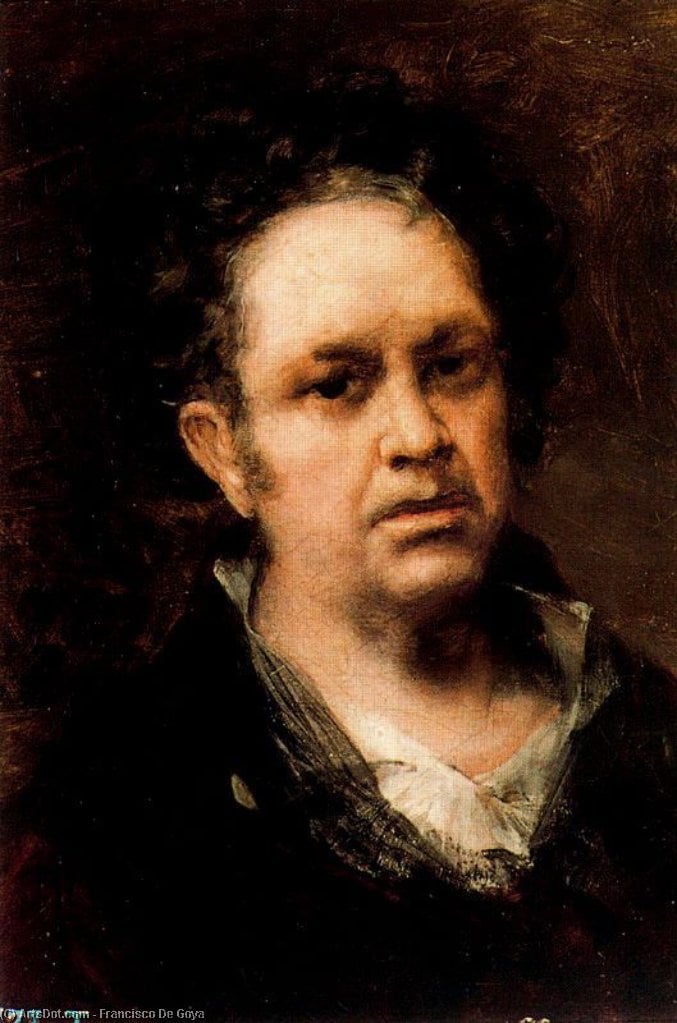
Graphic: Self-Portrait at 69 Years, by Goya, 1815. Museo del Prado-Madrid.

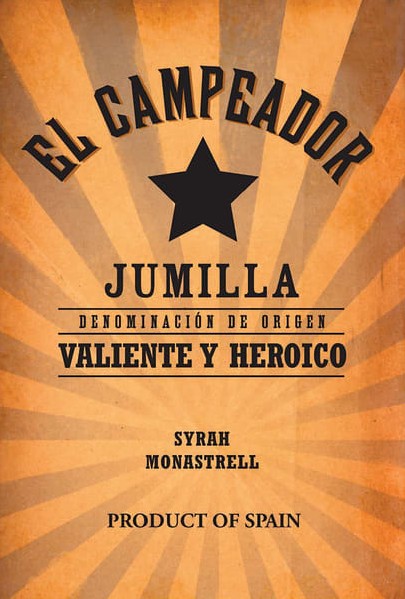
Artiga & Fustel El Campeador 2022

Other Red Blends from Jumilla, Spain

Syrah 50%, Monastrell 40%, Cabernet Sauvignon 10%

Purchase Price: $11.99

James Suckling 90, ElsBob 91

ABV 14.5%

A dense dark purple color, medium to full body, aromas of black fruit and spice. On the palate it is acidic, noticeable tannins but smooth, with a long finish.

An excellent fine wine at a great price. Recent prices are in the $14-17 range. Drink now. Cheers.

Trivia: Jumilla is a wine DO of the Murcia region near the Mediterranean in southeastern Spain. Monastrell (Mourvedre) is the dominant grape grown in this hot, arid region. In good years the DO produces about 100 million bottles of wine but the area has experienced severe droughts for the last couple of years and as such yields have decreased by 50-80%. 2024 yields supplied enough grapes to produce approximately 45 million bottles of wine. On the brighter side the grapes were said to have achieved “perfect ripeness” but with only average sugar levels.

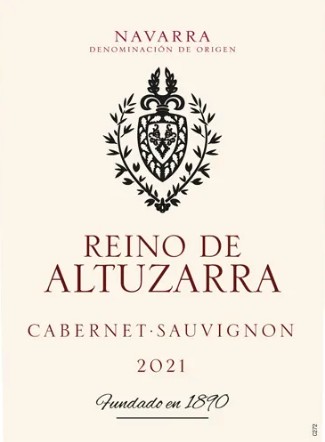
Bodegas Manzanos Reino De Altuzarra Cabernet Sauvignon 2021

Cabernet Sauvignon from Navarro, Spain

Purchase Price: $11.99

Wine Enthusiast 93, ElsBob 90

ABV 13.5%

A clear dark cherry red color, aromas of black fruit, licorice, and spice. On the palate it is acidic, subtle tannins, smooth, with a long finish.

An excellent table wine at a great price. Not as bold or complex as a Napa Cab but still interesting and worthwhile. Drink now. Cheers.

Posted

Real Not Real

Have no fear of perfection; you’ll never reach it.” – Dali.

Salvador Dalí was the entertaining, surrealist voice of the masses. His dreamlike spectacle of melting clocks and flamboyant persona captivated popular culture, injecting eccentric brushstrokes into the lives of the disengaged and disinterested. Dalí spoke directly to the public’s fascination with dreams and absurdity, transforming art into a theatrical experience and a giggly poke at the eminent egos on high altars.

Dalí was a 20th-century Spanish artist who drew from influences such as Renaissance art, Impressionism, and Cubism, but by his mid-twenties, he had fully embraced Surrealism. He spent most of his life in Spain, with notable excursions to Paris during the 1920s and 1930s and to the United States during the World War II years. In 1934, he married the love of his life, Gala. Without her, Dalí might never have achieved his fame. She was not just his muse but also his agent and model. A true partner in both his art and life. Together, they rode a rollercoaster of passion and creativity, thrills and dales, until her death in 1982.

Dalí had strong opinions on art, famously critiquing abstract art as “inconsequential.” He once said, “We are all hungry and thirsty for concrete images. Abstract art will have been good for one thing: to restore its exact virginity to figurative art.” He painted images that were real and with context that bordered on the not real, the surreal. For those who believed that modern abstract art had no life, no beauty, no appeal, he provided a bridge back to a coherent emotional foundation with a dreamlike veneer. Incorporating spirituality and innovative perspectives into his dreams and visions of life.

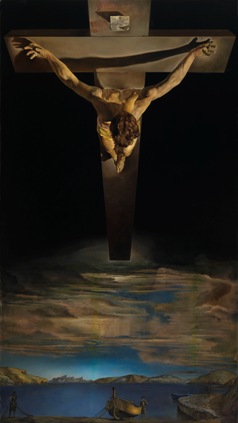
The Persistence of Memory (1931) is Dalí’s most recognizable and famous painting, but his 1951 work Christ of Saint John of the Cross is arguably his most autobiographical and accessible piece. A painting dripping with meaning and perspective, Dalí claimed it came to him in a dream inspired by Saint John of the Cross’s 16th-century sketch of Christ’s crucifixion. The perspective is indirectly informed by Saint John’s vision, while the boat and figures at the bottom reflect influences from La Nain and Velázquez. The triangular shape created by Christ’s body and the cross represents the Holy Trinity, while Christ’s head, a circular nucleus, signifies unity and eternity: “the universe, the Christ!” Dalí ties himself personally to the crucifixion by placing Port Lligat, his home, in the background. He considered this painting a singular and unique piece of existence, one he likely could never reproduce because the part of him that went into the painting was gone forever.That part is shared with his viewers, offering a glimpse into Christ’s pain, Dalí’s anguish, and his compassion: an emotional complexity that transcends mortal comprehension.

Source: Salvador Dali by Robert Descharnes, 1984. Graphic: Christ of Saint John of the Cross, Dali, 1951. Low Res. Copyright Glasgow Corporation.

World’s Best Vineyard 2024

The World’s Best Vineyards, known for curating exceptional wine tourism destinations, publishes an annual list of the top vineyards worldwide. Their selections highlight not only wine quality but also the visitor experience, including tastings, accommodations, and unique attractions at the vineyard and in its surrounding area.

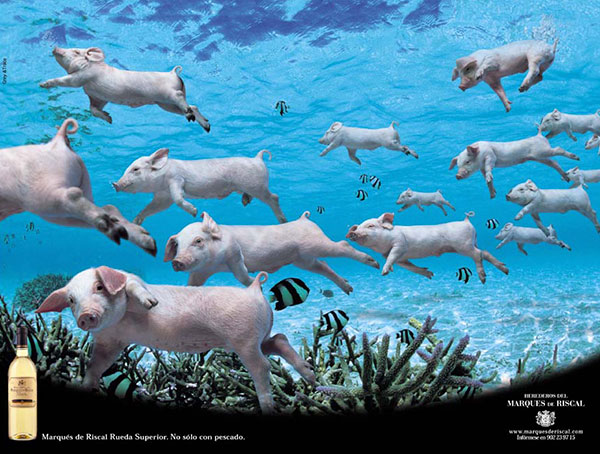
For 2024, the title of the best vineyard in Europe, and the world, has been awarded to Bodegas de los Herederos del Marqués de Riscal, situated in the small but charming town of Elciego, Spain, at the southern edge of the Rioja Alavesa wine region in northern Spain.

With a legacy spanning over 160 years, the vineyard and winery trace their origins back to 1858. Their first Rioja wine was produced just four years later, in 1862. For over a century, Marqués de Riscal crafted only red wines until they daringly broke with tradition and local reverence in 1972 by introducing their first white wine from Rueda. This leap into white winemaking is honored on their website with a whimsical and enigmatic photograph of the swimming pigs of the Bahamas. The choice of imagery invites unlimited speculation: pigs fly, pigs swim, white wine in Rioja, let your imagination freely wander.

In 2006, Marqués de Riscal expanded its offerings with the inauguration of the City of Wine, a striking complex featuring a hotel and entertainment facilities crowned by a “billowing titanium and stainless-steel roof;” designed by architect Frank Gehry. Visitors to the City of Wine can immerse themselves in the vineyard’s rich history and culture while enjoying luxurious relaxation at the Spa Vinothérapie Caudalie, fine dining at multiple restaurants, shopping at the wine boutique, or even celebrating their love with a wedding, perfect for couples old and young.

Oh, and enjoy the wines: Tempranillo, Tempranillo Blends, Tempranillo/Graciano, Garnacha/Viura, Verdejo, and Sauvignon Blanc. The Marques de Riscal Reserva Rioja’s (Tempranillo) various vintages are consistently rated in the 88-91 range and sell for about $25. Cheers.

Source: World’s Best Vineyards. Marques de Riscal Vineyard. Graphic: Swimming Pigs of the Bahamas.

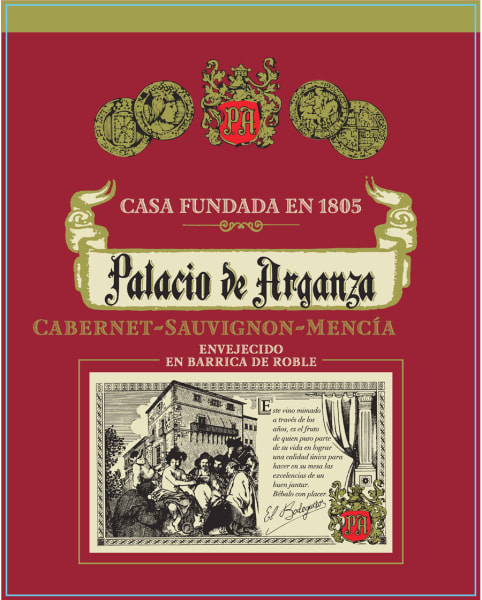
Vinos de Arganza Palacio de Arganza 2021

Other Red Blends from El Bierzo, Spain

Cabernet Sauvignon and Mencia

Purchase Price: $12.99

Wine Enthusiast 91, James Suckling 91, ElsBob 90

ABV 13%

Ruby red in color, aromas of black fruits and flowers, medium to full-bodied, smooth, dry bitter cherry tannins. Ideal with roasted or grilled meats and Spanish shellfish Paella.

An excellent table wine at a very reasonable price…cheap even. Buy a case and set it aside if you can find it.

Trivia: Mencia grapes are only known from the Spanish and Portuguese Iberian Peninsula, producing medium-bodied aromatic red wines that will age well.

Mucho Mas Red Blend

Tempranillo, Grenache, Syrah/Shiraz from Spain.

Purchase Price: $14.99

Vivino 92, ElsBob 84

ABV 13.5 %

Cherry red in color, dark fruit aromas, medium body, and with rather difficult tannins. Serve with very spicy food.

The wine is a blend of different grape varieties possible from different regions and maybe different years. Vinification is only for a week or so then put into oak barrels for 3-4 months. After this very short malolactic fermentation the wine is blended and bottled. A wine before its time.

A good table wine but overpriced for the quality. You probably shouldn’t purchase this wine unless you can find it for under $8.

Atalaya Laya 2020

Other Red Blends from Spain.

Garnacha Tintorera 70%, Monastrell 30%.

Purchase Price: $8.99

Rankings: James Suckling 90, Robert Parker 90, ElsBob 89.

ABV 14.5%

A deep ruby with aromas of black fruits and spices, medium to full body, dry and not too acidic with a medium finish. A middle of the road wine that is useless for sipping, must drink with spicy food to appreciate.

A very good wine that is worth exploring if you can find it under ten dollars.