Hamlet Goes to Milwaukee—A Tragicomedy in Five Acts

Prolepsis’ Prologue:

The Chorus enters. A single spotlight. A single Damocles’ bullet hangs in the air like a haunted ghost spinning to history’s rhythms and trajectories.

CHORUS:

John Schrank shoots Theodore Roosevelt, 113 long and mostly forgotten years ago, in Milwaukee, Wisconsin on a sharp and chilled Monday, coats pulled tight, 14 October 1912.

That’s the end, my friend, or so it seems. But tragedy demands context, and context demands sacramental passings. Let us reset and reconfigure the scene, with a sentimental barbershop quartet interlude of ‘Moonlight Bay’ drifting in the background and summon the ghosts of campaigns past and the raving refrains of the mad, all served with a bullet.

Act I: The Bull Rising

Before the Bull Moose and the bullet there was tradition and restraint. Before Roosevelt charged up the hill and across the plains, there was McKinley’s calm firmament.

William McKinley, 25th President of the United States, governed with a philosophy of calculated prosperity and protective nationalism, fittingly called the Ohio Napoleon, holding folksy court on America’s front porch. He was deliberate and firm but never rash, he was a Republican loyalist second, leader first, and a quiet expansionist, A Civil War veteran and devout Methodist, McKinley championed high tariffs, the gold standard, and industrial growth as the pillars of American strength.

His first term (1897–1901) unfolded as an economic recovery from Grover Cleveland’s faltering presidency and the Panic of 1893. It was marked by economic stabilization, the Spanish-American War, and the acquisition of overseas territories: Puerto Rico, Guam, the Philippines, and Hawaii, all additions to America’s imperial structure.

His vice president, Garret Hobart died, of heart failure in 1899 at the age of 55. With no constitutional mechanism to fill the vacancy, the office remained vacant until McKinley’s re-election. It wasn’t until the ratification of the 25th Amendment in 1967 that a formal process was established to replace a vice president.

In 1900, Theodore Roosevelt, then Governor of New York and war hero of the San Juan Hill, was chosen as McKinley’s running mate. His nomination was largely a strategy of containment: an attempt to temper his reformist zeal beneath the inconsequential and ceremonial weight of the vice-presidency.

Act II: Bull Cometh

The Bull Moose was buried beneath ceremony, but symbols cannot contain momentum. The front porch would give way to the lists and charging steeds.

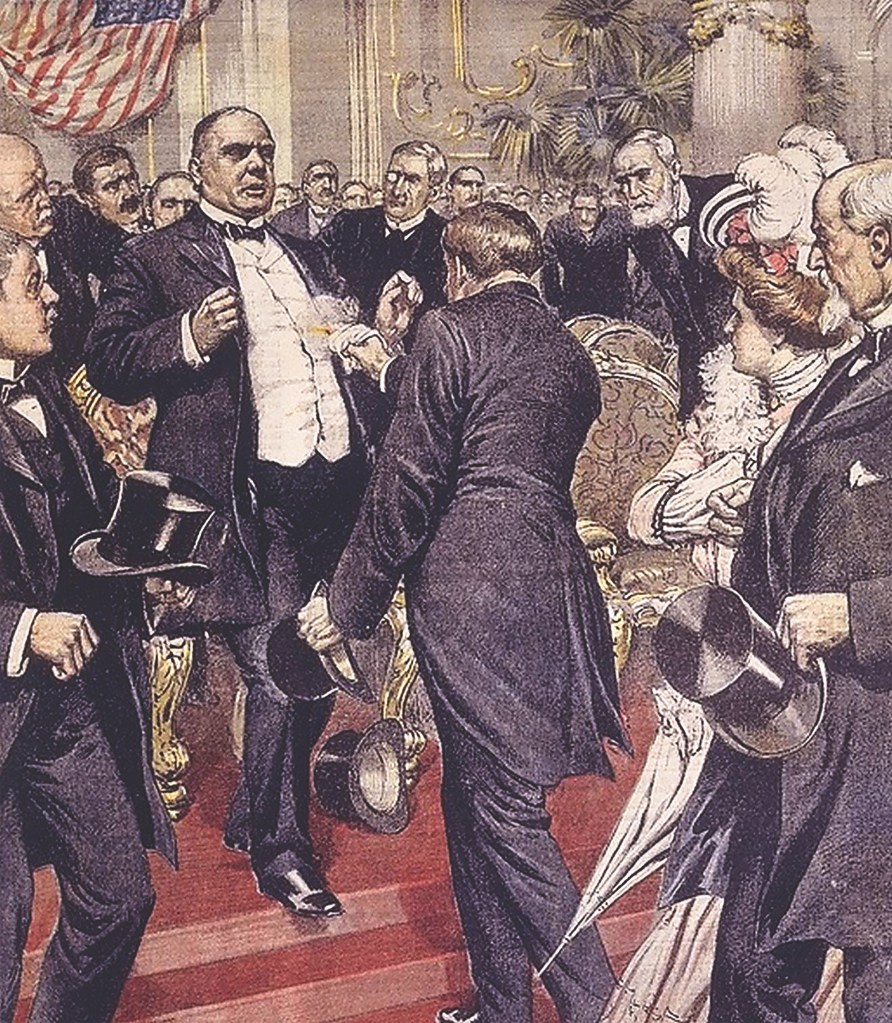
On September 6, 1901, President William McKinley stood beneath the vaulted glass of the Temple of Music at the Pan-American Exposition in Buffalo, New York, an American shrine to progress, electricity, and imperial optimism. There, in the charged glow of modernity, he was shot twice in the abdomen by Leon Czolgosz, a Polish American self-declared anarchist and bitter subject of the Panic of 1893 and its resultant mill closures, strikes and wage collapse, etched into his disillusioned psyche.

Czolgosz had been baptized in the radical writings of Emma Goldman, a Lithuanian emigree and firebrand of the American radical left. Goldman championed anarchism, women’s rights, and sexual liberation. She founded Mother Earth, a journal that became an infamous intellectual hearth for dissent and revolutionary analysis.

To Czolgosz, Mckinley was the embodiment of oppression: capitalism, imperialism, and state violence. His answer to these perceived provocations was violence. Concealing a revolver wrapped in a handkerchief, he fired at close range during a public reception, just as McKinley extended his hand in welcome.

Initially, doctors believed McKinley would recover. But gangrene developed around the damaged pancreas, and he died on 14th of September. His death was slow and tragic, a symbolic collapse of the front porch presidency.

Roosevelt, just 42, stepped up and became the youngest president in U.S. history (JFK was 43). With containment at an end, the Bull broke loose. And he mounted the stage with an agenda.

Act III: The Charge of the Bull

The Bull builds a protective legacy of words and stick, sweat and blood.

Roosevelt’s early presidency honored McKinley’s legacy: trust-busting, tariff moderation, and economic expansion. But he soon added his own signature: conservationism, progressive reform, and a bold, moralistic foreign policy.

He preserved 230 million acres of public land and established the U.S. Forest Service, 5 national parks, 18 national monuments, 150 national forests and a constellation wildlife refuges. Stewardship of the land became a sacred ideal that continues to present day.

In foreign affairs, Roosevelt extended the Monroe Doctrine with his Roosevelt Corollary (1904), asserting that the U.S. had the right to intervene in Latin America to prevent “chronic wrongdoing.” It was a doctrinal pivot from passive hemispheric defense against European imperialism to active imperial stewardship, cloaked in the language of civilization and order. America became the self-appointed policeman of the Western Hemisphere.

The corollary was a response to incidents like the 1902 Venezuelan debt crisis where European navies blockaded ports to force repayment. In Cuba, unrest was quelled with U.S. troops in 1906. Nicaragua, Haiti, and Honduras saw repeated interventions to protect U.S. interests and suppress revolutions. If Latin American failed to maintain order or financial solvency, the U.S. would intervene to stabilize rather than colonize.

The doctrine justified the U.S. dominance of the Panama Canal and set the precedent for Cold War interventions, neutralizing the American back yard while containing Soviet expansion in the east.

Act IV: Hamlet in Milwaukee

Heads of kings rest uneasy. Ghosts of injustice haunt. Princes fall prey.

After winning a full term in 1904, Roosevelt honored his promise not to seek reelection in 1908. But disillusioned with his successor, William Howard Taft, Roosevelt returned to politics in 1912, forming the Progressive Party, nicknamed the Bull Moose Party.

Enter stage left, John Schrank, a former barkeep plagued by visions and imagined slights. In the early morning hours of 15 September 1901, 6 days after McKinley was shot and 2 days before he died, the bar tender dreamt that the slain President rose from his casket and pointed to a shrouded figure in the corner: Roosevelt. “Avenge my death”, the ghost spoke. Schrank claimed to forget the dream for over a decade, until Roosevelt’s bid for a third term in 1912 reawakened the vision, which he now interpreted as a divine command.

Schrank believed Roosevelt’s third-term ambition was a betrayal of American tradition set forth in Washington’s Farewell Address. He hated Roosevelt and feared that he would win the election, seize dictatorial power, and betray the constitutional republic. In his delusional state, he believed Roosevelt was backed by foreign powers and was planning to take over the Panama Canal; an anachronistic fear, given total U.S. control of the canal since 1904. Schrank interpreted the ghost’s voice as God’s will: “Let no murderer occupy the presidential chair for a third term. Avenge my death.”

At his trial for the attempted assassination of Roosevelt, Schrank was remanded to a panel of experts to determine his mental competency. They deemed him insane, a “paranoid schizophrenic”, in the language of the time. He was committed to an asylum, where he remained until his death 31 years later.

Schrank’s madness parallels the haunted introspection of Hamlet, Prince of Denmark. Shakespeare’s longest and most psychologically complex tragedy that revolves around a ghost’s command: “Revenge my foul and most unnatural murder.” Hamlet, driven by the specter’s charge, spirals into feigned (and perhaps real) madness, wrestling with betrayal, duty, mortality, and metaphysical doubt. His uncle, the murderer, has married his mother; an Oedipal inversion within the world’s most enduring tragedy.

On 14 October 1912, as Roosevelt stood outside Milwaukee’s Gilpatrick Hotel, Schrank stepped forward and fired. The bullet pierced his steel glasses case and a folded 50-page tome of a speech, slowing its path. Bleeding, a bullet lodged in his chest, Roosevelt refused medical attention. He stepped onto the stage and spoke for 90 minutes, although it is said that due to his loss of blood, he shortened his speech out of necessity. Whether for himself or the audience is lost to history.

Unlike Hamlet, who dithers and soliloquizes his way toward a graveyard of corpses, Schrank shoots, hits, and leaves Roosevelt standing. Hamlet’s tragedy ends in death and metaphysical rupture. Schrank’s farce begins with the demands of a ghost and ends with a 90-minute speech. One prince takes his world with him into death. The other absorbs a bullet and keeps talking.

Act V: Ghosts and Republics

Ghosts and Republics are ephemeral. At the end of time; those fleeting moments, short and long; some, as Proust says, more and more seldom, are best treated with humor and grace.

In tragedy and near calamity, a man’s soul becomes visible. Some are seen darkly, others, bright, clear, unshaken and unafraid of new beginnings even if that beginning is death.

Roosevelt had already charged up San Juan Hill, bullets and fragments whistling past like invitations to a funeral ball. Each a death marker. So, when a solitary bullet from a madman struck him in Milwaukee, it was merely an inconvenience. He quipped: “Friends, I shall ask you to be as quiet as possible. I don’t know whether you fully understand that I have just been shot, but it takes more than that to kill a Bull Moose.”

Sixty-eight years later, Reagan too survived a bullet to the chest. As he was wheeled into the emergency room at George Washington University Hospital, he said he’d “rather be in Philadelphia,” a throwback to his vaudeville days, a gag line used on fake tombstones: “Here lies Bob: he’d rather be in Philadelphia.” W.C. Fields once requested it as his epitaph. He’s buried in California. To the surgeons, Reagan added: “I hope you’re all Republicans.”

Where Roosevelt offered mettle, Reagan offered mirth. Both answered violence with theatrical defiance: natural-born and unshakable leaders, unbothered by the ghosts that tracked them.

They were not alone. Jackson, beat his would-be-assassin with a cane. Truman kept his appointments after gunfire at Blair house. Ford faced two attempts in seventeen days and kept walking. Bush stood unfazed after a grenade failed to detonate. They met their specters with grace, a joke, and a shrug.

The assassins and would-be assassins vanished into the diffusing whisps of history. The leaders of men left a republic haunted not by ghosts, but by a living memory: charged with the courage to endure and to imagine greatness.

Graphic: Assassination of President McKinley by Achille Beltrame, 1901. Public Domain.
Consequence of Coincidence

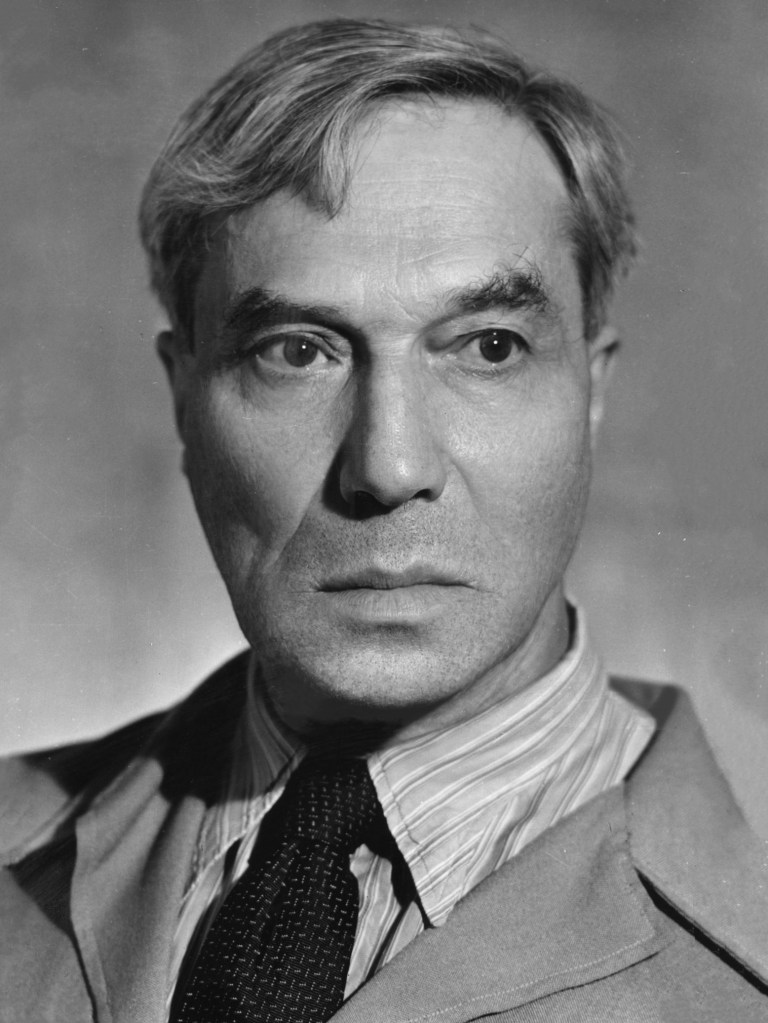
Boris Pasternak (1890–1960), Russian poet and novelist, spent a decade creating his singular opus, Doctor Zhivago, completed in 1956. More than a historical narrative, it is a philosophical cathedral, a novel constructed of haunted Romanticism, moral reckoning, and symbolic renewal. Set against the dissolution of Tsarist Russia and the disillusionment of revolutionary aftermath, the book crosses the bridge from imperial decay into the intoxicating dream of collective transformation, only to watch that dream unravel into a black hole of exile, violence, and starvation.

This arc of collapse recalls the spiritual bargain Thomas Mann dramatizes in Doctor Faustus, but where Mann’s protagonist descends into metaphysical madness, Doctor Zhivago journeys through the quiet but unrelenting erosion of the soul. He does not perish; he endures, but with dimming strength and drive. The rails he rides are not toward damnation but disillusionment. And still, beams of light pierce the fog: rays of love, recollection, and art that suggest the possibility of meaning and rebirth.

As Nikolai Nikolaievich says early in the novel, “the whole of life is symbolic because it is meaningful.” In this way, the prose becomes Pasternak’s metaphorical terrain, thick with fog, fractured history, and spiritual yearning. The appended poetry, by contrast, is a sudden clearing. Here, the truth is not narrated but sung as parables: psalms.

Pasternak stands in conversation with his literary ancestors, not in imitation but in integration. Tolstoy’s presence is unmistakable, the historical sweep as personal crisis, the aching attention to moral choice. But where Tolstoy moves with structural precision, Pasternak drifts with mystical defiance. His narrative resists symmetry. His characters do not seek ideology, they search for grace.

Symbolist in sensibility if not in allegiance, Pasternak paints with metaphysical hues. As Nikolai Nikolaievich reflects, it is not commandments but parables that endure, not doctrine but symbol. Life, for Pasternak, is sacred not by design but because of its trembling unpredictability.

It is no accident that Hamlet opens Zhivago’s verse collection. The parallels run deep: both Hamlet and Zhivago move through time like exiles from history itself, cast adrift in worlds too cruel for their contemplative souls. When Pasternak writes, “I consent to play this part therein,” he evokes both the tragedy and transcendence of bearing witness. Zhivago performs his role, but lives another life, internal, poetic, unreachable: above the fray, but corrupted by the psychosis below.

His poems chart this existential divide: March, an ode to ugliness and beauty; Holy Week, a quiet redemption; Parting, remembrance caught in an unfinished gesture. In Garden of Gethsemane, Pasternak, born Jewish, philosophically Christian, offers the novel’s spiritual heartbeat and epitaph: “To live is to sin, / But light will pierce the Darkness.”

Perhaps nowhere is Pasternak more intentional, and more misunderstood, than in his use of coincidence. Critics have dismissed the improbabilities: chance meetings, reappearances, entwined fates that strain believability. Yet, viewed symbolically, they form a system. These moments are not narrative indulgences; they are metaphysical punctuation marks, appearing when a character risks dissolution and irrelevance, summoning memory, recognition, or spiritual breath.

These recurring events hint at resurrection, not just personal but societal. Pasternak suggests life moves not in straight lines but in spirals and cycles. Coincidence becomes a kind of syntax for recurrence, for unfinished conversations rekindled in new voices. Meaning doesn’t unfold; it echoes amplified.

Again and again, children appear, observers, inheritors, blank slates. In them lies the novel’s quiet eschatology: renewal not through revolution, but through the uncorrupted eye. These youths do not argue ideology. They carry memory unwittingly. They are the future poets whose truths will be elemental and free, like wind through the trees.

If Doctor Zhivago is a Passion, then its resurrection comes not in fire, but in continuity. Not in triumph, but in scattered verses, remembered, revived. Pasternak’s salvation is lived: grace through endurance, beauty through suffering, renewal through remembrance.

Banned in the Soviet Union upon completion, Doctor Zhivago was smuggled to Italy and published in 1957, igniting an international phenomenon. The CIA distributed the book behind the Iron Curtain as a weapon of quiet revolt. Pasternak was awarded the Nobel Prize in 1958, then compelled to decline it under state pressure. And still, by 2003, the novel had found its way into Russian classrooms.

This was not just a novel. It was a voice buried and reborn.

Pasternak’s opus is not a chronicle of a man or an era, but a symbolic landscape of what it means to remain human in the machinery of history. A tale not of revolution’s glory, but of the soul’s refusal to be mechanized. It rejects dogma in favor of parable, certainty in favor of consequence, ideology in favor of grace.

Doctor Zhivago teaches us that life may be coincidence, but not accident. That beauty may falter, but goodness moves quietly. And that sometimes, when all else falls away, it is poetry that remains, whispering its eternal truths into the trembling heart of history.

Source: Dr. Zhivago by Boris Pasternak, 1957. Graphic: Boris Pasternak, 1959. Public Domain.

January Madness

Lots of people go mad in January. Not as many as in May, of course. Nor June. But January is your third most common month for madness.” – From Karen Joy Fowler’s 1991 novel “Sarah Canary”.  

Madness—a recurring theme through the arts and sciences:

  1. There is always some madness in love. But there is also always some reason in madness. – Friedrich Nietzsche
  2. I am but mad north-north-west: when the wind is southerly, I know a hawk from a handsaw. – William Shakespeare, Hamlet
  3. Madness, as you know, is like gravity. All it takes is a little push.” – The Joker, The Dark Knight
  4. The only difference between me and a madman is that I am not mad. – Salvador Dalí
  5.  Oh, you can’t help that… We’re all mad here. I’m mad. You’re mad.– Lewis Carroll, Alice in Wonderland, the Chesire Cat.
  6. The edge…There is no honest way to explain it, because the only people who really know where it is are the ones who have gone over.” – Hunter S. Thompson
  7. You must have chaos within you to give birth to a dancing star.” – Friedrich Nietzsche
  8. The madman is not the man who has lost his reason. The madman is the man who has lost everything except his reason.” – G.K. Chesterton
  9. “Imperfection is beauty, madness is genius, and it’s better to be absolutely ridiculous than absolutely boring.” – Marilyn Monroe
  10. Though this be madness, yet there is method in’t. – William Shakespeare, Hamlet

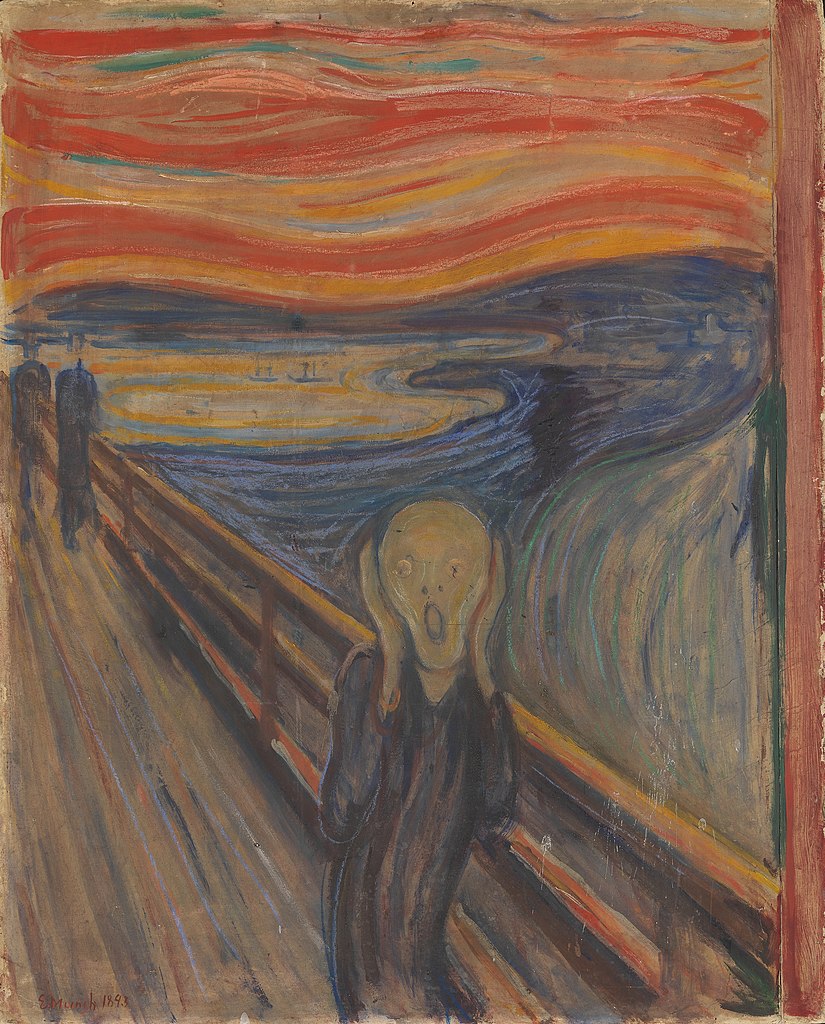
Source: Mental Health by the Numbers, NAMI. Graphic: The Scream by Edvard Munch, 1893, Munch Museum, Norway. Public Domain.

The Most Unkindest Cut of All

Mark Anthony opens his famous, but fictional, eulogy to Julius Caesar with 7 words of endearment and authority; Aristotelian pathos and ethos, that have become as familiar as blue sky to fans of Shakespeare and English lit students everywhere: “Friends, Romans, countrymen lend me your ears”.

Julius Caesar, a tragedy by Shakespeare, written around 1599, was based on Caesar’s life and death as documented in Plutarch’s Parallel Lives.

With pathos, logos and a chariot laden with irony, Anthony turns initial honor for Brutus and Caesar’s ambition inside out. He brings honor to Caesar and lays ambition on Brutus, along with Cassius. He brings condemnation to the conspirators and love for Caesar.

The first few lines of Anthony’s Eulogy:

Friends, Romans, countrymen, lend me your ears; I come to bury Caesar, not to praise him.
The evil that men do lives after them;
The good is oft interred with their bones;
So let it be with Caesar. The noble Brutus
Hath told you Caesar was ambitious:
If it were so, it was a grievous fault,
And grievously hath Caesar answer’d it.
Here, under leave of Brutus and the rest–
For Brutus is an honourable man;
So are they all, all honourable men–
Come I to speak in Caesar’s funeral.
He was my friend, faithful and just to me:
But Brutus says he was ambitious;
And Brutus is an honourable man.
He hath brought many captives home to Rome
Whose ransoms did the general coffers fill:
Did this in Caesar seem ambitious?
When that the poor have cried, Caesar hath wept:
Ambition should be made of sterner stuff:
Yet Brutus says he was ambitious;
And Brutus is an honourable man.
You all did see that on the Lupercal
I thrice presented him a kingly crown,
Which he did thrice refuse: was this ambition?
Yet Brutus says he was ambitious;
And, sure, he is an honourable man.
I speak not to disprove what Brutus spoke,
But here I am to speak what I do know.
You all did love him once, not without cause:
What cause withholds you then, to mourn for him?
O judgment! thou art fled to brutish beasts,
And men have lost their reason. Bear with me;
My heart is in the coffin there with Caesar,
And I must pause till it come back to me.

Source: “Julius Caesar” by William Shakespeare, Act 3, Scene II. Plutarch’s Parallel Lives. Graphic: Marlon Brando as Mark Antony in the 1953 film “Julius Caesar”

Greek Sci-Fi

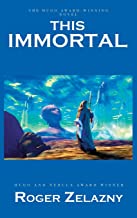
This Immortal

By Roger Zelazny

Published by iBooks

Copyright: © 2011

Original Book Publication Date: 1966

Roger Zelazny was a giant of science fiction and fantasy from the mid-1960s till his death in 1995 at the age of 58. For 42 years, beginning slow, learning to crawl in 1953, sprinting from the mid-60s onward, his prodigious writing produced 46 novels and novellas, more than 140 short stories, and plethora of poems, chapbooks, anthologies, and collections which earned him six Hugos and three Nebula Awards.

Zelazny’s prolific output flowed from an inventive mind wrapped around the mythology and literary fiction of the distant past. Homer to Shakespeare, Greek gods to Norse myths — Zelazny’s fictional future was filled with characters reprising roles from civilization’s long-gone coterie of rogues and heroes, some real, most not.

His greatest commercial achievement, the ten novels of Amber weave through the book’s fictional universe’s two true worlds: Amber, an Arthurian legend with Shakespearean Histories and Chaos, Greek myth at the edge of the abyss with all else in between being nothing but shadow of no real substance. Zelazny credits Farmer’s World of Tiers and French legend including the Song of Roland for inspiration in writing Amber with allusion to much that is Shakespeare: Hamlet, As You Like It, Julius Ceasar, and many of the other Histories and Romances. With an M.A. in Jacobean literature and a love of poetry it takes little imagination to suspect the shadows of Amber may also have a connection to Shakespeare’s Sonnet 53:

What is your substance, whereof are you made,
That millions of strange shadows on you tend?
Since every one hath, every one, one shade,
And you but one, can every shadow lend.

This Immortal or …And Call Me Conrad is a story of Greek myth meeting nuclear Armageddon of Earth. With the remaining population of a couple million living in the few places left on Earth that aren’t toxic, the galactic future appears to belong to the Vegans. The Vegans, from the star system of Vega, who may incidentally have been herbivores, were blue skinned aliens preferring humans as a source of cheap labor and prostitution and not much else. A Vegan author has come to Earth to write a book on the remaining locations of civilizational wonder left on the planet. He has requested that Conrad serve as his tour guide.

Conrad or Konstatin Nomikos, a young man, a rather ugly young man of innumerable years bearing a mysterious past would rather not. Would rather not serve as a tour guide. Would rather not serve as protector of a blue alien that Conrad’s former freedom party wishes to kill. But he does because he is curious, and it may be important.

With promises to protect and to serve Conrad, the blue alien, a few old acquaintances from his old freedom party and a hired assassin set off to survey the Earth’s past glories.

The story plays out as a film noir in words. A detective novel solving mysteries that may or may not be crimes. A cynical protagonist questioning motivations of all. A page-turner of mutant battles, robot wrestling, life squabbles, and glib dialogue. A piece-by-piece narrative of what Conrad wants and who he is. All brought to you through the lens of ancient Greek gods, myth, and literature.

Major Awards:

  • 1966 Hugo Novel Award for: …And Call Me Conrad (published in book form as This Immortal)
  • 1966 Nebula Novelette Award: The Doors of His Face, the Lamps of His Mouth
  • 1966 Nebula Novella Award: He Who Shapes
  • 1968 Hugo Novel Award: Lord of Light
  • 1976 Hugo and Nebula Novella Award: Home Is the Hangman
  • 1984 Hugo Novelette Award: Unicorn Variation
  • 1986 Hugo Novella Award: 24 Views of Mt. Fuji, by Hokusai
  • 1987 Hugo Novelette Award: Permafrost

Bibliography:

Novels and Novellas:

  • 1965…And Call Me Conrad
  • 1966 This Immortal (book form of the serialized …And Call Me Conrad)
  • 1966 The Dream Master
  • 1967 Lord of Light 
  • 1969 Creatures of Light and Darkness
  • 1969 Isle of the Dead (Francis Sandow)
  • 1969 Damnation Alley
  • 1970 Nine Princes in Amber (Chronicles of Amber)
  • 1971 Jack of Shadows
  • 1972 The Guns of Avalon (Chronicles of Amber)
  • 1973 Today We Choose Faces
  • 1973 To Die in Italbar (Francis Sandow)
  • 1975 Sign of the Unicorn (Chronicles of Amber)
  • 1976 Deus Irae (co-authored with Philip K. Dick)
  • 1976 Home is the Hangman
  • 1976 Doorways in the Sand
  • 1976 Bridge of Ashes
  • 1976 The Hand of Oberon (Chronicles of Amber)
  • 1978 The Courts of Chaos (Chronicles of Amber)
  • 1979 Roadmarks
  • 1980 Changeling (Wizard World)
  • 1981 Madwand (Wizard World)
  • 1981 The Changing Land 
  • 1982 Coils (co-authored with Fred Saberhagen)
  • 1982 Dilvish, the Damned
  • 1982 Eye of Cat
  • 1985 Trumps of Doom (Chronicles of Amber)
  • 1986 Blood of Amber (Chronicles of Amber)
  • 1987 Sign of Chaos (Chronicles of Amber)
  • 1987 A Dark Traveling
  • 1989 Knight of Shadows (Chronicles of Amber)
  • 1989 Wizard World (omnibus)
  • 1990 The Mask of Loki (co-authored with Thomas T. Thomas)
  • 1990 The Black Throne (co-authored with Fred Saberhagen)
  • 1991 Bring Me the Head of Prince Charming (The Millennial Contest co-authored with Robert Sheckley)
  • 1991 Prince of Chaos (Chronicles of Amber)
  • 1992 Flare (1992) (co-authored with Thomas T. Thomas)
  • 1992 Here There Be Dragons (written 1968/69)
  • 1992 Way Up High (written 1968/69)
  • 1993 If at Faust You Don’t Succeed (The Millennial Contest co-authored with Robert Sheckley)
  • 1993 A Night in the Lonesome October
  • 1994 Wilderness (1994) (co-authored with Gerald Hausman)
  • 1995 A Farce to Be Reckoned With (The Millennial Contest co-authored with Robert Sheckley)
  • 1998 Psychoshop (co-authored with Alfred Bester)
  • 1997 Donnerjack (posthumous collaboration with Jane Lindskold)
  • 1999 Lord Demon (posthumous collaboration with Jane Lindskold)
  • 2009 The Dead Man’s Brother (written in 1971)

Short Stories:

  • 1953 Conditional Benefit
  • 1954 And the Darkness is Harsh
  • 1954 Mr. Fuller’s Revolt
  • 1955 Youth Eternal
  • 1958 The Outward Sign
  • 1962 Horseman!
  • 1962 Passion Play
  • 1962 The Teachers Rode a Wheel of Fire
  • 1962 Moonless in Byzantium
  • 1963 On the Road to Splenoba
  • 1963 Final Dining
  • 1963 The Borgia Hand
  • 1963 A Thing of Terrible Beauty
  • 1963 Circle has Her Problems
  • 1963 The Malatesta Collection
  • 1963 The Stainless Steel Leech
  • 1963 Monologue for Two
  • 1963 Threshold of the Prophet
  • 1963 A Museum Piece
  • 1963 Mine is the Kingdom
  • 1963 King Solomon’s Ring
  • 1963 The Misfit
  • 1963 A Rose for Ecclesiastes
  • 1963 The Great Slow Kings
  • 1964 Lucifer
  • 1964 The Salvation of Faust
  • 1964 The New Pleasure
  • 1964 The Monster and the Maiden
  • 1965 But Not the Herald
  • 1965 He Who Shapes (shorter version of The Dream Master)
  • 1965 The Doors of His Face, the Lamps of His Mouth
  • 1965 Passage to Dilfar (Dilvish)
  • 1965 Of Time and Yan
  • 1965 The Furies
  • 1965 The Drawing
  • 1965 Thelinde’s Song (Dilvish)
  • 1965 Devil Car (Sam Murdock)
  • 1966 Synopsis of Part One…And Call Me Conrad (became This Immortal)
  • 1966 Comes Now the Power
  • 1966 Love is an Imaginary Number
  • 1966 Divine Madness (republished by Lightspeed Magazine 2018)
  • 1966 For a Breath I Tarry
  • 1966 The Bells of Shoredan (Dilvish)
  • 1966 Late, Late Show
  • 1966 This Moment of the Storm
  • 1966 The House of the Hanged Man
  • 1967 The Knight for Merytha (Dilvish)
  • 1967 Dawn (Lord of Light)
  • 1967 The Man Who Loved the Faioli 
  • 1967 In the House of the Dead (excerpt from Creatures of Light and Darkness)
  • 1967 Angel, Dark Angel
  • 1967 Damnation Alley
  • 1967 The Last Inn on the Road (with Dannie Plachta)
  • 1967 A Hand Across the Galaxy
  • 1967 Death of the Executioner (Lord of Light)
  • 1968 Dismal Light (Francis Sandow)
  • 1968 Heritage 
  • 1968 Stowaway 
  • 1968 Corrida 
  • 1968 He That Moves 
  • 1968 Song of the Blue Baboon 
  • 1968 Creatures of Light
  • 1969 The Eve of RUMOKO (Nemo)
  • 1969 The Steel General
  • 1969 Creatures of Darkness 
  • 1969 Come to Me Not in Winter’s White (with Harlan Ellison)
  • 1969 The Year of the Good Seed (with Dannie Plachta) 
  • 1970 The Man at the Corner of Now and Forever
  • 1970 My Lady of the Diodes 
  • 1970 Alas! Alas! This Woeful Fate 
  • 1971 Sun’s Trophy Stirring 
  • 1971 Add Infinite Item 
  • 1973 ‘Kjwalll’kje’k’koothaïlll’kje’k (Nemo)
  • 1974 The Engine at Heartspring’s Center 
  • 1975 Home is the Hangman (Nemo)
  • 1975 The Game of Blood and Dust 
  • 1976 The Force That Through the Circuit Drives the Current
  • 1977 No Award 
  • 1977 Is There a Demon Lover in the House? 
  • 1978 Shadowjack (Jack of Shadows)
  • 1978 Stand Pat, Ruby Stone
  • 1979 Halfjack
  • 1979 Go Starless in the Night 
  • 1979 A Very Good Year …
  • 1979 Garden of Blood (Dilvish)
  • 1979 The White Beast (Dilvish)
  • 1980 The Places of Aache (Dilvish)
  • 1980 Exeunt Omnes
  • 1980 Fire and/or Ice 
  • 1980 The George Business 
  • 1981 The Changing Land (Dilvish)
  • 1981 Tower of Ice (Dilvish)
  • 1981 Last of the Wild Ones (Sam Murdock)
  • 1981 Recital 
  • 1981 Walpurgisnacht 
  • 1981 Unicorn Variation 
  • 1981 And I Only Am Escaped to Tell Thee
  • 1981 The Naked Matador
  • 1981 The Horses of Lir
  • 1981 Madwand (excerpt)
  • 1982 A City Divided (Dilvish)
  • 1982 Devil and the Dancer (Dilvish)
  • 1982 Eye of Cat (excerpt)
  • 1983 Shadowjack (character Outline) 
  • 1983 Mana from Heaven (Magic Goes Away)
  • 1984 Itself Surprised (Berserker with Fred Saberhagen)
  • 1984 LOKI 7281
  • 1985 Dayblood 
  • 1985 A Mars rózsája 
  • 1985 Dreadsong 
  • 1985 24 Views of Mt. Fuji, by Hokusai (Cthulhu Mythos)
  • 1985 Prolog to Trumps of Doom (Amber)
  • 1986 The Bands of Titan 
  • 1986 Permafrost 
  • 1986 Night Kings 
  • 1987 The Sleeper (Wild Cards-Croyd Crenson)
  • 1987 Quest’s End 
  • 1987 Ashes to Ashes (Wild Cards-Croyd Crenson)
  • 1988 Concerto for Siren and Serotonin I-VIII (Wild Cards)
  • 1988 Deadboy Donner and the Filstone Cup
  • 1988 Concerto for Siren and Serotonin (Wild Cards-Croyd Crenson)
  • 1989 Kalifriki of the Thread
  • 1990 The Deadliest Game 
  • 1992 Flare (excerpt with Thomas T. Thomas)
  • 1992 Way Up High
  • 1992 Come Back to the Killing Ground, Alice, My Love (Kalifriki)
  • 1993 The Long Sleep (Wild Card-Croyd Crenson)
  • 1993 Prince of the Powers of This World
  • 1994 The Salesman’s Tale (Amber)
  • 1994 Tunnel Vision
  • 1994 Godson 
  • 1994 The Shroudling and The Guisel (Amber)
  • 1995 Blue Horse, Dancing Mountains (Amber)
  • 1995 Coming to a Cord (Amber)
  • 1995 Epithalamium
  • 1995 The Long Crawl of Hugh Glass
  • 1995 The Three Descents of Jeremy Baker 
  • 1995 Lady of Steel
  • 1995 Postlude (Forever After) 
  • 1995 Prelude the First (Forever After)
  • 1995 Prelude the Second (Forever After)
  • 1995 Prelude the Fourth (Forever After)
  • 1995 Prelude the Third (Forever After)
  • 1996 Hall of Mirrors (Amber)
  • 2000 Lord Demon (excerpt with Jane Lindskold)
  • 2005 A Secret of Amber (Amber. Co-authored with Ed Greenwood between 1977 and 1992)
  • 2009 Sandow’s Shadow (Francis Sandow outline)
  • 2009 Shadowland (Jack of Shadows outline)
  • 2009 The Sleeper (Wild Cards-Croyd Crenson outline)
  • 2009 Hand of the Master
  • 2009 Studies in Saviory
  • 2009 The Great Selchie of San Francisco Bay
  • 2009 The Juan’s Thousandth
  • 2009 There Shall Be No Moon!
  • 2009 Through a Glass, Greenly 
  • 2009 Time of Night in the 7th Room 
  • 2009 Bridge of Ashes (outline) 
  • 2009 Doorways in the Sand (summary) 
  • 2009 Guns of Avalon: Deleted Sex Scene 
  • 2009 The Hounds of Sorrow
  • 2009 The Insider
  • 2009 The Window Washer
  • 2009 Alien Speedway (outline) 
  • 2009 Changeling (film outline) 
  • 2009 Coils (outline) 
  • 2009 Donnerjack, of Virtù: A Fable for the Machine Age (outline) 
  • 2009 Dysonized Biologicals (outline)
  • 2009 Godson: A Play in Three Acts 
  • 2009 Head Count 
  • 2009 The Ahriman Factor (outline) 
  • 2019 Seven Tales of Amber (Amber)

Poetry:

  • 1974 Poems
  • 1980 When Pussywillows Last in the Catyard Bloomed
  • 1981 To Spin Is Miracle Cat
  • 1996 Hymn to the Sun: An Imitation
  • 2011 Collected Stories (poetry and unpublished works)

Snippets and Chapbooks:

  • 1974 Poems
  • 1979 The Bells of Shoredan
  • 1980 For a Breath I Tarry
  • 1980 The Last Defender of Camelot
  • 1981 A Rhapsody in Amber
  • 1986 The Bands of Titan / A Freas Sampler / A Dream of Passion
  • 1991 The Doors of His Face, the Lamps of His Mouth
  • 1992 Here There Be Dragons
  • 1992 Way Up High
  • 1996 Home is the Hangman
  • 1994 And the Darkness is Harsh
  • 2003 The Last Defender of Camelot

Collections:

  • 1967 Four for Tomorrow
  • 1969 Three for Tomorrow
  • 1971 The Doors of His Face, The Lamps of His Mouth, and Other Stories 
  • 1976 My Name Is Legion (Nemo)
  • 1978 The Illustrated Roger Zelazny 
  • 1980 When Pussywillows Last in the Catyard Bloomed
  • 1980 The Last Defender of Camelot (Pocket Books and SFBC)
  • 1981 The Last Defender of Camelot (Underwood-Miller)
  • 1981 Today We Choose Faces / Bridge of Ashes (omnibus)
  • 1981 A Rhapsody in Amber
  • 1981 To Spin is Miracle Cat
  • 1981 Alternities #6
  • 1982 Dilvish, the Damned
  • 1983 Unicorn Variations 
  • 1989 Frost & Fire (1989)
  • 1991 Gone to Earth
  • 1992 The Graveyard Heart/Elegy for Angels and Dogs 
  • 1992 Gone to Earth / Author’s Choice Monthly #27 (Pulphouse)
  • 1996 Hymn to the Sun: An Imitation
  • 2001 Isle of the Dead / Eye of the Cat (omnibus)
  • 2002 The Last Defender of Camelot (ibooks)
  • 2003 Manna from Heaven 
  • 2003 To Die in Italbar / A Dark Traveling (omnibus)
  • 2005 The Doors of His Face, The Lamps of His Mouth, and Other Stories
  • 2009 The Collected Stories of Roger Zelazny
    • Volume 1: Threshold
    • Volume 2: Power & Light
    • Volume 3: This Mortal Mountain
    • Volume 4: Last Exit to Babylon
    • Volume 5: Nine Black Doves
    • Volume 6: The Road to Amber
  • 2018 The Magic – October 1961-October 1967
  • 2022 The Scarlet Lady
  • 2022 Kalifrike

Anthologies:

  • 1953 Thurban 1 #3
  • 1955 Senior Scandals 
  • 1964 The Graveyard Heart (Party Set)
  • 1968 Nebula Award Stories Three
  • 1968 Nozdrovia #1
  • 1989 He Who Shapes / The Infinity Box (with Kate Wilhelm)
  • 1990 Elegy for Angels and Dogs / The Graveyard Heart (Party Set with Walter Jon Williams)
  • 1990 Home is the Hangman / We, in Some Strange Power’s Employ, Move on a Rigorous Line (with Samuel R. Delany)
  • 1995 Forever After 
  • 1995 Warriors of Blood and Dream (with Martin H. Greenberg)
  • 1995 Wheel of Fortune 
  • 1996 The Williamson Effect
  • 2017 Shadows and Reflections: Stories from the Worlds of Roger Zelazny
  • 2022 The Night Kings and the Heirs

Non-Fiction:

  • 1988 Roger Zelazny’s Visual Guide to Castle Amber (with Neil Randall)

Interviews:

Biography and Tributes:

Obituary:

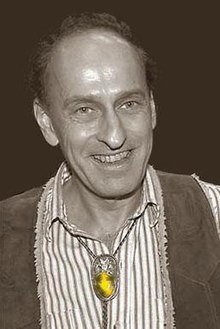
(The 1988 picture of Roger Zelazny comes from his Wikipedia page.)

Slow Sadness

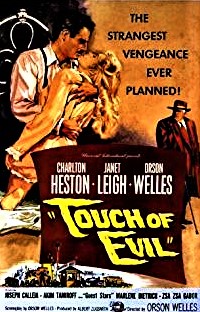
Touch of EvilM Touch 1958

Theaters:  February 1958

Streaming:  October 2000

Rated:  NR

Runtime:  95 minutes

Genre:  Classics – Crime – Drama –  Film Noir – Mystery – Suspense – Thriller

els:  8.5/10

IMDB:  8.1/10

Amazon:  4.4/5 stars

Rotten Tomatoes Critics:  8.9/10

Rotten Tomatoes Audience:  4.2/5

Metacritic Metascore:  NA/100

Metacritic User Score:  NA/10

Awards:

Directed by:  Orson Welles

Written by:  Orson Welles (screenplay), Whit Masterson: aka Robert Wade and Bill Miller (book)

Music by:  Henry Mancini

Cast:  Orson Welles, Charlton Heston, Janet Leigh, Marlene Dietrich, Zsa Zsa Gabor

Film Locations:  US

Budget:  $829,000

Worldwide Box Office:  $2,247,465

A man runs through a parking lot in a small Mexican town along the US border carrying a small package, placing it in the trunk of convertible moments before the owner and driver, Rudy Linnekar (Jeffery Green) and his young girlfriend Zita (Joi Lansing) arrive.  With the bomb ticking in the trunk of the car, Linnekar slowly drives through the town, filled with tourists and locals enjoying the cool night, heading for the nearby US border and home.  As they are driving, they pass the strolling newly married couple of Mike Vargas (Heston), a Mexican drug cop, and his American wife Susie (Leigh). The car crosses the border into the US and explodes.

Captain Quinlan (Welles), an obese cop with a bum leg, walking with the aid of a cane, arrives to take over the investigation of bombing. He quickly surmises that Sanchez (Victor Millan), who is secretly married to Rudy Linnekar’s daughter Marcia (Joanna Cook Moore), is the prime suspect.  Quinlan’s partner Pete Menzies (Joseph Calleia) plants incriminating evidence in Sanchez’s apartment and he is arrested. Vargas knows that the evidence against Sanchez was planted and begins to investigate the bombing and Quinlan, while letting his wife spend her honeymoon alone in some cheap deserted hotel in the dry scrublands of the American southwest.

Welles loosely based the movie’s screenplay on a 1956 Red Badge Mystery serial novel, Badge of Evil by Whit Masterson. The crime novel slowly solves the mystery of who killed Rudy Linnekar by blowing up his house with dynamite. The murder is investigated by police officers Hank Quinlan and Leron McCoy along with an assistant district attorney.  The 2 cops quickly make an arrest of Ernest Farnum, who soon commits suicide, even though incriminating dynamite was found in the apartment of Linnekar’s future son-in-law Delmont Shayon.

Whit Masterson is a pseudonym for 2 authors: Robert Allison “Bob” Wade and H. Bill Miller.  The pair, good friends since the age of 12, wrote more than 30 novels in their lifetimes with at least 6 adapted for movies.  Two other well received movies adapted from their books, in addition to this movie, were the 1942 All Through the Night with Humphrey Bogart, and The Yellow Canary starring Pat Boone.

Orson Welles, director, writer, actor, producer, and occasional illusionist was born an entertainer.  Shakespeare and presenting visual interpretations of the classic books were his passions. His colossal talent spanned the stage, radio, and movies, bequeathing an artistic ensemble to the world that increases in stature every year. In 1938, Welles produced, directed, and acted in Caesar, an updated version of Shakespeare’s Julius Caesar. The play was a monumental success. In the same year he narrated Mercury Theater’s adaptation of  H. G. Wells’, The War of Worlds, bringing him instant fame or at least infamy. In 1941 Welles, wrote, produced, directed, and acted in his greatest gift to movie goers everywhere: Citizen Kane.  A critical success on opening but financially not too great, held back by the Hearst’s family distaste and advertising boycott of the movie. Its impact on the public, though, has increased over time and by 2017 it was considered the greatest film ever made. He is also considered the 2nd greatest director of all time, with only Hitchcock ranking above him.

A Touch of Evil was Welles’ last Hollywood movie and one of the last in the film-noir genre, at least in the era of Hitchcock, Wilder, and Huston.  It ranks as one of his finest. Filmed in black and white, his use of upward shots, long sequences, and garish, crowded scenes gives the movie a dark and sinister look, foretelling from the beginning an ending of bleakness and sorrow.

Welles and Dietrich steal the show.  They are the 800 pound gorillas among the lesser greats of Heston, Leigh, and Cotton.  Heston’s acting is worthy of his name and this movie but casting him as a Mexican is a head scratcher.  Every time he appears in a scene you have to think about why he is portraying someone he clearly isn’t.

A Touch of Evil expresses the shadows of our lives that we all try to suppress, not by standing in the light but hiding them in our dark lonely places. Quinlan always getting his man regardless the cost, Vargas forsaking his wife to play the good cop, crime bosses sinking lower, night watchmen to afraid to do the right thing.  A tale of crossroads, with the right and left forks leading to the same forlorn scene of heartache and grief.

This is a movie you need to add to your “Must Watch in My Lifetime” list.  It is a great film-noir movie consistently ranking as one of the top 100 movies of all time.