Practical Solutions

Thomas Malthus in the late 18th century stated that population growth proceeds at an exponential pace while growth in the food supply is arithmetic (linear) leading to inevitable periods of disease and starvation. Malthus argued, or more accurately, preached, that there were only two ways to prevent inevitable famine: actively curtail population growth or let nature take its course. He advocated tariffs to spur local agricultural production and moral restraint. Modern day adherents of Malthusian theories coupled with climate, environmental, and social catastrophes include Paul Ehrlich author of The Population Bomb, and Garrett Hardin author Tragedy of the Commons, both who were concerned that resources could not keep pace with population growth. John Maynard Keynes, not necessarily a Malthusian, initially feared overpopulation would result in poverty. Later, he grew concerned that insufficient population growth would lead to labor shortages and economic stagnation. All Malthusian predictions fail because they underestimated human ingenuity: agricultural innovations, industrial advances, and the energy revolution continually expanded resources. While Malthusian thinkers predicted collapse, human ingenuity reshaped the future, standing on the shoulders of giants, we brought the sky closer instead of watching it fall.

Early in his career, Robert A. Heinlein acknowledged Malthusian concerns about overpopulation, but rather than advocating population control, he envisioned technological solutions to expand humanity’s reach. This idea provided the foundation for his 1956 juvenile novel, Time for the Stars, which explores interstellar colonization as a means of alleviating Earth’s burden. Faced with mounting population pressures, Earth launches an interstellar program to search for habitable worlds. The explorations will take place aboard spaceships that can accelerate up to but not beyond the speed of light. As the ships venture deeper into space at relativistic speeds, conventional communication with Earth suffers increasing delays, making real-time coordination nearly impossible. If the ships are lost or destroyed their discoveries will be delayed or lost completely. To solve this problem, Heinlein introduces the literary fictional concept of telepathic twins and triplets, individuals capable of instantaneous communication, unaffected by distance or time dilation.

Twins are recruited to maintain real-time communication with the ships, with one twin remaining on Earth while the other travels aboard the spacecraft. The twin on Earth ages much faster than the spacefaring twin traveling at near-light speeds. As the time gap widens, their telepathic link weakens, forcing the ship-bound twin to communicate with younger generations of their family on Earth.

This adventure becomes the sci-fi narrative for the concept of the twin paradox first proposed by Paul Langevin. In 1911 Langevin showed that a traveler moving close to the speed of light for two years would return to an Earth that had aged 200 years since his departure. At first, the paradox seemed to suggest that each twin should perceive the other as older, an apparent contradiction. Einstein resolved this by showing that time dilation is a fundamental consequence of special relativity, not an actual paradox. In special relativity, time dilation arises due to velocity, whereas in general relativity, it extends to curved spacetime via the equivalence principle. The traveler ages slower than his Earth-bound twin.

In Time for the Stars, Heinlein does more than illustrate relativistic physics, he champions the optimism that human ingenuity will always outweigh natural pessimism. It serves not only as a rebuttal to Malthusian gloom but also as a direct rejection of William Golding’s dystopian vision in Lord of the Flies, which Heinlein previously wrote in his 1955 utopian novel ‘Tunnel in the Sky’. Lord of the Flies in semitic languages translates directly to Beelzebub. In Indo-European languages Beelzebub, according to some, translates to ‘lord of the jungle’ a phrase with much less negativity than the semitic translation. Heinlein further expands on the lord of the jungle by introducing the German 20th century concept of Lebensraum in chapter 3 of Time for the Stars titled Project Lebensraum. Lebensraum in his novel parallels the German concept in that it means territorial expansion as a pragmatic solution to overpopulation. Given the post-WWII connotations of Lebensraum, Heinlein’s use of the term is provocative, perhaps deliberately so, prompting reflection on whether space colonization is an ethical necessity or simply another form of expansionist imperialism. Heinlein believed in the problems of overpopulation, but he wanted a positive solution to that rather than a disturbing reach into limiting fertility. Project Lebensraum to Heinlein was likely a repurpose of Lebensraum as a brilliant solution to overpopulation and continued survival of the species.

Ultimately, Heinlein’s Tunnel in the Sky counters the pessimistic view of human nature, demonstrating that young people can build a functional society rather than descend into chaos, contrasting Lord of the Flies and reinforcing the themes of Project Lebensraum in Time for the Stars. As an extension of that logic, humanity must expand beyond Earth to secure its future.

Time for the Stars is more than a literary exploration of Einstein’s time dilation, it is a direct refutation of fear-driven pessimism, a celebration of humanity, and a testament to our quest for an enduring future among the stars.

Source: Time for the Stars by Robert A. Heinlein, 1956. Graphic: Robert A. Heinlein.
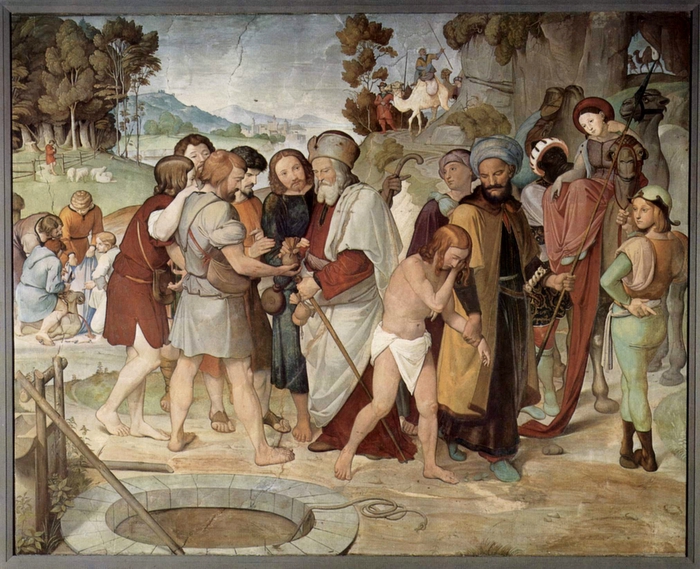
The Many Colors of Slavery

Those who deny freedom to others deserve it not for themselves.”—Abraham Lincoln

Whoever does not have two-thirds of his day for himself, is a slave, whatever he may be: a statesman, a businessman, an official, or a scholar.” — Friedrich Nietzsche

As the great continental glaciers receded at the end of the Pleistocene, fertile land emerged, allowing for the transition from hunting and gathering to agriculture. Farming was labor-intensive, and with the rise of permanent settlements came the demand for constrained and controlled labor. Slavery, likely with first roots in Mesopotamia, though independent manifestation by the Pharaohs in ancient Egypt and other early civilizations, made it ubiquitous, and it has never disappeared.

From the bonded laborers of the Pharaohs to the structured servitude in Greece and Rome, from the transatlantic trade that brutalized African populations to the modern exploitation of migrant workers in sweatshops and the sex trades, slavery has evolved rather than vanished. Each era refines its own form of servitude; forced labor, insurmountable debt, bureaucratic entrapment, or corporate exploitation. It is a practice as ancient as prostitution and taxation, deeply embedded in human society, yet constantly shifting into less visible but equally insidious forms. As long as slavery remains profitable its existence will continue to indelibly stain humanities’ collective soul.

Slavery, and its ultimate contrast, freedom, was a persistent theme in the works of sci-fi author Robert A. Heinlein. With a piercing social awareness, Heinlein, who, in his early years, was described by Isaac Asimov as a ‘flaming liberal’—picked up the theme and horrors of slavery with his 1957 juvenile novel “Citizen of the Galaxy”; bringing the many forms of servitude into the personal history of a precocious kidnapped boy named Thorby. Citizen of the Galaxy is a planet-hopping, spacefaring critique of oppression, class structure, and the nebulous concept of freedom. Heinlein crafts a future where contrasting societies across the galaxy reflect varying degrees of servitude and autonomy, if not necessarily total freedom. Man rarely allows himself complete independence.

Heinlein through the lens of Thorby explores the various shades of slavery, beginning with the brutal, controlling enslavement and continuing to more subtle forms that the individual may not even recognize as confinement. (Partial plot giveaways beyond this point.) Escaping his initial enslavement by the graces of a kindly, strict, but loveable old cripple named Baslim, Thorby moves into a hierarchical, structured existence of spacefaring traders then onto a self-imposed, due to a thirst for justice, straitjacket of a corporate bureaucracy on his birth planet of Terra. A life story of how control can be imposed by others or by ourselves.

As Heinlein’s social perspectives evolved, his libertarian leanings took greater prominence in Citizen of the Galaxy. Through Thorby’s life journey, Heinlein emphasizes personal autonomy, resistance to tyranny, and the moral duty to fight injustice. Baslim, Thorby’s first mentor, symbolizes the idea that one person can stand against oppression and make a difference, even if it takes many miles and years to materialize.

This theme runs through much of Heinlein’s work, but here, it’s especially poignant because Thorby is powerless for much of the novel, making his eventual triumph all the more meaningful. Heinlein’s novels, Farnham’s Freehold, Friday, and Time Enough for Love, explore slavery and control, reinforcing humanity’s inherent need for freedom, or at the very least, breathing space.

Source: Citizen of the Galaxy by Robert A. Heinlein, 1957. Graphic: Joseph Sold into Slavery by Friedrich Overbeck, 1816. Vanderbilt University. Public Domain.

Stasis and Change

Alien Romulus: A group of young adults indentured for life on the cloud-shrouded mining planet of Yvaga discovers a derelict spacecraft orbiting above. They plan to rendezvous with the craft and steal the ship’s cryostasis suits to travel to another planet. Once inside the spacecraft they soon detect they are not alone.

Romulus enters the Alien franchise as the seventh film, situated between Alien and Aliens, attempting to walk the path between Ridley Scott and James Cameron-two giants that Alvarez fails to surpass with this entry.

The story plays homage to its predecessors in the first acts, delivering plenty of frights and gore, enhanced by great graphics, visuals, and adequate acting. However, it then drifts off course into territory best left unexplored. But I guess that’s called setting up the sequel or more likely a spin-off.

Genre:  Horror—Sci-Fi–Suspense–Thriller

Directed by: Fede Alvarez

Screenplay by: Fede Alvarez Rodo Sayagues

Music by: Benjamin Wallfisch

Cast: Cailee Spaeny, David Jonsson, Archie Renaux

Film Locations: Budapest, Hungry and Various Studios

ElsBob: 6.5/10

IMDb: 7.2/10

Rotten Tomatoes Critics: 80%

Rotten Tomatoes Popcornmeter: 85%

Metacritic Metascore: 64%

Metacritic User Score: 7.1%

Theaters: 16 August 2024

Runtime: 119 minutes

Source: Rotten Tomatoes, IMDb, Metacritic. Graphic: Alien Romulus Poster and Trailer, 20 Century Studios

Future Apes

Kingdom of the Planet of the Apes: In the future some apes remember Ceasar, some lord over their slaves, some covet man stuff, and some are for the birds–Animal Farm meets Captain Fantastic.

Kingdom is the 10th movie in the series that began in 1968 with Planet of the Apes starring Charlton Heston; still the best of the banana bunch, originality wise that is.  

This movie is the first in a planned new trilogy that attempts to build on the previous trilogy. Unfortunately, it doesn’t surpass them in either acting or plot except for the supporting work of Kevin Durand for his portrayal of the movie’s antagonist, Proximus. He is superb and worth the price of admission.

Trivia or Goof: The flooding the man cave defies gravity. Try not to think about it.

Genre:  Action—Adventure—Drama–Fantasy—SciFi–Thriller

Directed by: Wes Ball

Screenplay by: Josh Friedman

Music by:  John Paesano

Cast: Owen Teague, Freya Allan, Kevin Durand, Peter Macon

Film Locations:  New South Wales, Australia

ElsBob: 7.0/10

IMDb:  6.9/10

Rotten Tomatoes Critics:  80

Rotten Tomatoes Audience:  78

Metacritic Metascore: 66

Metacritic User Score:  7.0/10

Theaters: 11 May 2024

Runtime: 145 minutes

Budget:  $160 million

Worldwide Box Office:  $397.4 million

Source: IMDb. Rotten Tomatoes. Metacritic. Graphic: Movie trailer and poster, copyright 20th Century Studios.

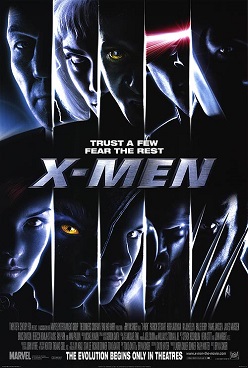
Wolverine: The First X-Men Movie

In the beginning there was the 2000 cinematic introduction of all things mutant, some good and some excessively proactive. The good were the Xavier’s X-Men and the excessively proactive belonged to Magneto’s unsympathetic Brotherhood of Mutants.

Wolverine, not necessarily part of the good or proactive, is living in the Canadian wilderness as an outsider just trying to make a buck by winning a cage match here and there. With a body full of adamantium with rather remarkable healing powers he is a formidable opponent in the ring.

Wolverine quickly becomes entangled in Magneto’s plans for annihilation of humans, forcing him to team up with Xavier’s X-Men. He ultimately plays a crucial role in the epic battle against Magneto and the Brotherhood.

Genre:  Action—Adventure–Fantasy—Sci-Fi

Directed by: Bryan Singer

Screenplay by: Tom DeSanto, Bryan Singer, David Hayter

Music by:  Michael Kamen

Cast: Hugh Jackman, Patrick Stewart, Ian McKellen

Film Locations:  Ontario, Canada

Els: 8.5/10

IMDb:  7.3/10

Rotten Tomatoes Critics:  82

Rotten Tomatoes Audience:  83

Metacritic Metascore: 64

Metacritic User Score:  7.5/10

Theaters: 12 July 2000

Runtime: 104 minutes

Budget:  $75 million

Worldwide Box Office:  $296.3 million

Source: IMDb. Rotten Tomatoes. Metacritic. Graphic: Movie Poster, 20th Century Fox.

X-Men Origins: Wolverine

I’m currently working my way through the 10 X-Men Wolverine flicks.

In the 2009 X-Men Origins: Wolverine, exhibiting twisted bureaucratic logic, the U.S. Army takes a seemingly immortal and invincible mutant and makes him into the more immortal and more invincible Wolverine. Not a logical plot line but it does make for an enjoyable movie.

This is the 4th X-Men film and the 1st solo Wolverine project of a planned trilogy.  

Genre:  Action—Fantasy—Sci-Fi

Directed by: Gavin Hood

Screenplay by: David Benioff, Skip Woods

Music by:  Harry Gregson-Williams

Cast: Hugh Jackman, Liev Schreiber, Ryan Reynolds

Film Locations:  Australia, Canada, New Zealand, U.S.

Els:  7.5/10

IMDb:  6.5/10

Rotten Tomatoes Critics:  38/100

Rotten Tomatoes Audience:  58/100

Metacritic Metascore:  75/100

Metacritic User Score:  8.0/10

Theaters: 1 May 2009

Runtime: 107 minutes

Budget:  $150 Million

Worldwide Box Office:  $373.1 Million

Source: IMDB, Rotten Tomatoes, Metacritic, Wikipedia. Graphic: Movie Poster by 20th Century Fox

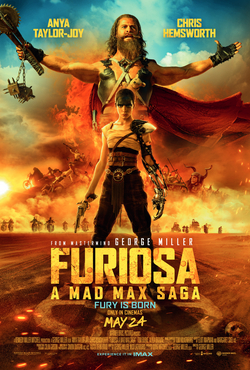
Furiosa: A Mad Max Saga

Furiosa, prequel to Mad Max: Fury Road, documents the psychological development of Furiosa (Taylor-Joy) as she channels her hate and vengeance towards Dementus (Hemsworth), destroyer of her mother in a post-apocalyptic, dystopian tale of fiefdoms and control.

Furiosa finds peak vengeance against her antagonist around the 2 hour and 15-minute mark of the movie when Dementus, somewhat incidentally, asks her if she was able to ‘make it epic’. The question really is posed to you the viewer and the short answer would be no. The long answer is the movie is needlessly long but not as long as it seemed.

Genre:  Action – Adventure – Drama — Sci-Fi

Directed by: George Miller

Screenplay by: George Miller, Nico Lathouris

Music by:  Tom Holkenborg

Cast: Anya Taylor-Joy, Chris Hemsworth, Tom Burke

Film Locations:  Australia, USA

ElsBob:  5.5-6.0/10

IMDb:  7.7/10

Rotten Tomatoes Critics:  90/100

Rotten Tomatoes Audience:  89/100

Metacritic Metascore:  79/100

Metacritic User Score:  7.3/10

Theaters: 23-24 May 2024

Streaming: 16 September 2022

Runtime: 148 minutes

Budget: $168 million

Box Office: $172.8 million

Source: IMDb. MetaCritic. Rotten Tomatoes. Graphic Furiosa: A Mad Max Saga movie poster, 2024, Copyright Warner Brothers.

Space Elevators

Arthur C. Clarke in his 1979 sci-fi novel, The Fountains of Paradise, builds a space elevator on Earth as a solution to the monetary and technical expense of Earth-based rockets.

A space elevator is a conceptual solution for a low-cost, low energy planet-to-space transportation system. The challenge to building the elevator is finding a material strong enough to withstand the immense compressional and tensional forces that with a counterweight balance, would be 44,490 miles long (71,600 km). Carbon nanotubes offer a possible solution but currently they are only strong enough to work on Mars or the moon.

This is not Clarke’s best novel, but he thoroughly explains the concept of a space elevator and a lot of the engineering problems that would need to be solved to build one. The solutions to all the problems are solved by the book’s protagonist, Dr. Vannevar Morgan, a thinly veiled character that likely refers to himself as Arthur C. Clarke when he is among friends.

As an aside, both within the book and as a reader, he spends 5-6 pages harping on his belief there is no God. Why he does so is a mystery since it adds nothing to his story and in the end, it is a pointless, garrulous, one-sided debate.

Heavy

Mission of Gravity

By Hal Clement

Illustrations: Vincent Di Fate

Easton Press

Copyright: © 1987

Original Publication Date: 1954

AmazonPicture

Di Fate Biography:

FootNoteA

Vincent Di Fate, born 1945 in Yonkers, is a New Yorker and American artist known for his depictions of science fiction, fantasy, and realistic space art. He has an MA from Syracuse University.

People Magazine noted the Di Fate is, “one of the top illustrators of science fiction…” His specialty is imaging technologies and environments in the nether regions of space and the universe. His clients include NASA, IBM, Scientific American, and The National Geographic Society. James Lizowski, Omni Magazine critic, noted that Di Fate, “combines the skills of a masterful painter with the fierce demand of an uncompromising artist to create visions of the future that are precise, powerful, and dazzling to the eye“. 

His numerous awards include the: Hugo, Sklark, Lensman, Chesley, and Rondo Awards, among others for illustration of science fiction and fantasy subjects. He was inducted into the Science Fiction Hall of Fame in 2011 and the Illustrator’s Hall of Fame in 2019. He has consulted for MCA/Universal, 20th Century Fox, Walt Disney, MGM/United Artists.

Di Fate has also written three books and is currently working on his fourth. His second book Infinite Worlds was the first comprehensive history of science fiction art in America. Listed below are some of the books of fiction he has illustrated. Additionally, he has illustrated hundreds of sci-fi and fantasy book covers in his four decades as an artist.

Di Fate Book Illustrations (Partial):

  • 2001: A Space Odyssey by Arthur C. Clarke
  • Prelude to Foundation by Isaac Asimov
  • The Demolished Man by Alfred Bester
  • The Fabulous Riverboat by Philip José Farmer
  • The Dark Design by Philip José Farmer
  • The Magic Labyrinth by Philip José Farmer
  • The World of Null-A by A.E. van Vogt
  • Rules of Engagement by Elizabeth Moon
  • The Time Traders by Andre Norton
  • The Godmakers by Frank Herbert

Di Fate Bibliography:

  • Di Fate’s Catalog of Science Fiction Hardware 1980
  • Infinite Worlds: The Fantastic Visions of Science Fiction Art 1997
  • The Science Fiction Art of Vincent Di Fate 2002

Clement Biography:

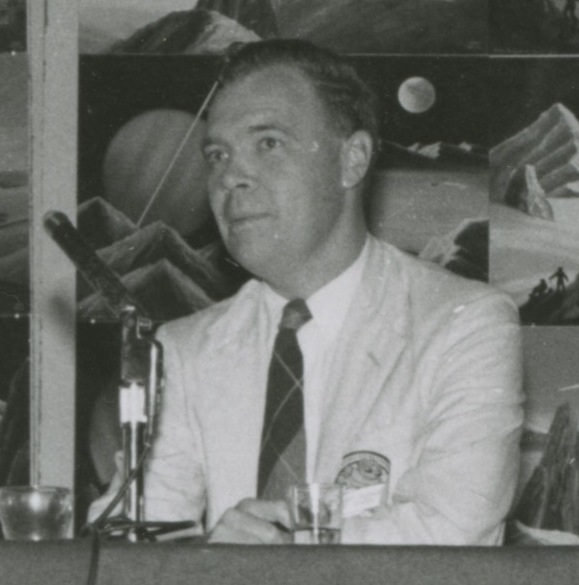
Human beings are prone to believe the things they wish were true.” – Hal Clement

Hal Clement, born in 1922, in Massachusetts, passing away in 2003, was an American science fiction writer and a leader of the hard science fiction subgenre. Hard science, as it was defined in 1957 by P. Schuyler Miller, is characterized by scientific accuracy and logic. Hard science fiction is strongly rooted to known physical laws in the natural universe. In an interview with “The Science Fiction Radio Show” in the early 1980s Clement said that he had “…trouble writing something unless, I can, more or less convince myself it might happen.” In the old days before computers, he was known to whip out his slide rule and run through the calculations to make sure his stories passed the law of physics test.

FootNoteB

Clement received a degree in astronomy from Harvard University in 1943, an M.Ed. from Boston University in 1946, and eventually an M.S. in chemistry from Simmons College in 1963. He was a B-24 Liberator, a heavy bomber, pilot during WWII, flying combat missions over Europe, finishing his Air Force career after the war in the Air Force Reserve, retiring as a colonel. He taught astronomy and chemistry at the high school level in Massachusetts.

Clement while working towards his B.S. at Harvard wrote and published his first piece of science fiction, a short story called “Proof“. The story first appeared in a 1942 issue of Astounding Science edited by his mentor John W. Campbell. Campbell was known as the leader of the hard science wing of the science fiction genre which Clement admits affected his writing standards. Clement’s first three novels were Astounding Science serials under Campbell: Needle in 1950, Iceworld in 1953, and Mission of Gravity, his best-known novel, in 1954. Clement followed up Needle and Mission of Gravity with the sequels: Through the Eye of a Needle in 1978 and Star Light in 1971, respectively. He also wrote two additional short story sequels for Mission of Gravity: Lecture Demonstration in 1973 and Under in 2000.

In addition to his writing, Clement also painted astronomically oriented artworks under the name George Richard. In 1998, he was inducted into the Science Fiction and Fantasy Hall of Fame and was named the 17th SFWA Grand Master by the Science Fiction and Fantasy Writers of America in 1999.

Hal Clement wrote over 120 novels, novellas, short stories, and collections. Below is a listing of just his novels.

Clement Bibliography (Novels Only, Shorter Fiction not Listed):

  • Needle 1950
  • Iceworld 1953
  • Mission of Gravity 1954
  • The Ranger Boys in Space 1956
  • Cycle of Fire 1957
  • Close to Critical 1958
  • Natives of Space 1965
  • Star Light 1971
  • Left of Africa 1976
  • Through the Eye of a Needle 1978
  • The Nitrogen Fix 1980
  • Intuit 1987
  • Still River 1987
  • Fossil 1993
  • Half Life 1999
  • The Essential Hal Clement, Volume 1: Trio for Slide Rule and Typewriter 2007
  • The Essential Hal Clement, Volume 3: Variations on a Theme by Sir Isaac Newton 2007
  • Heavy Planet 2002
  • Noise 2003
  • Hal Clement SF Gateway Omnibus 2014

Mission of Gravity:

Mission of Gravity was first published in serialized form in The Astounding Science Fiction Anthology of 1953 with the hardcover coming out in 1954 followed by the paperback in 1958.

The story takes place on the planet Mesklin, an object thought to be in the 61 Cygni system, eleven light years from Earth. Mesklin is a super-giant bowl-shaped planet, flattened at the poles, an oblate spheroid, with an extreme rotation that allows for 18-minute days or approximately 9 minutes of daylight. The high spin rate creates gravity that equals about 3g at the equator and 700g at the poles. Clement eventually re-calculated the gravity over the planet and changed the polar regions to 200g. For comparison purposes the Sun has a gravity of 28g or 28 times that of Earth.

Earth has sent a probe to Mesklin to study its extreme gravity and other matters of value, but it became stranded in the high gravity areas of a pole ruling out a rescue by a human team. Earth wants to recover the probe at all costs to learn what secrets it contains.

The planet is populated by an intelligent species of centipedes that come in assorted sizes, but the ones be-friended by the Earth visitors are about three feet long. An Earth spacemen, Charles Lackland travels to the equator of the planet where he can just manage the 3g environment and meets Barlennan a captain of a sailing raft named the Bree. The Bree and its crew are on a trading voyage in the equatorial areas making a profit by bartering goods from isolated populations all over the planet. After Barlennan learns English, a deal is arranged for him and his crew to retrieve the probe at the poles and return it to the equator where the humans can pick it up. So begins the centipedes’ journey to the pole.

Literary Criticism:

As with all science fiction, Mission of Gravity suffers from futuristic technology that outdates itself in a few years. A quaint process in mapping the surface of Mesklin involves taking a series of high altitude photographs, displaying them of photo paper and trying to put them all together like a giant jig-saw puzzle. No GPS coordinates, no digital, just 1950 Earth tech and methodology. Leaving that aside though, the story is well worth reading. The science as presented is sound, mostly, the story telling and plot is a page turner, and the characterization of the alien’s life-forms is plausible and interesting. It will be worth your time and at 223 pages a quick read.

References and Readings:

FootnoteA: Di Fate Cover Art for Ron Goulart Collection. Broke Down Engine. Macmillan. 1967

FootnoteB: Hal Clement at the 14th World Science Fiction Convention. Cropped from a Larger Photo. Public Domain. 1956

The Last of the Old Guard

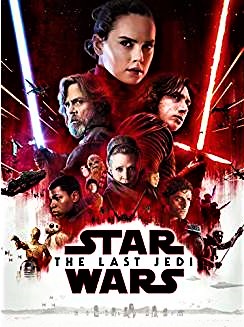
Star Wars: The Last Jedi  M Star 2017

Theaters:  December 2017

Streaming:  March 2018

Rated:  PG-13

Runtime:  152 minutes

Genre:  Action – Fantasy – Science Fiction

els:  6.0/10

IMDB:  7.4/10

Amazon:  3.5/5 stars

Rotten Tomatoes Critics:  8.1/10

Rotten Tomatoes Audience:  3.0/5

Metacritic Metascore:  85/100

Metacritic User Score:  4.5/10

Awards:  NA

Directed by:  Rian Johnson

Written by:  Rian Johnson (screenplay), George Lucas (characters)

Music by:  John Williams

Cast:  Mark Hamill, Carrie Fisher, Adam Driver, Daisy Ridley, John Boyega, Andy Serkis, Benicio del Toro

Film Locations:  Bolivia, Croatia, England, Ireland

Budget:  $200,000,000

Worldwide Box Office:  $1,322,000,00

Resistance forces are fleeing their home base while the First Order fleet prepares to destroy them.  Attempting to buy some time for the evacuation, the Resistance attacks and destroys a First Order dreadnought, aka battleship, allowing the rest of the evacuation forces to escape into hyperspace. The Resistance, after their jump, believing they had bought themselves some time, soon learn that their enemy can track them through hyperspace, leaving them with but a few hours to bring about a miracle or perish.

Meanwhile Rey (Ridley) travels to Luke’s (Hamill) planet for some badly needed lessons in light sabre use, force projection, and dark side avoidance. Luke has other ideas.

Rian Johnson, writer and director of the original, exciting, thought-provoking, and well received Looper movie, takes his turn in the revolving Star Wars franchise door, by writing and directing The Last Jedi.  He succeeds in producing warm milk.  Not horrible, but he definitely is not going down in the annuals of great Star Wars directors and writers.  Then again George Lucas couldn’t direct a golf cart to the first tee either. Johnson brings together some of the elements of a great space opera; breath-taking special and visual effects, great acting, and a wonderful score but the story is just a tedious collection snippets strung together to produce a very long movie. Ok, some of the snippets are quite good such as DJ’s (del Toro) bit pieces of breaking in and out of places that he shouldn’t be able to break in and out of.

This movie is the last that will contain elements of the old guard.  Harrison Ford killed himself off in VII, Carrie Fisher passed away, and Hamill, he can act–who knew, will not be returning for IX, so Johnson spends an inordinate amount of time on character development of all the new faces. It’s all so unnecessary, mostly immaterial and boring.  The development of the players can be spread out over the life of the franchise, no need to force-feed the audience the entire buffet in one sitting.

In the end this is a fair movie; there just wasn’t enough story to hold you for 2 hours and 32 minutes.