Real Not Real

Have no fear of perfection; you’ll never reach it.” – Dali.

Salvador Dalí was the entertaining, surrealist voice of the masses. His dreamlike spectacle of melting clocks and flamboyant persona captivated popular culture, injecting eccentric brushstrokes into the lives of the disengaged and disinterested. Dalí spoke directly to the public’s fascination with dreams and absurdity, transforming art into a theatrical experience and a giggly poke at the eminent egos on high altars.

Dalí was a 20th-century Spanish artist who drew from influences such as Renaissance art, Impressionism, and Cubism, but by his mid-twenties, he had fully embraced Surrealism. He spent most of his life in Spain, with notable excursions to Paris during the 1920s and 1930s and to the United States during the World War II years. In 1934, he married the love of his life, Gala. Without her, Dalí might never have achieved his fame. She was not just his muse but also his agent and model. A true partner in both his art and life. Together, they rode a rollercoaster of passion and creativity, thrills and dales, until her death in 1982.

Dalí had strong opinions on art, famously critiquing abstract art as “inconsequential.” He once said, “We are all hungry and thirsty for concrete images. Abstract art will have been good for one thing: to restore its exact virginity to figurative art.” He painted images that were real and with context that bordered on the not real, the surreal. For those who believed that modern abstract art had no life, no beauty, no appeal, he provided a bridge back to a coherent emotional foundation with a dreamlike veneer. Incorporating spirituality and innovative perspectives into his dreams and visions of life.

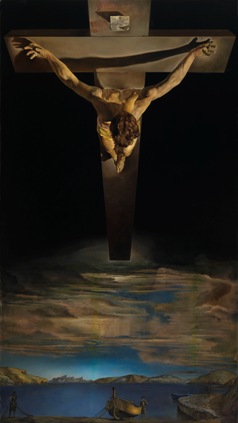
The Persistence of Memory (1931) is Dalí’s most recognizable and famous painting, but his 1951 work Christ of Saint John of the Cross is arguably his most autobiographical and accessible piece. A painting dripping with meaning and perspective, Dalí claimed it came to him in a dream inspired by Saint John of the Cross’s 16th-century sketch of Christ’s crucifixion. The perspective is indirectly informed by Saint John’s vision, while the boat and figures at the bottom reflect influences from La Nain and Velázquez. The triangular shape created by Christ’s body and the cross represents the Holy Trinity, while Christ’s head, a circular nucleus, signifies unity and eternity: “the universe, the Christ!” Dalí ties himself personally to the crucifixion by placing Port Lligat, his home, in the background. He considered this painting a singular and unique piece of existence, one he likely could never reproduce because the part of him that went into the painting was gone forever.That part is shared with his viewers, offering a glimpse into Christ’s pain, Dalí’s anguish, and his compassion: an emotional complexity that transcends mortal comprehension.

Source: Salvador Dali by Robert Descharnes, 1984. Graphic: Christ of Saint John of the Cross, Dali, 1951. Low Res. Copyright Glasgow Corporation.
The Travels of Mary, Joseph, and Jesus

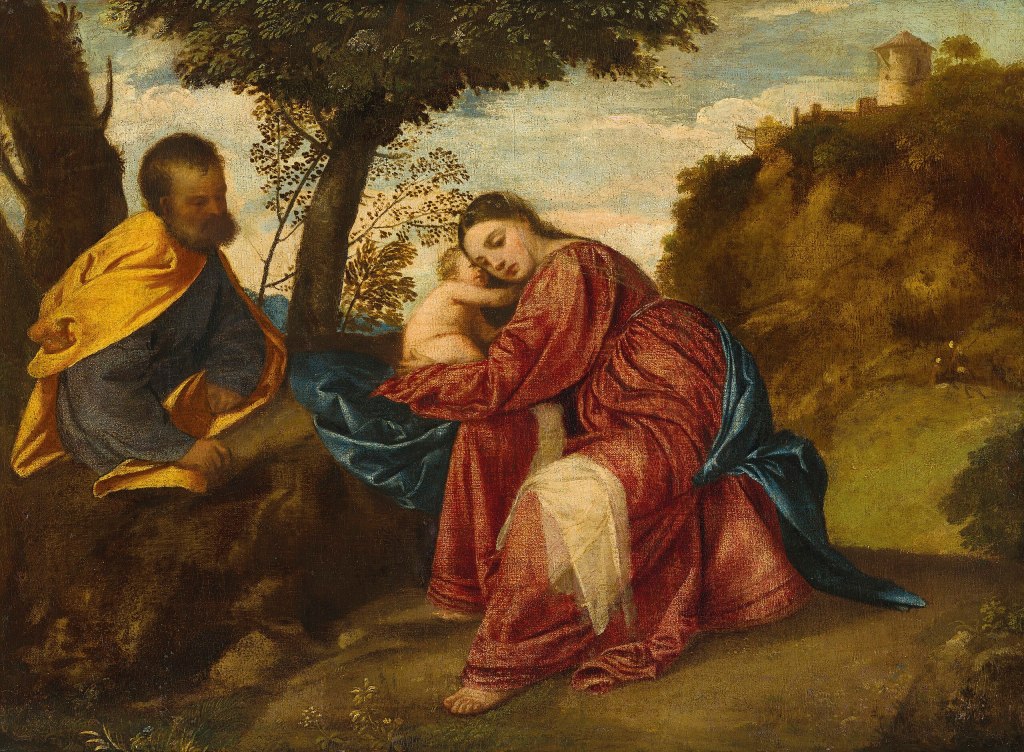
Rest on the Flight into Egypt was painted by the Venetian Renaissance master Tiziano Vecellio, better known as Titian, while he was in his late teens or possibly 20 years old in the year 1508. The painting was inspired by Joseph’s dream, recounted in Matthew 2:13-23, telling him and his young family to flee Herod and Judea.

The painting has changed hands repeatedly over the centuries being possessed by Dukes, Archdukes, Marquess, thieves, and other rich and powerful people. Below is a compilation of known owners of the painting through the years:

  • Possibly the first owner was Alfonso d’Este, Duke of Ferrara, 1508? Unverified.
  • Purchased by a Venetian merchant, Bartolomeo della Nave at an unknown date. Sold 1638
  • Purchased by James Hamilton, Duke of Hamilton in 1638
  • Purchased by Leopold Wilhelm, Archduke of Austria in 1649
  • Acquired by Hugh Andrew Johnston Munro of Novar in 1851
  • Acquired by John Thynne, Marquess of Bath in 1878
  • Stolen from Alexander Thynn, Marquess of Bath in 1995
  • Recovered for Alexander Thynn, Marquess of Bath in 2002. The painting was found at a bus stop in south-west London.
  • Sold by Ceawlin Thynn at Christie’s to an unknown buyer on 2 July 2024 for 17,560,000 pounds or about 22.17 million dollars.

Source: Christie’s June 2024. Artnet.com. The Art Newspaper.  Graphic: Rest on the Flight into Egypt, Titian, 1508, Public Domain.

Painter of Love

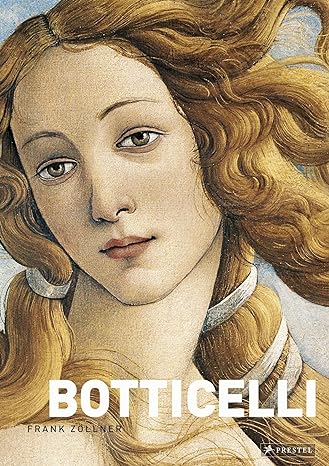
Botticelli

By Frank Zollner

Prestel

Copyright: © 2015

AmazonPicture

Zollner Biography:

FootnoteA

Frank Zollner, born 26 June 1956 in Bremen, Germany, is an art historian specializing in Renaissance painters, specifically Leonardo, but also Michelangelo, Rapheal, and Botticelli. He has been a professor of art history at Leipzig University since 1996.

As an expert in all matters Leonardo, he has been wrapped up in the authenticity of the multiple Mona Lisas that exist around world. The Mona Lisa actually painted by Leonardo that everyone appears to agree on is in the Louvre. Experts also agree that parts of the Isleworth Mona Lisa may have also been painted by Leonardo. Then there is the two Mona Lisas that are most like each other, the Louvre Mona Lisa, and the Prado Mona Lisa in Madrid. The Prado Mona Lisa is acknowledged to have been painted in Leonardo’s workshop but not necessarily by Leonardo himself. The two most famous paintings are the Louvre Mona Lisa and the Washington National Gallery’s Mona Lisa. The National Gallery Mona Lisa is believed to have been painted by one of Leonardo’s followers, possibly Salaì or Francesco Melzi. So, it would appear that there are a lot of Mona Lisa’s floating around but only one fully authentic and completely Leonardo.

Zöllner re-introduced the art world to the ancient concept of aesthetic hedonism. Aesthetic hedonism states that for art to have value one must experience emotional pleasure when viewing or experiencing it. The value related to aesthetic hedonism is derived from empirical observations and experiences. Philosophers, such as Hume and Kant, have argued that aesthetic pleasure is universal, reflecting the intellectual harmony within one’s mind. Plato and others, on the other hand, suggest that empiricism alone is not enough to render value to an object of art. Other subjective factors also need to be considered such as moral, social, or religious values.

Which brings us to an impertinent detour but much needed critique of modern art. Where is the beauty, the pleasure, or at a more essential and primeval level, where is the talent for what passes today as modern art? A deplorable example of modern art totally lacking in artistic talent or merit, unable to provide any visual pleasure, is Vienna’s newest fountain: WirWasser. A cultural devolution that is utterly sad and heartbreaking. Look at the picture of the fountain with the people responsible for that monstrosity. They are smiling. What is wrong with those people?

Botticelli Biography:

By throwing a sponge soaked with deffernet colors at at a wall one can make a spot in which a beautiful landscape can be seen“…Botticelli.

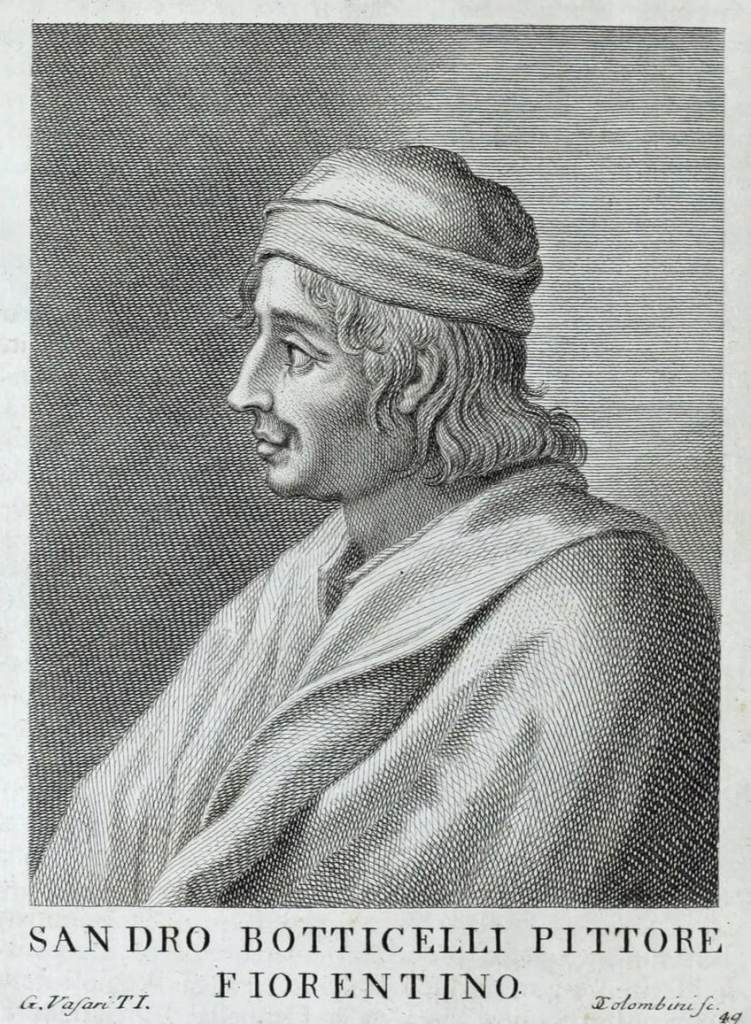
Sandro Botticelli, born Alessandro di Mariano di Vanni Filipep circa 1445, later given the moniker Botticelli by an older brother meaning ‘little barrel’ in Italian, is considered the greatest humanist painter of the Early Renaissance Era.

Botticelli’s art was always about dignity, about maintaining the grace and soulfulness of his subjects. His genus lies in capturing the emotional persona of people populating his paintings along with the technical ability to skillfully show perspective, accurately express anatomy, and the mastery of color and light.

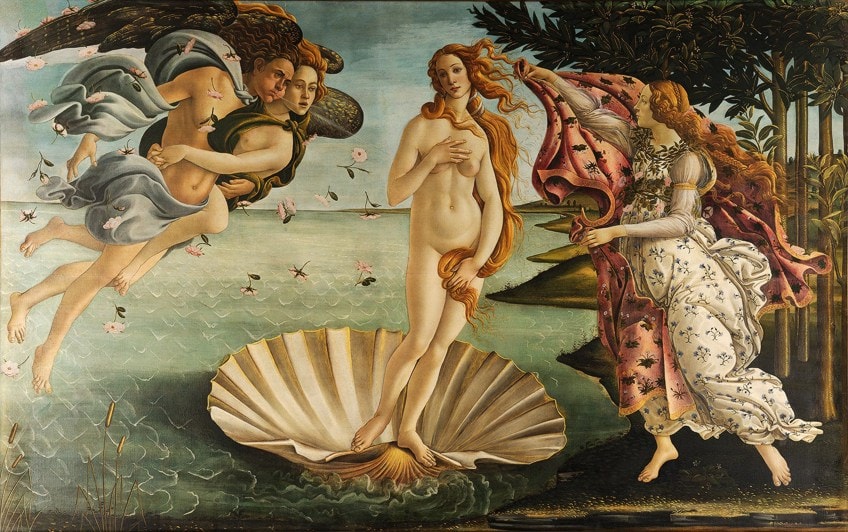
Botticelli died in Florence in 1510 at the age of 64 or 65. His complete oeuvre is unknown but at least 137 artworks have been attributed to him, including panel paintings, works on canvas, frescoes, and drawings for Dante’s Divine Comedy. Among his most famous and recognizable paintings are La Primavera (shown above) and the Birth of Venus (shown below), which today, are synonymous with perfection and Early Renaissance art.

The La Primavera, shown above, was originally in the possession of one of the younger Medicis and was given as a wedding present to Semiranmide Appiani who married Lorenzo di Pierfrancesco de’ Medici in 1482. The painting depicts, beginning on the far left continuing to far right, Mercury in winged shoes poking at the clouds with a wand, the Three Graces in the company of Mercury creating an atmosphere of beauty and what else, grace. The central figure is Venus. The floating cherub above Venus is Cupid, her son by Mars. To the right of Venus is Flora, goddess of flowers, springtime, and fertility. The woman to the right of Flora is Chloris, originally a virginal nymph who was transformed into Flora by the wind God Zephyr shown floating above ground on the far right. Zephyr raped Flora/Chloris but made amends by making her his wife.

Botticelli’s The Birth of Venus, referred to by some art critics, including Zollner, as the Arrival of Venus, shows the goddess of love on the shores of the island of Cythera. Botticelli based the painting on a poem by Greek poet Hesiod, describing Venus emerging from the sea, formed from the severed genitals of Uranus. Venus is standing on a giant scallop shell, blown by the wind god Zephyr and his companion Aura, a goddess of breeze, and welcomed by one of the Horae, likely a goddess of spring, who offers her a cloak.

Literary Criticism:

Zollner’s Botticelli is a masterpiece in scholarship and beauty. The reproductions of Botticelli’s art are crisp and clear, but the text brings it all together, biography, provenance, technique, and history. To follow a painting from brush to museum, as Zollner has, is itself a work of art and love.

FootnoteA: Frank Zollner. Welt newspaper 2021

Frank Zollner Art Book Bibliography (English):

References and Readings:

Early Italian Renaissance Painting

Piero Della Francesca

By Anna Maria Maetzke

Photographs by Alessandro Benci

Published by Silvana Editoriale

Copyright: © 2013

An art book short on art and long on art history and art criticism.

Piero della Francesca, born in Tuscany in the early 15th century, is regarded as a true master before his time, eerily anticipating post impression by 500 years. Francesca was a major force in inputting perspective into paintings, greatly influenced by an Italian contemporary polymath, Leon Battista Alberti.

Francesca’s greatest works include the painting to the right, Federico da Montefeltro, Duke of Urbino, and the fresco, The Legend of the True Cross, located within the basilica of San Francesco in Arezzo, Italy.

The book contains all surviving paintings by the artist, about 150, which showcase his genius when compared with fellow artists such as Donatello and Brunelleschi, along with extensive research and commentary on Francesca’s life and art.