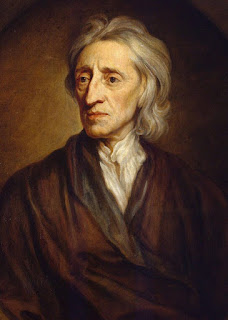
John Locke’s theory on the social contract is a cornerstone of his political philosophy and western democracies, as outlined in his work “Second Treatise of Government.” According to Locke, the social contract is an agreement among individuals to form a government that will protect their natural rights to life, liberty, and property. The social contract is a compromise between man’s inherent natural rights and the need to preserve and protect those rights.
Thomas Jefferson, in his Declaration of Independence builds on Locke’s concepts, tweak is probably a better word. Locke writes that people have “natural rights” to “life, liberty, and estate” (property), and if a government violates these, it’s “dissolved,” giving people the right to form a new one. Jefferson writes into the Declaration its famous “life, liberty, and the pursuit of happiness”—swapping “property” for a broader, aspirational feel. Locke’s idea that government derives legitimacy from the “consent of the governed” shows up when Jefferson lists grievances against King George III, arguing the king’s abuses justify breaking away. And Locke’s justification for revolution—“when a long train of abuses” threatens these rights, people can resist—mirrors Jefferson’s “whenever any Form of Government becomes destructive of these ends, it is the Right of the People to alter or to abolish it.”
Locke’s key points in his Second Treatise:
- State of Nature: Locke believed that in the state of nature, individuals are free and equal, governed by natural law, which dictates that no one should harm another in their life, health, liberty, or possessions. Anarchy with adherence to God’s moral code.
- Natural Rights: Locke argued that individuals have inherent rights to life, liberty, and property. These rights are inalienable and must be protected by any legitimate government.
- Consent of the Governed: Locke emphasized that government derives its authority from the consent of the governed. People agree to form a government to protect their natural rights, and this consent is the basis of political legitimacy.
- Limited Government: Locke’s social contract theory advocates for a government with limited powers, designed to serve the common good and protect individual rights.
- Right to Revolution: Locke believed that if a government becomes tyrannical and or violates the social contract, the people have the right to revolt and establish a new government that will better protect their rights.
Source: Second Treaties of Government by John Locke, 1690. Graphic: John Locke by Godfrey Kneller 1697. Public Domain.
 elsToday